2027 Legal Studies Career Outlook by Specialization

Co-Founder and Chief Data Scientist
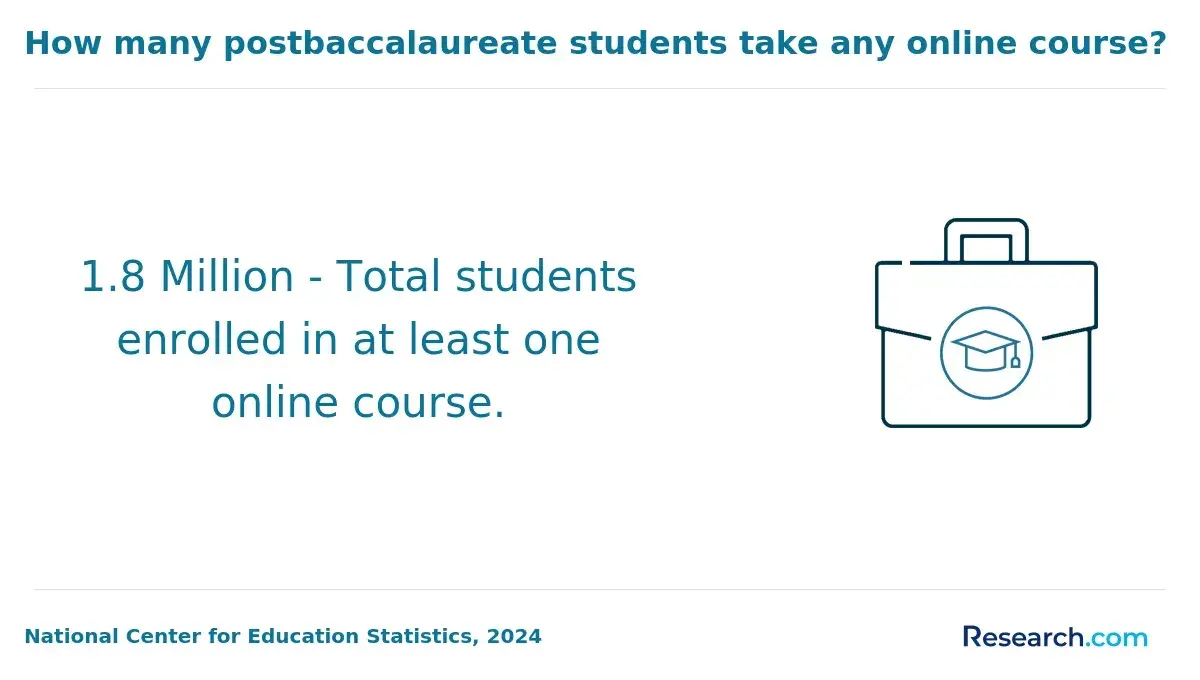
Facing a fragmented legal job market, many aspirants must choose specializations that won't just open doors but ensure sustainable career trajectories amid evolving employer demands. The rising enrollment of adult learners in online legal studies programs-up 22% over two years according to the National Center for Education Statistics-signals a structural shift toward flexible education, complicating timing and credential evaluation for both students and employers.
This dynamic influences career mobility and strategic program selection, especially as workforce data suggests differential demand across paralegal, compliance, and legal administration roles. This article examines specialization-specific career prospects to clarify pathways that align education with tangible labor market outcomes.
Key Things You Should Know
- Employment projections by the U.S. Bureau of Labor Statistics show 6% growth for paralegals through 2026, but specialization in compliance or cybersecurity law increases placement rates by 15%, indicating a strategic tradeoff in skill focus versus general credentials.
- Employers in major metropolitan areas prioritize candidates with certifications in digital privacy and regulatory affairs; 72% of surveyed firms in 2024 prefer specialized expertise over broad legal knowledge, affecting job market entry points.
- Average associate degree costs rose 8% since 2022, extending time-to-completion by 6 months for online legal studies programs, complicating mid-career pivots and amplifying opportunity costs for working professionals.
What is a legal studies degree and career path?
A legal studies degree programs in the United States often serve as tactical entry points into the legal workforce rather than direct pathways to practicing law. Graduates seldom become attorneys without pursuing additional law degrees and bar certification. Instead, the degree equips students for roles such as paralegals, compliance officers, court clerks, and legal analysts who operate behind the scenes in various sectors.
For instance, a healthcare compliance officer relies on knowledge gained through legal studies to navigate complex regulatory frameworks, ensuring institutional adherence to laws without practicing law directly. Employers in government and private sectors emphasize skills in legal documentation, critical analysis, and statutory interpretation over theoretical knowledge alone.
Practical training elements like internships or legal research projects within degree programs significantly increase job readiness and marketability. This focus on applied competence aligns with steady workforce demand, as the U.S. Bureau of Labor Statistics projects approximately 83,800 job openings in legal occupations annually through 2034, with median wages around $99,990.
Prospective students should identify programs that align with specific career goals. Those targeting paralegal roles benefit from accredited curricula including certification preparation, while individuals interested in policy analysis might consider interdisciplinary tracks blending legal studies with political science or business. Selecting affordable online interdisciplinary studies degrees with relevant practical components can optimize both cost and outcomes for diverse career trajectories.
Which legal studies specializations have the strongest job outlook?
The strongest legal studies specializations with strongest job growth concentrate in corporate law, intellectual property, healthcare law, and environmental law due to evolving regulatory landscapes and sector-specific demands. Lawyer employment in the U.S. is expected to grow 4% from 2024 to 2034, creating approximately 31,500 job openings annually with a median wage of $151,160 as of May 2024. However, this aggregate masks significant disparities tied to specialization.
For instance, corporate law remains resilient because companies continually face complex global compliance and transactional challenges. Intellectual property law's rapid expansion parallels increases in technology startups and innovation, though entering this field often requires a background in STEM or technical knowledge. Healthcare law specialists navigate regulatory shifts and biotechnology progress, providing critical guidance to hospitals, insurers, and pharmaceutical companies.
Environmental law's growth reflects new sustainability regulations impacting various industries. In contrast, areas like criminal and family law typically see slower expansion and more localized, budget-dependent opportunities, which may complicate employment stability. This differentiation should factor heavily when evaluating high demand legal studies careers in the US, as aligning educational investments with market realities is essential to avoid employment gaps.
Practical decision-making also involves understanding workforce expectations, such as how corporate law favors business or finance experience. For those intrigued by forensic profiles, comparing outlooks like the FBI criminal profiler salary and career trajectory can clarify divergent paths within specialized legal careers.

What jobs can you get with a legal studies degree?
A legal studies degree largely funnels graduates into support roles within legal systems rather than direct law practice, creating career opportunities in the United States that demand precise expertise without a law license. Positions such as paralegals, legal assistants, compliance officers, and court clerks leverage an understanding of legal frameworks and documentation.
For instance, paralegals and legal assistants represent a fast-growing segment with median salaries between $54,980 and $68,235, accompanied by a 4.3% growth rate, according to the U.S. Bureau of Labor Statistics data summarized by CampusPin. Employers expect candidates to efficiently manage legal documents, conduct regulatory research, and maintain case files.
The variation in job demands-like a paralegal in corporate law adapting to evolving compliance rules versus a legal assistant in criminal law working under urgent deadlines-affects job stability and outlines the need for ongoing specialization. Graduates exploring top jobs for graduates with a legal studies background should consider these distinctions carefully when targeting roles.
Beyond core roles, opportunities exist in contract administration, mediation support, and human resources compliance, though many require additional certifications or domain-specific knowledge, especially in sectors like healthcare or finance. Securing employment often depends on targeted internships or networking within firms or legal departments, given significant competition for generalist positions.
Those evaluating legal studies as a career path must weigh pursuing a paralegal career with steady but moderate salary growth against investing time and resources in law school for attorney qualifications. Practical experience combined with strategic certification greatly enhances employability. Related fields, such as forensic psychology, can present alternative trajectories; more on the pros of being a forensic psychologist provides additional insight for comparative decision-making.
What accreditation should a legal studies program have?
Employers in legal compliance and related sectors increasingly require candidates to graduate from programs with regional accreditation recognized by the U.S. Department of Education or the Council for Higher Education Accreditation, ensuring academic rigor and credit transferability. Accreditation standards for legal studies programs in the United States are especially critical for roles demanding specific credentials, such as corporate compliance officers, who must attend programs eligible for certifications overseen by bodies like the American Bar Association (ABA) or the Association of Certified Compliance Professionals.
Choosing a legal studies degree lacking these regional accreditation requirements for legal studies degrees can limit access to licenses, certifications, and roles that include federal regulatory knowledge or stringent background checks. Notably, compliance-related employment expanded by 32% in 2024, with median wages around $76,980, reflecting market demand that favors graduates from accredited programs validated by industry-specific organizations.
Tradeoffs between cost, flexibility, and career objectives shape decision-making. Many regionally accredited online programs without ABA approval prepare students well for paralegal or legal administrative roles but fall short for attorney or specialized regulatory tracks. Candidates must weigh whether immediate affordability or alignment with long-term, certification-driven career ambitions is more critical.
For those comparing pathways, exploring Spanish degrees online can offer perspective on balancing duration, cost, and employability within specialized academic tracks.
How do online and campus legal studies programs compare?
The decision between online and campus legal studies programs hinges on balancing flexibility against the depth of experiential training and professional networking opportunities inherent in traditional settings. While online programs offer accessibility tailored for working professionals, they often fall short in providing in-person interaction critical for fields like Alternative Dispute Resolution (ADR), where face-to-face negotiation practice and mediation clinics sharpen interpersonal skills.
Campus-based programs embed structured engagements such as moot courts, internships, and alumni events, which directly align with employer preferences for candidates demonstrating hands-on experience and strong local connections. Online students must independently secure these experiences, creating potential delays in practical skill acquisition and job market entry.
The U.S. Bureau of Labor Statistics projects a 4.3% growth rate in occupations such as arbitrators, mediators, and conciliators from 2024 to 2034, surpassing many traditional courtroom roles. Programs emphasizing dispute resolution theory, common in online formats, require supplemental experiential learning to meet these labor market expectations. Graduates from campus programs enter the workforce with integrated practical training, better positioned for immediate roles.
- Online legal studies often lack mandatory access to live simulations and spontaneous mentorship.
- Campus programs systematically incorporate real-world exercises enhancing employability.
- Working professionals must weigh scheduling flexibility against potentially slower skill development.
Students targeting strategic pivots in legal careers should carefully assess how each program's design intersects with workforce demands, especially as local networking remains a decisive factor in hiring.
What courses are included in legal studies programs?
Legal studies programs that prioritize transferable procedural skills alongside foundational knowledge better prepare students for public sector legal roles. Core courses-criminal law, constitutional law, legal research and writing, and civil procedure-are essential but insufficient alone for competitive government positions. Employers increasingly seek candidates proficient in litigation support, case management, and regulatory compliance navigation.
For example, legal support workers in government typically earn median wages near $54,980, reflecting the value of hands-on abilities like document preparation and court procedure familiarity rather than purely theoretical knowledge. With annual openings in criminal justice and related legal occupations projected at about 83,800 through 2034, aligning coursework with these fields offers a meaningful edge toward employability.
Students face the tradeoff of balancing rigorous academic content with skill sets demanded by hiring managers, such as ethics, law enforcement perspectives, and legal technology applications in automated workflows. Electives in public policy and administrative law contextualize regulatory frameworks, benefiting those targeting public administration over private sector or paralegal pathways.
Advising should emphasize curricula integrating practical and theoretical elements, closing common gaps caused by overly academic tracks. This approach supports both immediate entry and mid-term advancement within legal careers connected to the justice system and government service.
What are the admission requirements for legal studies programs?
Admission to legal studies programs requires strategic alignment between academic credentials and career intentions, not just meeting baseline prerequisites. For bachelor's programs, a high school diploma or GED with a GPA around 2.5 to 3.0 on a 4.0 scale is standard, though some schools have removed standardized test requirements. The emphasis lies on transcripts that reflect solid skills in reading, writing, and critical thinking, which are foundational to succeeding in legal coursework.
Master of Legal Studies (MLS) programs demand a completed undergraduate degree with growing flexibility regarding majors. However, candidates who clearly connect the MLS credential to tangible roles, such as compliance, human resources, or risk management, demonstrate stronger admission prospects. Relevant work experience can compensate for less traditional academic backgrounds, and programs may request letters of recommendation and personal statements tailored to non-lawyer legal career tracks.
GRE mandates vary, with many waivers offered based on professional or academic readiness. Consider a compliance officer aiming to move into specialized legal analysis: such a candidate must present a convincing blend of quantitative academic credentials and qualitative evidence of focused career intent.
Falling short of these criteria, whether by underperforming academically or lacking coherent application materials, delays entry and potentially extends the timeline to earning an average salary of $70,000 annually. Early, targeted preparation in both academics and documentation is critical to maintaining access and affordability.
How long does a legal studies degree take and what does it cost?
Choosing a legal studies pathway requires balancing credential depth, cost, and career intent. Associate degrees typically take about two years, while bachelor's degrees demand four years of full-time study, offering more comprehensive training. Certificate programs offer faster completion, often under a year, but their limited scope may constrain advancement in complex legal environments.
Cost is a critical consideration: public in-state tuition ranges from $6,000 to $10,000 annually, whereas private institutions may charge $20,000 to $40,000. Online options sometimes reduce tuition but could add fees for technology or materials, which might offset savings. Working professionals targeting compliance roles benefit from flexible, part-time or online classes to maintain income, while entry-level candidates seeking paralegal roles might favor accelerated certificates despite narrower skill coverage.
Legal employers increasingly value tech fluency alongside legal knowledge. Positions such as e-discovery specialists and roles at the intersection of law and technology command median salaries near $68,235. This trend demands integrating technology-focused coursework or supplementary certifications in areas like data management and cybersecurity to stay competitive.
When evaluating programs, students must weigh upfront costs against long-term outcomes, including program reputation, practical training, and network access, which strongly influence job placement and salaries in legal markets.
What certifications or licenses are needed for legal studies careers?
Licensing requirements shape legal careers more decisively than most educational credentials alone. For attorneys in the U.S., the Juris Doctor (JD) degree is only the initial threshold-passing the state bar exam is indispensable for active practice and client representation. Without bar admission, legal practice stalls entirely, illustrating the critical nature of aligning educational progression with exam readiness and licensing timelines.
Paralegals and legal assistants experience a different dynamic: despite no mandatory licenses, obtaining voluntary certifications like the Certified Paralegal (CP) credential can demonstrate verified expertise to employers and strengthen employment prospects in a competitive job market.
Beyond foundational credentials, niche certifications such as Certified Compliance & Ethics Professional (CCEP) or Certified Contract Manager (CCM) answer employer demands in specialized regulatory roles. These are fewer entry barriers and more strategic differentiators for upward mobility in compliance or contract oversight.
International legal practice, such as in New Zealand, demands familiarity with local licensing nuances and benefits from dual qualification or reciprocity agreements. Practitioners with five years' experience may earn between $95,000 and $145,000 NZD, yet they must navigate jurisdiction-specific requirements to access these opportunities.
Employers consistently prioritize candidates whose credentials reflect both formal licensing and targeted certifications aligned with niche expertise. Practical career planning entails rigorous exam preparation schedules and leveraging voluntary credentials to maintain flexibility in adjunct legal support roles.
How do salaries vary by legal studies specialization?
Salary outcomes in legal studies hinge heavily on specialization, with corporate law, intellectual property, and healthcare law offering median salaries substantially above the general mid-career average of roughly $108,000. For example, a corporate legal analyst at a Fortune 500 company typically commands better pay and advancement potential than a family law paralegal working in a small nonprofit. This gap illustrates how employer demand and industry revenue influence compensation more than the degree alone.
Specializations in compliance and regulatory affairs usually yield moderate but stable income due to ongoing industry legal complexities. In contrast, criminal justice or legal assistance roles often have lower pay, though these paths may present shorter, less expensive educational commitments, making their financial ROI less daunting despite smaller salaries.
According to the Georgetown Center on Education and the Workforce, only about 51% of law programs show a positive financial ROI ten years post-enrollment. This reality necessitates that prospective students weigh tuition costs against specialization-specific market demand before committing.
Government and public interest legal jobs typically offer lower salaries yet compensate with greater job security and mission-driven work, altering total earnings expectations. Meanwhile, combining legal and technical expertise in fields like technology law or intellectual property tends to maximize salary and job growth prospects.
Key considerations when choosing a legal studies focus include total education costs, median salaries by specialization, and evolving labor market trends to ensure alignment with both career ambitions and financial realities.
Other Things You Should Know About Legal Studies
In 2027, a bachelor's in legal studies can provide entry into various legal support roles such as paralegal or legal assistant. However, advanced legal positions, like becoming an attorney, generally require attending law school and passing the bar exam.
Practical experience through internships or externships is often more influential than coursework alone when securing employment in legal fields. Hands-on experience demonstrates familiarity with real office workflows and legal processes, which employers value over theoretical knowledge. Candidates should prioritize programs that integrate practical placements or offer substantial experiential learning to improve job market readiness.
For paralegal work, the National Association of Legal Assistants offers the Certified Paralegal exam, and NALA also recognizes Advanced Certified Paralegal credentials. For compliance roles, employers often value the Certified Compliance and Ethics Professional from SCCE, plus coursework in regulatory law, risk, and reporting procedures.
Part-time programs allow balancing work and study but extend the time to degree completion and may reduce immersion and networking opportunities. Employers may scrutinize how current and relevant the candidate's legal knowledge is if the program duration drags beyond typical timelines. Prioritizing intensive or hybrid formats that offer flexibility without excessive prolongation better sustains career momentum while working.
References
- 10 things you can do with a legal studies degree - One Legal https://www.onelegal.com/blog/10-things-you-can-do-with-a-legal-studies-degree/
- Admission to the European Legal Studies Programme https://www.coleurope.eu/admission/academic-requirements/admission-european-legal-studies-programme
- 5 Highest Paid Types of Lawyers | What Lawyers Make the Most Money? https://www.collegesoflaw.edu/blog/2024/02/19/lawyer-types-highest-paid-career-paths/
- Your Guide to Law-Related Careers https://www.isba.org/public/guide/lawrelatedcareers
- [PDF] Law-School Accreditation from the Perspective of Higher Education https://jle.aals.org/cgi/viewcontent.cgi
- What Can You Do With a Master of Legal Studies? https://onlinemls.law.umkc.edu/articles/what-can-you-do-master-legal-studies/
- Accredited Programs https://onlinemasteroflegalstudies.com/mls-degrees/accredited/
- Online Bachelor's Degree: Legal Studies https://www.umgc.edu/online-degrees/bachelors/legal-studies
- What Can You Do With a Master of Legal Studies (MLS)? https://mls.uclawsf.edu/articles/what-can-you-do-with-master-of-legal-studies/
- The Essential Guide to Legal Studies: Is a career path in law right for me? - https://staycampuslondon.com/essential-guide-to-legal-studies-is-career-path-in-law-right-for-me/