2027 Online Forensic Science Degrees With Laboratory Methods Coursework

Co-Founder and Chief Data Scientist
Forensic professionals face a persistent dilemma: acquiring hands-on laboratory skills remotely while balancing full-time work or family commitments. Traditional forensic science programs often require costly relocation or full campus attendance, creating barriers for mid-career adults seeking advancement. A 2024 National Center for Education Statistics report reveals that over 35% of postsecondary enrollments now pursue partially or fully online science degrees, signaling a shift toward accessible methods that do not sacrifice rigorous experiential learning.
This trend reshapes how candidates prepare, emphasizing flexible access without compromising essential lab competencies. This article evaluates online forensic science degrees with laboratory methods coursework, guiding readers through options that align with workforce demands and scheduling realities.
Key Things You Should Know
- Online forensic science degrees with lab methods face inherent tradeoffs: virtual simulations lower safety risks but reduce tactile proficiency, requiring supplementary in-person training to meet 68% of lab employer competency expectations reported by the American Society of Crime Laboratory Directors in 2024.
- Employers prioritize graduates with verified hands-on evidence processing skills; 74% of forensic lab managers indicate hiring biases against candidates holding exclusively online lab coursework, emphasizing the need for hybrid or accredited externships.
- Online programs reduce geographic barriers and average costs by 25% per annum compared to traditional routes but typically extend completion times by 15-20%, complicating entry timing into forensic workforce pipelines tracked by the Bureau of Labor Statistics.
What are online forensic science degrees with laboratory methods coursework?
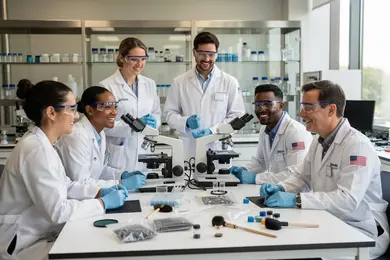
Several accredited institutions offer online forensic science degrees that feature essential laboratory methods coursework, often utilizing hybrid structures. For instance, Arizona State University offers an online Bachelor of Science in Forensic Science that integrates online lectures with mandatory, intensive in-person summer laboratory sessions.
Similarly, the University of Florida provides highly regarded online Master of Science concentrations (such as Forensic Toxicology and Forensic DNA & Serology) tailored to accommodate practical lab skills. These hybrid formats allow students to gain theoretical knowledge remotely while still fulfilling the hands-on requirements necessary for professional fieldwork. However, translating these academic requirements into a digital format is not without hurdles.
The essential challenge for online forensic science degrees with lab courses lies in coordinating access to hands-on laboratory experiences while managing remote theoretical instruction. Practical skills in laboratory methods, such as using chromatography or DNA sequencing equipment, remain indispensable for job readiness and meet employer demands that purely virtual programs cannot fulfill. Distance learning forensic science programs with practical laboratory methods require students to navigate constraints like lab availability, location proximity, and potential scheduling conflicts-factors that can extend program duration, especially for working professionals balancing other responsibilities.
For instance, a mid-career individual switching to forensic science may need to arrange lab sessions around limited times or travel to partnered facilities, complicating their study timeline. This logistical complexity impacts employability since workforce standards and federal guidelines emphasize demonstrated technical competence alongside academic knowledge.
Projected growth of forensic science technician roles at 13% from 2024 to 2034 (U.S. Bureau of Labor Statistics via New Jersey Institute of Technology) signals rising demand for graduates from accredited programs with authentic lab components. Programs must therefore provide robust mechanisms for practical training to ensure graduates meet these employment criteria.
Prospective students should weigh geographic flexibility, scheduling feasibility, and the imperative of experiential learning against their career goals. Those seeking in-depth analysis of related options might explore forensic psychology master's programs online as complementary pathways within the forensic sciences spectrum.
How does online forensic science compare with campus programs?
Online forensic science degrees with lab coursework face inherent challenges in replicating the hands-on training vital for technical competency and employability. Campus programs provide direct access to lab instruments, real-time simulations, and embedded internships-features rarely matched by fully online formats. This gap manifests in workforce outcomes; for example, the average starting salary for NJIT forensic science graduates is $56,320, which trails the national mid-career average of $67,440. Such discrepancies signal how insufficient practical exposure can limit entry into specialized or advanced forensic roles.
Graduates from purely online programs often confront delays in mastering lab protocols essential for fields like forensic toxicology or digital forensics, which demand early technical proficiency. They also shoulder the burden of independently securing competitive external lab placements or internships, a logistic and geographic hurdle absent in campus-integrated curricula. For working professionals seeking a career pivot, this may translate to longer time-to-employment and reduced initial earnings.
Prospective students must critically evaluate program accreditation-particularly hands-on lab options recognized by bodies like the Forensic Science Education Programs Accreditation Commission-to ensure curricular rigor meets employer expectations. Without this, degrees risk academic adequacy but practical inadequacy.
The distinction between online and campus offerings is a crucial consideration given employer preferences and market realities. Those interested in becoming a forensic autopsy technician should especially weigh the depth of lab training and experiential learning when choosing their path.
Is the program properly accredited for forensic science careers?
Employers in forensic science prioritize degrees with explicit, recognized accreditation because the absence of such credentials often translates into delayed career entry and extra costs. For example, federal agencies like the FBI require proof of program accreditation specific to forensic content-commonly FEPAC approval or equivalent regional recognition-to meet hiring standards for roles such as crime scene analyst. Choosing non-accredited online forensic science degree programs with lab courses typically compels graduates to pursue additional certifications or extended internships, which can detract from immediate workforce competitiveness.
Accredited forensic science programs undergo stringent evaluation to ensure lab-intensive coursework, whether delivered on-site or online, meets industry expectations for practical skill development and scientific rigor. The broader challenge is that some online options rely solely on regional accreditation, which does not always guarantee professional credentialing or acceptance by forensic boards, limiting long-term career mobility.
Prospective students targeting forensic science programs recognized for professional certification should verify not only accreditation status but also how laboratory components are fulfilled-virtual simulations versus mandatory residencies-to safeguard the practical equivalency needed by employers. Without this, graduates face a fragmented pathway that complicates credential recognition across agencies and private forensic employers.
Researching programs should include thorough comparison of accreditation, curriculum quality, and laboratory delivery methods. Those evaluating related educational fields may also consider exploring the best online library science programs, which share similar standards for rigorous professional preparation.
What laboratory methods are taught in online forensic science programs?
Online forensic science programs with hands-on lab coursework present practical hurdles often overlooked in purely theoretical paths. Students face the dual challenge of mastering advanced scientific techniques while navigating remote access to laboratory environments, typically managed through local lab affiliations or condensed campus residencies. This approach attempts to reconcile geographic constraints with the necessity of skill verification under controlled conditions.
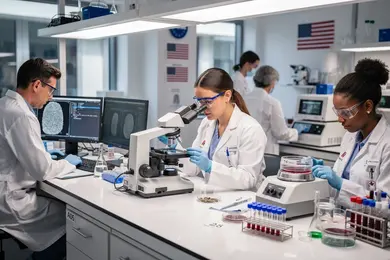
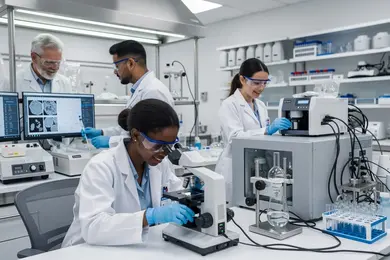
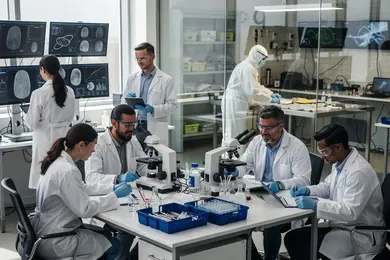
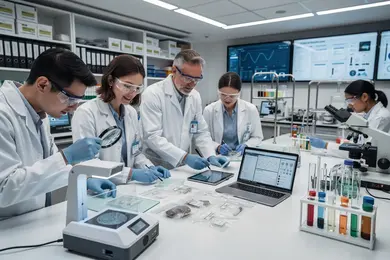
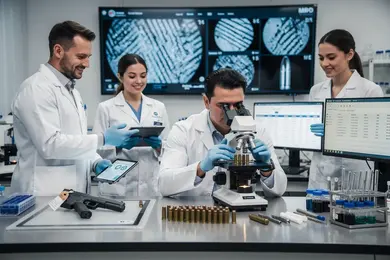
Laboratory methods in forensic science emphasize applied analytical techniques such as microscopy for trace evidence, chromatography for identifying chemical substances, PCR for DNA analysis, and toxicology screenings. These core competencies extend to bloodstain pattern analysis and controlled substance testing, foundational for employment in crime labs and law enforcement agencies. Digital forensics components may often supplement wet-lab skills but still presume a baseline proficiency in laboratory protocols.
Increasingly, programs follow Grand Canyon University's precedent by requiring prior coursework in chemistry, organic chemistry, and advanced biology. These prerequisites align with employers' demand for candidates possessing demonstrable scientific literacy to ensure precise and admissible forensic interpretations, a critical aspect when evidence integrity can influence judicial outcomes.
Forensic science laboratory techniques and methods do not operate in isolation but influence credentialing and hiring within both public and private sectors. Candidates lacking comprehensive lab experience may find themselves limited to entry-level roles or require supplementary training. Those weighing a transition should consider how these program structures affect employability and the long-term rigor of their forensic skill sets.
Professionals exploring pivot opportunities might also compare these pathways with other scientific degrees, such as an exercise science online degree, to assess time investment against career objectives.
What admissions requirements do these forensic science programs usually ask for?
Applicants to online forensic science programs with lab components face real-world academic and technical thresholds that significantly shape outcomes and employability. A bachelor's degree in chemistry, biology, or criminal justice is often mandatory, ensuring foundational science literacy before tackling graduate-level lab work remotely or in hybrid settings. Programs generally insist on at least a 3.0 GPA, reflecting the rigor and precision forensic techniques demand.
While GRE scores are optional in many cases, they can become critical for candidates whose undergraduate records lack quantitative depth. Letters of recommendation serve as key qualitative evidence of scientific aptitude. A targeted personal statement outlining forensic-specific goals distinguishes applicants in a competitive, technically demanding job market.
For those pivoting from law enforcement or technical roles, work experience can partially substitute traditional academic backgrounds, but candidates must still demonstrate proficiency with remote lab tools or specialty software essential for virtual simulations. Without this, students risk admission delays or needing remedial classes that stretch time and budget.
Cost remains a decisive factor. Stevenson University Online's rate of $719 per credit with zero required fees contrasts with private programs charging $1,500+ per credit. This gap influences not only access but potential debt burden and financial planning for professionals weighing return on investment against credential prestige.
How long does an online forensic science degree usually take?
Degree timelines in forensic science significantly impact employability, especially when laboratory proficiency is a non-negotiable employer expectation. Associate degrees generally require two years and provide foundational lab skills suited for technician roles, whereas bachelor's degrees demand four years of full-time study with rigorous, hands-on lab components critical for positions such as DNA analysts and drug chemists. Accelerated tracks offering reduced duration-sometimes as short as 18 months for associates or three years for bachelor's-often sacrifice the comprehensive lab training employers prioritize, thereby influencing readiness for complex tasks in forensic environments.
Working professionals frequently face extended completion periods through part-time or asynchronous study, often exceeding four years. This slower pace can hinder entry into specialized roles requiring validated lab competence, delaying both market relevance and income potential. For instance, a forensic drug chemist or crime scene investigator must combine thorough lab experience with timely degree completion to meet agency demands effectively.
Labor market data from Pace University show forensic science professionals with intensive lab experience earning roughly $96,000 to $107,000, depending on specialization. These figures emphasize the practical advantage of completing lab-intensive programs within standard timelines while maintaining skill depth. Graduates balancing career and education should gauge tradeoffs between accelerated or extended programs, recognizing prolonged studies risk skill atrophy and slower advancement in competitive forensic sectors.
How much do online forensic science degrees cost?
Choosing an online forensic science degree involves a careful cost-benefit analysis with direct implications for career outcomes. Tuition typically ranges from $15,000 at community colleges and state universities to over $40,000 at private or out-of-state programs, with additional costs for lab kits, software, and secure proctoring sometimes exceeding $1,000. This variability is significant when aligning educational investment against market entry roles where forensic analysts often start near $55,000 annually.
Arizona State University's online program serves as a useful benchmark, matching the 120-credit on-campus curriculum including practical lab training, which signals a closing gap between online and face-to-face technical preparedness. For students targeting immediate employment in state crime labs, this equivalency can be a deciding factor when tuition costs exceed $30,000.
Key considerations beyond tuition include technology requirements and access to virtual labs that replicate real forensic workflows-programs offering these integrated remote labs tend to charge premiums but provide stronger practical readiness. Additionally, accreditation and FAFSA eligibility vary widely; verifying these upfront is critical for unlocking federal financial aid and minimizing debt.
Prospective students should evaluate online forensic science programs through the lens of return on investment, weighing initial costs against certification timelines and potential salary uplift in forensic and related sectors, especially for career changers.
What jobs can you get with a forensic science degree?
Graduates with a forensic science degree enter a labor market where practical skills in digital and physical evidence handling sharply influence employability. Roles such as forensic analysts or crime scene investigators demand proficiency beyond theory-applicants must navigate virtual crime-scene reconstructions and digital microscopy, capabilities increasingly mandated by public and private employers alike.
Consider a crime scene investigator in a metropolitan police department: beyond traditional evidence collection, they often rely on virtual simulations for scene reconstruction. Candidates lacking experience with these tools risk falling behind peers whose education integrates lab and digital simulations, limiting advancement opportunities.
Additional career trajectories include forensic science technicians supporting legal teams by preparing expert reports or providing courtroom testimony. Success here hinges on adaptability to evolving software and forensic methodologies, which are standard in programs that stress virtual lab competencies.
Employment growth is projected modestly at 7% through 2030, largely within federal and state agencies that favor clear certification paths and specialized training. This landscape rewards those who invest in certifications related to digital forensics alongside their degree.
- Virtual lab experience in forensic science programs is critical for practical readiness.
- Job roles increasingly blend hands-on and digital investigative tasks.
- Supplementary certifications enhance employability within competitive public-sector hiring.
Choosing an online forensic science degree without integrated lab and simulation coursework risks leaving graduates underprepared for the hybrid technical demands of tomorrow's forensic workforce.
What salaries do forensic science graduates typically earn?
Starting salaries for forensic science graduates in the U.S. generally range from $55,000 to $70,000 annually, with a median wage near $60,590 per 2024 Bureau of Labor Statistics data for forensic science technicians. However, these figures mask significant variation tied to specialization, employer, and geographic region.
Practical laboratory skills notably influence earning potential. Professionals focusing on high-demand lab-intensive areas-such as bloodstain pattern analysis, crime lab analysis, and forensic ballistics-often earn $75,000 or more due to the technical proficiency required. For instance, a forensic analyst in a state crime lab without advanced lab credentials may start near the lower salary threshold, while one with certifications and specialized training in a federal agency like the FBI typically begins closer to the median or above.
Private forensic consultants working in litigation can exceed technician salaries by charging over $50 per hour, but these roles demand considerable field experience and additional certifications, often limiting accessibility for recent graduates.
Prospective forensic professionals must carefully balance the tradeoff between a broad foundational degree and investing extra time into specialized lab courses and certifications, which can delay entry but yield substantially higher earnings and job placement options in government and private sectors.
- Strong emphasis on proficiency in specialized lab methods is essential to meet employer expectations.
- Geographic relocation may be necessary to access higher-paying roles.
- Advancing through certifications correlates with more competitive compensation and career mobility.
How do you choose a reputable online forensic science program?
Accreditation and hands-on training differentiate competent forensic science programs from nominal online offerings. Accreditation by entities such as the forensic science Education Programs Accreditation Commission (FEPAC) or regional bodies substantiates degree validity and meets employer expectations, directly impacting graduate eligibility for certifications and job considerations.
Programs lacking laboratory rigor often lean heavily on simulations, which inadequately prepare students for technical roles requiring precise evidence handling. For example, a graduate unfamiliar with actual lab equipment may find barriers when applying for positions with salary averages of $62,325 for forensic scientists and $81,302 for detectives, as reported by Indeed. Employers prioritize demonstrable competence with physical analysis over theoretical familiarity alone.
Evaluating curriculum breadth is crucial. Core areas like evidence collection, DNA analysis, toxicology, and forensic chemistry must integrate practical and theoretical elements. Faculty with current investigative or forensic lab experience enhance relevancy and deepen skill transfer.
Students often face tradeoffs between flexibility and employability outcomes:
- Fully online programs without any in-person or kit-based lab components reduce costs and scheduling conflicts but may not meet employer standards for hands-on proficiency.
- Hybrid programs requiring on-site sessions or internships increase commitment and expenses but substantively improve readiness for forensic roles.
Decisions should align with career objectives and local job market requirements rather than assumptions about convenience or program marketing claims.
Other Things You Should Know About Forensic Science
Online forensic science programs with laboratory methods coursework attempt to simulate hands-on experience through virtual labs or at-home lab kits. However, these methods do not fully replicate the depth of skill development and equipment familiarity gained in traditional campus labs. Students aiming for roles that require advanced technical proficiency should prioritize programs offering supervised, in-person lab components or partnerships with local facilities to ensure practical readiness.
Most programs require a laboratory safety module before any in-person or mail-in lab work, along with proof of OSHA-style safety training and compliance with institutional rules for chemical handling and specimen disposal. Some schools also require a signed lab waiver and a recent background check before access is granted.
Employer skepticism varies depending on the program's reputation, accreditation, and demonstrated practical experience. Many forensic labs prioritize candidates who show verified hands-on skills and internships rather than degrees alone. Graduates from online programs should seek opportunities to gain applied experience and clearly document lab competencies to overcome potential employer concerns about the online format.
References
- Online Forensic Science Degree https://www.aiuniv.edu/degrees/criminal-justice/bachelors-forensic-science
- Forensic Science & CSI Schools By State - Degrees & Certification https://www.forensicscolleges.com/usa
- Forensic Scientist Salary: State-by-State Median Guide https://www.allcriminaljusticeschools.com/forensics/salary/
- Forensic Science Education Programs Accreditation Commission https://www.aafs.org/FEPAC
- Forensic and Analytical Science Course with BSc (Hons) Degree | RGU University – Aberdeen, Scotland, UK | Courses | RGU https://www.rgu.ac.uk/study/courses/bsc-hons-forensic-and-analytical-science
- What job can I get with a degree in Medical, Molecular or Forensic Science? https://www.murdoch.edu.au/news/blogs/blog-posts/campus-and-community/what-job-can-i-get-with-a-degree-in-medical-molecular-or-forensic-science
- How to become a forensic science technician | edX https://www.edx.org/become/how-to-become-a-forensic-science-technician
- How Much Does A Forensic Scientist Make? A Salary Overview https://www.salemu.edu/blog/how-much-does-forensic-scientist-make/
- Online Degree Programs from GMC Online https://online.gmc.edu/programs/forensic-laboratory-technology/