2027 Remote Work Report for Geoscience Graduates: Flexible Roles, Pay, and Hiring Trends

Co-Founder and Chief Data Scientist
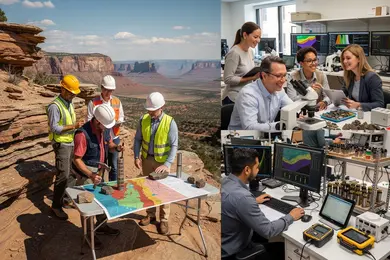
Graduates holding Geoscience degrees often confront an uneven remote job market where fieldwork-heavy roles dominate. Many positions still demand on-site presence, creating challenges for those seeking flexibility. Meanwhile, remote opportunities tend to cluster around data analysis, GIS modeling, and environmental consulting, which require specialized technical skills that not all graduates master during studies.
With US remote job postings for Geoscience-related roles increasing by 18% last year, understanding pay variations and employer expectations has become crucial. This article will clarify the types of remote roles available, typical compensation ranges, and hiring trends to help graduates make informed career decisions in a shifting landscape.
Key Points About Working Remotely for Geoscience Graduates
- Remote Geoscience roles primarily involve data analysis, GIS mapping, environmental consulting, and report writing, reducing reliance on fieldwork. This enables broader access to flexible positions but requires proficiency in digital tools.
- Average salaries range from $65,000 to $85,000 annually, influenced by experience and niche expertise. Graduates should target specializations that command higher pay within remote employment markets.
- Hiring cycles for remote Geoscience jobs often extend beyond typical entry-level timelines. Graduates must build technical and collaborative skills early and engage in strategic networking to improve remote job prospects.
- Key Points About Working Remotely for Geoscience Graduates Key Points About Working Remotely for Geoscience Graduates
- Are there remote work opportunities in the Geoscience industry? Remote Opportunities
- Which Geoscience niches offer remote roles? Which Geoscience niches offer remote roles?
- What entry-level Geoscience roles allow remote work? Entry-Level Roles
- What is the average salary of Geoscience graduates who are working remotely? Average Salary
- Do remote Geoscience jobs pay the same as on-site roles? Pay Comparison
- What benefits do remote Geoscience employees receive? What benefits do remote Geoscience employees receive?
- Where can Geoscience graduates look for remote jobs? Where to Find Jobs
- What do Geoscience employers look for in candidates? What do Geoscience employers look for in candidates?
- How can Geoscience graduates prepare for remote roles? Preparing for Remote Roles
- How can Geoscience graduates if remote roles are a good fit for them? How can Geoscience graduates if remote roles are a good fit for them?
Are there remote work opportunities in the Geoscience industry?
Remote and hybrid roles in the Geoscience sector remain cautiously integrated due to the hands-on nature of the work. Approximately 12% of entry-level positions are fully remote, while around 38% offer hybrid arrangements, reflecting a steady but limited market demand for off-site talent focused on data analysis and visualization.
Flexibility varies widely by organization and region. Firms adhere to differing compliance laws and operational workflows, often mandating minimum in-office days to assure fieldwork and laboratory tasks are completed. Remote access to cloud-based GIS and project management tools supports asynchronous work without sacrificing collaboration or quality.
For example, a recent study found that 56% of Geoscience-related companies have adopted partial remote or hybrid models as standard practice. This trend parallels broader STEM benchmarks, where return-to-office policies remain flexible but subject to periodic review based on project needs and institutional culture.
Graduates should weigh the practical limits of remote roles, as field experience is essential for skill development and career progression. Understanding these dynamics will guide realistic job search strategies in an evolving work environment.
Which Geoscience niches offer remote roles?
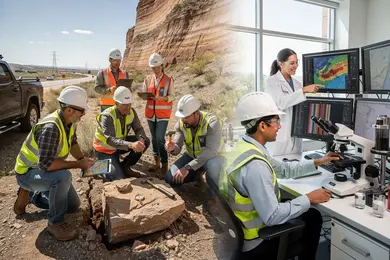
Remote roles in Geoscience cluster in data-centric niches where digital tools replace physical presence. Jobs centered on computational analysis, modeling, and interpretation allow flexibility that traditional fieldwork cannot. For example, a hydrogeologist might gather initial groundwater samples in the field but complete modeling and reporting tasks remotely. This kind of hybrid workflow illustrates why some areas are well-suited for asynchronous or off-site work. Below is a breakdown of key remote-friendly Geoscience niches and their operational dynamics.
- Remote Sensing and GIS: Professionals work primarily with satellite imagery and spatial databases. These digital assets enable spatial analysis and mapping from anywhere, making remote jobs typical in this niche.
- Environmental Consulting: Roles focus on data reporting, compliance documentation, and environmental impact assessments. Many tasks rely on digital records and virtual communication, supporting remote work.
- Hydrogeology: Combining occasional field sampling with intensive remote groundwater modeling offers a hybrid work structure. Remote processing of hydrological data dominates, reducing on-site time.
- Geophysical Data Analysis: Analysts interpret seismic, magnetic, or other geophysical data primarily through computational means. Once data collection is complete, this work can be performed off-site.
- Climate Science within Geosciences: Large-scale environmental simulations and remote sensor networks enable flexible work arrangements by focusing on coding, modeling, and report generation from remote locations.
- Petroleum Geology: Specializing in subsurface modeling and reservoir management software facilitates remote roles. However, some on-site coordination typically remains necessary.
Recent labor market research highlights a 12.4% increase in hiring volume for remote niches like GIS and environmental remote sensing. This trend reflects employer preference for digital analysis skills aligned with remote work feasibility. Graduates focused on flexible remote roles in Geoscience should prioritize these competencies for better employability. Those considering this path might compare available certifications and programs, including options like the cheapest ABA certification online, to build relevant expertise for remote-friendly jobs.
What entry-level Geoscience roles allow remote work?
Entry-level remote roles in Geoscience primarily emphasize digital data skills over field presence, reflecting a clear shift in industry hiring patterns. A 22.7% rise in remote or hybrid listings for junior Geoscience jobs in the US highlights this growing opportunity, especially in consulting and environmental assessment sectors where onsite work is less critical. Practical examples include a Junior GIS Technician compiling spatial databases or a remote Environmental Data Analyst managing environmental impact reports. The following outlines typical remote roles, their core duties, and essential qualifications for recent graduates looking into these pathways.
- Remote Environmental Data Analyst: Requires familiarity with data analysis software like Python and GIS tools. This role involves processing environmental datasets and supporting impact assessments, suitable for remote work due to its predominantly computer-based tasks.
- Junior GIS Technician: Entry-level candidates must know ArcGIS or QGIS to manage spatial databases and create thematic maps. The position centers on digital map production, enabling efficient remote execution without onsite travel.
- Entry-Level Hydrogeologist: Involves analyzing groundwater data and building models for resource management. Remote work is feasible since much of the analysis depends on digital data and collaboration platforms rather than field sampling.
- Remote Geospatial Analyst: Candidates should be skilled in remote sensing platforms like ENVI or Google Earth Engine. The role's focus on interpreting geospatial data supports effective offsite project contributions.
- Digital Geoscience Research Assistant: Requires proficiency in geospatial scripting and cloud collaboration tools such as Microsoft Teams. Supports research workflows through technical report writing and data modeling, tasks readily managed remotely.
Effective communication via platforms like Slack and Teams is crucial for these roles, which often depend on teamwork across locations. Certification in Esri tools or Python programming further strengthens employability in the remote work market. However, graduates pursuing remote work should consider the tradeoff between limited hands-on field experience and digital skill mastery. For those weighing educational options, exploring the easiest associate degree to get could offer an accessible starting point before specializing in geospatial technologies or programming essential for remote Geoscience roles. This calculated approach ensures realistic expectations about job flexibility and long-term career development.
What is the average salary of Geoscience graduates who are working remotely?
The average remote salary for Geoscience graduates typically ranges between $58,000 and $68,000 annually for entry-level roles. This pay scale reflects industry standards where remote or hybrid positions offer slightly higher compensation than fully on-site jobs to attract flexible talent. Employers expect compensation to align with the role's complexity and technical certifications.
Salary variations often depend on specialized skills or certifications, which can boost pay beyond the median range. For example, a graduate certified in GIS or remote sensing may command a premium. Understanding these pay differences is critical for graduates considering remote job pay trends for Geoscience professionals.
Compared to similar STEM fields like Environmental Science, entry-level remote salaries in Geoscience remain competitive, typically within $5,000 of each other. A 2024 study observed remote STEM workers have tighter salary bands, which limits geographic wage disparities and establishes a more consistent baseline pay.
This stability means pursuing a remote Geoscience role involves balancing salary expectations with potential limits on long-term growth tied to in-person networking. For graduates weighing different pathways, programs like an accelerated business program might complement technical skills to enhance career flexibility and earnings potential.
Do remote Geoscience jobs pay the same as on-site roles?
Remote Geoscience jobs typically offer about 92% to 95% of the salary earned by on-site roles. This pay gap reflects the common employer practice of adjusting compensation based on geographic location rather than providing consistent national wages for remote positions.
Employers often apply localized pay bands that reduce salaries for workers living in lower cost-of-living areas, even if they work remotely. This means a remote Geoscience professional in a smaller city may earn less than an equivalent on-site peer in a major hub, affecting overall compensation fairness.
A workforce study found that 43% of companies using location-based pay acknowledge this policy impacts remote employees' earnings in fields like Geoscience. Employers balance reduced travel stipends with increased home-office budgets, shifting costs but not fully closing the salary gap.
Graduates should weigh these dynamics carefully. Lower base pay may be offset by savings on commuting, but remote roles can limit salary growth tied to geographic demand, influencing long-term earnings and career trajectory in Geoscience professions.
What benefits do remote Geoscience employees receive?
Remote Geoscience roles demand targeted benefits to support productivity beyond traditional office settings. For example, a junior geoscientist managing GIS data while coordinating field sampling schedules depends on specialized certification reimbursements to stay proficient and competitive. Such tailored perks are not merely extras but essential tools that adapt the workforce to hybrid responsibilities. Companies recognize this by offering structured benefits that cover both basic and remote-specific needs. Below are key benefit categories common among remote Geoscience employees, showing what sustains engagement in dispersed teams.
- Home Office Stipends: Many firms allocate $500 to $1,000 annually to help employees create effective workstations at home. This funding covers ergonomic furniture and technical equipment, crucial for maintaining focus during long data analysis sessions or remote meetings.
- Healthcare and Retirement Plans: Standard health insurance options and retirement savings are consistently provided to ensure financial stability and well-being. These benefits align with expectations in professional settings, mitigating risks tied to remote work isolation.
- Certification Reimbursements: Specialized training in GIS or environmental compliance often receives employer funding. This investment enables employees to keep pace with evolving standards and tools, enhancing long-term career viability.
- Flexible Time-Off Policies: Paid vacation and sick leave with some flexibility help balance fieldwork demands with remote responsibilities. This reduces burnout and supports sustainable work rhythms.
Notably, 68% of decentralized engineering and Geoscience organizations provide home office stipends, which corresponds to a 12% higher reported workplace satisfaction among remote workers, according to recent sector research. This correlation underscores how modest financial support for remote infrastructure significantly impacts morale and retention.
One remote Geoscience analyst shared experience navigating these benefits, explaining that "the home office stipend was a game changer for setting up a reliable environment to process large geospatial datasets. Initially, I hesitated to ask for reimbursement, unsure if my requests met company policy. Getting that support helped me focus on complex analyses without constant technical interruptions, and it reinforced that my employer values remote productivity, which honestly boosted my confidence in working off-site long term."
Where can Geoscience graduates look for remote jobs?
Locating remote opportunities in Geoscience requires a multi-pronged search strategy due to the discipline's niche position within broader environmental and engineering sectors. For example, a recent graduate focusing on hydrogeology might find standard job boards flooded with irrelevant listings labeled under generic environmental science, making targeted platforms and professional communities essential. A key 2024 study shows that 56.4% of hiring agencies combine mainstream and specialized sources to identify entry-level candidates, underscoring the limits of relying on a single platform. The following are primary online channels and networks effective for remote Geoscience job seekers.
- LinkedIn: This widely used platform aggregates remote listings across industries, including Geoscience. It relies on keyword-based searching and algorithmic recommendations, which means precise terms related to subfields like geospatial analysis or environmental consulting improve relevance. Its networking features also facilitate access to unadvertised roles, critical given the low average remote job application success rate below 10%.
- Earthworks.jobs: Designed specifically for environmental and Geoscience fields, this site filters by remote options and early-career roles. Its niche focus reduces noise from unrelated sectors who might appear on larger boards, expediting targeted applications for internships and contract gigs common in remote settings.
- GeoJobs Network: A specialized hub for geoscience professionals that curates remote consulting and project-based roles. Its strength lies in connecting candidates directly with employers who understand the technical demands of the field, making remote opportunities more transparent and vetted.
- American Geosciences Institute LinkedIn Group: This professional community leverages peer sharing and insider tips to reveal unadvertised remote job openings. Participation can surface contract and project roles otherwise hard to find, emphasizing the importance of active engagement beyond automated listings.
- Specialized Slack Communities: Private Slack channels within the Geoscience sector function as informal job boards and networking spaces. Early-career professionals exchange leads on flexible remote gigs, supporting rapid response to emerging opportunities often missed on public platforms.
What do Geoscience employers look for in candidates?
Employers hiring remote Geoscience candidates in the US demand a precise combination of technical proficiency and practical skills tailored to both field analysis and digital workflows. For instance, when evaluating applicants for a remote environmental consulting project, employers prioritize candidates who can independently manage spatial data while effectively collaborating through digital platforms. The key qualifications sought reflect this balance. Below are critical skill areas and competencies that highlight how employers assess candidates for long-term success in distributed Geoscience roles:
- GIS Software Mastery: Proficiency in Geographic Information Systems such as ArcGIS and QGIS is essential. Candidates are assessed on their ability to manipulate spatial data, create detailed maps, and conduct geospatial analyses. This skill underpins much of the remote geoscience work that depends heavily on accurate data visualization and interpretation.
- Remote Sensing and Imagery Analysis: Expertise in analyzing satellite imagery and remote sensing data is increasingly vital, especially for projects removed from direct field supervision. Employers look for practical experience in applying these techniques to environmental or geological assessments, ensuring candidates can generate actionable insights remotely.
- Programming and Automation: Fluency in Python or R is a major advantage, as automated data processing and advanced modeling accelerate project timelines. Coding skills are often evaluated through technical assessments, signaling an applicant's capability to handle complex datasets independently.
- Digital Collaboration and Communication: The capacity to navigate asynchronous communication tools and cloud-based project management software ranks highly in screening. A 2024 industry report found 68.4% of remote-first Geoscience roles require verified competencies in data analytics alongside cloud collaboration, reflecting the hybrid nature of these positions.
- Practical Certifications and Portfolios: Certifications related to tools and methodologies offer concrete proof of competency. Employers frequently request portfolios demonstrating applied problem-solving such as geological mapping accuracy or risk modeling outcomes, further separating candidates with demonstrated real-world performance.
Geoscience graduate remote job qualifications in the US increasingly favor those who not only hold degrees but also show mastery in these applied skill sets. Those interested in accelerating their qualifications might consider specialized programs or certifications aligned with these requirements. For example, professionals pursuing a master of finance online may gain supplementary skills relevant to project budgeting and analytics, further enhancing remote work potential in environmental finance sectors.
How can Geoscience graduates prepare for remote roles?
Success in remote geoscience roles requires tailored preparation beyond foundational knowledge. Candidates must develop specific digital competencies and demonstrate practical remote work readiness. For example, a geoscience graduate participating in a virtual site assessment project gains hands-on experience relevant to remote workflows while expanding their technical portfolio. The following strategies highlight essential readiness areas for Remote Geoscience graduate job preparation strategies.
- GIS Software Mastery: Proficiency in tools like ArcGIS or QGIS is crucial for remote data analysis and visualization. Graduates should seek practical experience by completing projects or internships using these platforms, ensuring they can manage spatial datasets independently in distributed teams.
- Programming and Automation Skills: Learning Python or R complements GIS expertise by enabling automation of data processing tasks. This skill set reduces manual workloads and fits the expectations of employers who value efficient remote operators.
- Targeted Certifications and Bootcamps: Completing focused training in data analytics or remote sensing bridges academic gaps. Studies show that graduates with remote-readiness certifications have a 28% higher chance of securing flexible roles, highlighting the employer preference for demonstrable skills.
- Reliable Technology Setup: Access to high-performance computing hardware and cloud storage platforms supports seamless remote collaboration and data handling, preventing productivity bottlenecks common in virtual geoscience environments.
- Online Portfolio Development: Building a digital portfolio with examples like interactive geological models or contributions to open-source environmental data proves applied skills. This concrete evidence aligns with hiring trends favoring candidates who show actual results over formal credentials alone.
In navigating the evolving labor market, incorporating these best skills for flexible remote Geoscience roles ensures graduates remain competitive. Additionally, exploring supplementary paths such as an online forensic science degree can diversify technical capabilities and open niche remote opportunities within environmental and investigative fields.
How can Geoscience graduates if remote roles are a good fit for them?
Determining whether remote roles suit Geoscience graduates hinges on a careful balance between technical demands, communication needs, and personal work preferences. For instance, a graduate focusing on geospatial modeling software must evaluate if they can maintain high productivity without onsite supervision, especially when coordinating data inputs with a distributed field team across time zones. To guide this decision, graduates should consider key criteria that impact long-term satisfaction and professional growth in remote settings. Below are critical factors to assess:
- Technical Independence: Ability to manage complex geospatial tools and datasets autonomously is essential. Graduates should honestly assess their skill level and comfort handling assignments with minimal oversight since remote work relies heavily on self-direction to meet deadlines and quality standards.
- Communication Skills and Tools: Remote roles require clear, proactive communication with teams and external stakeholders in various locations. Candidates must evaluate if they can effectively use digital collaboration platforms and maintain timely, concise interactions despite potential timezone differences.
- Access to Reliable Technology: Working remotely demands stable high-speed internet and up-to-date hardware. Evaluating current tech infrastructure is crucial, as connectivity issues can disrupt data analysis workflows and delay project delivery.
- Flexibility with Work Hours: Graduates should consider their readiness to adapt to irregular schedules that accommodate fieldwork timelines or international regulations. Willingness to work outside traditional hours can be a make-or-break factor for remote success.
- Hands-on Field Experience Limitations: Remote roles often limit direct field exposure. Prospective remote workers need to weigh whether reduced practical site work aligns with their career development goals or if it might impede skill acquisition.
- Regulatory and Data Security Awareness: Understanding compliance requirements and safeguarding sensitive information is mandatory in digital geoscience workflows. Graduates should evaluate their knowledge of protocols to ensure compliance and avoid costly security breaches.
- Personality and Preference Fit: Comfort with virtual environments over face-to-face collaboration can vary significantly. Graduates who thrive on tangible fieldwork or in-person mentoring should carefully consider if remote isolation might lead to disengagement or decreased job satisfaction.
A recent study revealed that 38.7% of remote Geoscience professionals consider leaving their jobs due to feelings of disconnection from team dynamics and mentorship, underscoring the importance of social integration in remote roles. However, 46.2% cited improved work-life balance as their main advantage, highlighting a tradeoff between flexibility and professional connectivity that each graduate must weigh.
One Geoscience graduate with an online degree shared that initially, the lack of daily fieldwork caused uncertainty about remote work suitability. After reflecting on personal discipline and investing in communication tools, the graduate found remote roles provided a better life balance without sacrificing technical growth. This experience illustrates the nuanced, individualized decision-making process essential for remote career alignment.
References
- Geoscience Education Resources https://iugscoge.org/education-resources/
- A Guide to Graduate School Admissions in the Geosciences https://tu-freiberg.de/media/1662/download
- Average Cost of Online College [2025]: Yearly Tuition + Fees https://educationdata.org/average-cost-of-online-college
- Mileusnic: Service learning in geoscience education - Eurogeologists https://eurogeologists.eu/mileusnic-service-learning-in-geoscience-education/
- Interactive Online Short Courses - eage.org https://eage.org/education/interactive-online-short-courses/
- Welcome! https://learninggeoscience.org/
- Free Geoscience Resources https://www.americangeosciences.org/resources/free-geoscience-resources/
- Certificate of Earth Science - Australian Online Courses https://australianonlinecourses.com.au/courses/certificate-of-earth-science/
- Teaching Resources https://nagt.org/nagt/teaching_resources/index.html
- Library Guides: Geology: Inclusive & Online Learning Resources https://libguides.mines.edu/geology/online-course-resources
Other Things You Should Know About Geoscience
Remote work often limits spontaneous interactions and informal knowledge sharing essential for building professional networks in Geoscience. Graduates should consider that virtual collaboration requires proactive communication skills and deliberate relationship-building efforts, which may impact access to mentorship and industry insights. Prioritizing roles or employers that offer structured team interactions and regular check-ins can help mitigate the isolation that affects career development in technical fields.
Remote settings can obscure an individual's contributions due to less direct supervision and informal feedback, making it harder for Geoscience graduates to demonstrate their value clearly. This dynamic may lead to underestimated workloads or underrecognition, which can slow advancement. Graduates should seek roles with explicit performance metrics and maintain consistent documentation of achievements to ensure visibility and fair evaluation.
Programs emphasizing hands-on fieldwork and in-person lab experience may leave graduates less prepared for the independent data analysis and self-directed problem solving typical in remote roles. Choosing a program with robust training in remote technologies, data modeling software, and virtual collaboration tools can be crucial. Graduates should weigh the practical skills offered against their career preference for remote work to avoid skill gaps that complicate early employment.
While remote positions offer schedule flexibility, many employers still expect strict adherence to deadlines, availability during standard business hours, and responsiveness. Graduates must realistically assess their ability to meet these demands without the physical structure of an office environment. Prioritizing roles with clear and mutually agreed-upon expectations reduces misunderstandings and supports sustained performance in flexible work setups.