2027 Geoscience Career Outcomes by Degree Level Report: Pay, Employment, and Advancement Patterns

Co-Founder and Chief Data Scientist
Deciding whether to pursue an associate, bachelor's, or graduate degree in geoscience presents a complex challenge for many learners balancing time, cost, and career goals. Recent 2024 data from the U. S. Bureau of Labor Statistics shows that employment growth rates and job stability in geoscience fields vary significantly by degree level, reflecting shifting industry demands and credential expectations. This variation affects not only initial employability but also long-term advancement potential, revealing deeper structural patterns in workforce mobility and access. This article unpacks pay, employment trends, and advancement opportunities across geoscience degree levels to help readers make informed education and career decisions.
Key Things to Know About Geoscience Career Outcomes by Degree Level
- Associate degrees often provide faster entry into technical roles but limit advancement without additional credentials, reflecting a tradeoff between immediate employment and long-term career growth.
- Employers increasingly prefer master's-level candidates for specialized geoscience roles, implying that bachelor's holders face more competition and slower credential progression in core research or management positions.
- Doctoral degrees involve longer, costlier training, with 2024 data showing only 40% transition directly to academic or high-level research jobs, highlighting timing and financial access challenges for practical return on investment.
- Key Things to Know About Geoscience Career Outcomes by Degree Level Key Things to Know About Geoscience Career Outcomes by Degree Level
- What Career Outcomes Can Students Expect From Each Geoscience Degree Level? Career Outcomes by Degree
- How Much Do Geoscience Graduates Earn by Degree Level? Salary by Degree Level
- Which Geoscience Degree Level Offers the Strongest Employment Prospects? Best Degrees for Employment
- What Entry-Level Jobs Can You Get With a Geoscience Degree? Entry-Level Career Opportunities
- How Do Geoscience Degree Levels Affect Career Advancement and Promotion Opportunities? Career Growth by Degree
- Is a Geoscience Degree Worth It Based on Salary, Employment, and ROI? Salary, ROI, and Value
- How Do Associate, Bachelor's, Master's, and Doctoral Geoscience Degrees Compare? Comparing Degree Levels
- Which Industries and Employers Hire Geoscience Graduates by Degree Level? Which Industries and Employers Hire Geoscience Graduates by Degree Level?
- What Skills, Credentials, and Experience Improve Geoscience Career Outcomes? What Skills, Credentials, and Experience Improve Geoscience Career Outcomes?
- Which Geoscience Degree Level Is Best for Your Career Goals? Choosing the Right Degree
What Career Outcomes Can Students Expect From Each Geoscience Degree Level?
Choosing a geoscience degree level is a strategic tradeoff between immediate workforce entry and long-term advancement potential. Associate and certificate credentials often open doors to technician and support roles focused on hands-on fieldwork or laboratory tasks, offering faster access to employment but with limited upward mobility unless followed by further education. For example, a working professional with an associate degree might secure a stable role in environmental monitoring yet find advancement stalled without bachelor's-level theory and applied skills, which many employers consider essential for mid-tier technical positions. These patterns reflect the real-world balancing act between shorter time investment and the necessity of deeper credentials for leadership or specialized consulting roles.
Bachelor's degrees significantly broaden employment and advancement opportunities in geoscience by aligning with employer expectations for both foundational knowledge and role readiness, as indicated by workforce data showing that nearly 65% of technical geoscientists hold this level of education. Adult learners and transfer students often view the bachelor's as critical for crossing the threshold into environmental consulting, regulatory work, or natural resource management, with internships integrated into programs enhancing practical experience.
Moving into graduate studies emphasizes specialization, strategic career mobility, and supervisory prospects; for instance, master's degree holders show roughly 15% higher employment in management and specialist roles according to the National Center for Education Statistics, reflecting employer demand for advanced expertise and leadership readiness. For those weighing degree options, recognizing how each level shapes credential expectations, licensure pathways, and sector-specific roles is crucial to crafting a career trajectory that matches their personal and professional goals while optimizing prior credits and work experience.
These distinctions also underscore the importance of intentional degree planning amid a landscape of flexible and fast online degrees that pay well. Doctoral degrees, while essential for academic and high-level research positions, rarely guarantee pay increases proportional to the time invested and instead emphasize innovation leadership and complex project management crucial to sectors like climate science and energy. Professionals with doctoral credentials should strategically position themselves within roles that reward the specialized skills and responsibilities their education entails, contrasting with entry-level technician paths accessible via lower-level certifications. Overall, employment and advancement trends for geoscience graduates depend heavily on how earlier credentials pave the way for advanced study, specialized licensure, and leadership potential in an evolving job market.
How Much Do Geoscience Graduates Earn by Degree Level?
Compensation for geoscience professionals varies markedly depending on their credential level, reflecting differences in role complexity, regional demand, and licensure status. Entry-level positions often tied to certificates or associate degrees commonly pay in the $45,000 to $55,000 range, focusing on technical and field support that require less specialized expertise. A bachelor's degree can significantly broaden job eligibility and earnings potential, pushing median salaries toward $72,000 annually, largely due to access to roles involving environmental consulting or industry surveying that demand foundational scientific training. However, advancing to a master's credential usually brings a wage premium of $85,000 to $95,000, reflecting eligibility for supervisory or consulting roles that often require professional certifications, which can incur additional time and financial investment.
Doctoral-level qualifications open doors to leadership in research, academia, and high-stakes consultancy with median earnings often surpassing $110,000, but these positions tend to be geographically concentrated and contingent on extensive experience, subjecting graduates to variable employment stability. Prospective and working learners must weigh these progression patterns against costs such as lost income during extended study, credit transfer constraints, and the likelihood of obtaining licensure or roles that truly capitalize on advanced degrees. This is especially crucial for adults balancing career reentry or military-affiliated students who might prioritize quicker credentialing over incremental salary gains. Data from the U.S. Bureau of Labor Statistics (2024) underscore these nuanced tradeoffs, highlighting the importance of aligning educational investments with specific market conditions and realistic hiring practices rather than assuming automatic financial benefit from higher credentials.
One recent graduate deliberated between completing a bachelor's or pursing a master's after reviewing local job postings and employer feedback. Initially persuaded by the salary uplift advertised for master's holders, they hesitated when factoring in the two additional years needed, out-of-pocket tuition, and uncertain licensure timing. Conversations with sector professionals clarified that many regional employers valued relevant experience combined with a bachelor's over an unaccompanied master's degree. Consequently, the graduate opted for targeted certifications aligned with current roles while postponing the master's, reflecting a pragmatic balance of immediate earnings and long-term career flexibility.
Which Geoscience Degree Level Offers the Strongest Employment Prospects?
Employment outcomes in geoscience hinge critically on degree level, with bachelor's degrees generally providing the broadest access to stable roles and upward mobility. Employers often require at least a bachelor's credential for licensure-eligible positions such as professional geologists, supporting entry into environmental consulting or resource management. For example, data from the National Center for Education Statistics in 2024 shows bachelor's graduates have an 85% median employment rate within a year, reflecting both employer demand and the value of related internships. In contrast, associate degrees or certificates position candidates primarily for technician roles, offering faster entry but more limited long-term growth and modest anticipated job growth in many regions, as reported by the Bureau of Labor Statistics.
Advanced degrees in geoscience-master's and doctorates-shift focus toward specialized expertise, research leadership, and academic or federal agency roles, often accompanied by a 20 to 30% salary premium over bachelor's holders according to recent IPEDS findings. However, these roles demand longer educational commitments and may narrow geographic and occupational flexibility. The tradeoff for many students is between earlier labor market entry with modest advancement potential versus investing additional time and resources for higher specialization and leadership opportunities that remain competitive only in specific sectors. Practical decisions thus depend on individual career aspirations, willingness to pursue licensure or research-intensive work, and regional industry dynamics influencing job availability and compensation.
Employers increasingly emphasize experience alongside formal credentials, so candidates who combine a bachelor's degree with fieldwork or certifications often have a strategic advantage. While associate-level credentials enable quicker workforce participation, those seeking sustained career progression typically benefit from advancing their education and credentials. Students must weigh immediate employability against the long-term payoff of advanced study, considering how their chosen credential aligns with labor market needs and role requirements across geoscience subfields and locales.
What Entry-Level Jobs Can You Get With a Geoscience Degree?
Entry-level geoscience jobs often vary significantly based on degree attainment, reflecting practical tradeoffs between education depth and employer expectations. Associate degree holders typically enter technician or support positions requiring hands-on experience, often gained through internships or cooperative education, though these roles usually involve limited autonomy and slower career growth. Bachelor's degree graduates have access to a wider range of positions such as environmental scientists and hydrogeologists, where skills in GIS mapping and lab analysis are crucial, yet many advertised roles still call for one to two years of prior experience, a gap that challenges newcomers' immediate employability.
Master's degree holders frequently find earlier access to specialized or supervisory roles, such as environmental consulting or geoscience analysis, demanding advanced quantitative skills and proficiency with modeling software. Licensing or certification-especially in hydrogeology-can enhance job stability and advancement potential, yet initial entry positions rarely require these credentials, placing emphasis on future professional development. Regional hiring preferences and remote work policies further influence job availability, with resource-intensive areas favoring fieldwork and urban centers prioritizing lab and consulting opportunities. For those weighing degree options or planning next steps, understanding these patterns alongside expectations for transferable skills is essential to navigate the realistic entry points in the geoscience labor market.
Prospective students comparing education pathways should also consider the role of experience versus academic qualification when targeting top starting positions for geoscience degree graduates. Some may pursue additional credentials or graduate study to bridge experience gaps, while others might explore flexible learning like a cheap online psychology degree for complementary skills. A 2024 report from the U.S. Bureau of Labor Statistics underscores that experience remains a key hiring factor, reinforcing that strategic planning beyond initial degree choice is critical for sustained employment and advancement.
How Do Geoscience Degree Levels Affect Career Advancement and Promotion Opportunities?
Advanced degrees significantly influence promotion trajectories in geoscience careers by often serving as prerequisites for leadership and specialized roles. Employers generally consider a bachelor's degree the starting point, but many mid- and upper-management positions, especially those requiring licensure or certification, increasingly favor candidates with master's or doctoral credentials. Data from the U.S. Bureau of Labor Statistics and Lightcast in 2024 highlights that professionals with graduate degrees move more swiftly into supervisory positions, reflecting employer demand for enhanced technical expertise and research experience. Yet, pursuing additional education means delaying full-time workforce entry, creating a tradeoff between earlier employment and longer-term advancement potential.
Sector-specific expectations further complicate these choices; doctoral degrees are often essential for tenured academic roles and research leadership, while industry employers weigh practical experience alongside graduate credentials when considering promotions. For working professionals or military-affiliated students, returning for advanced degrees can accelerate advancement by coupling real-world knowledge with credential upgrades. However, for bachelor's degree holders without supplementary skills or certifications, promotion paths tend to be slower and more contingent on demonstrated competencies beyond formal education.
One geoscience professional reflected on deciding whether to pursue a master's degree after several years in fieldwork. Initially hesitant due to the time and cost, they noted how leadership openings within their consulting firm repeatedly required graduate-level credentials or licensure tied to advanced coursework. Pursuing a specialized certificate had not sufficed to meet promotion criteria, leading them to view a master's as a necessary investment to finally qualify for supervisory roles and complex project management responsibilities. This experience underscored the nuanced balance between practical expertise and formal education in navigating career advancement.
Is a Geoscience Degree Worth It Based on Salary, Employment, and ROI?
Deciding whether to pursue a geoscience degree involves weighing salary potential against employment stability and the time and financial investment required. Those with bachelor's degrees often face higher underemployment risks and slower career progression compared to master's or doctoral holders, who benefit from specialized roles and employer preferences for advanced technical expertise. For instance, a working professional considering return to school must evaluate whether the wage premium for graduate-level credentials justifies extended study and additional debt, especially given regional demand variations driven by sectors like energy and environmental consulting. This calculation is critical for adult learners balancing current job commitments and opportunity costs.
The return on investment for geoscience careers is also shaped by debt management and credentialing impacts. Bachelor graduates typically carry notable student debt, but advanced degree holders often repay loans more efficiently due to higher starting salaries and stronger licensure pathways that enhance employability. Program flexibility, including part-time options and credit transfers, can mitigate income disruption and reduce total costs, a factor important to military-affiliated students and transfer candidates. Those exploring further academic routes might also consider related fields such as an online master's in organizational leadership to complement technical skills and improve advancement opportunities.
Ultimately, salary and employment outcomes after a geoscience degree depend heavily on degree level, market conditions, and individual circumstances. While bachelor's degrees offer foundational skills, the enhanced pay and job security associated with graduate credentials often justify extra investment, provided students can complete programs without excessive delays or financial strain. Prospective students must assess their readiness for these demands alongside local labor market realities to make informed decisions that align with their career goals.
How Do Associate, Bachelor's, Master's, and Doctoral Geoscience Degrees Compare?
Choosing between associate, bachelor's, master's, and doctoral degrees in geoscience significantly affects job entry points, role eligibility, and long-term career flexibility. Associate degrees often lead quickly into technician or support roles with fragile job stability and limited upward mobility, which can be problematic during economic downturns or automation shifts. In contrast, a bachelor's degree provides a more stable foundation, meeting licensure requirements and employer expectations for professional roles in environmental consulting or project leadership, with the Bureau of Labor Statistics projecting steady demand for these skills through 2024.
Advancing to a master's degree tends to accelerate professional specialization and access to supervisory or research-oriented positions, but it comes with greater financial cost and longer time commitment, factors critical for those weighing short-term versus long-term returns on investment. Many master's programs accept bachelor's credits, which can shorten completion time and reduce expenses, yet the increased debt load can offset higher mid-career earnings, according to recent College Scorecard data. Doctoral programs, while opening doors to academic research, high-level consulting, and policy influence, require substantial time and financial investment and often delay workforce entry; their niche expertise and network benefits may not outweigh these factors for everyone.
Career decisions in geoscience hinge on balancing immediate employment needs with aspirations for leadership, research, or teaching roles. Employment rates for associate degree holders trail bachelor's level graduates by 10-15% within five years, reflecting differential opportunity scopes noted by the National Center for Education Statistics. While bachelor's credentials remain the primary threshold for licensure and stable career pathways, progressing beyond this level is most advantageous for those targeting deep specialization or academic leadership, due to the tradeoffs in cost, time, and market volatility. Strategically, learners should consider stackable credentials and transfer options to optimize progression without unnecessary educational burdens.
Which Industries and Employers Hire Geoscience Graduates by Degree Level?
Degree level in geoscience fundamentally shapes the sectors and roles graduates can realistically access, with clear tradeoffs between practical skills and specialization. Associate degree holders typically secure technician roles focused on data collection and basic analysis within environmental consulting, mining, or energy services, where hands-on fieldwork is prioritized over advanced theory. Reflecting this, 2024 data from the U.S. Bureau of Labor Statistics shows approximately 35% of geoscience technicians hold associate degrees, underscoring this credential's alignment with entry-level, operational positions in resource extraction and environmental monitoring. Those considering early workforce entry should weigh the technical, task-oriented nature of these roles against limited advancement without further education.
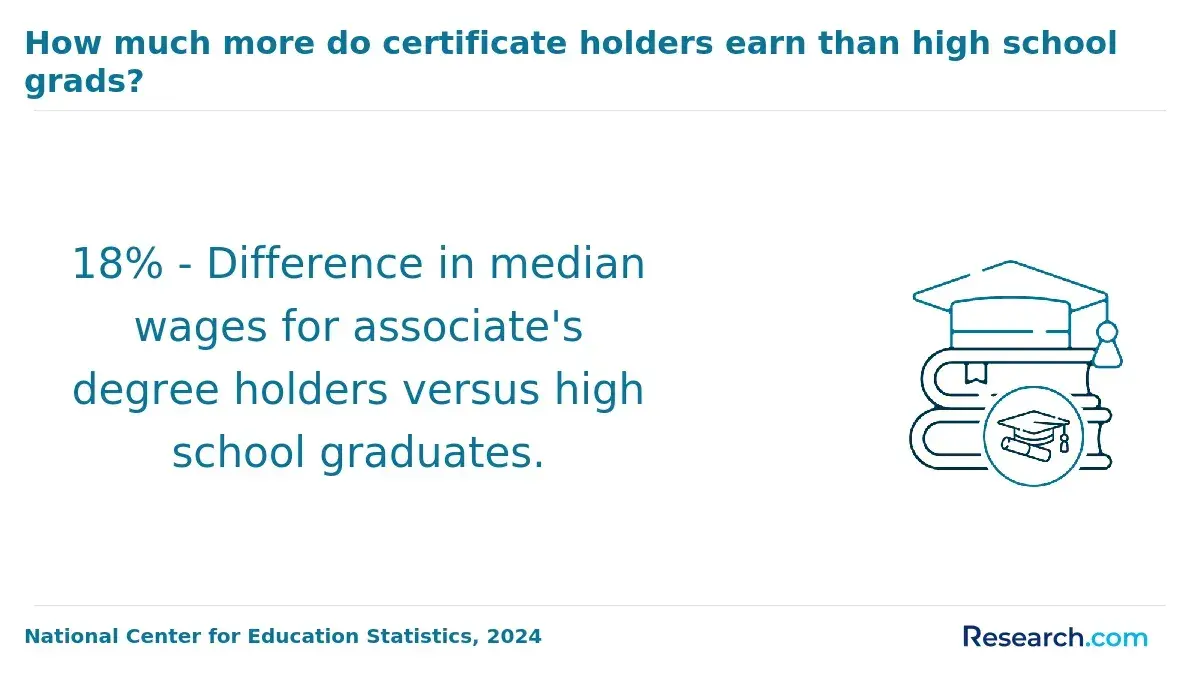
Bachelor's degree holders often find wider opportunities in both public agencies like the U.S. Geological Survey and private environmental firms, where analytical, regulatory, and project coordination skills are essential. Median starting salaries are about 20% higher than for associate degree holders, pointing to significant early financial returns tied to more complex responsibilities. Master's degrees generally target specialized research, leadership, or technical roles requiring deep subject-matter expertise, often hired by energy corporations and engineering companies engaged in advanced modeling or environmental impact studies. Doctoral graduates move into academic, federal research, or senior industry roles defined by innovation and high analytical rigor. Across these tiers, employers increasingly integrate licensure and certification requirements, particularly for autonomous consulting or clinical responsibilities, meaning students must strategically consider credential layering to meet evolving professional standards.
What Skills, Credentials, and Experience Improve Geoscience Career Outcomes?
Technical proficiency in data interpretation, GIS, and remote sensing forms the core skill set that substantially influences geoscience career outcomes at all degree levels. For professionals balancing work and study or transfer students maximizing prior credits, aligning these practical competencies with employer expectations delivers more tangible returns than generic academic knowledge. Employers increasingly prioritize candidates who demonstrate applied skills through internships or field placements, highlighting a 20% higher employment likelihood within the first year for those with relevant experience. This dynamic underscores how experience and credentials for geoscience employment success hinge not only on degree attainment but on integrating hands-on learning early to meet labor market demands.
Licensure and certifications critically affect promotion trajectories, especially for bachelor's and graduate degree holders. Securing a Professional Geologist license often acts as a gateway for supervisory roles or consulting opportunities, with state boards requiring a balance of education, documented experience, and examination success. The tradeoff between investing time to prepare for licensure versus pursuing graduate study can significantly impact career mobility and specialization options. Meanwhile, soft skills like leadership, communication, and project management complement technical abilities and play a decisive role in screening and advancement decisions. Military experience and cooperative education add transferable competencies that reinforce adaptability and problem-solving, essential for navigating evolving employer expectations.
Geoscience learners evaluating credentials should also consider portfolio development as an effective differentiator, evidencing real projects rather than relying solely on transcripts. This integration of credentials, applied experience, and communication skills aligns with strategic workforce considerations, including the growing availability of degrees for remote work, which offer flexibility for adult learners and professionals managing multiple commitments. Ultimately, pragmatic alignment of skills, certifications, and validated experience shapes both immediate employment access and long-term advancement potential in this competitive field.
Which Geoscience Degree Level Is Best for Your Career Goals?
Choosing the appropriate geoscience degree level directly influences employment access and advancement potential, where bachelor's degrees usually provide the quickest route into entry-level roles but may restrict long-term mobility without further credentials. For adult learners and transfer students balancing opportunity costs, a bachelor's allows earlier workforce entry and reduced debt, whereas master's degrees enhance eligibility for specialized positions, licensure, and certifications often required in technical fields; according to the U.S. Bureau of Labor Statistics (2024), individuals with master's credentials experience about a 12% higher employment rate in roles like hydrogeology or environmental management. This tradeoff means those aiming for mid-level management or professional mobility should weigh the longer time and cost commitments of advanced degrees carefully against immediate income needs and career timelines.
Doctoral programs tend to suit those targeting research, policy influence, or top-tier consultancy but necessitate a significant investment of time and resources, with longer completion periods and fewer graduates overall. Many employers expect doctoral-level geoscience professionals to lead federally funded research or industry innovation, roles typically inaccessible without this depth of expertise. Working professionals and military-affiliated students must consider whether this investment aligns with their career paths or if targeted credentials like certificates or specialized training-such as through cyber security courses-might better support their practical goals. The best geoscience degree for career advancement depends on balancing these factors alongside anticipated employer credential demands and personal circumstances.
References
- Career Development https://www.geolsoc.org.uk/Geology-Career-Pathways/Careers/Career-Development.html
- 3. What Undergraduate Geoscience Education Should Accomplish https://www.americangeosciences.org/change/sections/concepts/
- Geoscience Profession Intelligence https://profession.americangeosciences.org/collections/profession-data/
- Geoscience Jobs https://jobs.americangeosciences.org/
- Supporting Geoscience Students https://www.grow-geocareers.com/forgeodepartments
- Section 4. Skills Framework https://graduate.americangeosciences.org/report/section-4/
- What Does the Future Demand Look Like for Applied Geoscientists? https://www.aegweb.org/index.php
- ThisIsGeoscience - Geoscience Salaries https://www.thisisgeoscience.com/the-resources/geoscience-salaries
Other Things You Should Know About Geoscience
Graduate geoscience programs, especially at the master's and doctoral levels, often require substantial research commitments that directly influence early career experiences. Students investing heavily in research gain critical problem-solving skills and specialized knowledge but may enter the workforce with less practical field or industry experience compared to bachelor's graduates. This tradeoff can affect initial job roles, as employers may expect immediate application of field skills in certain sectors, making it crucial for prospective students to consider whether research depth or hands-on experience aligns better with their career goals.
Returning to obtain a master's or doctoral degree while employed in geoscience fields can disrupt income streams and limit availability for full-time work, presenting a tangible risk in the short term. However, part-time or online program structures can mitigate this effect, though these options sometimes offer fewer networking or lab-based experiences. Professionals should weigh whether the potential long-term payoffs and advanced roles justify temporary income reduction and possible skill atrophy in rapidly evolving geoscience subfields.
While a doctoral degree confers deep expertise and may open doors to specialized research or academic positions, many senior industry roles in geoscience are accessible with a master's degree coupled with significant professional experience. Candidates pursuing doctorates should prioritize programs offering strong industry ties or applied research to avoid overqualification or limited role flexibility. For most professionals targeting leadership or consulting roles outside academia, advancing through experience post-master's often yields more market-relevant advantages.
Location plays a critical role in geoscience career outcomes; degrees earned near active resource extraction, environmental consulting, or government research hubs often provide stronger internship access and employer connections. Students should give priority to programs within or closely connected to geographic centers where key employers operate, as this proximity frequently translates into smoother job placement and quicker career advancement. Remote programs without such ties can require more proactive networking to achieve comparable outcomes.