2027 Geoscience Admissions Trends Report: Acceptance Rates, GPA Expectations, and Test Policy Changes

Co-Founder and Chief Data Scientist
Geoscience programs increasingly reflect workforce shifts driven by climate change, energy transition, and environmental regulation, shaping enrollment demands and curricular priorities. Acceptance rates and GPA thresholds emerge as indicators of how departments balance limited faculty resources with the need for specialized skills.
As accreditation bodies emphasize interdisciplinary knowledge and research integration, prerequisite coursework and testing policies adapt accordingly. The growing age diversity in enrolled students suggests efforts to accommodate mid-career professionals addressing evolving labor market needs.
This report examines how acceptance rates, GPA expectations, and standardized testing protocols reveal institutional responses to these dynamic forces, offering insight into Geoscience education's evolving landscape.
Key Things to Know About Geoscience Admissions Trends
- Geoscience acceptance rates have tightened by 5% since 2023, reflecting increased program demand; this amplifies competition, necessitating stronger applications and strategic timing for prospective students.
- The average admitted GPA rose to 3.7 in 2024, signaling employer preference for candidates with robust academic foundations; weaker GPAs often correlate with limited employability in technical geoscience roles.
- Test-optional policies now dominate, reducing upfront costs but shifting evaluation weight onto portfolios and recommendations; applicants lacking standardized test data face greater pressure to demonstrate practical experience.
- Key Things to Know About Geoscience Admissions Trends Key Things to Know About Geoscience Admissions Trends
- What Are the Current Acceptance Rates for Geoscience Degree Programs? Current Acceptance Rates
- What Is the Average GPA of Accepted Geoscience Students? GPA Requirement
- Are SAT or ACT Scores Still Required for Geoscience Degree Programs? SAT/ACT Requirement
- How Many Geoscience Programs Have Adopted Test-Optional Admissions Policies? Test-Optional Programs
- What Non-Academic Factors Do Geoscience Admissions Committees Consider? What Non-Academic Factors Do Geoscience Admissions Committees Consider?
- Which Types of Schools Are the Most Selective for Geoscience Applicants? Which Types of Schools Are the Most Selective for Geoscience Applicants?
- How Do Admissions Standards Differ Across States and Regions? Admission Standards by State
- How Do Admissions Requirements Compare Between Online and Campus Programs? Online vs On-Campus Admissions
- Is There a Relationship Between Admissions Standards and Student Success? Admission Standards & Student Success
- How Can Students Strengthen a Geoscience Program Application? Program Application Preparation
Key Things to Know About Geoscience Admissions Trends
- Geoscience acceptance rates have tightened by 5% since 2023, reflecting increased program demand; this amplifies competition, necessitating stronger applications and strategic timing for prospective students.
- The average admitted GPA rose to 3.7 in 2024, signaling employer preference for candidates with robust academic foundations; weaker GPAs often correlate with limited employability in technical geoscience roles.
- Test-optional policies now dominate, reducing upfront costs but shifting evaluation weight onto portfolios and recommendations; applicants lacking standardized test data face greater pressure to demonstrate practical experience.
What Are the Current Acceptance Rates for Geoscience Degree Programs?
Acceptance rates for geoscience degree programs in the United States typically range from approximately 40% to 70% at public universities, according to recent data from the U.S. Department of Education's College Scorecard and NCES in 2024. Programs at more selective institutions, often those with specialized research or industry connections, may have rates closer to 30%, reflecting higher academic standards and competitiveness.
Regional and comprehensive universities frequently exhibit acceptance rates above 60%, as they prioritize expanding enrollment to satisfy environmental workforce needs. These variations highlight the complex landscape of United States geoscience program acceptance rates, influenced by institutional mission and capacity.
Differences in acceptance rates largely stem from factors such as institutional prestige, program capacity, and local demand for environmental expertise. Public universities tend to balance moderate selectivity with broader access, while private and specialized institutions may impose stricter admissions criteria, including high GPA thresholds between 3.5 and 4.0 and rigorous prerequisite completion.
Transfer applicants often face variable leniency depending on articulation agreements and foundational science course completion. The removal of standardized test requirements in many programs has shifted emphasis toward consistent academic performance, coursework rigor, and letters of recommendation, reshaping admissions strategies across regions.
These admission patterns reflect ongoing competitiveness trends within geoscience education, where moderate selectivity coexists with practical considerations like fieldwork opportunities and internship access, which employers heavily weigh. Prospective students should consider these dynamics when evaluating program fit and acceptance likelihood, as purely selective admission metrics do not fully represent program value or career preparation.
For those exploring alternatives, combining a geoscience degree with certificate programs online may enhance both employability and skill diversification in this evolving field.
What Is the Average GPA of Accepted Geoscience Students?
Recent admissions data from university fact books and institutional reports reflect that the average GPA requirements for geoscience admissions typically fall between 3.3 and 3.7 on a 4.0 scale. These benchmarks for accepted geoscience students illustrate a moderately selective landscape compared to other STEM fields, where GPA expectations frequently surpass 3.8.
This range suggests that while solid academic preparedness is important, geoscience programs balance GPA standards with the diverse skill sets required by the discipline.
GPA expectations fluctuate notably based on institutional characteristics such as selectivity, program focus, and delivery mode. Research-intensive universities with specialized geoscience tracks tend to favor higher GPAs near the upper end of the spectrum, reflecting competitive demand and rigorous academic environments.
Conversely, programs at public, private, and online institutions that emphasize applied or interdisciplinary approaches often admit students with a broader GPA distribution, recognizing grading variability and diverse academic pathways. These differences highlight how GPA functions as one metric among others to gauge academic readiness within geoscience admissions.
As a signal in the admissions process, GPA thresholds influence applicant strategies by setting baseline academic performance targets, but they do not operate in isolation from holistic review factors like field experience and personal statements.
This nuanced role affects applicant behavior and perceptions of program competitiveness, encouraging prospective students to pursue complementary strengths alongside GPA. For students considering transfer or entry, this context underlines the importance of balancing GPA achievement with practical involvement, as illustrated by related disciplines such as marriage and family therapy programs, which reflect similar complex admissions dynamics.
Are SAT or ACT Scores Still Required for Geoscience Degree Programs?
As of 2024, the majority of geoscience degree programs have shifted away from universally requiring SAT or ACT scores in their admissions processes. National educational statistics indicate that close to 60% of institutions offering geoscience majors now operate under test-optional or test-blind policies, particularly public universities and state colleges.
Instead of standardized exams, admissions decisions increasingly weigh high school GPA, the rigor of prior coursework, letters of recommendation, and personal essays. However, some competitive programs and selective universities may still view standardized test results as valuable for scholarship eligibility or honors track consideration, making the relevance of SAT and ACT scores uneven across the admissions landscape.
The move toward test-optional admissions in geoscience reflects several intersecting factors. Equity concerns play a critical role, as removing standardized test mandates helps mitigate barriers for students from underrepresented or economically disadvantaged backgrounds.
Institutional strategies to enhance diversity and reduce access disparities also drive this evolution, alongside debates about the predictive validity of standardized exams for success in STEM fields. Moreover, distinctions remain between public research institutions that have broadly adopted flexible testing policies and highly selective private universities that may retain traditional requirements to sustain selectivity and ranking metrics.
This nuanced environment requires applicants to carefully review specific program policies rather than assume a uniform expectation related to SAT or ACT submission.
A student recently navigating geoscience admissions recalled uncertainty around whether to submit ACT scores amid rolling application deadlines. Having delayed testing due to scheduling conflicts, they initially hesitated to apply without standardized results, worried about appearing less competitive.
After communicating with admissions offices and learning about the growing test-optional trend, they prioritized strengthening their coursework records and recommendation letters instead. This approach alleviated stress and allowed a focus on other application components, illustrating how evolving policies can shape both timing and strategic decisions during the admissions process.
How Many Geoscience Programs Have Adopted Test-Optional Admissions Policies?
As of early 2024, approximately 40% to 50% of institutions offering geoscience degrees have moved toward test-optional admissions, reflecting a substantial shift documented by sources such as FairTest, College Board research, and the National Center for Education Statistics.
This proportion is especially notable among bachelor's degree programs, with about 45% adopting policies that no longer require standardized tests like the SAT or ACT. The prevalence varies by institution type, with smaller liberal arts colleges more frequently embracing test-optional frameworks compared to larger research universities, which tend to maintain more traditional admissions criteria.
The push toward test-optional admissions arises largely from efforts to enhance diversity and accessibility within geoscience fields, acknowledging that standardized tests may not fully capture the skills necessary for success in demanding STEM curricula. The COVID-19 pandemic hastened this transition as testing disruptions pressured institutions to reevaluate admissions metrics.
Many universities initially adopted these policies on a temporary basis but have retained them due to favorable applicant responses and evidence suggesting broader inclusion does not compromise academic standards. Additionally, public institutions have generally exhibited greater flexibility, and transfer applicants often benefit from these relaxed requirements compared to first-time applicants.
These developments influence applicant behavior and institutional selectivity, requiring prospective students and advisors to scrutinize individual program policies carefully, as emphasis on GPA and other qualitative factors has strengthened.
While test-optional policies can increase application volumes by attracting a wider pool of candidates, they may also necessitate more holistic review practices, potentially shifting competitive dynamics in admissions. Understanding these nuances is critical for evaluating geoscience program accessibility and interpreting how admissions criteria evolve alongside changing educational and workforce demands.
What Non-Academic Factors Do Geoscience Admissions Committees Consider?
Admissions committees for geoscience programs increasingly balance academic credentials with a nuanced evaluation of non-academic factors to capture an applicant's broader potential. This holistic approach recognizes that GPA and test scores alone cannot fully represent a student's ability to navigate the practical and interdisciplinary demands of geoscience fields.
By integrating contextual and experiential elements, committees aim to select candidates who demonstrate resilience, collaboration skills, and alignment with evolving program goals.
- Personal Statements and Motivation Letters: These documents provide insights into an applicant's genuine passion and commitment to geoscience. Admissions committees assess them for evidence of intellectual curiosity, persistence, and alignment with a program's mission, interpreting them as indicators of how candidates might contribute uniquely beyond measurable academic achievements.
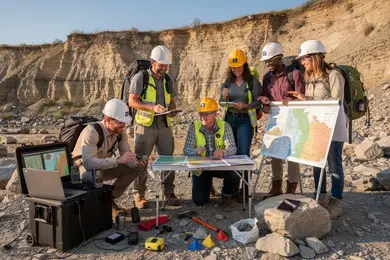
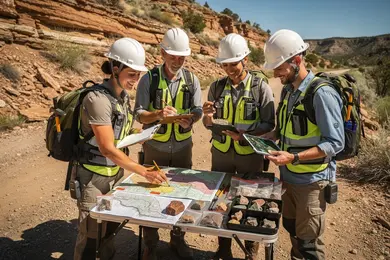
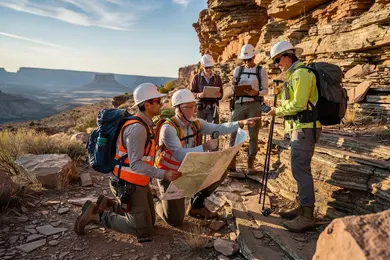
- Hands-On Field Experience: Practical experience through research projects, internships, or geological surveys is increasingly weighted alongside academic records. This factor signals an applicant's readiness to transition from theory to applied problem-solving, a key expectation among employers and faculty alike, reflecting real-world geoscience workflows.
- Letters of Recommendation: Recommendations are crucial for evaluating interpersonal skills, leadership, and effectiveness in collaborative, often challenging environments. Committees prioritize references that articulate an applicant's capacity for teamwork and adaptability, qualities essential in fieldwork and interdisciplinary projects.
- Socioeconomic and Personal Background: Overcoming barriers such as limited access to resources or contributing to community resilience initiatives can positively influence admissions decisions. This consideration aligns with institutional diversity policies and efforts to create cohorts with varied perspectives, which enhance problem-solving in a global context.
- Ethical Awareness and Cultural Competence: Increasingly important in geoscience admissions is the applicant's understanding of ethical issues and cultural sensitivity related to environmental stewardship. Programs value candidates who demonstrate the ability to navigate societal implications of scientific work, especially amid growing challenges like climate change and disaster management.
A 2024 National Science Foundation report found that 68% of geoscience graduate admissions committees weigh personal statements heavily, underlining the value placed on non-academic expressions of fit and motivation. This reflects a broader shift in geoscience admissions evaluation of non-academic experience, where holistic review processes now complement traditional metrics to identify well-rounded candidates with practical skills and diverse backgrounds.
These non-academic factors do not replace academic criteria but are assessed in tandem to build cohorts capable of addressing complex, interdisciplinary challenges. Prospective students benefit from understanding how key personal factors in geoscience admissions decisions influence outcomes, enabling them to tailor applications that reflect both academic proficiency and essential personal qualities.
For applicants considering related fields, exploring pathways such as online lMFT programs can offer complementary skills in communication and ethics that are increasingly valued in geoscience and environmental careers.
Which Types of Schools Are the Most Selective for Geoscience Applicants?
Admission selectivity for Geoscience degree programs varies considerably across institution types, shaped by factors such as funding availability, program capacity, and regional industry demand.
Schools with substantial research investments typically draw large applicant pools but have limited seats, intensifying competition. Conversely, institutions with broader missions or more applied program models often admit higher proportions of applicants, balancing accessibility with workforce preparation.
- Research-Intensive Doctoral Universities: These institutions operate with substantial federal and private research grants, supporting specialized and advanced Geoscience study. High demand for their limited openings drives average GPA expectations above 3.7, accompanied by the need for relevant research experience. Acceptance rates in geoscience departments here often fall below 30%, reflecting rigorous academic and experiential criteria beyond test scores, especially as many have adopted test-optional approaches.
- Regional Comprehensive Universities and State Colleges: With broader enrollment mandates and community-focused missions, these schools maintain more inclusive admissions policies. Their Geoscience programs typically admit students with GPAs ranging from 3.2 to 3.5, emphasizing practical fieldwork and extracurricular engagement. These factors moderate competitiveness, resulting in acceptance rates frequently exceeding 60%, which cater to local workforce needs rather than intensive research output.
- Community Colleges and Technical Institutes: Serving as entry points or transfer pathways, these institutions prioritize accessibility, often with open admissions policies. Their Geoscience curricula focus on foundational knowledge or associate degrees, limiting career entry without further study. Their lower selectivity parallels program capacity designed to funnel students upward rather than terminal credentialing for direct workforce entry.
How Do Admissions Standards Differ Across States and Regions?
Admissions standards for geoscience degree programs show notable variation across U.S. states and regions, reflecting more than just geographic differences. According to 2024 data from institutional reports and the National Center for Education Statistics, programs in states with established geoscience sectors often demand higher GPAs and maintain lower acceptance rates, signaling greater selectivity aligned with technical workforce requirements.
Meanwhile, states with less concentrated geoscience industries or smaller populations tend to have more accessible admissions policies, with moderate GPA expectations and higher acceptance rates to broaden enrollment capacity. These distinctions correlate with institutional missions and student demand shaped by regional economic contexts rather than uniform academic benchmarks.
The underlying factors driving these disparities include differences in public higher education funding, regional labor market demands, and population density patterns. Programs in well-funded, urban university systems often exhibit greater selectivity due to capacity limits and competition from larger applicant pools, while rural or midwestern institutions frequently adopt more inclusive admissions to support workforce development in emerging environmental and monitoring roles.
Furthermore, state education policies emphasizing access and equity influence whether standardized testing remains a barrier or optional requirement. These intersecting variables produce a patchwork of admissions competitiveness linked directly to local economic priorities and educational resource allocation.
One graduate recalled struggling with admissions timing in a highly selective southern state where his initial application was delayed due to incomplete test results, putting him at risk of missing rolling admissions cycles. He waited anxiously for official scores, weighing whether to apply elsewhere, but ultimately prioritized programs known for rigorous GPAs and competitive applicant pools.
His experience underscored how uneven processing timelines and evolving test policies across regions can create strategic uncertainty for candidates navigating varied institutional expectations.
How Do Admissions Requirements Compare Between Online and Campus Programs?
Admissions requirements for online and campus-based geoscience programs increasingly reflect their distinct operational environments and student demographics. Campus programs tend to uphold traditional criteria such as competitive GPAs around 3.0 to 3.5 and standardized testing, although many have moved toward test-optional policies by 2024 according to recent institutional disclosures.
Online programs often demonstrate more variability in GPA expectations and more flexible testing requirements, responding to a broader applicant pool that includes working adults and nontraditional students.
These differences arise from differing program delivery models where campus programs emphasize in-person lab and fieldwork prerequisites, while online programs may substitute virtual simulations or local field arrangements to address experiential learning demands, illustrating a key aspect of online versus campus geoscience admissions standards.
These divergences trace back to distinct institutional priorities around accessibility and enrollment management. Online programs generally aim for scalability and inclusivity, incorporating professional experience or prior degrees into admissions reviews to accommodate diverse backgrounds.
Conversely, campus programs prioritize demonstrated academic rigor and research exposure, aligning with employer expectations for hands-on skills. The shift towards flexible admissions in online programs also reflects technology-enabled access and evolving evidence about the limited predictive value of standardized tests, further distinguishing acceptance rates in geoscience online and campus programs.
Academic support frameworks, such as faculty interaction and research opportunities, are more embedded in campus settings, informing their selective admissions stance and holistic evaluations.
These admissions patterns influence student choices and perceptions of program rigor and value within geoscience education. Graduates from selective campus programs often benefit from direct research internships and robust networking, which many employers view as critical for field-related competencies.
However, reputable online programs, sometimes highlighted alongside accelerated bachelor's degree computer science online pathways, increasingly close gaps via partnerships and capstone projects. Understanding these nuanced admissions dynamics assists prospective students and advisors in evaluating tradeoffs between accessibility and experiential depth, ultimately shaping geoscience career trajectories across delivery formats.
Is There a Relationship Between Admissions Standards and Student Success?
Data from the National Center for Education Statistics (2024) confirms that geoscience degree programs with more rigorous admissions standards, often requiring a GPA above 3.3, tend to retain 15-20% more students through graduation than less selective programs. However, strict admissions thresholds alone do not necessarily translate into superior career readiness or employability.
Research from the American Geosciences Institute shows that students with somewhat lower GPAs who receive targeted academic support can achieve graduation and post-degree employment outcomes comparable to those admitted under more selective criteria. This underscores the complexity of the impact of admissions selectivity on geoscience student outcomes beyond retention metrics alone.
The relationship between geoscience program success rates by admission criteria is further complicated by variables like socioeconomic background, access to experiential learning such as internships, and institutional support infrastructure. Programs that invest in academic support services often equalize outcomes across diverse entering student profiles, revealing that admissions standards are only one piece of a multifaceted success equation.
Additionally, the increasing adoption of test-optional policies suggests standardized testing may be less predictive of student performance than previously believed, shifting attention toward holistic admissions processes and resource allocation.
For prospective students and advisors, these findings highlight why admissions selectivity should not be viewed as a sole indicator of program quality or long-term career success. Evaluating institutional academic supports and opportunities for practical experience alongside admissions standards offers a more nuanced picture of program effectiveness.
Students considering flexible pathways, including accelerated online degree programs for working adults, may find that broader program features influence outcomes more decisively than admissions hurdles alone.
How Can Students Strengthen a Geoscience Program Application?
Successful geoscience program applications hinge on demonstrating genuine readiness and strategic fit, rather than merely meeting baseline criteria. Admissions committees evaluate candidates on a nuanced combination of academic rigor, practical experience, and alignment with program goals, especially given the growing competitiveness and holistic review trends in 2024 and beyond.
Evidence of sustained commitment and relevant skill sets often distinguishes applicants in selective contexts, where GPA benchmarks typically exceed a 3.3 in science or math coursework, as reported by recent higher education research. Prospective students must therefore leverage multiple dimensions of their profiles to present comprehensive, coherent candidacies.
- Robust Academic Preparation: Emphasizing upper-division coursework in geochemistry, sedimentology, or remote sensing signals advanced knowledge and preparation. Admissions panels perceive these courses as indicators that applicants can engage with core disciplinary challenges, elevating them above minimum GPA thresholds.
- Targeted Hands-On Experience: Documented involvement in fieldwork, research, or internships conveys applied competence and practical problem-solving skills. This real-world exposure complements academic records and appeals to committees prioritizing experiential evidence of engagement.
- Demonstrated Quantitative and Technical Skills: Proficiency in programming languages such as Python or R, alongside statistics, reflects adaptability to evolving geospatial technologies and analytical demands, positioning candidates as workforce-ready.
- Strategic Personal Statements: Crafting narratives that connect academic achievements and experiential learning with current geoscience challenges helps contextualize qualifications. Admissions reviewers interpret well-articulated statements as signs of intellectual maturity and purposeful intent.
- Strong, Specific Recommendations: Letters from faculty or professionals who can vouch for an applicant's analytical capabilities and field skills reinforce credibility. Such endorsements weigh heavily in holistic evaluations, clarifying applicant potential beyond transcript data.
References
- #GeoGRExit: Why Geosciences Programs Are Dropping the GRE - Eos https://eos.org/opinions/geogrexit-why-geosciences-programs-are-dropping-the-gre
- Bachelor's Degree in Geosciences | UT San Antonio | Undergraduate Program in Geosciences | Earn Your Degree in Geosciences https://future.utsa.edu/programs/undergraduate/geosciences/
- Which Colleges Require ACT Science in 2026 — and Should You Take It? https://www.esmprep.com/articles/which-colleges-require-act-science
- List of Colleges Dropping & Reinstating ACT/SAT Requirements https://progresslearning.com/news-blog/colleges-dropping-reinstating-act-sat-requirements/
- Geoscientists Canada - BECOMING A P.GEO. https://geoscientistscanada.ca/becoming-a-p-geo.php
- Occhipinti: Rethinking Geoscience Education: Integrating SDGs for Next-Generation Learning - Eurogeologists https://eurogeologists.eu/occhipinti-rethinking-geoscience-education-integrating-sdgs-for-next-generation-learning/
- Admission requirements and application https://4euplus.eu/4EU-984.html
- SAT and ACT Policies and Score Ranges for Popular Colleges and Universities https://www.compassprep.com/college-profiles/
- ACT/SAT Optional List for Fall 2025 - Fairtest https://fairtest.org/test-optional-list/
- Finalizing College Search for a Geology Major https://talk.collegeconfidential.com/t/finalizing-college-search-for-a-geology-major/1843895
Other Things You Should Know About Geoscience
Rising GPA expectations in geoscience admissions often pressure students to prioritize coursework that directly boosts grades, potentially at the expense of hands-on fieldwork or research experiences.
While solid academic performance remains critical, students who overemphasize GPA at the cost of practical skills may find themselves less prepared for employer demands, which increasingly value applied competencies. A balanced approach that maintains competitive grades while engaging in experiential learning improves both admission prospects and career readiness.
Test-optional policies shift greater weight to GPA, recommendation letters, and extracurricular experiences in assessments, increasing variability in applicant evaluation. This change can disadvantage students without strong academic networks or verifiable field experience, making the admissions process less transparent and more subjective.
Applicants should therefore focus on building compelling portfolios that demonstrate relevant skills and commitment to geoscience rather than relying solely on standardized scores to validate their potential.
Transfer applicants face a tradeoff between accessibility and program quality. While schools with more flexible admissions criteria may facilitate smoother transfer paths, these programs sometimes offer fewer specialized resources or research opportunities critical to advanced geoscience training.
Transfers aiming for employment in competitive sectors should weigh whether passing through a less selective program might limit networking and hands-on learning opportunities essential for career advancement.
Increasing emphasis on broader STEM competencies and test-optional policies tends to push programs toward more generalized admissions profiles, which might dilute specific geoscience preparation. Students targeting specialized fields such as petroleum geology or environmental risk assessment should seek programs with stringent admissions standards that emphasize domain-focused coursework and internships.
Those prioritizing versatile career options may benefit from broader admissions but should proactively supplement their studies with targeted experiences.