2027 Geoscience Degree Growth by State: Where Interest Is Rising the Fastest

Co-Founder and Chief Data Scientist
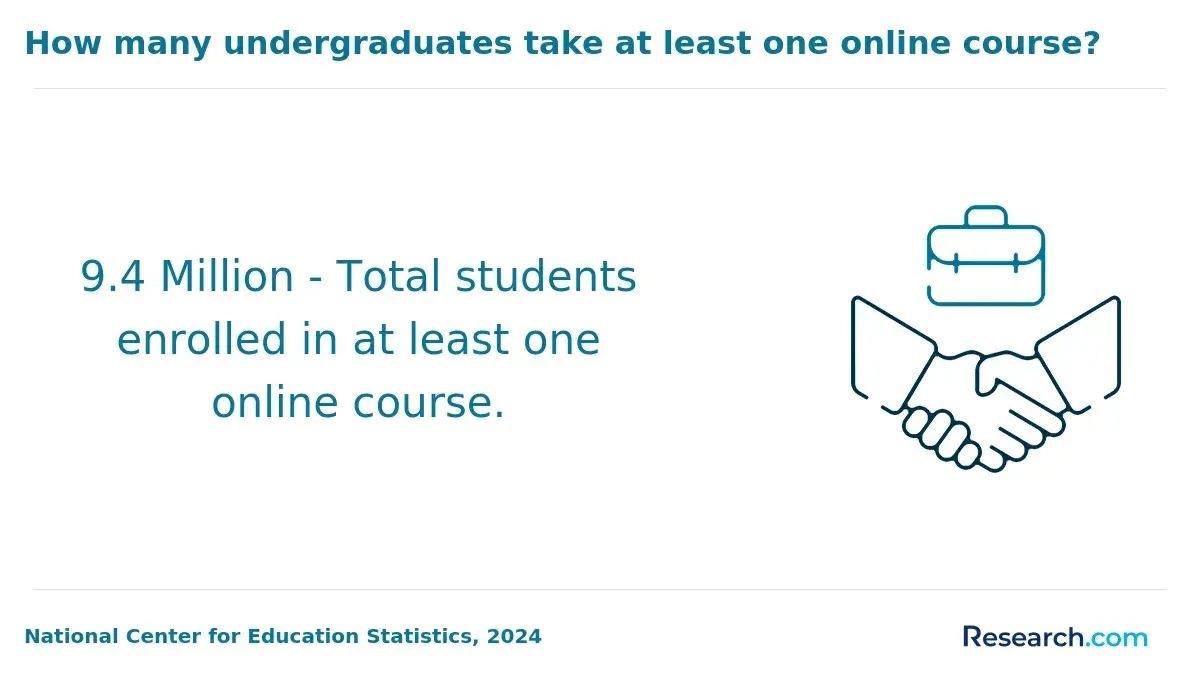
States experiencing rapid growth in geoscience degree enrollment often face unique economic and regulatory pressures shaping education demand. For instance, resource-rich regions with evolving environmental policies drive local industries to seek more specialized expertise, influencing both employer demand and student interest. A recent report from the National Center for Education Statistics highlights a notable rise in graduate enrollment flexibility, with online and hybrid formats expanding access for working adults. This shift matters because it enables career changers and geographically mobile learners to enter fields tied to local economic patterns while balancing existing commitments, altering traditional enrollment and workforce pathways across states with the fastest geoscience degree growth.
Key Things to Know About the State Where Geoscience Degree Interest Is Rising the Fastest
- States like Texas see enrollment spikes driven by energy sector demand, but regulatory volatility challenges workforce stability, compelling students to weigh rapid employment opportunities against unpredictable licensure requirements.
- California's growing acceptance of online and hybrid geoscience programs, noted by the National Center for Education Statistics 2024 data, improves access for working adults but may dilute hands-on experience valued by some employers.
- Midwestern states with aging populations report slower enrollment growth, reflecting demographic constraints that limit campus-based program viability and increasing the appeal of accelerated or part-time study paths.
- Which States Are Seeing the Fastest Growth in Geoscience Degree Enrollment? States Seeing the Fastest Growth in Enrollment
- What Does Enrollment Growth in Geoscience Programs Actually Tell Prospective Students? Interpreting Enrollment Growth
- How Do Regional Job Market Conditions Drive Geoscience Degree Demand by State? Role of Regional Job Market Conditions
- Which States Have Added the Most New Geoscience Degree Programs in the Last Five Years? States That Have Added the Most Programs
- How Has the Rise of Online Education Changed Which States Lead in Geoscience Program Interest? Role of Online Education in Increased Program Interest
- What Demographic Trends Are Fueling Geoscience Degree Growth in Specific States? Demographic Trends Fueling Growth
- How Do State Funding Levels for Geoscience Services Influence Degree Program Growth? Role of State Funding Levels
- Which States Are Emerging as Unexpected Leaders in Geoscience Degree Interest? States Emerging as Unexpected Leaders in Growth
- How Does State Population Size Affect the Interpretation of Geoscience Degree Growth Data? Role of State Population Size
- What Role Do State Licensing Requirements Play in Driving or Suppressing Geoscience Enrollment? Role of State Licensing Requirements
Which States Are Seeing the Fastest Growth in Geoscience Degree Enrollment?
- Colorado: Growth is supported by public research universities leveraging proximity to active energy sectors, inclining students toward applied geoscience fields that meet regional labor needs in renewables and oil and gas.
- Texas: A state with parallel urban expansion and energy diversification, Texas combines strong undergraduate program increases with graduate expansion driven by environmental resilience investments and state workforce pipelines.
- North Carolina: Its gains associate with federally funded coastal and environmental hazard research initiatives, embedding geoscience education into real-world climate adaptation efforts and raising program quality expectations.
- Utah: Enrollment rises correspond to mining-related program demand and sustainability emphasis, reflecting state economic priorities that influence program specialization and prospective student focus.
- Virginia: Marked advancement in graduate degrees aligns with growing climate science and hazard mitigation research centers, revealing institutional adaptations to federal research funding patterns.
Recognizing which states are seeing the fastest growth in geoscience degree enrollment is critical for prospective students weighing program selection, as enrollment momentum signals not only capacity but also evolving employer expectations and licensure landscapes that differ regionally. The following sections will dissect factors such as labor market alignment, state-specific regulatory hurdles, and program quality differentials. Such nuances matter for those navigating near-term credentials or longer-term academic tracks, including options like the best 1 year PhD programs online, as tradeoffs between program length, specialization, and geographic relevance weigh heavily on career outcomes and workforce integration.
What Does Enrollment Growth in Geoscience Programs Actually Tell Prospective Students?
Rising enrollment in geoscience programs often sparks optimism about career prospects, but interpreting these trends without deeper analysis can mislead prospective students. When choosing where to invest time and resources, understanding the quality and outcomes behind growth is crucial to avoid paths that may not yield sustainable professional success.
Raw enrollment figures serve as an initial indicator of interest but fail to capture long-term program effectiveness or workforce alignment. A program's growth may reflect robust labor market demand or institutional strengths, yet it can also result from relaxed admission criteria or aggressive marketing, which often undermine student success and employability.
- Retention Rates: Sustained student persistence through completion signals a supportive academic environment, which ultimately benefits graduate readiness for the field's demands.
- Graduation Outcomes: Timely degree attainment is a stronger predictor of program value than enrollment alone; rising numbers lost to attrition indicate potential weaknesses in curriculum or advising.
- Job Placement: Programs with consistent placement in relevant roles demonstrate alignment with employer needs, making growth more likely to translate into actual career opportunities.
- Licensure Pass Rates: For careers requiring certification, exam success rates provide tangible evidence of a program's rigor and real-world preparation.
- Program Growth Drivers: Distinguishing between expansion driven by market demand and academic quality versus superficial tactics requires scrutiny of institutional practices, faculty credentials, and employer partnerships.
- Critical Perspective: Enrollment should be only one factor examined alongside qualitative insights from current students and alumni to accurately assess program culture and outcomes.
- Contextual Factors: Regional economic conditions, regulatory frameworks, and employer presence critically influence both program growth and graduate prospects, especially for mobile students evaluating interstate options.
How Do Regional Job Market Conditions Drive Geoscience Degree Demand by State?
Regional job market dynamics directly shape demand for geoscience degrees by influencing employer hiring priorities and student enrollment patterns. States experiencing growth in healthcare infrastructure, public environmental programs, and expanding school districts often see tangible increases in demand for geoscience-trained professionals, as these sectors require expertise in environmental assessments, resource management, and land use planning. State workforce agencies highlight that employer incentives-such as subsidies for specific credentialing and bonuses for specialized hires-amplify these trends, intensifying the need for graduates who can contribute immediately to complex projects. Understanding these patterns is essential for prospective students balancing program selection with realistic workforce conditions.
- California: Driven by large-scale investments in renewable energy, water resources, and natural hazard mitigation, California leads in projected geoscience job openings, fueled by public sector expansions in environmental regulation and infrastructure resilience initiatives.
- Texas: Transitioning oil and gas industries combined with urban school system growth and healthcare facility expansions support increased geoscience employment, aided by state-backed employer incentives targeting sustainable practices and training.
- Colorado: Rapid population growth alongside environmental conservation and public land management efforts elevate demand for geoscience credentials in both government and private sectors.
- North Carolina: Local government environmental departments and expanding school districts are key drivers, with employer partnerships fostering specialized training in geological hazard assessment to meet hiring needs.
- Washington: Healthcare infrastructure development and public sector climate adaptation programs generate rising employment opportunities, reinforced by strategic workforce investment initiatives.
Prospective graduate students should prioritize researching the workforce outlook for geoscience degree demand by state job market conditions before committing to a program. A strong regional labor market enhances access to practicum placements and internships, critical for practical skills acquisition and employability. Furthermore, graduates entering robust markets enjoy improved negotiating leverage for starting salaries and career advancement. Conversely, enrolling in programs linked to oversaturated or underfunded markets increases the risk of credential obsolescence or limited employment options. For those exploring options, including geographically mobile students and career changers, such nuanced, data-informed analysis aids in aligning educational investment with long-term career viability. Investigation into resources like aggregated studies of top online colleges can also augment this decision-making process.
Which States Have Added the Most New Geoscience Degree Programs in the Last Five Years?
States with rapid growth in accredited geoscience degree programs highlight distinct regional drivers reflecting broader workforce and institutional dynamics. For students weighing options, understanding whether growth stems from entirely new programs, online expansions, or enrollment increases is critical, as each path carries implications for competition, specialization, and access to resources.
- Texas: Expansion here largely follows the energy sector's evolving needs, with significant new programs launched and online tracks introduced to serve professionals already in the field. State-funded grants motivate public universities to address shortages in environmental consulting and petroleum geology specialists, influencing program focus and admissions strategies.
- Colorado: Program growth is tied to the state's prioritization of sustainability and hazard mitigation. Peer institutions compete by enhancing concentration areas such as hydrology and climate science, offering diverse curricula but raising expectations for specialized skills among applicants.
- North Carolina: Growth favors scaling existing programs rather than creating new ones, reflecting local industries' demand for graduates versed in mining and coastal ecosystem management. State policies encourage accreditation and program quality, which indirectly elevates competitiveness for limited financial aid.
- California: Expansion is subtler, driven mainly by established universities incorporating online coursework to widen accessibility. Incremental enrollment growth targets critical workforce gaps in environmental geosciences, but opportunities are tempered by selective admissions and scholarship constraints due to statewide demand.
- Pennsylvania: Growth remains centered on legacy strengths tied to fossil fuels and environmental reclamation, with targeted grants incentivizing curriculum innovation and research depth. This fosters environments rich in practical training but requires candidates to navigate programs with historically specialized emphases.
Students should expect that states with burgeoning programs offer more specialized choices yet often face increased competition for scholarships and high-demand tracks. Comparing institutions within the same state enables alignment of program strengths with career goals while mitigating risks associated with fluctuating enrollment policies and financial aid availability.
A geoscience graduate recounted applying to graduate programs amid program expansions in Texas. The rolling admissions process added uncertainty as new online tracks were still finalizing curricula when she submitted her applications. Timing her decisions involved weighing early acceptance offers against waiting on programs promising niche specializations aligned with her interests in environmental consulting. Ultimately, delayed communications tested her resolve, underscoring how rapid program growth can create both fresh opportunities and strategic complexity for applicants navigating evolving academic landscapes.
How Has the Rise of Online Education Changed Which States Lead in Geoscience Program Interest?
The expansion of fully online geoscience programs has fundamentally altered traditional enrollment patterns, breaking the historic reliance on regional proximity. Previously, graduate students prioritized programs within commuting distance or affordable relocation zones, limiting access. Now, states like Colorado, Texas, and California dominate as hubs for out-of-state online enrollments, driven by factors such as strong academic reputations, competitive tuition structures, and recognized accreditation. This shift positions these states as virtual national providers of geoscience education rather than just local or regional options.
For prospective students, this development broadens access to programs that might otherwise have been unattainable due to geographic, financial, or personal constraints. However, the geographic separation introduces challenges around professional licensure, which remains tightly regulated at the state level. Students need to confirm that their online credentials meet the specific requirements of their intended state of practice, especially in regulated fields like environmental consulting or resource management. Furthermore, employers tend to prioritize graduates from programs with solid reputations and measurable outcomes, sometimes viewing online degrees through a more cautious lens.
- Access: Online delivery eliminates geographic barriers, expanding educational opportunities nationally beyond traditional commuting limits.
- Displacement: States with established online offerings attract disproportionate out-of-state student populations, shifting enrollment beyond local industries or campuses.
- Licensure: Despite broad online reach, state-level licensure rules require careful verification to ensure employability in desired jurisdictions.
- Employer Expectations: Hiring managers weigh program reputation and graduate success heavily, with lingering scrutiny on online credentials.
- Institutional Strategy: Universities must balance maintaining academic rigor with navigating complex state regulations and supporting a geographically diverse student body.
What Demographic Trends Are Fueling Geoscience Degree Growth in Specific States?
Geoscience degree enrollment growth in the United States is tightly linked to distinct demographic trends that influence regional workforce demand. Prospective students should recognize that enrollment hotspots often emerge where specific population dynamics drive sustained needs for geoscience professionals, rather than broad national averages. For example, states with older populations require ongoing environmental remediation and infrastructure oversight, which supports expanding geoscience programs to address these localized challenges. Selecting a graduate program in a state aligned with such demographic realities can improve long-term career stability and mitigate risks associated with cyclical labor markets.
- Population Aging: States in the Midwest and Northeast with rapidly aging populations experience heightened demand for geoscience expertise focused on environmental hazards and resource management, prompting local universities to respond with larger or specialized program offerings.
- Immigration Patterns: Southwestern and Southeastern states observing significant immigration inflows benefit from younger, college-aspiring populations that increase enrollments in STEM areas such as geoscience, which support industries like mining and environmental consulting.
- Urbanization: Fast-growing urban centers in Texas, Arizona, and Florida face complex environmental pressures such as groundwater depletion and flood risk, creating practical workforce needs for applied geoscience skills linked to urban planning and sustainability efforts.
- K-12 Enrollment Growth: Expanding K-12 populations in parts of the Mountain West and South act as a pipeline for geoscience interest and enrollment years later, particularly where state efforts bolster STEM education early on.
- Rising Mental Health Diagnoses: Increasing mental health challenges, documented in multiple state health department reports, correlate with social stressors tied to environmental and economic disruptions. This has indirectly fueled demand for geoscience roles engaged in disaster resilience and community risk mitigation.
Such regionally specific demographic factors highlight why broad metrics can obscure pockets of meaningful geoscience degree enrollment growth. Students and career changers should evaluate these demographic trajectories alongside labor market and licensure conditions to identify where long-term employment opportunities are most viable. For those interested in alternative STEM pathways, comparing these insights to other fields, such as sports management, may be instructive; for example, some are exploring sports management online programs with distinct population drivers.
How Do State Funding Levels for Geoscience Services Influence Degree Program Growth?
State investment in geoscience services significantly shapes the expansion or contraction of degree programs in this field. States that strategically fund related public services-such as Medicaid reimbursements, block grants, school-based mental health initiatives, and community health centers-build more reliable employment pathways for graduates. This, in turn, attracts both prospective students and institutions aiming to develop or maintain strong geoscience programs. Conversely, underfunded states often struggle with graduate retention, as limited local job markets prompt professionals to relocate, reducing program appeal and long-term viability.
- Investment: Robust state funding creates a more dynamic job market, enticing students who seek assurance their education corresponds to accessible local employment.
- Employment Pipeline: Well-supported public geoscience services generate a predictable flow of job openings, which program planners consider critical when launching or expanding degree options.
- Graduate Migration: Inadequate funding leads to brain drain, compelling graduates to move elsewhere, weakening local programs and complicating workforce planning.
- Legislative Review: Evaluating a state's recent budget decisions and legislative actions related to geoscience funding offers early signals of the economic environment future graduates will encounter.
- Program Transparency: Asking programs about five-year in-state employment rates for alumni helps gauge practical career outcomes aligned with regional job landscapes.
A recent graduate recounted hesitation during their application cycle, as they awaited clarity from their preferred state's funding outlook amid rolling admissions. Uncertainty about how quickly programs would respond, given shifting legislative budgets, made early engagement critical. They found that programs with clearer communication on graduate job retention rates helped them prioritize schools in better-funded regions. The experience underscored how awareness of each state's fiscal commitments to geoscience services impacted not only long-term employment prospects but also immediate admissions decisions and timing strategies.
Which States Are Emerging as Unexpected Leaders in Geoscience Degree Interest?
Several states traditionally outside the core of geoscience graduate education are now emerging as unexpected leaders in enrollment growth, reshaping regional dynamics for prospective students and the workforce. These shifts reflect targeted investments and evolving economic priorities, but they also present distinct tradeoffs in terms of sustainability and labor market absorption that merit careful evaluation.
- Arkansas: The state's enrollment increases are driven by new accredited programs at the University of Arkansas and state-funded initiatives linked to natural resource management and environmental monitoring. While these pandemic-era investments boost access, their temporary nature poses risks for long-term program stability in a region still growing its geoscience industry footprint.
- South Dakota: Joining multi-state compacts to reduce licensure barriers has improved appeal for working professionals, particularly through regulatory alignment facilitating cross-state practice. However, South Dakota's sparse population and industry limits mean much of the current growth hinges on government geological surveys and rural development grants, creating potential volatility in enrollment trends once funding fluctuates.
- Nebraska: A notable driver here is the introduction of interdisciplinary programs linked to clean energy and water resource management critical to agriculture. State STEM incentives and workforce stipends suggest structurally grounded growth, although the relatively small program scale advises cautious optimism about widespread market impact.
- West Virginia: Amid coal industry transitions, revamped curricula focusing on environmental remediation and energy shifts align graduates with evolving employer needs. Yet political and market shifts in the region inject uncertainty into sustained demand for geoscience skills, emphasizing the importance for students to monitor local industry trajectories.
These emerging states offer potential advantages for those seeking less competitive admissions and tuition benefits, but the fluctuating nature of funding and regional economies means that prospective students should carefully weigh whether these represent durable changes or transient trends. Understanding these dynamics is critical for aligning education pathways with realistic, long-term employability outcomes.
Recent enrollment growth patterns also suggest that some of the fastest shifts occur within states that have made deliberate regulatory and workforce development adjustments, a reminder that geoscience education decisions intersect tightly with state policy and labor market conditions. For those considering graduate study or exploring a return to school, evaluating these factors alongside program quality is essential.
For individuals weighing career pivots or geographic flexibility, it's also instructive to examine adjacent fields, such as those offered in programs like a forensic psychology degree, where regional workforce demands and licensing structures similarly influence educational and professional trajectories.
How Does State Population Size Affect the Interpretation of Geoscience Degree Growth Data?
Raw numbers reflecting growth in geoscience degree completions can mislead without considering state population size. For instance, a large state adding 2,000 graduates annually may seem to dominate enrollment trends, but this volume often corresponds to its substantial population rather than a proportional increase in market demand. Conversely, a smaller state with only 300 additional graduates could indicate a more significant per-capita growth rate, signaling genuine expansion in educational interest and workforce development relative to its population. Interpreting data without this context risks overstating demand in populous regions while overlooking emerging opportunities in smaller states.
Evaluating growth through per-capita metrics and the ratio of licensed geoscience professionals to the local population offers a clearer picture of market saturation and hiring potential. Prospective students and professionals navigating regional enrollment trends in geoscience programs should prioritize states where this ratio falls below the national average. These underserved markets often combine expanding educational infrastructure with unmet workforce needs, boosting early-career opportunities. Additionally, regulatory complexity in states with more restrictive licensure criteria can delay workforce entry, offsetting apparent degree growth.
- Population Scale: Larger states show greater absolute growth but not necessarily stronger market signals.
- Per-Capita Growth: True expansion becomes visible when adjusted for population size.
- Workforce Saturation: Licensed professional ratios more accurately indicate supply-demand balance.
- Early-Career Opportunities: Underserved states typically offer better entry points for new graduates.
- Regulatory Complexity: Strict licensure requirements can slow workforce integration despite rising graduates.
For those considering graduate study options, particularly recent undergraduates or career changers, understanding these dynamics is crucial. Some may also explore EdS to EdD bridge programs online to complement their geoscience expertise with educational credentials, expanding versatility in interdisciplinary roles.
What Role Do State Licensing Requirements Play in Driving or Suppressing Geoscience Enrollment?
State licensing requirements significantly shape enrollment patterns in geoscience graduate programs by signaling the feasibility and value of professional credentials. When licensure processes are transparent, consistent, and manageable, prospective students are more inclined to invest in graduate education in that state because they can clearly anticipate the steps needed to qualify for well-paying roles. For example, states with streamlined licensing tend to attract a higher proportion of mid-career professionals and geographically mobile students who prioritize minimizing uncertainty and avoiding regulatory roadblocks. Conversely, states with complex or frequently changing licensure rules often see suppressed enrollment, as the burden of navigating opaque requirements creates risk and discourages candidates wary of delayed career entry or costly credentialing challenges.
Licensing boards influence enrollment indirectly through employer behavior. Employers in states with strong, clear licensure expectations typically require or prefer licensed geoscientists, reinforcing demand for graduates who have met those standards. This dynamic creates a feedback loop where robust licensure frameworks bolster program growth, which in turn supports advocacy for improved regulatory systems. For instance, salary surveys from 2024 indicate licensed geoscientists often earn 15-25% more than non-licensed counterparts, a differential that employers actively reference in hiring decisions.
Prospective students should conduct a rigorous assessment of the entire licensure pathway in their target state before enrollment, considering not only degree requirements but also the practical complexity and timing of post-graduate licensing. Comparing states on clarity and accessibility of licensing can reveal crucial tradeoffs that materially affect employability and career trajectory.
- Stringency: Rigorous but transparent standards deter some candidates while attracting those seeking widely recognized credentials with higher market value.
- Clarity: Clearly defined exam and experience requirements reduce uncertainty and improve education and career planning.
- Accessibility: Licensing that offers reciprocity or accommodates diverse educational backgrounds appeals to mobile or mid-career candidates.
- Employer Influence: Hiring preferences for licensed candidates in states with consistent regulations stimulate enrollment growth and program development.
- Practical Advice: Analyze licensure complexity and manageability in the chosen state relative to alternatives before committing to a program.
References:
- Geoscience Profession Reports https://profession.americangeosciences.org/reports/
- What Does the Future Demand Look Like for Applied Geoscientists? https://www.aegweb.org/index.php
- The Growth of Online Education Increases Opportunities https://changinghighered.com/growth-of-online-education/
- ThisIsGeoscience - Student Numbers https://www.thisisgeoscience.com/the-resources/student-numbers
- 8. Recruiting, Retaining, and Promoting Success of Undergraduate Students with Emphasis on Students Underrepresented in the Geosciences https://www.americangeosciences.org/change/sections/recruitment/
- 133-4 Using Social Media to Transform Misperceptions of Geoscience and Increase Enrollment https://gsameetings.secure-platform.com/connects25/solicitations/103002/sessiongallery/schedule/items/95012/application/7307
- Online Geoscience Degrees: Top Schools and All Programs in 2026 https://www.gisdegree.org/online/geoscience-degrees/
- 8 things Geoscientists should know about Geoscience in schools https://geoscienceforthefuture.com/8-things-geoscientists-should-know-about-geoscience-in-schools/
- Geology Licensing Guide | Harbor Compliance https://www.harborcompliance.com/geology-license
Other Things You Should Know About Geoscience
Employers in states experiencing rapid growth in geoscience degree interest often prioritize graduates with hands-on experience in applied environmental assessment and natural resource management. This means that programs emphasizing internships, fieldwork, and data analysis tools align better with market needs. Students should evaluate whether prospective programs partner with local industries or government agencies, as these relationships frequently translate into higher job placement rates and more relevant skill development.
States with rising interest in geoscience degrees often reflect a balance of moderate tuition costs combined with affordable living expenses, attracting both recent graduates and working adults returning to school. High tuition paired with expensive housing can deter enrollment, even if job prospects are strong post-graduation. Prospective students should weigh total cost of education against local salary expectations; lower costs might mean a longer ROI timeline but reduce upfront debt burdens, which is critical when employer demand is still evolving.
While increased enrollment indicates growing interest and program expansion, it can also signal possible program capacity constraints or increased competition for local internships and jobs. Students should not interpret growth data as a standalone endorsement but rather as a prompt to investigate program resources, faculty expertise, and alumni outcomes in the respective state. Prioritizing programs with strong employer networks and dedicated career services typically results in better placement outcomes despite higher enrollment.