2027 Fastest Accredited Online TESOL & Multilingual Learners Programs: Accelerated Degrees and Completion Times

Co-Founder and Chief Data Scientist
Choosing a fast online TESOL or multilingual learners degree means balancing speed with accreditation, fieldwork, licensure fit, and workload. NCES reported that English learners represented 10.6% of U. S. public school students in its latest published national data, keeping demand for prepared educators visible across schools and adult-learning settings.
This guide is for teachers, career changers, and bachelor's-completion students comparing accelerated options. You'll learn what "fastest" really means, how transfer credits and prerequisites affect timelines, and how to choose a program that is quick without creating avoidable delays.
Key Things You Should Know
- The fastest accredited online TESOL and multilingual learners master's programs commonly advertise completion in about 12 to 18 months, while full bachelor's degrees usually take closer to four years unless students transfer substantial credit.
- Accelerated formats usually use 7- or 8-week courses, year-round enrollment, heavier course loads, or competency-based pacing; these shorten the calendar, not the amount of reading, lesson planning, assessment work, or field experience.
- Transfer-friendly bachelor's-completion programs may accept up to 90 credits toward a 120-credit degree, but graduate TESOL programs typically accept far fewer transfer credits, often only a small number approved case by case.
Which Colleges Offer the Fastest Accredited Online TESOL & Multilingual Learners Programs?
The fastest accredited online TESOL and multilingual learners programs are usually graduate degrees for licensed or aspiring educators, though some schools also offer bachelor's-completion or endorsement pathways. "Fastest" should mean the shortest realistic time to finish all required courses, assessments, and field experiences at an institution accredited by a recognized accreditor, not simply the shortest course term advertised on a website.
The table below compares examples of accredited U.S. institutions with online TESOL, ESL, English language learning, or multilingual learner-focused degrees that are commonly structured for accelerated or flexible completion. Always confirm the current catalog, state authorization, practicum expectations, and whether the program leads to endorsement or only to an academic degree.
| Institution | Online TESOL or multilingual learners degree type | Common accelerated feature | Advertised or typical completion range | Best fit |
| Campbellsville University | Online MA TESOL | 8-week online courses and a 30-credit structure | About 12 months for highly focused students | Students seeking one of the shortest master's timelines in a TESOL-focused program |
| Arizona State University Online | Online MA in TESOL | 7.5-week courses and 30 credit hours | Often about 12 to 18 months, depending on course load | Students who want a large public university with short online terms |
| American College of Education | Online M.Ed. in English as a Second Language and Bilingual Education | Fully online graduate model with an accelerated sequence | Often around 16 months | Working educators seeking a practice-oriented education master's |
| Western Governors University | Online MA English Language Learning | Competency-based pacing with six-month terms | Often about 18 months, faster for students who complete competencies quickly | Self-directed students who can move quickly through mastered material |
| Concordia University, Nebraska | Online M.Ed. TESOL | Online courses designed for educators | Often about 18 to 24 months | Teachers who prefer a steadier graduate timeline |
These examples show why the fastest program is not the same for every student. A 12-month master's may be realistic for someone who can take courses continuously, while a teacher with coaching duties, family responsibilities, or required licensure paperwork may finish more comfortably in 18 to 24 months.
One common mistake is comparing only the shortest advertised timeline. A better approach is to ask each school how many students actually finish at that pace, whether summer enrollment is required, and whether any practicum, observation, capstone, or endorsement paperwork can delay graduation.
How Long Does It Take to Complete an Accredited Online TESOL & Multilingual Learners Degree?
Completion time depends on the credential level. An online TESOL certificate can be completed faster than a degree, but it may not carry the same graduate-credit value, licensure relevance, or employer recognition. A degree usually includes broader coursework in linguistics, language acquisition, assessment, curriculum design, and multilingual learner advocacy.
The table below summarizes realistic completion ranges by program type. Use it to decide whether you are looking for a full degree, a graduate credential, an endorsement pathway, or a bachelor's-completion route.
| Program type | Typical credits | Fast online completion range | Standard online completion range | What can extend the timeline |
| Graduate TESOL certificate | 12 to 18 credits | 4 to 9 months | 9 to 18 months | Course sequencing, prerequisite teaching background, or state endorsement review |
| Master's in TESOL, ESL, or multilingual learners | 30 to 36 credits | 12 to 18 months | 18 to 30 months | Part-time enrollment, capstone, practicum, portfolio, or missed summer terms |
| M.Ed. with ESL, bilingual education, or multilingual learner concentration | 30 to 36 credits | 16 to 24 months | 2 to 3 years | Licensure alignment, district placement requirements, or slower course rotation |
| Bachelor's-completion degree with TESOL-related focus | Usually 120 total credits | 12 to 24 months with major transfer credit | 3 to 4 years from scratch | General education gaps, transfer-credit limits, residency rules, or student-teaching requirements |
For career context, TESOL and multilingual learner preparation can support roles such as ESL teacher, bilingual education teacher, adult education instructor, curriculum specialist, instructional coach, or international student support professional. BLS reported a 2024 median annual wage of $64,580 for high school teachers, which is useful as a broad benchmark for K-12 teaching roles but should not be read as a TESOL-specific salary guarantee.
The main trade-off is intensity. Two 8-week graduate courses taken at the same time may feel like four traditional courses compressed into a shorter academic window, especially when assignments require lesson design, classroom observation, language assessment analysis, or research-based writing.
How Do Accelerated and Competency-Based Online TESOL & Multilingual Learners Programs Work?
Accelerated online TESOL and multilingual learners programs shorten the calendar by changing the academic format. They may use shorter terms, continuous enrollment, asynchronous coursework, or competency-based progress, but accredited programs still must document college-level learning outcomes.
The formats below explain how students can move faster and why each option requires a different kind of discipline. The right model depends on whether you prefer weekly deadlines, self-paced progress, or a predictable cohort schedule.
- 7- or 8-week courses: These are common in accelerated master's programs and allow students to complete more terms per year, but each course covers the same graduate-level content in less time.
- Year-round enrollment: Programs with summer and multiple start dates can reduce waiting time between courses, which matters if a required class is offered only once or twice per year.
- Competency-based education: Students progress by demonstrating mastery rather than sitting through a fixed semester, which can be faster for experienced teachers who already understand lesson planning, assessment, and classroom practice.
- Cohort-based acceleration: Students follow a locked sequence with classmates, which can keep momentum high but may be less flexible if life or work interrupts the schedule.
- Stackable certificates: Some graduate certificates can later apply toward a master's degree, helping students earn a shorter credential first while preserving a path to the full degree.
Competency-based programs are not automatically easier. They often require strong writing skills, independent study habits, and the ability to produce evidence of mastery quickly. Students who need more instructor interaction may do better in a structured accelerated term than in a self-paced model.
Technology is also changing online TESOL coursework. Many programs now expect students to evaluate digital language-learning tools, accessibility features, and AI-supported instructional resources, but responsible programs still emphasize teacher judgment, culturally responsive pedagogy, and ethical assessment rather than treating technology as a shortcut.
What Accreditation Should an Online TESOL & Multilingual Learners Program Have?
An online TESOL or multilingual learners program should first have institutional accreditation from an accreditor recognized by the U.S. Department of Education or CHEA. This is the baseline for federal financial aid eligibility, transferability, and employer trust.
Programmatic accreditation matters most when the degree is tied to teacher preparation, endorsement, or licensure. For education schools, CAEP accreditation can be a strong signal, but state approval is often the deciding factor for whether coursework satisfies ESL, bilingual education, or English learner endorsement requirements.
Use this accreditation checklist before applying, especially if you want the program to support a public-school teaching credential. Skipping this step is one of the most expensive mistakes students make when trying to finish quickly.
- Confirm the institution's accreditor in the U.S. Department of Education's recognized accreditation database or the school's official accreditation page.
- Ask whether the TESOL, ESL, bilingual education, or multilingual learners program is part of a state-approved educator preparation pathway.
- Verify whether the program leads to a degree only, a certificate, an endorsement recommendation, or eligibility to apply for licensure in your state.
- Check whether required fieldwork must be completed in an approved school, district, adult education site, or virtual setting.
- Ask your state licensing board whether out-of-state online coursework will be accepted before you enroll.
The same accreditation-first logic applies in other regulated or field-placement-heavy disciplines, such as affordable online MSW programs, where institutional approval, placement rules, and state recognition can matter as much as speed.
Red flags include vague claims such as "nationally recognized" without naming an accreditor, a promise of licensure in every state, no clear fieldwork policy, or pressure to enroll before you receive a written transfer and licensure review.
How Can Transfer Credits and Prior Learning Shorten an Online TESOL & Multilingual Learners Degree?
Transfer credit is one of the biggest timeline accelerators for bachelor's students and a smaller but still useful factor for some graduate students. In TESOL-related bachelor's-completion pathways, transfer credit can determine whether you finish in one to two years or need a traditional four-year plan.
The table below shows how prior credit can affect time to completion. It is especially important for students who already hold an associate degree, previous bachelor's coursework, teacher certification coursework, military training, or professional development credits.
| Credit situation | Potential timeline effect | What to verify before enrolling |
| No prior college credit | Usually requires the longest route, often close to a full bachelor's timeline | General education sequence, practicum timing, and whether TESOL is a major, minor, or concentration |
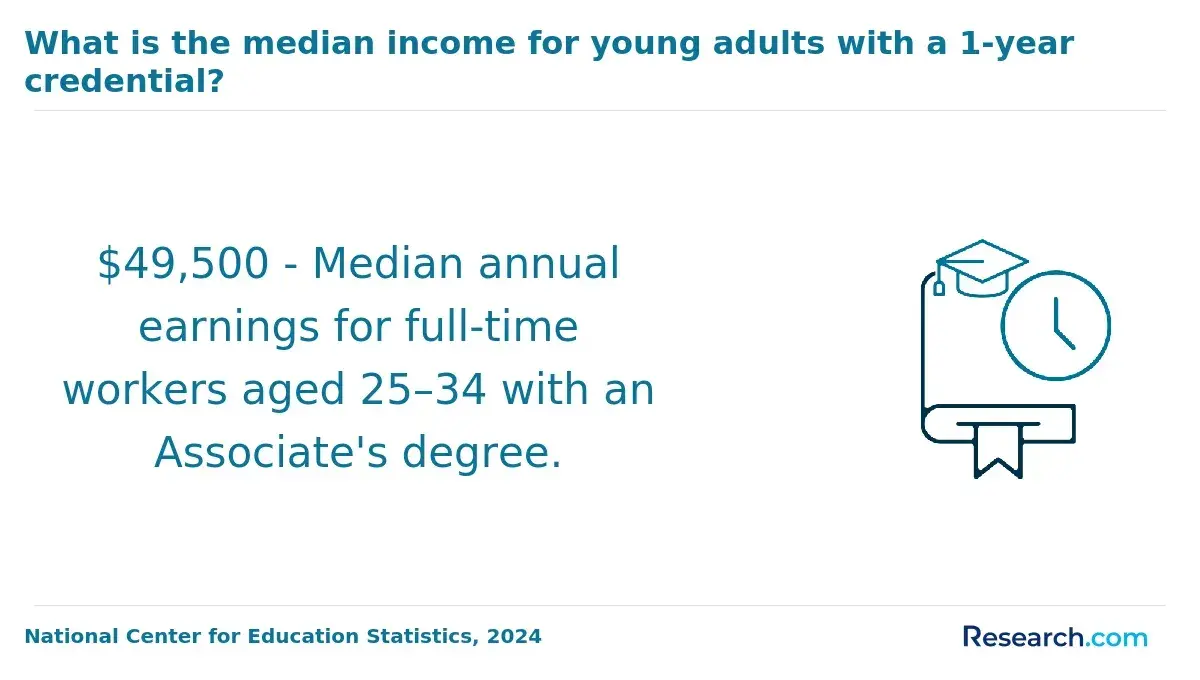
| Associate degree completed | May reduce a bachelor's-completion pathway to about 2 years | Whether the associate degree satisfies lower-division general education requirements |
| 60 to 90 transferable credits | May allow completion in about 12 to 24 months if major requirements are available online | Residency requirement, upper-division credit minimum, and major course rotation |
| Graduate transfer credit | May shorten a master's modestly if accepted | Maximum transferable graduate credits, course age limits, minimum grade, and syllabus review |
| Prior learning assessment | May reduce elective or general education credits in some undergraduate programs | Portfolio fees, exam options, credit limits, and whether credits apply to the degree plan |
To shorten your degree without creating surprises, request an official evaluation before committing. A verbal estimate from admissions is helpful, but it should not replace a written degree audit showing exactly which credits apply and which requirements remain.
Students should also ask whether accelerated terms are available for every remaining course. A school may accept many credits but still delay graduation if the final TESOL methods course, capstone, or practicum is offered only once per year.
What Are the Admission Requirements and Start Dates for Accelerated Online TESOL & Multilingual Learners Programs?
Admissions requirements vary by level. Master's programs usually require a bachelor's degree, transcripts, a minimum GPA, and sometimes a teaching license or classroom experience. Bachelor's-completion programs focus more on transferable credits, general education completion, and readiness for upper-division online coursework.
Accelerated programs often have more frequent start dates than traditional semester-based programs, but start-date flexibility does not remove admissions steps. The items below can affect whether you begin next month or wait another term.
- Transcript evaluation: Transfer-heavy applicants should request this early because official reviews can take time and may reveal missing prerequisites.
- Teaching license or background requirement: Some ESL or bilingual education pathways are designed for licensed teachers, while others are open to career changers or international educators.
- Field placement clearance: Programs with school-based observation may require background checks, district approval, or placement documentation before a course begins.
- English proficiency documentation: Applicants educated outside the U.S. may need TOEFL, IELTS, or other approved documentation, which can add time.
- Cohort deadline: A cohort program may have only a few starts per year, while an asynchronous accelerated program may admit students more frequently.
Applicants comparing education-adjacent online pathways, such as a library science degree, should pay similar attention to start dates, practicum expectations, and whether the credential aligns with school-based employment requirements.
A practical strategy is to apply with a complete file at least one term before your ideal start date. That gives you time to appeal transfer decisions, confirm state authorization, and build a realistic first-term course load instead of rushing into an accelerated schedule unprepared.
How Much Does a Fast Online TESOL & Multilingual Learners Degree Cost, and Is Financial Aid Available?
The cost of a fast online TESOL or multilingual learners degree depends on tuition model, transfer credit, technology fees, books, fieldwork costs, and how many terms you need. Faster graduation can reduce time away from career goals, but it does not always reduce tuition if the school charges by credit rather than by term.
National pricing data helps set expectations before you compare individual schools. College Board's 2024 pricing report listed these average published tuition and fee benchmarks for undergraduate institutions, which are not TESOL-specific but show why online students should compare total program cost rather than only per-credit tuition.
- Average published in-state tuition and fees at public four-year institutions: $11,610 for the 2024-25 academic year
- Average published tuition and fees at private nonprofit four-year institutions: $43,350 for the 2024-25 academic year
For graduate TESOL programs, the more useful comparison is total tuition for all required credits plus fees. A 30-credit master's with a higher per-credit rate may still cost less than a 36-credit program with a lower rate, depending on fees and transfer policies.
Financial aid may be available if the institution is eligible for Title IV federal student aid and the student meets enrollment requirements. Graduate students often rely on unsubsidized federal loans, employer tuition assistance, TEACH Grant eligibility when applicable, district reimbursement, scholarships, or payment plans.
If affordability is a major factor, compare TESOL programs with broader online graduate cost guides such as cheapest online masters options, but remember that licensure alignment and fieldwork access may matter more than finding the lowest sticker price.
Common cost mistakes include ignoring fees, assuming every accepted transfer credit reduces tuition, taking too many courses and withdrawing, or choosing a non-licensure program that later requires additional coursework. The fastest affordable path is usually the one with a clear degree audit, predictable course rotation, and no licensing surprises.
Can You Work Full Time While Completing an Accelerated Online TESOL & Multilingual Learners Degree?
Many students complete online TESOL and multilingual learners degrees while working full time, especially current teachers. The challenge is that accelerated online courses compress weekly reading, discussion, lesson planning, assessment projects, and field assignments into shorter windows.
The table below compares workload patterns. It can help you choose a pace that is fast enough to meet your goal without creating avoidable burnout or course withdrawals.
| Enrollment pace | Typical use case | Likely completion effect | Main trade-off |
| One accelerated course at a time | Full-time workers, teachers during the school year, caregivers | Steady progress, often 18 to 30 months for a master's | Slower than the fastest advertised path |
| Two accelerated courses at a time | Students with strong time management or lighter work seasons | May support 12 to 18 month master's completion | High weekly workload and less flexibility during field assignments |
| Year-round full-time graduate load | Students prioritizing speed over schedule flexibility | Shortest realistic calendar for many programs | Limited breaks and higher risk if work demands change |
| Competency-based pacing | Experienced educators who can demonstrate mastery quickly | Can be faster for self-directed students | Requires independent planning and quick completion of assessments |
Teachers should be especially careful with practicum or observation requirements. A course that looks manageable on paper may become difficult during testing season, parent conferences, or district reporting periods.
A realistic plan is to start with one accelerated course, learn the platform and assignment rhythm, then increase your load if your grades, work schedule, and fieldwork access are stable. Finishing one term later is usually better than withdrawing from a course that could delay financial aid progress or graduation.
Are Accelerated Online TESOL & Multilingual Learners Degrees Respected by Employers and Graduate Schools?
Accelerated online TESOL and multilingual learners degrees can be respected when they come from properly accredited institutions and match the credential expectations of the employer, school district, state licensing board, or graduate program. Employers generally care less about whether a course was 8 weeks or 16 weeks and more about whether the institution is legitimate, the curriculum is relevant, and the candidate can teach effectively.
For K-12 roles, the key issue is often licensure or endorsement. A master's in TESOL may strengthen a candidate's preparation, but it may not automatically add an ESL, bilingual education, or English learner endorsement unless the program is state-approved for that purpose.
Graduate schools may accept accelerated online degrees if they are regionally or institutionally accredited and the student meets GPA, prerequisite, and recommendation requirements. However, doctoral programs may look closely at research preparation, academic writing, and faculty recommendations, not just the speed of completion.
Students considering other school-based helping professions can compare credential expectations in related areas, including the cheapest online master's in counseling, because both fields show why state rules and supervised practice requirements can matter as much as the degree format.
The safest way to evaluate employer respect is to contact the specific district, charter network, adult education provider, university, or nonprofit where you hope to work. Ask whether the degree title, institution, and endorsement pathway meet their minimum qualifications before you enroll.
How Should You Compare the Fastest Accredited Online TESOL & Multilingual Learners Programs?
To compare the fastest accredited online TESOL and multilingual learners programs, look beyond the headline timeline. The best program is the one that lets you finish quickly while meeting your career, licensure, budget, and schedule needs.
The questions below are practical filters to use when speaking with admissions counselors or program directors. They help reveal whether a fast timeline is realistic for your specific background.
- What is the shortest possible completion time, and what course load does that require each term?
- How many students actually follow the fastest path while working full time?
- Are all required courses offered every term, including summer?
- Does the program include practicum, observation, student teaching, capstone, portfolio, or action research requirements?
- Will the program satisfy ESL, bilingual education, or English learner endorsement requirements in my state?
- How many transfer credits can apply, and will I receive a written degree plan before enrolling?
- Is tuition charged by credit, term, subscription period, or cohort package?
- What happens to my timeline if I skip a term or fail to complete a course on schedule?
The comparison table below summarizes common decision points. It is designed to help you choose between speed, flexibility, cost control, and credential fit.
| Decision factor | Fastest-looking option | Better question to ask | Why it matters |
| Course length | 7- or 8-week terms | How many courses can I safely take at once? | Short terms accelerate the calendar but increase weekly workload |
| Program length | 30-credit master's | Are there fieldwork, capstone, or endorsement requirements beyond coursework? | Extra requirements can extend completion even when credits are low |
| Transfer policy | High maximum transfer credits | Which of my credits apply to this exact degree plan? | Accepted credits do not always satisfy major or residency requirements |
| Licensure fit | Degree title includes TESOL or ESL | Does my state recognize this program for endorsement? | A fast degree may not meet public-school credential rules |
| Cost | Lowest tuition per credit | What is the total cost to finish, including fees and repeated terms? | Per-credit price can be misleading when program length differs |
If you are comparing online graduate degrees outside education, such as masters human resources programs, the same decision logic applies: verify accreditation, total cost, transfer rules, and whether the credential matches the career outcome you want.
The fastest TESOL program is usually best for students who already have strong academic writing skills, predictable weekly study time, and a clear credential goal. A slower timeline may be better for students changing careers, managing heavy work schedules, filling prerequisite gaps, or navigating state licensure requirements.
Other Things You Should Know About TESOL & Multilingual Learners
No. A TESOL degree is a full academic credential, usually a bachelor's or master's, while a certificate is shorter and may be non-degree or graduate-level. Certificates can be useful, but they may not meet employer, endorsement, or graduate-school expectations on their own.
Yes. Many accelerated programs include observations, practicum assignments, portfolios, or classroom-based projects. These requirements can often be completed locally, but students should confirm placement rules before enrolling.
Not automatically. Public-school teaching usually depends on state licensure and endorsement rules. Ask the program and your state education agency whether the degree leads to ESL, bilingual education, or English learner endorsement eligibility.
For many students, the quickest degree route is a 30-credit online TESOL master's with 7- or 8-week terms, year-round enrollment, and no unexpected licensure prerequisites. A graduate certificate may be faster, but it is not the same as earning a full degree.
References
- TEFL TESOL Accreditation | Affiliation Membership | | iTTi https://internationaltefltraininginstitute.com/itti-accreditation-affiliation-membership/
- TESOL: How many hours? | TESOL FAQs https://www.tesolcourse.com/tesol-faqs/tefl-tesol-courses/tesol-how-many-hours/
- TESOL Certificate: Is it really beneficial? https://ili.edu/news/is-it-really-beneficial-getting-a-tesol-certificate/
- Top 25 Great Values: Online Master’s in TESOL Degree Programs https://www.greatvaluecolleges.net/rankings/online-masters-tesol/
- Accreditation - Eaquals https://www.eaquals.org/accreditation/
- Financial Aid For Online Colleges https://www.affordablecollegesonline.org/financial-aid/financial-aid-for-online-colleges/
- TEFL/TEOL Courses Online – Asian College of Teachers https://www.asiancollegeofteachers.com/tefl-tesol-courses.php
- World TESOL Academy - TESOL/TEFL Certificate https://www.worldtesolacademy.com/
- TESOL/EL | Huntington University https://www.huntington.edu/graduate/education/programs/tesol
- The 12 Best Online TEFL Courses in 2026 | Go Overseas https://www.gooverseas.com/blog/best-online-tefl-courses