2027 Accredited Online Geoscience Degree Programs for Working Adults: Flexible, Part-Time, and Self-Paced Options

Co-Founder and Chief Data Scientist
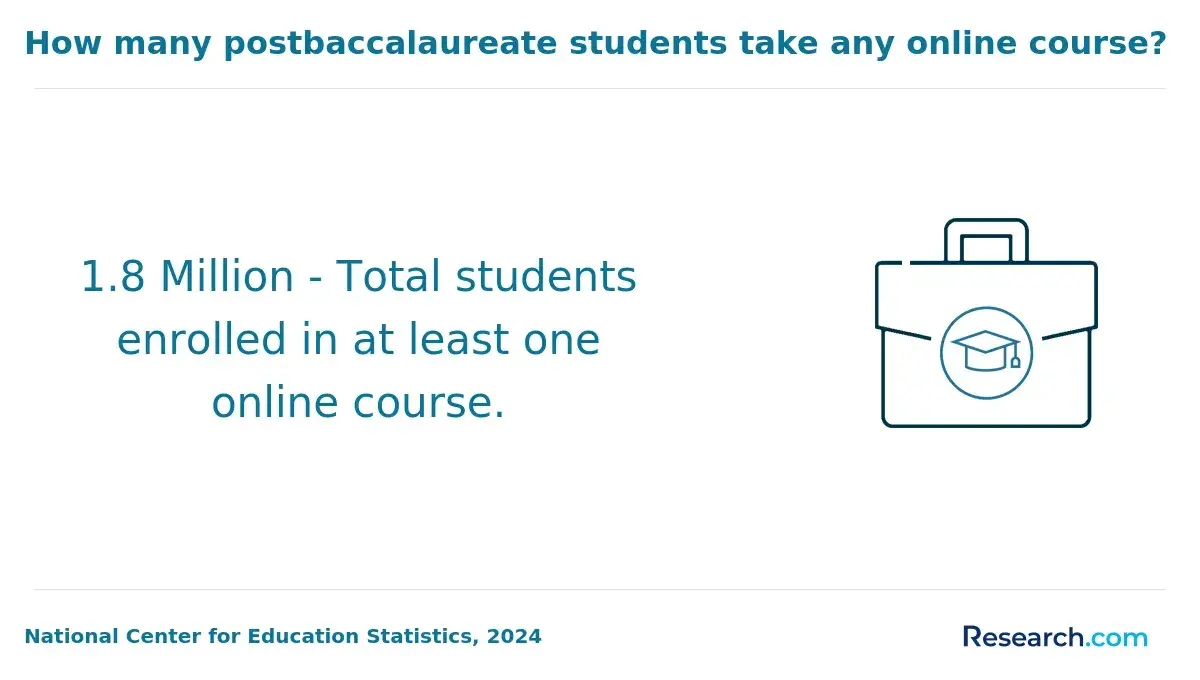
Choosing an online geoscience degree is hard when you also have a job, family schedule, and budget to protect. NCES data released in 2024 shows that more than half of U.S. undergraduates took at least one distance education course in fall 2022, making flexible online study a mainstream option rather than a backup plan.
This guide is for working adults comparing accredited online geoscience programs, part-time schedules, and self-paced courses. You will learn how to evaluate accreditation, cost, time commitment, transfer credits, hands-on requirements, and career fit before enrolling.
Key Things You Should Know
- Accreditation should be your first filter: choose an institution recognized by the U.S. Department of Education or CHEA, then confirm whether the curriculum supports state geologist licensure, graduate school prerequisites, or employer requirements.
- Part-time online geoscience study commonly fits full-time workers better than full-time enrollment, but a realistic workload is still about 8 to 12 hours weekly for one 3-credit course and more when labs, GIS projects, or field assignments are included.
- Transfer credits can shorten a bachelor's timeline substantially; many adult-friendly programs may accept 60 to 90 eligible credits, while College Board's 2024 pricing data shows published tuition and fees vary widely, from about $11,610 at public in-state four-year institutions to $43,350 at private nonprofit four-year institutions.
What Is an Accredited Online Geoscience Degree Program and Why Does Accreditation Matter?
An accredited online geoscience degree is a college program delivered fully or mostly online by an institution that has been reviewed by a recognized accrediting agency. Geoscience programs usually cover Earth systems, geology, environmental science, hydrology, mineral resources, geospatial analysis, climate processes, natural hazards, and scientific data interpretation. Some programs are broad earth science degrees, while others concentrate on geology, environmental geoscience, GIS, sustainability, or energy resources.
Accreditation matters because it affects financial aid eligibility, credit transfer, employer confidence, graduate school admission, and, in some states, professional geologist licensure. For working adults, it also reduces the risk of spending years and tuition on a credential that may not be recognized. Institutional accreditation is the baseline. Programmatic accreditation is less common in geoscience than in fields such as engineering or nursing, so students should focus on whether the degree has the right coursework, lab science, field components, and faculty expertise for their goals.
This comparison shows the main forms of recognition you may encounter and why each one matters when you are evaluating an online geoscience program.
| Recognition type | What it means | Why it matters for working adults |
| Institutional accreditation | The college or university has been evaluated by a recognized accreditor. | Usually required for federal financial aid, credit transfer, and employer tuition assistance. |
| Program-specific review | A department or curriculum may meet specialized standards, where available. | Helpful but not always available for geoscience; curriculum alignment can be more important than the label. |
| State licensure alignment | The coursework may meet education requirements for professional geologist pathways in certain states. | Critical if you plan to pursue licensed geologist roles, especially in environmental consulting, mining, water resources, or public agencies. |
| Employer recognition | Employers accept the school and degree as credible preparation. | Important for career changers who need the degree to signal scientific, technical, and analytical competence. |
If you are still deciding whether geoscience belongs on your long-term academic shortlist, it can help to compare it with other best majors for the future based on labor-market demand, technical skill development, and career flexibility.
Before applying, verify accreditation directly through the school, the accreditor, and federal or CHEA-recognized databases. A common mistake is assuming that "online," "licensed," or "state-approved" language on a website automatically means the degree will meet your intended career or licensure requirements. It may not.
Which Flexible Geoscience Degree Formats Are Best for Working Adults: Part-Time, Full-Time, or Self-Paced?
The best format depends on how predictable your schedule is, how quickly you need the credential, and how much science coursework you can realistically handle at once. In geoscience, flexibility is valuable, but lab assignments, mapping projects, proctored exams, and occasional field experiences can make the workload less flexible than in some lecture-only online majors.
The table below compares common online formats so you can match the program structure to your work schedule instead of choosing based only on marketing language.
| Format | Typical structure | Best fit | Main trade-off |
| Part-time asynchronous | One or two courses per term with weekly deadlines and recorded lectures. | Full-time workers, parents, military learners, and students with rotating schedules. | Slower completion, but often more sustainable. |
| Full-time online | Three to five courses per term, usually with fixed academic calendars. | Students who can reduce work hours or have strong financial and family support. | Faster progress, but science labs and quantitative assignments can create heavy weekly workloads. |
| Self-paced or competency-based | Students progress through modules within a defined subscription period or completion window. | Motivated adults with prior college experience and predictable study blocks. | Requires strong self-management; not all science labs or field courses can be fully self-paced. |
| Live online or hybrid | Scheduled evening classes, virtual labs, or occasional campus or field meetings. | Students who want instructor interaction and can commit to meeting times. | Less schedule freedom, but often better structure for difficult technical courses. |
Part-time study is often the safest choice if you work full time, especially during calculus, chemistry, physics, GIS, or upper-level geology courses. Self-paced study can work well if you already have strong study habits, but it is not the same as unlimited flexibility. Many programs still set term limits, exam windows, assignment checkpoints, or maximum time-to-completion rules.
Adults comparing flexible degrees sometimes look across fields to understand how acceleration works; for example, 1 year MSW programs online no BSW follow a different professional model than geoscience because Earth science programs often need labs, quantitative methods, and field-based learning that are harder to compress.
Use the following sequence when choosing a format, because the wrong format is one of the most common reasons working adults withdraw or slow down.
- Estimate your weekly study capacity before you estimate your graduation date.
- Ask whether online labs are asynchronous, live, mailed as lab kits, simulation-based, or completed during short residencies.
- Check whether exams require proctoring during business hours, evenings, or flexible windows.
- Confirm whether summer terms are optional, required, or recommended for faster progress.
- Choose the fastest format you can sustain, not the fastest format advertised.
What Are the Admission Requirements for Accredited Online Geoscience Degree Programs?
Admission requirements vary by degree level, but accredited online geoscience programs usually look for evidence that you can handle college-level science, math, writing, and technical coursework. Bachelor's programs may admit first-year students, transfer students, or degree-completion students. Master's programs usually expect a science background, though some environmental or geospatial programs may accept applicants from adjacent fields with prerequisite coursework.
Most adult learners should pay close attention to prerequisites, not just the application form. A program may be online, but geoscience still often requires chemistry, physics, statistics, calculus, environmental science, or introductory geology before upper-division courses.
Common admission materials include the following, and each item can affect how quickly you are admitted or placed into the right course sequence.
- Official transcripts from high school and all previously attended colleges.
- Minimum GPA requirements, often with separate standards for transfer or graduate applicants.
- Prerequisite science and math courses, especially for advanced geology, hydrology, geophysics, or GIS tracks.
- Personal statement or career-goal essay, particularly for graduate programs or competitive departments.
- Letters of recommendation, more common for master's programs than bachelor's programs.
- Resume or work history, which can help adult learners explain technical, military, environmental, construction, energy, or public-sector experience.
Do not assume that professional experience will replace science prerequisites. Some schools may consider prior learning for general education or elective credit, but lab science requirements are often stricter because they support later fieldwork, licensure, and graduate-level readiness.
A practical step is to request an unofficial transfer evaluation before you apply or immediately after submitting transcripts. Ask the admissions advisor to show which credits apply to the major, which count only as electives, and which prerequisites you still need. This prevents the common mistake of believing you are "two years from graduation" when several required science courses are still outstanding.
Online geoscience degree costs depend on residency status, public versus private institution, transfer credits, lab fees, technology fees, field course costs, and whether the school charges online students a flat or per-credit tuition rate. College Board's 2024 pricing report lists average published tuition and fees of $11,610 for in-state public four-year institutions and $43,350 for private nonprofit four-year institutions, which shows why school type and transfer credit strategy matter so much.
For a working adult, the sticker price is only one part of the total cost. Geoscience students may also pay for field trips, GIS software access, lab kits, proctoring, textbooks, safety gear, or travel to short campus residencies.
- Public in-state four-year published tuition and fees: about $11,610 per academic year.
- Private nonprofit four-year published tuition and fees: about $43,350 per academic year.
- Public two-year published tuition and fees: about $4,050 per academic year, which can make community college transfer pathways attractive for general education and lower-division science courses.
The table below summarizes cost factors that are especially relevant to online geoscience students because science degrees often include expenses that do not appear in lecture-only programs.
| Cost factor | Why it matters | How it can affect working adults |
| Per-credit tuition | Most online programs charge by credit hour. | Part-time students may pay gradually, but total tuition can rise if they repeat courses or lose transfer credits. |
| Residency pricing | Some public universities offer lower rates to in-state students. | Out-of-state online tuition may reduce affordability unless the school has a special online rate. |
| Lab and field fees | Geoscience may require lab kits, software, travel, or field intensives. | These costs can create cash-flow issues if they are charged in a single term. |
| Technology costs | GIS, remote sensing, and data-analysis courses may require capable hardware or software access. | Older laptops may not be enough for mapping or modeling assignments. |
| Time away from work | Field experiences or residencies may require leave from employment. | Lost wages or unpaid leave should be included in the affordability calculation. |
Financial aid options may include the FAFSA, federal grants, federal student loans, state grants, institutional scholarships, employer tuition assistance, military education benefits, workforce funding, and payment plans. If you are studying part time, confirm the minimum credit load needed to receive or keep aid because dropping below half-time enrollment can affect loan eligibility or repayment status.
If your immediate goal is a low-cost career pivot rather than a full science degree, a shorter credential such as a bookkeeping course may offer a faster return, but it will not substitute for geoscience coursework required for geology, hydrology, environmental science, or GIS-heavy roles.
A bachelor's degree in geoscience typically requires about 120 credits. Full-time students may finish in about four academic years, while working adults studying part time often take longer. The biggest timeline variables are transfer credits, math placement, science prerequisites, course availability, and whether required labs or field experiences are offered every term.
The table below gives a practical timeline comparison for working adults. It is not a promise of completion time, but it shows how enrollment intensity changes the path.
| Enrollment pattern | Common course load | Approximate pace | Schedule consideration |
| Full-time | 12 to 15 credits per term | Fastest route for students starting from scratch. | May be difficult with full-time employment because science courses can require labs and multi-step projects. |
| Part-time | 3 to 9 credits per term | More realistic for many working adults, but extends completion. | Best when job, caregiving, or military obligations limit weekly study time. |
| Transfer degree-completion | Major courses plus remaining general education | Can shorten the timeline if prior credits apply directly. | Most useful when prior coursework includes math, chemistry, biology, physics, or introductory geology. |
| Self-paced terms | Variable modules or competency units | Can be faster for disciplined students with prior knowledge. | May not be available for lab-heavy upper-level geoscience requirements. |
Transfer credit can be one of the most powerful tools for reducing cost and time. Many adult-friendly bachelor's programs evaluate previous college courses, military training, standardized exams, and sometimes prior learning, but major requirements are usually more restrictive than electives.
Take these steps before assuming your transfer credits will save time.
- Request a course-by-course transcript evaluation, not just an estimate of total accepted credits.
- Ask which credits apply to the geoscience major, general education, prerequisites, and electives.
- Confirm the maximum number of transfer credits allowed toward the degree.
- Check whether older science credits expire or need department approval.
- Ask when upper-level required courses are offered so you do not lose time waiting for a once-a-year class.
If speed is your top priority and you are still deciding whether you need a full bachelor's degree, researching an associate degree in 6 months online can help you understand how shorter academic pathways differ from a science-heavy geoscience degree.
Working adults should compare online geoscience programs by accreditation, curriculum depth, flexibility, transfer policy, cost, student support, and career alignment. A program that is convenient but weak in science requirements may not support graduate study, state licensure, or technical roles. A rigorous program that offers little scheduling flexibility may be hard to finish while working full time.
The table below highlights common red flags and better alternatives. Use it to avoid decisions that look efficient at enrollment but become expensive later.
| Common mistake or red flag | Why it is risky | Better alternative |
| Enrolling before verifying accreditation | Credits, aid, and employer recognition may be limited. | Confirm institutional accreditation through recognized databases and the school's official accreditation page. |
| Assuming "flexible" means no deadlines | Most online courses still have weekly due dates, exams, and lab milestones. | Ask for a sample syllabus before enrolling. |
| Ignoring field or lab requirements | Travel, time off work, and fees can surprise adult learners. | Confirm every in-person, virtual, or field-based requirement in writing. |
| Choosing only by lowest tuition | Low tuition may be offset by fees, poor transfer fit, or limited course availability. | Compare total degree cost after transfer credits and required fees. |
| Overlooking licensure alignment | Some geologist roles require state-specific education and experience. | Contact the state licensing board if licensure is part of your goal. |
| Underestimating technical requirements | GIS, mapping, and modeling courses may require stronger hardware or software access. | Review technology specifications before the first term. |
You should also compare the curriculum against your intended outcome. Environmental geoscience, petroleum geology, hydrogeology, GIS, earth science education, and climate-related pathways may require different electives, lab sequences, and internship opportunities.
Ask admissions and academic departments these questions before committing, because answers from the catalog alone may not reveal how the program works for adult learners.
- Are lectures asynchronous, live, or a mix of both?
- How many hours per week do successful part-time students spend on one lab science course?
- Are online labs accepted for prerequisite sequences and licensure pathways?
- Are field courses required, and can they be completed locally or during short intensives?
- How often are upper-level geoscience courses offered online?
- What GIS, remote sensing, coding, statistics, or data-analysis tools are included?
- What percentage of the degree can be completed online, including labs and capstone work?
Licensure-sensitive programs vary widely by field; comparing geoscience with online clinical psychology programs can be useful because both require students to look beyond online convenience and verify state-specific professional requirements.
A geoscience degree can support careers in environmental consulting, water resources, energy, mining, GIS, hazard assessment, climate and sustainability work, government agencies, education, and research support. The strongest outcomes usually come from combining geoscience knowledge with marketable technical skills such as GIS, remote sensing, statistics, Python or R, database work, field methods, environmental regulations, and scientific communication.
The U.S. Bureau of Labor Statistics Occupational Outlook Handbook released in 2024 reports a median annual wage of $92,580 for geoscientists based on May 2023 wage data and projects 5% employment growth from 2023 to 2033. That figure is useful as a national benchmark, but it does not mean every geoscience graduate will earn that amount; pay varies by role, location, experience, industry, licensing, and graduate education.
The table below summarizes common career directions so you can connect program features with realistic job targets.
| Career path | Typical work | Program features to prioritize |
| Environmental consultant | Site assessments, remediation support, sampling, compliance documentation, and field reporting. | Hydrogeology, environmental regulation, soil science, chemistry, field methods, and report writing. |
| GIS or geospatial analyst | Mapping, spatial databases, remote sensing, hazard models, and land-use analysis. | GIS software, remote sensing, spatial statistics, Python, databases, and portfolio projects. |
| Hydrology or water resources support | Groundwater, surface water, watershed studies, sampling, and data analysis. | Hydrology, quantitative methods, chemistry, modeling, and field experience. |
| Energy or mineral resources | Subsurface interpretation, resource evaluation, mapping, and exploration support. | Sedimentology, structural geology, geophysics, stratigraphy, and field mapping. |
| Earth science education | Teaching, curriculum support, museum education, outreach, or informal science communication. | Earth systems, pedagogy if required, communication, and state teaching requirements where applicable. |
Current hiring trends favor candidates who can work with data, maps, sensors, and interdisciplinary environmental problems. AI and automation are changing some routine mapping and data-cleaning tasks, but they also increase the value of professionals who can interpret Earth systems, validate model outputs, understand uncertainty, and communicate scientific findings to clients or policymakers.
A geoscience degree may be worth it if your target roles require scientific training, field competence, technical data skills, or a pathway to graduate study or licensure. It may be less suitable if you want a fully desk-based program with no lab or field expectations, need the fastest possible credential, or are not interested in math, chemistry, spatial reasoning, or scientific writing.
Balancing geoscience coursework with full-time work requires more planning than many online programs advertise. A single 3-credit course can require significant reading, problem sets, lab analysis, map interpretation, discussion posts, and exams. Upper-level courses may also require multi-week projects that cannot be completed the night before they are due.
The most sustainable strategy is to design your enrollment around your actual life, not an ideal week. If your work schedule changes seasonally, avoid taking the hardest science courses during peak work periods. If you have caregiving responsibilities, ask whether deadlines are weekly, fixed, or flexible within a module.
These practical steps can help you stay on track without overloading your schedule.
- Start with one course in your first term if you have been out of school for several years.
- Reserve recurring study blocks before the term begins, including one backup block for emergencies.
- Take math, chemistry, physics, and lab-heavy geoscience courses during terms when work is predictable.
- Tell your employer early if a field intensive, proctored exam, or synchronous session may require schedule changes.
- Use academic advising before every registration period to avoid taking courses out of sequence.
- Build a weekly checklist for readings, labs, discussion posts, quizzes, and project milestones.
- Pause acceleration when major life events, overtime, or caregiving demands increase.
One common mistake is treating asynchronous courses as "do anytime" courses. Asynchronous usually means you do not attend at a fixed class time, not that deadlines disappear. Another mistake is enrolling full time because financial aid or graduation projections look better, then withdrawing from a lab science course that was essential for the next term.
If you are unsure whether you can handle the workload, ask the program for sample syllabi from an introductory geoscience course, a lab course, and an upper-level major course. Comparing all three will show whether the workload increases gradually or becomes difficult to manage later.
Strong support services matter because online science students need more than recorded lectures. They need access to advising, tutoring, labs, software, faculty feedback, research help, and career guidance. For working adults, the timing of support is just as important as the existence of support; services available only during weekday business hours may not be useful.
The table below shows support resources that can make a major difference in an online geoscience program.
| Support resource | Why it matters | What to check |
| Dedicated academic advising | Geoscience courses often have strict sequences. | Whether advisors understand transfer credits, prerequisites, and online course rotation. |
| Science and math tutoring | Calculus, chemistry, physics, statistics, and quantitative geology can be challenging online. | Whether evening or weekend tutoring is available. |
| Online lab support | Students may need help with lab kits, simulations, data sets, or field observations. | Whether lab instructors offer virtual office hours and clear technical instructions. |
| GIS and software access | Modern geoscience jobs often require geospatial tools. | Whether software is included, cloud-based, or requires a high-performance computer. |
| Library and research help | Scientific writing requires credible sources and data interpretation. | Whether librarians support remote students and discipline-specific databases. |
| Career services | Adult learners may need help translating prior work experience into geoscience roles. | Whether services include resume review, employer connections, internships, and LinkedIn or portfolio guidance. |
Ask whether online students have the same access to faculty, tutoring, library services, career coaching, disability accommodations, and veteran or military support as campus students. Also ask how quickly instructors typically respond to emails or discussion questions, especially in technical courses where delays can block progress.
Good online learning resources should also help you build a portfolio. GIS maps, field reports, environmental assessments, data visualizations, and capstone projects can show employers what you can do, which is especially valuable for adults changing careers from another field.
Do Online Geoscience Degree Programs Include Internships, Practicums, or Other Hands-On Learning Requirements?
Many online geoscience programs include hands-on learning because Earth science is applied, observational, and data-driven. Depending on the program, hands-on requirements may include online labs, mailed lab kits, local field observations, short campus residencies, summer field courses, internships, GIS projects, research projects, or capstones.
The table below explains common hands-on components and why they matter when you are choosing a program around work and family responsibilities.
| Hands-on component | What it may involve | Why it matters |
| Online or virtual labs | Rock and mineral identification, maps, simulations, data analysis, or lab kits. | Supports science learning, but may still require scheduled exams or specialized materials. |
| Field course or field intensive | Short-term mapping, sampling, observation, or geology fieldwork. | Important for geology pathways and licensure preparation, but may require travel and time off work. |
| Local field assignments | Observing landforms, collecting environmental data, or documenting local geology. | Can be flexible, but students need safe and approved locations. |
| Internship | Work with an environmental firm, agency, lab, nonprofit, utility, or resource company. | Builds experience and contacts, but scheduling may be difficult for full-time workers. |
| Capstone or research project | Independent analysis, GIS project, environmental report, or applied research. | Creates portfolio evidence for employers or graduate programs. |
Before enrolling, ask whether hands-on requirements can be completed near your home, during evenings or weekends, or through your current employer if your work is related to environmental, construction, energy, public works, GIS, or safety operations. Some programs allow local placements, while others require approved sites or specific faculty-supervised experiences.
Do not skip this step if licensure is part of your plan. State geologist licensing boards may have specific expectations for coursework, field geology, supervised experience, exams, or degree content. Online delivery alone is not usually the problem; the issue is whether the program includes the required scientific preparation.
Other Things You Should Know About Geoscience
It can be. Many programs require statistics, algebra-based or calculus-based quantitative work, chemistry, physics, and data analysis. GIS, hydrology, geophysics, and climate-related courses tend to be more quantitative than general earth science survey courses.
Common tools may include GIS platforms, spreadsheet software, statistical tools, remote sensing applications, mapping databases, and learning management systems. Requirements vary, so check whether software licenses are included in tuition or fees.
Yes, if the program includes the science, math, lab, and research preparation expected by graduate departments. Students considering a master's or PhD should choose electives carefully and ask faculty advisors about research, fieldwork, and thesis preparation.
No. Energy is one pathway, but geoscience also supports environmental consulting, water resources, GIS, climate risk, natural hazards, sustainability, public agencies, education, and research support roles.
- Online, Hybrid, and More: Flexible Learning Options in College - ReUp Education https://reupeducation.com/blog/online-hybrid-and-more-flexible-learning-options-in-college/
- Self-Paced Online Degree Programs https://www.umassglobal.edu/why-umassglobal/flexible-ways-to-learn/self-paced
- DelftX: Geoscience: the Earth and its Resources | edX https://www.edx.org/learn/geosciences/delft-university-of-technology-geoscience-the-earth-and-its-resources
- Guide To Self-Paced Online Colleges And Courses https://www.affordablecollegesonline.org/college-resource-center/self-paced-online-college/
- Graduate program https://www.ga.gov.au/about/careers/graduate-program
- Online Geoscience Degrees: Top Schools and All Programs in 2026 https://www.gisdegree.org/online/geoscience-degrees/
- Online Learning Geology Resources for Professionals and Hobbyists https://www.aegweb.org/index.php
- Section 3. Graduate Programs and their Interface to Geoscience Work https://graduate.americangeosciences.org/report/section-3/
- The Geological Society - Degree Accreditation https://www.geolsoc.org.uk/education-and-resources/universities/university-degree-accreditation/
- Flexible online colleges https://www.gatewayunj.org/student-stories/flexible-college-programs-making-it-possible-to-earn-your-degree-on-your-schedule