2027 Best Online Geoscience Degree Programs at Nonprofit Universities

Co-Founder and Chief Data Scientist
Choosing an online geoscience degree requires more than finding a nonprofit university with online classes: field and laboratory requirements, accreditation, and career goals can change the value of a program substantially. The U.S. Bureau of Labor Statistics projects employment of geoscientists to grow 5% from 2023 to 2033, faster than the average for all occupations. This guide helps prospective students compare nonprofit programs by degree level, total cost, learning format, academic rigor, and career preparation before applying.
Key Things You Should Know
- Institutional accreditation is essential for federal aid, transfer credit, and graduate-school eligibility; nonprofit status alone does not establish academic quality.
- A bachelor's degree is the usual entry credential for geoscientist roles, while many online options are master's degrees designed for working professionals with prior science coursework.
- The Bureau of Labor Statistics projects 5% employment growth for geoscientists from 2023 to 2033, but students should match coursework, field experience, and any state-specific requirements to their intended role.
What Makes an Online Geoscience Degree Program at a Nonprofit University Different?
An online geoscience degree at a nonprofit university is a degree in earth science or a closely related discipline delivered partly or substantially through digital instruction. Geoscience encompasses geology, environmental geoscience, geophysics, hydrology, paleontology, ocean science, geographic information systems (GIS), and related fields that study Earth materials, processes, resources, and hazards.
Public universities are generally nonprofit, and many private universities are also nonprofit. Their revenue is typically reinvested in institutional operations, instruction, research, and student services rather than distributed to owners or shareholders. That organizational model may matter to some students, but it should not substitute for evaluating the individual program's curriculum, faculty, costs, and outcomes.
For students still weighing several career directions, reviewing best majors for the future can help place geoscience alongside other fields with different training and labor-market paths. Geoscience is especially suitable for learners interested in environmental systems, natural hazards, mapping, water, energy, climate, or Earth history.
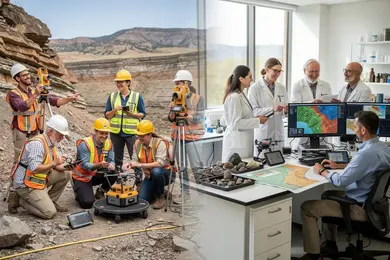
The most important distinction is often program design, not tax status. Fully online programs may focus on environmental management, GIS, or applied geoscience for professionals, while geology programs preparing students for field-intensive work may use online lectures alongside in-person labs, field courses, campus visits, or approved local experiences.
| Program type | Typical fit | Common academic emphasis | Potential limitation to check |
| Associate degree | Students exploring the field or planning to transfer | General education, introductory geology, math, science | Usually does not qualify graduates for geoscientist roles |
| Bachelor's degree | Career changers and first-time degree seekers | Geology, chemistry, physics, calculus, labs, field methods | May require significant in-person field or lab work |
| Master's degree | Working professionals or bachelor's graduates | Applied geoscience, environmental science, GIS, geospatial analysis | Prerequisite science coursework may be required |
| Doctoral degree | Research-focused students | Original research and advanced specialization | Rarely available fully online |
Use this comparison to identify the level that matches your starting point. A transfer-oriented associate degree can reduce the cost of general education, but a bachelor's is normally the more direct academic foundation for technical geoscience employment and graduate study.
How Can Students Verify Accreditation for an Online Geoscience Degree at a Nonprofit University?
Start with institutional accreditation. An institution should be accredited by an accrediting agency recognized by the U.S. Department of Education or the Council for Higher Education Accreditation. Institutional accreditation supports access to federal student aid and makes it more likely that other colleges, employers, and graduate schools will recognize the credential, although transfer-credit decisions remain individual institutions' decisions.
Geoscience does not have one universal programmatic accreditor comparable to those used in some regulated health fields. Instead, students should examine whether the curriculum includes the foundational courses needed for their goals, especially geology, chemistry, physics, mathematics, field methods, and laboratory science. For GIS-focused programs, review the technical coursework, software access, portfolio expectations, and faculty expertise.
Follow these verification steps before paying an application fee:
- Confirm the university's current institutional accreditation through the accreditor and federal accreditation directories.
- Ask whether the exact online degree appears on the institution's official catalog and transcript.
- Request a degree plan showing required science, mathematics, laboratory, field, internship, and residency components.
- Check whether the curriculum meets prerequisites for target graduate programs, certifications, or state geology licensing rules.
- Obtain transfer-credit and prior-learning policies in writing if you expect to bring credits from another institution.
A common mistake is treating a university's nonprofit status as proof of accreditation. Another is confusing a professional affiliation, industry membership, or software badge with academic accreditation. Verify both the institution and the specific academic pathway you intend to complete.
How Rigorous Are Online Geoscience Degree Programs at Nonprofit Universities?
A credible online geoscience program should be academically comparable to its campus-based counterpart in learning outcomes, assessment standards, faculty oversight, and required credits. Online delivery changes how instruction occurs; it should not eliminate quantitative analysis, scientific writing, data interpretation, laboratory reasoning, or field-based learning where those outcomes are central to the degree.
Rigor varies by degree level and specialization. An online environmental geoscience master's may emphasize spatial analysis, environmental policy, remote sensing, risk assessment, and applied projects. A geology bachelor's intended to support professional practice generally needs a deeper sequence in mineralogy, petrology, stratigraphy, structural geology, chemistry, physics, and field methods.
Before enrolling, examine how the program teaches skills that cannot be assessed well through recorded lectures alone:
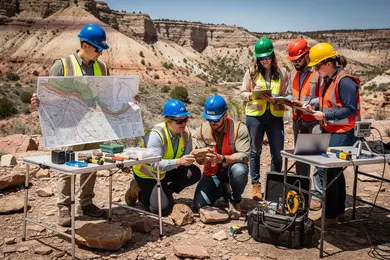
- Laboratory courses should explain whether students use mailed kits, virtual simulations, local facilities, short campus sessions, or in-person intensives.
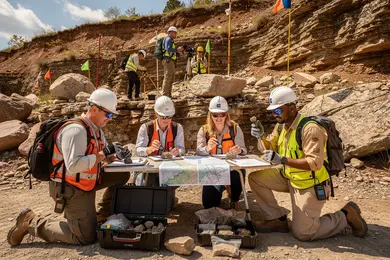
- Field requirements should identify the number of days, location, travel costs, safety expectations, and whether alternatives are permitted.
- GIS and geospatial courses should specify software, computing requirements, technical support, and portfolio-based assignments.
- Capstones should require applied analysis, research, mapping, or a project connected to a realistic geoscience problem.
Asynchronous classes can work well for reading, data analysis, and discussion, but they still have weekly deadlines. Synchronous seminars can provide live faculty access and peer collaboration, yet may be difficult for students in different time zones or with inflexible work schedules. Ask for a recent course schedule rather than relying on general statements that a program is "100% online."
Total cost is more useful than advertised tuition per credit. Costs may include mandatory fees, technology charges, textbooks, software, lab kits, proctoring, travel, lodging, field equipment, and health insurance requirements. Public nonprofit universities often offer lower rates to in-state undergraduates, while private nonprofit institutions may use one tuition rate but sometimes provide institutional scholarships that narrow the published-price difference.
For broad context, the College Board's 2024-25 published tuition and fees averages were $11,610 for in-state students at public four-year institutions and $43,350 at private nonprofit four-year institutions. These are national published-price averages, not the cost of a particular online geoscience program or the net price after grants. Use them only as a reminder to compare actual aid offers and program-specific expenses.
The following cost categories help students build a realistic comparison across schools.
| Cost category | Why it matters for geoscience students | What to request from the school |
| Tuition per credit | Determines the base cost and may differ by residency or program | Rate for your degree and anticipated start term |
| Required fees | Online, student-service, laboratory, and graduation fees can add up | Itemized mandatory-fee schedule |
| Fieldwork expenses | Travel and equipment may not be included in tuition | Typical annual and total field-course estimate |
| Technology and software | GIS, remote sensing, and data-analysis work may require capable hardware | Required computer specifications and software costs |
| Transfer credits | Accepted credits can shorten time to degree | Written preliminary transfer evaluation |
Lower tuition is not automatically the best value. A cheaper program can cost more overall if it accepts few transfer credits, requires repeated travel, lacks necessary prerequisite courses, or does not satisfy your graduate-school or licensing plan. Conversely, a higher-priced program may be reasonable if its aid package, transfer policy, required experiences, and career alignment materially reduce your time or risk of needing additional coursework later.
Eligible students at accredited nonprofit institutions may pursue federal grants, federal Direct Loans, work-study opportunities where available, state grants, institutional scholarships, private scholarships, employer tuition assistance, and veterans' education benefits. Complete the Free Application for Federal Student Aid early because school and state deadlines can be earlier than the federal deadline.
Graduate students should pay particular attention to the difference between grants and loans. Federal aid eligibility does not mean a program is affordable, and borrowing should be evaluated against total program cost, expected completion time, and the type of work you plan to pursue after graduation.
Build an aid plan using sources in an order that limits unnecessary borrowing:
- Submit the FAFSA and resolve any verification requests promptly.
- Ask the financial-aid office whether online students qualify for the same institutional scholarships as campus students.
- Search for scholarships connected to geology, environmental science, water resources, GIS, conservation, or your state and local professional associations.
- Check whether an employer offers tuition assistance, paid professional development, or reimbursement for GIS and environmental training.
- Compare net-price estimates and loan terms across your final choices before accepting federal or private loans.
Students considering another service-oriented graduate field may also compare funding structures in 1 year MSW programs online no BSW. The programs serve different careers, but the same principle applies: compare the full financing plan, prerequisites, practicum expectations, and time to completion rather than tuition alone.
Be cautious with scholarship promises that require enrolling before a complete aid offer is available. Ask whether an award is renewable, what academic progress is required, and whether it applies to online enrollment, summer terms, and any required field components.
Flexibility depends on more than whether lectures are online. The most workable program for a full-time employee may offer multiple start dates, part-time enrollment, asynchronous coursework, predictable deadlines, and a clear path for completing any field or laboratory work. Programs with cohort schedules or required live meetings can be excellent academically but may be less adaptable.
Accelerated terms can reduce calendar time, yet they compress reading, assignments, and exams into fewer weeks. Students balancing work or caregiving should calculate weekly workload rather than choosing the shortest advertised completion time. Learners seeking a short entry credential in another area can review an associate degree in 6 months online, but geoscience degrees with laboratory and field expectations often require a more structured timeline.
| Format feature | Best for | Question to ask |
| Asynchronous weekly courses | Working students needing time-of-day flexibility | Are exams, labs, or presentations scheduled at fixed times? |
| Live online classes | Students who value real-time interaction | Are sessions recorded, and is attendance required? |
| Part-time sequence | Students managing work or family commitments | Can required courses be taken in the needed order? |
| Accelerated terms | Students with substantial weekly study time | How many hours per week are expected in each course? |
| Hybrid field intensive | Students able to travel periodically | Where, when, and at what additional cost is it held? |
Do not assume that "online" means self-paced. Confirm deadlines, group projects, proctored examinations, travel windows, and whether a missed field intensive delays graduation until the next offering.
Strong online support should help students complete technical coursework, navigate university systems, and prepare for next steps. At a minimum, look for academic advising, online library access, tutoring or writing support, disability services, technology help, career services, financial-aid counseling, and responsive faculty communication.
Geoscience students may need additional support that is easy to overlook during admission. GIS software assistance, access to scientific databases, remote laboratory guidance, field-safety training, internship coordination, and help finding local research or volunteer opportunities can have a direct effect on learning and professional readiness.
Ask each university which of the following services are available specifically to distance learners:
- Subject-specific tutoring in mathematics, chemistry, physics, statistics, programming, or GIS.
- Online library support for peer-reviewed geoscience literature, maps, datasets, and citation management.
- Career coaching for resumes, technical portfolios, internships, and employer networking.
- Accessibility accommodations for online testing, field participation, and instructional materials.
- Technical assistance for learning platforms, remote desktop access, and specialized geospatial software.
Career support varies widely by institution, so ask for concrete examples rather than a general assurance that services are available. Students developing transferable administrative skills alongside a science degree may find a bookkeeping course useful for a different professional purpose, but it does not replace geoscience coursework, field experience, or technical portfolio development.
They can, provided the degree's curriculum and experiences match the role. Geoscience graduates work in environmental consulting, water resources, conservation, environmental compliance, GIS and geospatial analysis, natural-hazard assessment, energy and minerals, land management, education, and research. Requirements differ: some employers hire broadly trained environmental scientists or GIS specialists, while geology and geophysics roles may require a more prescribed science sequence and field experience.
The U.S. Bureau of Labor Statistics reports a 2023 median annual wage of $99,240 for geoscientists and projects 5% employment growth from 2023 to 2033. This occupation-level figure is not a promised salary for every graduate; pay varies by job title, geography, employer, experience, degree level, and specialization. It is most useful as evidence that technical Earth-science expertise remains relevant across resource, environmental, and hazard-related work.
| Career direction | Helpful preparation | Degree-planning consideration |
| Environmental consulting | Environmental regulations, sampling, report writing, GIS | Seek applied projects and internship support |
| GIS or geospatial analysis | Cartography, spatial analysis, remote sensing, coding | Build a reviewable technical portfolio |
| Hydrology or water resources | Hydrogeology, chemistry, statistics, field sampling | Check advanced math and science prerequisites |
| Geology and geophysics | Mineralogy, structural geology, physics, field methods | Verify that online delivery includes field and lab learning |
| Environmental education or policy | Communication, environmental systems, data literacy | Consider whether teaching or policy credentials are also needed |
Artificial intelligence and automation increasingly assist with data processing, remote sensing, mapping, and modeling, but they do not remove the need to evaluate data quality, explain uncertainty, follow environmental rules, and make defensible scientific judgments. Programs that teach GIS, quantitative reasoning, programming, scientific communication, and ethical data use can better support adaptable career preparation.
Yes, an online degree from an appropriately accredited nonprofit university can prepare students for graduate school when it provides the necessary academic foundation and the receiving graduate program recognizes the coursework. Graduate admissions committees commonly review institutional accreditation, cumulative and science GPA, prerequisite courses, recommendations, statement of purpose, research or applied experience, and evidence that the applicant can handle advanced quantitative work.
A bachelor's degree is usually the standard preparation for a geoscience master's. A master's can be appropriate for professionals seeking advanced technical specialization or for students aiming toward research, leadership, or more competitive scientific roles. Doctoral study is generally most appropriate for those pursuing original research, university teaching, or highly specialized scientific careers.
Students should map prerequisites backward from their target graduate programs. A general environmental studies degree may be valuable, but it may not include the calculus, chemistry, physics, geology labs, or field methods required for a geology, hydrology, geophysics, or Earth-science graduate program.
As a comparison point, applicants exploring behavioral-health pathways may look at online clinical psychology programs. Both fields illustrate why prospective students should distinguish an online academic degree from a credential that independently authorizes professional practice; licensing and admission requirements are field- and state-specific.
Before enrolling, email admissions offices at two or three target graduate schools with your proposed undergraduate course list. Ask whether the degree and specific prerequisites would be acceptable for the program you want. Written guidance is more reliable than assuming that a degree title alone will satisfy admission requirements.
How Should Students Compare the Best Online Geoscience Degree Programs at Nonprofit Universities?
The best online geoscience program is the one that fits your academic background, budget, schedule, and intended outcome. A low-cost, transfer-friendly public bachelor's may be the strongest value for a student needing foundational science courses. A specialized private nonprofit master's may fit an employed environmental professional who already has prerequisites and needs a targeted, flexible curriculum. Neither option is automatically better.
Create a short list of three to five programs, then compare the same information for each one. The table below identifies the decision factors most likely to affect both completion and career usefulness.
| Comparison factor | Strong sign | Red flag |
| Accreditation | Current institutional accreditation and transparent catalog information | Vague claims or difficulty identifying the accreditor |
| Curriculum | Required courses clearly match your career or graduate-school target | Degree title without detailed course descriptions |
| Experiential learning | Field, lab, internship, or capstone requirements are specific and feasible | Unexpected travel or unclear hands-on expectations |
| Total cost | Written estimate includes fees, technology, and field expenses | Only a per-credit tuition figure is provided |
| Flexibility | Course sequence, meeting times, and residency dates are published | "Flexible" format with undisclosed live requirements |
| Transfer policy | Preliminary credit review and maximum-transfer rules are clear | Credits evaluated only after substantial enrollment |
| Career support | Portfolio, internship, faculty, and alumni resources fit geoscience goals | Generic services with no support for online students |
Use the following final screening process to turn research into a practical enrollment decision:
- Define the role or graduate program you want and list its required skills, prerequisites, and any licensing considerations.
- Eliminate programs that lack recognized institutional accreditation or cannot document required labs, fieldwork, or technical coursework.
- Calculate each program's estimated total cost after grants, employer assistance, accepted transfer credits, and unavoidable travel expenses.
- Compare the course sequence with your work schedule, caregiving responsibilities, time zone, and ability to travel.
- Speak with an advisor and request written answers about transfer credit, field requirements, financial aid, completion timeline, and online-student support.
- Choose the program with the clearest fit to your documented priorities rather than the lowest price, highest-profile name, or fastest advertised format.
Common mistakes include assuming that all nonprofit universities have equal quality, choosing based only on rankings, overlooking required in-person components, and treating salary data as a personal outcome guarantee. A deliberate comparison of academic fit, net cost, flexibility, and career relevance is a more reliable way to judge return on investment.
Other Things You Should Know About Geoscience
Geology is a major branch of geoscience focused on Earth materials, structures, history, and processes. Geoscience is broader and can include geology, geophysics, hydrology, atmospheric science, ocean science, environmental geoscience, and geospatial analysis.
Possibly. Requirements vary by course and may include a capable computer, internet access, field clothing, safety gear, basic lab materials, or GIS software. Ask for an itemized equipment list before enrollment because these costs may not appear in tuition estimates.
Many bachelor's programs admit students without prior college science coursework, although they may require preparatory math and science classes. Master's programs often expect prior coursework in areas such as geology, chemistry, physics, calculus, statistics, or environmental science.
Employers and graduate programs often value data analysis, GIS, technical writing, statistics, programming, teamwork, field safety, project management, and the ability to communicate scientific findings to nontechnical audiences.
- Online Geoscience Degrees: Top Schools and All Programs in 2026 https://www.gisdegree.org/online/geoscience-degrees/
- 2026 Nonprofit Online Colleges and Universities https://www.onlineu.com/online-schools/non-profit
- Average Cost of College [2025]: Yearly Tuition + Expenses https://educationdata.org/average-cost-of-college
- Section 3. Graduate Programs and their Interface to Geoscience Work https://graduate.americangeosciences.org/report/section-3/
- Professional Development https://nagt.org/nagt/profdev/index.html