2027 Most Popular Concentrations in Geoscience Degrees

Co-Founder and Chief Data Scientist
Choosing the right concentration within a geoscience degree is increasingly important as environmental challenges and natural resource demands grow. Recent data shows that employment in geoscience-related fields is expected to rise by nearly 6% over the next decade, highlighting the need for specialized skills in areas such as environmental science, petroleum geology, and geophysics. This trend underscores the value of targeted education pathways.
This article explores the most popular concentrations within geoscience degrees, helping prospective students and professionals identify fields that align with their interests and career goals. By examining key disciplines, readers can make informed decisions about which specialization offers the best opportunities in this evolving and vital sector.
Key Benefits of Popular Concentrations in Geoscience Degrees
- Specialized geoscience concentrations boost employment growth, with environmental geology roles increasing by 12% nationally, aligning graduates with high-demand sectors.
- Focused training enhances technical skills like GIS mapping and remote sensing, crucial for precision in resource management and hazard assessment.
- Industry partnerships linked to popular concentrations offer internships and networking, improving job placement rates and career advancement opportunities.
What Are the Most Popular Geoscience Concentrations in 2027?
Interest in specialized geoscience study paths is growing as students respond to evolving workforce demands and emerging environmental challenges. Shifting industry needs prioritize practical skills that address sustainability, data analysis, and resource management, influencing student choices toward applied concentrations.
- Environmental Geology: This concentration, featured at institutions like Southern Illinois University and the University of Louisiana, focuses on environmental consulting and remediation. It addresses hydrogeology, contamination assessment, and resource management, aligning with growing regulatory pressures and job opportunities in environmental protection.
- Geospatial Analysis: Combining geology with geographic information systems (GIS) and geoinformatics, this rapidly expanding track prepares students for careers demanding spatial data expertise. Reflecting the industry's premium on geospatial skills, such specializations equip graduates for roles across energy, infrastructure, and environmental sectors, highlighting the importance of environmental geology and geospatial analysis specializations.
- Energy Resources: Despite transition trends in energy sectors, this concentration remains relevant for exploring fossil fuels and renewable sources. It equips students with applied knowledge bridging geology and energy production, maintaining steady enrollment due to ongoing market needs.
- Paleontology: Attracting those interested in climate science and deep-time environmental studies, this concentration integrates traditional geological science with contemporary research. It benefits from increasing interest in geochemistry geophysics and paleontology concentrations that emphasize scientific exploration and applied research.
- Earth Sciences: Offering broad foundational training, this track is suited for students undecided about specialization or pursuing doctoral research pathways. It supports versatile career goals by covering core geological principles and advanced methodologies.
For students exploring which path best fits their interests and career goals, detailed program options can be found among useful college majors, which provide insights into emerging geoscience concentrations and their relevance in today's job market.
What Skills Are Required for the Top Geoscience Concentrations?
Skill development is essential for success in specialized geoscience concentrations as industry demands evolve to integrate both traditional expertise and modern technology. Students must build competencies that prepare them for diverse roles and apply critical thinking to complex geological challenges.
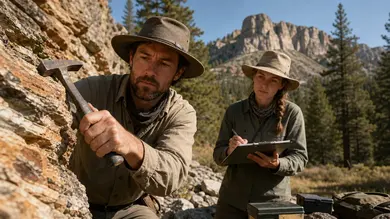
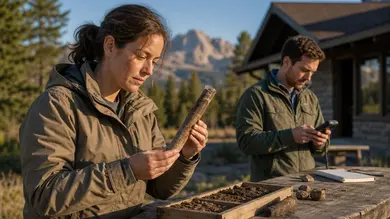
Employers prioritize geoscience field and laboratory skills development to ensure graduates are ready for practical site assessments and data collection activities crucial to environmental and geological work. These hands-on abilities complement analytical tasks and support decision-making in real-world contexts.
- Written communication: Clear and effective writing is vital for conveying complex geoscience findings to varied audiences, including scientific peers and non-technical stakeholders, facilitating broader understanding and collaboration.
- Field skills: Proficiency in site evaluations and monitoring activities enables accurate data gathering, essential for environmental scientists and geologists performing in-field research and assessments.
- Critical thinking and data analysis for geology careers: Analytical skills are crucial for interpreting geological data, solving problems, and making informed decisions, a necessity across all geoscience disciplines.
- Computational proficiency: Knowledge of GIS, programming basics, and data management supports advanced data analytics and modern geospatial applications, enhancing research efficiency.
- Planning and organization: Strong planning abilities ensure successful project execution and effective resource allocation, meeting both academic and workforce expectations.
For those exploring geoscience pathways, engaging with college courses for older adults online can provide flexible opportunities to develop these critical competencies.
Do Different Geoscience Concentrations Have Different Admission Requirements?
Different geoscience concentrations do have varying admission requirements, reflecting their unique academic and professional demands. While many programs share baseline standards such as transcripts, letters of recommendation, and statements of purpose, specialized concentrations may require additional prerequisites or specific skill sets. These differences often relate to the complexity of the track or its focus, such as geophysics, environmental geology, or applied geosciences.
Admission criteria thus cater to the specialization's rigor, ensuring students are well-prepared for success based on the nature and depth of the curriculum. This approach aligns with geology concentration admission requirements by university, helping tailor student preparation to program expectations.
Common distinctions include GPA thresholds, prerequisite coursework, and professional experience. For example, undergraduate transfer applicants generally need a minimum 2.5 GPA and foundational geology or earth science classes, while graduate programs often require stronger STEM backgrounds. Texas A&M demands completion of integral calculus and differential equations alongside chemistry and physics, whereas University of Chicago and UIC emphasize robust technical and academic performance in geophysical sciences.
Penn's Master of Science in Applied Geosciences prioritizes hands-on experience and credentials for working professionals. These criteria ensure programs select candidates with appropriate academic and practical skills, which explains why variations exist across concentrations and levels.
Prospective students can also explore the best affordable associate programs online as part of their academic pathway considerations.
Breakdown of All Fully Online Title IV Institutions

Accreditation plays a vital role in specialized geoscience programs by ensuring quality and affecting eligibility for certifications or certain career paths. Students should carefully consider accreditation status when selecting concentrations tied to professional licensure or regulated work.
- Licensure Eligibility: Graduates from ABET-accredited geology programs receive automatic credits toward Professional Geologist (PG) and Geologist in Training (GIT) licensure in states like California, including professional experience credits at graduation.
- Varied State Requirements: Not all states mandate accreditation, so licensure rules differ widely depending on regional regulations.
- Lack of Unified Accreditation: No single accrediting agency governs all geoscience programs nationally; ABET's Applied and Natural Science Accreditation Commission (ANSAC) accredits only a small number of geology programs worldwide.
- Curriculum Consistency: Employers and state boards express concern over inconsistent geology coursework, which can range drastically in depth and hours, making accreditation a mark of reliable program rigor.
- Concentration Alignment: Environmental and professional geoscience tracks may not have dedicated accreditation paths but often focus on preparing students for national licensing exams rather than formal program accreditation.
As more students weigh online versus on-campus geoscience programs, the quality of education has become a deciding factor. Both formats often provide similar credentials, but key elements shape the actual learning experience and outcomes.
- Curriculum Standards: Accredited programs maintain consistent course requirements and learning objectives regardless of delivery method.
- Accreditation: Recognized bodies hold online and in-person tracks equally accountable for meeting rigorous academic quality benchmarks.
- Faculty Expertise: Experienced instructors typically teach both formats, though accessibility to faculty may vary for online students.
- Learning Outcomes: Research shows virtual field trips can yield strong knowledge gains, but some data suggest on-campus students may achieve higher grades.
- Technology Integration: Effective use of simulations, GIS tools, and virtual labs can enhance remote learning and bridge hands-on training gaps.
- Student Support: Online learners sometimes face challenges accessing scholarships, research opportunities, and collaborative experiences available on campus.
- Hands-On Training: Hybrid approaches with optional in-person intensives help replicate traditional fieldwork essential to geoscience education.
Variations in course difficulty, skill demands, and program intensity make some geoscience concentrations harder to complete than others. Factors like advanced mathematics, laboratory work, and research responsibilities influence how challenging a concentration can be.
- Mathematical Rigor: Requires proficiency in advanced calculus, differential equations, and statistical analysis to interpret complex geological data and predict subsurface conditions.
- Physics Foundation: Demands a solid grasp of physics concepts including wave mechanics, electromagnetism, and gravity to understand geophysical techniques.
- Instrumentation Expertise: Involves hands-on experience with specialized tools such as seismic sensors, magnetometers, and gravity meters, often exceeding typical lab requirements.
- Research Integration: Emphasizes independent research projects that extend program duration and enhance problem-solving skills applied to realistic Earth science scenarios.
Different geoscience concentrations equip graduates with specialized skills tailored to distinct professional roles, enabling focused career paths. Recognizing how each specialization aligns with industry demands helps students make informed decisions about their education and future employment.
- Environmental geology: Careers include environmental consultant and hydrogeologist, focusing on protecting ecosystems, managing water resources, and addressing climate-related challenges. Graduates find opportunities in government, nonprofits, and consulting firms dedicated to sustainability and remediation.
- Petroleum geology: Specialists work primarily in oil and gas exploration, serving as petroleum geologists or geophysicists, with roles extending to renewable energy sectors. Employment often centers on private energy companies involved in resource extraction.
- Geophysics: Geophysicists analyze Earth's physical properties through seismic and electromagnetic methods, contributing to mining, earthquake prediction, and energy exploration. According to national data, they earn an average salary of $87,539 annually.
- Engineering geology: Graduates serve as geotechnical engineers, applying geological knowledge to construction and infrastructure, essential for evaluating site conditions and guiding safe project development. The average annual income in this field is approximately $75,282.
- Hydrogeology: Hydrogeologists specialize in managing groundwater and water quality, designing systems that combat scarcity and contamination. Their expertise is vital in governmental and environmental organizations across global regions facing water challenges.
Recognizing present industry trends is vital for students deciding on a geoscience concentration, as these trends directly impact career options, salary potential, and job market availability.
- Geospatial Technologies and GIS Integration: The expanding use of geospatial tools like GIS and remote sensing has become crucial in geoscience work. Employers in environmental consulting, resource management, and government sectors increasingly prefer candidates skilled in spatial data analysis, driving demand for this specialization.
- Environmental Geology and Sustainability Focus: Growing concerns over climate change and stricter environmental policies are boosting interest in environmental geology. Expertise in hydrogeology, resource management, and remediation equips graduates to address significant ecological challenges in both industry and research roles.
- Data Science and Computational Skills: The fusion of traditional geological knowledge with data science and programming is reshaping geoscience education. Proficiency in computational analysis opens doors to careers in resource exploration, environmental evaluation, and climate studies by meeting evolving employer expectations.
Salary prospects within geoscience vary widely depending on specialization, affecting long-term earning potential and career decisions. Insight into geoscientist salary by education level and experience helps students choose concentrations with favorable outcomes.
- Geology: Geologists earn an average of $122,000 annually, with typical salaries ranging from $111,000 to $161,000. Entry-level positions start near $40,000, while experienced specialists, especially in petroleum and mining geology, can surpass $108,000 due to strong industry demand.
- Geochemistry: Among the highest-paying geoscience concentrations, geochemists average $107,500 per year. Their expertise in environmental analysis, materials science, and industrial processes commands market premiums based on specialized knowledge.
- General geosciences: This broad field reports median annual wages of $99,240 and averages near $77,030. Compensation varies significantly by employer and region, reflecting diverse career paths including environmental assessment and resource management.
- Environmental geoscience: Environmental scientists in geoscience earn around $65,778 on average. Though lower than petroleum-related roles, this concentration benefits from steady growth tied to regulatory compliance and sustainability initiatives.
For those considering geographic influences, top paying geoscience jobs and metropolitan areas can impact salary expectations substantially. For example, professionals working in major energy hubs often see compensation well above national averages.
Prospective students can explore accredited online schools with waived application fees to find programs that fit their educational goals without upfront costs.
Selecting the right concentration in a geoscience program is critical for aligning your education with both your career goals and personal strengths. Making this choice carefully ensures your academic investment directly supports your desired professional trajectory.
- Career Aspirations and Long-Term Goals: Identify the specific geoscience career pathways and professional goals that excite you most. Whether you aim for traditional roles like petroleum geology or emerging fields such as climate science, this focus will guide your concentration selection and coursework.
- Industry Demand and Job Growth: Research which concentrations offer robust employment prospects. For example, Geographic Information Systems (GIS) specialization is projected to have some of the highest job growth and above-average starting salaries, reflecting strong market demand.
- Skill Development and Technical Requirements: Different concentrations emphasize unique technical competencies like mineralogy, hydrology, or computer science. Selecting a focus aligned with skills you want to develop ensures your education is both relevant and engaging.
- Program Requirements and Difficulty Levels: Selecting the right geoscience major based on program requirements and difficulty is essential. Some concentrations require more intensive lab work or advanced coursework, so consider your preparedness and interest in meeting these academic challenges.
- Program Resources and Opportunities: Evaluate what your institution offers in terms of fieldwork, research, and internships. Programs with strong partnerships, such as those involving NASA or the U.S. Geological Survey, often provide valuable experiential learning and networking.
For students exploring educational options, researching the best online trades school can offer insight into programs that support these concentrations with flexible formats and industry connections.
What Graduates Say About Their Popular Concentrations in Geoscience Degrees
- Louie: "Pursuing a concentration in environmental geoscience truly opened my eyes to the interconnectedness of natural systems. The hands-on learning and fieldwork were invaluable, and while the average cost of attendance was a concern, the knowledge and skills I gained made it worth every penny. I now have a fulfilling career helping communities manage natural resources sustainably."
- Zamir: "The analytical skills I developed through the geophysics concentration were challenging but rewarding. Reflecting on my journey, I appreciate how the reasonably priced program balanced theory with practical application, which has greatly impacted my role in the energy sector. The investment in my education continues to pay off professionally."
- Matthew: "Studying petroleum geology was an intense experience, especially considering the typical expenses involved. However, the focused curriculum and expert faculty helped me secure a strong position in the industry, making the cost a strategic investment. The career growth and opportunities I've accessed since graduating affirm the program's value."
Other Things You Should Know About Geoscience Degrees
In 2027, the most popular concentrations in Geoscience degrees include Climate Science, Environmental Geoscience, Geophysics, Hydrogeology, and Oceanography. These concentrations attract students due to their relevance in addressing global challenges related to climate change, resource management, and environmental protection.
Yes. Most geoscience concentrations require hands-on work, often 2 to 6 field credits and 1 or more lab courses each term. Core training commonly includes mapping, mineral identification, sediment analysis, and data interpretation, with field camps or research projects in many programs.
- Why geoscience matters - @theU https://attheu.utah.edu/facultystaff/why-geoscience-matters/
- Critical workforce skills for bachelor-level geoscientists: An analysis of geoscience job advertisements | Geosphere | GeoScienceWorld https://pubs.geoscienceworld.org/gsa/geosphere/article/19/2/628/620368/Critical-workforce-skills-for-bachelor-level
- ABET Accreditation a Clear Pathway to Professional Geologist and Geologist in Training Licensure Under New California Regulations - ABET https://www.abet.org/abet-accreditation-a-clear-pathway-to-professional-geologist-and-geologist-in-training-licensure-under-new-california-regulations/
- Best Major to Study: Geoscience! https://www.study-in-germany.com/en/community/best-major-to-study-geoscience/
- Job Sectors https://www.geolsoc.org.uk/Geology-Career-Pathways/Careers/Job-Sectors.html
- Geoscientists : Occupational Outlook Handbook: : U.S. Bureau of Labor Statistics https://www.bls.gov/ooh/life-physical-and-social-science/geoscientists.htm
- Most Popular Schools for Geological & Earth Sciences in the United States - Grad Degree https://graddegree.com/majors/physical-sciences/geological-and-earth-sciences/rankings/most-popular/doctorate-degrees/
- The Geosciences Advantage https://www.jsg.utexas.edu/news/2021/11/the-geosciences-advantage/
- Geology https://www.ucalgary.ca/student-services/degree-guide/science/geology
- article https://www.geosociety.org/GSA/GSA/GSAToday/groundwork/G571GW/article.aspx