2027 Online Geoscience Degree Programs With No Letters of Recommendation Required

Co-Founder and Chief Data Scientist
Applicants who lack recent professors or supervisors to recommend them may find geoscience admissions unnecessarily difficult. Online programs with no recommendation-letter requirement can reduce that barrier while still reviewing academic readiness. This guide is for prospective undergraduate and graduate students comparing legitimate online geology, environmental science, GIS, and related geoscience pathways.
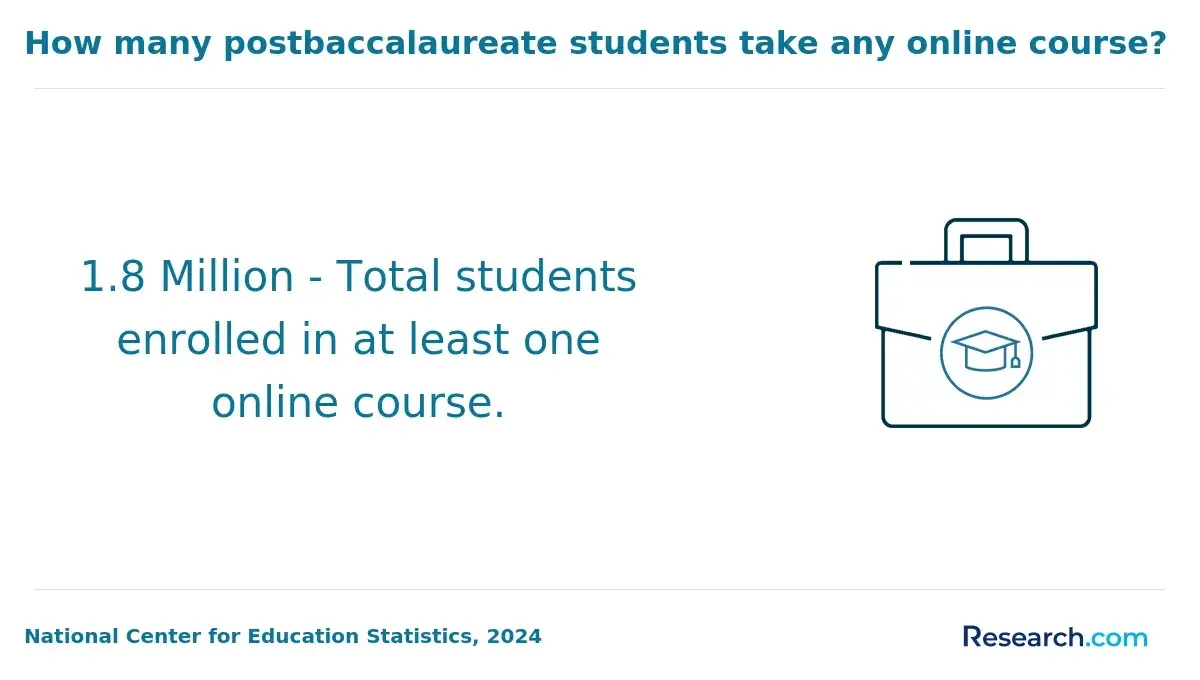
The National Center for Education Statistics reported that more than half of U.S. postsecondary students took at least one distance-education course in fall 2022, making online program screening increasingly important. Learn what schools require instead, how to verify policies, and how to choose an option that supports your career goals.
Key Things You Should Know
- "No letters of recommendation required" means the application does not require references for that specific program and applicant type; it does not mean transcripts, GPA standards, prerequisites, essays, or identity documentation are waived.
- Fully online degrees titled geoscience are less common than online environmental science, geographic information systems, sustainability, and earth-science-related programs, so confirm that the curriculum matches the geology, GIS, environmental, or resource career you want.
- Institutional accreditation, curriculum depth, faculty credentials, total tuition, field-learning options, and transfer policy matter more than simplified admissions; the U.S. Bureau of Labor Statistics lists a 2024 median pay of $99,240 for geoscientists, but roles and earnings vary substantially by specialty and location.
Which Online Geoscience Degree Programs Require No Letters of Recommendation?
Programs with a clearly published, universal no-recommendation policy are most often found at the undergraduate level. Many online bachelor's programs process admissions through the university's general undergraduate application, where official transcripts and placement information may be required but recommendation letters are not.
Fully online options may be labeled environmental science, environmental management, geographic information systems, earth systems, sustainability, or natural resources rather than "geoscience."
Graduate programs are more variable. A professional master's, graduate certificate, or course-based program may omit letters, while a research-oriented M.S. in geology, geophysics, hydrology, or earth science often requests them because faculty need evidence of research preparation. "Optional" is not the same as "not required," and a waiver for applicants with a certain GPA is not a universal no-letter policy.
This comparison helps distinguish common online pathways from the admissions pattern an applicant is likely to encounter. Always treat the current program application page - not a third-party listing - as the controlling requirement:
| Online pathway | Typical credential | How often letters are omitted | Career alignment to check |
| Environmental science or environmental management | Bachelor's or master's | More common for undergraduate admission | Environmental compliance, sustainability, conservation, remediation support |
| GIS or geospatial technology | Certificate, bachelor's, or master's | Often omitted for certificates and some undergraduate programs | Mapping, spatial analysis, planning, emergency management |
| Earth science or geology-related study | Bachelor's completion or individual courses | Depends heavily on the institution and lab requirements | Geology foundations, education, environmental fieldwork |
| Geoscience research master's | M.S. | Less common | Research, doctoral preparation, specialized technical work |
Do not exclude adjacent pathways automatically. A student interested in spatial data may get better preparation from a GIS curriculum than from a broad earth-science degree, while someone seeking professional geologist licensure may need a geology-major curriculum with specified laboratory and field credits.
Students weighing the labor-market resilience of different disciplines can also review best majors for the future as a broader planning resource.
To find qualifying programs, search each institution's online catalog first, then open the admissions page for the exact degree level and term. Ask admissions staff to confirm in writing whether letters are required, optional, waived, or never reviewed for your intended program.
What Are the Admission Requirements for Online Geoscience Degree Programs With No Recommendation Letters?
Removing recommendation letters usually streamlines one document requirement rather than lowering academic expectations. Undergraduate applicants commonly submit an application, official high school or college transcripts, and any required proof of prerequisite completion.
Transfer students may need transcripts from every college attended. Graduate applicants generally need a completed bachelor's degree and may face discipline-specific preparation requirements.
The items below show what can replace letters in an application file and why each item matters to an admissions reviewer:
- Official transcripts show cumulative GPA, course rigor, and completion of math and science prerequisites.
- A personal statement may explain career goals, academic context, and why an online geoscience curriculum fits those goals.
- A résumé can document environmental, mapping, laboratory, engineering, military, or technical work experience.
- Prerequisite records may demonstrate prior coursework in algebra, statistics, chemistry, physics, programming, earth science, or GIS.
- A portfolio may be requested for geospatial programs and can include maps, code, analysis reports, or project documentation.
- Standardized test scores are increasingly uncommon in many programs, but a school may still request placement testing or reserve the right to consider scores.
Typical GPA thresholds vary by school and credential. A bachelor's program may use broad university admission standards, whereas a graduate geoscience program may require a minimum undergraduate GPA and specific science coursework.
If you are missing a prerequisite, ask whether the program permits conditional admission, bridge coursework, or enrollment as a nondegree student. Do not assume that a no-letter policy provides an exception to prerequisite rules.
Working adults who do not have academic references can be especially well served by this model if their transcript and experience accurately show readiness. Applicants with weak foundational science preparation, however, should prioritize a program offering transparent academic support and required labs rather than selecting solely for the shortest application.
Are Online Geoscience Programs With No Letters of Recommendation Easier to Get Into?
Not necessarily. A program can eliminate letters because they add administrative friction or provide inconsistent evidence, yet still enforce GPA, prerequisite, capacity, and academic-progress standards. The absence of letters makes an application more accessible for people without recent academic contacts; it does not establish that admission is automatic, that courses are easier, or that the credential has lower value.
Admissions selectivity is especially difficult to compare because many institutions do not publish program-specific acceptance rates for online geoscience tracks. Instead of relying on a university-wide rate, compare the exact standards listed for the degree.
A program that requires calculus, chemistry, physics, field methods, or prior GIS coursework may be academically demanding even if no recommendations are requested.
Use this distinction when interpreting common admissions language:
| Admissions wording | What it usually means | What to verify |
| No letters required | References are not part of the standard file | Whether the policy applies to your degree level and applicant category |
| Letters optional | You can apply without them, but they may be reviewed | Whether optional letters can strengthen borderline applications |
| Letters waived | A requirement is removed only under stated conditions | The GPA, prior-degree, employer, or deadline conditions for the waiver |
| Open or broad access admission | Entry may be less selective at the institutional level | Progression rules, course prerequisites, and graduation requirements |
A common mistake is equating streamlined admissions with a low-quality program. The better test is whether the curriculum contains appropriate quantitative, scientific, laboratory, data-analysis, and applied-learning components for your goal. Another mistake is overlooking the difference between admission to a university and admission to a restricted major.
If speed is your main concern, compare start dates and credit requirements carefully rather than assuming simplified applications shorten a degree. Readers considering accelerated credentials in another academic category can explore associate degree in 6 months online, but should not treat timelines from unrelated fields as a proxy for science degrees with laboratory requirements.
Without recommendation letters, admissions teams generally rely more directly on verifiable evidence: academic performance, completed prerequisites, written goals, and relevant experience. This can be an advantage for applicants whose work history is stronger than their access to references, but it also makes careful documentation important.
The following evidence is commonly more persuasive than a generic application statement because it connects your background to the demands of geoscience study:
- Recent grades in quantitative courses demonstrate readiness for data analysis, modeling, or physical-science coursework.
- Completed science labs help a school assess whether you can handle experimental procedures and technical reporting.
- GIS projects, field logs, environmental reports, or coding samples provide concrete evidence of applied skills when a portfolio is accepted.
- Relevant employment can show familiarity with safety procedures, sampling, compliance, surveying, mapping, or technical communication.
- A focused statement can explain a career transition, gaps in enrollment, or why a specific specialization fits your professional objective.
Tailor the application to the actual discipline. A GIS-focused program may value evidence of spatial analysis and software use, while a geology-oriented program may place greater weight on chemistry, physics, calculus, and earth-science preparation. Do not exaggerate field or laboratory experience; admissions reviewers can compare claims against transcripts and résumés.
Technology is also changing the work students prepare for. Geoscience employers increasingly use remote sensing, spatial data, modeling, automated sensors, and data-management tools. That makes a curriculum's access to software, datasets, virtual labs, field intensives, and instructor feedback more consequential than whether an application asks for references.
Applicants who want a structured introduction to financial recordkeeping rather than earth systems should consider a separate bookkeeping course; it is a different career path and should not be used as a substitute for geoscience preparation.
Start with institutional accreditation. In the United States, the school should be accredited by an agency recognized by the U.S. Department of Education or the Council for Higher Education Accreditation. Accreditation affects credit transferability, eligibility for federal student aid, and employer confidence, although no credential guarantees transfer acceptance or employment.
Geoscience does not have one universal programmatic accreditor comparable to those used in some licensed health professions. That means you must inspect the curriculum, faculty, student services, and career fit in addition to institutional accreditation.
For geology careers that may lead to state professional geologist licensure, review the licensing board's education rules in the state where you intend to work; required geology credits and field/lab content can differ.
Use these steps before paying an application fee or deposit:
- Find the institution in the U.S. Department of Education's accreditation database and confirm that the accreditor and institutional status are current.
- Read the degree's official catalog page for total credits, course descriptions, faculty information, residency or field requirements, and graduation requirements.
- Confirm that the online delivery format includes any lab, field, software, or proctored-assessment components you can realistically complete.
- Request written confirmation of the no-letter policy for your exact program, term, degree level, and transfer or international applicant category.
- Review tuition disclosures, refund rules, financial-aid contacts, transfer-credit policies, and the school's complaint-resolution information before enrolling.
Red flags include pressure to enroll before receiving a written cost estimate, vague faculty biographies, an unclear accreditation claim, promises of licensure or employment, and a curriculum with too little science for the career it advertises. Be skeptical of a school that calls a short certificate a "degree" or will not identify who teaches the courses.
Online learning itself is not a legitimacy problem. Employers commonly focus on the awarding institution, skills, experience, and degree relevance. Still, field-intensive geology work may require hands-on components that a fully online program cannot replicate. Choose the format that honestly supports the work you intend to pursue.
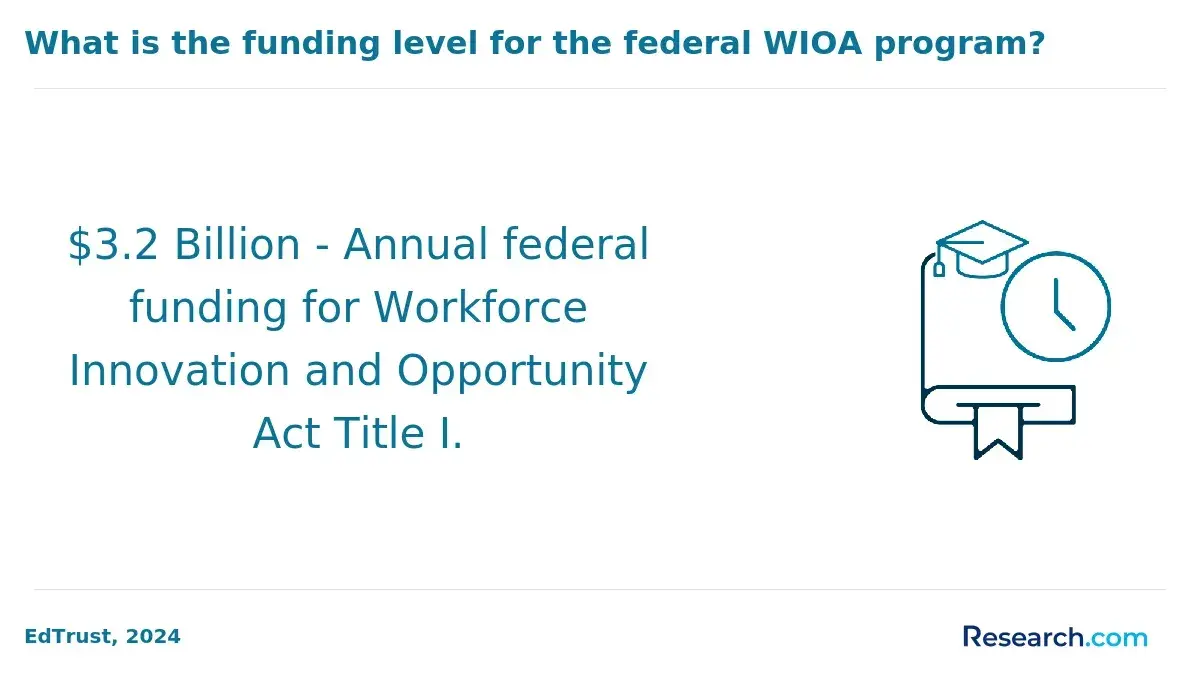
A no-recommendation policy does not predict tuition. Cost depends on public or private status, residency rules, undergraduate or graduate level, number of credits, technology charges, course materials, lab kits, software, travel for field experiences, and whether transferred credits reduce the credits you must buy.
For a broad U.S. benchmark, College Board reported average published tuition and fees of $11,610 for in-state students at public four-year institutions and $43,350 at private nonprofit four-year institutions for 2024-25.
These are not online-geoscience price quotes and exclude important costs such as housing, transportation, books, and potential field travel. Use them only to frame the difference between sticker price and a specific program's total estimate.
This cost framework shows which figures to request from each school before you compare programs:
| Cost item | Why it matters for online geoscience study | Question to ask |
| Tuition per credit or term | Determines the core cost and may differ for online, graduate, or out-of-state students | What is the published rate for my program and start term? |
| Required credits after transfer | Directly affects total tuition | How many of my credits will apply to this major? |
| Laboratory and software expenses | Geoscience courses may require specialized materials or licenses | Which fees, kits, subscriptions, and equipment are mandatory? |
| Field experience travel | Some programs require in-person fieldwork or intensives | Where are field activities held and what expenses are mine? |
| Financial aid and scholarships | Net price may differ substantially from published tuition | What institutional aid is available to online students? |
Compare total program cost, not only the lowest per-credit rate. A lower-priced program can become more expensive if few transfer credits apply or if required travel is substantial. Conversely, a higher tuition rate may be manageable when an employer benefit, military education benefit, grant, or scholarship reduces the net cost.
Career return also depends on specialization. The Bureau of Labor Statistics reports a 2024 median annual wage of $99,240 for geoscientists, but that occupational figure does not represent every environmental, GIS, technician, or entry-level role, nor does it guarantee an individual outcome. Match the degree's curriculum to the jobs you can realistically pursue.
Employer Confidence in Online vs. In-Person Degree Skills, Global 2024

Yes. A streamlined admissions process does not, by itself, affect eligibility for federal financial aid. Students in eligible degree or certificate programs at qualifying institutions may submit the Free Application for Federal Student Aid (FAFSA).
Aid eligibility depends on factors such as citizenship or eligible noncitizen status, enrollment, satisfactory academic progress, program eligibility, and the information reported on the FAFSA.
Online students should ask whether their exact program is eligible for federal aid and whether their enrollment pattern meets the school's half-time definition for loans.
Grants, federal loans, work-study availability, institutional scholarships, employer tuition assistance, veterans' benefits, and state aid each have separate rules. A program may be fully online while some aid opportunities remain limited by residency, degree level, or enrollment intensity.
Before accepting an offer, complete these checks so you can compare net cost rather than marketing claims:
- Submit the FAFSA early enough to meet the institution's and your state's priority deadlines.
- Request a written financial-aid offer and distinguish grants and scholarships from loans that must be repaid.
- Ask whether online students qualify for the same departmental scholarships and payment plans as campus students.
- Confirm how repeated courses, withdrawals, transferred credits, and part-time enrollment affect satisfactory academic progress.
- Calculate any fieldwork, software, equipment, and travel costs that may not be covered by standard aid.
Do not choose a program based solely on an aid estimate. Compare renewal conditions, loan borrowing, completion timeline, and the likely value of the coursework for your intended career. Students exploring a different helping-profession path may find 1 year MSW programs online no BSW useful for comparison, but social work has distinct field education and state licensing requirements.
Admissions paperwork has little effect on the academic time required. A typical bachelor's degree requires about 120 semester credits, while many master's programs require roughly 30 to 36 credits, although exact requirements vary. Transfer credits, prerequisites, course sequencing, lab availability, fieldwork, and enrollment intensity determine the actual completion timeline.
A full-time student entering a bachelor's program with no transfer credit commonly needs about four academic years. A transfer student who has satisfied general education and lower-division science requirements may finish sooner, while a part-time working adult may take longer. Course-based master's programs can be shorter than research master's programs, but a thesis, capstone, internship, or field component can extend the schedule.
The table separates admission speed from completion speed, which helps prevent a common planning error:
| Program factor | Effect on application process | Effect on graduation timeline |
| No recommendation letters | May remove time spent requesting and collecting references | Usually no direct effect |
| Transfer-credit evaluation | May require additional transcript review | Can shorten study if credits apply to degree requirements |
| Prerequisite science courses | May affect admission or conditional admission | Can add terms before advanced coursework |
| Part-time enrollment | Usually does not change initial requirements | Extends the number of terms needed |
| Field or capstone requirements | May require scheduling confirmation | Can create fixed completion points |
Ask for a term-by-term degree plan based on your transfer evaluation, not a generic advertised timeline. Also verify whether courses are asynchronous, scheduled live, offered every term, or only once per year. A flexible online format is useful only when required courses are available when you need them.
Usually, yes, but transfer admission and credit acceptance are separate decisions. A school may admit you without recommendations yet apply only some previous coursework toward the degree. Institutions typically evaluate official transcripts, course content, grades, credit age, accreditation of the sending institution, and alignment with program requirements.
General education courses often transfer more readily than specialized geoscience classes. Mathematics, chemistry, physics, programming, environmental science, geology labs, and GIS coursework may require syllabi or catalog descriptions for an equivalency decision.
Courses that include a laboratory or field component deserve special attention because an online program may have specific standards for accepting them.
Take these actions before enrolling to reduce the risk of lost time and money:
- Send official transcripts early and request a written transfer-credit evaluation before committing to a start date.
- Compare accepted credits against the major's degree audit, not merely the total number of credits accepted by the university.
- Keep syllabi, lab descriptions, project samples, and course catalogs for technical courses that may need departmental review.
- Ask whether there is a maximum transfer-credit limit, minimum grade requirement, residency requirement, or time limit on science courses.
- Confirm whether transferred courses satisfy prerequisites for advanced geoscience classes or count only as electives.
Community college students should ask about articulation agreements, but still verify that the agreement applies to the online major. Students changing fields may need to complete foundational science courses even if they transfer many general credits. Transfer-friendly admissions can improve affordability, but only when the accepted credits advance you toward required graduation competencies.
How Should You Compare Online Geoscience Degree Programs That Do Not Require Letters of Recommendation?
Compare programs in the order that protects your career options: academic fit and legitimacy first, total cost and schedule second, application convenience last. A no-letter policy is valuable if it removes a real barrier, but it should be one criterion in a broader decision.
Start by defining the outcome you want. Environmental compliance, GIS analysis, teaching, conservation, hydrology, energy, geology, and graduate research can require different coursework. If your target role has state licensure, employer credential, or technical-software expectations, use those requirements to screen programs before applying.
This comparison matrix identifies the questions that most clearly separate a convenient application from a sound educational investment:
| Comparison category | Strong sign | Potential concern |
| Admissions policy | Written confirmation that letters are not required for your applicant type | Only broad marketing language or conflicting instructions |
| Accreditation | Current institutional accreditation that can be independently verified | Unclear accreditor or unsupported claims |
| Curriculum | Published courses align with your intended technical or professional pathway | Vague course titles and limited science depth |
| Applied learning | Clear plan for labs, fieldwork, software, projects, or capstone work | No explanation of how practical competencies are developed |
| Total cost | Written estimate covering tuition, fees, materials, and travel | Price quoted without required-cost details |
| Support and outcomes | Accessible advising, tutoring, career support, and transparent outcome information | Pressure-based recruiting or unverified employment promises |
Make a short list of two to four programs, then contact each admissions office with the same questions: Are letters required for my exact program? Which prerequisites am I missing? How many credits will transfer? Are labs or field experiences required in person? What will I pay after all mandatory fees? Can you provide the answers in writing?
Avoid choosing solely because an application takes less time. Students whose interests are more clinical and behavioral than earth-science-based may instead compare online clinical psychology programs, recognizing that psychology careers have different degree, supervised-practice, and licensure pathways. The right geoscience option is the one whose accredited curriculum, delivery format, costs, and career preparation fit your documented goals.
Other Things You Should Know About Geoscience
Often, yes. No-recommendation admissions can be helpful for returning students without recent academic references. You may still need official transcripts and prerequisite coursework. Use your statement and résumé to explain relevant work experience and your readiness for quantitative or science-based study.
Employers generally do not see your college application materials. They are more likely to evaluate the institution, credential, coursework, technical skills, projects, internships, work history, and interview performance.
Some do, but formats vary. A program may use virtual labs, home lab kits, local approved activities, short campus intensives, or required field courses. Read the catalog carefully because a fully online label does not always mean every requirement can be completed remotely.
Check the current admissions page and application checklist for your exact degree, then email or call admissions. Ask for written confirmation that no letters are required for your intended term, degree level, and applicant status. Save that response with your application records.
- 2025 Most Affordable Online Environmental Science Degrees https://www.onlineu.com/most-affordable-colleges/environmental-science-degrees
- Geoscience Profession Intelligence https://profession.americangeosciences.org/collections/profession-data/
- Online Geoscience Degrees: Top Schools and All Programs in 2026 https://www.gisdegree.org/online/geoscience-degrees/
- Geoscientists: Salary, career path, job outlook, education and more - RaiseMe https://www.raise.me/careers/life-physical-and-social-science/geoscientists/
- Master programme in Exploration Geoscience, Program, Exploration Geoscience Economic Geology Ore Geology Mineral Exploration Mining Geology Raw materials Mineral resources https://www.ltu.se/en/education/programme/tmgpa-master-programme-in-exploration-geoscience