2027 Are There Any One-Year Online Geoscience Degree Programs Worth Considering?

Co-Founder and Chief Data Scientist
If you are searching for a one-year online Geoscience degree, the main question is not whether fast study is possible—it is whether the credential you choose will be recognized, academically realistic, and useful for your career goal. Geoscience is a lab- and field-based discipline, so compressed online options are more limited than in business, education, or some technology fields.
Most full Geoscience degrees cannot be completed from start to finish in one year. However, accelerated graduate tracks, online certificates, transfer-friendly pathways, and non-thesis programs may help students with prior coursework or professional experience move faster. These options can be valuable for environmental consultants, teachers, GIS professionals, STEM graduates, and working adults who need targeted earth science training without pausing their careers.
This guide explains what one-year online Geoscience programs can realistically offer, how to compare degree and certificate options, what admissions requirements to expect, how costs and financial aid work, and which trade-offs matter before enrolling.
Key Points About One-Year Online Geoscience Degree Programs
- One-year online Geoscience degrees are rare compared to traditional multi-year programs, focusing on foundational knowledge combined with advanced specialization tailored for working professionals.
- These programs emphasize practical data analysis and remote sensing skills, reflecting industry demand for applied technological expertise in fields like environmental consulting and resource management.
- Students should expect intensive coursework with limited fieldwork opportunities due to the online format, impacting hands-on experience critical in traditional Geoscience education.
Is It Feasible to Finish a Geoscience Degree in One Year?
For most students, completing a full accredited online Geoscience degree in one year is not realistic. A bachelor's degree usually requires around 120 credits and is designed to take four years. Some master's programs move faster, but even accelerated formats may take about three semesters, which still goes beyond a single year.
The biggest barrier is not only the credit load. Geoscience programs often require lab work, field methods, mapping, data analysis, research projects, or applied exercises that are difficult to compress without reducing learning quality. Subjects such as mineralogy, sedimentology, hydrogeology, geochemistry, and geospatial analysis build on each other, so rushing through them can leave gaps that matter in professional work.
Students with substantial transfer credits, a prior science degree, or relevant professional experience may be able to shorten their timeline. Even then, a true one-year path is more common for graduate certificates or specialized credentials than for full degrees.
- Most feasible in one year: Graduate certificates, focused professional credentials, or a small set of advanced courses.
- Sometimes feasible in an accelerated format: Non-thesis master's programs, especially for students who already meet prerequisites.
- Usually not feasible from the beginning: A full bachelor's degree in Geoscience, unless the student brings extensive prior credits.
Students should also remember that graduation is not always the final step. Some geoscience careers may involve employer requirements, state rules, licensing, or professional certification after the degree. Those steps can add time beyond the academic program.
Are There Available One-year Online Geoscience Degree Programs?
One-year online Geoscience options exist, but they are limited and should be reviewed carefully. Many programs marketed as fast-track geoscience pathways are certificates, accelerated graduate options, or programs that require students to enter with previous science coursework. A one-year timeline is usually possible only when the student is prepared to take an intensive course load and already meets admission requirements.
When comparing programs, pay close attention to whether the credential is a degree, a graduate certificate, or an accelerated track within a broader program. These distinctions matter for employment, graduate study, licensing preparation, and financial aid eligibility.
- University of Arizona: Offers an accelerated Master of Science in Geosciences available fully online, designed to be completed within one year. The program features coursework in earth processes, mineralogy, and environmental geology, supporting both research and applied knowledge.
- Colorado State University: Provides a one-year online Geoscience Graduate Certificate focused on atmospheric science and Earth system science. It is ideal for those seeking to deepen their expertise quickly while maintaining professional responsibilities.
- University of Florida: Has an online Master's in Geosciences program with an accelerated track, allowing students to finish in about twelve months by taking an intensive course load covering geospatial analysis and hydrogeology.
Before applying, confirm the current program length, delivery format, accreditation status, field or lab expectations, and whether the one-year pace is available to all students or only to those who qualify for an accelerated plan. Catalog language can change, and some programs require continuous enrollment to meet the shortest advertised timeline.
Students comparing fast pathways in multiple fields can also review fast degrees to understand how accelerated formats differ across disciplines.
Why Consider Taking Up One-year Online Geoscience Programs?
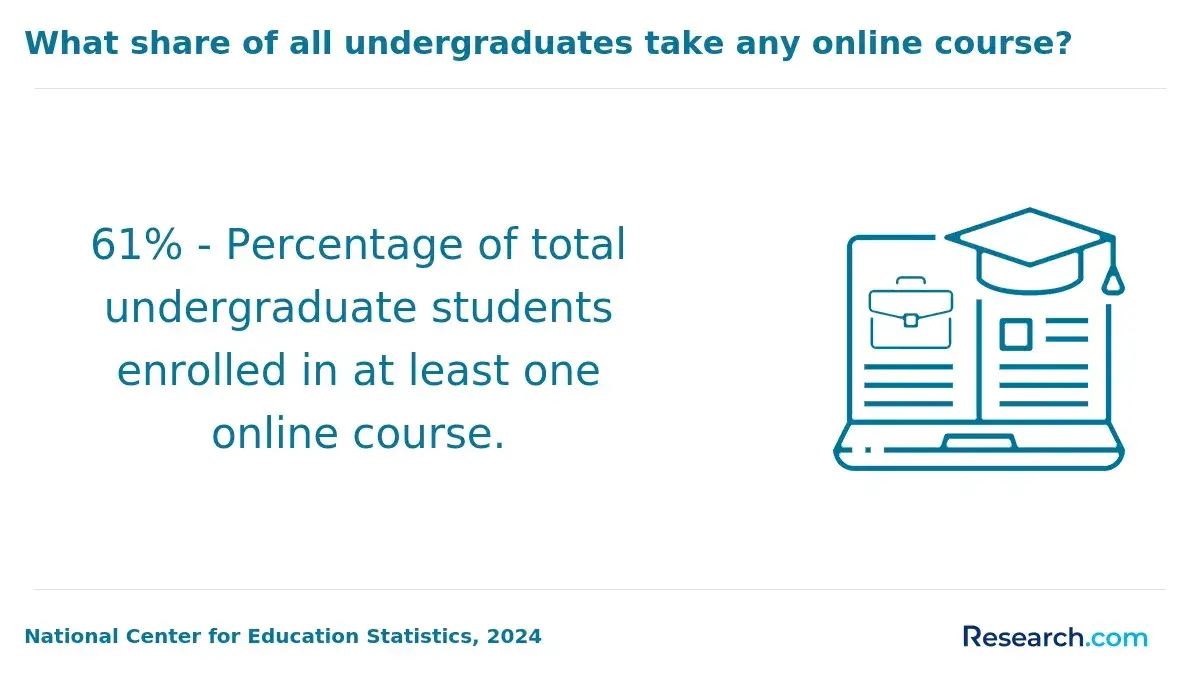
A one-year online Geoscience program can make sense when you need targeted skills quickly and already have a foundation in science, engineering, education, environmental work, or spatial data. The strongest programs are not simply faster versions of traditional degrees; they are structured for focused professional development.
These programs are especially useful for learners who want to strengthen technical knowledge without committing to a long residential degree. They may also help current professionals qualify for new responsibilities, support a career pivot, or add earth science expertise to an existing role.
- Time efficiency: Programs can be completed in as few as three semesters, enabling faster career progression and quicker return on educational investment.
- Flexible learning: Seven-week modules and asynchronous coursework can fit around work schedules in areas such as environmental consulting, teaching, GIS, and hydrogeology.
- Applied technical training: Courses may emphasize GIS, remote sensing, environmental assessment, earth systems, and data interpretation—skills that translate directly to workplace problems.
- Non-thesis structure: Some accelerated programs avoid a lengthy thesis and instead focus on applied coursework, projects, or professional practice.
- Expanded career opportunities: High school earth science teachers can gain credentials for college-level dual enrollment courses without disrupting their teaching duties.
The best reason to choose a fast program is alignment. If your goal is a specific skill set—such as geospatial analysis, environmental geology, atmospheric science, or hydrogeology—a short online option may be efficient. If your goal requires extensive field training, research preparation, or professional licensure, a longer program may be the safer choice.
Students still exploring undergraduate options may want to compare broader entry points, including the easiest bachelor degree to get, before deciding whether Geoscience is the right long-term direction.
The main drawback of a one-year online Geoscience program is compression. Geoscience is cumulative and practical, so a shorter schedule can limit time for observation, field interpretation, lab technique, and close faculty feedback. A fast credential may be useful, but it may not replace the depth of a longer degree.
- Heavy academic demands: Condensing topics such as mineralogy, sedimentology, geochemical processes, GIS, and environmental analysis into one year can create a demanding workload and increase the risk of burnout.
- Limited hands-on training: Lab work, field mapping, sampling, and site observation are central to geoscience. Online programs may use simulations, remote datasets, home lab kits, or short residencies, but these do not always match extended in-person field experience.
- Reduced mentoring and networking: Online learners may have fewer informal opportunities to build relationships with professors, research teams, classmates, and local employers.
- Work-life pressure: The shorter the program, the less room there is for missed deadlines, work travel, family obligations, or unexpected disruptions.
- Credential confusion: Some fast options are certificates rather than degrees. That may be perfectly appropriate for skill building, but it may not meet requirements for jobs, graduate admission, or licensing pathways.
Prospective students should ask how the program handles field learning, whether online students receive the same advising as campus students, and how graduates use the credential. A shorter program is worthwhile only if it supports the outcome you need.
Eligibility requirements depend on the credential level. One-year online Geoscience programs are usually designed for students who already have college-level preparation in science or a related professional background. Accelerated programs rarely start with introductory material, so admissions teams often look for evidence that applicants can handle advanced coursework immediately.
- Prior College Credits: Applicants typically must hold a bachelor's degree in geoscience, geology, earth sciences, or a related field. Undergraduate courses in chemistry, physics, mathematics, and basic geology are usually required.
- Professional Experience: Especially for graduate certificates or accelerated master's programs, demonstrated relevant experience in geoscience, environmental science, petroleum engineering, or spatial data analysis strengthens applications and may be mandatory.
- Prerequisite Coursework: Completion of specific science and math courses such as introductory geology, chemistry, physics, and occasionally advanced math or computer science is generally required.
- Placement Exams: Although uncommon, some programs might require placement tests in math or science to verify readiness for advanced coursework.
- Background Checks and Interviews: These are rare but may be necessary for programs involving fieldwork or for international applicants.
- Degree Level Differences: Certificate programs usually have fewer entry requirements than master's programs, while accelerated bachelor's-to-master's tracks often demand specific credit numbers and GPA standards.
Applications generally require transcripts, a resume or CV, and letters of recommendation. GRE scores are not consistently required, which can make some programs more accessible to working professionals.
Before applying, compare your background with the program's prerequisite list. If you lack geology, chemistry, physics, math, or computing preparation, you may need to complete additional coursework first. Students considering shorter early-college pathways can also review fastest online associates degree options as a possible step toward later geoscience study.
Because one-year online Geoscience programs are limited, the right choice depends on more than speed. A program should match your career target, provide credible academic training, and clearly explain how online students complete labs, projects, field components, and advising.
- Accreditation: Verify that the institution is accredited by a recognized agency. Some programs may also reference ABET or other specialized standards, but institutional accreditation is the first credential to confirm.
- Credential type: Check whether the program awards a full degree, a graduate certificate, or a professional certificate. Do not assume all fast programs carry the same value.
- Faculty expertise: Review whether instructors have backgrounds in geoscience, earth systems, environmental geology, hydrogeology, GIS, atmospheric science, or the specialty you plan to pursue.
- Curriculum quality and delivery format: Look for courses that cover essential geoscience topics and explain how online learning is delivered, including live sessions, asynchronous coursework, software requirements, and assessment methods.
- Lab and field expectations: Ask how the program develops practical skills. Strong options should be transparent about remote labs, local field assignments, short residencies, datasets, mapping exercises, or capstone projects.
- Credit transfer policies: Programs should clearly state whether they accept prior graduate or undergraduate coursework and how transfer decisions are made.
- Tuition cost and financial aid: Compare total program cost, not only cost per credit. Include technology fees, lab materials, graduation fees, software, and travel if any in-person components are required.
- Student support services: Online students should have access to academic advising, library resources, technical support, tutoring, and career guidance.
- Alignment with goals: Confirm that the program supports your intended outcome, whether that is environmental consulting, teaching, GIS work, graduate study, or preparation for roles requiring certifications.
- Certification preparation: Some programs may prepare students for the Professional Geologist (PG) exam or other credentials necessary for certain geoscience careers.
A common mistake is choosing the fastest option before checking whether employers or licensing boards will recognize it. Ask admissions staff for graduate outcomes, course descriptions, and any restrictions that apply to online students. You can also compare top-ranked accredited online schools with no fee to apply when evaluating broader online education options.
One-year online Geoscience programs are uncommon, and costs vary by credential type, institution, enrollment pace, residency status, and required credits. Typical tuition fees range from approximately $3,800 to $12,000, depending on the program and institution.
Several factors can change the final price: whether the school is public or private, whether online students pay in-state or out-of-state rates, how many credits are required, and whether additional laboratory, technology, software, graduation, or course fees apply. A program that looks inexpensive per credit may cost more if it requires extra materials or continuous enrollment.
For instance, Western Governors University charges about $3,825 per six-month term, while Southern New Hampshire University's courses cost roughly $320 per credit hour, totaling around $9,600 annually for a 30-credit program.
Compared to traditional four-year on-campus Geoscience degrees, which can cost between $30,000 and $40,000 or more, one-year online programs can be a more affordable and flexible route. The trade-off is that shorter programs may offer less field exposure, fewer electives, or a narrower credential than a traditional degree.
Before enrolling, request a full cost breakdown from the school. Include tuition, fees, books, lab kits, software, proctoring, travel, and any cost tied to internships, fieldwork, or capstone requirements.
Students should expect an intensive, structured program rather than a relaxed online schedule. One-year online geoscience degree programs are exceptionally rare within the current U.S. educational framework. Most authentic degrees require a longer commitment—bachelor's degrees typically involve 120 credits over three to four years, while master's degrees usually span about two years or 30 credits.
In fast-track options, coursework may cover geology, chemistry, physics, geostatistics, earth system science, GIS, remote sensing, environmental analysis, and scientific communication. Programs may use instructor-led laboratory sessions, custom lab kits delivered to students' homes, field-based assignments in a student's local area, virtual mapping tools, or real-world datasets.
The pace can be demanding. Students may need to devote at least 15 hours weekly and become comfortable with specialized software such as geographic information systems (GIS) and remote sensing platforms. Because compressed courses move quickly, falling behind can be difficult to recover from.
Graduate certificates are often the most realistic one-year option. They typically involve four courses over two semesters and allow students to build focused expertise without committing to a full degree. For students who need a broader undergraduate credential, resources such as the cheapest bachelor degree can help with cost comparisons.
Financial aid may be available for one-year online Geoscience programs, but eligibility depends on the school, credential type, accreditation status, enrollment level, and whether the program qualifies for aid. Degree programs are more likely to qualify for federal aid than standalone certificates, although some certificate programs may still have institutional or employer-funded options.
- Federal and State Aid: Eligible students enrolled at least half-time in accredited programs can apply for federal aid such as Pell Grants and student loans by completing the FAFSA. State-based aid may also be available, often contingent on residency and program enrollment status.
- Scholarships: Many universities offer merit- or discipline-based scholarships specifically for Geoscience students, requiring academic records, recommendation letters, or essays. External scholarships related to STEM or environmental fields may also support candidates with career goals in geoscience.
- Employer Tuition Assistance: Employees working in sectors like energy, environmental science, or engineering might receive tuition reimbursement or financial support from their employers. Qualification typically depends on employment status and alignment between the degree and job responsibilities.
- Private Grants: Some private grants from foundations promote education in geoscience-related areas, especially for students entering environmental careers.
Because accelerated programs may use condensed terms, aid timing matters. Contact the financial aid office before enrolling to confirm disbursement dates, minimum credit requirements, satisfactory academic progress rules, and whether dropping a course could affect aid eligibility.
What Geoscience Graduates Say About Their Online Degree
- : "Completing my one-year online Geoscience degree was a game-changer for my career. The accelerated format allowed me to quickly earn credentials without sacrificing depth, and the affordability was a huge plus compared to traditional programs. I feel confident stepping into environmental consulting roles now. — Louie"
- : "The competency-based structure of the Geoscience program fit perfectly with my busy schedule and learning style. I could focus on mastering each topic before moving on, which made the accelerated pace manageable and rewarding. This experience broadened my understanding of earth sciences far beyond what I expected. — Zamir"
- : "As a professional looking to pivot into geoscience, the online one-year degree offered a practical and efficient pathway. The program's strong emphasis on real-world applications and cutting-edge research prepared me well for the field, all while keeping costs reasonable. It was a reflective journey that balanced speed with quality learning. — Matthew"
Other Things You Should Know About Pursuing One-Year Geoscience Degrees
Completing a Geoscience degree online in less than 18 months is challenging due to the complexity and requirement of comprehensive coursework and lab work. Some programs might offer condensed schedules, but typically, they still require 18 months to 2 years to complete.
Many online Geoscience programs incorporate virtual labs, simulations, or local fieldwork requirements to provide hands-on experience. Some require students to complete internships or practicums at nearby agencies or organizations. This approach helps ensure that students gain practical skills alongside theoretical knowledge, even when studying remotely.
Acceptance depends on program accreditation and curriculum content. Many accredited online Geoscience degrees meet the education prerequisites for certification boards such as the American Institute of Professional Geologists (AIPG). Prospective students should verify that their chosen program aligns with certification requirements in their intended career path.
Yes. Most accredited geoscience programs require some fieldwork, lab work, or a field camp, even when the coursework is online. Schools may let students complete these requirements in short summer sessions, hybrid formats, or approved local placements, and many employers expect that hands-on training.
- Geosciences Bachelors Degree (BS) https://www.nextstudent.com/accelerated-degrees/geosciences-bachelors-degree/
- Bachelor's Degree in Geosciences | UT San Antonio | Undergraduate Program in Geosciences | Earn Your Degree in Geosciences https://future.utsa.edu/programs/undergraduate/geosciences/
- 2025 Best Online Bachelor's in Geoscience Degrees https://www.degreeplanet.com/geoscience-degree-online/
- Best Online Master's in GIS Programs - GISDegree.org https://www.gisdegree.org/online/masters/
- 5 Pros and Cons for Studying a Distance Learning Degree in 2025 | Distancelearningportal https://www.distancelearningportal.com/articles/174/why-study-distance-learning-degree.html
- 2025 Most Affordable Online Environmental Science Degrees https://www.onlineu.com/most-affordable-colleges/environmental-science-degrees
- Environmental Geoscience with a Year of Study Abroad (BSc) - Study - Cardiff University https://www.cardiff.ac.uk/study/undergraduate/courses/course/environmental-geoscience-with-a-year-of-study-abroad-bsc
- Geoscience with a Year of International Study MSci | Royal Holloway, University of London https://www.royalholloway.ac.uk/studying-here/undergraduate/earth-sciences/geoscience-with-a-year-of-international-study/
- Costs, Financial Aid, and Scholarships https://www.geosc.psu.edu/undergraduate/admissions-and-aid/costs-financial-aid-and-scholarships
- Tuition and Fees https://www.lps.upenn.edu/degree-programs/msag/tuition