2027 Online Geoscience Degree Programs With No Personal Statement or Admissions Essay Required

Co-Founder and Chief Data Scientist
An online geoscience degree with no admissions essay can shorten the application process, but it does not remove academic review. For perspective, the U.S. Bureau of Labor Statistics reported a $99,240 median annual wage for geoscientists in May 2023 and projects 5% employment growth from 2023 to 2033.
This guide is for students seeking a less writing-intensive application. Learn what "no essay" actually covers, which requirements remain, how to assess program quality, and how to choose an option that supports your career goals.
Key Things You Should Know
- A true no-essay policy means the standard admission application does not require a personal statement; transcripts, minimum GPA rules, prerequisite science or math courses, and identity or residency documentation may still be required.
- No essay does not mean open or automatic admission: schools can review academic preparation, transfer-credit eligibility, program capacity, and readiness for online coursework before making a decision.
- "Essay-optional" and "essay-waived" are different from "no essay," and separate scholarship, honors, graduate, or conditional-admission applications may still request written materials.
What Does No Personal Statement or Admissions Essay Required Mean for Online Geoscience Degree Programs?
For an online geoscience degree, "no personal statement or admissions essay required" usually means the institution does not ask applicants to submit a narrative explaining their background, goals, or reasons for enrolling as part of the standard admission file. The school instead makes its initial decision using objective records such as transcripts, completed coursework, and application information.
This policy applies to admission, not necessarily every activity connected to enrollment. A department may still request a short statement for a competitive concentration, research placement, honors college, scholarship, graduate assistantship, or appeal. Read the requirements for both the university and the specific geoscience program, because they can differ.
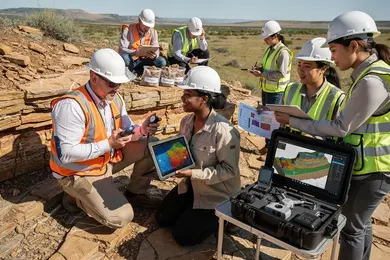
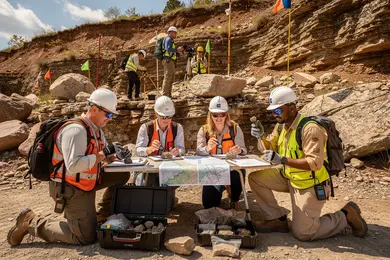
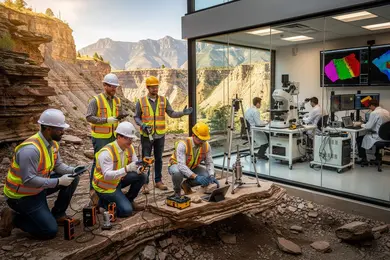
Geoscience is a broad field that can include geology, environmental science, earth systems science, geographic information systems, hydrology, climate science, and natural-resources study. Fully online options are more common in related environmental science or interdisciplinary earth-science programs than in traditional geology programs requiring extensive field, laboratory, and equipment-based instruction. Confirm how the program handles fieldwork, lab kits, virtual simulations, and any on-campus requirements before applying.
Application simplicity should be one factor in choosing a major, not the deciding factor. Students comparing geoscience with other fields can also review best majors for the future in light of their interests, math and science preparation, and intended career path.
What Admissions Requirements Do Online Geoscience Degree Programs Use Instead of an Essay?
Schools use evidence of academic readiness when an essay is not part of the review. Requirements vary by degree level and applicant type, so an applicant should rely on the published program page rather than an admissions checklist for a different online major.
The table shows common substitutes for an admissions essay and what each item can indicate. It is a comparison tool, not a universal admissions standard.
| Requirement | What the school evaluates | Common applicant consideration |
| Official or unofficial transcripts | Prior coursework, grades, degree status, and academic trend | Math, chemistry, physics, environmental science, and writing courses may matter for geoscience preparation. |
| Minimum GPA | Baseline academic standing | A stated minimum may qualify an applicant for review but does not always assure admission. |
| Prerequisite courses | Readiness for quantitative and laboratory-based coursework | Missing prerequisites can lead to conditional admission, extra coursework, or denial. |
| Application form and fee | Program choice, residency, educational history, and applicant identity | Fee waivers may be available, but eligibility and deadlines differ by school. |
| Recommendations, résumé, or interview | Professional or academic context when required | These are more common for graduate programs, competitive tracks, or applicants with unusual academic histories. |
| English-language documentation | Readiness to complete instruction in English | This may apply to applicants whose prior education does not meet the institution's exemption rules. |
Test-optional is separate from no-essay admission. A school may not require SAT or ACT scores while still requiring transcripts and prerequisites; another may require no essay but retain test requirements for certain first-year applicants. Ask whether the published policy applies to your entry term and degree level.
Applicants who need to refresh foundational study skills before beginning a science degree may also compare shorter credential formats, such as an associate degree in 6 months online, while recognizing that accelerated options vary substantially in transferability and academic fit.
Who Is a Good Fit for Online Geoscience Degree Programs With No Admissions Essay?
No-essay online geoscience admission can suit applicants whose transcripts already show their readiness and who want to avoid preparing a narrative application. It can be especially practical for working adults, military-affiliated learners, transfer students with established college records, and applicants applying to several institutions on a deadline.
A strong fit generally includes students who can document relevant coursework and can independently manage online learning. Geoscience coursework may involve quantitative analysis, mapping, data visualization, scientific writing, and field or lab activities. A simpler application does not make those academic expectations simpler.
Consider an essay-required or essay-optional program when written context would strengthen your file. This can be valuable if you have a low cumulative GPA but a strong recent record, changed majors after a difficult period, have substantial environmental or technical work experience, or need to explain missing prerequisites. An optional essay may be an opportunity rather than a burden when it provides meaningful evidence that grades alone cannot show.
Applicants whose goals are primarily community-facing behavioral-health work should not assume geoscience is the appropriate route simply because the application is shorter. For a different professional pathway, explore 1 year MSW programs online no BSW and verify field-placement, licensure, and state-specific requirements separately.
The wording on an admissions page matters. These policies can sound alike, but they create different obligations and different opportunities to provide context.
The comparison below helps applicants identify whether writing is prohibited, voluntary, or merely removed under a particular condition.
| Policy | Meaning for the standard application | Best way to respond |
| No essay required | The institution does not request a personal statement or admissions essay for the listed applicant category. | Confirm whether separate program, scholarship, or honors forms include writing prompts. |
| Essay-optional | An essay is not mandatory, but the school will accept and may consider one. | Submit a focused essay only if it adds useful context, demonstrates fit, or addresses a material weakness. |
| Essay-waived | An essay requirement is removed because the applicant meets a stated condition or policy. | Verify the waiver applies to your degree level, term, residency category, and application route. |
| Essay required | A written response is part of the complete application. | Follow the prompt, word limit, and deadline exactly; a missing response may make the application incomplete. |
Do not treat an essay waiver as a permanent institution-wide promise. Waivers can change by enrollment term, may apply only to applicants using a particular application portal, or may exclude graduate certificates and competitive cohorts. Save a copy of the requirement page and request written confirmation from admissions if the wording is unclear.
Not necessarily. Removing an essay changes the documents a school reviews; it does not automatically lower GPA expectations, eliminate prerequisites, expand cohort capacity, or change academic standards. A program may be selective because of limited laboratory placements, faculty capacity, transfer-credit policies, or the need for adequate science and math preparation.
The U.S. Bureau of Labor Statistics projects 5% growth in geoscientist employment from 2023 to 2033. That outlook signals continued demand across some earth-science roles, but it should not be used to judge admission odds at any individual program. Employers may also expect field experience, technical software proficiency, or specialized graduate education depending on the role.
Instead of asking whether a no-essay program is easier, compare its published admission profile with your record. Look at required GPA, prerequisite grades, transfer-credit minimums, deadlines, and whether admission is rolling, space-limited, direct to the major, conditional, or university-only pending later department review.
A common mistake is choosing the quickest application and overlooking experiential learning. For careers in geology, environmental consulting, hydrogeology, or field science, confirm whether the degree includes practical methods, faculty interaction, and access to required field or lab experiences. A program that requests an essay may be the better choice if it offers the academic structure and career preparation you need.
Accreditation is a quality and eligibility check, not an admissions-policy label. For most U.S. online degree seekers, the first priority is institutional accreditation recognized by the U.S. Department of Education and the Council for Higher Education Accreditation. Accreditation can affect federal financial-aid eligibility, transfer-credit acceptance, graduate-school consideration, and employer confidence, although no outcome is guaranteed.
Use the following checks before paying an application fee or accepting an offer. They help distinguish a streamlined application from a program that has not provided enough information to evaluate.
- Verify the institution's accredited status through official federal or recognized accreditor directories and confirm that the status applies to the degree-granting institution.
- Read the online program's curriculum, including credits, sequencing, laboratory requirements, fieldwork, software, faculty credentials, and assessment methods.
- Confirm whether the online degree carries the same institutional credential as the campus version and whether the transcript identifies an online format.
- Ask how students complete field-based requirements, who supervises them, what travel or equipment costs may apply, and whether placements are available near the student.
- Review student-support services, including tutoring, library access, career advising, disability accommodations, technical support, and complaint procedures.
- For a regulated or specialized goal, ask the relevant employer, graduate program, or state board whether the degree's coursework meets its expectations.
Be cautious of red flags: vague accreditation language, no named faculty, unclear total-credit requirements, pressure to enroll before receiving a written cost estimate, or claims that a degree alone guarantees employment or licensure. For a skills-focused alternative outside earth science, a bookkeeping course may offer a different training route, but it should be assessed by the same standards of recognition, cost, and career fit.
A no-personal-statement application is usually shorter, but it still requires careful document matching. Start early enough to request transcripts, resolve holds, evaluate transfer credit, and complete any prerequisite review before the enrollment deadline.
These steps reduce the risk of confusing a no-essay policy with a complete application.
- Identify the exact online geoscience degree, concentration, start term, and applicant category, such as first-year, transfer, returning, adult, or graduate student.
- Read the program-specific admission page and download or save the requirement list, noting whether it says no essay, optional essay, or waived essay.
- Create the application account and provide accurate educational history, residency, and contact information.
- Request transcripts from every required secondary school, college, or university using the submission method the institution specifies.
- Submit any required prerequisite documentation, test scores, recommendations, résumé, proof of English proficiency, or identity records.
- Review the application status portal until every item is marked received, then respond promptly if admissions requests clarification or additional documents.
- After admission, compare the official financial-aid offer, transfer-credit evaluation, course plan, fieldwork obligations, and total estimated cost before committing.
A school can request additional written information after submission when a record is incomplete, inconsistent, or requires context. That does not necessarily contradict a no-essay policy; it may be an individualized request needed to make an informed decision. Keep answers factual and ask whether the request is required for admission or only for a supplemental opportunity.
Yes, many transfer and adult applicants can apply without an admissions essay when the published policy includes their category. However, they may face more record-review requirements than first-time students because the school must determine transfer equivalencies, credit limits, residency requirements, and whether prior science coursework meets the major's sequence.
Transfer students should submit transcripts from all postsecondary institutions when required, even if they earned few credits or withdrew. Omitting a school can delay a decision or later create a compliance problem. Adult students returning after a long break should ask whether older math and science credits remain acceptable, whether placement testing is required, and whether professional experience can produce credit through a formal prior-learning assessment.
Focus on the degree-completion plan, not just the number of credits accepted. A large transfer total may include electives that do not satisfy upper-level geoscience, laboratory, or general-education requirements. Request a preliminary evaluation in writing and ask which courses remain after transfer is officially posted.
Students considering another online science-related route may compare program structures with online clinical psychology programs, while keeping in mind that psychology training and geoscience training lead to different academic and professional requirements.
A no-essay admission policy does not inherently make tuition lower or higher. Tuition depends on the institution, residency rules, credit load, program level, mandatory fees, course materials, lab kits, fieldwork, technology, and whether online students pay separate distance-learning charges. Compare the total cost to completion, not only the price per credit.
Federal financial aid is generally tied to eligibility, enrollment, satisfactory academic progress, and attendance at an eligible institution and program, rather than to whether an admissions essay was required. Complete the FAFSA and meet school deadlines; some state, institutional, and limited-fund awards have earlier dates than the admission deadline.
Scholarships are the main exception to expect. Many merit, departmental, leadership, research, and community-service scholarships use essays to distinguish among qualified applicants. A no-essay admission path can therefore reduce application friction without eliminating writing if you want to compete for aid.
Before enrolling, obtain a written estimate that separates direct charges from likely indirect costs. Ask whether field excursions, travel, software licenses, proctoring, lab supplies, and graduation fees are included. Also compare whether part-time enrollment changes aid eligibility or extends the time needed to finish.
How Should You Compare Online Geoscience Degree Programs With No Admissions Essay?
Compare programs on academic and career value first, then use the admission process as a practical tie-breaker. A no-essay option is worthwhile when it removes an unnecessary barrier without sacrificing the curriculum, support, affordability, or learning experiences needed for your goal.
The following criteria provide a direct side-by-side framework for comparing finalist programs before applying or accepting an offer.
| Comparison factor | What to verify | Why it matters |
| Admissions policy | Whether no essay applies to your applicant type, term, and program | Prevents surprises from supplemental forms or conditional requirements. |
| Academic preparation | Minimum GPA, prerequisites, placement rules, and conditional-admission terms | Shows whether you are likely to be academically ready on entry. |
| Program format | Live versus asynchronous classes, laboratory delivery, fieldwork, and campus visits | Determines whether the online format works with your location and schedule. |
| Accreditation and curriculum | Recognized institutional accreditation, named faculty, course sequence, and outcomes information | Supports transferability, aid eligibility, and confidence in academic quality. |
| Cost and aid | Total estimated completion cost, fees, transfer credits, scholarships, and payment deadlines | Helps avoid selecting a low-friction application with a high long-term cost. |
| Career alignment | Technical skills, internships, field methods, GIS exposure, and graduate-school preparation | Connects the degree to the work or further education you intend to pursue. |
Before making a final decision, ask admissions or the department five targeted questions: Does the no-essay rule apply to me? Which prerequisites must be completed before enrollment? What in-person or field commitments exist? What is my estimated remaining time and cost after transfer credit? Which career services and experiential-learning opportunities are available to online students?
Choose an essay-free program when its answers are clear and its academic design fits your goals. Consider an essay-optional or essay-required alternative when you need space to explain your record, showcase relevant experience, or compete for awards that use written materials.
Other Things You Should Know About Geoscience
Yes. Schools may use different requirements for first-year, transfer, returning, international, graduate, and nondegree applicants. Check the requirement page for your exact category rather than relying on a general university statement.
Yes. Admissions may request clarification about academic history, a prerequisite, disciplinary disclosure, residency, or an unusual transcript. The school may also require writing for a separate honors, scholarship, or competitive-program application.
Some do, while others focus on earth systems, environmental science, GIS, or related coursework that can be taught more remotely. Review the curriculum for required field camps, local projects, laboratory intensives, travel, and associated costs before enrolling.
Possible directions include environmental data support, GIS-related work, natural-resources roles, environmental compliance, education, and preparation for graduate study. Specific geoscientist positions may require field experience, specialized technical skills, employer-preferred coursework, or an advanced degree.
- 2025 Best Online Geoscience Degrees [Bachelor's Guide] https://www.mydegreeguide.com/geoscience-degree-online/
- Online Geoscience Degrees: Top Schools and All Programs in 2026 https://www.gisdegree.org/online/geoscience-degrees/
- Colleges That Don't Require Supplemental Essays https://www.collegexpress.com/lists/list/colleges-and-universities-that-dont-require-supplemental-essays/3008/
- Supporting Geoscience Students https://www.grow-geocareers.com/forgeodepartments
- Colleges Without Supplemental Essays? Yes, Please. - Top Tier Admissions https://toptieradmissions.com/colleges-without-supplemental-essays-yes-please/
- College Applications Without Essays: Do They Exist? https://collegewise.com/blog/college-application-without-essay