2027 Fastest Accredited Online Geoscience Programs: Accelerated Degrees and Completion Times

Co-Founder and Chief Data Scientist
Choosing the fastest online geoscience degree is really a question of speed, credibility, and fit. The U. S. Bureau of Labor Statistics reports a 2024 median pay of $95,750 for geoscientists, making program choice important for students targeting environmental, energy, GIS, or graduate-study paths. This guide explains which accredited online geoscience programs can move quickly, what "accelerated" actually means, and how transfer credits, prerequisites, course load, start dates, labs, and fieldwork can change the real time to graduation.
Key Things You Should Know
- The fastest realistic online geoscience bachelor's path is usually a degree-completion route: students who transfer close to 90 of 120 required credits may finish remaining coursework in about 12 to 18 months, while first-time students commonly need 3 to 4 years.
- Accelerated online geoscience programs usually use 7.5-week, 8-week, or year-round terms; these shorten the calendar, but they do not reduce the amount of reading, labs, mapping, quantitative work, or writing required.
- Accredited colleges commonly accept 60 to 90 transfer credits toward a bachelor's degree, but residency rules, upper-division major requirements, science prerequisites, and field components can prevent every credit from shortening the timeline.
Which Colleges Offer the Fastest Accredited Online Geoscience Programs?
The fastest accredited online geoscience programs are usually not "four-year degrees compressed into one year." They are flexible online programs that combine regional accreditation, short academic terms, generous transfer policies, year-round scheduling, and major requirements that can be completed without frequent campus visits.
The table below compares well-known U.S. institutions with online geoscience, earth science, geology, geography, GIS, or closely related geospatial options. Program names and formats can change, so students should confirm the current catalog, transfer policy, and any in-person requirements before applying.
| College | Relevant online program type | Accreditation to verify | Accelerated feature | Best fit for speed |
| Southern New Hampshire University | Online BS in Geosciences | Institutional accreditation through NECHE | 8-week undergraduate terms and up to 90 accepted transfer credits | Students with substantial prior college credit who want a broad geoscience bachelor's completion route |
| Arizona State University Online | Online earth, environmental, geography, and geospatial science-related bachelor's options | Institutional accreditation through HLC | 7.5-week course sessions and multiple start dates | Students who want shorter terms, a large online catalog, and strong geospatial or environmental course availability |
| University of Florida Online | Online geology-related bachelor's pathway, subject to current catalog availability | Institutional accreditation through SACSCOC | Online delivery with fall, spring, and summer enrollment planning | Students who want a public university option and can manage science prerequisites carefully |
| Oregon State University Ecampus | Online geography, geospatial science, environmental science, and earth science-related study options | Institutional accreditation through NWCCU | Quarter system with year-round course sequencing | Students who can use summer and quarter-based scheduling to maintain steady progress |
| University of Arizona Online | Online GIS technology, geography, environmental science, or related geoscience-adjacent programs | Institutional accreditation through HLC | Online terms with flexible sequencing in many programs | Students aiming for GIS, remote sensing, mapping, or applied spatial-data roles |
| Mississippi State University | Online MS in Geosciences or geoscience education-related graduate study | Institutional accreditation through SACSCOC | Graduate-level online coursework commonly designed for working professionals or educators | Students who already hold a bachelor's degree and want a shorter graduate credential path |
For students still comparing geoscience with other high-demand fields, broader career planning resources such as best majors for the future can help place earth science, GIS, environmental work, and data-heavy STEM degrees in context.
No single school is automatically the fastest for every student. A program with 8-week courses may be slower than a 16-week program if it accepts fewer transfer credits, offers major courses only once per year, or requires prerequisites that must be taken in sequence.
How Long Does It Take to Complete an Accredited Online Geoscience Degree?
Completion time depends on whether the student is starting from zero credits, transferring general education courses, finishing a bachelor's degree, or entering a graduate program. In online geoscience, "fastest" usually means the shortest realistic path that still satisfies accreditation, credit-hour, lab, and major-course requirements.
The table below summarizes common timelines. Use it as a planning benchmark, not a guarantee, because course availability, transfer evaluations, and science prerequisites can change the final graduation date.
| Student starting point | Typical credits remaining | Fast online timeline | More common timeline | What can slow it down |
| First-time bachelor's student | About 120 semester credits | About 3 years with heavy year-round enrollment | 4 years or more | Math placement, lab science sequences, limited summer major courses, work schedule |
| Associate degree holder | About 60 semester credits | About 18 to 24 months | 2 to 3 years | Credits not matching general education or lower-division science requirements |
| Transfer student near the maximum transfer limit | About 30 to 45 semester credits | About 12 to 18 months | 18 to 24 months | Upper-division residency rules, capstone timing, missing prerequisites |
| Online master's student | About 30 to 36 graduate credits | About 12 to 18 months if full time | 2 years or more | Thesis, research project, educator schedule, field or practicum expectations |
| Graduate certificate student | About 12 to 18 graduate credits | About 6 to 12 months | 1 year | Course rotation and prerequisite GIS or science background |
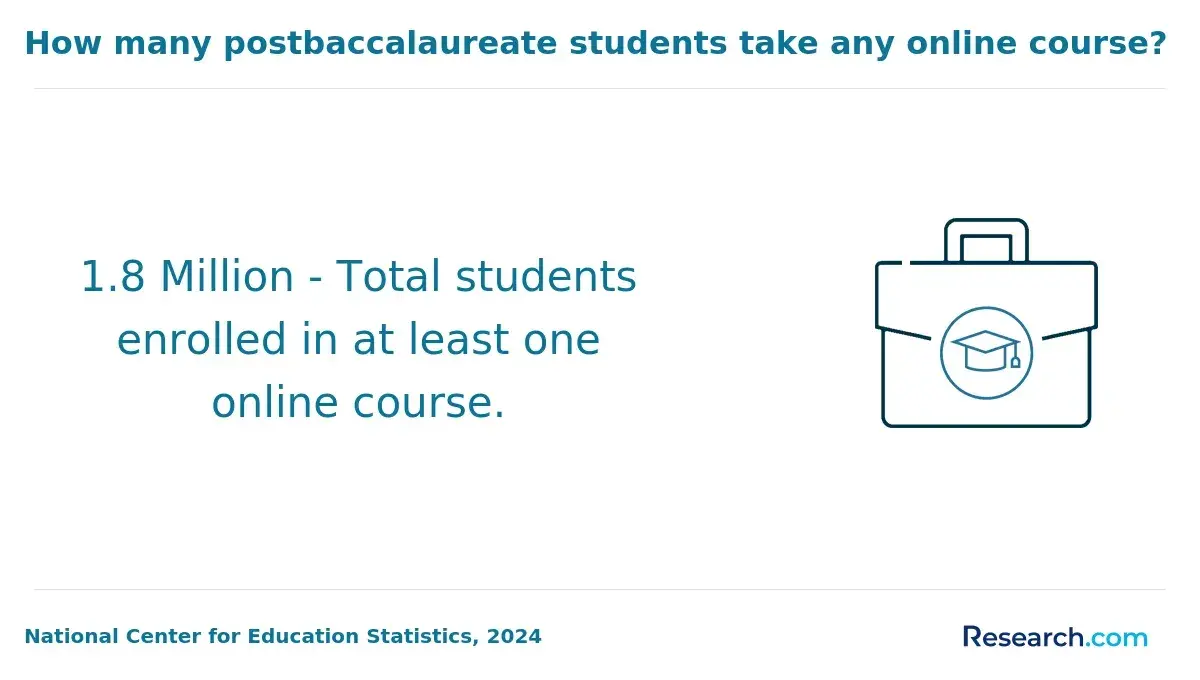
Short terms can make a degree feel faster because students finish courses more often throughout the year. The trade-off is intensity: an 8-week mineralogy, environmental data, GIS, or earth systems course may cover the same outcomes as a longer course in half the calendar time.
A realistic accelerated plan usually requires students to do several things at once. Before enrolling, ask the school to map every remaining requirement to actual upcoming terms, not just to a general degree plan.
- Confirm how many credits will transfer into general education, electives, and the geoscience major.
- Identify prerequisites for chemistry, physics, calculus, statistics, GIS, geology, or field methods courses.
- Ask whether required upper-division geoscience courses are offered every term, every year, or less often.
- Check whether capstone, internship, research, or field components must be completed in a specific season.
- Request a full-time and part-time plan so you can compare speed with weekly workload.
How Do Accelerated and Competency-Based Online Geoscience Programs Work?
Accelerated online geoscience programs usually work through shorter academic terms, overlapping start dates, transfer-friendly degree plans, and year-round enrollment. Competency-based geoscience bachelor's programs are less common than competency-based business or IT degrees because geoscience often requires sequenced science learning, labs, spatial analysis, and faculty-assessed projects.
The formats below are the main ways colleges shorten the calendar. Each can help, but each also changes the pace and workload a student must manage.
| Format | How it speeds completion | Best for | Main trade-off |
| 7.5-week or 8-week courses | Students complete more course blocks per year than in traditional semesters | Organized students who can focus on one or two intensive courses at a time | Less recovery time between exams, labs, maps, and projects |
| Year-round enrollment | Summer, winter, or multiple start dates reduce idle time | Students who want continuous progress | Fewer breaks and possible course-availability constraints |
| Transfer-heavy bachelor's completion | Prior credits reduce the number of courses still required | Associate degree holders or returning students | Major requirements may still take several terms if courses are sequential |
| Self-paced or competency-based courses | Students move faster through material they already know | Experienced professionals with strong prior knowledge | Less common in geoscience and may not cover required lab or field outcomes |
| Stackable certificates | Certificate coursework may later apply toward a degree | Students testing a GIS, environmental, or data pathway before committing | Not every certificate credit transfers into every degree |
Students sometimes compare accelerated geoscience programs with fast degrees in other fields, such as 1 year MSW programs online no BSW, but the comparison has limits. Geoscience speed is shaped heavily by science sequencing, labs, mapping software, and possible fieldwork, while social work acceleration is shaped more by practicum and accreditation rules.
A good accelerated geoscience program should still include rigorous earth systems, geology, environmental science, data analysis, GIS, or spatial reasoning outcomes. If a program seems fast because it removes core science expectations entirely, students should question whether it supports their intended career or graduate-school pathway.
The most important accreditation for an online geoscience degree is institutional accreditation from an agency recognized by the U.S. Department of Education. This is what generally supports federal financial aid eligibility, credit transfer, graduate-school recognition, and employer confidence.
Programmatic accreditation is less standardized in geoscience than in nursing, engineering, counseling, or education. Some environmental engineering or engineering-adjacent programs may seek ABET accreditation, but most geology, geography, GIS, earth science, or environmental geoscience degrees rely primarily on institutional accreditation and department reputation.
Before applying, students should verify accreditation and recognition through official school and government sources. This sequence helps avoid unrecognized schools and programs that sound fast but may not be useful.
- Confirm the college's institutional accreditor on the school website and through the U.S. Department of Education's recognized accreditation database.
- Check whether the program is fully online, mostly online, or online with required campus, field, or lab sessions.
- Ask whether the degree title appears exactly as an approved academic program in the current catalog.
- For licensure-oriented geology goals, compare coursework with the requirements of the state board where you may practice.
- Ask graduate programs or target employers whether the online degree meets their prerequisites or hiring expectations.
Accreditation does not guarantee that every credit will transfer or that a state licensing board will accept every course. It does, however, establish a baseline of institutional legitimacy that students should not compromise for speed.
Transfer credit is the single biggest factor in finishing an accredited online geoscience bachelor's degree quickly. A student who transfers an associate degree or prior university coursework may bypass much of the general education and elective load, but still needs the right science, math, and upper-division geoscience courses.
The table below shows how different credit sources can affect time to degree. The key issue is not just whether the school accepts the credit, but whether it applies to the exact requirement that controls graduation.
| Credit source | How it may help | Common limit or concern | Timeline impact |
| Community college transfer credits | Can satisfy general education, electives, and some lower-division science courses | Many bachelor's programs cap total transfer credit, often around 60 to 90 semester credits | Can reduce a bachelor's plan by 1 to 2 years |
| Completed associate degree | May transfer as a block or satisfy lower-division requirements | Science prerequisites may not align with geology, GIS, or environmental tracks | Often supports an 18- to 24-month completion plan |
| AP, IB, CLEP, or DSST credit | Can reduce general education or introductory requirements | Major departments may require minimum scores or may not accept exam credit for labs | Can remove one or more terms if applied early |
| Military or workforce learning | May count toward electives or technical requirements after evaluation | Often does not replace upper-division geoscience coursework | Helpful for elective reduction, less reliable for major acceleration |
| Prior learning assessment portfolio | Can document college-level learning from work or training | Policies vary widely and may involve fees, faculty review, and credit caps | Useful when planned before enrollment, rarely instant |
Students who want a fast path should treat transfer evaluation as an admissions requirement, not an afterthought. If you are building a pathway from a two-year credential, resources on an associate degree in 6 months online can help you understand how accelerated lower-division study differs from completing a science-heavy bachelor's major.
To shorten the degree without creating delays, ask for a written transfer audit before committing. Then check whether your remaining requirements can be taken in the exact order and terms needed for your target graduation date.
Admission requirements vary by degree level, but accredited online geoscience programs usually expect standard academic documentation and may also require proof of readiness for college-level math and science. Fast admission does not always mean fast graduation, especially if placement results add prerequisite courses.
Most undergraduate applicants should be prepared to submit the following materials. Each item can affect timing because missing documents can push the student to the next start date.
- High school transcript, GED documentation, or prior college transcripts from every institution attended.
- Transfer-credit evaluation, especially for students who want to finish in less than two years.
- Math placement, previous algebra, precalculus, calculus, or statistics coursework when required by the major.
- Science background documentation for programs with chemistry, physics, geology, or environmental science prerequisites.
- Application form, identity documentation, and financial aid materials by the school's priority deadline.
Graduate programs may require a bachelor's degree, minimum GPA, statement of purpose, references, and prior coursework in geology, earth science, education, geography, GIS, or a related field. Some online master's programs are designed for teachers or working professionals, so applicants should confirm whether the curriculum matches their professional goal.
Start dates matter because accelerated programs often run on multiple short terms rather than one fall-only cycle. A school with six starts per year may let you begin sooner, but a required upper-division course offered only in spring can still control the final graduation date.
A fast online geoscience degree can cost less if transfer credits reduce the number of courses you pay for, but acceleration does not automatically lower tuition. Students may pay technology fees, lab kits, field-course costs, GIS software fees, textbooks, and graduation fees in addition to tuition.
For cost context, the College Board's 2024-25 published tuition and fee averages for four-year institutions show the range students may be comparing before discounts, grants, or institutional aid:
- Public four-year in-state average: $11,610
- Public four-year out-of-state average: $30,780
- Private nonprofit four-year average: $43,350
Those figures are annual published prices, not online-program net costs. The useful takeaway is that tuition structure matters: some online programs charge a flat per-credit rate regardless of residency, while others retain in-state and out-of-state pricing.
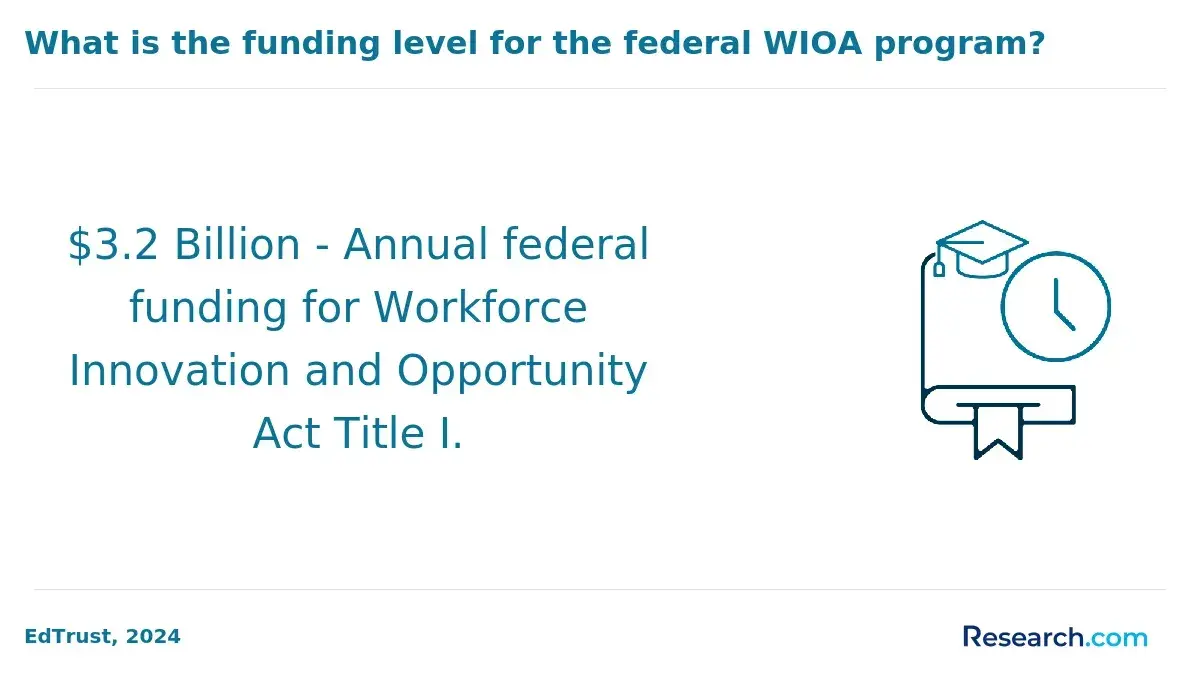
Financial aid may be available if the student attends an eligible accredited institution and meets federal aid rules. The maximum Federal Pell Grant for the 2024-25 award year was $7,395, but actual eligibility depends on the FAFSA, enrollment intensity, cost of attendance, and student circumstances.
Students comparing fast degrees with lower-cost credentials should be clear about the job goal. A short bookkeeping course, for example, may be practical for an office or accounting-support path, but it will not replace the science, GIS, environmental, or graduate-school preparation expected from a geoscience degree.
To estimate total cost, multiply remaining credits by tuition, then add fees and required materials. A student with 30 credits remaining at a higher per-credit rate may still pay less overall than a student with 90 credits remaining at a lower rate.
Many students choose online geoscience programs because they need to keep working, but accelerated study can be demanding. A full-time job plus two 8-week science or GIS courses can create a heavy weekly schedule, especially when projects require software, data analysis, lab interpretation, or field observations.
The table below compares likely enrollment patterns. It helps students decide whether the fastest plan is realistic or whether a slightly slower pace will lead to better performance and retention.
| Enrollment pattern | Typical course load | Speed advantage | Best for | Risk |
| Aggressive accelerated full time | Two courses per short term, year-round | Fastest for students with few outside obligations | Students with flexible work, strong study habits, and completed prerequisites | Burnout, lower grades, missed lab or project deadlines |
| Moderate full time | One to two courses per short term with planned breaks | Still faster than traditional part-time study | Working adults who can reserve consistent evening or weekend study time | Graduation may extend if courses are not offered every term |
| Part time | One course per term or selected terms only | Slowest but most manageable | Students with full-time work, caregiving, travel, or variable shifts | Financial aid status, motivation, and course sequencing may become issues |
Students who work full time should be especially cautious with lab science, statistics, remote sensing, GIS programming, and capstone courses. These may require longer work blocks than reading-based classes.
A practical compromise is to accelerate general education or elective courses while taking technical geoscience courses at a steadier pace. This can preserve momentum without turning every term into a high-pressure sprint.
An accelerated online geoscience degree can be respected when it comes from an accredited institution, appears on the transcript like a standard academic degree, and includes the technical preparation expected for the student's goal. Employers and graduate schools usually care more about accreditation, coursework, skills, projects, and experience than whether the courses were taken online.
The labor market is not limited to the job title "geoscientist." Depending on coursework, students may pursue or build toward roles in environmental consulting, GIS analysis, hydrology support, natural resource management, energy, hazard assessment, science education, or graduate study. The BLS reported 2024 median pay of $95,750 for geoscientists, but entry-level roles, GIS roles, environmental technician positions, and jobs requiring graduate study can differ substantially.
Respect also depends on whether the degree matches the role. A GIS-heavy program may be excellent for mapping and spatial-data jobs but less suitable for a state geologist licensing pathway if it lacks required geology coursework. A geology-focused degree may support graduate study better than a broad environmental studies degree, but it may also require more math, labs, or field methods.
Students evaluating professional recognition can learn from other regulated fields, such as online clinical psychology programs, where accreditation, supervised experience, and state rules strongly affect outcomes. Geoscience is not identical, but the lesson is similar: verify requirements before assuming an online degree will satisfy every employer, graduate program, or licensing board.
How Should You Compare the Fastest Accredited Online Geoscience Programs?
The best fast online geoscience program is the one that gets you to your goal quickly without creating accreditation, transfer, cost, licensing, or workload problems. A strong comparison should look beyond the advertised completion time and focus on the exact degree plan you would follow.
Use this sequence when comparing programs. It keeps the decision practical and helps separate genuinely accelerated options from programs that only sound fast.
- Verify institutional accreditation and confirm that the degree appears in the current academic catalog.
- Request a preliminary transfer-credit evaluation before enrolling, especially if you have more than 30 prior credits.
- Ask for a term-by-term graduation plan showing required courses, prerequisites, and expected availability.
- Confirm whether labs, fieldwork, internships, capstones, proctored exams, or campus visits are required.
- Compare total remaining cost, not just per-credit tuition or advertised annual tuition.
- Ask whether the program supports your target outcome, such as GIS employment, environmental consulting, teaching, graduate school, or geology licensure preparation.
- Choose the fastest schedule you can sustain while maintaining grades, skill development, and enough time for projects or experience.
The table below highlights common mistakes that can delay graduation or reduce the value of a fast online geoscience degree. These red flags are especially important for transfer students and working adults.
| Common mistake | Why it matters | Better approach |
| Assuming "accelerated" means easier | Shorter terms usually compress the same learning outcomes | Review syllabi, weekly workload, lab expectations, and project deadlines |
| Focusing only on the shortest advertised timeline | The advertised path may assume maximum transfer credit or full-time enrollment | Ask for a personalized completion estimate based on your transcript |
| Ignoring prerequisites | Math and science sequences can add terms if taken in the wrong order | Map prerequisite chains before the first term begins |
| Assuming all credits transfer | Credits may transfer as electives but not satisfy major requirements | Get a written audit showing how each course applies |
| Overlooking field or lab requirements | Some requirements may be seasonal, in person, or hard to schedule around work | Ask whether alternatives, local placements, or online lab options are available |
| Choosing a degree title that does not match the career goal | GIS, environmental science, geology, and geography programs prepare students differently | Compare required courses with job postings, graduate prerequisites, or state board rules |
If two programs look equally fast, choose the one with clearer transfer rules, stronger course availability, better advising, and a curriculum that matches your target role. Speed is valuable only when the degree remains credible, affordable, and useful after graduation.
Other Things You Should Know About Geoscience
Some do, especially geology-focused programs. Others use virtual labs, local observations, GIS projects, or field alternatives. Students should ask whether any field course is required in person, offered only in summer, or tied to a specific location.
No. GIS is a technical field focused on spatial data, mapping, and analysis. It is often used in geoscience, environmental work, planning, emergency management, and natural resources, but a GIS degree may not include the same geology or earth science depth as a geoscience degree.
It can, if the curriculum includes the prerequisites required by the graduate program, such as geology, chemistry, physics, calculus, statistics, research methods, or GIS. Students should compare undergraduate course requirements with target graduate admissions pages before enrolling.
Often, yes. Many programs use GIS, remote sensing, statistics, spreadsheet, modeling, or visualization tools. Ask whether software is included, whether a high-performance computer is needed, and whether technical support is available for online students.
- Supporting Geoscience Students https://www.grow-geocareers.com/forgeodepartments
- How Can I Earn a Master’s Degree Faster? | UMGC https://www.umgc.edu/blog/how-can-i-earn-a-masters-degree-faster
- Graduate Programs https://www.uaeu.ac.ae/en/catalog/graduate/programs/bachelormaster-accelerated-option-in-geosciences.shtml
- Course Schedule and Course Pacing: Does it Affect Student Success in Online Asynchronous Courses? - OJDLA https://ojdla.com/articles/course-schedule-and-course-pacing-does-it-affect-student-success-in-online-asynchronous-courses
- Online Geoscience Degrees: Top Schools and All Programs in 2026 https://www.gisdegree.org/online/geoscience-degrees/
- Online Degree vs. Traditional: Choosing the Right Path https://beal.edu/online-degree-vs-traditional/
- How do recent geoscience graduates experience the job market? - GeoExpro https://geoexpro.com/how-do-recent-geoscience-graduates-experience-the-job-market/