2027 What Requirements Do You Need for an Online Oceanography Bachelor's Degree? Admission Rules, Credits & Eligibility

Co-Founder and Chief Data Scientist
Many prospective students face uncertainty about the prerequisites for enrolling in an online oceanography bachelor's degree program. Questions arise about required credits, eligibility criteria, and how prior academic experience translates to acceptance. This confusion can delay application and career planning. Data shows that nearly 40% of students pursuing STEM degrees online seek flexible admission pathways due to diverse educational backgrounds.
Understanding these requirements is crucial for those aiming to enter the oceanography field without a traditional science degree. This article clarifies admission rules, credit expectations, and eligibility criteria to guide applicants in making informed, strategic decisions.
Key Benefits of Preparing for Online Oceanography Bachelor's Degree Requirements
- Choosing the right online oceanography program ensures alignment with career goals, considering factors like accreditation, faculty expertise, and specialization areas.
- Maximizing transfer credits, often up to 60%, accelerates graduation and reduces tuition costs by applying prior college coursework effectively.
- Completing an accredited bachelor's degree opens doors to careers in marine research, environmental consultancy, and government agencies, with employment in these fields growing 8% through 2030.
What are the basic eligibility requirements to apply for an online oceanography bachelor's degree?
Eligibility for an online oceanography bachelor's degree represents the essential qualifications that applicants must meet before applying, distinct from acceptance or enrollment. Acceptance is the institution's decision after reviewing an application, while enrollment involves registering for classes. Eligibility sets the baseline requirements that allow students to begin the admission process.
In line with most admission criteria for online oceanography bachelor's programs and standards from the U.S. Department of Education, students must typically hold a high school diploma or GED, meet a minimum age requirement (usually 17 or 18 years old), and satisfy citizenship or residency criteria. These foundational criteria confirm a student's readiness for college-level oceanography coursework and ensure compliance with legal regulations for enrollment.
Since eligibility rules vary widely among institutions, prospective students should confirm specific requirements directly with each school offering oceanography programs. This includes verifying requested transcripts, minimum GPA or standardized test scores, and any unique documentation.
Applicants should also consider accreditation status to ensure credits transfer and degrees gain recognition. Those seeking an affordable and credit-efficient pathway to their degree may find guidance by exploring options for the easiest online degree programs, which can help streamline the admission and completion process.
- High School Diploma or GED Required: Proof of secondary education completion is mandatory to demonstrate academic preparedness for college-level studies in oceanography.
- Minimum Age Threshold: Most programs require students to be at least 17 or 18 years old, aligning with legal standards for enrolling in higher education.
- Citizenship and Residency Rules: Admission eligibility often depends on U.S. citizenship, permanent residency, or international status, with varying restrictions by institution.
- Accreditation Considerations: Students should ensure their chosen program is accredited to facilitate credit transfer and employer or graduate school recognition.
- Verification with Institutions: Direct communication with each oceanography program is crucial to confirm distinct eligibility requirements and acceptable documentation.
What is the minimum GPA required for admission to an online oceanography bachelor's degree program?
The minimum GPA required for admission to an online oceanography bachelor's degree program varies significantly by institution. Many schools accept a cumulative high school GPA as low as 2.0, which reflects a more flexible admissions approach. However, more selective programs often require a minimum GPA of 2.5 or higher to attract students with stronger academic records. These required GPA scores for online oceanography degree programs form just one part of a holistic review process.
Admissions committees evaluate applicants based not only on GPA but also on class rank, standardized test scores, and letters of recommendation, offering a comprehensive look at each candidate's potential. Some schools differentiate between weighted GPAs, which factor in course difficulty, and unweighted GPAs, which do not. This distinction can influence eligibility, with weighted GPAs often providing a more favorable indication of academic strength.
Students near the minimum GPA threshold might still qualify through conditional or probationary admission policies. These options allow students to enroll while agreeing to meet certain academic benchmarks during their studies to remain in the program.
When applying, prospective oceanography students should carefully calculate or self-report their GPA by verifying whether the school prefers weighted or unweighted scores. Using official transcripts or reliable calculators ensures accuracy and reduces the risk of delays.
Additionally, applicants should gather relevant documents and inquire with admissions offices about transfer credit policies, accreditation standards, English proficiency requirements, and financial aid options. Those interested in related fields might also explore an accelerated bachelor's degree psychology as an alternative pathway.
- Varied GPA Thresholds: Institutions set minimum GPA requirements typically ranging from 2.0 to 2.5, reflecting their selectivity and standards for admission.
- Holistic Review Process: Admissions committees consider GPA alongside class rank, test scores, and recommendation letters to evaluate each applicant thoroughly.
- Weighted vs. Unweighted GPA: Schools may assess weighted GPAs that account for advanced courses or unweighted GPAs, which can affect admissions decisions.
- Conditional Admission Options: Applicants near the cutoff may receive probationary acceptance contingent on maintaining satisfactory academic progress.
- Accurate GPA Reporting: Prospective students should confirm GPA calculation preferences and use official documents or trusted tools to report their GPA precisely.
2026 Update: Checking Lab, Fieldwork, and Technology Readiness Before Applying
For 2026, this guide adds a closer look at the practical readiness requirements that can affect whether an online oceanography program is a good fit before you apply.
- Whether required labs can be completed fully online, through mailed kits, simulations, or approved local sites.
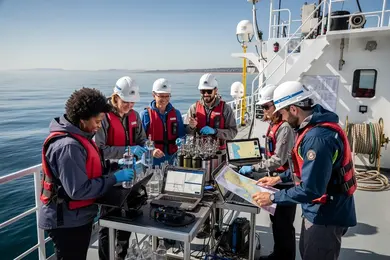
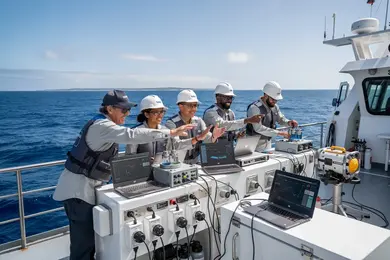
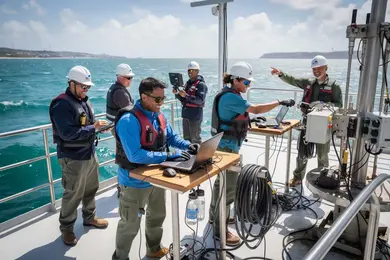
- If the program includes fieldwork, coastal site visits, research cruises, or in-person intensives.
- What computer specifications, software, mapping tools, or data analysis platforms students must use.
- Whether students need access to a reliable internet connection for live lectures, lab demonstrations, or group projects.
- If safety training, liability forms, or equipment purchases are required for lab or field components.
- How scheduling works for synchronous classes, lab deadlines, and instructor-led research activities.
Checking these details early helps students avoid enrollment surprises and choose an online oceanography program that matches their location, schedule, and technical resources.
Many online bachelor's programs in oceanography, especially those catering to adult learners or individuals balancing work and family, have moved toward test-optional or test-free admissions. This shift aligns with broader trends seen nationwide since 2020, aiming to reduce reliance on standardized exams like the SAT and ACT, which may not always reflect a student's full potential.
Still, some selective programs ask for test scores in specific situations, such as awarding merit-based scholarships, admitting to honors tracks, or meeting competition criteria in highly competitive programs. In these cases, standardized tests remain one component of a holistic review.
When required, schools typically look for SAT scores between about 1100 and 1300 or ACT composite scores ranging from 22 to 28. These benchmarks indicate the level of academic preparedness expected but are not strict cutoffs and can vary widely among institutions.
Since policies have evolved rapidly over recent years, it's essential for applicants to check each program's admissions page for the most current requirements. Variations exist even among reputable universities offering online oceanography degrees, so direct verification is necessary.
- Test-Optional Admissions: The majority of online oceanography bachelor's programs waive SAT or ACT requirements to enhance accessibility, particularly for adult learners and transfer students.
- Situations Requiring Scores: Some institutions still request exams for scholarships, honors programs, or selective admission tracks where standardized testing helps differentiate candidates.
- Typical Score Ranges: When tests are needed, competitive programs often seek SAT scores of 1100-1300 or ACT scores between 22 and 28, reflecting moderate to strong academic skills.
- Policy Variations: Admissions requirements continue to change quickly; confirming details on the official program website ensures accuracy.
- Recent Trend: According to a 2023 NACAC report, over 70% of four-year colleges have adopted test-optional policies, influencing STEM fields like oceanography.
A professional who enrolled in an online oceanography bachelor's program to switch careers shared that navigating admissions was initially confusing due to unclear test requirements. He explained, "I wasn't sure if I needed to submit my ACT scores, which I took years ago, or if I could just rely on my college transcripts."
After contacting the admissions office, he learned his application would be reviewed without test scores but was advised to submit strong academic references instead. He described the process as reassuring once the program clarified their flexible stance, allowing him to focus more on balancing work, study, and life rather than prepping for tests he felt disconnected from.
Most accredited online oceanography bachelor's programs require around 120 semester credit hours (SCH) to graduate, although some tracks demand up to 128 or 130 credits depending on the curriculum. These credit hours typically break down into general education courses (about 30-40 credits), core major courses focused on oceanography and related sciences (40-60 credits), electives offering academic flexibility (15-25 credits), and capstone or practicum experiences adding 3-6 credits. Students should note the difference between semester and quarter credit hours; quarter systems require about 180-195 quarter credits to match the 120-130 SCH baseline.
Transferable credits play a crucial role in reducing the total credits needed. Students with prior learning experiences, such as Advanced Placement (AP) credits, College-Level Examination Program (CLEP) results, or credits from previously attended institutions, can apply these toward general education or electives. This approach helps those pursuing an online oceanography bachelor's degree minimize redundant coursework and graduate sooner.
For prospective students, gathering accurate details about credit transfer policies and course requirements is essential. Additionally, those interested in accelerating their degree path might explore related options like the accelerated construction management degree programs, which emphasize efficient credit completion strategies.
- Total Credit Hours Required: Most online oceanography bachelor's degrees require 120-130 semester credit hours, with variability based on program demands.
- Credit Distribution Breakdown: Coursework spans general education, core major classes, electives, and practicum components to meet graduation criteria.
- Semester vs. Quarter Credits: Semester credit hours are standard; quarter credit hours necessitate more units to equal semester credits.
- Prior Learning Credits: AP, CLEP, and transfer credits can significantly reduce the total transferable credits needed for online oceanography degree completion.
- Program Variability: Some tracks require additional lab or fieldwork credits, slightly increasing total credit hour requirements.
Courses in math and science form the foundation required before starting an online oceanography bachelor's degree. Students generally must complete algebra and geometry, with calculus preferred, along with biology, chemistry, and physics to build the quantitative and scientific skills essential for this discipline.
Proficiency in English composition and literature is also mandatory, as strong communication abilities are vital for interpreting research and crafting reports. While not required, electives like environmental science, computer science, and geography can enhance an application and contribute valuable context to one's studies.
Many students fulfill these prerequisites by taking community college courses or participating in dual enrollment during high school. These credits often satisfy admission criteria and can lighten the overall course load by transferring directly into the bachelor's program, potentially speeding up graduation.
Some online oceanography programs offer bridge or remedial classes to help applicants who lack certain prerequisites; however, these additional courses may extend the time needed to complete the degree.
- Hard Prerequisites: Completion of foundational math (algebra, geometry, calculus) and core sciences (biology, chemistry, physics) is essential for enrollment.
- English Requirements: Mastery of English writing and reading through composition and literature courses is required for academic success.
- Recommended Electives: Subjects like environmental science or geography can strengthen your application but aren't usually mandatory.
- Dual Enrollment Credits: Transferable college-level classes completed during high school can fulfill prerequisite courses and reduce time to degree.
- Remedial Options: Bridge courses help those missing prerequisites but may add semesters to the program length.
A professional who built her career after earning an online oceanography bachelor's spoke about the anxiety of meeting prerequisites. She explained, "At first, I worried my high school background wasn't strong enough, especially in calculus. Taking a couple of community college classes clarified gaps and gave me confidence."
She also appreciated programs offering remedial support, noting that while it added time, it prevented frustration later on in core coursework. Her experience highlights how understanding and addressing prerequisite requirements early can turn apprehension into academic success.
Most accredited institutions allow between 60 and 90 transfer credits for a bachelor's degree, typically covering two to three years of coursework. However, transfer limits can differ based on university policies and program requirements.
Community colleges and institutions with 2+2 articulation agreements generally offer smoother credit transfers, making it easier for students to apply previous coursework toward their bachelor's degree. Conversely, some universities maintain stricter rules, especially for specialized fields like oceanography, to protect academic standards.
Admissions officials review official transcripts to verify course content, credit hours, and grades. Credits only transfer if they match the degree's curriculum or general education needs; unrelated or lower-graded courses are often excluded.
Oceanography programs prioritize science, math, and environmental studies courses. Natural science credits usually transfer more readily than humanities or vocational classes. Electives may transfer but often with tighter restrictions.
Students should request a formal transfer credit evaluation before enrolling. This step clarifies how many previously earned credits will count toward the oceanography degree and helps avoid unexpected issues later.
Regional or national accreditation granted by agencies recognized by CHEA or the U.S. Department of Education confirms that a school meets quality standards. Attending a regionally accredited institution ensures your online Oceanography bachelor's degree is valued by employers and qualifies for federal financial aid.
Credits from regionally accredited schools transfer more easily between institutions, a key factor if you plan to switch colleges or pursue graduate studies. Schools without accreditation often have non-transferable credits, potentially delaying degree completion.
Specific branches within Oceanography may require additional program-level accreditation by discipline-focused bodies. These accreditors often enforce stricter admission standards and maintain curriculum quality to prepare students for professional success.
Employers in scientific fields typically prefer degrees from accredited programs, associating them with academic rigor and credibility. Degrees earned from unaccredited schools may face skepticism, limiting career opportunities.
Most graduate programs insist applicants hold degrees from accredited institutions. Choosing an unaccredited Oceanography program can block access to advanced degrees and professional licenses.
Prospective students should verify accreditation status through official databases or institutional resources before applying. This avoids investing time and money in degrees that might not be recognized upon graduation.
Official Transcripts: Most programs require official high school transcripts to verify your academic history. If you have attended college previously, official college transcripts must also be submitted. These documents are usually sent directly from the issuing institution to the program, ensuring authenticity. Knowing the difference between official and unofficial transcripts helps in preparing necessary application materials for online oceanography programs.
Government-Issued ID: A valid government-issued ID such as a driver's license or passport is essential to confirm your identity during application. This requirement is especially important for online students who cannot verify their identity in person.
Application Essays: Many online programs ask for one or more essays that highlight your motivation for studying oceanography and outline your academic or professional goals. Well-written essays can strengthen your application by showcasing commitment and clear communication.
Additional Documents: Some selective online oceanography bachelor's degree programs may require extra materials such as a portfolio of scientific projects, letters of recommendation, a résumé, or a personal statement detailing your background and aspirations.
Certified Translations: International students must provide certified translations of transcripts or documents not originally in English to ensure accurate evaluation by U.S.-based admissions committees. This step is critical for avoiding delays or misunderstandings.
Since various programs operate on rolling or fixed-semester deadlines, start gathering documents at least three to six months ahead. Early preparation allows time to request official transcripts, secure recommendations, and revise essays carefully.
Organize your application documents well in advance to accommodate transcript processing times and recommended waiting periods for letters. A checklist is a helpful tool to keep your application complete and on track.
For those exploring options to accelerate their education, consider researching programs that offer a sports degree online as a model of streamlined online degree pathways that might inspire your approach to completing an oceanography bachelor's degree efficiently.
For non-native English speakers applying to an online oceanography bachelor's degree, most accredited U.S. programs require demonstrating proficiency in English through recognized standardized tests.
- Accepted Tests: Commonly accepted exams include the TOEFL iBT, IELTS Academic, and Duolingo English Test. These assess critical language skills such as reading, writing, listening, and speaking to ensure students can succeed academically.
- Typical Score Ranges: Undergraduate programs generally require minimum TOEFL iBT scores between 61 and 80, IELTS band scores from 6.0 to 6.5, or Duolingo English Test scores around 90 to 100. These benchmarks help admissions committees evaluate English proficiency consistently.
- Exemptions: Applicants from English-speaking countries or those who have completed several years of study in English-medium institutions may be exempt from these testing requirements. Prospective students must verify exemption policies with each online oceanography program.
- Conditional Admissions: Some programs offer conditional admission for students not meeting proficiency thresholds. These options often require participation in an ESL bridge program aimed at strengthening language skills before full acceptance into the degree coursework.
Prospective students seeking English proficiency test scores for non-native speakers applying to online oceanography degrees should carefully review each program's policies. Contacting admissions offices can clarify documentation requirements and alternative pathways. Additionally, adult learners and working professionals might explore the shortest masters degree programs online to complement their oceanography studies efficiently.
CLEP (College-Level Examination Program) offers students a chance to earn college credit by passing exams in various subjects. A score of 50 or above, as advised by the American Council on Education (ACE), is accepted for undergraduate credit by over 2,900 colleges.
However, CLEP credit acceptance varies: some online oceanography programs allow broad use of these credits, including in major courses, while others restrict them to general education requirements. Verifying your target school's CLEP policies in advance is crucial for maximizing credit transfer.
Besides CLEP, several prior learning assessment (PLA) options can accelerate degree progress. These include DANTES/DSST tests, portfolio evaluations, and credit granted for professional certifications, military service, or related work experience. Such alternatives recognize existing knowledge and skills gained outside traditional classrooms.
- Institution-Specific Policies: Policies on CLEP and other PLA credits differ significantly by program. Confirm with your prospective school which credits they accept to avoid surprises.
- Broader Credit Options: Exams like DANTES/DSST and portfolio assessments provide additional routes to gain college credit beyond CLEP.
- Cost and Time Savings: Prior learning credits help reduce tuition expenses and shorten the length of your oceanography bachelor's degree.
- Contact Registrar Early: Engaging admissions or registrar offices early clarifies credit transfer rules and helps plan the most efficient educational path.
Many public universities offer online programs with in-state tuition rates to students regardless of their residency, largely thanks to participation in the State Authorization Reciprocity Agreement (SARA). SARA is an agreement among member states that permits institutions licensed in one state to provide distance education to students in other member states without needing additional authorization. This arrangement often enables students to access reduced tuition costs while studying online.
Nevertheless, some schools continue to charge out-of-state rates for their online degrees. It is vital to verify tuition policies directly with the institution before enrolling in an oceanography program to avoid unexpected expenses. Students aiming to qualify for in-state tuition generally must submit residency documents to prove their physical presence in the state.
- State Authorization Reciprocity Agreement (SARA): SARA allows colleges in participating states to enroll out-of-state online students without requiring separate state approval, facilitating streamlined access to online programs.
- Tuition Variation: Some institutions still apply out-of-state tuition for online learners, so confirming a school's specific policies is essential prior to enrollment.
- Residency Documentation: To establish eligibility for in-state rates, students often must provide documents such as utility bills, voter registration, or a driver's license showing residency within the state.
- Financial Impact: Verifying tuition and residency criteria beforehand can result in significant savings and a clearer plan for obtaining an affordable oceanography degree.
What Graduates Say About Preparing for the Online Oceanography Bachelor's Degree Requirements
- Kent: "Starting my online oceanography degree, I quickly realized how crucial it was to understand the admission requirements thoroughly. This upfront knowledge helped me prepare all necessary documents and avoid last-minute hurdles. Plus, being aware of credit transfer policies from day one allowed me to accelerate my progress, and now I feel confident stepping into a competitive job market with a solid degree in hand."
- Calvin: "Reflecting on my journey, the eligibility criteria were a game changer for choosing the right online oceanography program. Knowing exactly what courses and prerequisites were needed saved me from wasted effort and ensured a smooth admission process. The program's flexibility helped me balance work and study, and completing it has genuinely elevated my professional opportunities in marine research."
- Sidney: "From a professional standpoint, understanding the credit policies early on was instrumental in maximizing my prior coursework and streamlining my path to graduation. The clarity of admission requirements prevented unnecessary delays, making the entire experience efficient and goal-driven. Graduating with an online oceanography bachelor's degree expanded my career options in environmental consultancy far beyond what I initially imagined."
Other Things You Should Know About Oceanography Degrees
Students pursuing an online oceanography bachelor's degree can access various financial aid options, including federal and state grants, scholarships, and student loans. Many schools also offer institution-specific scholarships and work-study programs. It is important for applicants to complete the Free Application for Federal Student Aid (FAFSA) early to maximize grant and loan eligibility.
Yes. Many online oceanography bachelor’s programs require at least one field or laboratory component, often completed through an approved local site, campus residency, or summer field session. Programs may require 1–3 credit lab courses and proof of completion before graduation.
Online oceanography students generally need a reliable computer with internet access, updated web browsers, and specific software for data analysis and simulations used in science courses. A webcam and microphone are often required for virtual meetings and exams. Institutions usually provide a detailed list of technical requirements during enrollment.
Adult learners and working professionals may face flexible admission policies, such as accepting prior college credits or work experience related to oceanography or STEM fields. Some programs offer rolling admissions and accommodate part-time schedules. However, all applicants must still meet core prerequisites like minimum GPA and competency in math and science.
- English language proficiency https://www.uva.nl/en/about-the-uva/organisation/faculties/faculty-of-social-and-behavioural-sciences/education/social-sciences/english-language-proficiency.html
- ACT/SAT Optional List for Fall 2025 - Fairtest https://fairtest.org/test-optional-list/
- Credit for Prior Learning https://www.tsc.fl.edu/academics/credit-for-prior-learning/
- Oceanography | Shasta College https://www.shastacollege.edu/academics/programs/oceanography/
- 7 Classes That All Aspiring Marine Biologists Should Take https://www.seamester.com/blog/7-high-school-classes-that-all-aspiring-marine-biologists-should-take/
- Oceanography: Bachelor of Science Degree (BSc) - UBCV | EducationPlannerBC https://www.educationplannerbc.ca/institutions/university-of-british-columbia/539e2475-0215-44c3-a4d0-ea806cf9ab9f/programs/UBCV-oceanography-bachelor-of-science-degree-combined-major-or-honours
- Accreditation - Woods Hole Oceanographic Institution https://www.whoi.edu/what-we-do/educate/apo/accreditation/
- In-State Tuition and State Residency Requirements - Finaid https://finaid.org/otheraid/stateresidency/
- Oceanography, B.S. https://catalog.fit.edu/preview_program.php