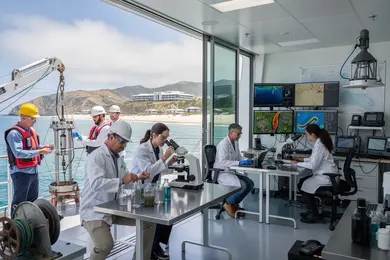
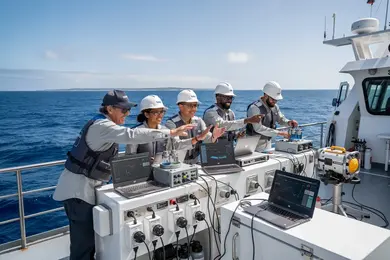
2027 Online Oceanography Bachelor's Degree Programs With Weekly Start Dates

Co-Founder and Chief Data Scientist
Professionals with unrelated undergraduate degrees often face scheduling conflicts and admission delays when pursuing a career shift into oceanography. Traditional semester start dates can stall momentum, especially for working adults balancing jobs and personal commitments. Online oceanography bachelor's degree programs with weekly start dates address this challenge by allowing immediate enrollment and continuous progress.
Recent data shows a 30% increase in enrollment flexibility correlates with higher completion rates among non-traditional students in marine sciences. This article explores available programs featuring weekly start dates and how they enable timely, flexible advancement for students eager to enter oceanography careers without long wait times or rigid schedules.
Key Benefits of Online Oceanography Bachelor's Degree Programs With Weekly Start Dates
- Flexible weekly start dates allow working professionals and career changers to begin an online Oceanography bachelor's degree without waiting for traditional semester enrollments.
- Programs reduce barriers by enabling students to enroll and start coursework within days of acceptance, greatly shortening the path back to education.
- Students can earn regionally accredited degrees while balancing job and family commitments, supported by transfer credit options and prior learning assessments.
What Are Weekly Start Dates in Online Oceanography Bachelor's Programs, and How Do They Differ From Traditional Term-Based Enrollment?
Weekly start dates in online oceanography bachelor's programs offer students the ability to begin coursework at the start of any week throughout the year, differing significantly from the traditional term-based enrollment system, which opens admissions only a few times annually. This rolling enrollment model eliminates long waits between application approval and class commencement, giving students more control over their academic schedules and timelines.
Unlike semester-based programs that restrict enrollment to fixed periods like fall or spring, weekly start dates allow continuous entry, supporting faster, more flexible degree progress. This structure is especially beneficial for the difference between weekly enrollment and traditional term-based oceanography programs, as it caters to students who need adaptable timelines to balance work, family, or other commitments.
Institutions such as Western Governors University and Purdue Global demonstrate how multiple start dates throughout the month enable students to enroll and begin classes as soon as they're ready. This approach supports working adults aiming for career advancement without the delay often imposed by traditional start dates. Students can accelerate their studies by leveraging transfer credit policies and prior learning assessments common in many accredited programs.
Additionally, programs offering rolling starts often highlight financial aid opportunities that align with flexible enrollment periods. The growing demand for this enrollment model reflects its career-focused design, allowing learners to pursue an online oceanography degree with minimal interruption.
For those looking to expand their qualifications efficiently, weekly start dates are an effective option. For example, prospective students balancing a job can explore programs, including popular options related to RN to BSN online no clinicals, illustrating the appeal of flexible online education formats across disciplines.
- Flexible Entry Times: Weekly start dates eliminate fixed academic calendar restrictions, enabling enrollment every week and immediate course access for faster degree progress.
- Reduced Wait Periods: Rolling enrollment shortens the time between admission and starting classes-key for busy adults wanting to avoid long delays common in semester systems.
- Personalized Pace: Continuous enrollment lets students control when they begin and how quickly they proceed, fitting education around their lifestyles and responsibilities.
- Career-Focused Design: This enrollment style suits working professionals seeking quick advancement without job disruptions, aligning well with transfer credits and financial aid options.
Which Accredited Institutions Offer Online Oceanography Bachelor's Degree Programs With Weekly or Rolling Start Dates?
Prospective students pursuing accredited online oceanography bachelor's programs with weekly enrollment benefit from flexible start dates and accelerated learning options. These programs cater especially well to adult learners balancing career and personal commitments. Offering rolling start dates, they help avoid delays commonly found in traditional semester systems.
- University of Florida - Online: The Bachelor of Science in Environmental Management in Agriculture and Natural Resources includes marine science electives relevant to oceanography. Tuition is approximately $129 per credit in-state, with multiple yearly and rolling admission start dates. UF Online is accredited by the Southern Association of Colleges and Schools (SACSCOC).
- American Public University System: Offering a Bachelor of Science in Environmental Science with coursework overlapping oceanography, this program features nearly weekly start dates. Tuition is about $285 per credit. The Higher Learning Commission (HLC) accredits APU, which allows transfer credits and advanced placement exams to help accelerate degree completion.
- Southern New Hampshire University: SNHU's Bachelor of Science in Environmental Science emphasizes marine ecosystems. Enrollment is open weekly with tuition around $320 per credit. Accredited by the New England Commission of Higher Education (NECHE), SNHU supports flexible credit transfer and financial aid options.
- Liberty University: Their Bachelor of Science in Environmental and Occupational Health with a marine and coastal management focus provides weekly starts. Tuition costs approximately $390 per credit. Liberty holds regional accreditation by the Southern Association of Colleges and Schools Commission on Colleges (SACSCOC) and offers generous transfer credits and prior learning assessments.
- Western Governors University: WGU's Bachelor of Science in Environmental Science covers oceanographic topics within a competency-based model. With monthly start dates, it offers near-weekly flexibility. Tuition is a flat rate of $3,920 per six-month term, and the university is accredited by the Northwest Commission on Colleges and Universities (NWCCU). This model enables motivated students to advance by demonstrating mastery.
Each program combines affordability, regional accreditation, and flexible enrollment schedules. Students can maximize savings and speed by leveraging transfer credits and prior learning assessments. Such options make these programs ideal for those seeking top online oceanography degrees offering rolling start dates. Pursuing these paths supports careers in marine science, environmental consulting, and research roles highlighted by the Bureau of Labor Statistics.
For those looking to explore flexible degree options beyond oceanography, consider programs in related fields such as healthcare administration available online. Resources like the healthcare administration degree online accredited provide further guidance on accelerated and flexible pathways to advance your education.
How Do Weekly Start Dates in Online Oceanography Programs Benefit Working Adults and Non-Traditional Students?
Weekly start dates in online oceanography bachelor's programs offer crucial advantages for working adults and non-traditional students by removing the rigid timeframes of traditional semesters. This approach allows learners to begin courses almost immediately after acceptance-closing the gap between motivation and enrollment and preventing delays that can hinder educational progress.
- Immediate Enrollment: Students no longer need to wait for a new semester to start, enabling them to maintain momentum and reduce chances of losing focus or facing life disruptions before beginning their studies.
- Flexible Scheduling: Weekly start dates accommodate the unpredictable hours and responsibilities that many adult learners juggle, such as fluctuating work shifts or family care, ensuring that coursework fits their unique schedules.
- Higher Retention and Completion: According to data from the NCES and Lumina Foundation, flexibility in course timing improves persistence rates-adult learners tend to continue and graduate more successfully when they can start promptly and progress steadily without semester-based delays.
- Faster Career Progression: Starting classes sooner means students can enter or advance in oceanography-related careers earlier, which shortens downtime and accelerates potential salary growth and return on investment.
A professional who enrolled in an online oceanography bachelor's program with weekly start options shared how this flexibility helped him balance his full-time job and family while pursuing his degree. He explained, "Not having to wait months for the next semester kept me motivated-any delay felt like a lost opportunity."
Navigating work demands alongside coursework was challenging, but starting when ready allowed him to take control of his timeline. He recalled that being able to "jump straight into classes" eased anxiety about falling behind and made it easier to stay committed to graduating on schedule, reinforcing that weekly start dates truly accommodate the realities of adult learners.
What Is the Total Tuition Cost for Online Oceanography Bachelor's Programs That Allow Weekly Enrollment?
Tuition rates for online oceanography bachelor's programs with rolling start dates generally range from $300 to $600 per credit hour. For a typical 120-credit degree, this means overall tuition costs usually fall between $36,000 and $72,000 before considering additional expenses.
Other options include:
- Flat-Rate Tuition: Some institutions offer block or flat-rate tuition, allowing students to pay a set fee per term regardless of course load-beneficial for those maximizing course enrollment during weekly starts to accelerate completion.
- Uniform Online Tuition: Certain schools provide the same in-state online tuition rates to all enrollees, irrespective of residency. This approach makes these programs especially affordable for out-of-state and international students pursuing an oceanography degree.
- Extra Fees: Beyond base tuition, students should budget for technology fees, course materials, and online access charges, which can increase annual costs by several hundred to over a thousand dollars.
- Transfer Credits and Prior Learning: Programs with generous transfer policies or prior learning assessments can cut down required credits, reducing both time and total tuition. This factor is crucial for students comparing average tuition cost for online oceanography bachelor's degrees with rolling start dates.
Prospective students should carefully review official tuition pages and factor in all associated fees to accurately estimate their financial commitment. For those seeking guidance in health-related fields, exploring the cheapest online MHA programs may offer useful insights into affordable online education models.
How Quickly Can Students Complete an Online Oceanography Bachelor's Degree When Enrolling Through a Weekly Start Option?
Enrolling in a full course load, generally 12 to 15 credits each term, enables students to finish faster than those taking fewer classes. Many programs offer overlapping courses within terms, which motivated students can leverage to complete their degree in as little as three to four years.
Some institutions allow up to 90 transfer credits from previous college work, military training, or professional experience, significantly reducing the time needed to graduate by bypassing lower-level courses. Programs that let students advance by demonstrating mastery at their own pace provide flexibility for busy adults. This approach can shorten the degree timeline considerably, especially for those balancing work and family commitments.
Full-time students who start weekly can often graduate within three to four years, while part-time learners might take five to six years. However, weekly start dates help part-time students maintain momentum by eliminating long breaks between terms. A dedicated working adult using transfer credits and taking full course loads with weekly starts might finish in roughly two and a half to three and a half years.
One professional who completed a self-paced online oceanography bachelor's degree with weekly starts shared that managing coursework alongside a full-time job was challenging but rewarding. She appreciated the immediate enrollment opportunity, which let her jump straight into classes without delay.
"The flexibility to tailor my study time was crucial," she reflected, noting how mastering competencies at her own pace helped build confidence. Periods of intense focus alternated with times when family duties required her attention, yet this model allowed her to keep progressing steadily. Graduating felt like a powerful achievement, blending persistence with practical learning strategies.
What Admission Requirements Must Students Meet to Enroll in an Online Oceanography Bachelor's Program With a Weekly Start Date?
Weekly-start online oceanography bachelor's programs often feature more relaxed admission standards than traditional semester-based degrees. Many schools adopt rolling or open admissions, allowing students to enroll nearly any week without waiting for fixed deadlines. These flexible policies usually require only a high school diploma or GED, with minimum GPA expectations typically around 2.0 or lower, and many do not mandate SAT or ACT scores.
This accessibility means students should be prepared for a more self-directed learning environment. Less selective programs often offer extensive academic support, such as tutoring and advising, to help students navigate accelerated or nontraditional coursework. In contrast, programs with higher admission criteria may still provide rolling starts but expect stronger academic preparedness upfront.
Applicants with unconventional educational backgrounds-such as long gaps since last studying or unrelated prior coursework-can strengthen their applications by showcasing relevant work or volunteer experiences, submitting detailed personal statements, or completing introductory courses to demonstrate readiness. Highlighting connections to scientific or environmental fields can also improve admission prospects.
Data from the National Center for Education Statistics shows that enrollment in online bachelor's programs with rolling start dates has grown by 15% in the past five years, reflecting rising demand for flexible STEM education.
- Lower Admission Thresholds: Programs usually require a high school diploma or GED, with minimal GPA demands and many waiving standardized testing to broaden access.
- Rolling Enrollment Flexibility: Weekly start dates and open admission policies eliminate waiting periods, allowing for immediate enrollment.
- Academic Support Availability: Success often depends on resources like tutoring and advising, especially in less selective programs with open admissions.
- Preparation for Nontraditional Students: Applicants with gaps or diverse backgrounds should emphasize relevant experience and readiness to boost acceptance chances.
- Enrollment Growth Trend: Online oceanography bachelor's programs with rolling starts have seen a 15% increase in enrollment recently, highlighting growing interest in flexible STEM pathways.
How Do Online Oceanography Programs With Weekly Starts Handle Transfer Credits From Previous College Coursework?
Weekly-start online oceanography bachelor's degree programs often provide flexible transfer credit policies designed specifically for adult learners and working professionals. These policies accept credits from a variety of sources, such as accredited community colleges, military training, and employer-based learning experiences. Institutions like Oregon State University and the University of North Carolina Wilmington allow transfer limits as high as 90 credits, offering one of the most generous credit acceptance standards among online programs.
The American Council on Education (ACE) plays a critical role by evaluating military and workforce training and issuing credit recommendations widely honored by these programs. This system allows students to convert non-traditional learning into academic credit, increasing the speed of degree completion and lowering educational costs.
Before enrolling, students should always request a transcript evaluation to clarify exactly how many credits will transfer and what courses remain. According to the National Center for Education Statistics, nearly 38% of undergraduates have transferred credits, underscoring the growing importance of clear policies in supporting diverse learners.
- Flexible Credit Policies: Weekly start programs accept credits from community colleges and other accredited sources, improving accessibility for returning students.
- ACE Credit Recommendations: Military and workplace training evaluations convert to academic credits, recognized by many online oceanography programs.
- High Transfer Limits: Schools such as Oregon State University accept up to 90 credits, significantly reducing degree completion time and tuition expenses.
- Transcript Evaluations: Early credit assessments help students plan their remaining coursework and understand graduation requirements.
- Rising Transfer Trends: Approximately 38% of undergraduates transfer credits, reflecting the increasing demand for accommodating transfer policies.
What Financial Aid and Scholarship Options Are Available for Students Enrolling in Weekly-Start Online Oceanography Programs?
Students enrolling in online oceanography bachelor's programs with weekly starts have access to federal financial aid options, including Pell Grants, subsidized and unsubsidized Stafford loans, and Federal Work-Study. Because most federal aid schedules align with traditional semesters, those in weekly-start or rolling admission programs must coordinate closely with financial aid offices to ensure timely disbursement.
The Free Application for Federal Student Aid (FAFSA) is essential for unlocking federal grants and loans. Submitting it early maximizes eligibility since many institutional scholarships and grants are awarded on a first-come, first-served basis. According to the College Board's Trends in Student Aid, undergraduate aid packages average around $14,000 annually, but amounts vary by institution and individual needs.
Beyond federal aid, scholarships and grants available for weekly enrollment oceanography degrees often come from professional scientific groups like the Marine Technology Society and the American Geophysical Union. Many universities also offer scholarships aimed at online students, recognizing the unique challenges they face. This targeted funding can significantly supplement federal assistance.
Prospective students should also explore career pathways after graduation to justify their investment-those interested can learn about jobs with a biology degree, which have strong overlaps with oceanography-related fields.
- Plan Early: Begin the FAFSA process well before enrollment to secure the most funding and prevent processing delays.
- Stay Informed: Maintain regular contact with financial aid advisors to navigate timelines unique to nontraditional start dates.
- Explore Specialized Scholarships: Seek scholarships targeting online learners and marine science majors to boost available aid.
- Understand Aid Limits: Distinguish between subsidized and unsubsidized loans, borrowing only what is necessary to minimize debt.
- Consider Work-Study: Federal Work-Study jobs offer flexible paid employment that fits the schedules common in online programs.
What Accreditation Standards Should a Weekly-Start Online Oceanography Bachelor's Program Meet to Ensure Employer and Transfer Recognition?
Choosing an accredited online oceanography bachelor programs in the United States requires careful attention to accreditation standards to ensure academic quality and professional recognition. In the U.S., there are two primary types of accreditation: regional and national. Regional accreditation remains the gold standard, especially in STEM fields like oceanography, because it enforces stringent academic criteria and is widely accepted by employers and other educational institutions.
The U.S. Department of Education recognizes seven regional accrediting agencies: the Middle States Commission on Higher Education, New England Commission on Higher Education, Higher Learning Commission, Northwest Commission on Colleges and Universities, Southern Association of Colleges and Schools Commission on Colleges, Western Association of Schools and Colleges Senior College and University Commission, and the WASC Accrediting Commission for Community and Junior Colleges.
Among these, the Higher Learning Commission and the Southern Association most commonly accredit weekly-start online programs, offering flexible enrollment that caters to working adults. Before enrolling, prospective students should verify the program's accreditation status directly through the U.S. Department of Education's accreditation database.
Attending a nationally accredited-only institution may jeopardize your ability to transfer credits to regionally accredited universities or pursue graduate degrees in oceanography, due to less rigorous quality review and limited acceptance.
- Regional vs. National Accreditation: Regional accreditation guarantees higher academic standards and greater acceptance by employers and transfer institutions compared to national accreditation.
- Seven Regional Bodies: These include Middle States, New England, Higher Learning Commission, Northwest, Southern Association, WASC Senior College, and WASC Community Colleges-some specialize in online weekly-start programs.
- Verification Importance: Checking the U.S. Department of Education's database ensures your program maintains valid and current accreditation.
- Transfer and Graduate Risks: Schools with only national accreditation may restrict your ability to transfer credits or attend graduate school in oceanography.
- Weekly-Start Accreditation Trends: The Higher Learning Commission and Southern Association frequently accredit programs with rolling enrollment, ideal for adult learners balancing multiple commitments.
For students interested in related fields, exploring flexible options such as PMHNP online programs can provide additional pathways for advancement within the healthcare and science sectors.
How Is Coursework Structured in Online Oceanography Bachelor's Programs With Weekly Starts Compared to Semester-Based Formats?
Online oceanography bachelor's programs with weekly start dates typically use asynchronous video lectures, allowing students to access course materials at any time without fixed class sessions. Weekly deadlines for assignments and participation in online discussion boards ensure steady progress and engagement.
Digital tools facilitate peer collaboration and instructor feedback despite the remote format. These programs often feature condensed courses lasting five to eight weeks, unlike traditional 15-week semester formats, demanding rigorous time management and self-motivation to keep pace with rapid content delivery.
This accelerated structure effectively develops core oceanography skills such as data analysis, interpreting field observations, and applying environmental problem-solving techniques. However, shorter terms may offer fewer opportunities for extended research projects or hands-on lab work, which can be more common in semester-long courses.
Students considering these programs should check for the availability of virtual labs or field experiences to supplement learning. Mental preparation and clear scheduling are crucial for success in such fast-paced programs.
Minimizing distractions and maintaining regular communication with instructors helps students stay on track. According to a recent National Center for Education Statistics report, about 15% of online undergraduates chose programs with flexible, rolling start dates, emphasizing growing interest in adaptable learning options.
- Flexible Access: Weekly enrollment lets students begin oceanography courses anytime, supporting individualized pace and continuous progress.
- Compressed Terms: Five-to-eight-week classes require quick mastery of material and strict weekly deadline adherence.
- Asynchronous Format: Recorded lectures and online discussions provide convenience but demand proactive participation.
- Skill Acquisition: The format builds competencies in data interpretation and environmental assessment but may limit prolonged research engagement.
- Success Preparation: Organized study routines, self-discipline, and communication with instructors are vital for thriving in accelerated courses.
Can Students Earn Credit Through CLEP, DSST, or Prior Learning Assessment in Weekly-Start Online Oceanography Programs?
Credit by examination programs, such as the College Board's CLEP and the DANTES Subject Standardized Tests (DSST), allow students pursuing an online oceanography bachelor's degree with weekly start dates to earn college credit for knowledge they already possess. These exams, backed by the American Council on Education's (ACE) credit recommendations, cover core science and oceanography subjects.
Many programs with rolling start options also offer flexible prior learning assessment (PLA) policies. Students can submit portfolios demonstrating professional experience or provide military training transcripts to receive credit. Institutions like Thomas Edison State University and Excelsior College are recognized for awarding up to 30-60 credits this way, significantly reducing both time and tuition expenses.
Proper documentation is crucial-detailed syllabi, certifications, work samples, and official transcripts strengthen PLA submissions. These materials are evaluated by a program's credit office, which determines the applicable credit on a case-by-case basis. Early engagement with admissions or advisors ensures clarity on requirements and deadlines.
- Credit by Examination Programs: CLEP and DSST exams cover subjects relevant to oceanography, helping students test out of foundational courses and earn transferable credits efficiently.
- Prior Learning Assessment Flexibility: Top online oceanography programs accept portfolios and military transcripts, allowing substantial credit for experiential learning and reducing course loads.
- Documentation Requirements: Successful credit evaluation depends on organized evidence like course outlines and verified certificates to validate prior skills and knowledge.
- Institutional Limits and Procedures: Credit maximums and submission timelines vary by school, requiring students to review each program's policies carefully.
- Maximizing Time and Cost Savings: Combining weekly start dates with credit-by-exam and PLA options offers working professionals customizable pacing and lower overall education costs.
What Graduates Say About Online Oceanography Bachelor's Degree Programs With Weekly Start Dates
- Paxton: "Choosing an online oceanography bachelor's program with weekly start dates was a game-changer for me-I needed flexibility to balance my job and studies. The affordability of the program made it accessible without the burden of overwhelming debt, which was a huge relief. Since graduating, I've noticed significant career growth and confidence in my profession thanks to the practical skills and knowledge I gained. "
- Ameer: "I was drawn to the online oceanography degree because weekly start dates meant I could begin immediately, without waiting for traditional semester schedules. The cost was reasonable compared to on-campus options, which allowed me to invest in my future without financial stress. Reflecting on my journey, this program has opened doors to research positions I hadn't considered before, truly expanding my career horizons."
- Nathan: "From a professional standpoint, the weekly start dates offered by the online oceanography bachelor's program provided unmatched flexibility that accommodated my unpredictable work hours. The cost-effectiveness of the program also made continuing education viable without sacrificing financial stability. I now apply what I learned daily in my environmental consulting role, demonstrating the direct impact the degree has had on advancing my career."
Other Things You Should Know About Oceanography Degrees
Weekly-start online oceanography programs commonly utilize learning management systems like Blackboard, Canvas, or Moodle. These platforms support video lectures, interactive discussions, and digital submissions. Students typically need reliable high-speed internet access, a computer capable of running multimedia content, and basic software such as word processors and spreadsheet applications. Some courses may also require specialized software for data analysis or virtual lab simulations.
In 2027, online oceanography programs with weekly start dates often have variable tuition rates, but many align closely with the national average for online degrees, which is around $300 to $500 per credit hour. Some institutions may offer more competitive rates or financial aid options.
In 2027, online oceanography programs use virtual labs, simulation software, and collaborative projects to offer hands-on experiences. Students may engage in fieldwork during local internships or research projects, facilitated through school partnerships, ensuring practical skills alongside theoretical learning.
References
- Scholarships & Grants https://www.semesteratsea.org/financial-aid/scholarships/
- What Are the Benefits of Online Education for Adult Learners? https://straighterline.com/blog/self-paced-what-are-the-benefits-of-online-education-for-adult-learners
- Programs - Norwalk Public Schools https://www.norwalkps.org/academics/marine-science-pathway/programs
- Undergraduate Programs - Sea Education Association https://sea.edu/programs/undergraduate-programs/
- Bachelor of Marine Science https://ezyapply.net/program/detail/30611
- How can businesses benefit from ocean e-learning courses? https://m.umu.com/ask/q11122301573854184927
- Earn College Credit for Experience | Ocean County College https://www.ocean.edu/student-resources/testing-center/prior-learning-credit/
- Start an online degree within weeks https://www.walbrook.ac.uk/degrees/studying-with-us/learning-online/flexible-start-dates/
- CLEP and DSST Exams https://www.frontrange.edu/student-experience/academic-support/testing-centers/clep-dsst.html