2027 Online Oceanography Bachelor's Degree Completion Programs for Working Adults

Co-Founder and Chief Data Scientist
Many working adults with partial college credits encounter barriers when trying to complete a bachelor's degree in oceanography online. Juggling full-time employment, family demands, and course scheduling conflicts often slows progress or causes dropouts. According to the National Center for Education Statistics, only 28% of adult learners earn a degree within six years after initial enrollment in online science programs. This gap highlights the need for flexible, clearly structured degree completion pathways. This article examines the most effective online oceanography bachelor's degree completion programs, focusing on transfer policies, accreditation, cost, and career results to help adults choose the best fit for their needs.
Key Benefits of Online Oceanography Bachelor's Degree Completion Programs for Working Adults
- Online oceanography bachelor's degree completion programs offer flexible schedules tailored for working adults balancing careers and education.
- Fully asynchronous coursework enables professionals to study at their convenience without interrupting income or work commitments.
- These programs often shorten time to graduation by credit transfer and focused curricula, accelerating degree completion compared to starting anew.
What Are Online Oceanography Bachelor's Degree Completion Programs, and Who Are They Designed For?
Degree completion programs in oceanography are designed specifically for working adults who have previously earned some college credits but have yet to obtain a bachelor's degree. Unlike traditional four-year bachelor's programs that start at the freshman level and require full-time study over several years, completion programs focus exclusively on the remaining coursework needed to graduate.
This approach allows students to transfer previously earned credits and often complete their degree faster through an accelerated format, making them ideal for those balancing education with professional and personal obligations. According to the National Center for Education Statistics (NCES), millions of Americans have some college credits without holding a credential, identifying this group as the primary audience for these programs.
Key features of the best accredited online oceanography bachelor's programs for transfer students include:
- Accelerated Format: Courses are delivered in shorter, intensive sessions to help students advance quickly while managing other responsibilities.
- High Transfer Credit Acceptance: Programs recognize a significant portion of previous college coursework, minimizing redundancy and expediting degree completion.
- Flexible Delivery: Offered fully online or in hybrid models to accommodate professional schedules and remote learning needs.
- Career-Focused Design: Curriculum aligns with industry standards, preparing graduates for roles that increasingly require formal bachelor's degrees.
These online oceanography degree completion programs for working adults have surged in popularity as employers now often require bachelor's degrees for jobs that previously accepted less formal education. For those ready to finish their degree efficiently while maintaining a career, exploring online degrees can provide a flexible, accessible path to academic and professional advancement.
How Do Online Oceanography Degree Completion Programs Differ From Traditional Four-Year Oceanography Bachelor's Degrees?
Online oceanography degree completion programs provide flexible online oceanography degree options for working adults who have already earned 60 or more college credits. These programs are designed to accelerate degree completion by focusing primarily on advanced coursework and core oceanography subjects, replacing many general education requirements with prior learning assessments or competency-based alternatives. This structure recognizes professional experience, military training, or certifications, thereby reducing redundancy and catering to adult learners' schedules.
- Credit Requirements: Completion programs typically require about 60 to 70 upper-division credits, substantially fewer than the 120-130 credits required in traditional four-year oceanography bachelor's degrees. This is possible because they accept extensive transfer credits from previous college work.
- Curriculum Sequencing: Traditional degrees follow a fixed four-year sequence starting with foundational courses, while completion programs offer a streamlined path emphasizing core oceanography courses and electives relevant to working adults. General education credits are often replaced by life experience evaluations, allowing for a more targeted curriculum.
- Time to Completion: Due to condensed coursework and focused scheduling, completion programs often allow students to finish within 18 to 24 months. In contrast, traditional bachelor's programs usually extend over four years, even for transfer students, as they incorporate all standard requirements at a more measured pace.
- Tuition and Cost: IPEDS data show that per-credit-hour rates in completion programs tend to mirror or slightly exceed those of traditional pathways at the same institutions. However, the reduced total credit load often results in lower overall costs for degree completion.
Students considering these pathways should evaluate practical trade-offs, balancing faster degree completion and adult learner orientation against potentially narrower campus resources and curriculum scope offered by completion programs. Both models maintain regional accreditation, ensuring academic quality and consistent employer recognition.
Depending on your background as a community college transfer, military veteran, or mid-career professional, choosing between these formats shapes your timeline, budget, and career trajectory. If you also explore related fields, consider programs such as a reputable family therapy degree for additional career flexibility.
2026 Update: Field and Lab Requirements to Confirm Before Enrolling
For this 2026 update, we reviewed how online oceanography completion programs handle hands-on science requirements, since these can affect work schedules, travel plans, and total completion feasibility.
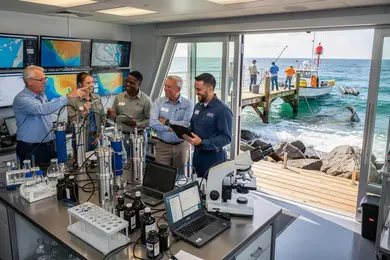
- Whether required labs are fully online, completed through home lab kits, or tied to scheduled virtual sessions.
- If any in-person fieldwork, coastal study, or campus residency is required before graduation.
- Whether students can complete field experiences near their home or workplace through approved local sites.
- What technology, software, sampling tools, or data-analysis platforms students must access or purchase.
- How lab and field courses are scheduled, especially if they are offered only in certain terms.
- Whether prior science lab credits can satisfy upper-division or general education lab expectations.
Checking these requirements early helps working adults avoid unexpected travel, equipment costs, or scheduling conflicts while choosing a program they can realistically finish.
Which Accredited Universities Offer the Most Affordable Online Oceanography Bachelor's Degree Completion Programs?
Lowest-cost programs typically employ flat tuition models for online students to eliminate residency-based pricing disparities. Strong regional accreditation combined with clear transfer pathways and recognition of prior learning consistently appear among these affordable options. Mid-tier institutions often charge differential out-of-state rates or include specialized accreditations providing advanced credentials but at higher expenses.
- University of Southern Mississippi: Offers an online Bachelor of Science in Marine Science with tuition set at $335 per credit for in-state and $517 per credit for out-of-state students. The program is accredited by the Southern Association of Colleges and Schools Commission on Colleges (SACSCOC) and features a hybrid format with asynchronous classes tailored for working adults.
- California State University, Monterey Bay: Provides a Bachelor of Science in Marine Science Completion program entirely online, charging a flat rate of $370 per credit for all students, regardless of residency. CSUMB is accredited by the WASC Senior College and University Commission (WSCUC) and emphasizes flexible pacing and transfer credit acceptance to support degree completion.
- Florida Institute of Technology: Delivers a Bachelor of Science in Ocean Engineering with a tuition fee of $460 per credit. This program is accredited by SACSCOC and ABET for engineering, combining oceanographic fundamentals with engineering rigor. It accommodates transfer credits, including military and professional experience, catering to students targeting technical ocean science careers.
- Oregon State University: OSU's Bachelor of Science in Marine Biology is offered online through its Ecampus with tuition of $331 per credit for residents and $450 for non-residents. The Northwest Commission on Colleges and Universities (NWCCU) accredits the university, while the program holds additional endorsement from the Association for the Sciences of Limnology and Oceanography (ASLO).
- University of North Carolina Wilmington: Features a fully online Bachelor of Science in Marine Biology, charging a flat tuition rate of $398 per credit for all learners. Accredited by the Southern Association of Colleges and Schools Commission on Colleges (SACSCOC), UNC Wilmington welcomes transfer credits and prior learning assessments, offering affordable access irrespective of residency.
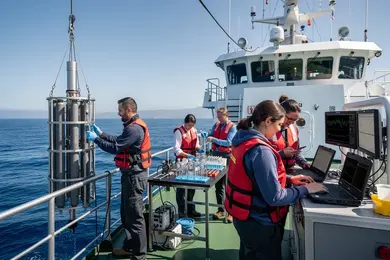
Reflecting on his experience enrolling in an online oceanography bachelor's degree completion program, a professional recalled initial concerns about balancing coursework with a demanding job schedule. He found that the flexible format and transfer-friendly policies reduced stress and helped accelerate his progress. "It wasn't just about affordability; feeling supported through prior learning evaluations and practical applications made a huge difference," he shared. Encountering occasional challenges with remote lab components, he adapted by leveraging virtual simulations and collaborating with local resources. Overall, this pathway enabled him to establish his career without sacrificing work or personal commitments.
How Many Transfer Credits Can Working Adults Apply Toward an Online Oceanography Degree Completion Program?
- Transfer Credit Limits: Online oceanography degree completion programs for working adults typically allow 60 to 90 semester hours to be transferred, ensuring students complete essential upper-division courses at their chosen institution. This balance maintains academic quality while recognizing previous academic efforts.
- Equivalency Assessments: Institutions conduct detailed reviews of transcripts to compare past coursework with program requirements. General education and foundational courses generally transfer with ease, but specialized oceanography credits may need comprehensive syllabi for evaluation.
- Articulation Agreements: Formal partnerships between community colleges and four-year universities streamline credit transfers, reducing credit loss and providing clear pathways. These agreements are especially important for working adults seeking efficient routes to degree completion.
- Credit Loss Concerns: Data from the U.S. Department of Education's Transfer Summit reveals that students lose about 40% of their transfer credits on average. This reality underscores selecting programs with guaranteed or structured transfer policies to safeguard previously earned credits.
- Military and Certification Credits: Some of the most transfer-friendly oceanography programs accept ACE-recommended credits from military training and professional certifications, broadening access for veterans and experienced professionals.
- Transcript Evaluations: Requesting an official transcript evaluation before enrolling helps working adults understand credit transferability and avoid unexpected delays. Early clarity supports informed choices about program fit and duration.
- Transfer Credit Policies: When considering transfer credit policies for working adults in oceanography programs, exploring structured pathways and articulation agreements is crucial. Exploring flexible options can be complemented by researching accelerated options such as 18 month MBA programs to find suitable schedules and quicker completion timelines.
What Are the Typical Admission Requirements for Online Oceanography Bachelor's Degree Completion Programs?
- Transfer Credit Minimums: Most programs require between 24 and 60 semester hours of transferable college credit, often including foundational courses in math and science to prepare students for advanced oceanography topics.
- GPA Requirements: A cumulative GPA threshold typically ranges from 2.5 to 3.0 on a 4.0 scale. Some schools offer conditional acceptance for applicants who narrowly miss this, allowing them to demonstrate academic readiness through additional coursework.
- Required Documentation: Applicants must provide official transcripts from all prior institutions. Additional materials such as letters of recommendation or personal statements detailing interest and goals in oceanography may also be requested.
- Prerequisite Coursework: Introductory classes in biology, chemistry, earth sciences, or oceanography are often mandatory. Candidates without these may need to complete them at community colleges to qualify for upper-level classes.
- Admission Policies: Open-admission completion programs involve fewer entry barriers and more academic support but may carry less prestige. Selective programs have stricter standards, limited seats, and better reputations for preparing competitive graduates.
- Conditional Admission Options: Some programs permit provisional enrollment contingent on meeting specific conditions such as completing designated classes with satisfactory grades before full acceptance.
- Application Enhancement: Working adults are advised to fill any gaps in prerequisite knowledge and maintain strong grades in current studies. Demonstrating relevant experience or a clear passion for oceanography through a compelling statement can also strengthen applications.
A professional who completed an online oceanography bachelor's degree shared that navigating the transfer credit evaluation was the biggest hurdle. "It was tough ensuring all my previous science courses aligned with the program's requirements," she recalled. However, proactive communication with advisors helped clarify expectations. She emphasized that maintaining a solid GPA during the application phase boosted her confidence and acceptance chances. Reflecting on her journey, she found the conditional admission pathway reassuring, stating it "gave me time to prove myself academically without delaying my goal." Her experience highlights how perseverance and careful planning can turn admission challenges into stepping stones for a successful career in oceanography.
How Long Does It Take to Complete an Online Oceanography Bachelor's Degree Completion Program as a Working Adult?
The time needed to complete an online oceanography bachelor's degree depends heavily on how many transfer credits a student brings in and their course load each term. Programs often accept between 30 and 90 transfer credits, with those transferring 90 credits potentially only needing about 30 more to graduate. In contrast, students with 30 transfer credits might need to finish closer to 60 credits.
Enrollment intensity significantly influences completion speed. Part-time students taking around 6 credits each semester may extend their studies to four years or beyond, particularly without consistent summer enrollment. On the other hand, those enrolling full-time with 12 or more credits-often spread across two accelerated eight-week sessions per term-could finish in about two years or less.
A typical schedule for a full-time working professional might involve two courses per semester across fall, spring, and summer terms. This approach can shorten completion to roughly two to three years, depending on prior credits and course availability. Accelerated eight-week courses and competency-based progression models, which allow students to advance by demonstrating mastery rather than time spent, further reduce timelines and benefit learners with relevant experience or background knowledge.
It is essential for students to weigh their personal responsibilities and employer support options-like tuition reimbursement or flexible schedules-when planning their degree path. Research from the National Center for Education Statistics in 2023 found that 45% of online bachelor's degree earners were working adults juggling job and family demands, highlighting the need for adaptable programs.
What Financial Aid, Grants, and Employer Tuition Assistance Options Are Available for Online Oceanography Completion Students?
Financial aid options for adults completing an online oceanography bachelor's degree are diverse and tailored to non-traditional students. Federal aid remains a crucial resource, with Pell Grants and Direct Loans available to eligible adult learners. Additionally, many states provide grants specifically for adults returning to higher education, offsetting tuition costs significantly. Institutional scholarships also play a vital role, as numerous colleges offer awards designed to support adult learners finishing their bachelor's degrees.
Employer tuition assistance under IRS Section 127 is especially valuable. Employers can contribute up to $5,250 annually in tax-free education benefits toward undergraduate studies, covering tuition, fees, and course materials. This tax advantage reduces the financial burden for working students. It's essential for students to consult their HR departments to understand the availability and terms of such benefits.
Scholarships and fellowships targeting adult learners pursuing an oceanography degree acknowledge the unique challenges of balancing work, family, and education. Prospective students should explore scholarship databases and connect with program advisors to discover opportunities that fit their circumstances.
Before enrolling, follow this financial aid checklist:
- File the FAFSA: Complete the Free Application for Federal Student Aid to determine your eligibility for federal and state aid programs.
- Explore State Grants: Investigate grant programs available to adult returners in your state to maximize financial assistance.
- Request Employer Benefits: Check for tuition assistance programs with your employer and secure benefit agreements to understand your support options.
- Apply for Scholarships: Pursue institutional and external scholarships aimed at adult learners completing oceanography degrees.
How Does Per-Credit-Hour Tuition for Online Oceanography Completion Programs Compare Across Accredited Institutions?
Per-credit-hour tuition for online oceanography bachelor's degree completion programs varies widely among accredited institutions, with a national average near $420 per credit based on NCES and IPEDS data. This benchmark helps guide working adults who hold some college credits in comparing tuition cost for accredited online oceanography completion programs that typically range from $300 to over $600 per credit hour depending on institution type and location.
Students with 60 completed credits can expect to pay between $15,000 and $25,200 to finish a standard 120-credit bachelor's degree, while those with 90 credits generally face costs from $6,000 to $12,600. These figures exclude ancillary fees, which can substantially increase total expenses.
Ancillary fees often include technology charges averaging $150 to $400 per semester, graduation fees between $100 and $200, plus proctoring or assessment fees that may add several hundred dollars annually. Textbook and lab materials costs can surpass $1,200 across the program, especially for science-intensive oceanography coursework. Such fees mean the lowest per-credit tuition rate does not always align with the lowest total program cost.
Also, some programs require more than the typical 120 credit hours due to unique accreditation standards or limited transfer credit acceptance, which can raise total tuition beyond initial estimates. Verifying transfer policies and total credit requirements is crucial for accurate budgeting.
For adult learners evaluating degree completion options, exploring degrees in other fields may also be beneficial. For example, reviewing a social media marketing degree can provide insights into cost structures and transfer policies within an entirely different online bachelor's completion pathway.
What Prior Learning Assessment and Credit-by-Exam Options Exist in Online Oceanography Degree Completion Programs?
Prior Learning Assessment (PLA) options, including CLEP and DSST exams, portfolio assessment, and credit for military training evaluated through the American Council on Education (ACE), enable working adults to convert existing knowledge into academic credit and reduce time to graduation. Many online oceanography degree completion programs recognize these methods to support adult learners, especially those who have accumulated college credits but need flexible pathways to finish their degrees.
Top-ranked programs often have expansive PLA policies, accepting up to 30-45 credits from various assessments. They allow portfolio review evidence ranging from professional certifications and workplace training to detailed reflective essays and documented skills. The ACE credit recommendation system is especially relevant for military service members and those who have completed corporate training programs, as it standardizes credit transfer for non-traditional learning experiences.
For students exploring prior learning assessment options for online oceanography degrees, careful documentation is key. Prospective candidates should compile transcripts, detailed course descriptions, military transcripts, certificates, and professional evaluations. Institutions typically require a formal submission process, including a PLA application, supporting evidence, and sometimes an interview or additional exam to validate learning.
Whether you are a community college transfer student, a military veteran, or a mid-career professional, leveraging prior learning options can optimize your educational journey toward an online oceanography degree. Many institutions feature credit-by-exam opportunities in online oceanography degree completion programs, helping you to blend past experiences with formal education. For those weighing career outcomes, reviewing the artificial intelligence degree salary data can offer insights into salary potential for those blending tech expertise with environmental sciences.
How Do Asynchronous Schedules in Online Oceanography Programs Accommodate Full-Time Working Professionals?
- Fully Asynchronous Delivery: Online oceanography completion programs often use fully asynchronous formats where lectures, assignments, discussions, and assessments are accessible anytime. This model accommodates students across time zones and varied schedules, offering maximum flexibility for working adults.
- Assignments and Discussions: Coursework typically includes weekly assignments and participation in discussion boards, allowing students to interact with peers and instructors at their convenience without fixed meeting times.
- Program Formats: Compared to synchronous and hybrid models, asynchronous programs best serve shift workers, travelers, and caregivers by removing real-time attendance pressures. However, synchronous formats can enhance engagement through live sessions, and hybrid programs balance flexibility with scheduled interactions.
- Eight-Week Terms: Some institutions adopt accelerated eight-week course terms, enabling students to concentrate on fewer subjects simultaneously. This structure helps balance academic workload with professional and personal commitments.
- Time Management Strategies: Successful learners recommend setting dedicated study times, using digital calendars, and breaking tasks into manageable chunks. Consistent planning supports steady progress and timely completion.
- Digital Tools: Popular tools include task managers, note-taking apps, and reminders, which boost organization and focus. Reliable internet access and familiarity with learning management systems also play crucial roles in navigating online coursework efficiently.
What Concentrations and Career Tracks Are Available Within Online Oceanography Degree Completion Programs?
Most online oceanography bachelor's degree completion programs offer concentrations included within the standard 120-credit curriculum, allowing specialization without adding extra time or expense. These tailored tracks align with workforce demands and help optimize degree completion for busy adults.
- Marine Biology: Centers on marine ecosystems, species, and conservation efforts. Graduates can work as marine biologists, environmental consultants, or aquaculture experts. The U.S. Bureau of Labor Statistics cites a median annual wage near $63,000, with ongoing growth in environmental consulting roles.
- Physical Oceanography: Studies ocean currents, waves, and their influence on climate systems. Career options include oceanographers, climate analysts, and research scientists. Median salaries typically fall between $70,000 and $90,000, reflecting steady federal and environmental agency demand.
- Coastal Resource Management: Integrates policy development, environmental science, and planning for coastal areas. Graduates pursue positions in marine policy and coastal zone management with salaries averaging $55,000 to $75,000. Additional certifications in environmental planning enhance job prospects.
- Geospatial Technology: Employs GIS and remote sensing for ocean mapping and analysis. Career paths feature GIS specialists and data analysts earning around $60,000 annually. Professional credentials like GIS Professional (GISP) strengthen employment potential.
- Certification Preparation: Some programs prepare students for certifications such as Certified Marine Scientist or Environmental Professional, boosting marketability and expertise beyond degree completion.
What Graduates Say About Online Oceanography Bachelor's Degree Completion Programs for Working Adults
- Paxton: "What really stood out to me about this online oceanography bachelor's degree completion program was its clear structure and strict adherence to accreditation standards. Knowing the program was fully accredited gave me confidence in the quality of education and how it would be recognized by employers. The flexibility to transfer many of my previous college credits made finishing my degree both affordable and efficient, which was critical for balancing work and study."
- Ameer: "I appreciated the thoughtful transfer credit policies offered by the program, which allowed me to leverage both my general education and specialized courses seamlessly. The tuition model was straightforward and competitive, making it easier to plan financially as a working professional. Completing the degree online meant I could continue my career uninterrupted while gaining knowledge directly applicable to marine science roles-something that has opened several new doors for me."
- Nathan: "The option to earn credit for prior learning based on my professional experience accelerated my path to completing the oceanography degree. From a career perspective, graduating from a respected program with a solid employer-recognized credential has enhanced my credibility and advancement opportunities. Reflecting on my journey, the combination of flexible course delivery, strong academic support, and real-world relevance made all the difference in achieving my goals."
Other Things You Should Know About Oceanography Degrees
In 2027, online oceanography bachelor's degree completion programs for working adults may offer flat-rate or subscription-based tuition models. These models benefit students by providing predictable costs and potentially faster degree completion, accommodating the financial needs of working adults balancing education with professional commitments.
Many online oceanography completion programs offer dedicated academic advisors familiar with transfer policies and degree requirements to help working adults navigate course selection and scheduling. Additional support often includes tutoring, research assistance, and access to virtual libraries. Career services may feature job placement assistance, internship coordination, and networking opportunities tailored to oceanography-related fields to aid graduates in career advancement.
References
- PLA Programme https://online-degrees.org/uni/prior-learning-assessment/programme
- Apply for Aid https://www.sunymaritime.edu/admissions/financial-aid
- Oceanography, B.S. https://www.fit.edu/programs/oceanography-bs/
- Financial Aid & Scholarships | Seamester Study Abroad at Sea https://www.seamester.com/financial-aid/
- Online Prior Learning Assessment (PLA) Programs | Colorado State University Global https://csuglobal.edu/admissions/transfer-students/alternative-credit-options/online-prior-learning-assessment-pla-programs
- Oceanography | Shasta College https://www.shastacollege.edu/academics/programs/oceanography/
- Best Online Oceanography Courses and Programs | edX https://www.edx.org/learn/oceanography
- How to become an oceanographer | Conservation Careers https://www.conservation-careers.com/how-to-become-an-oceanographer/
- Scholarships & Grants https://www.semesteratsea.org/financial-aid/scholarships/
- Financial Aid for Undergraduate International Students https://www.nafsa.org/about/about-international-education/financial-aid-undergraduate-international-students