2027 A Public Health Volunteer Retention Analysis Plan: A Graduate Public Health Portfolio Project

Co-Founder and Chief Data Scientist
A volunteer retention project can look straightforward until a student must decide who counts as a volunteer, what "staying" means, and whether the available records can answer the question. Those choices matter for community programs that depend on reliable staffing and cannot afford misleading conclusions.
This guide is for graduate public health students developing a portfolio project, particularly with a nonprofit, health department, or community partner. It shows how to scope a feasible analysis plan, select measures, protect volunteer information, and produce a useful deliverable without presenting a proposal as a completed evaluation.
Key Things You Should Know
- Define a volunteer cohort, a start date, and a fixed observation window before calculating retention; a proposed measure is the share of eligible volunteers still active 90 days after starting.
- Separate departures from scheduling gaps and completed short-term assignments; attendance records alone may not explain why people stop participating.
- A strong portfolio artifact pairs a reproducible measurement plan with privacy safeguards, limitations, and decisions the partner could make - not invented findings.
What is a public health volunteer retention analysis plan?
A public health volunteer retention analysis plan is a documented proposal for measuring continued participation in activities such as outreach, vaccination support, health education, or emergency preparedness. Its audience is usually a program manager who needs to decide whether changes to onboarding, scheduling, supervision, or volunteer support are warranted.
The plan specifies the decision, eligible volunteers, observation period, data sources, calculations, and limits of interpretation. It may be a worthwhile graduate portfolio project even when no usable records are available: a clearly labeled proposed analysis and data-collection tool are more credible than a simulated result presented as fact. A student seeking basic program-evaluation practice does not necessarily need graduate study; public health undergraduate program affordability is relevant if a bachelor's pathway better fits their starting point and budget.
Why is volunteer retention important in public health programs?
Continuity can preserve relationships with community members, reduce repeated onboarding work, and help a program cover scheduled activities. But higher retention is not automatically better: a short-term disaster response assignment may end exactly as intended, while a volunteer who stays despite an unsustainable workload may signal a different problem.
Analyze retention alongside the program's purpose. A manager may care most about whether trained volunteers return for recurring outreach shifts, whether coverage is equitable across locations, or whether people leave before completing orientation. These questions produce different denominators and recommendations. For students considering graduate education to do this work, a public health master's degree investment guide can help frame the cost decision; an employer-supported evaluation project or targeted methods course may be sufficient for a narrower skill goal.
How do graduate students design a public health volunteer retention project?
Start with one decision a partner can realistically make and one cohort the partner can identify. Confirm the course requirements and the partner's willingness to review the proposed deliverable before requesting records. The sequence below keeps the project manageable.
- Write a decision question, such as whether recurring outreach volunteers are less likely to return after orientation than after their first completed shift.
- Define eligibility, the start event, what counts as continued participation, and an observation window that fits the program's schedule.
- Map existing records, who owns them, which fields are reliable, and whether permission and institutional oversight are needed.
- Choose descriptive comparisons and, if appropriate, optional feedback questions that the partner can administer responsibly.
- Agree on a draft review, final audience, permitted portfolio version, and a fallback deliverable if data access is denied.
Do not assume a host's willingness to discuss the project grants access to volunteer records or satisfies an MPH applied practice requirement. Faculty and site supervisors should confirm academic approval separately. If this project is also part of an application strategy, online graduate public health options without letters may be worth reviewing, but admissions policies do not establish whether a proposed field project will be accepted.
Collect only fields needed for the agreed question. A minimal record might contain a random volunteer identifier, assignment type, orientation date, scheduled and completed shifts, and the dates of last contact and last participation. Keep names and contact details in the organization's system rather than a student analysis file whenever possible.
For a proposed 90-day retention measure, the denominator is eligible volunteers whose start dates allow a full 90 days of follow-up. The numerator is those meeting a predefined activity rule at that point. State whether "active" means completing a shift, remaining available for scheduling, or something else; these definitions are not interchangeable. Exclude volunteers who have not yet had enough follow-up rather than labeling them as departures.
Consider recording legitimate reasons that an apparently inactive volunteer may not represent preventable attrition: assignment completion, seasonal availability, a program pause, or transfer to another role. Optional feedback about scheduling, training, belonging, and supervision can add context, but small or identifiable groups should not be reported in ways that expose individuals. Students building these data-literacy skills before graduate school can compare online public health bachelor's pathways for opportunities to practice basic data handling and evaluation.
A theory helps a student decide what to ask, not declare why volunteers left. The frameworks below suggest different explanations that a partner could assess against program records or appropriately gathered feedback.
| Framework | What it draws attention to | Important limit |
| Self-determination theory | Whether volunteers experience autonomy, competence, and connection | Participation records do not measure these experiences directly. |
| Social ecological model | Individual circumstances alongside team, organization, and community conditions | It does not identify which level caused a departure. |
| Role and organizational support perspectives | Clear expectations, training, supervisor contact, and perceived support | Positive feedback may reflect who chose to respond. |
Choose a framework that fits the partner's possible decisions. If scheduling is fixed by a grant or event calendar, a theory-driven recommendation to offer more flexibility may be impractical; clearer role expectations might be actionable instead. Students comparing social and behavioral training with other graduate routes can use MPH and related public health graduate pathways to identify the methods and community-engagement preparation their project requires.
Begin with counts and a documented calculation, then check how results change under a reasonable alternative definition of "active." Compare groups only when records are sufficiently complete and reporting will not identify volunteers. A difference between assignment types is descriptive, not evidence that the assignment caused people to leave: time of year, selection into roles, training, and available shifts may differ.
Check missing dates, duplicate identifiers, inconsistent status codes, and volunteers who joined too recently for full follow-up. Report the number of eligible records and the extent of missing information with any eventual results. If feedback is collected, explain who was invited and who responded; responses from current volunteers may miss the experiences of those who departed.
Before accessing or surveying people, confirm partner permission, data-use conditions, secure storage, retention and deletion rules, and the school's process for determining whether ethics or institutional review is required. Deidentification reduces risk but does not itself settle permission or review questions. Advanced modeling is unnecessary for many small programs; students seeking a research-intensive pathway can compare affordable online public health PhD programs, but a PhD is not required to produce a sound descriptive plan.
The strongest artifact lets a reader understand what decision the analysis would support and reproduce the proposed measure. Its contents should distinguish approved work from plans that have not been implemented.
- A concise partner decision, project scope, intended audience, and defined volunteer cohort.
- A logic model or brief explanation connecting volunteer support, participation, and program operations.
- A data dictionary with field definitions, sources, permitted uses, and known quality concerns.
- Retention definitions, planned comparisons, missing-data checks, and interpretation limits.
- A mock reporting layout clearly marked as a template, plus recommendations conditional on possible findings.
- A permissions and oversight record and a version suitable for public sharing.
Remove names, free-text details, small-group disclosures, and partner-confidential material from a public portfolio version; obtain permission before displaying an organization's documents or branding. The project's value should be weighed against education costs, too. A public health master's scholarship and net-price guide can inform that broader decision, while a supervisor-approved project at an existing workplace may reduce the need to find a separate site.
An MPH can bring together program planning, epidemiology, biostatistics, community engagement, and ethical practice. A retention project tests whether a student can apply those skills to an operational decision - not merely run a calculation. The depth of methods training, availability of evaluation electives, and expectations for applied practice or an integrative project vary by school.
Ask a prospective program whether students can work with a community organization on an evaluation plan, who approves the site and deliverable, and what happens if restricted data cannot be released. Also check supervision, meeting schedules, and any travel or unpaid fieldwork obligations; online coursework does not automatically make a partner project asynchronous. When comparing feasibility, reviewing tuition across online MPH degrees is useful only alongside fees, time commitments, and fieldwork requirements.
Program coordinators and volunteer managers may use retention measures to improve onboarding and shift coverage. Evaluation assistants may maintain data dictionaries, check records, and summarize participation for a supervisor. Community health program staff may combine those summaries with respectful feedback from volunteers and partners. These roles differ in authority: an entry-level analyst can support a recommendation without being responsible for organization-wide staffing decisions.
A portfolio plan can demonstrate measurement design, privacy awareness, and communication, particularly when paired with supervised implementation experience. It does not by itself qualify someone for a manager or advanced research role. Job titles and pay vary substantially by employer and responsibilities; MPH career pay comparisons should not be read as a salary forecast for a volunteer retention project or any particular graduate.
How can students choose an accredited public health degree program?
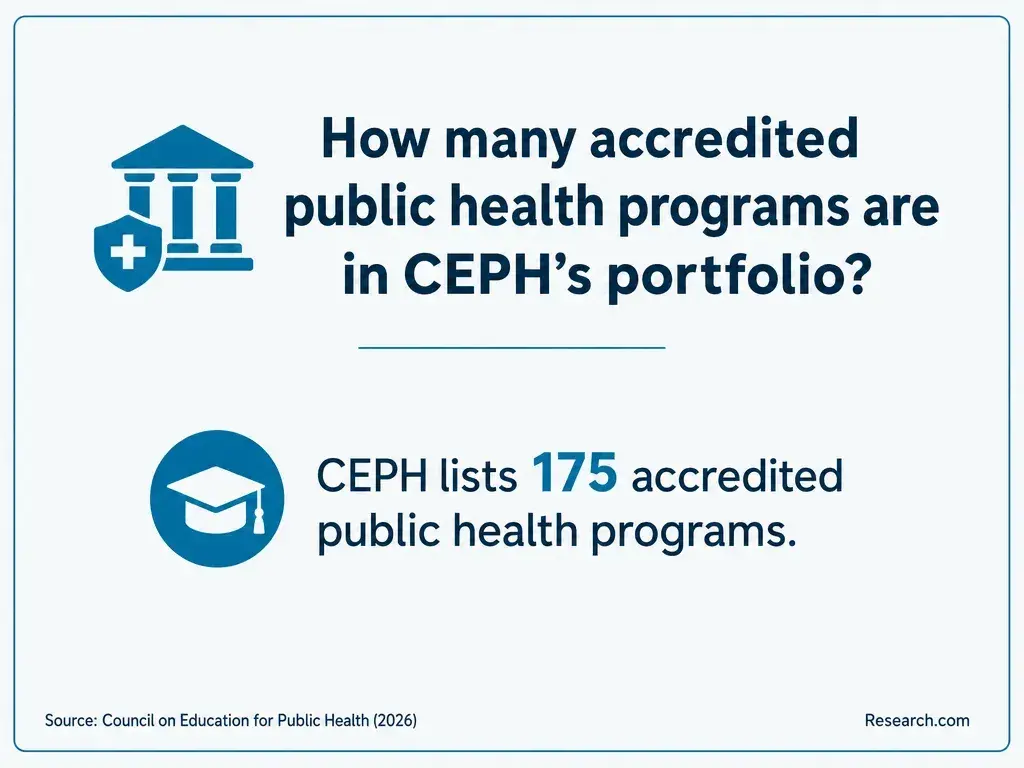
For this project, evaluate a program by what it will let you learn and complete: evaluation coursework, accessible methods support, a realistic partner-project process, and clear rules for sharing work. Verify the institution's accreditation separately from Council on Education for Public Health (CEPH) accreditation, and check whether the exact school, unit, or degree under consideration falls within CEPH's stated scope.
Use accreditation-focused online MPH comparisons as a starting point, then confirm status and scope with the accreditor and program. Ask the program director which project deliverables satisfy current requirements and whether an analysis plan without partner data would qualify. If a targeted evaluation course, mentorship, and permission to work with an existing organization meet your goal, a full degree may be unnecessary.
Other Things You Should Know About Public Health
Decide based on the partner's question. They may be departures from one assignment but retained within the organization. Report those outcomes separately if records support the distinction.
Yes. Stipends, reimbursements, or recognition may influence participation, but records of an incentive do not prove it caused retention. Document when eligibility or availability changed.
Measure return across comparable seasons rather than treating the months between events as inactivity. State who was eligible and had an opportunity to return.
Only with the partner's permission. Label proposed measures and untested recommendations clearly, and do not present a portfolio template as completed evaluation evidence.
- Retaining public health volunteers beyond COVID-19 - PMC https://pmc.ncbi.nlm.nih.gov/articles/PMC10642819/
- Data Minimization | wa.gov https://watech.wa.gov/data-minimization
- an exploratory study of stay interviews as a | iu.edu https://scholarworks.indianapolis.iu.edu/server/api/core/bitstreams/8a9fb1f3-47ea-4ea3-8125-0019dfe659b2/content
- Volunteer Engageability: A Conceptual Framework | sagepub.com https://journals.sagepub.com/doi/10.1177/08997640221132499
- Data protection and privacy laws | Identification for Development https://id4d.worldbank.org/guide/data-protection-and-privacy-laws