# 1 position

Audited and Verified:
Our Editorial and Data Verification Process
Research.com uses government datasets, official education statistics and primary institutional information to support its career and degree guides. Our review process checks factual accuracy, occupational definitions, source dates and the requirements associated with the credentials discussed.
How This Article Was Fact-Checked
Our editorial team verifies salary estimates, employment projections, education requirements and program information against original data providers and official organizations. Salary figures are checked against the relevant occupational definitions and reporting periods. Information about licensure, accreditation and required in-person training is reviewed separately.
Fact-checked and verified on:

Co-Founder and Chief Data Scientist

Reviewed by Karolina Broda
Fact-Checker and Data Verification
The cheapest dental assistant program may not be the least expensive route into work if it omits clinical practice or leaves you paying separately for required training. This guide helps prospective students and career changers compare training near Midwest City by total cost, time, practical experience, and Oklahoma requirements. The Research.com team of data scientists created the Most Affordable Dental Assistant Trade Schools in Midwest City for 2027 ranking to help students identify programs worth considering. With national dental assistant employment projected to grow 7.4% from 2025 to 2035, choosing a job-ready pathway matters (U.S. Bureau of Labor Statistics).
Expect instruction in chairside assistance, infection prevention, dental terminology, patient communication, and office workflow, paired with practice using dental instruments and procedures. Dental assistants prepare patients and treatment areas, assist dentists during procedures, and maintain records; particular duties vary by employer and state rules (U.S. Bureau of Labor Statistics).
A school-based certificate or diploma may suit someone who wants structured practice before applying for work. An associate-degree program is a longer option only if its additional coursework serves your goals. Direct-entry employment with supervised, employer-provided training may cost less upfront, but you should ask which duties you can learn on the job and whether additional training is needed. Do not choose solely because a credential appears on a list of best paying 6 month certifications; verify its dental-specific clinical component and Oklahoma relevance.
Before committing, request a written breakdown of classroom instruction, simulation or lab practice, and any supervised placement. Two programs awarding similarly named certificates may offer very different amounts of patient-facing preparation.
Dental offices are the primary employment setting for dental assistants nationally (U.S. Bureau of Labor Statistics). For a Midwest City student, the practical search area also includes dental practices across the Oklahoma City metro. That wider commute may expand placement and job options, but it can add transportation costs during both training and employment.
General dentistry is one starting point; practices focused on orthodontics, oral surgery, pediatric dentistry, or other specialties may train assistants for different procedures. Ask a provider where its students complete supervised practice and whether those sites are reachable on your schedule. A placement connection is useful, but it is not a job guarantee.
The national median annual wage was $48,070 in May 2025 for dental assistants (U.S. Bureau of Labor Statistics). That is the midpoint across workers with differing experience, duties, and locations; it is neither a verified Midwest City wage nor a reliable estimate of a new graduate's first offer.
When estimating what training is worth, compare actual entry-level offers from reachable Oklahoma City-area practices with your current earnings. Ask whether pay changes after you gain experience or qualify for additional permitted duties, and account for benefits and commuting. Without a verified city-specific wage figure using the same occupation and reference period, a precise local-to-national comparison would be misleading.
Completion time depends on the credential, schedule, and supervised-practice requirements. A short certificate may provide a faster route to entry-level applications than an associate-degree program, while employer-sponsored training can let you begin working before completing all skills training. Neither speed nor a search for the easiest degree to get tells you whether a pathway prepares you for dental assisting duties.
Ask each provider for its published clock or contact hours, weekly attendance schedule, lab hours, and any externship hours. Also ask when placements start and whether waiting for a clinical site can delay completion. Do not assume one program's hours apply to another or that course completion alone establishes eligibility for a particular Oklahoma duty.
Online study can cover dental terminology, records, and some theory, but it cannot replace supervised practice with instruments, infection-control procedures, and chairside tasks. An on-campus or hybrid program is useful when it provides accessible labs and a clear arrangement for practical training. An entirely online course should not be treated as equivalent to clinical preparation.
For Midwest City residents, the deciding question is where and when will I practice in person? Confirm the lab location, required trips, placement responsibilities, and whether the schedule works with your job. A school's appearance among nationally accredited online universities would not, by itself, establish dental assisting clinical competence, programmatic accreditation, or eligibility for an Oklahoma-regulated function.
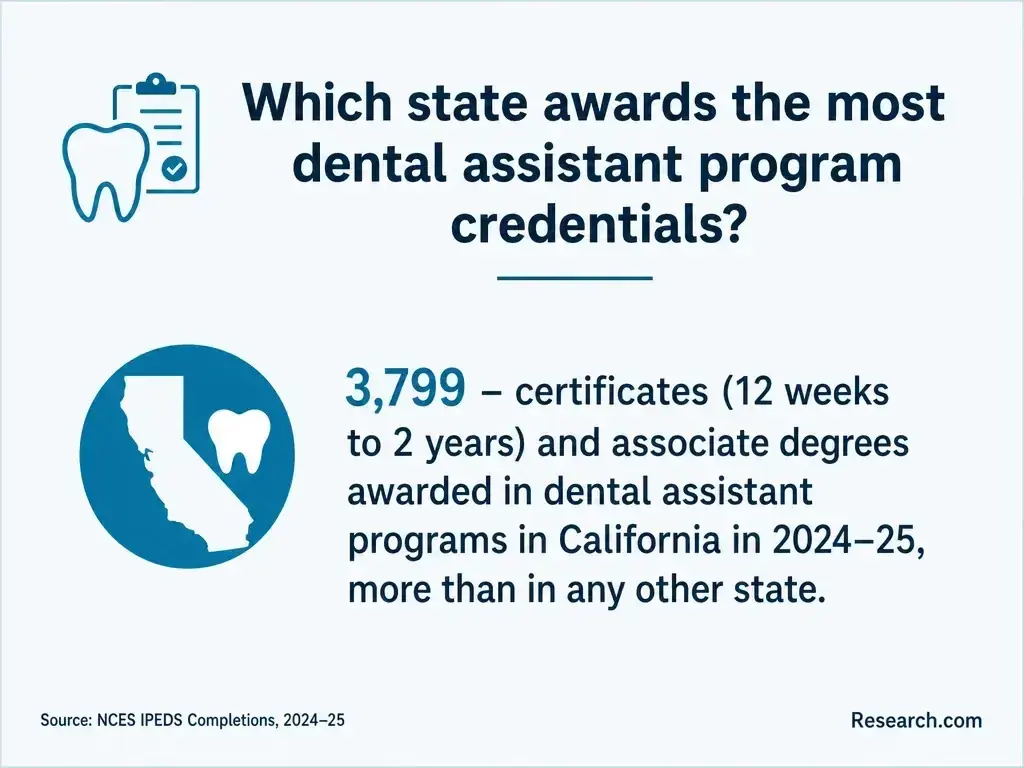
A defensible Midwest City average cannot be stated without comparable, current prices for the local programs and the same definition of total cost. Published tuition alone can understate what it takes to become job-ready. Request an itemized estimate from each provider before comparing offers.
Use that estimate to compare the expenses most likely to change your decision:
Subtract grants, scholarships, and eligible aid from your out-of-pocket estimate; account for wages if an employer pays you while training. Federal aid depends on the student and program's eligibility, not simply on whether a school appears on a list of online colleges that accept fafsa (Federal Student Aid). A shorter, higher-priced course may still cost less overall if it reduces missed work, but only after comparing its practical training and likely completion timeline.
The award may be a certificate, diploma, or - at a program that actually offers one - an associate degree. Employer training may instead document completed workplace competencies. Ask for the exact award name on your completion record; a school's use of "certified" in marketing does not mean you have earned a third-party certification.
Keep four distinctions clear: institutional accreditation applies to a school; CODA programmatic accreditation applies to a qualifying dental assisting program; DANB certification is a separate professional credential; and Oklahoma's rules govern which duties an assistant may perform (Commission on Dental Accreditation; Dental Assisting National Board; Oklahoma Board of Dentistry). None automatically substitutes for another. If later study matters to you, get any transfer-credit or advanced-standing agreement in writing before paying a deposit.
Admissions requirements differ by provider and by the clinical setting used for training. Request the current admissions checklist rather than assuming every program requires the same prior schooling, assessment, immunization documentation, or background screening. Ask whether any condition must be met before enrollment or only before a placement begins.
If you plan to train while employed, check attendance rules as carefully as entry rules: missed labs or an incompatible externship schedule can extend training. For employer-based entry, ask what supervision and instruction the practice provides, which skills you must already have, and who pays for training needed to perform additional duties.
A useful curriculum connects infection prevention, instrument handling, dental materials, charting, and patient communication to repeated hands-on practice. Dental assistants commonly prepare treatment rooms, assist during care, and handle clinical and administrative tasks, though exact assignments depend on the practice (U.S. Bureau of Labor Statistics).
Ask to see the skills checklist and how performance is assessed - not just a course-title list. Training involving imaging or other functions subject to Oklahoma rules deserves particular scrutiny: confirm what instruction is included, who supervises practice, and what further steps may be needed before performing that function at work (Oklahoma Board of Dentistry). Comfort with digital records and imaging workflows can be valuable, but software familiarity does not replace safe clinical technique.
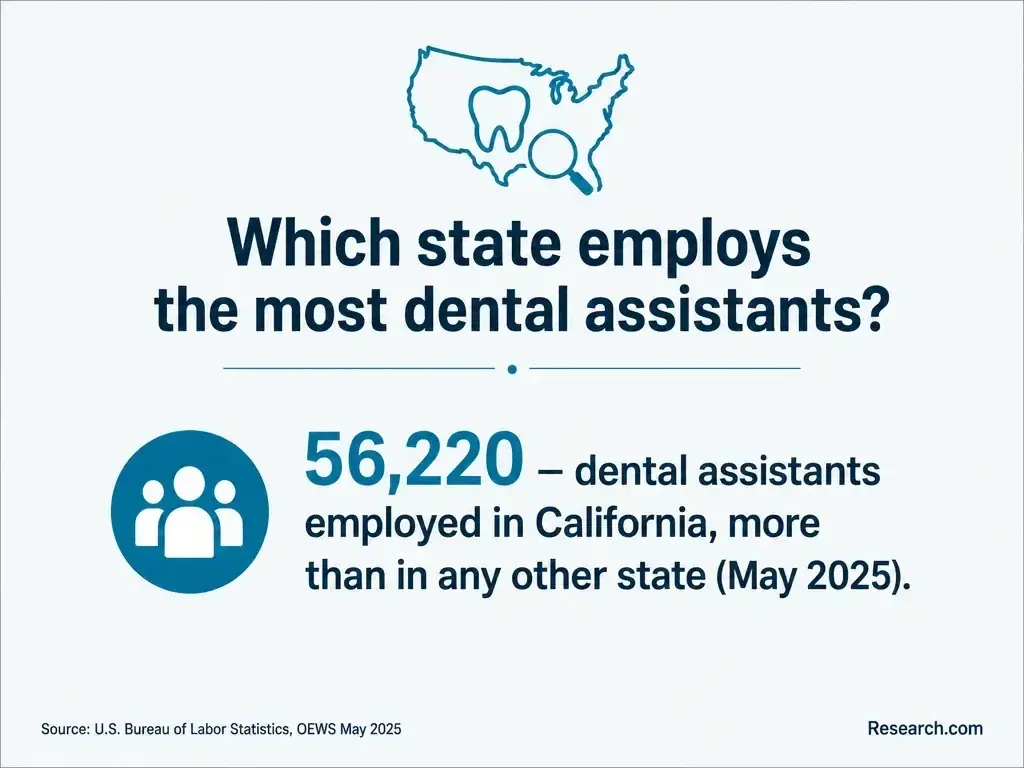
Do not assume that a general dental assisting credential is an Oklahoma occupational license. Entry-level duties and authority to perform particular expanded or regulated functions are different questions. The Oklahoma Board of Dentistry sets the applicable requirements for duties such as dental radiography; check its current rules for the exact function you want before selecting training.
DANB certification is a professional credential, distinct from state permission to perform a duty and from graduating from a CODA-accredited program (Dental Assisting National Board; Commission on Dental Accreditation; Oklahoma Board of Dentistry). Ask a prospective school to identify, in writing, which Oklahoma requirements its instruction addresses and which examinations, applications, supervised experience, or additional courses remain your responsibility.
Start with the duties and work setting you want, then compare programs on the cost and training needed to reach that goal. Rose State College is one provider you can investigate; compare any option you consider against employer-sponsored entry rather than assuming school is automatically the better investment. Rankings help identify options, but an affordability score does not measure clinical fit.
Before enrolling, get answers to these questions from each provider:
A common mistake is comparing tuition while ignoring lost earnings, borrowing, and the chance of finishing on time. Estimate return over a realistic working period using your current pay, possible post-training pay, aid, debt, completion probability, and the value of money over time. Searches such as what is the quickest masters degree to obtain address a different decision; for dental assisting, prioritize occupational duties, practical experience, and Oklahoma eligibility.
Entry-level chairside assisting can lead to broader responsibilities as you gain experience and meet any Oklahoma requirements for specific duties. Depending on the practice, an experienced assistant may focus on a specialty, coordinate clinical workflows, train new staff, or move toward office administration. Those roles depend on employer needs and demonstrated skills, not merely on the name of an initial certificate.
If your goal is a particular expanded function, choose training that explicitly addresses its requirements. If your goal is to test the occupation with minimal upfront spending, supervised employer training may be a better first step. Ask local practices which credentials and practical skills they expect for the jobs you actually intend to pursue.
National employment of dental assistants is projected to grow 7.4% from 2025 to 2035 (U.S. Bureau of Labor Statistics, Employment Projections). That indicates continuing demand nationally, but it does not forecast Midwest City openings or guarantee a job after training.
For a local decision, review current vacancies across the Oklahoma City metro and note the skills, schedules, and experience employers request. If accessible openings consistently require duties your proposed program does not teach, the lower tuition may be a false saving. Conversely, a practice willing to provide supervised entry-level training could make a costly introductory program unnecessary for your immediate goal.
Investing in training is an important decision, so the Research.com team designed the ranking to compare dental assisting programs with other programs serving the same occupation and location. Only programs with completions reported to IPEDS are eligible. This makes the comparison consistent, but it also means a legitimate employer-training route or provider absent from IPEDS may not appear.
The most affordable ranking uses tuition, cost of attendance, median student debt, and federal loan default rate. An entropy-based method assigns more weight to cost and debt indicators that vary more across eligible programs. Accreditation and other quality measures do not enter the affordability score; readers should check those separately before enrolling. The team reviewed the following sources to support credible, accurate comparisons:
Use the ranking to narrow your search, not to assume the highest-listed option meets your clinical-training or career goals. More detail about the ranking process is available on Research.com's methodology page.
# 1 position
# 2 position
Not necessarily for every entry-level role. Employer-provided training may be an alternative, but particular duties can have separate Oklahoma requirements. Check the Oklahoma Board of Dentistry's current rules for the work you want to do.
Only if its total cost, practical training, schedule, and credential match your goal. Add fees, supplies, travel, and lost earnings before comparing offers.
You can study some theory online, but hands-on clinical skills require in-person practice. Verify the lab and supervised-training arrangements before enrolling.
No. A school award and DANB professional certification are separate credentials, and neither automatically grants permission to perform every Oklahoma-regulated duty (Dental Assisting National Board; Oklahoma Board of Dentistry).
Choose based on the duties you want, practical hours, cost, and time away from work. A shorter certificate may fit a direct-entry goal; an associate-degree program makes sense only if its additional training supports your plans.