2027 Best Online Bachelor's in History Degree Programs Ranking in the USA

Co-Founder and Chief Data Scientist
If you're considering pursuing a history degree online, this article is here to guide you.
It features the 2027 Best Online Bachelor's in History Degree Programs Ranking in the USA, created by the Research.com team of data scientists. This ranking helps you identify quality programs worth your time and effort.
Reading this can save you time and give you confidence in choosing a program that fits your goals. A history degree opens doors to meaningful careers and deeper understanding of the past, offering both personal and professional growth.
Key benefits of getting online history degree in America
- History degree graduates can pursue careers as historians, archivists, or museum workers, with archivists earning a median annual wage around $56,000, providing a solid foundation for a rewarding career.
- Many history graduates from well-known universities find opportunities in education, public history, and policy analysis, making their degree versatile and opening doors to diverse, fulfilling pathways.
- Online history degrees offer flexible schedules and access to quality programs from respected schools, helping graduates balance life commitments while gaining valuable skills in a convenient, supportive setting.
- Key benefits of getting online history degree in America
- What can I expect from online history degree in America?
- Where can I work with online history degree in America?
- How much can I make with online history degree in America?
- 2027 Best Online Bachelor's in History Degree Programs Ranking in the USA
- Key Findings
- How long does it take to complete online history degree in America?
- What's the difference between online and on-campus history degree?
- What is the average cost of online history degree in America?
- What financial aid is available to online history degree students in America?
- What are the prerequisites for enrolling in online history degree program in America?
- What courses are typically in online history degree programs in America?
- What types of specializations are available in online history degree programs in America?
- How do you choose the best online history degree in America?
- What career paths are available for online history degree students in America?
- What is the job market for online history degree in America?
- Top Trending History Rankings
What can I expect from online history degree in America?
The average cost of an online history degree in America typically dances between $15,000 and $40,000, depending on the university and its prestige. Graduates from well-known institutions like Arizona State University often recall the manageable tuition paired with the freedom to dive into topics such as cultural revolutions or military history, all from their own kitchens.
Community colleges might offer more budget-friendly paths closer to $10,000, attracting students eager to juggle work and study simultaneously, savoring every moment of live discussions and digital archives. Meanwhile, mid-tier public universities lean toward the $20,000 to $30,000 range, striking a balance between cost and academic robustness.
Imagine a graduate recounting late-night zoom sessions dissecting historiography or the thrill of submitting a capstone reflecting on African American history-each dollar invested fuels those transformative experiences. Though price tags vary, the shared excitement of unwrapping history's layers together, despite distance, remains priceless.
Where can I work with online history degree in America?
Graduates armed with an online history degree from top American universities often find themselves stepping into vibrant arenas where the past fuels the future. Imagine a graduate from a renowned state university in California thriving as a secondary school history teacher, guiding curious minds through the twists and turns of social studies. Others, hailing from prestigious Ivy League schools, dive into the labyrinth of university research or assist professors in uncovering hidden narratives, their master's or doctoral work opening doors to academic realms.
Picture alumni weaving stories in museums scattered across New York and Washington, D.C., curating exhibits that bring centuries-old artifacts to life. Some embrace the digital age, preserving history as archivists amidst growing online collections, their passion feeding the Society of American Archivists' expanding demand. In government corridors, history grads craft policies and manage cultural heritage, their work echoing through halls like the National Park Service or the Library of Congress.
Others channel their analytical prowess into publishing and consulting, crafting compelling historical narratives for media outlets or aiding legal firms in unraveling past complexities. These careers don't just pay the bills-they ignite enthusiasm and embody a shared love for storytelling that history students nationwide cherish.
How much can I make with online history degree in America?
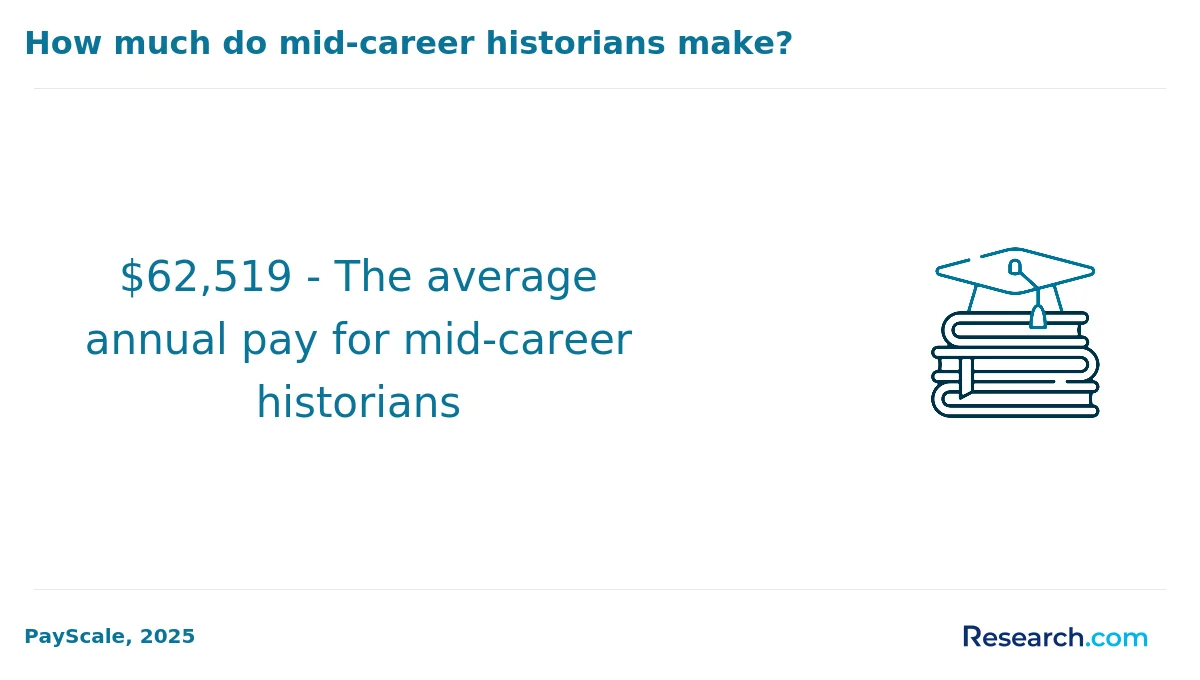
Picture yourself earning an online history degree from a renowned American university like the University of Texas or Arizona State, stepping into a world where your passion for the past transforms into a paycheck around $63,100 a year, the median wage for historians nationwide. Graduates report a buzz of excitement entering federal roles, where the median climbs closer to $80,000, fueled by the complex narratives you've mastered and the skills you've honed remotely.
Think of a history graduate working as a high school teacher in California, weaving stories into lessons while drawing an average of $63,000 annually. Or imagine stepping into a museum, curating exhibits with a median salary near $60,000, blending your love for artifacts with a paycheck that matches your expertise.
Metropolitan hubs like Washington D.C. or New York amplify these rewards, offering salaries sometimes soaring beyond $90,000, echoing the vibrant energy and rich histories that inspired your studies through online coursework. These numbers aren't just figures-they're stories of opportunity unfolding across America's diverse landscape.
2027 Best Online Bachelor's in History Degree Programs Ranking in the USA
How do we rank schools?
Investing in your education is a significant decision that can shape your future, and the Research.com team understands the importance of making informed choices. To assist prospective students, we have meticulously crafted the "2027 Best Online Bachelor's in History Degree Programs Ranking in the USA." Our commitment to quality, credibility, and accuracy is reflected in the extensive research and analysis conducted to compile this ranking.
We utilized the following reputable data sources to ensure a comprehensive evaluation of history degree programs:
By exploring this ranking, readers will gain valuable insights into the best online history degree programs available nationwide, helping them make informed decisions about their educational paths. For more details on our methodology, please visit our Research.com methodology page.


# 5 position
Penn State University Park
Bachelor of History




# 19 position
Judson College
Bachelor of History


Key Findings
- Most online history degrees in the U.S. require about 120 credit hours, usually completed in four years for full-time students.
- Tuition costs vary, with in-state public university fees ranging from $7,000 to $15,000 per year and private or out-of-state tuition sometimes exceeding $30,000 annually.
- Jobs related to history, like archivists and museum workers, are expected to grow by about 7% from 2022 to 2032.
- Starting salaries for history graduates are typically between $40,000 and $50,000, with experienced professionals earning $70,000 to $90,000 annually.
- Programs focus on skills such as critical thinking and writing, applicable to careers in education, law, journalism, and public policy.
How long does it take to complete online history degree in America?
Imagine diving into the past through an online history degree from a university like the University of Florida or Arizona State University, where most graduates breeze through approximately 120 to 128 credits over four years. Picture balancing your life like many do-working part-time or raising a family-stretching the journey to five or six years without losing enthusiasm. This is the beauty of American online programs: flexibility meets ambition.
Some graduates astonish themselves by accelerating their studies, taking summer sessions and heavier course loads, finishing in three years or less. Think of a dedicated student juggling history papers during holidays rather than vacations-turning a traditional timeline on its head.
Others celebrate reduced workloads thanks to transfer credits from prior classes or AP exams, feeling the satisfaction of cutting their adventure short. For these history enthusiasts, every semester completed online is a step closer to unveiling stories that shape America's past, one course at a time.
What's the difference between online and on-campus history degree?
Imagine pacing the historic halls of the University of Virginia, flipping through aged manuscripts in a sunlit library, engaging in sparring debates right after class. That's the on-campus history degree vibe-immersed in tactile discovery and spontaneous face-to-face brilliance. Graduates recall the electric buzz of late-night study groups and the tactile thrill of original archives within reach.
Now, picture another path: logging in at midnight from your cozy apartment in Denver, juggling family dinners and coursework streamed from Harvard's virtual classrooms. Online history degrees give you that liberating flexibility, delivering lectures and archives right to your screen. Students cherish the freedom to pause and rewind a professor's insights while sipping coffee in their PJs.
Cost isn't just a number-it's freedom. Those pursuing history on campus at state schools like UCLA might pay $25,000 annually and wrestle with housing and travel; online peers often save 15-20%, investing in experiences instead.
Both roads trace America's past; the difference is how and where you walk.
What is the average cost of online history degree in America?
When you unpack the average cost of online history degree USA, the numbers paint an intriguing picture. Graduates from well-known institutions like the University of North Carolina or the University of Florida recall tuition totals falling around $40,440 for in-state students, a price that feels surprisingly within reach when compared to the dream of historical scholarship it unlocks. Out-of-state students at these schools often face a steeper climb, with median totals near $57,780, yet many still find the investment rewarding as they pursue stories that connect the past to today's society.
Imagine a history enthusiast at a private university famed for its rich archives and faculty expertise, where the total expenses for history bachelor's degree online in the USA can exceed $55,000. Their journey includes courses steeped in intensive research, but the personalized education and access to rare collections make every dollar worthwhile. These graduates often share how financial aid and flexible payment plans transformed their academic path, easing anxieties about cost.
For prospective students exploring different options, it's vital to consider not just tuition but supplemental expenses like textbooks and digital resources. Many discover detailed insights and transparent estimates on degrees for history, allowing for informed decisions that balance passion with practicality.
What financial aid is available to online history degree students in America?
Imagine a history student at a well-known institution like Arizona State University, navigating the maze of tuition fees and stumbling onto federal financial aid like a Pell Grant-a shimmering beacon worth up to $7,395 that doesn't have to be repaid. This grant alone can feel like a treasure chest uncovered, easing the burden of the roughly $25,000 to $100,000 cost tag many face for four years of study.
Other students have tapped into the steady current of federal loans-Direct Subsidized and Unsubsidized-with low interest and flexible terms that make dreaming of historical discoveries less stressful. Meanwhile, scholarships from venerable bodies such as the American Historical Association act like secret scrolls handed down, rewarding passion and merit in history.
State grants transform campus dreams into reality for locals attending public universities, while veterans wield the GI Bill-a powerful sword that cuts tuition and housing costs. Finally, institutional aid programs at universities like University of Florida sprinkle merit-based scholarships and discounts on online learners, turning financial hurdles into stepping stones.
What are the prerequisites for enrolling in online history degree program in America?
To step into the world of online history degrees in America, you first need the simple yet powerful ticket of a high school diploma or GED. Imagine a graduate from a well-known public university in California recalling how this basic credential opened doors wide, turning their curiosity about American revolutions into academic pursuit. Beyond that, many programs ask for transcripts showcasing your dedication, often hoping for a GPA around 2.5 to 3.0-a snapshot of your readiness to dive deep into events shaping civilizations.
While some graduates from esteemed schools like the University of Michigan fondly remember submitting SAT or ACT scores, many peers found test-optional policies freeing, focusing instead on personal statements that reveal a genuine passion for history. These essays, alongside recommendation letters, act like whispered endorsements, sharing your story and ambition, helping admission teams envision your potential even before the first lecture begins.
Flexibility reigns in many public institutions, embracing working adults balancing careers and dreams, making the path to a history degree as unique as the stories you'll study online.
What courses are typically in online history degree programs in America?
Diving into an online history degree from a lively institution like the University of Florida or Arizona State often means embarking on a storytelling journey through time. Graduates recall zooming into United States History courses, where the drama of colonial beginnings, revolutions, and the modern era unfold like binge-worthy series, stirring a profound connection to their own American identities.
The world doesn't stand still either-courses in World Civilizations sweep students through ancient Egypt and the empires of Rome and Asia, inviting them to visualize bustling marketplaces or momentous battles, bringing dusty textbooks vividly to life. One graduate shared how Historical Research and Writing classes transformed their view, turning them into detectives who piece together clues from rare manuscripts, uncovering truths hidden in time.
As specialization beckons, students from schools like Oregon State find themselves immersed in dynamic electives-Military History pulses with the intensity of strategic wars; Social and Cultural History awakens empathy by spotlighting diverse American experiences; and Public History offers the thrill of curating stories in museums or digital archives. These courses go beyond dates and facts, sparking curiosity and a sense of belonging to a larger historical tapestry.
What types of specializations are available in online history degree programs in America?
Imagine diving into an online history degree in America where you can swim through the turbulent waters of American History, tracing the country's roots from colonial whispers to modern-day echoes. Graduates from renowned universities often share how this rich tapestry prepares them for passionate careers in education or government, feeling empowered by understanding their nation's heartbeat. Another adventurous path? World History, where students voyage beyond borders, exploring global civilizations and their intricate dance of diplomacy and culture, ideal for those captivated by international relations.
In the vibrant realm of online history degree specializations USA students flock to, Historical Preservation and Public History stand out, offering hands-on experience in saving relics and stories-graduates recount the thrill of working with museums or archives, guarding culture for future generations. Social and cultural history courses boldly tackle topics like race, gender, and class, matching the pulse of today's society and resonating deeply with students wanting to understand and influence contemporary narratives.
Creative niches such as Military History or Environmental History also beckon, connecting history with defense or sustainability concerns. For students charting their own course, choosing from the best history major concentrations in America transforms a generic degree into a passionate vocation. Curious about career prospects? Check out this careers history degree insight to fuel your journey.
How do you choose the best online history degree in America?
Imagine choosing the best online history degree programs USA as navigating a time machine, where every decision propels you into a different academic era. Graduates from renowned institutions like the University of Florida or Arizona State University recall how regional accreditation felt like a trusted compass, ensuring their diplomas opened doors rather than closed them. The secret is to hunt for programs with curricula rich in American milestones and global narratives that ignite curiosity beyond textbooks-real-world skills like historiography and research methods that bring history alive on your screen.
Affordable online history bachelor's America options often reveal themselves through transparent tuition and clever support systems that help students juggle busy lives. One graduate's story from a top public university illustrates the joy of flexible, asynchronous classes-where evening study sessions fit perfectly around a full-time job or family life.
Finally, explore graduation success and career returns, guided by tools like the career opportunities in history page. This path not only leads to a degree but to a fulfilling vocation rooted in the past, yet thriving in today's demanding world.
What career paths are available for online history degree students in America?
Graduates armed with an online history degree in America often find themselves stepping into a mosaic of career paths where the past fuels the future. From dynamic classrooms in universities like the University of Florida or Arizona State University, alumni recount how they transformed their passion for history into roles as inspiring secondary teachers, shaping young minds amid a 6% job growth promise. Others channel their curiosity into preserving cultural treasures at museums or archives, joining the ranks of those who keep America's stories alive, excited by the thought that over 850 million visitors annually engage with history thanks to their efforts.
The realm of public service also beckons history graduates, who dive into government or nonprofit work, turning complex policies into tangible change or protecting national landmarks with agencies like the National Park Service. History's analytical edge sharpens skills prized in business sectors, where former students thrive in market research or corporate communications, weaving narratives from data.
If you dream of exploring these possibilities, researching the best online colleges for history degree programs can open doors to exciting futures, blending flexibility, affordability, and rich career opportunities.
What is the job market for online history degree in America?
Graduates holding an online history degree in America often find themselves crossing paths with careers that blend passion and purpose. Imagine a graduate from a renowned state university in the Midwest, who lands a role as a high school history teacher, confidently sharing stories that shape youthful curiosity while earning a median salary near $62,870. This scenario paints the texture of many success stories within online history degree jobs in USA, where the stability of education roles is a reliable beacon amid a competitive landscape.
Another graduate from a well-known public university in the South might navigate toward museums or archives, leveraging expertise in preservation and public engagement. These positions often offer salaries ranging from $50,000 to $60,000, a testament to the vibrant cultural resource management sector. The demand for such roles is spurred by growing interest in heritage and history, which some online students at these institutions complement with internships that open doors.
Beyond traditional roles, the transferable skills honed-critical thinking, research, communication-unlock doors to diverse areas like public administration or law. It's no surprise that some graduates explore art history careers as parallel pathways. For those weighing options, understanding history degree career opportunities America-wide becomes essential in sculpting an adaptable, fulfilling professional journey.
Frequently Asked Questions About history
Online history degree students in America can maximize their learning by actively engaging with course materials and participating in virtual discussions. Studies show that interaction with peers and instructors improves understanding and retention, even in remote settings (National Survey of Student Engagement, 2023).
Creating a structured study schedule helps manage time effectively, especially when balancing work or family commitments. Utilizing university libraries' digital archives and databases is essential for accessing primary sources, a cornerstone of historical research.
Additionally, students should seek opportunities for internships or virtual workshops related to American history, which provide practical experience and networking.
Finally, staying informed about recent historiographical debates through academic journals enhances critical thinking and analytical skills.
The field of history in the United States is expanding beyond traditional study areas. Emerging niches include digital history, where students utilize technology to analyze and present historical data. This niche is rapidly growing in response to increased interest in digital humanities programs at US universities, with enrollment in related courses rising by over 25% since 2017, according to the American Historical Association.
Another emerging area is public history, focusing on how history is shared with the public through museums, archives, and media. This niche supports careers in education and preservation, with the Bureau of Labor Statistics projecting a 7% growth in heritage-related jobs by 2030.
Additionally, environmental history, which examines the relationship between humans and the environment over time, is gaining traction amid rising environmental concerns nationwide.
Preparing for the job market after earning an online history degree in America requires strategic planning. Graduates should focus on gaining practical experience through internships at museums, archives, or cultural institutions. According to the U.S. Bureau of Labor Statistics, these experiences significantly improve employment prospects in history-related fields.
Networking is also crucial. Joining professional organizations such as the American Historical Association can connect graduates with mentors and job opportunities. Additionally, developing skills in digital archives, research databases, and data analysis enhances employability.
Online students should leverage their program's career services to access job boards and resume workshops. It's vital to tailor applications to roles in education, public history, or government sectors where demand for history graduates remains steady.
Employers in America highly value critical thinking and research skills in history degree graduates. According to the Bureau of Labor Statistics, analytical abilities help in interpreting complex historical data, which are essential for many roles beyond academia.
Strong writing and communication skills are also top priorities, as history graduates must clearly present arguments and findings. The National Association of Colleges and Employers reports that 80% of employers seek candidates who can write effectively.
Additionally, proficiency with digital tools and databases is increasingly important, given the rise of online archives and digital history projects.
Finally, adaptability and interdisciplinary knowledge enhance employability, enabling graduates to apply historical perspectives in varied fields such as law, education, and public policy.
Finding internships relevant to a history degree in America starts with leveraging university career centers, which often partner with museums, archives, and cultural organizations. According to the National Association of Colleges and Employers (NACE), about 62% of history majors secure internships before graduation, improving job prospects significantly. Online students should explore virtual internships through platforms like the Smithsonian's Digital Volunteer Program and local state historical societies.
Networking plays a key role; joining professional groups such as the American Historical Association can open doors to internship opportunities. Additionally, government agencies, including the National Archives, offer internships focused on American history research and preservation.
In America, earning an online history degree can significantly enhance career mobility and advancement. According to the U.S. Bureau of Labor Statistics, professionals with a bachelor's degree in history often find opportunities in education, research, museums, and public policy. An online degree offers flexibility, allowing students to continue working while advancing their education, which is critical for career growth.
The American Historical Association notes that history graduates develop strong critical thinking and writing skills valued in many sectors. These skills make graduates eligible for roles in law, archives, and government agencies, fields that often promote within based on educational credentials.
Data from the National Center for Education Statistics reveals that graduates with history degrees have seen steady wage growth, especially when combined with advanced training or certificates. This trend affirms that online history degrees can open pathways to higher-paying positions and leadership roles in various U.S. institutions.
Studying for a history degree online in America equips students with skills that extend beyond traditional historical knowledge. American history programs emphasize critical thinking, research, and analytical skills, which are highly valued in interdisciplinary roles.
Many programs incorporate coursework from political science, economics, sociology, and cultural studies, helping students understand complex societal issues from multiple perspectives. According to the American Historical Association, nearly 60% of history graduates pursue careers outside of academia, frequently in fields like education, public policy, and business.
This broad academic foundation enables graduates to collaborate across disciplines and adapt to diverse professional environments effectively.
Choosing between a thesis and a non-thesis online history degree in America depends on your academic and career goals. A thesis program requires in-depth research and writing, often suited for students aiming for graduate studies or research careers. According to the American Historical Association, thesis options develop critical analysis and advanced writing skills, valuable for academia or archival work.
Non-thesis tracks focus more on coursework and practical skills, ideal for those seeking teaching positions or work in museums and public history. The National Center for Education Statistics reports many online history programs offer flexibility through non-thesis paths, appealing to working adults. Evaluate your interests and long-term plans before deciding.
Students in America interested in studying history abroad through online programs have several viable options. Many accredited U.S. universities partner with foreign institutions, offering joint or dual-degree programs that allow students to earn credits recognized internationally. According to the American Historical Association, about 30% of history majors incorporate study-abroad elements into their curriculum, often through virtual exchanges or international research projects.
Popular destinations for collaborations include the United Kingdom, Italy, and Germany, where history programs emphasize different cultural perspectives. These remote learning opportunities often include access to digital archives and interactive coursework.
Part-time job opportunities that complement a history degree in America often include roles in museums, archives, and libraries. According to the U.S. Bureau of Labor Statistics (BLS), jobs such as museum technicians and archivists are projected to grow by 7% from 2022 to 2032. These positions allow students to apply historical research skills and gain practical experience with artifacts and records.
Other relevant roles include historical tour guides, who engage the public with knowledge about local history, and research assistants for academic or nonprofit organizations. Many employers value strong writing and critical thinking skills developed in history programs.
Additionally, part-time work in educational settings, such as tutoring or assistant teaching for history courses, can reinforce academic knowledge while providing income. These jobs often offer flexible hours suited to student schedules.
Online history students in America have access to diverse networking opportunities despite the virtual format. Many accredited programs partner with historical societies, museums, and libraries, offering virtual internships and events. For example, the American Historical Association (AHA) provides online forums, mentorship programs, and annual conferences that welcome both in-person and remote participation. Additionally, students can join campus-affiliated online clubs and discussion groups, allowing peer connections across states.
The Bureau of Labor Statistics notes that nearly 15% of historians surveyed found jobs through professional networking, emphasizing its importance. Schools often facilitate alumni networking platforms to support career growth post-graduation.
Alumni networks offer significant advantages for students pursuing online history degrees in America. These networks provide access to professional connections in museums, archives, education, and public history sectors. According to the American Historical Association, nearly 60% of history graduates find jobs through networking, highlighting the value of alumni links.
Online students may feel isolated, but alumni communities create opportunities for mentorship, internships, and job referrals. Many universities in the U.S. organize virtual events, allowing graduates and current students to share resources and career advice.
This support helps students navigate the competitive history job market and fosters lifelong relationships beneficial for continued professional growth.
Customizing an online history degree in America allows students to align their studies with specific career goals. Many accredited universities offer electives and concentration areas such as public history, archival science, or American history. These options enable students to develop specialized skills relevant to fields like education, museum curation, or government work.
Students can also integrate internships or project-based courses to gain practical experience. According to the American Historical Association, nearly 60% of history graduates pursue careers outside academia, highlighting the importance of adaptable curricula.
Additionally, some programs provide opportunities to combine history studies with related disciplines, such as political science or cultural studies, broadening career prospects.
Online history students in America often face challenges related to engagement and access. Unlike traditional settings, online courses may limit direct interaction with professors and peers, which can impact deeper understanding of complex historical narratives. According to the National Center for Education Statistics (NCES), about 15% of online students report feeling isolated compared to 7% in face-to-face programs.
Another challenge is sourcing and analyzing primary historical materials, which often require access to archives or libraries not fully available online. Additionally, balancing coursework with personal or professional responsibilities can hinder consistent study time. Time management remains a critical skill for successful online history students.
Technical issues and varying digital literacy also present barriers, especially for older students re-entering education. These factors together contribute to the unique hurdles faced by online history degree candidates in the U.S.
With an online history degree in America, graduates can pursue various professional certifications that enhance career opportunities. One common path is earning the Certified Archivist credential offered by the Academy of Certified Archivists, which validates skills in managing historical records. Another option is the Museum Studies Certification, popular for those interested in working in museums or cultural institutions. Additionally, some history graduates pursue teaching credentials through state-specific programs if they want to enter K-12 education. According to the Bureau of Labor Statistics, roles like archivists and curators often value these certifications, which can help applicants stand out in competitive job markets.
To craft a strong application for an online history program in America, start by highlighting your passion for historical study and relevant experiences. Online history degrees often emphasize critical thinking and research skills, so be sure to showcase any previous coursework, independent projects, or internships related to history.
Include a clear, well-organized personal statement explaining why you want to pursue history online and how the program aligns with your career goals. According to the National Center for Education Statistics, demonstrating your commitment through a compelling essay improves admission chances.
Lastly, maintain a solid academic record, as programs typically expect a minimum GPA around 3.0. Letters of recommendation from educators familiar with your analytical abilities will strengthen your application further.
Globally, a history career is valued for its role in understanding cultures and shaping policies, but the employment landscape varies significantly. In the United States, the Bureau of Labor Statistics forecasts about 8% growth in historian jobs between 2022 and 2032, reflecting steady demand. Many historians work in education, government, or cultural preservation, often supporting public knowledge and diplomacy. International employers appreciate historians for their critical thinking, research, and communication skills, which are applicable in fields like international relations and museum curation.
However, competition remains strong, making advanced degrees and specialized skills important. According to the American Historical Association, history graduates in the U.S. often complement their studies with internships or technology proficiency to enhance global career prospects.
Gaining practical experience while pursuing an online history degree in America is possible through various opportunities. Many programs encourage internships with museums, archives, or historical societies, allowing students to apply research skills in real-world settings. For example, the American Historical Association highlights internships as a vital step for career preparation.
Virtual internships have become increasingly common, especially post-pandemic, offering remote work with institutions nationwide. Additionally, students can participate in digital history projects or contribute to local community history initiatives. Some universities also offer service-learning courses, connecting academic study with community engagement. These experiences enhance resumes and provide valuable professional networking.
Choosing the right concentration within an online history degree in America depends largely on your career goals and interests. Common concentrations include American History, World History, Public History, and Digital History. According to the American Historical Association, about 60% of history graduates pursue careers in education, archives, or museums, so programs with practical internships may add value.
It's important to review course offerings and faculty expertise at each school. For instance, some programs emphasize research methods, while others focus on regional history or thematic studies like civil rights or environmental history.
Consider also accreditation and student support services, as these affect your learning experience and job prospects. The National Center for Education Statistics provides useful data on graduation rates and employment outcomes for history majors in the US.
Top Trending History Rankings
References
- My Top 3 Recommendations on Networking in the History World | An Historian About Town https://anhistorianabouttown.com/recommendations-on-networking-in-the-history-world/
- Niche History Picks from EPOCH https://www.epoch-magazine.com/post/niche-history-picks-from-epoch
- Top Online Master’s Degree Programs in History for 2025 https://www.onlinemastersdegrees.org/best-programs/history/
- THE list of internships for history majors https://employedhistorian.com/history-major/internships-for-history-majors/
- Join the Alumni Network - National History Day https://nhd.org/en/get-involved/join-the-alumni-network/
- Finding Networking Opportunities as a Student | National Society of High School Scholars https://www.nshss.org/resources/blog/blog-posts/how-to-find-networking-opportunities-as-a-student/
- History Online https://www.nsu.edu/History-and-Interdisciplinary-Studies/History-Online
- Master's History Application - Sample Letter (EN) https://ai.mystudies.com/blog/mystudies-writing-examples/application-for-master-program-history-20-06-2025.html
- Free Online History Courses https://www.openculture.com/history_free_courses
- History Programs Abroad: Degrees & Opportunities - AEC https://www.aecoverseas.com/history/