
2027 Most Valuable Counseling Degree Programs Ranking in New York

Co-Founder and Chief Data Scientist
Choosing the right counseling degree program in New York can feel overwhelming. To make this easier, the Research.com team of data scientists has created the 2027 Most Valuable Counseling Degree Programs Ranking in New York.
This article offers clear insights to help you identify programs that provide strong career value and growth opportunities. Whether you're starting your education journey or considering a change, understanding these rankings can guide you to a program that fits your goals.
Pursuing a counseling degree opens doors to meaningful work helping others and building a fulfilling career. This guide supports your decision with trusted data and practical information.
Key benefits of getting counseling degree in New York
- Counseling degree graduates in New York can pursue jobs such as Addiction Counselor with a mean annual wage of $60,080 or Community Outreach Coordinator earning about $54,020, offering rewarding career opportunities with competitive salaries.
- A graduate from a popular New York university might explore diverse career paths, including Rehabilitation Specialist or Family Support Worker roles, allowing for impactful work in various community and healthcare settings.
- Completing a counseling degree online from a reputable New York institution provides flexibility and convenience, helping students balance personal commitments while gaining practical skills for a successful career.
- Key benefits of getting counseling degree in New York
- What can I expect from counseling degree in New York?
- Where can I work with counseling degree in New York?
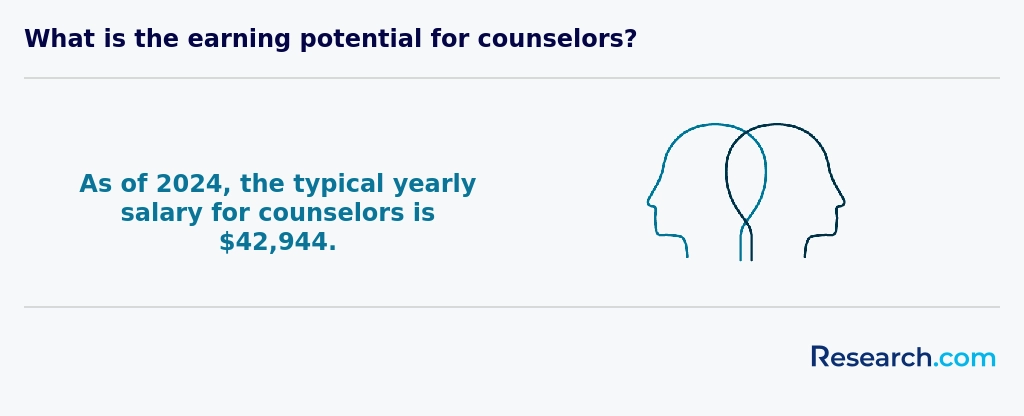
- How much can I make with counseling degree in New York?
- 2027 Most Valuable Counseling Degree Programs Ranking in New York
- Key Findings
- How long does it take to complete counseling degree in New York?
- Affordable Online Counseling Program Alternatives
- What's the difference between online and on-campus counseling degree?
- Why Choosing the Right Counseling Program in New York Matters
- What is the average cost of counseling degree in New York?
- Licensure Requirements for Counseling in New York
- What financial aid is available to counseling degree students in New York?
- Program Costs and Return on Investment
- What are the prerequisites for enrolling in counseling degree program in New York?
- Licensure and Certification in New York
- What courses are typically in counseling degree programs in New York?
- What types of specializations are available in counseling degree programs in New York?
- How do you choose the best counseling degree in New York?
- What career paths are available for counseling degree students in New York?
- What is the job market for counseling degree in New York?
- Top Trending Counseling Rankings
- See What Experts Have To Say About Studying Counseling
What can I expect from counseling degree in New York?
The average cost of pursuing a counseling degree in New York can vary widely, often sparking excitement and careful planning among students. At popular institutions like Hunter College and New York University, graduates recall balancing the investment of tuition, which for a Master's degree often ranges between $15,000 to $35,000 per year for in-state students, with the immense value of hands-on experience and licensure preparation.
Many students share stories of immersing themselves in rigorous coursework while navigating the vibrant urban settings around them. Practical training through clinical internships - usually requiring 700 to 1,000 supervised hours - often occurs in dynamic environments like community mental health centers or regional hospitals, adding depth to their education beyond the classroom.
Those who chose online or hybrid programs also note how flexible schedules at accredited schools helped them thrive without sacrificing work or family life. The excitement of learning about real-world counseling challenges-like trauma or addiction in diverse New York City neighborhoods-makes the investment feel worthwhile. While costs can be significant, the rewards of launching a meaningful career in mental health counseling resonate deeply with graduates exploring this path.
Where can I work with counseling degree in New York?
With a counseling degree from a top New York institution like Columbia University or Hunter College, graduates often find themselves stepping into vibrant roles that truly make a difference. Imagine working as a Licensed Mental Health Counselor at a bustling community clinic in Brooklyn, helping clients navigate anxiety and trauma with empathy and expert care.
Others relish the rewarding challenge of school counseling, guiding students in Queens or the Bronx through academic hurdles and social growth, armed with certifications from New York's State Education Department. Picture the joy in unlocking a student's potential and watching them thrive.
Hospitals across Manhattan and Westchester call upon counselors to provide comfort and coping strategies for patients battling chronic illnesses or mental health crises, blending therapy with hands-on compassion. Graduates from CUNY programs often share their inspiring experiences here.
Private practice is also a popular path. Licensed counselors embrace the freedom to specialize, maybe in marriage or addiction counseling, creating flexible careers where they build trusting relationships over time.
Finally, nonprofit and government agencies hire counselors to champion public health efforts and crisis intervention, turning passion into impactful programs that serve vulnerable communities. These varied paths reflect the dynamic, hopeful journey awaiting counseling graduates in New York.
How much can I make with counseling degree in New York?
Graduates from counseling programs at institutions like Columbia University or the City University of New York find themselves stepping into a vibrant job market with promising salary prospects. For example, becoming an Addiction Counselor in New York can bring a mean annual wage of about $60,080, giving you room to breathe financially while making a real difference.
If you're drawn to community-focused roles, positions such as Community Outreach Coordinator or Family Support Worker offer mean annual salaries near $54,020. This opens doors to engaging careers that blend passion with steady income. Meanwhile, Rehabilitation Specialists enjoy a solid mean annual wage of $48,430, perfect for those eager to support recovery journeys.
Imagine starting your day collaborating with diverse clients, all while earning competitive pay that reflects the dynamic nature of New York's mental health field. Graduates often remark on the rewarding mix of challenge and stability, turning their counseling degrees into adventures of growth and impact.
2027 Most Valuable Counseling Degree Programs Ranking in New York
How do we rank schools?
Investing in your education is a significant decision that can shape your future, and the Research.com team understands the importance of making informed choices. To assist prospective students in New York, we have meticulously crafted the "2027 Most Valuable Counseling Degree Programs Ranking in New York." Our commitment to quality, credibility, and accuracy is reflected in the extensive research and analysis conducted to compile this ranking.
We utilized the following reputable data sources to ensure a comprehensive evaluation of counseling programs:
By exploring this ranking, readers will gain valuable insights into the best counseling degree programs available in New York, helping them make informed decisions about their educational paths. For more details on our methodology, please visit our Research.com methodology page.


# 5 position
Teachers College at Columbia University
Master of Science in Counseling


# 9 position
New York Theological Seminary
Master of Science in Counseling

Key Findings
- Master's programs in counseling in New York usually take two to three years to complete.
- Graduates must complete at least 3,000 hours of supervised clinical experience to become a Licensed Mental Health Counselor (LMHC).
- Tuition ranges from $15,000 to $40,000 per year, with public universities like CUNY being more affordable.
- The average starting salary for counselors in New York is about $55,000, increasing to over $75,000 with experience.
- The job outlook for mental health counselors in New York is strong, with a 22% growth rate expected over the next decade.
- Programs often include preparation for the New York State licensing exam as part of their curriculum.
How long does it take to complete counseling degree in New York?
Diving into a counseling degree in New York is like embarking on a rewarding journey that often takes between two to six years, depending on your academic path. Many graduates from well-known institutions like Hunter College or Columbia University find themselves immersed in two to three years of full-time master's programs, mixing engaging coursework with hands-on practicum hours. Imagine spending your days connecting theory with real clients, building skills you'll use forever.
For those starting with a bachelor's in psychology, such as students from New York University, the adventure begins with about four years of undergraduate study before moving into graduate counseling programs. This means a combined span of about five to seven years to reach the finish line, blending classroom learning with vital clinical experiences.
And it doesn't stop there-after graduation, fresh counselors eagerly tackle 3,000 hours of supervised post-grad practice, gaining confidence and real-world savvy in diverse New York communities to become fully licensed. It's challenging but deeply fulfilling, as many graduates reflect on how this journey transformed their passion for helping others into meaningful professional expertise.
Affordable Online Counseling Program Alternatives
For students seeking to minimize tuition while earning a fully accredited counseling degree, online programs can offer exceptional value without compromising quality. Accredited online bachelor’s programs often feature lower per-credit costs, flexible scheduling, and reduced fees for technology and campus services. Many of these programs also incorporate virtual practicums and remote field placements, ensuring you meet licensure requirements while studying from anywhere. When comparing affordability, it’s essential to review comprehensive rankings that highlight both cost and program reputation. For instance, you might explore the 2025 Most Low Cost Online Bachelor's in Counseling Degree Programs Ranking in Virginia to see how top-tier institutions structure their tuition and support services. Several schools in this list boast per-credit rates under $300, no out-of-state surcharges, and robust online student resources-from virtual counseling labs to one-on-one academic advising. Key considerations for choosing a budget-friendly online program:
- Accreditation: Ensure the program is CACREP-accredited or regionally accredited to satisfy state licensure boards.
- Clinical Placements: Confirm the availability of supervised internships in your local area, as this is critical for licensure and professional development.
- Technology Fees: Compare mandatory fees for online platforms and assess whether they are bundled into tuition or billed separately.
- Support Services: Look for programs offering career counseling, alumni networks, and mental health resources to bolster your academic journey. By leveraging these affordable online alternatives, you can achieve the same rigorous training as on-campus counterparts while reducing overall costs-freeing up resources for conferences, certifications, or graduate study.
What's the difference between online and on-campus counseling degree?
Imagine stepping into Columbia University's bustling counseling labs, where on-campus students soak up face-to-face vibes, exchanging insights with professors and peers in real time. These graduates often recall the thrill of immediate feedback during hands-on practicum sessions and the rich energy of campus life, balancing structured schedules with clinical internships that deepen their skills.
Now, picture a busy professional enrolled at New York University, diving into counseling courses from their living room through an online program. This flexible model attracts students juggling work or family, who cherish the freedom to learn at their own pace while accessing virtual simulations and telehealth practicums tailored to meet New York's licensure standards. Graduates here share a sense of accomplishment in navigating the digital classroom and securing client contact hours remotely.
Both paths demand dedication, yet on-campus offerings emphasize immersive, in-person learning, while online degrees provide adaptable convenience-all leading to rewarding counseling careers within New York's vibrant communities.
Why Choosing the Right Counseling Program in New York Matters
When considering a counseling degree in New York, it's essential to explore the various programs available to find the one that best aligns with your goals, interests, and budget. Pursuing a degree from one of the valuable counseling schools in New York can provide a competitive edge in the job market and open doors to diverse career paths. Understanding the nuances of each program, including accreditation, specialization options, and field experience, is crucial for making an informed decision. By taking the time to research and compare different programs, aspiring counselors can set themselves on a path to success and make a meaningful difference in the lives of others.
What is the average cost of counseling degree in New York?
The average counseling degree cost in New York is a fascinating mix of numbers that tell the story of ambition and opportunity. Median total costs hover around $57,387, which may seem like a significant investment, but many graduates reflect on this expense as an essential step toward a fulfilling career. For those living in-state, the financial path can be gentler, with median costs closer to $36,925, making programs at public institutions like the State University of New York (SUNY) system very attractive for residents.
Imagine a graduate sharing how the vibrant experience at a popular New York counseling program combined rigorous coursework with affordable tuition, creating a perfect bridge of learning and cost. On the flip side, private schools such as Columbia University offer a distinct energy, albeit with tuition leaning toward the higher end of the spectrum, reinforcing the diversity in New York counseling degree tuition and fees.
Books, clinical supervision, and living expenses in buzzing urban campuses add layers to the financial adventure, yet many students find creative ways to balance this with scholarships and assistantships. For those eager to explore more about the valuable counseling schools in New York, carefully weighing these costs and experiences can unlock remarkable opportunities valuable counseling schools in New York.

Licensure Requirements for Counseling in New York
To become a Licensed Mental Health Counselor (LMHC) in New York State, you must:
- Earn a master’s degree from a program approved by the New York State Education Department
- Complete 3,000 hours of supervised clinical practice after graduation
- Pass the National Clinical Mental Health Counseling Examination (NCMHCE)
- Submit your application, official transcripts, supervisor verification forms, and fee to NYSED’s Office of the Professions
- Renew your license every three years by completing 36 continuing education credits
For flexible program options that meet these standards, explore online counseling degrees.
What financial aid is available to counseling degree students in New York?
Diving into counseling studies in New York opens doors not only to knowledge but also to a treasure trove of financial aid options waiting to be discovered. Imagine a graduate from a well-known New York City university sharing how federal aid, accessed through FAFSA, transformed their challenging tuition experience into an achievable reality-grants, work-study, and federal loans like the Grad PLUS made all the difference. Picture another student at a SUNY school enthusiastically explaining how the Tuition Assistance Program (TAP) and Excelsior Scholarship eased the burden, making those $15,000+ annual tuition fees feel far less daunting.
Beyond state and federal support, many New York colleges reward diligent counselors-in-training with merit-based scholarships and graduate assistantships that offer more than just financial relief-they provide hands-on teaching and research opportunities that enrich the learning journey.
Envision a counseling student receiving encouragement from the New York State Association for Counselor Education and Supervision (NYACE) scholarship, fueling their passion while easing financial stress. This is complemented by private and nonprofit grants targeted at mental health advocates ready to make their mark.
Program Costs and Return on Investment
When evaluating counseling degree programs in New York, it’s essential to weigh not only tuition but also the long-term return on investment (ROI). On average, a master’s in counseling in New York can range from $20,000 to $50,000 in total tuition. Considering the mean annual wage of $74,310 for Intervention Specialists and $51,620 for Community Outreach Coordinators, graduates can often recoup their educational costs within 4–6 years. However, factors such as living expenses, additional fees, and loan interest can extend this timeframe. To maximize ROI: • Compare per-credit costs across institutions. Public universities typically offer lower in-state rates, while private colleges may provide more substantial scholarship packages. • Factor in online alternatives. Programs with flexible formats can reduce relocation and commuting expenses. For instance, students seeking a cheap cacrep accredited counseling online program often find accelerated completion times and lower per-credit costs without sacrificing accreditation quality. • Leverage financial aid and employer tuition assistance. Many graduates use a combination of TAP, APTS, and private scholarships to defray costs by 30% or more. • Calculate breakeven point. Divide total debt by your projected starting salary to estimate how quickly you’ll break even, then adjust for living expenses and tax considerations. By conducting a thorough cost-benefit analysis, prospective students can choose a program that aligns with both their career goals and financial realities, ensuring a sustainable path toward licensure and professional growth.
What are the prerequisites for enrolling in counseling degree program in New York?
Diving into a counseling degree in New York means you'll likely need a bachelor's degree from an accredited college, often with a solid foundation in psychology or related fields. Imagine a graduate from Hunter College reflecting on how their early classes in human development made complex theories feel surprisingly accessible and relevant.
Many programs, like those at Pace University, ask for GRE scores, though some schools have started waiving them, opening doors to more diverse experiences and backgrounds. Letters of recommendation and personal statements become your chance to share the story behind your passion-something graduates often describe as a deeply rewarding self-discovery process.
Volunteer experience in counseling or human services? This real-world exposure, common among SUNY students, offers a taste of the rewarding challenge found in helping others. For those envisioning work in schools or hospitals, background checks align with New York's regulations, ensuring safe, professional environments.
Finally, courses in statistics or counseling techniques might already be on your transcript or woven into your chosen program, preparing you to face your future career with confidence and excitement.
Licensure and Certification in New York
Earning your license is the crucial final step to practice counseling professionally in the state.
- Graduate from a New York State–approved master’s program (48–60 credits).
- Complete 3,000 supervised clinical hours under a licensed mental health counselor.
- Pass the National Counselor Examination (NCE) or the New York State licensure exam.
- Apply to the NYS Education Department with official transcripts, exam results and supervisor evaluations.
- Fulfill 36 hours of continuing education every three years to maintain your license.
Flexible formats-like online counseling degrees-can help you complete these requirements on your schedule.
What courses are typically in counseling degree programs in New York?
Diving into a counseling degree in New York means immersing yourself in courses that truly shape your ability to help others navigate life's complexities. Imagine sitting in a lively class at Hunter College, exploring Introduction to Counseling Theories and Techniques, where graduates often recall moments of "aha" when theory met real conversations. You'll also navigate Human Growth and Development, understanding the rich journey each client brings through their lifespan.
Popular courses like Multicultural Counseling and Diversity empower you to embrace New York's vibrant population, sparking curiosity about different cultures and viewpoints-key to becoming an empathetic counselor. Group sessions at NYU, for example, simulate Group Counseling Methods, honing skills in dynamic, real-world settings.
Ethics isn't just a checklist; it's explored deeply under Ethics and Professional Issues in Counseling, where graduates reflect on challenges they found inspiring rather than intimidating. Add in Career Development and Counseling plus Psychopathology and Diagnosis, and you're fully equipped to understand and support clients facing diverse mental health challenges.
This blend sparks excitement and readiness for the practicum experiences awaiting every student eager to make a difference in New York's communities.
What types of specializations are available in counseling degree programs in New York?
Discovering the best counseling degree specializations in New York opens doors to uniquely tailored career paths. Graduates from renowned universities in New York often share how specializing in mental health counseling empowered them to connect deeply with clients facing emotional challenges in vibrant urban environments. Imagine navigating a School Counseling program in a top college, focusing on guiding diverse youth through their academic and personal growth, a truly rewarding journey amidst New York's bustling school districts.
Some adventurous students delve into substance abuse and addiction counseling, responding to pressing community needs with hands-on training in crisis intervention, feeling the real impact of their work every day. Others find passion in marriage and family therapy, where they develop skills to heal relationships and foster harmony in complex family dynamics. Career counseling and rehabilitation counseling are also popular focus areas counseling program focus areas New York students explore, offering pathways to uplift others toward independence and fulfillment.
For those balancing budgets and ambition, checking out a cheap cacrep accredited counseling online program can be a smart move, blending affordability with quality training.
How do you choose the best counseling degree in New York?
Choosing the best counseling degree programs in New York often starts with chasing accreditation, especially the coveted CACREP seal that many graduates celebrate for smoothing their licensure journey. Imagine walking the halls of a SUNY college, feeling confident your coursework meets strict standards, while preparing to enter a bustling New York counseling scene.
Cost can push students to explore options beyond the typical path. Graduates from private colleges sometimes reflect on the trade-off: higher tuition balanced by unique specialization opportunities or intimate faculty connections. For those curious about affordable choices, referring to the 2025 Most Low Cost Online Bachelor's in Counseling Degree Programs Ranking in Virginia can spark ideas on navigating fees while aiming high.
Picture sitting in a lively seminar at a New York institution known for clinical mental health counseling, with peers sharing internship stories from city hospitals and local agencies. These hands-on chances shape the future, and graduates often cherish how these experiences built their confidence to thrive in demanding urban environments. Tracking your path through affordable counseling degrees NY 2027 means weighing these vibrant, real-world connections alongside your dream career in counseling.
What career paths are available for counseling degree students in New York?
Graduates of counseling programs in New York discover a rich tapestry of career opportunities that invite exploration and meaningful impact. Imagine stepping into a bustling New York City school, where licensed counseling jobs available in New York allow counselors to guide students through academic and emotional challenges, shaping futures with each conversation. Others find fulfillment working in hospitals or private practices, addressing mental health issues like anxiety and trauma amidst the state's growing emphasis on well-being.
For those drawn to specialized care, substance abuse counseling opens doors to rehabilitation centers combating the opioid crisis, where counselors witness powerful stories of recovery firsthand. Alternatively, marriage and family therapy offers a deeply relational career path, helping New Yorkers navigate complex dynamics within their closest relationships. Graduates from SUNY or private colleges can also pursue career counseling, supporting individuals navigating the competitive job market of New York City and beyond.
Many students at these institutions take advantage of affordable options or explore an accelerated bachelor degree online, quickly advancing toward their goals. These varied pathways highlight exciting career opportunities for counseling degree in New York, inviting passion, growth, and real-world change.
What is the job market for counseling degree in New York?
The counseling degree job outlook New York offers is vibrant and full of promise, especially for graduates eager to make a difference. Imagine stepping out of a well-known New York university, like Columbia or New York University, ready to join diverse settings such as community mental health centers or private practices. Graduates often share excitement about finding roles in schools or government agencies where their skills are in high demand, reflecting the state's deep commitment to mental health awareness and support.
Employment opportunities for counselors in New York can feel like an open door to varied experiences-from bustling city hospitals to serene rehabilitation facilities. Salaries typically start around $52,000 but can rise well above $70,000, rewarding those who deepen their expertise. New York's challenging yet welcoming environment makes it an ideal place to pursue a counseling career while living in a city full of energy and purpose.
For those curious about balancing study duration and effort, exploring what is the fastest and easiest bachelor's degree to get might inspire your academic path. With strong licensure regulations and a supportive job market, New York stands out as a rewarding destination for counseling degree graduates.
Frequently Asked Questions About counseling
Counseling degree students in New York can maximize their learning by engaging deeply with both academic coursework and practical experiences. New York requires counseling students to complete supervised clinical hours-often between 700 and 3,000 hours-before licensure, according to the New York State Education Department. Students should seek internships and practicum placements in diverse settings to gain exposure to a wide range of client needs.
Participating in professional organizations such as the New York Counseling Association helps students network and stay informed about industry standards. Furthermore, many New York programs emphasize multicultural competence due to the state's diverse population, which enhances students' effectiveness in real-world counseling environments.
Emerging niches within the counseling field reflect evolving societal needs and growing awareness of mental health in New York. One expanding area is telehealth counseling, which increased by over 60% during the COVID-19 pandemic, making remote therapy a key service for many residents, according to the New York State Office of Mental Health (OMH).
Another fast-growing specialty is trauma-informed counseling. Counselors trained in this niche focus on addressing the effects of trauma, which is critical given New York's diverse population and urban stressors. Additionally, substance abuse counseling remains vital, with opioid treatment programs expanding under state initiatives.
Furthermore, school counseling services have intensified, especially in areas with high youth populations. Counselors with expertise in multicultural and bilingual settings are increasingly sought after in New York's diverse communities.
After completing a counseling degree in New York, preparing for the job market involves several key steps. Obtaining licensure is crucial; for example, becoming a Licensed Mental Health Counselor (LMHC) requires 3,000 hours of supervised experience and passing the NY State licensing exam. Networking with professionals through organizations like the New York Mental Health Counselors Association can provide valuable connections. Additionally, gaining experience via internships or volunteer positions enhances employability. According to the New York State Department of Labor, counseling jobs in the state are projected to grow by 15% by 2030, reflecting strong market demand. Continuing education also supports career advancement.
Employers in New York seeking counseling degree graduates prioritize strong communication skills, emphasizing empathy and active listening as essential attributes. The New York State Education Department highlights the need for cultural competence, given the state's diverse population. Graduates must also demonstrate critical thinking and ethical decision-making, which are key for handling complex client situations responsibly.
Analytical skills are vital, especially for counseling roles involving mental health assessments and treatment planning. According to the Bureau of Labor Statistics, New York counselors with these competencies experience higher employability. Additionally, teamwork and adaptability remain important, as counselors often collaborate within multidisciplinary healthcare or educational settings.
Finding internships in New York related to counseling degrees involves multiple strategies aligned with state education and licensure requirements. First, students should explore partnerships between their colleges and local organizations, since many New York universities collaborate with hospitals, schools, and mental health agencies to provide clinical placements. The New York State Education Department (NYSED) requires supervised experience for licensure, so these internships must offer professional supervision.
Additionally, networking through professional associations, such as the New York Mental Health Counselors Association, can connect students with internship opportunities. Online platforms like Handshake or government job boards also list local internships.
According to the Bureau of Labor Statistics, New York offers approximately 20% more counseling internship opportunities than the national average due to its extensive healthcare system. It is essential to verify internship accreditation to ensure it meets New York's licensure requirements.
A counseling degree in New York significantly enhances career mobility and advancement opportunities. Graduates gain licensure eligibility, such as becoming a Licensed Mental Health Counselor (LMHC), which is required for many professional roles. According to the New York State Education Department, LMHCs have access to diverse employment settings including hospitals, private practices, and schools.
Completing a counseling degree also allows professionals to increase their earning potential. The Bureau of Labor Statistics reports that counselors in New York earn a median annual wage above the national average, reflecting the demand for qualified counselors.
Advanced degrees further open leadership, supervisory, and educational roles, making long-term career growth more achievable within the state's expanding behavioral health sector.
Studying for a counseling degree in New York equips students with skills to work across multiple disciplines, including healthcare, education, and social services. New York's counseling programs emphasize collaboration with professionals such as psychologists, social workers, and medical practitioners. This interdisciplinary training reflects the state's diverse population and complex community needs. According to the New York State Education Department, programs require practicum hours in varied settings, enabling students to apply counseling theories in real-world, multidisciplinary environments. This prepares graduates to communicate effectively within teams, improving patient or client outcomes by addressing mental health, social, and medical factors together.
When choosing between a thesis and a non-thesis counseling degree program in New York, students should consider their long-term goals. A thesis option typically involves conducting original research and writing a detailed paper, which is beneficial for those aiming for academic careers or doctoral studies. According to the New York State Education Department, research skills can also enhance clinical practice quality by deepening understanding of counseling theories.
Non-thesis programs often focus more on practical experience through internships and coursework. This route suits professionals seeking immediate licensure or direct clinical work. Many New York programs accredited by CACREP offer both tracks, allowing flexibility based on career needs.
Students in New York seeking to study counseling abroad have several avenues to explore. Many U.S. universities, including those in New York, offer study abroad programs or partnerships with institutions worldwide. These programs allow students to gain international perspectives while completing credits toward their counseling degrees.
The Council for Accreditation of Counseling and Related Educational Programs (CACREP) accredits several international programs recognized by U.S. standards, ensuring coursework aligns with state licensure requirements. This is essential for New York students who plan to return and pursue licensure as Licensed Mental Health Counselors (LMHC).
New York ranks among the top states with over 13,000 active licensed mental health counselors (New York State Office of Professions, 2023). Thus, choosing internationally recognized programs maintains eligibility for licensure and employment back home. Students should verify accreditation and transfer policies with their New York institutions before enrolling abroad.
Part-time jobs in New York that complement counseling degree education often include roles like mental health technician, case manager assistant, or peer support specialist. These positions provide practical experience with client interaction and mental health care systems, which are essential for licensure. According to the New York State Office of Mental Health, hands-on experience in counseling-related settings enhances skill development and can improve graduate employment prospects.
Working in community health centers or nonprofit organizations is also common. These jobs allow students to observe counseling techniques and develop crisis intervention skills. Additionally, university counseling centers may offer part-time roles or internships aligned with academic schedules.
Engaging in such employment helps students fulfill practicum hours required by New York's Licensed Mental Health Counselor (LMHC) certification process, reinforcing classroom learning with real-world application.
Counseling students in New York benefit from numerous networking opportunities that can enhance their academic and professional growth. Many universities, including Columbia and New York University, host regular career fairs and networking events exclusively for counseling majors. These events connect students with faculty, alumni, and local mental health professionals. Additionally, the New York State Association for Mental Health (NYAMH) offers memberships that provide access to conferences, workshops, and regional meetings, fostering valuable industry connections.
Students may also join specialized groups such as the New York Mental Health Counselors Association. These organizations focus on peer support and professional development. According to the Bureau of Labor Statistics, New York employs over 18,000 mental health counselors, highlighting a robust local network for internships and job placements.
Alumni networks play a significant role in supporting counseling degree students in New York. These networks offer valuable connections to licensed professionals and recent graduates working in diverse counseling settings across the state.
Members often gain access to mentorship opportunities, which can enhance practical skills and increase employment chances. According to the New York State Board of Regents, nearly 65% of counseling professionals find their initial jobs through personal or professional contacts, highlighting networking's value.
Additionally, alumni groups frequently share job postings, licensure advice, and continuing education resources, helping students stay informed about state licensing requirements and industry trends.
In New York, students can tailor their counseling degree programs by selecting specialized tracks aligned with career goals, such as mental health, school, or substance abuse counseling. Many institutions offer elective courses and fieldwork opportunities to develop expertise in targeted populations or issues. For example, New York State Education Department licensing requires specific coursework depending on the counseling focus, which encourages program customization.
Internships and practicum placements within local agencies also enable students to gain relevant experience. According to the New York State Office of Mental Health, practical training enhances employability, especially in the state's diverse urban and rural communities. Online and hybrid course options further support flexible scheduling for working professionals.
Counseling students in New York often face several common challenges during their studies. One major hurdle is balancing rigorous coursework with the required clinical hours. New York mandates a minimum of 700 supervised internship hours for licensure, which can be difficult to coordinate alongside academic schedules. According to the New York State Education Department, many students report stress managing this combined demand.
Financial strain is another issue. Graduate counseling programs in New York average tuition costs ranging from $20,000 to over $40,000 annually, leading some students to juggle part-time jobs or loans.
Additionally, navigating the licensing requirements specific to New York, such as the Licensed Mental Health Counselor (LMHC) exam, requires careful planning and preparation. Students often express concerns about accessing adequate mentorship to guide them through this process.
With a counseling degree in New York, graduates can pursue several professional certifications to enhance their career prospects. One common certification is the Licensed Mental Health Counselor (LMHC), which requires a master's degree in counseling, 3,000 hours of supervised experience, and passing the National Clinical Mental Health Counseling Examination.
Other options include becoming a Licensed Marriage and Family Therapist (LMFT), requiring a specialized degree and similar supervised hours. Additionally, certifications like National Certified Counselor (NCC) offered by the National Board for Certified Counselors are valued nationally.
These certifications allow counselors in New York to work in diverse settings from private practice to schools.
To write a winning application for a counseling program in New York, begin by researching each program's specific requirements. Most programs require a strong undergraduate GPA, typically around 3.0 or higher, and relevant volunteer or work experience in counseling or related fields. According to the New York State Education Department, demonstrating a clear understanding of counseling ethics and state licensing requirements strengthens your application.
Craft a personal statement that highlights your motivation, relevant skills, and career goals. Admissions committees appreciate concise, well-structured essays showing self-awareness and commitment. Including examples of teamwork, empathy, or leadership can improve your chances.
Secure strong letters of recommendation from academic or professional sources familiar with your abilities. Also, prepare for any required standardized tests, such as the GRE, if applicable. Following these steps aligns your application with New York's counseling education standards.
Counseling is recognized globally as a vital profession focused on mental health and personal development. In the United States, including New York, counseling careers are shaped by licensure requirements and ethical standards that often influence international practices. According to the New York State Education Department, aspiring counselors must complete a master's degree, supervised experience, and pass a licensing exam to practice professionally.
Globally, counseling roles vary but share a common emphasis on supporting psychological well-being. The U.S. Bureau of Labor Statistics reports that employment for mental health counselors in New York is projected to grow by 21% from 2021 to 2031, reflecting steady demand. This growth aligns with increased recognition worldwide of mental health's importance in overall healthcare.
Many countries look to U.S. standards for training and certification models, highlighting New York's programs as influential in shaping global counseling education and practice.
Gaining practical experience while studying counseling in New York is essential for licensure and career readiness. Most counseling programs incorporate supervised fieldwork or internships as a graduation requirement. For instance, New York's licensure for Licensed Mental Health Counselors (LMHC) mandates at least 3,000 hours of post-master's supervised experience, often beginning with practical work during the degree.
Students can seek placements in community health centers, schools, or nonprofit organizations where counseling services are offered. Universities often have partnerships facilitating these internships, providing valuable real-world exposure.
The New York State Education Department and the State Board for Mental Health Practitioners provide guidelines ensuring quality supervision during these experiences.
Choosing the right concentration within a counseling degree program in New York depends on your career goals and interests. Popular concentrations include mental health counseling, school counseling, and substance abuse counseling. Each requires specific certification and meets New York State Education Department regulations differently.
For example, mental health counselors in New York need to complete 3,000 hours of supervised experience for licensure as Licensed Mental Health Counselors (LMHC). School counselors must meet the New York State certification requirements for P-12 school settings.
Research labor market data from the New York State Department of Labor to identify high-demand specializations. For instance, mental health counseling roles are projected to grow by 13% through 2030, higher than the national average.
Consider programs accredited by CACREP or regionally accredited to ensure quality education and licensure eligibility. Speaking with current professionals and academic advisors in New York can also help clarify which concentration aligns best with local job markets and your long-term plans.
Related Counseling Rankings for Nearby Cities
- 2027 Most Valuable Counseling Degree Programs Ranking in Bronx
- 2027 Most Valuable Counseling Degree Programs Ranking in Philadelphia
- 2027 Most Valuable Counseling Degree Programs Ranking in Scranton
- 2027 Most Valuable Counseling Degree Programs Ranking in Springfield
- 2027 Most Valuable Counseling Degree Programs Ranking in Baltimore
- 2027 Most Valuable Counseling Degree Programs Ranking in Boston
- 2027 Most Valuable Counseling Degree Programs Ranking in Washington
- 2027 Most Valuable Counseling Degree Programs Ranking in Rochester
- 2027 Most Valuable Counseling Degree Programs Ranking in Virginia Beach
- 2027 Most Valuable Counseling Degree Programs Ranking in Norfolk
Top Trending Counseling Rankings
See What Experts Have To Say About Studying Counseling
Read our interview with Counseling experts

Meredith A. Rausch
Counseling Expert
Associate Professor
University of Alabama

References
- What Degree Do I Need to Be a Counselor? | University of Bridgeport https://www.bridgeport.edu/news/degree-needed-to-be-a-counselor/
- How Long Does It Take to Become a Licensed Counselor? https://onlinecounselingprograms.com/become-a-counselor/how-long-does-it-take/
- Where therapists work and what they do https://www.bacp.co.uk/careers/counselling-and-therapy-as-a-career/where-therapists-work-and-what-they-do/
- How to Write a School Counselor Cover Letter | VocoVision https://www.vocovision.com/resources/uncategorized/how-to-write-a-strong-school-counselor-cover-letter/
- Become a Counselor in New York (NY): State Licensing & Schools https://www.counselingschools.com/licenses/new-york
- For Students - CACREP https://www.cacrep.org/for-students/
- Networking for Therapists: Building Connections for Career Success & Client Care https://www.mentalyc.com/blog/networking-for-therapists
- Study Counseling Abroad - Top Universities for Masters, MBA, PhD Degree Programs https://studee.com/degree/abroad/counseling
- Best Online Counseling Degree Programs 2025 https://www.psychology.org/rankings/best-online-counseling-programs/
- How to Find Therapist Jobs https://agentsofchangeprep.com/blog/how-to-find-therapist-jobs/


