The fastest counseling degree is not necessarily the fastest route to the job you want: online classes can fit around work, but clinical placements and South Carolina credential rules still shape your timeline. This guide is for prospective students and working professionals comparing program length, cost, training, and career outcomes. It accompanies the 2027 Fastest Online Counseling Degree Programs Ranking in South Carolina, created by the Research.com team of data scientists to help students make an informed choice about which counseling programs are worth considering.
Key findings about online Counseling degrees in South Carolina
A 60-credit counseling master's can be a useful comparison point, but an advertised accelerated schedule does not remove practicum, internship, or later licensure requirements.
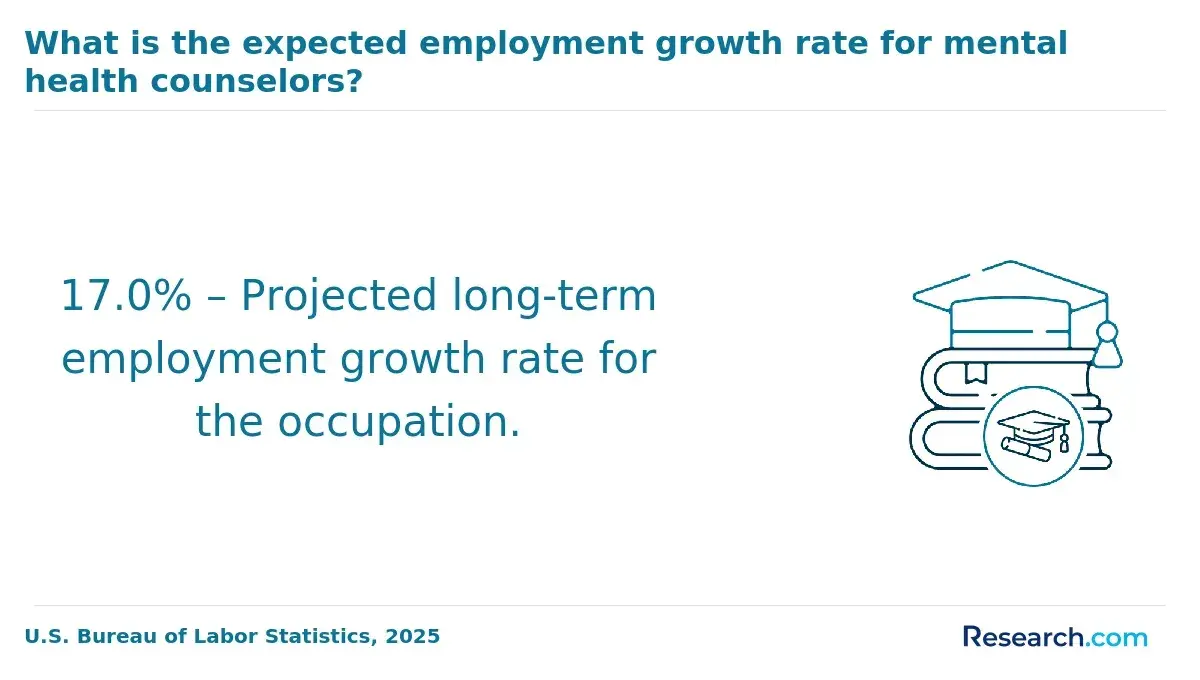
Career target comes first: the national May 2025 median was $59,350 for the BLS occupation encompassing mental health and addiction counselors, while the 2025-2035 projected growth rate was 18%; these are occupational figures, not graduate salary promises.
In South Carolina, prospective clinical counselors and school counselors should check different credential pathways before choosing a program; an online delivery format alone establishes neither eligibility.
What can I expect from an online Counseling degree in South Carolina?
Most online degrees aimed at professional counseling are master's programs. Coursework may be online, but skills practice, a supervised practicum, and an internship require scheduled interaction and approved sites. "Online" therefore describes much of the classroom delivery, not an entirely remote route to professional practice.
The most important distinction is between clinical mental health counseling, which prepares students for client care and a possible licensed professional counselor pathway, and school counseling, which prepares students to support pupils within schools. A counseling-related bachelor's degree can introduce the field but generally is not a substitute for the graduate education required for these professional roles. Compare the best counseling programs by intended credential as well as academic quality.
Where can I work with an online Counseling degree in South Carolina?
Depending on specialization and credentials, graduates may pursue roles in community mental health organizations, hospitals, substance-use treatment programs, private practices, K-12 schools, colleges, or rehabilitation services. A clinical degree does not by itself authorize independent practice, and a school counseling degree should not be assumed to satisfy clinical licensure requirements; the South Carolina licensing board and Department of Education govern different pathways.
Location also affects training access. Before enrolling from a smaller South Carolina community, ask whether the program approves nearby placement sites and who secures them. An online classroom may spare a commute to campus while still requiring regular travel to a school, clinic, or agency.
Pay depends on occupation, setting, experience, credentials, and location - not the degree title alone. The following national BLS figures provide comparable benchmarks for several paths, but they are not South Carolina starting salaries or forecasts for individual graduates.
Career direction
U.S. median annual pay, May 2025
Projected U.S. job growth, 2025-2035
Clinical mental health or addiction counseling
$59,350
18%
School counseling
$64,330
3%
Rehabilitation counseling
$46,850
2%
The U.S. Bureau of Labor Statistics' Occupational Outlook Handbook and Employment Projections report these occupational benchmarks. School counseling's higher national median does not make it the better financial choice for every student: compare the work itself, local job options, and the cost and time of the credential each role requires.
These program descriptions point to different decisions, not interchangeable versions of a fast degree. Verify the current catalog, delivery schedule, field-placement rules, and credential alignment with each university before applying.
Charleston Southern University - M.S. in Clinical Counseling: Its 60-credit clinical counseling curriculum is the clearest fit of these options for a student focused on clinical client work rather than school certification. Ask how its practicum and internship sequence affects the shortest feasible completion time. Source: Charleston Southern University program information.
Winthrop University - online M. Ed. in Counseling and Development: The broader degree presentation lets applicants investigate counseling pathways before selecting the one that matches their career goal. That breadth is useful only if the chosen track's courses and placements align with the credential the student intends to pursue. Source: Winthrop University program information.
Winthrop University - online M. Ed. in Counseling and Development, School Counseling: The dedicated school counseling pathway centers preparation for work with pupils and school systems, a more specific target than a general counseling program description. Prospective students should confirm South Carolina educator-certification alignment and school-based placement arrangements, particularly if they live far from campus. Source: Winthrop University school counseling program information.
A counseling master's commonly takes about two to three years of full-time study; part-time study generally takes longer. The practical timeline depends on credit load, course rotation, placement availability, and whether internship hours can be completed alongside paid work. A school's shortest advertised duration may describe an uninterrupted full-time plan rather than a realistic schedule for every working adult.
Ask for a term-by-term plan showing when the practicum and internship begin, whether summer enrollment is necessary, and what happens if a placement is delayed. Graduation and independent clinical licensure are separate milestones: required post-degree supervised experience can extend the time before independent practice under South Carolina Board of Examiners for Licensure of Professional Counselors, Marriage and Family Therapists, Addiction Counselors, and Psycho-Educational Specialists rules.
Online study can reduce routine campus travel and make coursework easier to combine with employment. On-campus study may better suit someone who wants frequent in-person faculty contact or easier access to a university's established local placement network. Neither format eliminates supervised, in-person professional training.
Compare where you will train, not just where lectures occur. Ask whether online students must attend residencies, who approves local supervisors, and whether the university has placement relationships near your home. For a student outside a major South Carolina metro area, those answers can matter more than the difference between live and self-paced lectures.
There is no single reliable statewide price for the programs discussed here: a meaningful comparison needs the current tuition rate, required credits, fees, and the student's residency and enrollment status. Public-university resident and nonresident rates may differ, while a private nonprofit university may use another pricing structure. Institution type alone does not establish the cheaper total.
Request a written total-program estimate covering tuition, university and online fees, books, travel or residency costs, and expenses tied to field placements. Then compare that estimate with the most affordable counseling programs. A shorter schedule may reduce time away from work, but it can also make paid employment harder during internship; include that opportunity cost in the comparison.
Eligible students at participating institutions may use federal graduate aid, including Direct Unsubsidized Loans, after filing the FAFSA. University scholarships, graduate assistantships, employer tuition benefits, and eligible service-based repayment programs may also matter. Confirm that a specific online program participates in the aid you intend to use; undergraduate-focused state awards should not be assumed to fund a master's degree. Sources: Federal Student Aid; South Carolina Commission on Higher Education.
Graduate PLUS requires particular care for 2027 entrants: under current federal rules, new graduate borrowers generally cannot obtain Graduate PLUS loans for periods beginning on or after July 1, 2026. A limited transition provision may cover qualifying students already enrolled in the same program who meet the prior-borrowing conditions. Ask the financial aid office to determine your eligibility rather than building a budget around that loan. Source: Federal Student Aid.
View the chart data as a table
Pay vs projected growth by counseling career path (U.S., BLS) (Source: BLS)
Name
Median annual wage (USD/year)
Projected growth (%)
Mental Health Counselors
59,350
18
School & Career Counselors
64,330
3
Rehabilitation Counselors
46,850
2
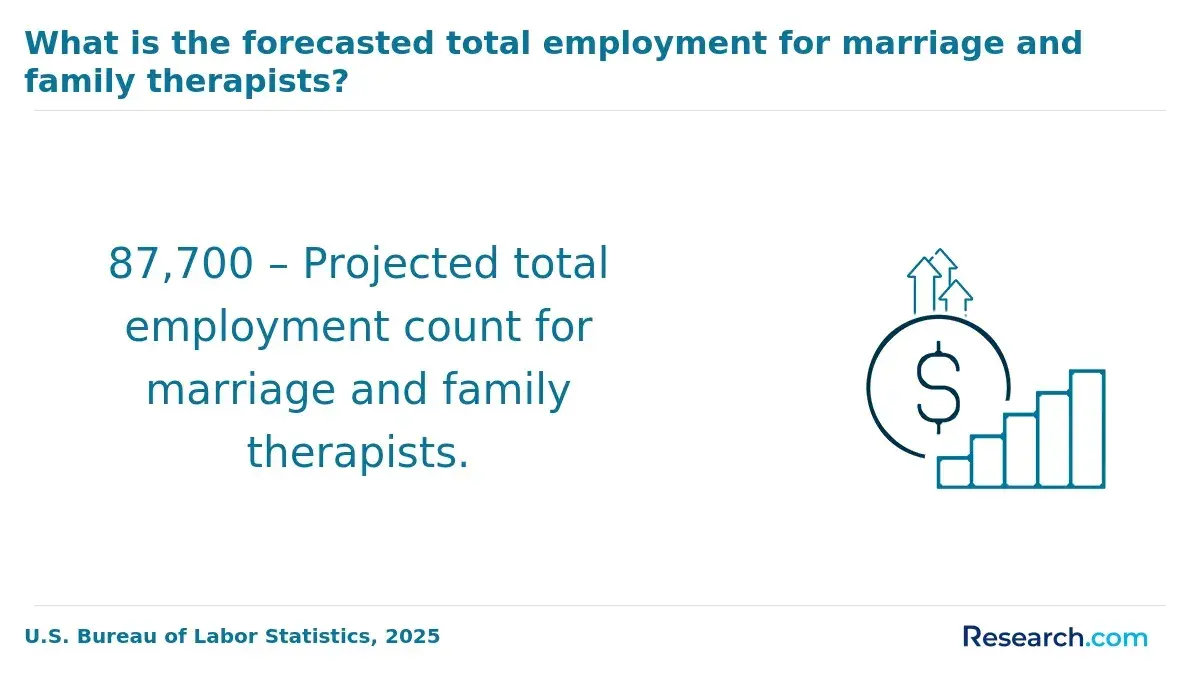
Marriage & Family Therapists
66,940
14
Psychologists
99,110
6
Postsecondary Teachers
85,330
7
Expect a bachelor's degree and an application that may include transcripts, recommendations, a statement of purpose, and an interview. Specific GPA thresholds, prerequisite courses, background-check policies, and test requirements belong to each university's current admissions rules. A bachelor's major outside psychology or counseling need not automatically rule you out; ask whether any foundational coursework is required.
Admissions flexibility is different from professional eligibility. The easiest counseling programs may help you compare entry requirements, but check whether the completed curriculum - not merely admission to it - supports your intended South Carolina credential. Ask the school how it evaluates transfer credits, especially clinical or fieldwork courses that may not transfer like classroom electives.
Professional counseling curricula commonly cover counseling theories, ethics, assessment, research, human development, group work, and culturally responsive practice. Clinical tracks may add diagnosis, treatment planning, and substance-use counseling; school tracks emphasize pupil development and counseling within educational systems. Supervised practicum and internship courses apply classroom skills to real settings.
Read the course sequence rather than relying on the degree name. If a required clinical course is offered infrequently, or fieldwork cannot start until several prerequisites are complete, an apparently fast online program may take longer on your schedule.
Common directions include clinical mental health, school, addiction, marriage and family, and rehabilitation counseling. These labels can represent different degrees, concentrations, or professional pathways rather than electives within one interchangeable credential. The relevant South Carolina licensing board or educator-certification authority - not the specialization's marketing name - determines how a course of study fits its requirements.
Choose by the population and workplace you want. A prospective K-12 counselor should prioritize an educator-certification-aligned school pathway; someone planning clinical mental health practice should examine counselor-licensure education and supervision requirements. If you are undecided, request the course maps for both paths before paying an enrollment deposit.
Start with your target job and work backward. A ranking can identify programs worth investigating, but the best investment is the one you can finish, fund, and use toward your intended credential. Review most valuable counseling programs alongside the following checks rather than treating speed as a stand-in for return on investment.
Ask each school for answers you can compare in writing:
Which South Carolina credential is this specific track designed to support, and what must graduates complete after the degree?
What are the current accreditation status, total required credits, and full-time and part-time course sequences? Verify institutional recognition and any claimed CACREP program accreditation directly with the relevant accreditor.
Who arranges and approves practicum and internship sites near my home, and are any campus visits required?
What will I pay after likely aid, and how could internship scheduling affect my earnings and borrowing?
What program-specific completion, licensure-exam, and employment outcomes can the school document?
A common mistake is choosing the lowest published tuition or shortest advertised timeline without checking placement capacity and credential fit. For a fuller return-on-investment comparison, consider completion probability, debt, earnings before and potentially after the degree, foregone income, and the number of years over which those costs and benefits occur.
View the chart data as a table
Program length by program (Source: Research.com)
Category
Value
Charleston Southern Univ
33
Winthrop University
36
Winthrop University
36
A clinical counseling graduate might seek supervised practice in an agency before pursuing independent licensure; a school counseling graduate might pursue the state educator credential needed for a school role. Other possibilities depend on specialized preparation and employer rules, including addiction-treatment, rehabilitation, and student-support work. A degree, certification, and state license are distinct qualifications.
For career changers, the central question is whether the desired role requires this graduate investment. If you want to explore helping professions but not provide licensed counseling, a related support position or shorter credential may be a better first step. If independent clinical practice is the goal, budget for both graduate training and the supervised pathway that follows it.
View the chart data as a table
Programs by specialization (Source: Research.com)
Category
Value
Clinical Mental Health Counseling
2
School Counseling
1
National demand differs sharply by counseling occupation: the U.S. Bureau of Labor Statistics projects 18% growth from 2025 to 2035 for the occupational grouping covering mental health and substance-use counselors. That is a reason to investigate the field, not evidence that any particular South Carolina graduate will find a job quickly.
Local opportunity depends on the setting you can access and the credential you hold. Compare openings at agencies, treatment providers, and school districts in the areas where you could realistically work; then ask prospective programs whether their placement arrangements reach those areas. This matters especially if online study is your solution to living far from campus but relocation for fieldwork is not an option.
2027 Fastest Online Counseling Degree Programs Ranking in South Carolina
Investing in a counseling degree is a consequential decision, especially when a program's advertised pace may differ from the time needed for supervised training. Research.com's team uses institutional and program data to assess the quality, credibility, and accuracy of its counseling rankings, giving readers a starting point for comparing options rather than a substitute for checking current program requirements.
The ranking draws on these data sources:
IPEDS database: institutional reporting on enrollment, completions, and costs.
Peterson's database: program and institutional information used in comparisons.
Research.com evaluates counseling programs using graduate completion and employment-or-doctoral-admission outcomes, applicable licensure-exam pass rates, CACREP recognition, federal Title IV eligibility, and cost. Its Best ranking primarily combines outcomes and accreditation, then gives cost a smaller role; rankings focused on another dimension order programs by that dimension. For a fastest-program ranking, readers should still confirm whether published completion times include required fieldwork and reflect their intended enrollment pace. See Research.com's methodology for more about how the rankings are created.
# 1 position
Charleston Southern University
Master
Master of Science in Clinical Counseling
Delivery mode: online
58.70
/ 100
Final score
Program length
Full-time: 33 months/8 semesters
Specialization
Clinical Mental Health Counseling
Required credits
60 semester credits
GPA range
3.00 - 4.00
Program completion rate
85.7% (2024-25)
Employment or doctoral admission
90% (2021-24)
Licensure exam pass rate
100% (2023-24)
Application deadline
rolling
Application process
direct
GRE
no
Prerequisites
Twelve undergraduate hours of psychology or a related field are required. Upon acceptance, these courses may be taken as prerequisites prior to starting the program.
Additional requirements
Graduate application; official transcripts; undergraduate GPA of 3.0 (lower GPA may be considered with addendum); two recommendations (one academic, one professional); Goals Statement; Interview.
Accreditation
Accredited by the Council for Accreditation of Counseling and Related Educational Programs (CACREP), with institutional accreditation from the Southern Association of Colleges and Schools Commission on Colleges (SACSCOC).
Charleston Southern University earned a Research.com Completion Speed Score of 58.7/100, supported by 33-month completion pathway and 60 semester credits. The program is CACREP-accredited, valid through 2033-10-31.
# 2 position
Winthrop University
Master
Master of Education in Counseling and Development – Clinical Mental Health Counseling (100% Online)
Delivery mode: online
52.20
/ 100
Final score
Program length
3 Years (7 Semesters)
Specialization
Clinical Mental Health Counseling
Required credits
60 semester credits
GPA range
3.00 - 4.00
Program completion rate
86.9% (2025-26)
Application deadline
12/15/26
GRE
Conditional: GRE or MAT required if undergraduate GPA is below 3.0 (waived with a previous graduate degree)
Prerequisites
Admission review based on GPA, GRE/MAT scores if GPA is under 3.0, letter of reference, and experience, followed by a group/individual interview process.
Additional requirements
GPA; GRE/MAT scores if GPA under 3.0; Letter of Reference; Experience; interview process consisting of group and individual interviews with faculty and students, a writing sample, and various surveys (not separately broken out for the online delivery)
Accreditation
Accredited by the Council for Accreditation of Counseling and Related Educational Programs (CACREP), with institutional accreditation from the Southern Association of Colleges and Schools Commission on Colleges (SACSCOC).
Winthrop University earned a Research.com Completion Speed Score of 52.2/100, supported by 3-year completion pathway and 60 semester credits. The program is CACREP-accredited, valid through 2033-10-31.
# 3 position
Winthrop University
Master
M.Ed. in Counseling and Development – School Counseling
Delivery mode: online
52.20
/ 100
Final score
Program length
3 Years (7 Semesters)
Specialization
School Counseling
Required credits
60 semester credits
GPA range
3.00 - 4.00
Employment or doctoral admission
75% (2025-26)
Application deadline
12/15/26
Application process
direct
GRE
no
Prerequisites
Bachelor's degree with an undergraduate GPA of 3.0 on a 4.0 scale; if GPA is under 3.0, additional admission items may be required.
Additional requirements
Online application form; $50 application fee; bachelor's degree with 3.0 undergraduate GPA (additional items may be required if under 3.0); brief statement of purpose (up to two pages); one professional recommendation; background check; resume.
Accreditation
Accredited by the Council for Accreditation of Counseling and Related Educational Programs (CACREP), with institutional accreditation from the Southern Association of Colleges and Schools Commission on Colleges (SACSCOC).
Winthrop University earned a Research.com Completion Speed Score of 52.2/100, supported by 3-year completion pathway and 60 semester credits. The program is CACREP-accredited, valid through 2033-10-31.
Frequently asked questions about online Counseling degree in South Carolina
Can I become a licensed counselor through an online degree?
Potentially, but online delivery alone does not establish eligibility. Check the specific curriculum and fieldwork against South Carolina's current professional counselor requirements, then plan for any required supervised experience and examinations. Source: South Carolina professional counselor licensing board.
Is a school counseling degree the same as a clinical counseling degree?
No. School counseling generally targets work in educational settings and the relevant educator credential; clinical counseling targets a different practice and licensure pathway. Confirm the intended credential before applying.
Can I complete an online counseling degree without visiting a placement site?
Professional programs normally require supervised practical training. Ask whether the school can approve a site near you and whether it also requires campus visits or residencies.
Does the fastest program offer the best value?
Not necessarily. Compare total cost, aid, placement scheduling, completion prospects, and credential fit. A quicker degree that does not support your intended job is unlikely to be the better investment.
Will my undergraduate major prevent me from applying?
Not always. Admissions requirements vary by program; ask whether applicants from other majors need prerequisite courses and whether those courses would extend your timeline.
See What Experts Have To Say About Studying Counseling