The least expensive counseling program may not be the least expensive route to the job you want. Tuition matters, but so do required credits, field placements, time away from work, and whether the degree meets New Jersey's credential requirements. This article accompanies the 2027 Most Affordable Counseling Degree Programs Ranking in New Jersey, created by the Research.com team of data scientists to help students make an informed choice about which programs are worth considering. Use it to compare costs, credentials, formats, and career outcomes before committing.
Key findings about Counseling degrees in New Jersey
For a New Jersey resident, an eligible public university may offer a lower tuition bill, but the meaningful comparison is the full cost of the credits and placements required for the intended credential - not a per-credit price alone.
Clinical mental health and school counseling lead toward different New Jersey credentials. Confirm program coursework and supervised-training arrangements against the relevant state requirements before treating either degree as a licensure pathway.
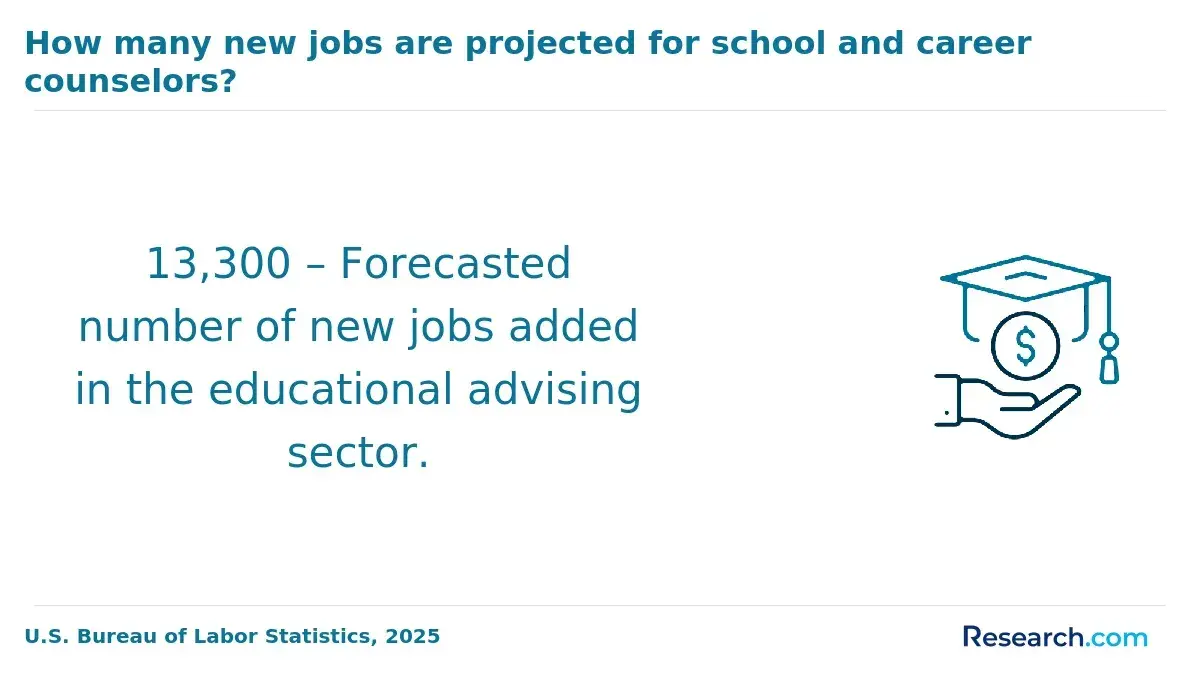
The U.S. Bureau of Labor Statistics reports a May 2025 national median annual wage of $59,350 for the occupation associated with clinical mental health and addiction counseling, with 18% projected employment growth for 2025-2035. Neither figure predicts an individual graduate's earnings or hiring prospects.
What can I expect from a Counseling degree in New Jersey?
Most readers comparing professional counseling programs are considering a master's degree, not an undergraduate counseling major. A bachelor's degree can prepare students for related support roles or graduate admission, but independent clinical practice generally requires graduate education followed by additional state requirements. A school-counseling degree instead prepares students for a school credential and work with pupils, families, and educators.
Expect coursework in counseling theories, ethics, assessment, multicultural practice, and research, followed by supervised practica or internships. The placements are central to the decision: they affect travel, work schedules, and when you can finish. New Jersey's State Board of Marriage and Family Therapy Examiners oversees professional counselor licensure, while the New Jersey Department of Education administers school-counselor certification. Check the requirements for your intended occupation, not simply whether a program has "counseling" in its name.
Where can I work with a Counseling degree in New Jersey?
Clinical mental health graduates may pursue roles in community mental health agencies, hospitals, behavioral health organizations, and eventually private practice if they obtain the necessary license. School-counseling graduates typically seek positions in public or private schools; higher-education counseling and student-affairs programs point toward colleges rather than clinical practice. Addiction-focused work may occur in treatment programs, although duties and credential requirements vary by position.
Location changes the practical value of a placement. A student commuting through northern New Jersey may have access to a different set of school districts, hospitals, and agencies than one based near the Shore or South Jersey. Ask programs where recent students completed placements and whether a suitable site is available near your home or employer; a distant unpaid placement can erase an apparent tuition saving.
Pay depends more on occupation, employer, experience, and credential than on the degree title alone. The following U.S. Bureau of Labor Statistics occupational figures use May 2025 national median annual wages and 2025-2035 national employment projections. They are benchmarks for comparing career directions, not New Jersey starting-salary estimates.
Career direction
National median annual wage, May 2025
Projected U.S. growth, 2025-2035
Clinical mental health or addiction counseling
$59,350
18%
School counseling
$64,330
3%
Marriage, couple, and family counseling
$66,940
14%
Rehabilitation counseling
$46,850
2%
These figures describe occupations with different training and licensing rules; a general counseling master's does not qualify someone for every row. When evaluating a New Jersey offer, compare its actual salary, benefits, and supervision arrangements with your expected debt and current earnings.
The programs associated with the ranking serve notably different goals. Their most useful distinctions concern the credential or work setting they target; confirm current credits, tuition, accreditation status, and placement terms directly with each school before applying.
Kean University, MA in Counseling: Kean offers a counseling-focused graduate route at a New Jersey public university. It is worth comparing with private options if resident tuition could lower your total bill, but verify that the specific course sequence matches your intended credential (Kean University).
William Paterson University, MEd in Professional Counseling - School Counseling: This named school-counseling concentration separates the education-setting pathway from the university's clinical mental health concentration. It suits applicants whose goal is school practice rather than clinical licensure; confirm New Jersey certification alignment with the program (William Paterson University).
William Paterson University, MEd in Professional Counseling - Clinical Mental Health Counseling: The separate clinical mental health concentration lets applicants choose a treatment-oriented route instead of assuming the school track is interchangeable. Ask the university to document how its curriculum and placements address New Jersey professional-counselor requirements (William Paterson University).
Montclair State University, PhD in Counseling: This is the doctoral option in this group, making it a different investment from an entry-to-practice master's. It is most relevant to applicants pursuing counseling research, teaching, or advanced professional study; a prospective clinical practitioner should first establish which master's-level credential is required (Montclair State University).
Monmouth University, MS in Clinical Mental Health Counseling: Monmouth offers a specifically clinical master's, rather than requiring applicants to choose a general counseling degree and infer its focus. Compare its full tuition and placement schedule with public clinical tracks when assessing the cost of a licensure-oriented path (Monmouth University).
Monmouth University, MSEd in School Counseling: The MSEd is explicitly directed toward school counseling, distinguishing it from Monmouth's clinical MS. It fits applicants targeting school-based work who need to verify educational-services certification requirements rather than clinical-license requirements (Monmouth University).
Monmouth University, MSEd in Student Affairs and College Counseling: Its higher-education focus is the clearest distinction among Monmouth's listed options. Choose it for college student-support goals, not on the assumption that its title provides the same pathway as a clinical counseling degree (Monmouth University).
Montclair State University, MA in Counseling: The MA offers a graduate counseling route at a public institution, distinct from Montclair's research-oriented PhD. Applicants comparing costs should obtain a concentration-specific degree plan: the relevant credits and placements depend on the career direction they select (Montclair State University).
Montclair State University, MA in Counseling - School Counseling: The catalog's school-counseling pathway provides a more specific comparison for applicants seeking a New Jersey school credential than the general MA description alone. Compare its school-based fieldwork and certification advising with the named school tracks at William Paterson and Monmouth (Montclair State University).
For a comparison that weighs outcomes and accreditation alongside cost, consult the best counseling programs ranking. Program titles and published descriptions establish a starting point, not proof of individual licensure eligibility.
A full-time counseling master's commonly takes about two to three years; part-time study can take longer, especially when internships are scheduled in fixed terms. A doctorate usually adds several more years after prior graduate study. Exact timelines depend on required credits, course rotation, approved placements, and whether a school permits summer study.
An accelerated schedule makes sense if you can protect time for fieldwork and maintain income without taking on costly debt. Working students should ask whether required classes and supervised hours can fit their jobs before choosing the shortest advertised completion time. Transfer-credit limits and prerequisite courses can also change an individual timeline.
Online coursework can reduce commuting, but it does not make supervised counseling practice virtual or eliminate placement scheduling. Campus study may make face-to-face practice and local networking easier, while a hybrid program may offer a workable compromise for employed students. The better format is the one in which you can complete approved fieldwork without disrupting your finances or delaying graduation.
Before enrolling from New Jersey in an out-of-state online program, ask for written confirmation that its curriculum and placements address the New Jersey credential you seek. State authorization to enroll students is not the same thing as professional-licensure eligibility. Compare the most popular counseling programs if you want to see other frequently chosen options, but do not treat popularity as evidence of credential fit.
There is no single responsible average for the programs discussed here: they span public and private institutions, different degrees, and different credit and fieldwork requirements. An institutional graduate-tuition average from NCES/IPEDS would not necessarily describe the price of a specific counseling program. For a useful estimate, multiply the program's required credits by your applicable tuition rate, then add mandatory fees, books, travel, placement-related expenses, and any extra terms needed to finish.
New Jersey residency may affect tuition at public universities; private universities may have different aid packages. Compare each school's current program-specific quote and your actual aid offer, not published sticker prices alone. The least expensive total cost may differ from the lowest per-credit rate if one option requires more credits or forces you to reduce paid work.
Start with the FAFSA and each university's graduate-aid office. Depending on eligibility and availability, funding may include federal Direct Unsubsidized Loans, institutional scholarships, graduate assistantships, employer tuition support, and awards connected to particular service commitments. New Jersey's Higher Education Student Assistance Authority is a useful source for checking state programs, but do not assume an undergraduate grant covers a counseling master's (Federal Student Aid; New Jersey Higher Education Student Assistance Authority).
Federal Graduate PLUS rules have changed for new graduate borrowers beginning July 1, 2026. Certain students who borrowed for and were enrolled in their program before that date may qualify for a limited continuation exception; new entrants should not build a 2027 budget assuming Graduate PLUS will be available. Confirm your own eligibility and current federal loan limits with Federal Student Aid and the school's aid office before accepting an offer (Federal Student Aid).
Ask whether scholarships continue during internships and whether assistantship hours conflict with placements. A larger award that adds a term or prevents paid work may be less valuable than it first appears.
View the chart data as a table
Wage range - Substance Abuse, Behavioral Disorder, and Mental Health Counselors in New Jersey (BLS OEWS, May 2025) (Source: BLS)
Category
Value
10th percentile
40,630
25th percentile
49,290
Median
62,820
75th percentile
81,900
90th percentile
104,310
Master's programs generally require a bachelor's degree, transcripts, and application materials explaining the applicant's goals. Schools may also request recommendations, an interview, or prerequisite coursework; requirements vary by institution and concentration. Doctoral applicants should expect additional scrutiny of graduate preparation and research interests. Use each university's current admissions page rather than assuming one New Jersey program's rules apply to another.
Admission and future credential eligibility are separate checks. Before paying a deposit, request the program's written guidance on applicable New Jersey coursework, supervised experience, and examinations. CACREP programmatic accreditation can be a useful quality and portability consideration, but institutional accreditation, programmatic accreditation, and state approval are different concepts; verify each claim with the accreditor or relevant state authority (Council for Accreditation of Counseling and Related Educational Programs; New Jersey State Board of Marriage and Family Therapy Examiners; New Jersey Department of Education).
Typical graduate coursework covers counseling skills and theories, human development, ethics, assessment, research, group work, and culturally responsive practice. A clinical track may emphasize diagnosis and treatment planning, while a school track may emphasize student development, school systems, and collaboration with families and educators. Supervised field courses put those skills into practice.
Course titles alone do not establish that a transcript meets New Jersey's requirements. Ask the program for a course-to-requirement map and check whether an elective or additional placement is needed for your intended credential. That request is particularly important if you plan to transfer credits or change concentrations after admission.
The clearest options among the programs discussed here are clinical mental health, school counseling, and student affairs or college counseling. Other programs may offer addiction, rehabilitation, or related emphases, but an emphasis is not automatically a separate license. Match the specialization to the people and setting you want to serve, then identify the credential that employers or regulators require.
If you are undecided between school and clinical work, compare the two curricula before choosing a seemingly flexible general MA. Switching paths later may require additional courses and supervised experience. Research-focused doctoral study is a further distinction: it can suit future educators or researchers without replacing the initial credential check for clinical work.
Begin with the job, not the ranking position. A lower-priced degree is a poor investment if it does not support the credential or schedule your intended job requires. Use the most valuable counseling programs ranking as an additional perspective, then test any promising option against your own circumstances.
These checks expose the differences most likely to change your decision:
Identify your target occupation and ask the appropriate New Jersey board or education authority which degree, coursework, experience, and examinations apply.
Request a written degree plan showing required credits, course availability, field-placement expectations, and realistic full- and part-time completion dates.
Compare net total costs after confirmed aid, including fees, travel, lost earnings during fieldwork, and borrowing costs.
Ask for program-specific completion, placement, and applicable exam outcomes with their reporting periods; do not substitute institution-wide figures.
Confirm accreditation and ask how transferred credits or a change in concentration would affect both graduation and credential eligibility.
For a return-on-investment estimate, consider your current earnings, likely post-degree earnings, aid, debt, chance of completion, years spent studying, and the time over which benefits might accrue. Someone seeking a school credential should avoid choosing a clinical program solely for its price; someone seeking clinical practice should be equally wary of assuming a college-counseling title qualifies them for licensure.
View the chart data as a table
Pay vs projected growth by counseling career path (U.S., BLS) (Source: BLS)
Name
Median annual wage (USD/year)
Projected growth (%)
Mental Health Counselors
59,350
18
School & Career Counselors
64,330
3
Rehabilitation Counselors
46,850
2
Marriage & Family Therapists
66,940
14
Psychologists
99,110
6
Postsecondary Teachers
85,330
7
A clinical master's can lead toward supervised post-degree practice and, after applicable requirements are met, professional counselor licensure. A school-counseling program can lead toward school-counselor certification and positions in K-12 settings. A student-affairs degree may lead to college advising and support roles that are not equivalent to licensed clinical counseling. Doctoral study can support research, teaching, and supervision goals, depending on the position.
These are pathways, not automatic outcomes of graduation. The New Jersey professional-counselor licensing board distinguishes stages of credentialing and requires more than possession of a degree; the Department of Education sets its own school-certification rules (New Jersey State Board of Marriage and Family Therapy Examiners; New Jersey Department of Education). If you intend to work across state lines, check that state's requirements before selecting a program.
View the chart data as a table
Reported total program cost distribution across ranked programs (Source: Research.com)
Category
Value
$50,000–$54,999
1
$55,000–$59,999
9
$60,000–$64,999
4
$65,000–$69,999
3
$70,000–$74,999
1
$75,000–$79,999
0
$80,000–$84,999
1
The national outlook favors some specialties more than others: the U.S. Bureau of Labor Statistics projects 18% employment growth for the occupation associated with mental health and addiction counseling during 2025-2035, compared with 3% for school counseling. These are U.S. projections, not forecasts of New Jersey vacancies. They suggest different demand conditions, but they should not determine your specialization without regard to credential requirements and preferred work setting.
For a local search, examine recent openings from New Jersey school districts, health systems, community agencies, and colleges. Note the exact license or certificate requested, whether supervision is available, and whether positions are accessible from where you plan to live. A degree can be worthwhile when it unlocks the specific roles you want at a manageable total cost; broad national growth alone cannot establish that return.
2027 Most Affordable Counseling Degree Programs Ranking in New Jersey
Investing in a counseling degree is a consequential financial decision. Research.com designed its counseling rankings to help readers compare programs using consistent evidence rather than tuition or promotional claims alone. Its team checks information from the following sources when assessing program costs, outcomes, and institutional characteristics:
IPEDS database: institutional reporting on such measures as tuition, enrollment, and completions.
Research.com evaluates counseling programs on graduate outcomes, applicable licensure-exam pass rates, accreditation and federal Title IV eligibility, and cost. Its Best ranking first combines program completion (40%), employment or doctoral admission (20%), applicable exam pass rates (20%), CACREP accreditation (16%), and Title IV eligibility (4%); weights are adjusted when a measure does not apply. Cost then contributes about 7% of the final Best score. The same approach applies to online and campus programs; rankings named for another dimension, including affordability, order programs by that dimension. This distinction lets readers use an affordability ranking to build a shortlist without mistaking price for a complete measure of fit. See Research.com's methodology for more detail.
# 1 position
Kean University
Master
Counseling - College Counseling and Student Services (M.A.)
Accredited bachelor's; 3.0 GPA; official transcripts; three recommendation letters; personal statement; resume/CV; possible departmental interview; TOEFL/IELTS if applicable. GRE not required.
Accreditation
Accredited by the Council for Accreditation of Counseling and Related Educational Programs (CACREP), with institutional accreditation from the Middle States Commission on Higher Education (MSCHE).
Kean University earned a Research.com Affordability Score of 73.8/100, with $52,364 total cost (tuition and fees) among the verified supporting factors. The program is CACREP-accredited, valid through 2030-03-31.
# 2 position
William Paterson University of New Jersey
Master
M.Ed. in Professional Counseling
Delivery mode: campus
71.60
/ 100
Final score
Program length
3 years full-time, 4 years part-time
Specialization
School Counseling
Required credits
60 semester credits
GPA range
2.75 - 4.00
Application deadline
Fall: Aug 1; Spring: Dec 1
Application process
direct
GRE
no
Prerequisites
Bachelor's degree from an accredited college or university; cumulative undergraduate GPA of at least 2.75 on a 4.00 scale, or a master's degree with a graduate GPA of at least 3.00 on a 4.00 scale.
Additional requirements
Official transcripts from all institutions attended, an essay following the provided prompt, two professional letters of recommendation, and an interview with counseling faculty.
Accreditation
Accredited by the Council for Accreditation of Counseling and Related Educational Programs (CACREP), with institutional accreditation from the Middle States Commission on Higher Education (MSCHE).
William Paterson University of New Jersey earned a Research.com Affordability Score of 71.6/100, supported by $55,357 total cost (tuition and fees) and 60 semester credits. The program is CACREP-accredited, valid through 2027-03-31.
# 3 position
William Paterson University of New Jersey
Master
MEd in Professional Counseling, Clinical Mental Health Counseling Concentration
Delivery mode: campus
71.60
/ 100
Final score
Program length
3 years full-time
Specialization
Clinical Mental Health Counseling
Required credits
60 semester credits
GPA range
2.75 - 4.00
Program completion rate
99% (2024-25)
Employment or doctoral admission
97% (2024-25)
Licensure exam pass rate
88% (2024-25)
Application deadline
Fall: Aug 1; Spring: Dec 1
Application process
direct
GRE
no
Prerequisites
Bachelor's degree; evaluation on undergraduate/graduate GPA and/or admissions test scores, interview with counseling faculty, and two professional recommendations; applicants below thresholds may submit other evidence of potential.
Additional requirements
Bachelor's degree with official transcripts; undergraduate GPA of at least 2.75 (or graduate GPA of 3.00 with a master's); essay; two professional letters of recommendation; interview with counseling faculty.
Accreditation
Accredited by the Council for Accreditation of Counseling and Related Educational Programs (CACREP), with institutional accreditation from the Middle States Commission on Higher Education (MSCHE).
William Paterson University of New Jersey earned a Research.com Affordability Score of 71.6/100, supported by $55,357 total cost (tuition and fees) and 60 semester credits. The program is CACREP-accredited, valid through 2027-03-31.
# 4 position
Montclair State University
Doctor
Ph.D. in Counseling
Delivery mode: campus
69.90
/ 100
Final score
Program length
6-year timeframe allocated by the university
Specialization
Counselor Education and Supervision
Required credits
66
Program completion rate
60% (2024-25)
Employment or doctoral admission
100% (2024-25)
Application deadline
December 1st - Fall Admission Only
Application process
direct
GRE
no
Prerequisites
Master's degree in counseling required. Missing core courses (e.g., Counseling Theories, Techniques, Group, Career, Ethics, Research, Assessment, Diversity, Practicum/Internship) may need to be taken before doctoral core courses.
Additional requirements
Online application, transcripts, personal statement, three professional letters of recommendation (one from faculty, one from a supervisor), resume, and an on-campus interview day with a writing sample; GRE not required.
Accreditation
Accredited by the Council for Accreditation of Counseling and Related Educational Programs (CACREP), with institutional accreditation from the Middle States Commission on Higher Education (MSCHE).
Montclair State University earned a Research.com Affordability Score of 69.9/100, supported by $57,751 total cost (tuition and fees, estimated) and 66 credits. The program is CACREP-accredited, valid through 2033-10-31.
# 5 position
Monmouth University
Master
Master of Science in Clinical Mental Health Counseling
Delivery mode: campus
68.50
/ 100
Final score
Specialization
Clinical Mental Health Counseling
Required credits
60 semester credits
GPA range
3.00 - 4.00
Application deadline
Fall: Priority Deadline March 15; Late Deadline July 1 (space available); Spring: December 1
Application process
direct
GRE
no
Prerequisites
Four-year baccalaureate degree with a minimum 3.0 overall GPA in any major
Additional requirements
Two completed recommendation forms; essay responding to questions in the online graduate application; evaluative group interview
Accreditation
Accredited by the Council for Accreditation of Counseling and Related Educational Programs (CACREP), with institutional accreditation from the Middle States Commission on Higher Education (MSCHE).
Monmouth University earned a Research.com Affordability Score of 68.5/100, supported by $59,700 total tuition (estimated) and 60 semester credits. The program is CACREP-accredited, valid through 2034-04-30.
# 6 position
Monmouth University
Master
M.S.Ed. in School Counseling
Delivery mode: hybrid
68.50
/ 100
Final score
Program length
3 years
Specialization
School Counseling
Required credits
60 semester credits
GPA range
3.00 - 4.00
Program completion rate
97% (2024-25)
Employment or doctoral admission
80% (2024-25)
Application deadline
Summer: May 1; Fall: Priority Deadline April 15, Late Deadline July 1 (space available); Spring: December 1 (Fall-start only for MSEd programs)
Application process
direct
GRE
no
Prerequisites
Possession of a baccalaureate degree from an accredited institution, with a competitive overall GPA (3.0 preferred, but not required) and an academic record that demonstrates success
Additional requirements
Online application, official undergraduate and graduate transcripts, two recommendation letters, a 500+ word essay on why social justice matters and how you would use this training as a school counselor, and a group interview if invited.
Accreditation
Accredited by the Council for Accreditation of Counseling and Related Educational Programs (CACREP), with institutional accreditation from the Middle States Commission on Higher Education (MSCHE).
Monmouth University earned a Research.com Affordability Score of 68.5/100, supported by $59,700 total tuition (estimated) and 60 semester credits. The program is CACREP-accredited, valid through 2033-10-31.
# 7 position
Monmouth University
Master
M.S.Ed. in Student Affairs and College Counseling
Delivery mode: hybrid
68.50
/ 100
Final score
Program length
3 years
Specialization
College Counseling and Student Affairs
Required credits
60 semester credits
GPA range
3.00 - 4.00
Program completion rate
97% (2024-25)
Employment or doctoral admission
80% (2024-25)
Application deadline
Fall: April 15 (priority), July 1 (late)
Application process
direct
GRE
no
Prerequisites
Baccalaureate degree from an accredited institution, with a competitive overall GPA (3.0 preferred, but not required) and an academic record demonstrating success.
Additional requirements
Online application and fee; official transcripts; two letters of recommendation; essay (500+ words) on why social justice is important and how you will use this training in student affairs; group interview if invited.
Accreditation
Accredited by the Council for Accreditation of Counseling and Related Educational Programs (CACREP), with institutional accreditation from the Middle States Commission on Higher Education (MSCHE).
Monmouth University earned a Research.com Affordability Score of 68.5/100, supported by $59,700 total tuition (estimated) and 60 semester credits. The program is CACREP-accredited, valid through 2033-10-31.
# 8 position
Montclair State University
Master
M.A. in Counseling
Delivery mode: campus
68.30
/ 100
Final score
Program length
2½ to 3 years (full-time)
Specialization
Addiction Counseling
Required credits
60 semester credits
GPA range
2.90 - 4.00
Application deadline
Fall: February 1; Spring: October 1
Application process
direct
Prerequisites
Equivalent of a U.S. bachelor's degree
Additional requirements
Online application and $60 fee, transcripts, essay/personal statement, two letters of recommendation, resume
Accreditation
Accredited by the Council for Accreditation of Counseling and Related Educational Programs (CACREP), with institutional accreditation from the Middle States Commission on Higher Education (MSCHE).
Montclair State University earned a Research.com Affordability Score of 68.3/100, supported by $59,941 total cost (tuition and fees, estimated) and 60 semester credits. The program is CACREP-accredited, valid through 2027-03-31.
# 9 position
Montclair State University
Master
M.A. in Counseling
Delivery mode: campus
68.30
/ 100
Final score
Program length
2½ to 3 years (full-time)
Specialization
Clinical Mental Health Counseling
Required credits
60 semester credits
GPA range
2.90 - 4.00
Application deadline
Fall: February 1; Spring: October 1
Application process
direct
Prerequisites
Equivalent of a U.S. bachelor's degree
Additional requirements
Online application and $60 fee, transcripts, essay/personal statement, two letters of recommendation, resume
Accreditation
Accredited by the Council for Accreditation of Counseling and Related Educational Programs (CACREP), with institutional accreditation from the Middle States Commission on Higher Education (MSCHE).
Montclair State University earned a Research.com Affordability Score of 68.3/100, supported by $59,941 total cost (tuition and fees, estimated) and 60 semester credits. The program is CACREP-accredited, valid through 2033-10-31.
# 10 position
Montclair State University
Master
M.A. in Counseling - School Counseling Concentration
Delivery mode: campus
68.30
/ 100
Final score
Program length
2 ½ to 3 years full-time
Specialization
School Counseling
Required credits
60 semester credits
GPA range
2.90 - 4.00
Employment or doctoral admission
90% (2025-26)
Application deadline
Fall: February 1; Spring: October 1
Application process
direct
GRE
no
Prerequisites
Equivalent of a U.S. bachelor's degree; applicants with GPA below 2.9 not considered.
Additional requirements
Online application and fee, transcripts, essay on mental health equity/marginalized populations, two letters of recommendation (one from a professor if graduated within past 3 years), and a resume.
Accreditation
Accredited by the Council for Accreditation of Counseling and Related Educational Programs (CACREP), with institutional accreditation from the Middle States Commission on Higher Education (MSCHE).
Montclair State University earned a Research.com Affordability Score of 68.3/100, supported by $59,941 total cost (tuition and fees, estimated) and 60 semester credits. The program is CACREP-accredited, valid through 2033-10-31.
# 11 position
Georgian Court University
Master
M.A. in Clinical Mental Health Counseling
Delivery mode: campus
67.40
/ 100
Final score
Program length
Average completion: 2.5–3 years
Specialization
Clinical Mental Health Counseling
Required credits
60 semester credits
GPA range
3.00 - 4.00
Program completion rate
62% (2022-23)
Employment or doctoral admission
100% (2022-23)
Licensure exam pass rate
75% (2022-23)
Application deadline
April 30
Application process
direct
GRE
no
Prerequisites
Baccalaureate degree; minimum 3.0 GPA (below 3.0 considered with special circumstances); introductory psychology and statistics for the behavioral sciences; deficiencies may require undergraduate coursework without graduate credit.
Additional requirements
A completed and signed application; official transcripts from all previously attended colleges and universities; check with program regarding additional required documents.
Accreditation
Accredited by the Council for Accreditation of Counseling and Related Educational Programs (CACREP), with institutional accreditation from the Middle States Commission on Higher Education (MSCHE).
Georgian Court University earned a Research.com Affordability Score of 67.4/100, supported by $61,159 total cost (tuition and fees) and 60 semester credits. The program is CACREP-accredited, valid through 2032-03-31.
# 12 position
Stockton University
Master
M.A. in Counseling
Delivery mode: campus
67.20
/ 100
Final score
Program length
21 months (full-time plan of study)
Specialization
Clinical Mental Health Counseling
Required credits
60 semester credits
GPA range
3.00 - 4.00
Program completion rate
94% (2025-26)
Employment or doctoral admission
69% (2025-26)
Licensure exam pass rate
88% (2025-26)
Application deadline
Fall 2027: February 16, 2027
Application process
direct
GRE
yes
Prerequisites
Bachelor's degree from a regionally accredited institution; minimum GPA of 3.0; prerequisites in statistics and experimental psychology, plus one course in child development or personality psychology, with grades of B or better.
Additional requirements
Online application; graduate application essay; three recommendation letters; resume; official transcripts; faculty interview. GRE scores no more than 10 years old; GRE waived with cumulative GPA of at least 3.51 or a master's degree.
Accreditation
Accredited by the Council for Accreditation of Counseling and Related Educational Programs (CACREP), with institutional accreditation from the Middle States Commission on Higher Education (MSCHE).
Stockton University earned a Research.com Affordability Score of 67.2/100, supported by $61,415 total cost (tuition and fees) and 60 semester credits. The program is CACREP-accredited, valid through 2032-10-31.
# 13 position
The College of New Jersey
Master
Clinical Mental Health Counseling, MA
Delivery mode: campus
65.50
/ 100
Final score
Program length
24 months
Specialization
Clinical Mental Health Counseling
Required credits
60 semester credits
Program completion rate
98% (2024-25)
Employment or doctoral admission
100% (2024-25)
Application deadline
rolling
Application process
direct
Additional requirements
Online application; official transcripts; two references; essay; resume; $75 fee; Admissions Questionnaire Addendum.
Accreditation
Accredited by the Council for Accreditation of Counseling and Related Educational Programs (CACREP), with institutional accreditation from the Middle States Commission on Higher Education (MSCHE).
The College of New Jersey earned a Research.com Affordability Score of 65.5/100, supported by $63,760 total cost (tuition and fees) and 60 semester credits. The program is CACREP-accredited, valid through 2030-10-31.
Accredited by the Council for Accreditation of Counseling and Related Educational Programs (CACREP), with institutional accreditation from the Middle States Commission on Higher Education (MSCHE).
The College of New Jersey earned a Research.com Affordability Score of 65.5/100, supported by $63,760 total cost (tuition and fees) and 60 semester credits. The program is CACREP-accredited, valid through 2030-10-31.
# 15 position
Kean University
Master
Counseling - School Counseling (M.A.)
Delivery mode: campus
64.30
/ 100
Final score
Specialization
School Counseling
Required credits
60 semester credits
GPA range
3.00 - 4.00
Program completion rate
48.5% (2024-25)
Application deadline
Fall: February 15; Spring: October 5
Application process
direct
Prerequisites
Bachelor's degree; minimum 3.0 GPA (subject to 5 & 10 year step-down rule)
Additional requirements
Bachelor's degree, minimum 3.0 GPA, letters of recommendation
Accreditation
Accredited by the Council for Accreditation of Counseling and Related Educational Programs (CACREP), with institutional accreditation from the Middle States Commission on Higher Education (MSCHE).
Kean University earned a Research.com Affordability Score of 64.3/100, supported by $65,455 total cost (tuition and fees) and 60 semester credits. The program is CACREP-accredited, valid through 2030-03-31.
# 16 position
Kean University
Master
Counseling - Clinical Mental Health Counseling (M.A.)
Delivery mode: campus
64.30
/ 100
Final score
Specialization
Clinical Mental Health Counseling
Required credits
60 semester credits
GPA range
3.00 - 4.00
Program completion rate
48.5% (2024-25)
Application deadline
Fall: February 15; Spring: October 5
Application process
direct
Prerequisites
Bachelor's degree; minimum 3.0 GPA (exceptions for 5- and 10-year step-down rule)
Accreditation
Accredited by the Council for Accreditation of Counseling and Related Educational Programs (CACREP), with institutional accreditation from the Middle States Commission on Higher Education (MSCHE).
Kean University earned a Research.com Affordability Score of 64.3/100, supported by $65,455 total cost (tuition and fees) and 60 semester credits. The program is CACREP-accredited, valid through 2030-03-31.
# 17 position
Rowan University
Master
M.A. in Counseling in Educational Settings
Delivery mode: campus
62.40
/ 100
Final score
Specialization
School Counseling
Required credits
60 semester credits
Acceptance rate
63%
GPA range
3.00 - 4.00
Program completion rate
64.7% (2025-26)
Employment or doctoral admission
100% (2021-22)
Licensure exam pass rate
80% (2025-26)
Class size
20
Application process
direct
GRE
no
Prerequisites
Bachelor's degree or equivalent from an accredited institution; no prerequisite coursework; transcripts, resume, statement of objectives, two letters of recommendation, recommended minimum GPA, and interview.
Additional requirements
No application fee; official transcripts; professional resume; statement of professional objectives (max 2 pages); two professional letters of recommendation; interview (Zoom or in person) with on-site writing sample.
Accreditation
Accredited by the Council for Accreditation of Counseling and Related Educational Programs (CACREP), with institutional accreditation from the Middle States Commission on Higher Education (MSCHE).
Rowan University earned a Research.com Affordability Score of 62.4/100, supported by $68,130 total cost (tuition and fees) and 60 semester credits. The program is CACREP-accredited, valid through 2027-10-31.
# 18 position
Kean University
Doctor
Ph.D. in Counseling and Supervision
Delivery mode: hybrid
60.10
/ 100
Final score
Program length
approximately four to five years
Specialization
Counselor Education and Supervision
Required credits
63 semester credits
GPA range
3.50 - 4.00
Program completion rate
50% (2024-25)
Application deadline
Fall: December 5
Application process
direct
GRE
optional
Prerequisites
Accredited master's in counseling, preferably CACREP; related degrees considered with experience and a prerequisite plan. Preparation in CACREP core areas and CMHC required. 1-2 years post-master's experience preferred; licensure before comps.
Additional requirements
Official transcripts, three recommendations, résumé/CV, personal statement, and counseling license documentation or licensure plan; GRE optional; English proficiency if applicable. Statement length details conflict; confirm with admissions.
Accreditation
Accredited by the Council for Accreditation of Counseling and Related Educational Programs (CACREP), with institutional accreditation from the Middle States Commission on Higher Education (MSCHE).
Kean University earned a Research.com Affordability Score of 60.1/100, supported by $71,255 total cost (tuition and fees) and 63 semester credits. The program is CACREP-accredited, valid through 2030-03-31.
# 19 position
Fairleigh Dickinson University-Florham Campus
Master
MA in Clinical Mental Health Counseling
Delivery mode: campus
53.20
/ 100
Final score
Program length
Minimum of 7 semesters
Specialization
Clinical Mental Health Counseling
Required credits
60 semester credits
GPA range
3.00 - 4.00
Program completion rate
86.4% (2024-25)
Employment or doctoral admission
100% (2024-25)
Licensure exam pass rate
100% (2024-25)
Application deadline
March 1
Application process
direct
GRE
no
Prerequisites
Graduation from an accredited college or university with a minimum undergraduate GPA of 3.0 in the major field of study.
Additional requirements
Official undergraduate and graduate transcripts; three letters of recommendation; completed FDU Graduate School Application form; a written personal statement of professional goals; a personal group interview.
Accreditation
Accredited by the Council for Accreditation of Counseling and Related Educational Programs (CACREP), with institutional accreditation from the Middle States Commission on Higher Education (MSCHE).
Fairleigh Dickinson University-Florham Campus earned a Research.com Affordability Score of 53.2/100, supported by $80,819 total cost (tuition and fees, estimated) and 60 semester credits. The program is CACREP-accredited, valid through 2027-10-31.
Frequently asked questions about Counseling degree in New Jersey
What is the cheapest way to earn a counseling master's in New Jersey?
Compare resident public-university rates with private universities' actual aid offers, then price every required credit and placement expense. The cheapest advertised tuition rate is not necessarily the lowest completed-degree cost.
Do I need a master's degree to become a licensed counselor?
A bachelor's degree alone is not the usual educational route to New Jersey professional-counselor licensure. Verify the qualifying graduate education and subsequent requirements with the state licensing board before enrolling.
Will a school-counseling degree qualify me for clinical practice?
Do not assume so. School certification and professional clinical licensure are different pathways with different requirements (New Jersey Department of Education; New Jersey State Board of Marriage and Family Therapy Examiners).
Can I complete a New Jersey counseling degree entirely online?
Some academic coursework may be online, but counseling programs generally include supervised fieldwork. Confirm where you can complete placements and whether the curriculum addresses your intended New Jersey credential.
Is CACREP accreditation required for every counseling job?
No single accreditation rule describes every counseling-related job. Check a program's institutional and programmatic status separately, then verify the requirements of the specific New Jersey credential and employer you seek.
Is an affordable counseling degree worth it?
It may be if it fits your career goal, supports the necessary credential, and leaves manageable debt after accounting for placements and time away from work. Compare an actual degree plan and aid offer with your current earnings and realistic job options - not a national median wage alone.
See What Experts Have To Say About Studying Counseling