Choosing an "easy" online counseling degree is not just about getting admitted: the program must also fit your schedule, budget, and intended Tennessee credential. This guide compares degree paths, clinical requirements, costs, and career outcomes so you can identify realistic options without mistaking convenience for a shortcut to licensure. It will also feature the 2027 Easiest Online Counseling Degree Programs Ranking in Tennessee, created by the Research.com team of data scientists to help students make an informed choice about which counseling programs are worth considering.
Key findings about online Counseling degrees in Tennessee
For Tennessee clinical mental health licensure, choose a graduate program whose coursework and supervised training align with state requirements; an online format alone does not establish eligibility.
The national median annual wage for substance abuse, behavioral disorder, and mental health counselors was $59,350 in May 2025; U.S. employment in that occupational group is projected to grow 18% from 2025 to 2035 (U.S. Bureau of Labor Statistics).
Compare total tuition, fees, required campus visits, and local placement support - not admissions convenience alone. A clinical counseling master's commonly requires around 60 semester credits, while pace and fieldwork determine time to completion (CACREP).
What can I expect from an online Counseling degree in Tennessee?
Most readers seeking to practice counseling are comparing graduate degrees, not bachelor's programs. Online counseling master's coursework typically covers assessment, ethics, counseling theories, research, and supervised practice. "Online" usually describes classroom delivery: practicum and internship still require an approved setting and supervision, and some programs require campus visits.
The credential you want should drive the comparison. This table distinguishes paths that can look similar in a search result but lead toward different work.
Path
Best fit
Credential question to resolve
Clinical mental health counseling master's
Applicants seeking psychotherapy-oriented practice
Does the curriculum meet Tennessee's requirements for the intended counseling license?
School counseling master's
Applicants planning to work with K-12 students
Does it meet Tennessee educator-licensure requirements for school counseling?
Addiction-focused counseling program
Applicants targeting substance-use services
Which Tennessee credential and employers does the specific degree prepare them for?
Counseling-related bachelor's degree
Applicants preparing for graduate study or support roles
Will a master's and further supervised experience still be needed for the intended role?
A professionally oriented master's is worth considering if you want direct counseling work and can accommodate placements alongside classes. If your goal is a support role that does not require a counseling license, compare the shorter and less costly credentials accepted by the employers you have in mind. To broaden a licensure-focused shortlist, compare the best counseling programs alongside each program's Tennessee credential disclosures.
Where can I work with an online Counseling degree in Tennessee?
The answer depends on specialization and credential, not whether lectures were online. Clinical mental health graduates may pursue positions in community mental health organizations, hospitals, outpatient practices, or substance-use treatment settings; independent practice requires the applicable state license and its post-degree requirements. School counseling follows a separate educator-licensure path and generally leads to K-12 settings (Tennessee Board for Licensed Professional Counselors, Licensed Marital and Family Therapists and Licensed Clinical Pastoral Therapists; Tennessee Department of Education).
Location matters when arranging training. A student outside Nashville, Memphis, Knoxville, or Chattanooga may value online classes but still need an accessible approved practicum site and supervisor. Ask programs where recent Tennessee students completed placements and whether the school helps secure sites near your home; a distant placement can change both the cost and feasibility of a degree.
Pay depends on the occupation, location, employer, experience, and license - not the degree title by itself. These U.S. medians are useful career benchmarks, but they are not Tennessee starting salaries or estimates of what a particular program's graduates earn.
Counseling-related occupation
U.S. median annual pay, May 2025
U.S. projected employment growth, 2025-2035
Substance abuse, behavioral disorder, and mental health counselors
$59,350
18%
School and career counselors and advisors
$64,330
3%
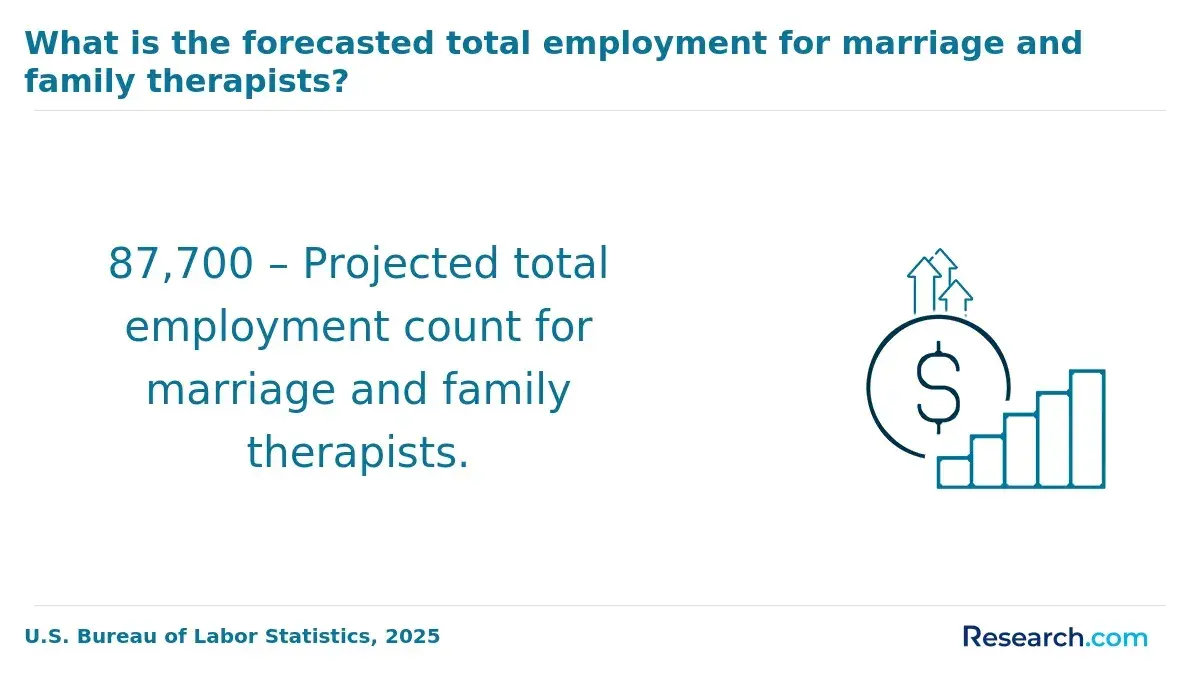
Marriage and family therapists
$66,940
14%
Rehabilitation counselors
$46,850
2%
Source: U.S. Bureau of Labor Statistics, Occupational Outlook Handbook and Employment Projections. The differing growth rates show why "counseling" is too broad a category for an earnings decision. Before borrowing, compare wages for the occupation you actually intend to enter with your current earnings, anticipated debt, and any period of supervised work before full licensure.
These Tennessee programs present different degree titles and professional emphases. Those differences are useful for narrowing a shortlist, but they do not establish that a program is entirely online or satisfies a particular license; confirm current delivery, credit requirements, accreditation, and placement arrangements with each school.
Lincoln Memorial University: Its Master of Education in Professional Counseling identifies clinical mental health as a specific pathway (Lincoln Memorial University graduate catalog). That explicit pathway is a useful starting point for applicants focused on clinical practice rather than a broadly named counseling degree; confirm the current course and placement requirements against Tennessee licensure rules.
Southern Adventist University: Its graduate counseling offering gives applicants a faith-based institutional setting to evaluate alongside professional preparation (Southern Adventist University Graduate Studies). If that environment matters to you, ask how it affects curriculum and training, while separately checking whether the degree's delivery and credential alignment fit your goal.
Carson-Newman University: Its Master of Science in Counseling offers an MS credential rather than Lincoln Memorial's education-titled degree (Carson-Newman University Graduate Studies). That distinction may prompt useful curriculum questions, but the title itself does not confer a licensing advantage; request the current track, clinical-hour, and Tennessee eligibility details.
Freed-Hardeman University: Its graduate offering specifically names clinical mental health counseling (Freed-Hardeman University Graduate Studies). For applicants committed to that practice area, the defined focus makes it easier to examine the exact courses and supervised experiences required for their intended license.
Johnson University: Its Master of Arts in Counseling uses a broader degree title than the explicitly clinical programs above (Johnson University). Students considering it should determine which professional roles its current curriculum targets before assuming it leads to clinical mental health or school counseling eligibility.
None of these degree titles substitutes for a written answer about Tennessee licensure eligibility. A useful comparison request is each school's current program plan, required in-person activities, placement policy, total charges, and most recent program-specific outcomes.
A clinical counseling master's commonly takes about two to three years full time; part-time study can take longer. The curriculum often includes approximately 60 semester credits, but a school's calendar, course sequencing, and available practicum sites may matter more than the credit count when estimating your graduation date (CACREP; institutional program requirements).
For working adults, an accelerated schedule is only helpful if it leaves enough time for supervised fieldwork. Ask for a term-by-term plan showing when placements start, whether required courses run every term, and how a delayed placement affects graduation. Compare the fastest counseling programs using realistic completion schedules rather than advertised minimums alone.
The main difference is where you complete academic coursework, not whether you must practice counseling skills in person. This comparison highlights the scheduling trade-offs most likely to affect a Tennessee applicant.
Consideration
Online program
On-campus program
Course attendance
May combine scheduled video meetings with independent work
Typically requires travel to scheduled classes
Clinical training
Requires approved supervised experiences; local site arrangements may be necessary
Also requires supervised experiences, sometimes near campus
Geographic flexibility
Can reduce routine travel, subject to campus visits and state authorization
Generally favors students able to commute or relocate
Peer interaction
Depends on live sessions, skills practice, and cohort design
Includes regular face-to-face interaction
Online study may suit a working adult who already has a viable local placement network. Campus study may be preferable if you want regular in-person skills practice or access to nearby training relationships. For either format, ask whether skills assessments require travel and who is responsible for finding and approving a supervisor.
There is no single reliable Tennessee-wide average that describes the full cost of an online counseling master's: charges vary by institution, enrollment pace, fees, and residency rules. Published per-credit tuition is only a starting point. Request a current estimate for the entire program, including mandatory fees, campus visits, background checks, clinical-site costs, and any extra terms needed for placement.
Public institutions may have different resident and nonresident prices; private nonprofit institutions may use another pricing structure. Neither category guarantees better value. Compare the most affordable counseling programs using net cost after aid, then consider whether a lower-priced program offers the schedule and supervised-training support needed to finish.
Start with the FAFSA and each school's graduate-aid office. Eligible students may have access to federal Direct Unsubsidized Loans, institutional scholarships, assistantships, employer tuition benefits, or aid tied to qualifying service. Federal loan eligibility depends on the student and program; an online degree is not automatically ineligible (Federal Student Aid).
Graduate PLUS requires particular care for 2027 planning. Federal changes restrict its availability to new graduate borrowers beginning July 2026, while some continuing borrowers may qualify under transition rules. Do not build a budget around Graduate PLUS without having the aid office verify your individual eligibility and borrowing limits under current Federal Student Aid guidance.
Ask whether scholarships continue during internship terms and whether reducing your course load changes aid eligibility. Those questions are especially important if you expect to cut paid work hours to complete clinical training.
View the chart data as a table
Programs by specialization (Source: Research.com)
Category
Value
Clinical Mental Health Counseling
5
School Counseling
4
A graduate counseling applicant generally needs a bachelor's degree from an appropriately accredited institution. Schools set their own additional requirements, which may include transcripts, recommendations, a statement of purpose, an interview, prerequisite coursework, or screening before clinical placement. An unrelated undergraduate major does not necessarily rule out admission; check the specific program rather than assuming you need a psychology degree.
Admission and licensure are separate decisions. Before accepting an offer, request written confirmation of the program's intended Tennessee credential pathway, its current accreditation status, and any requirements you must complete outside the degree. If you might move, ask for a separate determination for the state where you expect to practice (Tennessee counseling board; Tennessee Department of Education; institution admissions policies).
Clinical mental health programs commonly include counseling theories, helping relationships, ethics, diagnosis and assessment, research, group counseling, multicultural counseling, and supervised practicum and internship. School counseling programs add preparation specific to students, schools, and educational systems. Course names vary, so a familiar-sounding catalog description is not proof that it meets a board requirement (CACREP; Tennessee counseling board; Tennessee Department of Education).
Compare syllabi or a course-to-requirement map if licensure is your goal. Pay particular attention to clinical content and supervised experience: those components are harder to make up after graduation than an elective and can affect when you become eligible to pursue a credential.
Common graduate pathways include clinical mental health, school, addiction, marriage and family, and rehabilitation counseling. Availability differs by institution, and a concentration within a general degree is not necessarily equivalent to a separate degree designed for a specific license.
Choose the specialization by working backward from the setting and credential you want. If you want to counsel K-12 students as a school counselor, prioritize Tennessee educator-licensure alignment. If you want clinical mental health practice, examine the pathway reviewed by the state counseling board. Addiction-focused coursework can be valuable in either planning process, but ask which credential the complete program - not just its electives - supports.
Use the ranking to identify candidates, then test each one against your career goal. An "easy" application is a poor bargain if the resulting degree does not support the credential or schedule you need. The following checks make school conversations more productive:
Identify the exact job and Tennessee license or educator credential you intend to pursue.
Ask the program to document how its current curriculum and supervised experiences align with that credential; verify its institutional and, if relevant, programmatic accreditation.
Request a complete cost estimate and a realistic term-by-term plan for your intended enrollment pace.
Ask who secures local placements, whether travel is required, and what happens if a site falls through.
Compare published completion, exam, and employment outcomes using the same reporting periods, and ask what those measures include.
Do not choose solely by tuition, advertised speed, or an assumption that every online program works for every state. For a broader return-on-investment comparison, review the most valuable counseling programs, then weigh aid, debt, time away from work, likelihood of completion, current earnings, possible post-degree earnings, and how long you expect to work in the field.
View the chart data as a table
Admissions GPA distribution across ranked programs (Source: Research.com)
Category
Value
2.75-2.79
2
2.80-2.84
0
2.85-2.89
0
2.90-2.94
0
2.95-2.99
7
A clinical mental health pathway can lead toward supervised counseling work and, after applicable licensing steps, licensed professional practice. Other paths include school counseling, substance-use services, rehabilitation counseling, or further study in counselor education. Employers and regulators may distinguish sharply among these credentials, even when job titles sound similar (Tennessee counseling board; Tennessee Department of Education).
If you are changing careers, separate your first likely role from your long-term goal. A graduate degree may prepare you to seek supervised positions, while independent clinical work can require additional experience and examinations. A bachelor's-level support role may be a more practical first step if you need to test your interest in the field before committing to graduate tuition.
View the chart data as a table
Projected job growth 2025-2035 by counseling career path (U.S., BLS) (Source: BLS)
Category
Value
Mental Health Counselors
18
Marriage & Family Therapists
14
Postsecondary Teachers
7
Psychologists
6
School & Career Counselors
3
Rehabilitation Counselors
2
All occupations
3
The U.S. Bureau of Labor Statistics projects 18% employment growth for substance abuse, behavioral disorder, and mental health counselors from 2025 to 2035. That national projection signals substantial demand in a relevant occupational group, but it does not predict the number of openings near a particular Tennessee student or guarantee a job after graduation.
For a local decision, review current postings in the part of Tennessee where you plan to work. Note the required license, accepted degree, experience level, and whether employers offer supervision. Comparing those requirements with a program's curriculum and placement support is more useful than treating a national growth rate as a promise of local opportunity.
2027 Easiest Online Counseling Degree Programs Ranking in Tennessee
Investing in a counseling degree is a consequential decision, especially when a program's cost, completion requirements, and licensure alignment may affect years of work after enrollment. Research.com's team evaluated programs using graduate outcomes, accreditation, licensure exam results where applicable, and cost, with the aim of making comparisons more credible and useful than a judgment based on admissions difficulty alone.
The ranking draws on these data sources:
IPEDS database - institutional enrollment, completions, and cost information.
Research.com scores counseling programs on completion, employment or doctoral admission, licensure exam pass rates where applicable, CACREP programmatic recognition, federal Title IV eligibility, and cost. Its Best ranking combines graduate outcomes and accreditation before adding a smaller cost component; other rankings emphasize the dimension named in their titles. The same approach applies to online and campus programs. Readers can use the ranking to build a shortlist, then verify current program details directly with schools. More information is available in Research.com's methodology.
# 1 position
Lincoln Memorial University
Master
MEd in Professional Counseling – Clinical Mental Health Counseling (Non-School)
Delivery mode: hybrid
66.60
/ 100
Final score
Program length
Year 1 Fall - Year 2 Summer (6 consecutive semesters)
Specialization
Clinical Mental Health Counseling
Required credits
60 semester credits
GPA range
2.75 - 4.00
Program completion rate
22.73% (2024-25)
Employment or doctoral admission
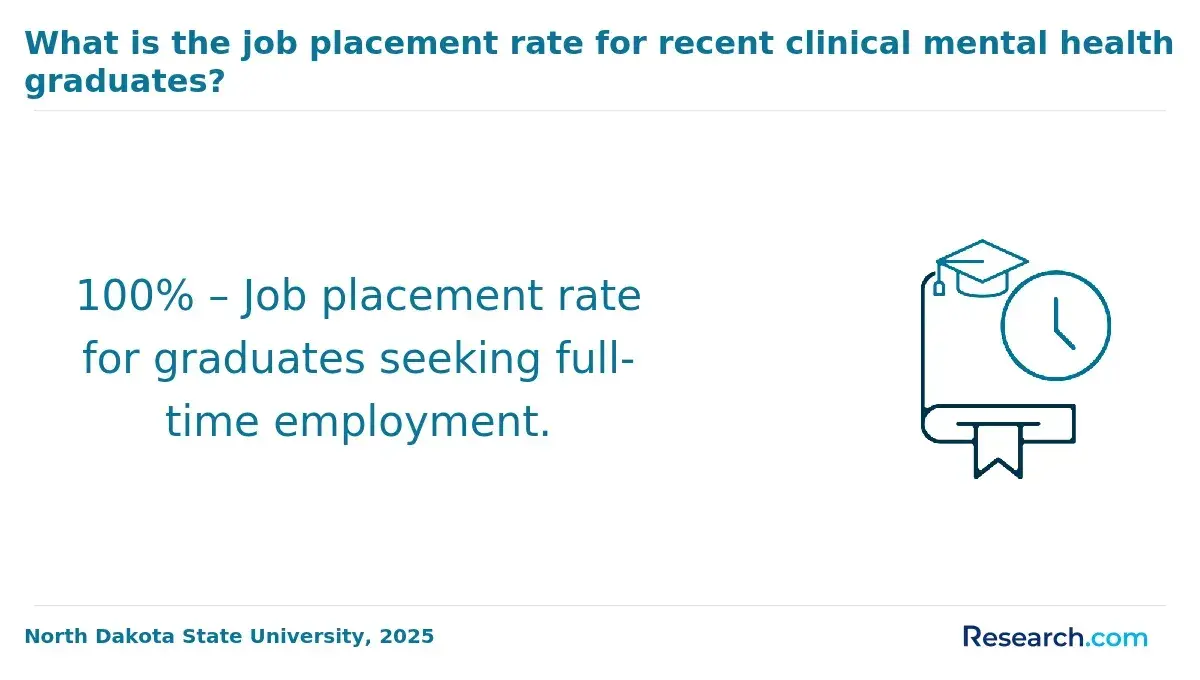
100% (2022-23)
Licensure exam pass rate
100% (2022-23)
Application deadline
rolling
Application process
direct
GRE
no
Prerequisites
Bachelor's degree from an accredited institution
Accreditation
Accredited by the Council for Accreditation of Counseling and Related Educational Programs (CACREP), with institutional accreditation from the Southern Association of Colleges and Schools Commission on Colleges (SACSCOC).
Lincoln Memorial University earned a Research.com Admissions Accessibility Score of 66.6/100, supported by a minimum GPA of 2.75 and 22.73% program completion rate. The program is CACREP-accredited, valid through 2030-10-31.
# 2 position
Lincoln Memorial University
Master
M.Ed. in Professional Counseling – PreK-12 School Counseling
Delivery mode: hybrid
66.60
/ 100
Final score
Program length
5 semesters (Fall, Spring, Summer, Fall, Spring)
Specialization
School Counseling
Required credits
60 semester credits
GPA range
2.75 - 4.00
Program completion rate
66.67% (2024-25)
Employment or doctoral admission
100% (2022-23)
Licensure exam pass rate
100% (2022-23)
Application deadline
rolling
Application process
direct
GRE
no
Prerequisites
Bachelor's degree coursework from an accredited institution; minimum cumulative undergraduate GPA of 2.75 on a 4.0 scale; completed background check.
Accreditation
Accredited by the Council for Accreditation of Counseling and Related Educational Programs (CACREP), with institutional accreditation from the Southern Association of Colleges and Schools Commission on Colleges (SACSCOC).
Lincoln Memorial University earned a Research.com Admissions Accessibility Score of 66.6/100, supported by a minimum GPA of 2.75 and 66.67% program completion rate. The program is CACREP-accredited, valid through 2030-10-31.
# 3 position
Southern Adventist University
Master
M.S. in Professional Counseling – School Counseling
Delivery mode: hybrid
51.40
/ 100
Final score
Program length
approximately two and a half years of full-time study
Specialization
School Counseling
Required credits
60 semester credits
GPA range
3.00 - 4.00
Program completion rate
86% (2024-25)
Employment or doctoral admission
100% (2024-25)
Licensure exam pass rate
100% (2024-25)
Application deadline
Fall: July 15; Winter: November 1
Application process
direct
GRE
no
Prerequisites
Bachelor's degree: a four-year degree in any field from an accredited institution; minimum cumulative undergraduate GPA of 3.0.
Additional requirements
Graduate application ($50 non-refundable fee); official transcripts; three professional recommendation forms (one academic); statement of purpose; resumé; background check; criminal-record release and declaration; personality test; faculty interview.
Accreditation
Accredited by the Council for Accreditation of Counseling and Related Educational Programs (CACREP), with institutional accreditation from the Southern Association of Colleges and Schools Commission on Colleges (SACSCOC).
Southern Adventist University earned a Research.com Admissions Accessibility Score of 51.4/100, supported by a minimum GPA of 3 and 86% program completion rate. The program is CACREP-accredited, valid through 2033-10-31.
# 4 position
Carson-Newman University
Master
M.S. in Counseling – Professional School Counseling
Delivery mode: hybrid
51.40
/ 100
Final score
Program length
approximately two and half years (minimum seven semesters)
Specialization
School Counseling
Required credits
60 semester credits
GPA range
3.00 - 4.00
Program completion rate
83.3% (2023-24)
Employment or doctoral admission
100% (2023-24)
Licensure exam pass rate
100% (2023-24)
Application deadline
Fall: Feb 1; Spring: Oct 1
Application process
direct
GRE
no
Prerequisites
A bachelor's degree from a regionally accredited university (international applicants welcome); minimum overall undergraduate GPA of 3.0.
Additional requirements
Professional resume; statement of purpose (plus common C-N graduate admission requirements).
Accreditation
Accredited by the Council for Accreditation of Counseling and Related Educational Programs (CACREP), with institutional accreditation from the Southern Association of Colleges and Schools Commission on Colleges (SACSCOC).
Carson-Newman University earned a Research.com Admissions Accessibility Score of 51.4/100, supported by a minimum GPA of 3 and 83.3% program completion rate. The program is CACREP-accredited, valid through 2032-03-31.
# 5 position
Southern Adventist University
Master
Master of Science in Professional Counseling – Clinical Mental Health Counseling
Delivery mode: hybrid
51.40
/ 100
Final score
Program length
approximately two and a half years of full-time study
Specialization
Clinical Mental Health Counseling
Required credits
60 semester credits
GPA range
3.00 - 4.00
Program completion rate
90% (2024-25)
Employment or doctoral admission
100% (2024-25)
Licensure exam pass rate
100% (2024-25)
Application deadline
Fall: July 15; Winter: November 1
Application process
direct
GRE
no
Prerequisites
Bachelor's degree: a four-year degree in any field from an accredited institution; minimum cumulative undergraduate GPA of 3.0.
Additional requirements
Graduate application; official transcripts; three professional recommendation forms (one may be academic); statement of purpose; resumé; background check; criminal-record release and declaration; personality test; faculty interview.
Accreditation
Accredited by the Council for Accreditation of Counseling and Related Educational Programs (CACREP), with institutional accreditation from the Southern Association of Colleges and Schools Commission on Colleges (SACSCOC).
Southern Adventist University earned a Research.com Admissions Accessibility Score of 51.4/100, supported by a minimum GPA of 3 and 90% program completion rate. The program is CACREP-accredited, valid through 2033-10-31.
# 6 position
Carson-Newman University
Master
Master of Science in Counseling – Clinical Mental Health Counseling
Delivery mode: hybrid
51.40
/ 100
Final score
Program length
approximately two and half years (minimum seven semesters)
Specialization
Clinical Mental Health Counseling
Required credits
60 semester credits
GPA range
3.00 - 4.00
Program completion rate
77.4% (2023-24)
Employment or doctoral admission
100% (2023-24)
Licensure exam pass rate
100% (2023-24)
Application deadline
Fall: February 1; Spring: October 1
Application process
direct
GRE
no
Prerequisites
Bachelor’s degree from a regionally accredited university; minimum overall undergraduate GPA of 3.0.
Additional requirements
Professional resume and statement of purpose, plus graduate admission requirements: application form, two recommendations, official transcripts, an interview, and a background records check.
Accreditation
Accredited by the Council for Accreditation of Counseling and Related Educational Programs (CACREP), with institutional accreditation from the Southern Association of Colleges and Schools Commission on Colleges (SACSCOC).
Carson-Newman University earned a Research.com Admissions Accessibility Score of 51.4/100, supported by a minimum GPA of 3 and 77.4% program completion rate. The program is CACREP-accredited, valid through 2032-03-31.
# 7 position
Freed-Hardeman University
Master
Master of Science in Clinical Mental Health Counseling
Delivery mode: hybrid
51.40
/ 100
Final score
Program length
2 to 2.5 years (full-time)
Specialization
Clinical Mental Health Counseling
Required credits
61 semester credits
GPA range
3.00 - 4.00
Program completion rate
58% (2024-25)
Employment or doctoral admission
100% (2024-25)
Application deadline
August 10
Application process
direct
GRE
no
Prerequisites
Must have the equivalent of 12 semester hours in Behavioral Science (Psychology, Sociology, Social Work, Anthropology, Family Studies).
Additional requirements
Free online application; official transcripts for all undergraduate and graduate degrees (expected GPA of 3.00 or higher); essay of personal goals (300-500 words); interview with the Counseling Admissions Committee.
Accreditation
Accredited by the Council for Accreditation of Counseling and Related Educational Programs (CACREP), with institutional accreditation from the Southern Association of Colleges and Schools Commission on Colleges (SACSCOC).
Freed-Hardeman University earned a Research.com Admissions Accessibility Score of 51.4/100, supported by a minimum GPA of 3 and 58% program completion rate. The program is CACREP-accredited, valid through 2028-03-31.
# 8 position
Johnson University
Master
M.A. in Counseling
Delivery mode: hybrid
43.90
/ 100
Final score
Program length
2 ½–5 years
Specialization
School Counseling
Required credits
60 semester credits
Acceptance rate
100%
GPA range
3.00 - 4.00
Program completion rate
55.56% (2024-25)
Employment or doctoral admission
100% (2024-25)
Licensure exam pass rate
100% (2024-25)
Application deadline
Spring: October 1; Fall: February 1
Class size
1
Application process
direct
GRE
Conditional: GRE or MAT required if undergraduate GPA is below 3.0 (admits placed on probation)
Prerequisites
A minimum of 15 hours of undergraduate or graduate credit in counseling or a related field from a regionally accredited institution.
Additional requirements
Online graduate application; three references (two academic, one personal); official transcripts; government-issued photo ID; 5-10 page writing sample; interview with School of Social & Behavioral Science graduate faculty.
Accreditation
Accredited by the Council for Accreditation of Counseling and Related Educational Programs (CACREP), with institutional accreditation from the Southern Association of Colleges and Schools Commission on Colleges (SACSCOC).
Johnson University earned a Research.com Admissions Accessibility Score of 43.9/100, supported by a minimum GPA of 3 and 100% acceptance rate. The program is CACREP-accredited, valid through 2033-03-31.
# 9 position
Johnson University
Master
M.A. in Counseling
Delivery mode: hybrid
43.90
/ 100
Final score
Program length
2 ½–5 years
Specialization
Clinical Mental Health Counseling
Required credits
60 semester credits
GPA range
3.00 - 4.00
Program completion rate
62.5% (2024-25)
Employment or doctoral admission
100% (2024-25)
Application deadline
Spring: October 1; Fall: February 1
Class size
7
Application process
direct
GRE
Conditional: GRE or MAT required if undergraduate GPA is below 3.0 (such admits are placed on probation)
Prerequisites
At least 15 credit hours in counseling or a related field; three references (two academic, one personal); official transcripts; government-issued photo ID; 5-10 page writing sample; interview with graduate faculty.
Additional requirements
Online graduate application; three references (two academic, one personal); official transcripts; government-issued photo ID; 5-10 page writing sample; interview with School of Social & Behavioral Science graduate faculty.
Accreditation
Accredited by the Council for Accreditation of Counseling and Related Educational Programs (CACREP), with institutional accreditation from the Southern Association of Colleges and Schools Commission on Colleges (SACSCOC).
Johnson University earned a Research.com Admissions Accessibility Score of 43.9/100, supported by a minimum GPA of 3 and 62.5% program completion rate. The program is CACREP-accredited, valid through 2033-03-31.
Frequently asked questions about online Counseling degree in Tennessee
What makes an online counseling program "easy"?
It may offer accessible admissions, flexible coursework, or a manageable schedule. It should not mean reduced clinical training or automatic licensure. Compare the requirements you must actually complete.
Can I become a licensed counselor in Tennessee with an online degree?
Potentially. The relevant question is whether the specific degree, coursework, and supervised experiences meet Tennessee's requirements; graduation alone does not grant a license (Tennessee counseling board).
Are counseling internships online?
Online coursework does not eliminate supervised fieldwork. Ask each program whether you can use an approved site near home and who finds the placement.
Do I need a counseling bachelor's degree first?
Not necessarily. Graduate programs set their own admissions and prerequisite rules; applicants with other majors should ask whether additional coursework is required.
Is a faster program always a better investment?
No. A shorter schedule helps only if you can complete its courses and placements without an unsustainable reduction in work hours or added borrowing. Compare total cost and a realistic graduation timeline.
See What Experts Have To Say About Studying Counseling