Choosing an online counseling degree in Colorado means looking beyond convenience: the wrong specialization or field-placement arrangement can delay your career plans. This guide compares degree paths, costs, training requirements, and Colorado credential rules so you can identify programs worth investigating. It accompanies the 2027 Best Online Counseling Degree Programs Ranking in Colorado, created by the Research.com team of data scientists to help students make an informed choice about which counseling programs are worth considering.
Key findings about online Counseling degrees in Colorado
For clinical mental health counseling, prioritize a master's curriculum and supervised training that fit Colorado's Licensed Professional Counselor pathway; an online degree alone does not confer a license (Colorado State Board of Licensed Professional Counselor Examiners).
National median annual pay was $59,350 for substance abuse, behavioral disorder, and mental health counselors and $64,330 for school and career counselors in May 2025; these are occupational medians, not expected salaries for new Colorado graduates (U.S. Bureau of Labor Statistics).
Compare total program cost and local placement feasibility, not tuition alone: online coursework does not eliminate required in-person counseling practice, and Colorado credential requirements differ between clinical and school counseling (Colorado State Board of Licensed Professional Counselor Examiners; Colorado Department of Education).
What can I expect from an online Counseling degree in Colorado?
Most students comparing online counseling degrees are looking at graduate programs. A clinical mental health counseling master's prepares students for supervised therapeutic work; a school counseling master's focuses on services in educational settings; and rehabilitation counseling addresses disability, employment, and independent-living needs. Doctorates in counselor education and supervision are generally better suited to experienced counselors seeking teaching, research, or supervisory roles than to someone seeking an initial practice credential (American Counseling Association; Council for Accreditation of Counseling and Related Educational Programs).
"Online" usually describes where academic classes happen, not where all training happens. Expect live skills practice in some programs, as well as supervised practicum and internship work at approved sites. For a Colorado resident outside the Front Range, the crucial question is whether the school can approve and support a qualified placement near home. For someone who already has a suitable clinical employer, a part-time online format may be easier to integrate with work; it is less attractive if arranging daytime field hours would be difficult.
Before treating any curriculum as license-qualifying, ask the program to map its coursework and supervised experiences to the specific Colorado credential you intend to pursue. Admission, graduation, post-degree supervised experience, examinations, and licensure are separate steps (Colorado State Board of Licensed Professional Counselor Examiners; Colorado Department of Education).
Where can I work with an online Counseling degree in Colorado?
The answer depends on specialization and credential status. Clinical mental health graduates may pursue roles in community mental health organizations, hospitals, outpatient practices, or integrated-care settings, subject to employer requirements and Colorado practice rules. School counseling graduates generally target public or private schools; public-school positions can require the applicable Colorado educator credential. Rehabilitation counseling can lead toward disability services, vocational rehabilitation, and related agencies (Colorado Department of Regulatory Agencies; Colorado Department of Education; U.S. Bureau of Labor Statistics).
Location changes the practical choice of program. Someone planning to work in a rural community should ask about local field-site approval and supervision before enrolling, while a student targeting school employment should confirm that the degree supports the relevant Colorado endorsement. A doctorate aimed at counselor education is not an interchangeable shortcut to a school or clinical counseling credential.
There is no single "online counseling degree salary." Pay follows the occupation, setting, location, experience, and credential - not the course-delivery format. The following national medians provide a consistent benchmark for comparing paths; they are May 2025 occupational wages, not Colorado starting salaries or estimates of what a particular program's graduates earn (U.S. Bureau of Labor Statistics, Occupational Outlook Handbook).
Counseling-related occupation
U.S. median annual pay, May 2025
Decision implication
Substance abuse, behavioral disorder, and mental health counselors
$59,350
Relevant benchmark for many clinical mental health and addiction goals; check the credential required for the job.
School and career counselors
$64,330
Useful for comparing school counseling with clinical routes, but school salary schedules and contracts matter.
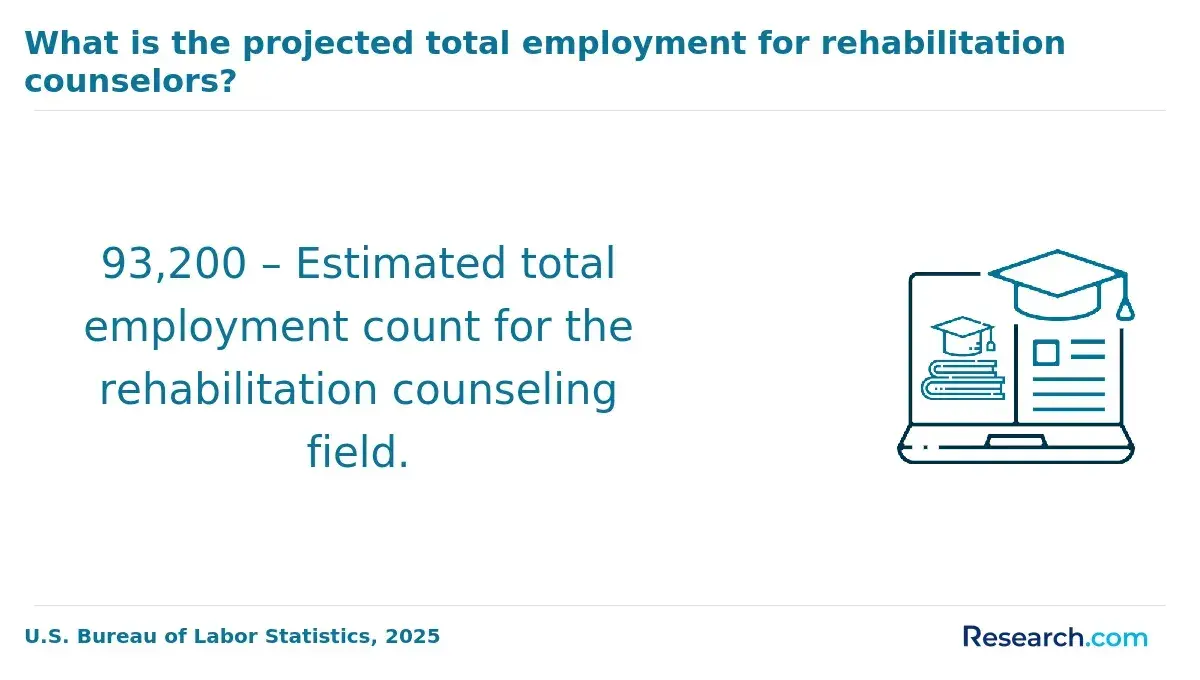
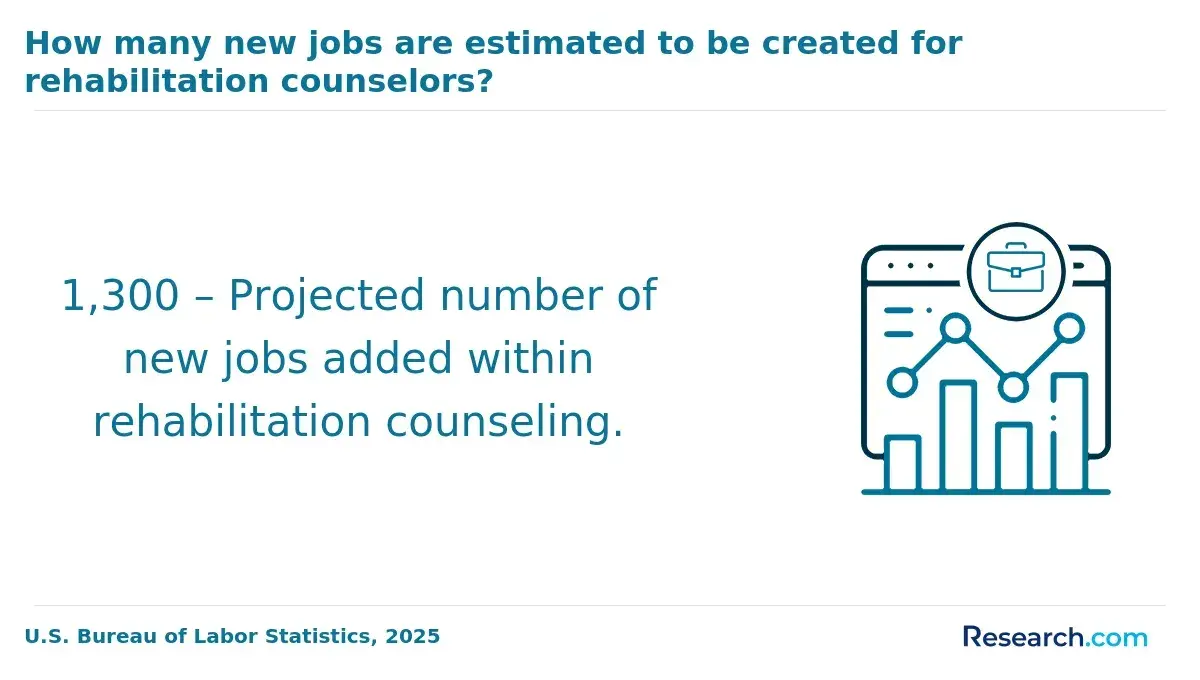
Rehabilitation counselors
$46,850
Use this occupation-specific benchmark rather than assuming all counseling specialties pay alike.
For an investment decision, compare prospective earnings with your current earnings and the cost of getting credentialed. Include tuition, fees, foregone work hours during placements, borrowing, and any period of supervised practice after graduation. A national median is a reference point, not a return-on-investment forecast; compare the most valuable counseling programs alongside program-level costs and outcomes.
The strongest distinction is often which credential or next career stage a program serves, not whether it advertises flexibility. These program-specific highlights compare the listed options; confirm current credits, delivery requirements, accreditation status, and placement policies directly with each school before applying.
Colorado Christian University - clinical mental health counseling: Its 60-credit master's combines clinical counselor preparation with an explicitly Christian perspective (Colorado Christian University). That makes the learning environment a meaningful fit consideration for applicants seeking faith-integrated training, rather than a substitute for verifying Colorado LPC eligibility.
University of Northern Colorado - rehabilitation counseling: The MA centers rehabilitation counseling rather than treating disability and vocational concerns as a secondary clinical elective (University of Northern Colorado). It is the clearest match in this group for students whose intended work involves disability services or vocational rehabilitation.
Adams State University - clinical mental health counseling: This 60-credit master's offers a clinical route within Adams State's counselor education offerings (Adams State University). Applicants comparing it with faith-integrated clinical study should focus on curriculum fit, field-site approval, and the full cost of completion.
Adams State University - counselor education doctorate: The doctorate is oriented toward advanced counselor education and supervision rather than initial master's-level clinical preparation (Adams State University). It is most relevant to practicing counselors who want to evaluate teaching, scholarship, or supervisory careers.
Colorado Christian University - school counseling: This program applies the university's Christian educational perspective to school counselor preparation, a different professional destination from its clinical mental health degree (Colorado Christian University). Applicants should prioritize its fit with school-based work and confirm Colorado educator-credential alignment.
Denver Seminary - counselor education and supervision doctorate: Its doctoral focus pairs counselor education and supervision with a seminary setting (Denver Seminary). That combination is particularly relevant to experienced counselors seeking advanced academic work in a faith-informed environment, not to applicants who first need a qualifying counseling master's.
University of Denver - online school counseling: The Morgridge College program is built specifically around an online school counseling master's and supervised school-based preparation (University of Denver). Students outside the Denver area should establish where placements can occur and whether the degree satisfies their intended state's credential rules.
Adams State University - school counseling: This master's provides a school-focused alternative within the same counselor education department as Adams State's clinical pathway (Adams State University). Its value for an applicant turns on intended school credential, placement arrangements, and whether its delivery schedule fits school-year employment.
Do not compare doctoral and master's options as though they lead to the same first job. Among master's programs, request the current handbook and ask for the exact graduation requirements and recent program-level outcomes; those details are more useful than a broad institutional reputation.
A counseling master's commonly takes about two to three years of full-time study; part-time enrollment can extend that timeline. Required courses are only part of the schedule: practicum, internship, site approval, and the availability of an appropriate supervisor can determine when you actually finish. Doctoral study typically takes longer and may depend heavily on dissertation progress (Council for Accreditation of Counseling and Related Educational Programs; program curricula).
Ask schools for a term-by-term plan showing when fieldwork begins and whether its hours can fit around paid employment. An accelerated calendar is useful only if you can complete its placement commitments and finance the reduced time available for work. Use the fastest counseling programs as a shortlist, then verify each program's realistic time to completion for your enrollment pattern.
Both formats can include comparable counseling coursework and supervised practice; the principal difference is how classes and skills activities are scheduled and accessed. Online study may reduce commuting and expand program choice for a Colorado resident far from a campus. On-campus study may make face-to-face skills work and a school's established local placement network easier to access. Neither format removes the need to meet a program's fieldwork and applicable state credential requirements (Council for Accreditation of Counseling and Related Educational Programs; Colorado Department of Regulatory Agencies).
For an online program, check whether courses are live or self-paced, whether any campus visits are mandatory, and who secures clinical or school placements. If you might move after graduation, obtain written guidance about eligibility in the state where you plan to practice; an online program's willingness to enroll you does not establish licensure eligibility there.
A single reliable average for online counseling degrees in Colorado is not established by the institutional tuition figures commonly reported in NCES/IPEDS: those figures do not necessarily isolate a specific graduate program, online delivery, required fees, or clinical-placement expenses. Publishing an institutional average as a counseling-program price would give a misleading comparison (National Center for Education Statistics, IPEDS).
Instead, request each school's current per-credit charge, required credits, mandatory fees, residency or campus-visit costs, and expected fieldwork-related expenses. Confirm whether a public university applies different resident and nonresident rates to its online program; do not assume either rate from the institution's general tuition page. A lower per-credit price may still produce a higher total if more credits or extra terms are required. Start with the most affordable counseling programs, then compare personalized, full-program estimates rather than advertised tuition alone.
Students at eligible institutions may be able to use federal graduate Direct Unsubsidized Loans, subject to federal rules, and may qualify for school scholarships, assistantships, or employer tuition assistance. Submit the FAFSA and ask the financial aid office which funding applies to your particular program and enrollment load; institutional eligibility does not mean every student or expense qualifies (Federal Student Aid; U.S. Department of Education).
Do not build a new graduate-school budget around Graduate PLUS. Under the federal transition rules beginning July 1, 2026, new graduate borrowers generally cannot take out new Graduate PLUS loans. Certain students already enrolled in a qualifying program who borrowed Graduate PLUS before that date may retain limited transitional eligibility; the school's aid office should verify the individual case and applicable time limit (Federal Student Aid).
Because field placements can constrain paid work, compare aid offers against the entire enrollment period, not only the first term. Ask whether scholarships renew, whether assistantships require on-campus work, and what borrowing remains if completion takes an extra semester.
View the chart data as a table
Median wage by counseling career path (U.S., BLS May 2025) (Source: BLS)
Category
Value
Psychologists
99,110
Postsecondary Teachers
85,330
Marriage & Family Therapists
66,940
School & Career Counselors
64,330
Mental Health Counselors
59,350
Rehabilitation Counselors
46,850
For a counseling master's, expect to need a bachelor's degree and to submit materials such as transcripts, a statement of purpose, recommendations, and possibly an interview; particular prerequisites and minimum academic standards vary by school. Counselor education doctorates generally expect prior graduate preparation in counseling and may specify professional experience or other qualifications (Colorado Christian University; Adams State University; Denver Seminary).
Admission is separate from professional eligibility. Before paying an application fee, ask admissions and the program director whether applicants with your prior degree can enter the intended track, whether missing courses can be completed, and whether transfer credits apply to required counseling courses or only electives. If your goal is Colorado practice, compare the program's curriculum against the appropriate state board or education-agency requirements - not merely its admissions criteria (Colorado State Board of Licensed Professional Counselor Examiners; Colorado Department of Education).
Clinical counseling study commonly covers helping skills, assessment, ethics, diagnosis and treatment, research, and supervised clinical practice. School counseling shifts more attention to student development, school systems, and services delivered in educational settings; rehabilitation counseling emphasizes disability, access, and vocational issues. The exact course titles and required sequence differ by program (Council for Accreditation of Counseling and Related Educational Programs; program curricula).
When comparing syllabi, look beyond an appealing elective title. Check which courses must precede practicum, how often those courses run online, and whether a missing required class could postpone placement by a term. For licensure planning, request a written course-to-requirement explanation from the program rather than assuming a general counseling degree covers every required subject.
The clearest choices among the programs considered here are clinical mental health, school, and rehabilitation counseling, plus doctoral-level counselor education and supervision. Clinical mental health fits a prospective therapist; school counseling fits someone committed to working with students in schools; rehabilitation fits a student drawn to disability and vocational services. The doctoral route fits an already-prepared counselor pursuing advanced academic or supervisory work (Colorado Christian University; University of Northern Colorado; Adams State University; Denver Seminary; University of Denver).
A concentration name is not a credential. If addiction counseling, marriage and family therapy, or another specialty is your goal, ask which coursework and supervised training support the specific credential or position you want. Choosing a broadly named program because it offers one relevant elective can leave important requirements unmet (Colorado Department of Regulatory Agencies).
Start with the job and credential, then compare programs that can plausibly get you there. A ranking can narrow the search, but these checks determine whether a highly placed program works for your circumstances:
Identify the intended setting - clinical practice, schools, rehabilitation services, or counselor education - and the credential the position requires.
Confirm institutional accreditation, the program's current CACREP status where relevant, and written guidance on Colorado credential eligibility; ask how the school supports graduates seeking credentials in another state (Council for Accreditation of Counseling and Related Educational Programs; Colorado licensing and education agencies).
Obtain a full tuition-and-fee estimate, a term-by-term course plan, and written answers about placement-site approval, supervision, campus visits, and transfer-credit limits.
Ask for recent program-specific completion, exam, and employment information with its reporting period, then compare likely debt and time away from work against your own earnings and career goal.
A common mistake is selecting the quickest or easiest admission route before checking fieldwork and credential fit. The easiest counseling programs may help you identify accessible options, but admission ease should never replace those checks. Private and nonprofit are not opposing categories, and institution type by itself does not determine value: a sound return-on-investment comparison also considers aid, debt, completion likelihood, opportunity cost, earnings before and after study, and the time over which those differences matter.
A clinical mental health master's can be a step toward professional counseling, but independent practice requires satisfying Colorado's additional licensing conditions. School counseling preparation points toward student-support roles and the applicable educator credential. Rehabilitation counseling points toward disability and vocational-service roles, where employers may specify credentials or experience. Doctoral study can support counselor education, research, and supervision, subject to the requirements of the particular position (Colorado State Board of Licensed Professional Counselor Examiners; Colorado Department of Education; U.S. Bureau of Labor Statistics).
If you want to test the field before committing to a graduate degree, examine entry-level behavioral health, school-support, or human-services positions and their actual qualifications. If your target job explicitly requires a licensed counselor, however, a short certificate should not be treated as a substitute for the required degree, supervised experience, and examination pathway.
View the chart data as a table
Best score distribution across ranked programs (Source: Research.com)
Category
Value
80-81
1
82-83
1
84-85
1
86-87
3
88-89
1
90-91
1
The national outlook differs considerably by specialty: employment of substance abuse, behavioral disorder, and mental health counselors is projected to grow 18% from 2025 to 2035, while the projection for school and career counselors is 3% over the same period (U.S. Bureau of Labor Statistics, Employment Projections, 2025-2035). Those are U.S. occupation projections, not forecasts of Colorado openings or a guarantee of employment for graduates.
Use that difference to guide, not dictate, your choice. Clinical training may offer a broader set of care settings, whereas a school-focused student should investigate district hiring and credential requirements in the part of Colorado where they intend to live. In either path, current local job postings can reveal whether employers require a license, accept candidates working toward one, or seek experience with particular populations. Check those conditions before choosing a placement or specialty.
2027 Best Online Counseling Degree Programs Ranking in Colorado
Investing in a counseling degree is a consequential decision, especially when tuition and the path to a professional credential differ by program. Research.com evaluates online and on-campus programs using the same method and checks multiple education datasets to make the ranking more useful for comparing outcomes, recognition, and cost.
The Best ranking begins with a graduate-outcomes-and-accreditation score: program completion carries 40%; employment or doctoral admission, 20%; applicable licensure exam pass rates, 20%; CACREP programmatic accreditation, 16%; and institutional Title IV eligibility, 4%. Weights are renormalized when a measure does not apply. Program cost contributes a smaller component - about 7% of the final score. Other Research.com counseling rankings order programs by the individual measure named in each ranking.
The ranking draws on these data sources, which readers can also use to investigate an institution:
IPEDS database - institutional enrollment, completion, and cost reporting.
These measures provide a starting point, not a substitute for checking a program's current tuition, placement support, and fit with your intended credential. Read more about how Research.com creates its rankings.
# 1 position
Colorado Christian University
Master
M.A. in Clinical Mental Health Counseling
Delivery mode: hybrid
91.67
/ 100
Final score
Program length
as little as 30 months of consecutive coursework
Specialization
Clinical Mental Health Counseling
Required credits
60 semester credits
GPA range
2.50 - 4.00
Application process
direct
Prerequisites
Bachelor's degree from a regionally accredited college or university with a minimum GPA of 2.5/4.0. Applicants with GPAs of 2.0–2.49 may receive conditional admission and must maintain at least a 3.0 GPA during their first semester.
Additional requirements
Online application; government ID; resume/CV; official bachelor's transcript and any graduate counseling transcripts; criminal background checks for every country of residence in the past seven years; Candidacy Writing Sample; interview.
Accreditation
Accredited by the Council for Accreditation of Counseling and Related Educational Programs (CACREP), with institutional accreditation from the Higher Learning Commission (HLC).
Colorado Christian University earned a Research.com Counseling Program Score of 91.67/100. The program is CACREP-accredited, valid through 2027-10-31.
# 2 position
University of Northern Colorado
Master
Master of Arts in Rehabilitation Counseling
Delivery mode: hybrid
89.08
/ 100
Final score
Program length
two academic years, including one summer
Specialization
Rehabilitation Counseling
Required credits
60 semester credits
GPA range
3.00 - 4.00
Program completion rate
97% (2025-26)
Employment or doctoral admission
100% (2025-26)
Licensure exam pass rate
78% (2024-25)
Application deadline
rolling
Application process
direct
Prerequisites
Bachelor's degree with a GPA of at least 3.0 in the last 60 semester hours of the most recently completed degree
Additional requirements
Application to UNC Graduate School including a statement addressing career/educational goals, reasons for choosing rehabilitation counseling, and past exposure (coursework or work experience) to rehabilitation counseling
Accreditation
Accredited by the Council for Accreditation of Counseling and Related Educational Programs (CACREP), with institutional accreditation from the Higher Learning Commission (HLC).
University of Northern Colorado earned a Research.com Counseling Program Score of 89.08/100, supported by 78% licensure exam pass rate and 97% program completion rate. The program is CACREP-accredited, valid through 2029-10-31.
# 3 position
Adams State University
Master
M.A. Clinical Mental Health Counseling
Delivery mode: hybrid
87.70
/ 100
Final score
Program length
Fall cohort: 5 semesters; Spring cohort: 7 semesters
Specialization
Clinical Mental Health Counseling
Required credits
60 semester credits
GPA range
2.75 - 4.00
Program completion rate
82% (2024-25)
Employment or doctoral admission
77% (2024-25)
Application deadline
rolling
Application process
direct
GRE
no
Prerequisites
Baccalaureate degree from a regionally accredited institution (or in final year of undergraduate study pending verification of degree receipt).
Additional requirements
Online application, $30 application fee, five short essay questions (200-300 words each), two online recommendation forms from professional (non-family) sources, official transcripts from all previously attended institutions.
Accreditation
Accredited by the Council for Accreditation of Counseling and Related Educational Programs (CACREP), with institutional accreditation from the Higher Learning Commission (HLC).
Adams State University earned a Research.com Counseling Program Score of 87.7/100, supported by 82% program completion rate and 77% employment or doctoral admission rate. The program is CACREP-accredited, valid through 2028-03-31.
# 4 position
Adams State University
Doctor
Ph.D. in Counselor Education & Supervision
Delivery mode: hybrid
87.27
/ 100
Final score
Program length
4 year, fixed 60 semester credit program
Specialization
Counselor Education and Supervision
Required credits
60 semester credits
GPA range
3.00 - 4.00
Program completion rate
95% (2024-25)
Employment or doctoral admission
87% (2024-25)
Application deadline
Fall 2027: November 1, 2026
Class size
12
Application process
direct
GRE
no
Prerequisites
Accredited master's in counseling or a closely related field with GPA 3.0+; coursework reviewed against CACREP standards, deficiencies completed before or during doctoral study. CACREP degree, two years' experience and licensure preferred.
Additional requirements
Online application; 3–4-page letter of intent answering six prompts; two reference request forms; current resume/CV; official transcripts from all prior institutions. Required in-person interview and orientation. No international admission.
Accreditation
Accredited by the Council for Accreditation of Counseling and Related Educational Programs (CACREP), with institutional accreditation from the Higher Learning Commission (HLC).
Adams State University earned a Research.com Counseling Program Score of 87.27/100, supported by 95% program completion rate and 87% employment or doctoral admission rate. The program is CACREP-accredited, valid through 2028-03-31.
# 5 position
Colorado Christian University
Master
M.A. in School Counseling
Delivery mode: hybrid
86.04
/ 100
Final score
Program length
designed to be completed in two and a half years
Specialization
School Counseling
Required credits
60 semester credits
GPA range
2.50 - 4.00
Program completion rate
33.3% (2024-25)
Employment or doctoral admission
100% (2024-25)
Application deadline
rolling
Application process
direct
GRE
no
Prerequisites
No undergraduate prerequisites required; applicant must have a conferred bachelor's degree from a regionally accredited college or university.
Accredited by the Council for Accreditation of Counseling and Related Educational Programs (CACREP), with institutional accreditation from the Higher Learning Commission (HLC).
Colorado Christian University earned a Research.com Counseling Program Score of 86.04/100, supported by 33.3% program completion rate and 100% employment or doctoral admission rate. The program is CACREP-accredited, valid through 2027-10-31.
# 6 position
Denver Seminary
Doctor
Doctor of Philosophy (PhD) in Counselor Education and Supervision
Delivery mode: hybrid
85.15
/ 100
Final score
Program length
Complete in 4 years (full-time study)
Specialization
Counselor Education and Supervision
Required credits
66 semester credits
GPA range
3.00 - 4.00
Application deadline
Fall 2027 Early Decision: Nov 15, 2026 (interviews Dec 2026); Fall 2027 General: Dec 15, 2026 (interviews Jan 2027); Rolling Jan-Jun 2027; Fall 2027 Final: Jun 1, 2027 (interviews Jul 2027)
Application process
direct
GRE
no
Prerequisites
60-credit CACREP or CORE accredited master's in counseling (or equivalent); minimum 3.0 graduate GPA; hold or be eligible for counseling license; one year of clinical experience. Conditional admission for non-CACREP degrees.
Additional requirements
Degree-seeking PhD application, official transcripts verifying GPA, evidence of licensure eligibility, and participation in an admissions interview (individual and group interviews conducted per admissions cycle).
Accreditation
Accredited by the Council for Accreditation of Counseling and Related Educational Programs (CACREP), with institutional accreditation from the Higher Learning Commission (HLC) and the Commission on Accrediting of the Association of Theological Schools (ATS).
Denver Seminary earned a Research.com Counseling Program Score of 85.15/100. The program is CACREP-accredited, valid through 2029-10-31.
# 7 position
University of Denver
Master
Master of Arts in School Counseling
Delivery mode: online
83.95
/ 100
Final score
Program length
as few as 22 months (accelerated full-time online)
Specialization
School Counseling
Required credits
90 quarter credits
GPA range
2.50 - 4.00
Program completion rate
68% (2024-25)
Employment or doctoral admission
90% (2024-25)
Licensure exam pass rate
100% (2024-25)
Application deadline
January 2027: Oct 30, 2026; rolling admissions
Application process
direct
GRE
no
Prerequisites
Bachelor's degree from a regionally accredited institution; minimum cumulative undergraduate GPA of 2.5 (or 2.5 for last 60 semester/90 quarter credits)
Additional requirements
Two letters of recommendation, current resume, unofficial/official transcripts from all postsecondary institutions, statement of professional goals (personal statement + supplementary essay)
Accreditation
Accredited by the Council for Accreditation of Counseling and Related Educational Programs (CACREP), with institutional accreditation from the Higher Learning Commission (HLC).
University of Denver earned a Research.com Counseling Program Score of 83.95/100, supported by 100% licensure exam pass rate and 68% program completion rate. The program is CACREP-accredited, valid through 2030-10-31.
Bachelor's degree from an accredited institution; undergraduate GPA requirements apply
Additional requirements
Online application, $30 non-refundable application fee, official transcripts from all previously attended institutions, two (2) letters of recommendation forms
Accreditation
Accredited by the Council for Accreditation of Counseling and Related Educational Programs (CACREP), with institutional accreditation from the Higher Learning Commission (HLC).
Adams State University earned a Research.com Counseling Program Score of 80.97/100, supported by 80% licensure exam pass rate and 75% program completion rate. The program is CACREP-accredited, valid through 2028-03-31.
Frequently asked questions about online Counseling degree in Colorado
Can I become a licensed counselor in Colorado with an online degree?
Potentially, but online delivery alone establishes nothing about eligibility. Verify the degree's coursework and supervised training against Colorado's requirements, then account for applicable examinations and post-degree supervised experience (Colorado State Board of Licensed Professional Counselor Examiners).
Do online counseling programs require in-person training?
Typically, yes. Counseling preparation includes supervised practicum or internship experiences, even when classes are online. Ask where those placements can occur and who is responsible for finding an approved site (Council for Accreditation of Counseling and Related Educational Programs; program handbooks).
Should I choose clinical mental health or school counseling?
Choose based on the setting and credential you want. Clinical mental health training is aimed at therapeutic care; school counseling is aimed at work with students in educational settings. The two routes should not be assumed interchangeable under Colorado credential rules (Colorado Department of Regulatory Agencies; Colorado Department of Education).
Is CACREP accreditation required for every Colorado counseling job?
No single accreditation claim covers every job or credential. Check the program's current status and the requirements of your intended Colorado credential, employer, and any other state where you might practice (Council for Accreditation of Counseling and Related Educational Programs; Colorado licensing and education agencies).
Is an online counseling degree worth the cost?
It can be if the program supports your intended credential, offers workable placements, and has a total cost you can justify against your career plans. Compare aid-adjusted cost, likely debt, time to completion, lost work income, and program-specific outcomes; do not treat a national salary median as your expected paycheck.
See What Experts Have To Say About Studying Counseling