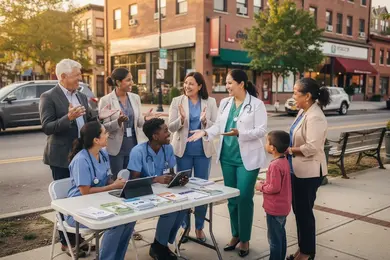
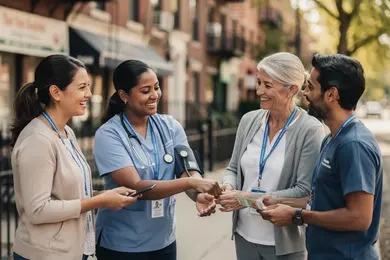
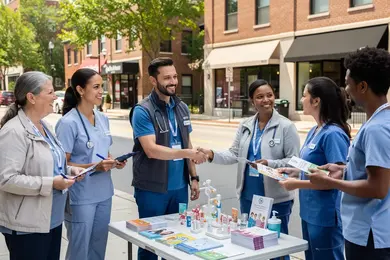
2027 Online Community Health Degrees With Strong Outreach Training

Co-Founder and Chief Data Scientist
Professionals seeking to master outreach in community health often encounter inflexible program structures that hinder balancing work, family, and continuing education. The National Center for Education Statistics reports that over 50% of enrolled students in public universities in 2024 are adults returning to education part-time, underscoring a shift toward asynchronous, practical degree formats. This adaptation matters because community health roles demand real-time application of skills gained through outreach training, often in unpredictable environments.
Navigating these educational options requires understanding how online programs integrate hands-on outreach components with flexible schedules. This article evaluates online community health degrees emphasizing strong outreach training to guide strategic enrollment decisions aligned with career advancement and job market demands.
Key Things You Should Know
- Programs emphasizing outreach training face a tradeoff as intensive fieldwork requirements can extend average completion times by 20%, increasing total cost burdens by up to 15%, per National Center for Education Statistics 2024 data.
- Employers in nonprofit and public health sectors now rank demonstrated outreach competencies among top three hiring criteria, reflecting a 35% wage premium for graduates with supervised outreach practicums, U.S. Bureau of Labor projections show.
- Limited availability of accredited online outreach courses disproportionately affects working professionals in rural areas, delaying workforce entry by an average of nine months, according to a 2024 AMA workforce study.
What are online community health degrees?
Online community health degree programs centered on outreach training present distinct practical challenges, especially balancing theoretical frameworks with mandatory local fieldwork. Students aiming to coordinate rural healthcare outreach must acquire skills in virtual education and remote resource management to counter geographic constraints, while those focused on urban health settings prioritize digital data gathering and culturally sensitive communication. Such specialization directly influences employability criteria.
Programs integrating community health degrees with outreach training demand rigorous time management as most involve hybrid formats combining online coursework with in-person practicums. This structure particularly affects working adults managing professional obligations alongside studies. Employers seek graduates who can apply data-driven analysis, adapt communication styles across diverse communities, and seamlessly shift between digital tools and face-to-face engagement.
Community colleges hold a pivotal role in healthcare education, delivering over half of U.S. healthcare training programs and conferring more than a third of credentials. Their expansion into online modalities broadens access for prospective students, but evaluating partnerships with local agencies and the robustness of technological support remains essential for real-world effectiveness. Those assessing their options should consult resources such as the best online environmental health and safety programs for comparative program insights.
Successfully navigating an online community health degree entails understanding the tradeoffs between flexibility and the discipline required to engage proactively with field supervisors, ensuring practical training translates into genuine workforce readiness.
Which accreditation matters for community health programs?
Employers in public health sectors prioritize graduates from accredited community health degree programs in the United States, particularly those with program-specific accreditation like the Council on Education for Public Health (CEPH). This standard ensures curricula align with current competencies and regulatory requirements, which directly affects hiring decisions. For example, state health departments typically prefer outreach coordinators with CEPH-accredited backgrounds for their validated practical training and rigor.
Many top accredited community health outreach training programs include extensive practicum components that have measurable impact on community outcomes. A 2023 study demonstrated that trained outreach professionals contributed to a 12% rise in vaccination rates and a 15% drop in emergency care visits. This highlights a key tradeoff: programs without hands-on outreach training may limit graduates' effectiveness and reduce their competitiveness in job markets where practical skills are essential.
Students pursuing an online healthcare administration degree or similar paths should verify institutional accreditation and ensure practical outreach modules meet evolving public health needs. Lacking these elements often leads to additional certification requirements or delays in career progression due to on-the-job skill gaps.
Seeking comprehensive, accredited community health degree programs in the United States requires careful evaluation of these tradeoffs to balance academic credentials with workforce readiness. For those exploring options, a detailed comparison of program affordability and rigor is available at online healthcare administration degree.
What careers can a community health degree lead to?
A community health degree focused on outreach expertise positions graduates for evolving roles in public health education, program management, and social services, with a practical emphasis on addressing health disparities in underserved populations. Employment projections indicate roughly 313,700 openings annually nationwide in community and social service occupations through 2034, driven by growth and replacement needs in both urban and rural settings. For example, a graduate working for a local public health department may lead vaccination campaigns targeted at underinsured groups, requiring data analysis skills and a nuanced understanding of local health demographics.
The choice between healthcare employers and nonprofit organizations involves significant tradeoffs. Healthcare roles often provide higher salaries but demand comfort with clinical protocols and environments. Nonprofits may offer greater flexibility and community engagement responsibilities but frequently operate under tighter funding, necessitating grant writing and cultural competency. Some positions require certifications, which extend upfront investment but can raise earning potential long term.
To enhance employability in outreach-heavy roles, practical competencies such as bilingual communication, digital health technology proficiency, and partnership-building with clinics or schools are critical. Many online community health programs leading to public health outreach jobs emphasize these skills alongside foundational knowledge. Candidates exploring accelerated pathways might also consider 12-month accelerated nursing programs online for non nurses to diversify qualifications and marketability.
How do online and campus community health programs compare?
Choosing between a community health degree online versus campus delivery hinges on how learners balance accessibility with experiential demands. Online programs accommodate working professionals by offering flexible pacing and removing geographic barriers, critical for those managing employment and family. Yet, this flexibility often comes with limited direct access to field internships and in-person networking, which employers highly value for outreach leadership roles.
Campus community health programs integrate structured field placements and collaboration opportunities that foster hands-on skill development and professional connections. This advantage typically results in higher initial job placement rates for graduates with robust practicum hours, particularly for positions requiring leadership over local initiatives.
Employers prioritize candidates with demonstrated applied experience; thus, campus training better aligns with workforce expectations where internship hours differentiate applicants. However, those pursuing a community health degree online can strategically supplement their studies with hands-on roles part-time, balancing study with work contextually. Both program formats generally cover core curricula meeting accreditation standards, but practical workforce integration often depends on how effectively students engage beyond theory.
According to Bureau of Labor Statistics May 2024 data, social and community service managers earn a median wage of $78,240, surpassing typical U.S. median incomes. This wage premium underscores the value of leadership experience gained during training and suggests intentional choice of program delivery affects long-term employability and earnings. Prospective students considering benefits of online and campus community health programs should weigh personal constraints against these tradeoffs.
Working adults aiming for career transition may also explore hybrid pathways such as BSN to MSN programs that combine flexibility with clinical skill acquisition, offering another practical route in community health education.
What courses are in a community health curriculum?
Community health programs prioritize practical skills aligned with employer demands for outreach workers who can navigate complex, diverse populations. Core courses such as epidemiology and biostatistics supply foundational tools to interpret disease data and support evidence-based intervention strategies. Behavioral health training addresses the growing need for professionals equipped to manage mental health and substance abuse outreach, an area increasingly emphasized by healthcare employers.
Curricula consistently include health program planning and evaluation, reflecting real-world requirements for designing and assessing the impact of public health initiatives. Environmental health education prepares students for roles involving regulatory compliance and policy analysis, tasks essential to addressing community-level determinants like pollution and housing quality.
Communication instruction focuses on crafting culturally and linguistically appropriate materials, a necessity for engaging populations with varying health literacy levels-such as rural communities where tailored messaging directly affects intervention success. Ethics and public health policy coursework further equips students to work effectively within regulatory frameworks and ethical boundaries common in outreach roles.
Critical tradeoffs emerge around program format and experiential learning: while online or hybrid options offer flexibility, employers often prioritize candidates with direct field experience. Without hands-on practicum components, graduates may struggle to demonstrate job readiness despite theoretical knowledge, underscoring the importance of applied learning in credentialing pathways connected to community colleges-major contributors to the national healthcare workforce.
What admission requirements do community health programs have?
Admission to community health programs increasingly weighs practical outreach experience as heavily as academic metrics. While a GPA between 2.5 and 3.0 on a 4.0 scale remains a baseline, mere grades rarely suffice without demonstrated interaction in diverse or underserved populations. For instance, a candidate with sustained volunteer work at a multicultural clinic often gains preference over a higher-GPA peer lacking comparable field exposure. This practical emphasis aligns with employer demands for graduates capable of navigating complex community dynamics.
Admission requirements typically include official transcripts, letters of recommendation emphasizing interpersonal skills and engagement, and personal statements focused on relevant outreach. Standardized test scores such as the SAT or ACT are frequently optional or waived to prioritize real-world competencies. However, logistical hurdles persist: securing required fieldwork placements demands early planning and institutional support to avoid delayed progression.
Programs accommodating working professionals via deferred enrollment or part-time tracks recognize balancing outreach commitments with employment challenges. With more than 80% of undergraduate students reporting improved communication and adaptability from field involvement, admissions increasingly reflect these outcomes rather than relying solely on academic criteria. This operational approach also mitigates costly setbacks post-matriculation by ensuring candidates demonstrate verified outreach readiness.
In sum, community health admissions in 2026 reflect a strategic shift toward valuing experiential readiness alongside solid academic foundations. Candidates should prioritize programs with clear, accessible pathways to verified fieldwork and outreach competence to meet employer expectations effectively and sustainably.
How long does an online community health degree take?
Choosing the duration for an online community health degree tightly links to balancing workforce entry timing against educational depth and real-world readiness. Associate degrees, typically two years, provide basic credentials for entry-level roles but may lack the comprehensive outreach training employers expect from public health agencies and nonprofits. A bachelor's degree averages four years full-time but can be compressed to three; this acceleration intensifies weekly demands, often restricting part-time work hours, which can be a major tradeoff for working adults.
Practical workforce shifts and program expansions-such as the 24% enrollment increase in federally supported training between 2021-2023 reported by the Health Resources and Services Administration-have made flexible pacing options like part-time or hybrid models common. However, these options typically extend completion beyond four years, delaying full workforce participation. Professionals pivoting careers must weigh if longer programs justify the delayed employment with enhanced field experience and outreach competencies sought by employers.
Certification pathways further complicate timelines. Some programs integrate community health worker certification, shortening transition to employment, while others require separate post-degree certificates, adding months to training. Checking institutional collaborations with local health organizations can reveal the efficiency of practical training preparation-a critical factor in meeting frontline community health role expectations.
How much do online community health degrees cost?
Cost benchmarks for online community health programs reveal critical tradeoffs in balancing financial investment with workforce outcomes. Southern New Hampshire University exemplifies this with a $354 per credit rate, culminating in $42,480 for a traditional 120-credit bachelor's degree. This per-credit structure demands that prospective students carefully calculate total expenses, especially when factoring in transfer credits, which can materially reduce tuition if accepted.
However, a program's cost alone does not equate to better job placement or advanced skills in community health roles. Employers weigh practical training and relevant clinical experience heavily; two degrees with matching tuition can differ sharply in preparatory value depending on practicum quality and employer networks. For example, a public health professional seeking managerial advancement might justify Southern New Hampshire University's tuition due to its applied outreach focus, which aligns with employer expectations.
Additional costs such as technology fees, textbooks, and certification exams add to the total financial outlay, alongside the challenge of managing time commitments for working adults balancing study, employment, and family. Programs offering lower per-credit costs might extend duration or limit hands-on exposure, impacting the credential's value in employer evaluations. Successfully aligning educational investment with community health career trajectories depends on a nuanced understanding of total cost against measurable workforce advantages. The $354 per credit figure from Southern New Hampshire University serves as a grounded metric for this analysis.
What certifications help community health graduates?
Credentials like Certified Health Education Specialist (CHES) and Certified Public Health (CPH) distinctly align with community health graduates targeting outreach roles. Employers, especially public health agencies and nonprofits working in underserved or rural areas, often require CHES certification as a baseline due to workforce shortages and the need for proven community engagement skills. The Health Resources and Services Administration (HRSA) data indicate that regions with pronounced health professional deficits rely heavily on skilled outreach specialists to maintain access.
In contrast, Certified Community Health Worker (CCHW) certification is more focused on patient advocacy and resource coordination, making it the preferred credential for health departments operating chronic disease management or prevention programs. This contrasts with certifications like those emphasizing epidemiology, which are less directly linked to outreach functions.
For candidates aiming beyond frontline outreach, certifications such as Project Management Professional (PMP) or Lean Six Sigma offer tools to enhance program efficiency and scalability, addressing administrative and operational demands. Employers prioritize metrics-driven outcomes and cultural competency, particularly in rural contexts where primary care shortages have doubled versus urban areas according to HRSA.
What salary and job outlook do community health graduates have?
Community health graduates face a distinct wage and skill landscape shaped by sector and technology adoption. Median salaries generally range from $45,000 to $65,000 annually, with government and nonprofit roles offering lower pay compared to hospital-affiliated positions, which often require certifications and fluency in health IT systems. This wage disparity underscores the importance of assessing where technical proficiencies intersect with employer expectations.
Employment projections indicate a 12% growth rate through 2032, driven by expanding needs in chronic disease management and preventive outreach. However, the evolving role demands more than foundational health education; practical competencies now extend to digital literacy, including data collection and electronic record management. For example, community health workers supporting vaccination campaigns must efficiently navigate mobile platforms to optimize scheduling and client follow-up-skills that directly correlate with improved service completion rates by 10-15% compared to traditional methods.
Graduates should weigh these realities when selecting educational programs or job settings. Nonprofit roles may grant grassroots experience but often with restricted salary progression and fewer advancement opportunities. Conversely, hospital or health system positions provide higher earning potential but require readiness to engage with complex digital tools and formal credentialing.
Other Things You Should Know About Community Health
While not always required, prior healthcare or public health experience significantly improves comprehension and application of outreach principles. Programs that integrate outreach demand practical skills in communication, cultural competency, and data use-areas where familiarity eases the learning curve. For those without experience, expect to invest extra effort in mastering applied aspects and fieldwork, which can extend program timelines or complicate employment readiness.
Effective programs combine online coursework with mandatory field-based practicums or virtual simulations to develop outreach competencies. However, the quality and availability of these experiential elements vary widely, impacting skill transferability to real-world settings. Students should prioritize programs with structured, supervised outreach placements over those relying solely on theoretical instruction to meet employer expectations for hands-on proficiency.
Balancing asynchronous coursework with supervised outreach projects presents significant time-management challenges, especially for working professionals. Practicum hours can conflict with standard work hours, requiring flexible scheduling or employer accommodation. Students should evaluate program flexibility and support resources carefully to prevent burnout and ensure successful completion without extending total degree time.
References
- DIPLOMA IN COMMUNITY HEALTH AND DEVELOPMENT - Kenya Institute of Social Work and Community Development https://www.kiswcd.co.ke/courses/community-health-and-nutrition/diploma-in-community-health-and-development/
- Community Health Worker Curriculums - RHIhub Toolkit https://www.ruralhealthinfo.org/toolkits/community-health-workers/4/training/curriculum
- Community health workers: Salary, career path, job outlook, education and more - RaiseMe https://www.raise.me/careers/community-and-social-service/health-educators/community-health-workers/
- What Can You Do With a Community Health Degree | CUNE https://www.cune.edu/news/what-can-you-do-with-community-health-degree
- Online Public Health Degrees: Find Your Program https://www.degreesforgood.org/online-degrees/public-health-programs/
- Online Bachelor’s Degree in Community Health and Wellness https://www.monroeu.edu/academics/undergraduate-programs/school-allied-health-professions/online-bachelors-degree-community
- Understanding the Difference Between Public Health and Community Health https://www.ahu.edu/blog/understanding-the-difference-between-public-health-and-community-health
- Top 25 Online MPH Community Health Degree Programs - MPH Online https://www.mphonline.org/best-online-mph-community-health/
- Community Health Worker https://northeast.edu/degrees-and-programs/community-health-worker
- Community Health Worker (CHW) Certificate | Metropolitan School of Business & Management UK https://msbm.org.uk/enugu/programme/community-health-worker-certificate