2027 Most Affordable ABA-Approved Online Paralegal Programs

Co-Founder and Chief Data Scientist
Becoming a paralegal is a good first step for those who wish to delve into the legal field. Paralegals or legal assistants conduct various tasks to support lawyers, such as conducting research and preparing for trials. With today’s technology, you can find online paralegal programs to help you attain a paralegal studies degree at your own time and pace. This guide lists affordable online paralegal programs approved by the American Bar Association (ABA).
What are the benefits of getting an online degree in paralegal studies?
- Online paralegal programs offer the same quality education as on-campus programs.
- Online programs offer flexibility in schedule, making it easier to fit in your studies between work and other commitments.
- The cost of online programs can be cheaper due to reduced transportation and housing costs.
What can I expect from an online paralegal program?
An online paralegal program can equip you with the knowledge and skills to be a successful paralegal. Courses will delve into essential paralegal skills like legal research, legal writing, and legal analysis. You will likely learn to use legal databases and practice writing legal documents. In addition, many programs offer courses in specific areas of law, such as litigation, contracts, family law, real estate, or intellectual property. This allows you to tailor your studies to your interests.
Where can I work with an online paralegal studies degree?
An online paralegal studies degree can open doors to various work environments in the legal field. A paralegal typically works in a law firm, assisting lawyers in various practice areas like litigation, corporate law, real estate, intellectual property, or family law. Many companies have in-house legal departments where paralegals provide support on matters related to contracts, employment law, regulatory compliance, or mergers and acquisitions. Some paralegals may also work in government agencies and nonprofit organizations.
How much can I make with an online paralegal studies degree?
The salary of a paralegal depends on factors such as their degree and level of experience. Graduates of Bachelor of Science in Paralegal Studies can make up to $66,000 per year, while those with an associate degree in paralegal studies can earn $50,000 to $58,000 a year. These figures may change based on your experience and specialization.
- 2027 List of Programs/Universities List of Programs
- How long does it take to complete an online paralegal program? How long does it take to complete an online paralegal program?
- Are there accelerated options for completing an online paralegal program? Are there accelerated options for completing an online paralegal program?
- How does an online paralegal program compare to an on-campus program? How does an online paralegal program compare to an on-campus program?
- What is the average cost of an online paralegal program? Program Cost
- What are the financial aid options for students enrolling in an online paralegal program? Financial Aid Options
- What are the prerequisites for enrolling in an online paralegal program? What are the prerequisites for enrolling in an online paralegal program?
- What courses are typically in an online paralegal program? What courses are typically in an online paralegal program?
- What types of specializations are available in online paralegal programs? What types of specializations are available in online paralegal programs?
- How to Choose the Best Online Paralegal Program How to Choose the Best Online Paralegal Program
- What career paths are available for graduates of online paralegal programs? Career Paths
- What challenges should you consider before enrolling in an online paralegal program? What challenges should you consider before enrolling in an online paralegal program?
- How can you evaluate the ROI of an online paralegal education? How can you evaluate the ROI of an online paralegal education?
- How can advanced legal studies propel your paralegal career? How can advanced legal studies propel your paralegal career?
- What is the job market for graduates with an online paralegal studies degree? Job Market
- What technology skills are essential for paralegals in online programs? What technology skills are essential for paralegals in online programs?
- What should you look for in an accredited online university offering paralegal programs? What should you look for in an accredited online university offering paralegal programs?
- What professional certifications can boost your paralegal career? What professional certifications can boost your paralegal career?
- Can forensic science skills enhance your paralegal career? Can forensic science skills enhance your paralegal career?
- Emerging Trends in Paralegal Education Emerging Trends in Paralegal Education
- Can exploring adjacent legal careers enhance your paralegal journey? Can exploring adjacent legal careers enhance your paralegal journey?
- Can networking and mentorship elevate paralegal career success? Can networking and mentorship elevate paralegal career success?
2027 Best Online Paralegal Programs and Universities
Choosing an online paralegal program is not just a question of convenience. The right program can help you build practical legal research, writing, case management, and document-preparation skills; the wrong one can leave you with credits that do not transfer, limited employer recognition, or too little hands-on experience. This guide is for prospective students comparing certificate, associate, and bachelor’s-level paralegal options, especially those who need an online format because of work, family, location, or career-change plans.
You will learn how long online paralegal programs take, what they cost, how online and campus formats differ, what ABA approval means, which courses and specializations are common, and how to evaluate career outcomes before enrolling. The goal is to help you choose a program based on fit, value, flexibility, and career readiness—not only on tuition or name recognition.
Quick Answer: Are Online Paralegal Programs Worth It?
Online paralegal programs can be worth it for students who want a flexible path into legal support roles and are comfortable with independent study. The strongest options combine legal research and writing, practical document drafting, technology training, career support, and access to internships or externships. Before enrolling, verify the school’s accreditation, confirm whether the paralegal program is ABA-approved when that matters to your goals, compare total costs, and ask how the program helps online students gain real legal experience.
How Research.com Evaluates Online Paralegal Programs
Research.com reviewed online paralegal programs using available institutional information, program characteristics, cost data, and recognized education data sources. This ranking is intended to help students begin a shortlist, not replace direct conversations with admissions and academic advisors. Program details can change, so confirm tuition, delivery format, ABA approval status, admissions requirements, and financial aid eligibility with each school before applying.
- Integrated Postsecondary Education Data System
- Peterson’s education data, including the Distance Learning Licensed Data Set
- College Scorecard
- National Center for Education Statistics
1. Clayton State University
Clayton State University provides several routes into paralegal education: a Bachelor of Science in Paralegal Studies, an Associate of Science in Paralegal Studies, and a Paralegal Certificate. The associate option is designed for students who want to prepare for paralegal work in about two years, while the bachelor’s degree may be a better fit for students planning graduate study or broader legal studies preparation. Students who already hold a degree can use the certificate to add legal terminology, research, and paralegal practice skills. Coursework is offered online, and some classes allow students to complete work on a more flexible schedule.
- Program length: 4 years for the BS degree; 2 years for the AS degree; 1 year for the Paralegal Certificate
- Tracks/concentrations: Business Organizations, Computers in the Law, Real Estate Law, Wills, Trusts, and Probate Law, Family Law, Law Office Skills
- Cost per credit: $170
- Credits required: 120 for the BS degree; 60 for the AS degree; 18 for the Paralegal Certificate
- Approval/accreditation listed: American Bar Association
2. Louisiana State University
Louisiana State University offers a Paralegal Certificate that is described as the only ABA-approved paralegal program in Louisiana. The online format is built for working adults who want a structured introduction to law, legal procedure, and the skills needed to support attorneys. Courses are taught by professionals with legal field experience, including lawyers, judges, and paralegals.
- Program length: 1 year
- Cost: $5,740
- Credits required: 18
- Approval/accreditation listed: American Bar Association
3. Madison College
Madison College offers an Associate degree in Legal Studies that introduces students to ethics, procedural law, and the American legal system. The curriculum also emphasizes analytical thinking, problem solving, and legal communication. Students may study full time or part time, and the program is available both online and on campus.
- Program length: 2 years
- Cost: $9,753
- Credits required: 60
- Approval/accreditation listed: American Bar Association
4. American National University
American National University offers an online associate degree in paralegal studies and identifies the program as one of the first ABA-approved options. Students study legal language, legal documentation, and the work paralegals perform in legal settings. The program also includes an optional 120-hour externship that may be completed with a business or organization near the student.
- Program length: 2 years
- Cost: $27,968
- Credits required: 92
- Approval/accreditation listed: American Bar Association, Distance Education Accrediting Commission
5. Phoenix College
Phoenix College offers paralegal studies through an Associate in Applied Science and a certificate pathway. The school describes its program as the only ABA-approved paralegal program in Arizona. The AAS degree is intended to prepare students for paralegal responsibilities by combining legal skills, law-related terminology, and foundational legal knowledge. The certificate covers similar content but is intended for students who already have an associate or bachelor’s degree.
- Program length: 2 years for the AAS; 1 year for the Certificate
- Cost per credit: $97 for Maricopa residents; $531 for out-of-county residents; $372 for out-of-state students
- Credits required: 63-74 for the AAS; 40-43 for the Certificate
- Approval/accreditation listed: American Bar Association
6. University of San Diego
The University of San Diego has offered its Paralegal Certificate since 1975 and describes it as the first ABA-approved program in San Diego. Students learn core legal concepts and examine how paralegals contribute to law firms, legal departments, and other legal environments. Classes are online, with day and evening schedule options.
- Program length: 1 year
- Cost per credit: $295
- Credits required: 24
- Approval/accreditation listed: American Bar Association
7. Middlesex Community College
Middlesex Community College offers an Associate of Science in Paralegal Studies and a post-graduate certificate. The associate degree is designed for undergraduates preparing to seek paralegal roles after completion, and students may use an internship option to build workplace exposure. Both the associate and certificate formats include asynchronous and synchronous online learning.
- Program length: 2 years for the AS; 1 year for the Certificate
- Cost: $6,048 per year
- Credits required: 60 for the AS; 27 for the Certificate
- Approval/accreditation listed: American Bar Association
8. California State University East Bay
California State University East Bay offers a Certificate in Paralegal Studies for students entering the field and for current paralegals who want a credential from an ABA-approved program. Coursework focuses on legal drafting, investigations, interviewing, and other practical legal support functions. The program uses small classes to provide more direct faculty interaction.
- Program length: 1 year
- Cost: $7,810
- Credits required: 36
- Approval/accreditation listed: American Bar Association, Approved California State Bar Provider of Mandatory Continuing Legal Education (MCLE) courses
9. Elgin Community College
Elgin Community College offers a Paralegal Certificate for students preparing to enter paralegal work as well as future law students who want stronger familiarity with the technical side of legal practice. The curriculum includes legal research, legal writing, family law, criminal law, and business entity formation. Online classes are scheduled in the evening.
- Program length: 1 year
- Cost per credit: $132
- Credits required: 37
- Approval/accreditation listed: American Bar Association
10. Loyola University Chicago
Loyola University Chicago offers a Paralegal Certificate with full-time and part-time study options. Applicants must hold a bachelor’s degree and have a cumulative grade point average of 2.5 or higher. Courses are available online and on campus and are taught by attorneys with experience in areas such as immigration, employment, environmental, and real estate law.
- Program length: 10 months
- Tracks/concentrations: Paralegal Studies, Litigation and Corporate Practice, Litigation Practice, Corporate Practice
- Cost per credit: $790
- Credits required: 22-28
- Approval/accreditation listed: American Bar Association
Student Perspectives on Online Paralegal Study
- Alison: "With a full-time job and family responsibilities, commuting to campus was not realistic. The online format let me study during small windows of free time, including evenings and breaks. Class discussions with students from different regions also helped me see how varied legal work can be."
- George: "I wondered whether an online program would feel rigorous enough for legal training. The courses required careful reading, research, and writing, and the instructors were accessible when I needed help. By the end, I felt more confident about pursuing paralegal work in intellectual property law."
- Lisa: "Returning to school after working in another field felt overwhelming at first. Being able to replay lectures and ask questions online made the material manageable. The program helped me reconnect with my interest in law and gave me a clearer path into a paralegal career."
Key Findings
- Online paralegal certificates are often the fastest route for students who already have college experience or a degree, while associate and bachelor’s programs provide broader academic preparation.
- Program costs vary widely, with listed examples ranging from $5,740 to $27,968 depending on credential level, residency, credit requirements, and institution.
- ABA approval can matter to some employers and students, but students should verify current approval status directly through the school and the ABA directory before enrolling.
- Hands-on experience is a major differentiator. Internships, externships, legal clinics, and employer partnerships can make an online program more career-ready.
- Technology skills are increasingly important because paralegals often work with legal research databases, case management platforms, document systems, e-discovery tools, and court e-filing systems.
How Long Does It Take to Complete an Online Paralegal Program?
The time required depends on the credential. A short certificate may take as little as six weeks, while an associate degree in legal studies can take up to two years. Bachelor’s programs in paralegal studies typically take four years. Students with transfer credits, prior degrees, or full-time availability may finish faster, while part-time students may need more time.
| Credential | Typical Time to Complete | Best For |
| Short certificate | As little as six weeks | Students seeking a brief introduction or targeted skill development |
| Paralegal certificate | About 1 year | Career changers or degree holders who want paralegal-specific training |
| Associate degree | Up to 2 years | Students who want a college credential and entry-level career preparation |
| Bachelor’s degree | About 4 years | Students who want broader legal studies preparation or may pursue graduate study |
Are Accelerated Online Paralegal Programs Available?
Yes. Accelerated online paralegal programs are designed for students who want to enter the legal field sooner than a traditional two- or four-year pathway allows. These programs may use shorter terms, year-round scheduling, intensive coursework, or transfer credit policies that reduce the time to completion. Some students can complete a paralegal certificate or associate degree in as little as one year.
Acceleration is useful, but it is not always easier. Condensed courses require steady weekly effort and strong reading, writing, and time-management skills. Before choosing a fast-track option, ask whether the schedule still includes legal research, litigation support, contract law, writing assignments, and practical legal technology training. Students considering an accelerated paralegal certificate should also confirm whether the pace leaves enough time for internship planning and job-search preparation.
How Does an Online Paralegal Program Compare to an On-Campus Program?
Online and campus-based paralegal programs can cover similar legal topics, but the student experience differs. Online learning usually offers more scheduling flexibility, while campus programs may provide more immediate interaction and local networking. The best choice depends on how you learn, how much structure you need, and whether you can access legal work experience from your location.
Students comparing online learning across fields may notice similar trade-offs in programs such as affordable medical billing and coding programs online, online MFA programs, affordable online public health degree options, and programs with different cost structures such as online MBA tuition. The lesson is the same: format matters, but support, outcomes, and total cost matter more.
| Factor | Online Paralegal Program | On-Campus Paralegal Program |
| Flexibility | Often better for working adults, caregivers, and students outside commuting distance | Requires scheduled attendance and travel to campus |
| Learning style | Works best for self-directed students who can keep up with readings and deadlines | Better for students who prefer real-time discussion and face-to-face clarification |
| Networking | May require more effort through virtual events, local bar associations, or self-arranged internships | May provide easier access to campus events, local legal employers, and instructor referrals |
| Internships | Availability varies; students may need to find local placements | Schools may have stronger established relationships with nearby firms and agencies |
| Cost considerations | Can reduce commuting and relocation expenses but may require reliable technology | May include transportation, parking, housing, or campus fees |
What Is the Average Cost of an Online Paralegal Program?
Based on the programs listed in this guide, online paralegal program costs can range from $5,700 to $27,000, depending on the credential, school, residency status, and credit requirements. Certificate programs often cost less because they require fewer courses. For example, Louisiana State University’s paralegal certificate costs $5,740, while Madison College lists $9,753 for an associate degree in legal studies.
Do not compare tuition alone. Ask each school about technology fees, books, legal research database access, graduation fees, transcript fees, exam or certification-related costs, and whether tuition differs for out-of-state online students.
Tuition Examples for ABA-Approved Online Paralegal Programs
| Type of Program | School | Tuition |
| Certificate | Louisiana State University | $5,740 |
| Certificate | University of San Diego | $7,080 |
| Certificate | California State University East Bay | $7,810 |
| Certificate | Elgin Community College | $4,884 |
| Certificate | Loyola University Chicago | $17,380 |
| Associate Degree | Madison College | $9,753 |
| Associate Degree | American National University | $27,968 |
| Associate Degree | Middlesex Community College | $12,096 |
Source: Louisiana State University (2024), University of San Diego (n.d.), California State University East Bay (n.d.), Elgin Community College (n.d.), Loyola University Chicago (n.d.), Madison College (n.d.), American National University (n.d.), Middlesex Community College (n.d.)
What Financial Aid Options Are Available for Online Paralegal Students?
Financial aid depends on the school, credential type, student eligibility, and whether the program participates in qualifying aid programs. This is similar to other online credentials, including an affordable human services degree online, where the lowest advertised tuition is only one part of affordability.
- FAFSA: The Free Application for Federal Student Aid determines eligibility for federal grants, loans, and other aid. Not every online paralegal program qualifies for Title IV federal funding, so ask the school before assuming FAFSA-based aid is available.
- Scholarships and grants: Look for awards from colleges, state agencies, paralegal associations, legal organizations, and local bar associations. Some are need-based, while others reward academic performance or career goals.
- Payment plans: Many schools allow students to divide tuition into scheduled payments rather than paying the full amount at once.
- Employer tuition assistance: If you already work in a law firm, court, business office, government agency, or compliance setting, ask whether your employer reimburses job-related education.
What Are the Prerequisites for Enrolling in an Online Paralegal Program?
Admissions requirements vary by institution and credential level. Some programs accept students with a high school diploma or GED, while post-baccalaureate certificate programs may require an associate or bachelor’s degree. As with the most affordable online counseling degrees, applicants should review both school-level and program-level requirements before applying.
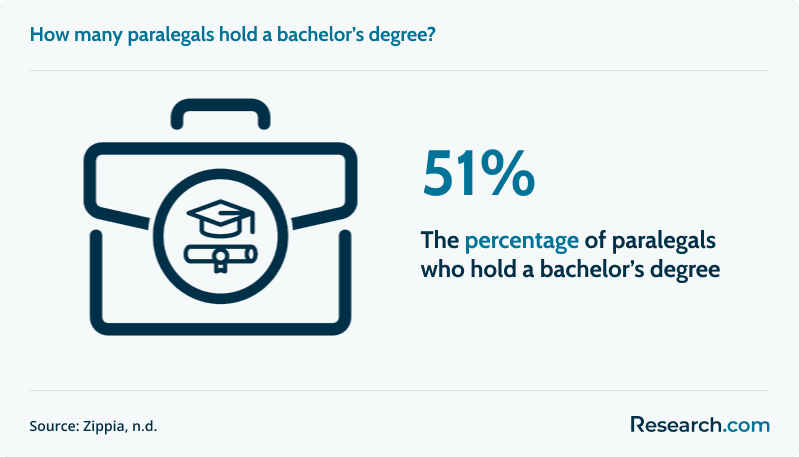
- Minimum education: Many programs require a high school diploma or GED. Some certificate programs require prior college study or a completed degree in any field, such as a human resources degree. Among employed paralegals in the US, 51% hold a bachelor’s degree.
- Admissions testing: Some schools may require an assessment such as the Wonderlic Scholastic Level Exam (Wonderlic SLE) to evaluate reading, basic math, and academic readiness.
- Technology readiness: Online students should be comfortable with learning platforms, email, file uploads, word processing, spreadsheets, video conferencing, and digital research tools.
- Writing ability: Legal work depends heavily on accuracy, clarity, citation, and documentation. Programs may expect students to enter with college-level writing skills or complete prerequisite English coursework.
What Courses Are Typically Included in an Online Paralegal Program?
Online paralegal curricula usually combine legal foundations with applied skills. Students learn how the legal system works, how to research legal authority, how to draft and organize documents, and how paralegals support attorneys while following ethical boundaries. A course on the American legal system may also introduce federal and state court structures.
- Introduction to Legal Studies or Paralegalism: Covers the legal profession, court systems, the paralegal role, unauthorized practice of law, and ethical responsibilities.
- Legal Research and Writing: Teaches students how to locate statutes, cases, regulations, and secondary sources, then use those materials in legal memoranda, letters, motions, and briefs.
- Legal Terminology: Builds fluency in legal vocabulary, court language, document types, and citation conventions.
- Legal Analysis and Problem Solving: Develops the ability to identify facts, apply legal rules, organize issues, and communicate conclusions clearly.
- Litigation Procedures: Explains the life cycle of a lawsuit, including pleadings, discovery, depositions, trial preparation, exhibits, and post-trial filings.
- Civil Law and Procedure: Introduces non-criminal disputes involving contracts, torts, property, family law, and related legal processes.
What Specializations Are Available in Online Paralegal Programs?
Many paralegal programs begin with a general legal foundation, then allow students to choose electives or tracks aligned with a practice area. Specialization can be useful if you already know the type of employer you want to target, such as a litigation firm, corporate legal department, real estate office, or estate planning practice.
| Specialization | What You Learn | Good Fit For |
| Litigation | Discovery, trial preparation, pleadings, evidence organization, and case-file management | Students interested in law firms, court-related work, or trial support |
| Corporate Law | Business entities, contracts, compliance, mergers and acquisitions, and corporate records | Students targeting in-house legal teams or business law practices |
| Family Law | Divorce, custody, support, domestic partnerships, and family court procedures | Students who want client-facing work in emotionally sensitive legal matters |
| Estate Planning and Probate | Wills, trusts, intestacy, estate administration, and probate filings | Students interested in planning, elder law, or probate practices |
| Real Estate Law | Property transactions, leases, title issues, ownership, and landlord-tenant matters | Students seeking work with real estate firms, title companies, or property practices |
How to Choose the Best Online Paralegal Program
The best online paralegal program is the one that matches your background, budget, schedule, location, and career target. A highly ranked program may still be a poor fit if it lacks internship support in your area, does not accept transfer credits, or costs more than your expected career benefit can justify.
1. Confirm Accreditation and ABA Approval
Start by checking institutional accreditation and then verify whether the paralegal program itself is ABA-approved when that matters to you. The American Bar Association maintains information about ABA-approved paralegal education programs, but approval status should always be confirmed directly before enrollment. Also review broader school quality through resources such as accredited online universities.
2. Match the Credential to Your Starting Point
If you already have a bachelor’s degree, a certificate may be the most direct route. If you do not have college credit, an associate degree may offer a stronger academic foundation. If you want broader legal studies preparation, a bachelor’s program may make more sense.
3. Review Curriculum Depth
Look for legal research, legal writing, ethics, litigation, civil procedure, technology training, and practical document work. If you have a preferred practice area, check whether electives support that field.
4. Ask About Faculty and Student Support
Faculty should have relevant legal experience. Online students should have access to tutoring, library support, technology help, legal research tools, advising, and career services.
5. Compare Total Cost, Not Just Tuition
Calculate tuition, fees, books, technology, software, exam costs, and lost work time. Then ask whether credits transfer and whether the program participates in eligible financial aid options.
6. Evaluate Flexibility Honestly
Asynchronous classes offer more freedom, but they require discipline. Synchronous classes provide structure, but they may conflict with work schedules. Choose the format you can actually sustain.
Questions to Ask Before Enrolling
- Is the institution accredited, and is the paralegal program currently ABA-approved?
- Are online students eligible for the same career services as campus students?
- Does the program help students find internships, externships, or legal volunteer opportunities?
- What legal research platforms and case management tools will students use?
- How many credits can I transfer, and how will transfer credits affect completion time?
- What is the full estimated program cost, including fees and materials?
- Are classes fully asynchronous, scheduled live, or a mix of both?
- What employment data does the school provide for recent graduates?
What Career Paths Are Available After an Online Paralegal Program?
Graduates can pursue roles in law firms, corporate legal departments, courts, government agencies, nonprofit legal services, compliance teams, and real estate or insurance organizations. Actual job opportunities depend on education level, local hiring conditions, experience, writing ability, technology skills, and professional network.
Litigation Paralegal
Litigation paralegals support attorneys through the full life cycle of a case. Their work may include legal research, drafting pleadings, organizing exhibits, managing case files, preparing for depositions, coordinating trial materials, communicating with clients and court staff, and helping attorneys prepare settlement documents.
Median annual salary: $65,768
Corporate Paralegal
Corporate paralegals assist with business transactions, contracts, intellectual property matters, compliance tasks, corporate governance, legal records, and mergers and acquisitions. These roles are often less courtroom-focused than litigation jobs and may be based in corporate legal departments.
Median annual salary: $79,113
Legal Assistant
Legal assistants provide administrative and legal support in law offices, government agencies, and corporate legal teams. Duties may include document preparation, calendar management, case tracking, client communication, and file organization.
Median annual salary: $68,021
Paralegal Educator
Paralegal educators teach legal concepts, research, writing, civil procedure, contracts, real property, and other paralegal subjects. Professionals who want to move into teaching may pursue additional preparation, including online master's programs for teaching, depending on employer expectations.
Median annual salary: $63,925
The chart below presents Bureau of Labor Statistics data on median annual wages for paralegals in top-paying industries.
What Challenges Should You Consider Before Enrolling?
Online paralegal study is flexible, but it is not passive. Students must keep up with dense reading, legal writing assignments, citation rules, research exercises, and deadlines without the daily structure of campus attendance. Some students also find it harder to build a professional network or secure hands-on experience when they are not physically near the school’s employer partners.
| Common Challenge | Why It Matters | How to Reduce the Risk |
| Limited structure | Self-paced work can lead to missed deadlines | Choose programs with clear weekly milestones and instructor access |
| Weak networking | Legal hiring often depends on referrals and local contacts | Join paralegal associations, attend virtual legal events, and request internship support early |
| No local internship pathway | Experience can strengthen entry-level applications | Ask whether the school helps online students arrange placements near home |
| Technology barriers | Legal work increasingly uses digital platforms | Confirm required software, computer specifications, and database access before classes begin |
| Fast-track overload | Accelerated programs compress complex legal topics | Estimate weekly study time realistically before enrolling |
How Can You Evaluate the ROI of an Online Paralegal Education?
Return on investment should include both the cost of the program and the likelihood that it helps you reach a specific career goal. Add tuition, fees, books, required technology, possible certification costs, and any income you may lose while studying. Then compare that cost with your target role, local job openings, expected salary range, and the program’s practical career support.
Programs with lower tuition are not automatically the best value if they lack employer connections, legal research tools, or writing-intensive coursework. Conversely, a more expensive program may be difficult to justify if it does not provide measurable advantages. Use ABA approved paralegal programs as one benchmark, but also compare completion time, transfer credit, graduate support, and internship access.
How Can Advanced Legal Studies Propel a Paralegal Career?
After gaining foundational paralegal training, some professionals pursue additional legal studies to move toward specialization, compliance, legal operations, policy support, or leadership-adjacent roles. A master’s-level legal studies program can strengthen analytical reasoning, legal research, written communication, and strategic decision-making. Students exploring graduate options can review What can you do with a master of legal studies? and compare cost-conscious options such as the most affordable master’s degrees online.
What Is the Job Market for Online Paralegal Studies Graduates?
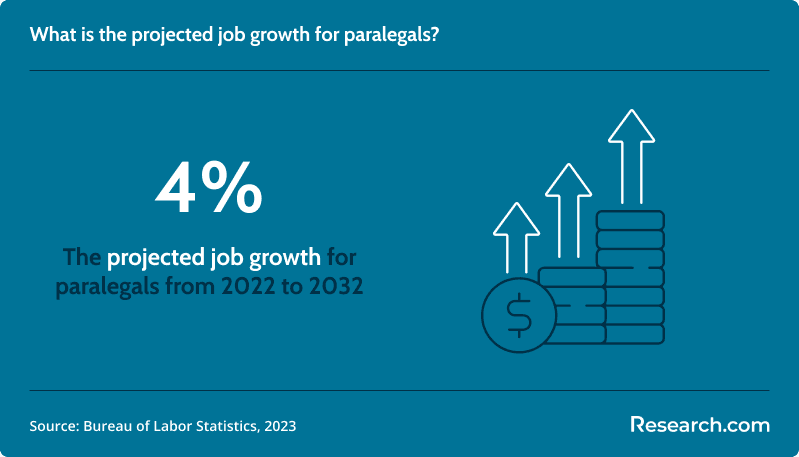
The job outlook for paralegals and legal assistants is projected to grow 4% from 2022 to 2032. Attorneys continue to rely on paralegals for research, drafting, organization, client communication, and administrative legal support so lawyers can focus on more complex legal work. Graduates with strong writing, research, technology, and case-management skills may be better positioned in the job market.
An online credential can provide a flexible route into the field, but the credential alone does not guarantee employment. As in other career areas, including healthcare MBA jobs, relevant experience and a strong skill set can improve competitiveness. Look for internships, externships, legal aid volunteer work, courthouse exposure, or administrative legal roles while you study.
What Technology Skills Are Essential for Paralegals?
Modern paralegal work is highly digital. Online programs should prepare students not only to understand legal concepts but also to use tools for research, drafting, document storage, case tracking, electronic filing, and evidence management. Students who can combine legal accuracy with technology fluency may be more useful to employers.
- Legal research software: Familiarity with platforms such as Westlaw, LexisNexis, and Bloomberg Law helps paralegals locate cases, statutes, regulations, and secondary sources efficiently.
- Document management systems: Tools such as iManage and NetDocuments help legal teams store, organize, retrieve, and secure large volumes of documents.
- E-discovery tools: Platforms such as Relativity and Everlaw are used to organize, search, and analyze electronic evidence during litigation.
- Case management software: Systems such as Clio, MyCase, and Rocket Matter help track deadlines, client information, tasks, documents, and case progress.
- Microsoft Office Suite: Word, Excel, and PowerPoint remain important for drafting, formatting, data organization, and presentations.
- Electronic filing: Many courts use e-filing systems, so paralegals should understand platforms such as PACER and state-specific filing systems.
What Should You Look for in an Accredited Online University Offering Paralegal Programs?
Accreditation helps signal that a school meets recognized academic standards. For paralegal studies, students should review both institutional accreditation and program-level recognition or approval. Many employers prefer candidates from reputable institutions, and some may value ABA-approved paralegal education.
Beyond accreditation, examine faculty credentials, access to legal research databases, career advising, technical support, internship or practicum options, writing feedback, and whether online students receive the same services as campus students. A strong online university should make it clear how students will learn practical legal skills rather than only complete readings and quizzes.
What Professional Certifications Can Boost a Paralegal Career?
Professional certification can help paralegals demonstrate knowledge, commitment, and readiness for additional responsibility. Certification is not the same as completing a degree or certificate program, and requirements vary by organization. Before choosing a credential, compare eligibility rules, exam content, cost, renewal requirements, and employer recognition in your target market.
It also helps to understand the full scope of the role before choosing a credential. Reviewing what does a paralegal do can clarify which certifications align with litigation, corporate, real estate, family law, compliance, or legal operations goals.
Can Forensic Science Skills Enhance a Paralegal Career?
Forensic science knowledge can be useful for paralegals who work with criminal cases, digital evidence, litigation support, insurance matters, or complex investigations. Training in evidence handling, forensic documentation, and digital analysis may help paralegals communicate more effectively with attorneys, experts, and investigators. Students interested in this crossover can compare low cost forensic science degree programs online as a possible way to broaden their technical understanding.
Emerging Trends in Paralegal Education
Paralegal education is changing as law offices adopt more technology, remote work becomes more common, and employers expect legal support staff to handle increasingly specialized tasks. Students should look for programs that teach current legal tools while still building strong fundamentals in ethics, research, writing, and procedure.
Can a Criminal Justice Background Expand Paralegal Opportunities?
Criminal justice knowledge can strengthen preparation for paralegal roles connected to criminal defense, prosecution support, investigations, corrections, victim advocacy, or public-sector legal work. Students with this background may be better prepared to understand evidence, procedure, law enforcement records, and court processes. Those comparing broader legal and justice-related pathways may also research the highest paying jobs you can get with a criminal justice degree.
- Legal technology and AI: Legal teams increasingly use technology for research, contract review, document review, and workflow automation. Paralegal programs should teach students how to use these tools responsibly and check AI-assisted work for accuracy.
- Remote legal work: Virtual law firms and hybrid legal departments require paralegals who can communicate clearly online, manage cloud-based documents, protect confidentiality, and meet deadlines without constant supervision.
- Specialized practice areas: Programs may offer coursework in intellectual property, healthcare law, environmental law, compliance, or other expanding areas where targeted knowledge can help students stand out.
- Corporate and government demand: Paralegals are not limited to private law firms. Corporate legal departments and public agencies also need support with contracts, regulations, records, investigations, and legal operations.
- Data security and compliance: Because legal teams handle sensitive information, paralegals need to understand confidentiality, privacy rules, cybersecurity basics, and secure document handling.
Can Adjacent Legal Careers Strengthen Your Paralegal Path?
Exploring nearby legal careers can help students understand how courts, law offices, enforcement agencies, and legal service organizations operate. For example, learning the requirements to become a bailiff can provide insight into courtroom procedure, security, and court administration. Even if you remain focused on paralegal work, this broader perspective can help you communicate more effectively with court staff and legal professionals.
Can Networking and Mentorship Improve Paralegal Career Success?
Networking and mentorship can make a major difference for online students because they may have fewer casual in-person interactions with faculty, classmates, and local legal employers. Join paralegal associations, attend legal webinars, volunteer with legal aid organizations, and ask instructors or supervisors for informational interviews. Mentors can help you choose electives, prepare for interviews, build a writing sample, and understand compensation expectations. For broader context, review information on legal studies degree salary.
Common Mistakes to Avoid When Choosing an Online Paralegal Program
- Choosing only by tuition: A low-cost program may not be the best value if it lacks career support, legal research tools, or practical writing assignments.
- Ignoring accreditation and approval status: Always verify institutional accreditation and current ABA approval when those factors matter to your career goals.
- Assuming online means self-paced: Some online programs have live class times, fixed deadlines, or required synchronous meetings.
- Overlooking internship access: Ask early how online students gain legal workplace experience, especially if you do not already work in a legal setting.
- Forgetting transfer policies: Transfer credit can affect cost and completion time, but schools evaluate credits differently.
- Assuming salary outcomes are guaranteed: Pay depends on location, employer type, experience, specialization, and local demand.
- Relying only on rankings: Rankings can help you start your search, but your final choice should reflect your budget, schedule, learning style, and target role.
References
- American Bar Association (n.d.). Directory of ABA Approved Paralegal Education Programs. https://www.americanbar.org/groups/paralegals/paralegal-resource-directory/
- Bureau of Labor Statistics (2023 September 6). Paralegals and Legal Assistants. https://www.bls.gov/ooh/legal/paralegals-and-legal-assistants.htm#tab-6
- Clayton State University (2024). Tuition & Fees. https://www.clayton.edu/bursar/tuition
- Clayton State University (n.d.). Legal Studies Curriculum. https://www.clayton.edu/degrees/legal-studies/curriculum
- Middlesex Community College (n.d.). Paying for College - Student Financial Services for New Students. https://www.middlesex.mass.edu/financialassistance/newstudents.aspx
- Payscale (2023 October 5). Associate of Arts (AA), Paralegal Studies Degree. https://www.payscale.com/research/US/Degree=Associate_of_Arts_(AA)%2C_Paralegal_Studies/Salary
- Payscale (2023 September 19). Associate of Science (AS), Paralegal Studies Degree. https://www.payscale.com/research/US/Degree=Associate_of_Science_(AS)%2C_Paralegal_Studies/Hourly_Rate
- Payscale (2024 January 5). Bachelor of Science (BS / BSc), Paralegal Studies Degree. https://www.payscale.com/research/US/Degree=Bachelor_of_Science_(BS_%2F_BSc)%2C_Paralegal_Studies/Salary
- Salary.com (2024 February 26). Corporate Paralegal Salary in the United States. https://www.salary.com/research/salary/listing/corporate-paralegal-salary
- Salary.com (2024 February 26). Legal Assistant Salary in the United States. https://www.salary.com/research/salary/listing/legal-assistant-salary
- Salary.com (2024 February 26). Litigation Paralegal Salary in the United States. https://www.salary.com/research/salary/posting/litigation-paralegal-salary
- Zippia (n.d.). Paralegal Demographics and Statistics in the US. https://www.zippia.com/paralegal-jobs/demographics/
- ZipRecruiter (2024 March 15). Paralegal Instructor Salary. https://www.ziprecruiter.com/Salaries/Paralegal-Instructor-Salary
Key Insights
- An online paralegal program is a good fit if you need flexibility and can stay organized without daily campus structure.
- Certificates are usually faster; associate and bachelor’s degrees provide broader academic preparation and may suit students without prior college credentials.
- ABA approval, institutional accreditation, internship access, writing practice, and legal technology training are more important than convenience alone.
- Total cost should include fees, materials, technology, transfer credit policies, and the time you need to complete the credential.
- Career readiness depends on practical experience. Prioritize programs that help online students build legal writing samples, use research databases, and connect with employers.
- Paralegal work is becoming more technology-driven, so skills in e-discovery, case management, document management, legal research platforms, and e-filing can improve employability.
Other Things You Should Know About Online Paralegal Programs
Students need basic word-processing, email, and file-management skills before enrollment. Many ABA-approved online paralegal programs also require access to Microsoft Word, PDF software, and a reliable internet connection for research databases, discussion boards, and document drafting assignments.
ABA-approved online paralegal programs in 2027 generally require a reliable computer, high-speed internet, and updated software like Microsoft Office. Specific programs might also necessitate access to legal databases or platforms such as Westlaw or LexisNexis for coursework and research.