2027 Elementary Education Career Outcomes by Degree Level Report: Pay, Employment, and Advancement Patterns

Co-Founder and Chief Data Scientist
This article examines how different elementary education degree levels impact salary trajectories, job placement rates, and promotional prospects to help learners make informed choices aligned with workforce demands.
Key Things to Know About Elementary Education Career Outcomes by Degree Level
- Associate degrees in elementary education often expedite entry into paraprofessional roles but limit advancement without further certification, reflecting a tradeoff between faster workforce access and long-term career ceiling constraints.
- Bachelor's degrees remain the most commonly required credential for public school teaching, signaling employer prioritization of comprehensive training over shorter credentials despite higher upfront investments.
- Data from 2024 indicate that pursuing master's degrees delays full-time employment by an average of 2 years, which may suppress immediate earnings but enhances qualification for specialized or leadership roles later.
- Key Things to Know About Elementary Education Career Outcomes by Degree Level Key Things to Know About Elementary Education Career Outcomes by Degree Level
- What Career Outcomes Can Students Expect From Each Elementary Education Degree Level? Career Outcomes by Degree
- How Much Do Elementary Education Graduates Earn by Degree Level? Salary by Degree Level
- Which Elementary Education Degree Level Offers the Strongest Employment Prospects? Best Degrees for Employment
- What Entry-Level Jobs Can You Get With a Elementary Education Degree? Entry-Level Career Opportunities
- How Do Elementary Education Degree Levels Affect Career Advancement and Promotion Opportunities? Career Growth by Degree
- Is a Elementary Education Degree Worth It Based on Salary, Employment, and ROI? Salary, ROI, and Value
- How Do Associate, Bachelor's, Master's, and Doctoral Elementary Education Degrees Compare? Comparing Degree Levels
- Which Industries and Employers Hire Elementary Education Graduates by Degree Level? Which Industries and Employers Hire Elementary Education Graduates by Degree Level?
- What Skills, Credentials, and Experience Improve Elementary Education Career Outcomes? What Skills, Credentials, and Experience Improve Elementary Education Career Outcomes?
- Which Elementary Education Degree Level Is Best for Your Career Goals? Choosing the Right Degree
What Career Outcomes Can Students Expect From Each Elementary Education Degree Level?
For adult learners or transfer students balancing time and prior credits, pursuing a bachelor's degree remains critical because it not only unlocks standard teaching roles but also enhances geographic mobility and credential portability in states participating in interstate agreements. The tradeoff lies in the longer time and greater financial investment required upfront compared to quicker certificate or associate pathways, which may impede career momentum beyond entry-level employment.
The bachelor's credential alone, while foundational, tends to plateau in terms of pay and leadership opportunities unless followed by graduate degrees. Master's programs in elementary education tend to attract a quarter of educators seeking specialized instructional duties or roles such as curriculum development and instructional coaching, which command higher salaries and more stable employment. These programs often integrate practical research and can be pursued part-time or online, accommodating working professionals aiming to minimize debt while scaling their role scope.
Doctoral degrees, typically pursued by fewer educators, target district-level leadership, policy influence, or administrative careers but come with intense competition and require clear alignment with long-term leadership goals. Navigating this progression thoughtfully is essential for those weighing advancement and employer expectations against time investment and role stability in elementary education employment and advancement by degree level.
For professionals seeking accelerated paths, awareness of program designs, such as the shortest DNP program options, offers insight into how certain graduate credentials can be strategically timed. Regional demand and state-specific credential policies further nuance these outcomes, underscoring that educational choices in elementary education often reflect a balance between immediate employment access and sustainable career growth. This dynamic holds especially true for military-affiliated students and working adults who must carefully plan credit transfers, licensure requirements, and employer demand trends while deciding which credential level best fits their long-term objectives.
How Much Do Elementary Education Graduates Earn by Degree Level?
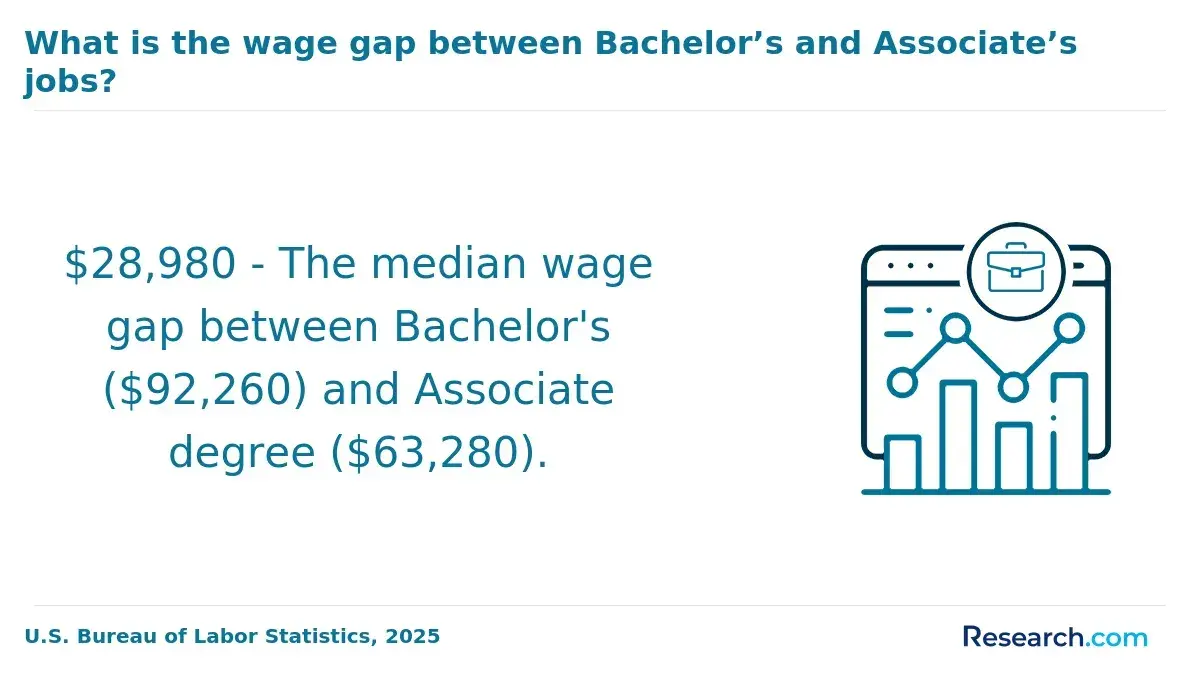
Elementary education earnings differ significantly depending on degree level, licensure status, and regional demand, with bachelor's degrees generally setting the baseline for full teaching roles. According to 2024 data from the U.S. Bureau of Labor Statistics, median wages for elementary teachers holding a bachelor's degree hover around $61,000 annually, but this figure masks important nuances. Certificate and associate degree holders often take paraprofessional jobs, where pay typically ranges from $30,000 to $40,000 and advancement is limited due to fewer licensing requirements and lower institutional recognition.
Meanwhile, master's degrees tend to deliver about a 10-15% salary premium by opening access to specialized roles or district pay scales, yet these gains must be weighed against additional time and financial investments, particularly when local districts have varying pay differentials or licensure hurdles.
Doctoral qualifications are less common and typically linked to leadership or academic positions with salaries exceeding $85,000, though these roles also carry geographic and institutional variability that can influence returns on extended study. Employment stability aligns closely with credential levels, as bachelor's and graduate degree holders experience lower unemployment rates due to stricter certification standards and stronger demand for fully licensed teachers.
For working adults and transfer students, the decision to pursue further education hinges on balancing immediate earnings potential with longer-term job security and career growth; credits transfer and program length can dramatically affect both cost and time to market. Prospective educators often encounter complex local licensure requirements and heterogeneous wage scales that make evaluating each degree's practical value essential before committing to additional schooling.
One recent graduate, initially satisfied with a teaching assistant role after earning a certificate, found the limited wage growth and job stability frustrating. After researching local job listings and consulting with school HR offices, the graduate realized that completing a bachelor's degree opened more doors, including full certification and higher pay.
However, the prospect of pursuing a master's degree was met with hesitation due to the uncertain regional salary increase and considerable tuition costs, resulting in a cautious approach to further education. This pragmatic evaluation underscored the need to balance educational investment with realistic career advancement opportunities and labor market conditions rather than assuming higher degrees automatically translate to better financial outcomes.
Which Elementary Education Degree Level Offers the Strongest Employment Prospects?
Holding a bachelor's degree remains the most effective credential for securing full-time roles as elementary teachers, primarily because it satisfies the minimum licensure and certification standards set by most states. Candidates with only associate degrees or certificates frequently find themselves limited to paraprofessional or instructional aide positions, slowing direct classroom entry.
For example, a graduate with a bachelor's in elementary education has roughly an 85% completion-to-employment rate according to 2024 labor data, reflecting strong alignment with market demand and credential requirements. Regional factors can also create variability; in states facing teacher shortages, there may be increased flexibility or demand that benefits bachelor's degree holders, but this advantage does not typically extend to lower-level credentials.
While advanced degrees such as master's and doctorates do not significantly enhance initial employment prospects for new teachers, they carry distinct benefits for those seeking leadership, curriculum design, or specialized instructional roles later in their careers. These pathways often entail delaying workforce entry due to the time and financial investment required, making them more suitable for professionals aiming to advance after gaining classroom experience.
Employers equally value practicum or fieldwork integration within degree programs, which bolsters licensure readiness and practical teaching skills. Ultimately, the decision to pursue higher credentials versus earlier employment hinges on weighing immediate classroom access against potential for elevated roles that demand deeper expertise and credentials.
What Entry-Level Jobs Can You Get With an Elementary Education Degree?
Entry-level opportunities for graduates with an elementary education degree vary significantly depending on degree level, licensure, and prior experience. Those holding bachelor's degrees and full certification typically qualify for classroom teaching roles, which represent the core pathway for sustained employment and advancement in education.
In contrast, candidates with associate degrees or certificates often find initial positions as paraprofessionals, teacher assistants, or aides—roles that build practical skills but usually lack autonomous teaching responsibilities or clear promotion trajectories. Given the competitive hiring standards in urban districts, students without formal student-teaching experience or robust licensure portfolios may face delayed entry or need to consider support roles as stepping stones.
Employers often prioritize candidates who combine academic preparation with hands-on practicum or internships, as these enhance instructional readiness. Frequently, rural or underserved schools may offer provisional or expedited licensing pathways to address shortages, creating localized hiring flexibility but potentially limiting portability of credentials.
Employment stability and longer-term mobility correlate strongly with certification status; a 2024 report from the National Center for Education Statistics notes that over 80% of newly licensed elementary educators secure classroom roles within two years. Those pursuing elementary education teaching jobs for beginners should weigh the tradeoffs between immediate employment in support capacities and the additional investment needed for full certification to access teacher roles with career growth potential.
Remote work options remain sparse due to the in-person demands of elementary teaching, though some tech-adjacent tutoring roles offer flexibility. Prospective students aiming to optimize practical value of their credentials should carefully compare pathways including associate versus bachelor's degrees, considering whether they plan to advance through graduate study or remain focused on frontline teaching roles. For individuals exploring alternatives, research on nursing schools that do not require entrance exam illustrates how strategic credential choices can impact access and progression in related education or care sectors.
How Do Elementary Education Degree Levels Affect Career Advancement and Promotion Opportunities?
Advancement in elementary education roles is closely tied to degree level, with master's credentials increasingly serving as a gateway to leadership and specialized positions. While a bachelor's degree typically suffices for entry-level teaching, employers—particularly in public school districts—commonly require a master's degree for roles like curriculum specialist or assistant principal, reflecting state licensure and certification standards.
This credential threshold affects not only eligibility but also the timing of promotion, as educators with advanced degrees often gain leadership roles approximately three years earlier than those without, according to 2024 data from the National Center for Education Statistics. The tradeoff involves the additional expense and time for graduate study weighed against faster career mobility and enhanced job stability in a sector where many institutions prioritize advanced training.
For working adults and transfer students, the decision to pursue graduate credentials hinges on practical factors like current job status, employer policies, and long-term goals rather than the assumption that higher degrees guarantee advancement. Bachelor's degree holders commonly confront stagnant promotion prospects without supplementary certification or graduate work, particularly when competing internally against peers with master's or specialist degrees.
Specialized programs incorporating supervisory skills or instructional coaching can align with employer expectations, but returning to school while balancing work often requires careful assessment of immediate career needs versus potential future gains. This dynamic underscores how credential level directly influences both the speed and scope of upward mobility within elementary education careers.
One recent graduate shared that after years teaching with a bachelor's degree, she hesitated before enrolling in a master's program because her district prioritizes that credential for lead teacher roles. She recalled feeling frustrated when passed over for a curriculum coach position despite strong evaluations, realizing her lack of a graduate degree was a structural barrier.
The decision to pursue the master's was propelled not just by ambition but by clear employer guidelines and conversations with supervisors emphasizing the credential's necessity for internal promotion. This experience highlights how degree level shapes not only opportunity but also confidence in pursuing advancement within education systems that systematically favor higher qualifications.
Is an Elementary Education Degree Worth It Based on Salary, Employment, and ROI?
The decision to pursue an elementary education degree involves weighing salary prospects, employment stability, and long-term financial outcomes against program costs and time commitments. Entry-level salaries for bachelor's degree holders generally cluster near median wages reported by the Bureau of Labor Statistics, but geographic variation and district funding significantly influence actual pay.
Those considering advanced degrees must factor in modest salary boosts that often come with master's credentials against additional tuition and delayed full earnings, especially for working adults or transfer students balancing job and school. Employment for elementary education graduates remains solid with projected growth slightly above average, yet regional shifts in education budgets can lead to underemployment or turnover, complicating the degree's financial and job security calculus.
Return on investment for elementary education degrees varies widely depending on individual circumstances, including debt burden and ability to accelerate completion through part-time or credit transfer options. Graduates facing debt near national averages sometimes struggle with repayment pressures that dampen the career's economic appeal despite stable job demand. Advancement into administrative or specialized roles is possible but typically requires further certification and graduate study, increasing upfront costs and time out of the workforce.
For students weighing whether additional education in this field provides value against alternatives like the top dietetics masters programs, a nuanced approach is essential. Understanding elementary education degree salary and employment outcomes alongside personal financial and career goals will better inform whether pursuing further credentials delivers meaningful gains or disproportionately extends time-to-earning potential.
How Do Associate, Bachelor's, Master's, and Doctoral Elementary Education Degrees Compare?
Associate degrees seldom qualify graduates for full licensure or stable employment in public elementary classrooms, as most states and districts require at least a bachelor's degree coupled with certification. While associate programs may reduce educational costs and facilitate credit transfer to bachelor's degrees, variability in credit acceptance can delay completion and increase debt. Consequently, those aiming for permanent K-6 teaching roles generally benefit from progressing to a bachelor's level, which unlocks access to certified teaching jobs and a relatively high employment rate-over 80% within a year of graduation according to the U.S. Department of Education in 2024.
Completing a bachelor's degree in elementary education typically marks the minimal credential for direct classroom entry and job stability, but advancement beyond this point often requires graduate study. Master's degrees expand career options into leadership, curriculum design, and specialized instructional roles, responding to district demands where roughly 30% of elementary educators pursue master's-level credentials within five years for promotion or salary increases. These programs frequently incorporate professional development credits that support licensure renewal or specialized certifications, making them effective for mid-career educators targeting upward mobility within schools or districts.
Doctoral degrees, although held by fewer than 5% of elementary educators, primarily serve those targeting administrative leadership, policy-making, research, or university faculty positions rather than classroom teaching. The significant time and effort required for doctorates yield returns mostly aligned with long-term career trajectories focused on systemic influence rather than immediate employment gains. For working professionals weighing the tradeoff between extended study and practical impact, the master's level often presents the most balanced option, while stopping at a bachelor's may be sufficient for those prioritizing classroom teaching with a quicker path to employment.
Which Industries and Employers Hire Elementary Education Graduates by Degree Level?
Hiring practices in elementary education vary sharply by degree level, shaping employment prospects and career trajectories. Associate degree holders typically fill support roles such as instructional assistants or paraprofessionals within public and private K-12 schools, sectors that emphasize hands-on experience but limit upward mobility without further credentials.
For example, an associate degree graduate may enter a school district relatively quickly but encounter wage ceilings and fewer leadership opportunities compared to bachelor's graduates, whose state-mandated licensure makes them the primary candidates for classroom teaching positions in public schools. According to the U.S. Bureau of Labor Statistics 2024 data, bachelor's degree holders dominate employment in this space, reflecting licensure-driven hiring preferences among public agencies.
Master's degree graduates frequently move into specialized or leadership roles such as curriculum coordination, instructional coaching, or special education, often within districts or private educational organizations prioritizing differentiated instruction and professional development. This credential level signals advanced pedagogical expertise, with the National Education Association noting that roughly 35% of elementary educators in certain states hold master's degrees to meet rising instructional standards.
Conversely, doctoral degree holders find fewer classroom roles and instead gravitate toward administrative, policy, research, or higher education faculty positions where their advanced training in educational leadership and scholarship is critical. Employers like university education departments and policy institutes require extensive experience alongside doctoral qualifications. Certificate programs and alternative licensure offer faster entry for working adults but typically involve provisional licenses and limited pay growth, highlighting a crucial tradeoff between expediency and long-term advancement.
What Skills, Credentials, and Experience Improve Elementary Education Career Outcomes?
Elementary education career outcomes are strongly shaped by the combination of credentials, demonstrated skills, and practical experience that align with employer expectations. Candidates who hold state licensure backed by accredited preparation programs and verified field experience gain substantially better access to public school jobs. For example, adults with previous industry experience or military backgrounds benefit from tailored credential pathways but must still meet licensure prerequisites such as supervised teaching and standardized exams. This tradeoff highlights how moving beyond an associate degree to a bachelor's or graduate credential expands eligibility for licensed roles and improves long-term advancement prospects.
The relevance of technical competencies, including proficiency with educational technology and adaptive learning platforms, grows as hybrid and digital classroom models become more common. Employers place high value on soft skills like communication, classroom management, and cultural competency, which are crucial for specialist or administrative positions. Leadership exposure through roles like grade-level chair or committee participation significantly increases promotion likelihood, with evidence from a 2024 survey showing a 30% higher chance of obtaining advanced roles within five years. Credential stacking that combines licensures, endorsements, and specialized certificates for STEM or special education further strengthens competitiveness and career mobility.
Applied learning opportunities such as internships and extended field placements provide practical exposure critical for those transitioning into elementary education from other sectors. Prospective students weighing degree options should carefully consider these experiential learning components alongside credential requirements, especially since associate degrees often lead to paraeducator roles with lower pay and limited advancement. Those seeking greater employability and upward mobility should note the pronounced benefits of bachelor's and graduate degrees in meeting licensing standards and employer expectations. For related insight on education and salary comparisons, research the typical sports analyst salary in your preferred area.
Which Elementary Education Degree Level Is Best for Your Career Goals?
Choosing an associate degree in elementary education limits employment options primarily to paraprofessional or assistant teaching roles, with scarce upward mobility without further credentials. For many adult learners or military-affiliated students balancing work and study, an associate degree may offer faster workforce entry but often fails to meet state licensure requirements, which usually mandate at least a bachelor's degree. According to 2024 data from the National Center for Education Statistics, individuals with only an associate degree face barriers to becoming licensed teachers, constraining long-term career advancement and salary growth compared to those holding higher credentials. Transfer pathways into bachelor's programs, though increasingly available, require strategic planning to avoid credit loss and prolonged time to completion.
Bachelor's degrees remain the critical credential for entry-level classroom teacher roles, aligning directly with state licensure and employer expectations; over 85% of practicing elementary teachers hold this level. This makes the bachelor's degree the best elementary education degree for job advancement, balancing upfront time and cost with access to full teaching responsibilities and a foundation for specialization. The U.S. Department of Education emphasizes that bachelor's programs commonly include field experiences essential for employer readiness. However, those targeting leadership or curriculum specialist positions often must pursue graduate degrees, which yield higher promotion rates but incur additional costs and student debt.
Graduate degrees provide essential depth for roles beyond classroom instruction, such as administration or specialized curriculum design, enabling sustained income growth visible in labor market data. They also allow working professionals to study part-time, though the opportunity cost remains significant. For prospective students weighing these options, understanding credential requirements and long-term mobility is vital. Relevant pathways, such as accelerated programs or credit transfer strategies, can mitigate some operational challenges. For further insights specific to graduate program entry, including acceptance statistics and requirements, refer to the latest SLP acceptance rate.
References
- Top 10 Professional Development Skills for Teachers in 2025 Teacher Guide https://www.simplek12.com/blog/professional-development-skills-teachers
- Helping Learners Identify and Talk to Their Transferable Skills - Blog https://www.edalex.com/blog/lens-on-educators-helping-learners-identify-talk-to-transferable-skills/
- How does a college degree improve graduates’ employment and earnings potential? - APLU https://www.aplu.org/our-work/4-policy-and-advocacy/publicuvalues/employment-earnings/
- International Journal of Sustainability and Advanced Integrated Research (IJSAIR) https://www.ijsair.com/index.php/ijsair/article/view/178
- Research Summary: Education and Lifetime Earnings https://www.ssa.gov/policy/docs/research-summaries/education-earnings.html
- What Can I Do With a Teaching Degree (Besides Teach)? https://www.alleducationschools.com/blog/what-can-i-do-with-a-teaching-degree-besides-teach/
- Teaching Degree ROI Guide: The Return on Investment You Can Expect with a Degree in Education https://www.educationdegree.com/articles/return-on-investment-guide-to-education-degrees/
- How Much More High School Graduates Earn Than Non-Graduates in Every State | U.S. Career Institute https://www.uscareerinstitute.edu/blog/how-much-more-high-school-graduates-earn-than-non-graduates
- How to Find Advancement Opportunities in Your Teaching Career - Graduate Programs for Educators https://www.graduateprogram.org/blog/how-to-find-advancement-opportunities-in-your-teaching-career/
- Types of College Degrees https://www.act.org/content/act/en/students-and-parents/high-school-success/what-to-do-after-high-school/college-degrees.html
Other Things You Should Know About Elementary Education
Longer programs, such as master's or doctoral degrees in elementary education, typically demand significant time and effort, often while balancing work or personal commitments. While these advanced degrees may open doors for specialized roles or leadership positions, the incremental pay and career advancement aren't guaranteed to offset the increased investment, especially early in your career. Careful consideration should be given to how much time you can realistically commit and whether your career goals require advanced credentials, as many classroom teaching roles prioritize bachelor's degrees paired with certification over higher degrees.
Higher degrees can strengthen your qualifications, but they do not immunize you from employment fluctuations caused by district funding cuts or policy changes. In many cases, job stability in elementary education depends more on geographic location, union presence, and district budget health than degree level alone. If job security is a top priority, prioritizing these external factors and gaining local certification or credentials relevant to your target district may be as important as pursuing advanced academic degrees.
Employers often expect advanced degree holders to demonstrate leadership skills, curriculum design expertise, or abilities in mentoring less experienced teachers. If you choose to pursue a master's or doctoral degree, be prepared for roles involving significant planning, collaboration, or administration beyond classroom teaching. For those uninterested in administrative responsibilities, the investment in a higher degree might lead to misaligned expectations and job dissatisfaction, so aligning degree choice with your preferred job functions is critical.
Yes, accumulating teaching experience before enrolling in a master's or doctoral program tends to enhance both learning outcomes and career returns. Practical experience grounds theoretical knowledge and improves your ability to apply advanced concepts in real classroom settings. Furthermore, many school districts value experience highly in promotion decisions, sometimes more than additional degrees alone, so balancing work and study can be a more effective path to sustainable career advancement.