2027 Elementary Education Degree Program Availability Report: Which States and Schools Offer the Most Options

Co-Founder and Chief Data Scientist
The presence of elementary education degree programs reflects underlying regional priorities and labor market necessities. States with broader offerings often align with higher K-12 teacher demand documented by the U. S. Bureau of Labor Statistics, signaling responsive institutional capacity. Conversely, limited program availability may indicate constrained educational investment or demographic shifts reducing teacher preparation pipeline size.
Recent data from the National Center for Education Statistics (2024) reveal that enrollment trends in these programs correlate strongly with state-level funding patterns and workforce retention rates. Examining which states and institutions offer the most elementary education degree options uncovers critical insights into access disparities, institutional focus, and alignment with evolving education sector needs.
Key Benefits of States and Schools That Offer the Most Elementary Education Degree Program Options
- States and schools with diverse elementary education program options often require navigating more complex course selections, which may extend time to degree but allow tailored specialization aligning with specific teaching contexts.
- Employers in districts with varied curriculum demands tend to favor candidates from programs offering broad elementary education tracks, indicating wider program availability enhances workforce adaptability to evolving standards.
- Expanded program options correlate with increased access in underserved regions, as 2024 data show a 12% enrollment growth in states prioritizing elementary education variety, reflecting improved educational equity and regional talent development.
- Key Benefits of States and Schools That Offer the Most Elementary Education Degree Program Options Key Benefits
- Which States Offer the Most Elementary Education Degree Programs? Top States
- Why Do Some States Have More Elementary Education Programs Than Others? Program Availability
- Which Colleges Offer the Largest Number of Elementary Education Degree Options? Top Schools
- How Do Online Programs Improve Access in States With Limited Options? Online Program Access
- How Much Does Elementary Education Program Tuition Vary by State? Tuition by State
- How Does Elementary Education Program Demand Affect Admissions Decisions? Program Demand
- How Do Elementary Education Specialization Options Vary by Region? Specialization Options
- How Does Regional Employer Demand Affect Career Outcomes? Employer Demand
- What Factors Matter Most When Comparing Elementary Education Programs Across States? Key Comparison Factors
- Which Regions May See the Fastest Growth in Elementary Education Education? Fastest Growing Region
Which States Offer the Most Elementary Education Degree Programs?
The distribution of elementary education degree programs across the United States is heavily influenced by regional educational infrastructure, population density, and workforce demands. States with significant higher education networks and large urban populations tend to cluster the greatest number of these programs. Such concentration supports a variety of delivery methods and specializations that better align with local licensure requirements and teacher recruitment strategies.
These systemic factors explain why certain states lead in program availability, offering broader academic options for aspiring educators.
- California: As home to one of the largest and most diverse public university systems in the country, California provides a vast array of elementary education degree programs. The state's combination of major research universities and numerous private colleges reflects its extensive investment in teacher preparation, addressing both urban and rural school needs. This abundance allows students access to specialized tracks and expedited formats that accommodate diverse learning styles and career timelines.
- Texas: Texas benefits from its broad community college networks, flagship universities, and growing metropolitan areas, which jointly contribute to a high volume of elementary education program offerings. The state's emphasis on meeting regional workforce shortages encourages institutions to tailor curricula toward licensure requirements and practical pedagogical skills. Students benefit from a dynamic market that often links program completion with immediate employment opportunities in high-demand districts.
- New York: New York's dense concentration of higher education institutions, including renowned research universities and urban teacher colleges, results in a robust supply of elementary education degrees. The state's diverse demographic and strong public school system traction push programs to integrate culturally responsive pedagogy and advanced certification pathways. Prospective students in New York can choose from a broad spectrum of program models, enhancing both academic flexibility and long-term career alignment.
Midwestern states such as Ohio and Illinois also maintain notable program availability due to their balance of public universities and liberal arts institutions that align offerings with regional K-12 demands. However, states with smaller or more rural populations face limitations in program access, potentially requiring students to rely on distance education or relocate.
Though the number of programs is a critical metric, prospective students must evaluate the quality, accreditation status, and state-specific certification compatibility of available options. The portability of an elementary education degree and its certification remains a decisive factor in long-term employment prospects, varying widely by state policies and licensure reciprocity.
For those comparing availability alongside affordability, exploring most affordable online FNP programs provides a model of how online education can expand access, a trend increasingly mirrored in elementary education pathways as well.
Why Do Some States Have More Elementary Education Programs Than Others?
Variations in the availability of elementary education programs across states often reflect differences in higher education infrastructure and regional demand for trained educators. Larger states with dense populations typically support extensive university systems capable of offering multiple specialized programs, while smaller or more rural states may have fewer institutions with limited capacity.
These disparities in program availability are closely tied to how states allocate resources and respond to local workforce needs, shaping the pathways available to prospective elementary education students. Understanding these factors offers clarity on why state differences in elementary education program availability persist beyond simply geographic size or population.
Key drivers behind this variation include state funding priorities and the research and development capacity of universities, which enable program growth and curriculum diversification. States that invest heavily in public education tend to maintain broader elementary education options, partly due to the financial flexibility to develop new tracks aligned with labor market demands. Additionally, regions hosting robust education industry clusters or experiencing teacher shortages often expand program offerings to sustain employer pipelines.
According to the National Center for Education Statistics data from 2024, states with higher per capita education funding offer on average 30% more elementary education programs than lower-funded states, underscoring the crucial impact of funding models and employer demand on program density.
These disparities influence not only student access but also regional workforce development and the evolution of alternative delivery models. As some areas lack sufficient in-person options, a growing share of prospective students turn to online programs, especially those emphasizing low barriers like online college free application policies. Such trends reflect systemic responses to geographic imbalances and labor market pressures, with long-term implications for the distribution of qualified elementary education professionals nationwide.
Which Colleges Offer the Largest Number of Elementary Education Degree Options?
The breadth of elementary education degree programs at a college typically correlates strongly with the institution's size, funding base, and academic infrastructure rather than simply its geographic location. Larger, research-focused universities often maintain diversified offerings, including specialized tracks and varied delivery models such as online and accelerated formats, to address evolving educational and workforce needs.
These institutions leverage interdisciplinary collaboration and extensive faculty to continuously expand curriculum pathways aligned with certification requirements and labor market demands.
- Large Public Research Universities: These institutions benefit from substantial state funding, extensive faculty networks, and multiple academic departments that promote program diversification. Universities like the University of Texas at Austin and Michigan State University exemplify how flagship state schools develop upwards of 10 distinct elementary education programs, integrating areas such as bilingual education, educational technology, and special education to meet diverse student and employer demands.
- Comprehensive Teacher Preparation Institutions: Colleges dedicated primarily to teacher education typically embed a wide variety of elementary education specializations within their program portfolios. Their focused mission aligns curricular resources and faculty expertise to create pathways including early childhood development, curriculum design, and certification preparation, often coupled with graduate-level certificates and master's degree options.
- Large State Universities With Interdisciplinary Departments: These universities combine education faculties with departments such as psychology, linguistics, and technology, fostering program innovation through interdisciplinarity. This structure supports developing niche tracks that respond to shifting workforce requirements, such as STEM integration and culturally responsive teaching, offering prospective students more tailored elementary education credentials.
- Private Liberal Arts Colleges With Limited Degree Tracks: These smaller institutions prioritize cohort-based, in-depth study over breadth of programs. While they may offer fewer specialized tracks, their strength lies in delivering focused pedagogy and personalized instruction, appealing to students seeking a concentrated and supported learning environment.
- Community Colleges Offering Associate Degrees and Transfer Pathways: Although generally limited in providing full elementary education degrees, community colleges play a strategic role by offering foundational coursework and streamlined transfer agreements that feed students into four-year programs with broader academic options.
According to the 2024 National Center for Education Statistics data, flagship state universities consistently lead in program variety, with multiple specialized elementary education offerings that reflect both workforce needs and state certification nuances. This institutional capacity offers prospective students a wider range of academic pathways and modalities to fit diverse educational goals and local labor market conditions.
How Do Online Programs Improve Access in States With Limited Options?
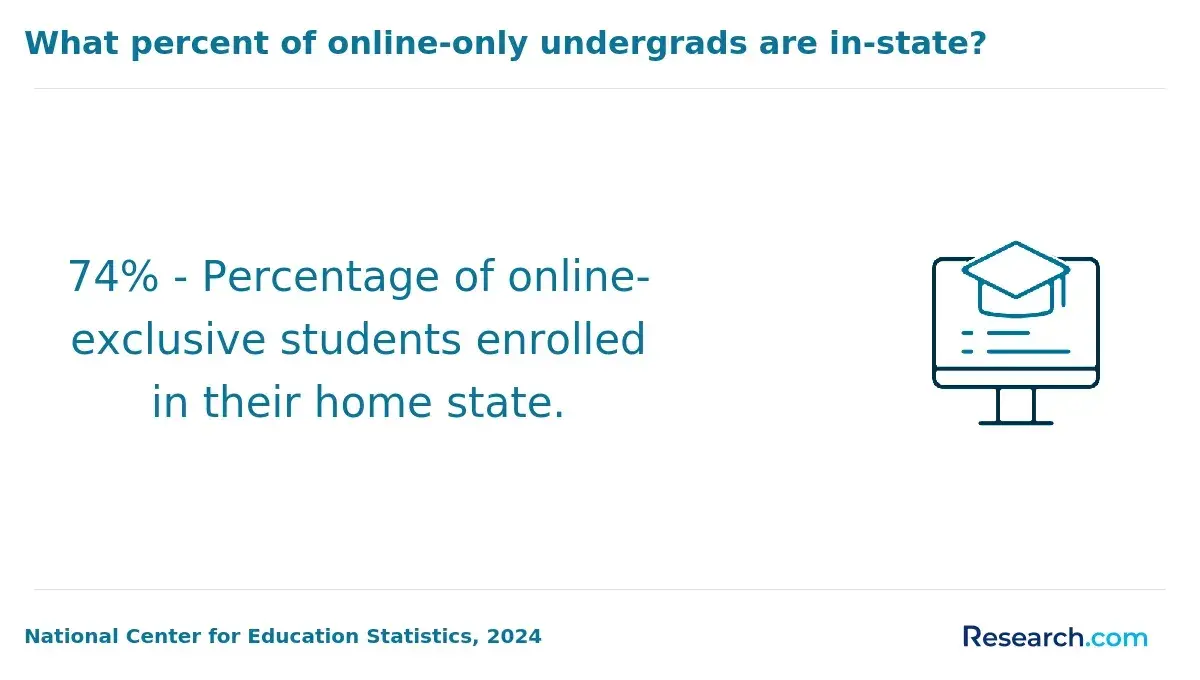
In states where brick-and-mortar options for elementary education degree programs are scarce, online offerings significantly broaden access by decoupling geographic location from enrollment capability. Students in rural or underserved areas no longer face the traditional barrier of relocating or enduring long commutes to attend programs. This shift is particularly impactful for working adults and parents balancing multiple responsibilities, allowing them to engage with accredited programs nationwide.
Data from the U.S. Department of Education in 2024 indicates that over 40% of elementary education students in these regions choose fully online or hybrid formats, reflecting how digital accessibility reshapes participation in teacher preparation pathways.
The expansion hinges on several interrelated mechanisms, including asynchronous course delivery that lessens scheduling conflicts and enables sustained engagement despite varied personal circumstances. Cross-state enrollment also disrupts reliance on local institutions, allowing universities to reach broader populations without physical infrastructure constraints. These dynamics facilitate institutional scaling while responding to increasing demand in areas with workforce shortages. The result is an education ecosystem where program availability is less tethered to regional campus presence and more aligned with flexible, scalable delivery models that accommodate diverse student needs across state lines.
Beyond immediate enrollment shifts, these developments influence regional workforce composition by increasing the supply of credentialed elementary educators in areas historically limited by geographic access. They also introduce competitive pressures among institutions vying to attract remote students, potentially driving innovation in curriculum and technology use.
Ultimately, this realignment reconfigures traditional educational boundaries, supporting more equitable distribution of preparation resources and reinforcing teacher pipelines in states with previously restricted program options.
How Much Does Elementary Education Program Tuition Vary by State?
Tuition for elementary education degree programs varies significantly across U.S. states, primarily driven by differences in public funding levels, institutional types, and residency-based pricing policies. Public universities typically offer the most affordable tuition for in-state students, reflecting state subsidy priorities aimed at local residents. Out-of-state students and those attending private institutions face markedly higher tuition due to the absence of subsidized rates or reliance on private funding models. These pricing structures are embedded within broader higher education finance systems and reflect how states allocate resources and support their university systems.
Current estimates show public in-state tuition for elementary education programs ranging from about $4,000 annually in states such as Wyoming and New Mexico to over $12,000 in Vermont and New Hampshire, according to data from the U.S. Department of Education and state university system reports. Out-of-state tuition commonly triples or quadruples these amounts, creating a substantial financial barrier for non-resident students. Private institutions typically charge between $20,000 and $40,000 per year, though some prestigious programs exceed this range.
These cost variations, which are non-arbitrary, reflect both regional economic conditions and institutional funding strategies, highlighting the importance of understanding the underlying education finance mechanisms when comparing cost variations for elementary education degrees across US states.
Such disparities influence more than just sticker price-they affect student access, mobility, and choices between programs in different states. Lower tuition states may offer fewer specializations or limited experiential learning, factors that prospective students must weigh against cost savings. Additionally, regional cost of living and availability of financial aid impact the real affordability of programs.
For researchers analyzing program availability, these tuition differences also reflect variations in state-level higher education policies and resource distribution. This nuanced understanding is critical in evaluating how tuition variation intersects with program quality and workforce readiness. Students exploring related fields might also consider options like online PMHNP programs for alternative financial and geographic flexibility.
How Does Elementary Education Program Demand Affect Admissions Decisions?
Rising demand for elementary education programs tends to compress admissions acceptance rates, as institutions face greater application volumes relative to available seats. This increased demand pressures programs to tighten selection criteria, raising GPA thresholds and adding requirements such as prerequisite coursework or interviews to better differentiate candidates. As a result, admissions decisions become more selective to maintain manageable cohort sizes while ensuring academic readiness and alignment with evolving program goals. These dynamics are particularly evident in populous states or regions with strong education sectors where competition intensifies and programs must balance volume with quality control.
The underlying drivers of this selectivity include institutional capacity constraints, such as limited faculty availability and classroom space, which restrict how many students can be effectively supported and trained. Accreditation standards further influence enrollment caps and demand rigorous student evaluation to uphold program reputation and compliance.
Simultaneously, labor market needs for specialized skills in areas like bilingual education or STEM integration shape admissions priorities, encouraging programs to admit candidates who can satisfy employer expectations for workforce readiness. These interlocking factors produce an admissions environment where fluctuations in demand strongly dictate both acceptance rates and the nature of assessment criteria.
Over time, rising demand not only influences admissions frameworks but also affects how applicants prepare and position themselves. Candidates applying to highly competitive programs often invest more effort in strategic coursework selection and gaining relevant experience to meet heightened standards. While more selective admissions can elevate program prestige and internship opportunities, they may also narrow access for some prospective students, amplifying disparities based on timing, resources, and readiness.
This evolving landscape requires applicants to navigate not just academic qualifications but also timing and program-specific priorities to optimize admission chances.
How Do Elementary Education Specialization Options Vary by Region?
Elementary education specialization options in the United States are closely tied to regional economic priorities and industry ecosystems, shaping curricular focus and graduate skill sets. Southeastern states, for example, often align their programs with the diverse demographic profiles and workforce demands by emphasizing bilingual education, special education, and STEM integration. Conversely, Midwestern states prioritize foundational pedagogical expertise, responding to local school districts' needs for literacy and early childhood development competence.
In the West, regional innovation hubs and environmental policy influence the growth of specializations in technology, digital media, and sustainability education. These variations reflect a strategic alignment between academic offerings and local labor market signals rather than uniform program availability nationwide.
Key factors driving regional divergence include dominant industries, university research strengths, and employer collaboration patterns that directly influence program development and specialization breadth. States with large urban centers on the East Coast deploy dual-language and multicultural education tracks grounded in metropolitan demographics and policy initiatives promoting educational equity. Meanwhile, areas with less demographic heterogeneity or fewer tech industry partnerships have fewer specialized tracks related to digital literacy or social-emotional learning, which are nonetheless expanding in national demand.
Data from the National Center for Education Statistics in 2024 confirms that southeastern institutions provide the widest range of elementary education specializations, reflecting both state education policies and market responsiveness to inclusive classroom preparation.
These regional differences have meaningful implications for students considering program selection, particularly regarding employment mobility and career trajectory. Graduates trained in highly specialized curricula tailored to local workforce needs may find distinct advantages within their regions but face challenges when relocating to areas with differing educational priorities.
Therefore, prospective students and researchers must evaluate how specialization offerings correlate to regional job markets and long-term labor trends, weighing the tradeoffs between immediate employability in targeted districts and broader versatility across states. This nuanced alignment between educational specialization and labor demand underscores the importance of geographic context in shaping effective elementary education career pathways.
How Does Regional Employer Demand Affect Career Outcomes?
Regional employer demand significantly shapes the career outcomes for graduates with an elementary education degree by influencing local job availability and initial employment conditions. Areas with strong employer demand, often linked to rising student populations and stable or growing school funding, tend to offer more job openings and competitive salary ranges.
According to labor market data from the U.S. Bureau of Labor Statistics, states like Texas, Florida, and California demonstrate higher-than-average teacher employment growth, reflecting a wider variety of academic program offerings and diverse career entry points. These regional disparities reflect the crucial role of geographic labor market dynamics in determining the practical opportunities available to graduates in different states or districts.
The key mechanisms underpinning these trends involve the concentration of school districts and educational employers within a region, along with their partnerships with local universities and training programs. Regions with established networks often create specialized hiring ecosystems that attract elementary education graduates through incentives such as signing bonuses or loan forgiveness. Wage competition also varies by region, affected by cost of living and union strength, which in turn impacts salary scales and contract conditions.
This variability in employer concentration and regional wage structures explains why career outcomes for elementary education degree holders by state can diverge widely, even for those with similar credentials.
These regional demand patterns also have broader implications for career planning, including decisions about geographic mobility and, increasingly, the potential for hybrid or remote work arrangements in educational support roles. Graduates must weigh local labor market conditions alongside longer-term factors such as career progression opportunities that often depend on district resources and professional development availability.
For prospective students, understanding how these regional employer demand dynamics align with program availability can clarify where pursuing an elementary education degree may yield the most practical benefits. For those exploring related fields, for instance 1 year nurse practitioner programs online show a similar pattern of regional workforce-driven program expansion and employer demand.
What Factors Matter Most When Comparing Elementary Education Programs Across States?
Comparing elementary education degree programs across states requires analyzing more than just availability. State-level differences impact educational access, program costs, specialization options, and long-term career outcomes. Understanding these factors allows students and researchers to evaluate how regional variations shape both the academic experience and workforce alignment.
This is especially relevant when assessing elementary education degree program availability by state and the regional differences in elementary education program options.
- Certification and Licensure Alignment: States vary in their certification requirements, which directly influence employability after graduation. Programs matching state licensure pathways streamline the transition into teaching roles, crucial given that regulatory complexity can limit cross-state mobility and job prospects.
- Accreditation and Program Quality: Accreditation status significantly affects program rigor and recognition. CAEP-accredited programs, for example, align closely with educational quality standards, with graduates 25% more likely to find employment within the first year, underscoring workforce expectations for credible preparation.
- Curriculum Breadth and Practical Experience: Programs that incorporate comprehensive curriculum and diverse practicum placements across multiple grade levels prepare candidates for the varied demands of teaching environments. States offering expansive fieldwork opportunities tend to produce more adaptable educators, meeting employer calls for readiness in real-world classroom settings.
- Costs, Duration, and Resource Investment: Financial factors and program length influence accessibility, yet longer programs emphasizing clinical practice and mentorship show higher teacher retention rates. This investment represents a tradeoff between upfront affordability and sustainable career outcomes.
- Regional Labor Market Demand: The availability of elementary education programs often correlates with state-specific demand for educators. States with broader academic options frequently reflect stronger job markets, vital for aligning academic pathways with future employment opportunities.
Given these complexities, students might also explore related fields complementing education careers, such as programs for an online masters in marriage and family therapy, which are increasingly relevant within comprehensive student support frameworks in schools.
Which Regions May See the Fastest Growth in Elementary Education Education?
Growth in elementary education degree programs is most pronounced where demographic expansion, employer demand, and higher education investments converge regionally. These factors are interdependent: rising school-age populations prompt K-12 system growth, which in turn increases demand for qualified elementary educators, motivating universities to expand program capacity.
Consequently, regions experiencing sustained population growth and economic vitality typically see the broadest increase in elementary education offerings and specialization options.
- Southeast: This region leads projected growth due to rapid population increases and expanding school enrollments in states like Florida and Georgia. Substantial investments in public education and responsive university expansions undergird program availability. Consequently, students may find more diverse elementary education specializations and pathways here, reflecting targeted workforce development to address teacher shortages.
- Southwest: States such as Texas and Arizona demonstrate significant expansions fueled by sustained birth rate increases and ongoing urbanization. Higher education institutions are scaling up to meet growing employer demand, supported by regional economic diversification. Students benefit from expanding program capacity and potentially enhanced field placement opportunities linked to community and district partnerships.
- Mountain West: Moderate growth in this region aligns with steady population increases and state-level incentives addressing teacher shortages. Although growth rates are less dramatic, regionally coordinated responses provide emerging specialization options particularly in rural and indigenous education.
- Midwest: Growth in elementary education programs is stable or slightly declining owing to demographic stagnation and constrained educational budgets. University programs face pressure to consolidate, affecting program variety and experiential learning availability. Prospective students should consider potential limitations in choice and funding.
- Northeast: Enrollment declines and static or contracting youth populations reduce expansion incentives. While some urban centers maintain steady demand, overall offerings may narrow, emphasizing retention and credential renewal over new program development.
References:
- Blended Learning and e-Learning are Improving Access to Education https://www.adb.org/news/features/blended-learning-and-e-learning-are-improving-access-education
- Colleges producing too many elementary teachers, data says http://hechingerreport.org/colleges-producing-too-many-elementary-teachers-data-says/
- Elementary Teacher Careers: Demand, Pathways and Advancement in 2025 | Teachers of Tomorrow https://www.teachersoftomorrow.org/blog/insights/elementary-teacher-careers/
- Factors Influencing Students' Decisions in Choosing Elementary Education Study Programs in Indonesia https://www.edupij.com/index/arsiv/74/423/factors-influencing-students-decisions-in-choosing-elementary-education-study-programs-in-indonesia
- What Teaching Specializations Actually Mean | All Education Schools https://www.alleducationschools.com/blog/what-teaching-specializations-mean/
- Elementary Education Master’s Programs Online: Find a Program https://www.onlinemastersdegrees.org/best-programs/education/elementary-education/
- Guide to Online Education Degrees | OEDb.org https://www.oedb.org/rankings/online-education-programs/
- An Overview of Specialization Options in Education Degrees https://www.euroeducation.net/articles/an-overview-of-specialization-options-in-education-degrees.htm
- Enhancing Access, Engagement, and Inclusion in Online Education https://www.facultyfocus.com/articles/blended-flipped-learning/enhancing-access-engagement-and-inclusion-in-online-education/
- Education in the United States of America https://wenr.wes.org/education-system-profiles/education-in-the-united-states-of-america/
Other Things You Should Know About Elementary Education
Large programs in states with abundant options can offer extensive resources and networking opportunities but may risk less personalized support and higher competition within cohort-based practica placements. Smaller, specialized programs might provide deeper mentorship, targeted field experiences, and stronger community ties but limited elective choices could restrict adaptability to specific career paths. Students prioritizing hands-on teaching practice should weigh the benefits of personalized faculty guidance against the breadth of specialization and credentialing available through larger program clusters.
States with many elementary education programs may vary widely in how their curriculums align with state-specific licensure requirements, impacting graduates' readiness and ease of entering the local workforce. Some programs focus heavily on passing standardized licensure exams, while others emphasize experiential learning or interdisciplinary skills, which can affect employer perceptions and hiring outcomes. Prospective students should prioritize programs with clear, demonstrated success in graduate licensure rates and established partnerships with local school districts to avoid post-graduation employment hurdles.
While program availability suggests choice, the quality and diversity of clinical placements often have a more direct impact on preparation and future job prospects. Programs tied to extensive, well-supervised student teaching sites in diverse school settings foster adaptability and real-world problem-solving skills valued by employers. For students aiming for long-term success, selecting programs with strong fieldwork networks-even if fewer in number-provides a practical edge in classroom readiness and professional growth, outweighing mere volume of program options.