2027 Which Radiology Technician Degree Careers Are Most Likely to Be Remote in the Future?

Co-Founder and Chief Data Scientist
As healthcare shifts toward digital integration, many radiology technician roles struggle to adapt to remote work demands-due to required on-site imaging tasks and equipment handling. However, emerging subfields like teleradiology show promise, with about 30% of diagnostic imaging analysis now conducted remotely in larger hospital systems. Employers increasingly value advanced technology skills and familiarity with secure telehealth platforms, while freelance and contract opportunities grow in urban and rural markets alike. Geographic limitations remain a barrier, yet proficiency in remote data management can extend career flexibility. This article explores which radiology technician degree careers offer the strongest prospects for remote work-providing a clear framework to help students and professionals align their choices with long-term remote accessibility.
Key Things to Know About the Radiology Technician Degree Careers Most Likely to Be Remote in the Future
- Remote adoption remains limited-teleradiology roles show 25% growth due to compatible digital imaging tasks and advanced software use, favoring candidates with strong IT proficiency.
- Healthcare organizations with robust remote cultures-mainly large urban hospital networks-offer more telework flexibility, while smaller clinics often require on-site presence due to equipment handling.
- Freelance radiology technician opportunities-such as contract image analysis-reduce geographic constraints, supporting long-term remote viability for certified specialists emphasizing continuous tech training.
What Does 'Remote Work' Actually Mean for Radiology Technician Degree Careers, and Why Does It Matter?
Remote work in the radiology technician field spans a spectrum-from fully remote roles conducted 100% off-site to hybrid roles mixing scheduled on-site and off-site duties, and remote-eligible roles where on-site presence remains standard but some flexibility is permitted. This nuanced definition helps clarify varied remote work access across Radiology Technician degree careers and employers.
Since 2020, data from Pew Research Center, the Stanford Institute for Economic Policy Research, and the BLS American Time Use Survey confirm broad growth in remote work adoption across many sectors. Yet, healthcare roles-including many radiology technician positions-continue to require substantial on-site activity due to equipment and patient interaction demands. Still, tasks like image analysis and reporting increasingly support remote or hybrid arrangements, reflecting evolving future remote career trends for radiology technician professionals in US healthcare.
This issue matters to radiology technician degree seekers because geographic flexibility widens access to employment beyond local institutions, removes commuting burdens, and potentially increases salary prospects by connecting candidates to high-wage urban employers regardless of residence. Peer-reviewed studies also link remote work options with greater job satisfaction and stronger retention, essential for career longevity and well-being.
To evaluate remote work prospects systematically, an analytical framework distinguishes:
- Task-Level Remote Compatibility: Whether specific radiology technician duties can be performed off-site through current technologies.
- Employer-Level Remote Adoption: The extent to which healthcare organizations offer remote or hybrid work policies within radiology departments.
- Structural Constraints: Licensing, regulatory, patient presence, and equipment demands that enforce on-site work despite remote feasibility.
Prospective students prioritizing remote work should also investigate specialized academic routes and certifications that enhance remote eligibility. Options like DNP online programs illustrate expanding online credentials relevant in healthcare education and flexibility.
Which Radiology Technician Career Paths Have the Highest Remote Work Adoption Rates Today?
Current data from the BLS telework supplement, LinkedIn Workforce Insights, Ladders 2024 tracking, and Gallup workplace surveys highlight radiology technician career paths with notably high rates of remote or hybrid work adoption. These roles owe their remote feasibility to fundamentally digital workflows, virtual communication demands, and secure system access rather than physical presence or onsite imaging operations. This analysis focuses on the radiology technician remote work adoption rates in the United States, revealing specialty areas aligned with sustained remote flexibility.
- Tele-Radiology Coordination: Combining imaging analysis with digital reporting, technicians support radiologists by managing image data securely transmitted to remote specialists. The primarily digital deliverables and reliance on secure remote systems enable widespread remote work, with many positions maintaining high remote rates beyond the pandemic peak.
- Medical Imaging Informatics Specialists: These roles manage and optimize digital infrastructure underpinning radiology services-such as PACS systems and imaging databases. Their work involves configuring, troubleshooting, and training remotely, leveraging secure IT access and virtual platforms, making remote work practical and employer-accepted.
- Radiology Quality Assurance and Compliance Analysts: Reviewing imaging protocols, auditing reports, and ensuring regulatory compliance through electronic documents and teleconferences enables effective hybrid or fully remote setups. Their output depends on data accuracy and documentation rather than patient contact.
- Radiology Education and Training Coordinators: Delivering virtual training sessions and developing e-learning materials creates remote engagement opportunities. This role's reliance on digital content creation and virtual student interaction justifies solid remote adoption, especially in larger healthcare systems and educational institutions.
- Remote Radiology Scheduling and Case Management: Appointment coordination and case tracking rely heavily on telecommunication and digital scheduling platforms. These positions maintain elevated remote work levels across diverse employers by emphasizing client and provider communication through remote channels.
- Radiology Research Data Analysts: Operating within academic or clinical research units, these technicians analyze imaging datasets and prepare reports remotely. Their data-centric deliverables accessible via secured connections support durable remote work trends, particularly in research-focused organizations.
Since 2020, roles anchored in electronic data handling and virtual communication show genuine permanence in remote work adoption. In contrast, radiology technician specialties requiring physical imaging equipment operation or direct patient interaction largely reverted to onsite norms after pandemic restrictions lifted. Employer size, sector, and geographic factors heavily influence remote work policy-large urban hospitals and tech-forward research institutions consistently offer remote or hybrid roles, while smaller clinics often maintain traditional onsite expectations. Rural and regional facilities frequently lack infrastructure or policy frameworks supporting telework flexibility.
Early-career and current radiology technician professionals prioritizing remote flexibility should consider specialty-specific, employer-type, and geographic variables carefully. Specializations combining strong digital task components and virtual communication represent the highest potential for durable remote access. Pursuing certifications and academic concentrations aligned with these remote-friendly paths will further support career longevity and flexibility. For those interested in advancing their credentials with remote work benefits, programs such as RN BSN provide accessible education pathways complementing this evolving job landscape.
How Does the Nature of Radiology Technician Work Determine Its Remote Compatibility?
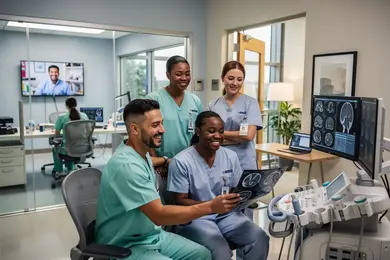
Applying the task-level remote work framework reveals clear divides within radiology technician roles based on task types. Tasks that produce digital deliverables-such as drafting reports, interpreting imaging studies, and managing data files-fit well with remote setups by leveraging secure platforms for data access and collaboration. Virtual communication roles-engaging with physicians, patients, or teams via video or messaging-also enable remote advisory and supervisory functions inside radiology practice.
- Digital Deliverable Production: Creating radiology analyses and reports remotely depends on secure digital workflows rather than physical presence.
- Virtual Interaction: Remote liaison and consultation with healthcare professionals and patients support flexible work arrangements.
- Research and Knowledge Work: Involvement in imaging research or continuing education can be pursued from afar, relying primarily on information access.
Conversely, certain tasks mandate on-site presence and hinder remote opportunities. Physical client assessments, equipment operation, and direct patient care require in-person engagement. Laboratory and radiology machine maintenance necessitate being onsite, as does meeting regulatory compliance through physical inspections. Emergency imaging situations demand immediate onsite responses. Additionally, some team-based creative production tasks are less effective when performed remotely, restricting remote eligibility even in hybrid roles.
- Physical Client Assessment and Service Delivery: Essential technician duties that require direct patient and equipment interaction.
- Laboratory and Equipment Dependency: Onsite tasks for machine operation and quality assurance.
- Regulatory Compliance: Safety inspections and verification with physical presence prerequisites.
- Emergency Response: Urgent imaging demands immediate onsite action.
- Collaborative Production Constraints: Teamwork and creative processes that lose effectiveness remotely.
Assessing remote work potential involves a detailed review of job tasks informed by O*NET data, job descriptions, and dialogues with radiology technicians who work remotely. Roles gravitating toward digital data analysis, virtual communication, and research afford the best remote compatibility. For those balancing remote opportunities, it's crucial to weigh how much hands-on patient or equipment duties dominate their workload.
One radiology technician graduate shared how navigating the balance between clinical demands and remote tasks shaped his career choices: "During my program, I realized that while I loved working with imaging technology, the in-person equipment handling limited my remote options. Transitioning into report analysis and virtual consultations took time and deliberate skill development. It was a challenge learning to trust digital platforms for collaboration, but over time it opened up flexible work avenues that traditional roles didn't offer."
Several radiology technician specializations in the United States are expected to experience notable growth in remote work opportunities over the next decade. These trends align with technological advances and evolving employer preferences that favor flexible, distributed work environments alongside sustained demand.
- Tele-Radiology: Digitization of imaging and demand for asynchronous, off-site interpretations drive remote job growth in this field. Secure remote access tools enable technicians to maintain efficiency comparable to on-site work while addressing client needs beyond traditional geographic constraints.
- Interventional Radiology Coordination: Although hands-on procedures require presence, remote roles for pre- and post-procedural planning, consultations, and documentation are expanding. These tasks leverage remote-first cultures and growing digital infrastructure to support decentralized workflows.
- Diagnostic Imaging Informatics: Specialists managing image systems, quality assurance, and workflow optimization benefit from cloud-based platforms that facilitate remote work. Knowledge-intensive responsibilities in this area are well-suited to flexible, distributed execution supported by investment in secure technologies.
Conversely, specializations like conventional radiography face hurdles for remote adoption due to regulatory mandates for physical supervision and the necessity of operating complex equipment onsite. Additionally, client and employer preference for face-to-face interaction, especially in pediatric imaging, may curtail remote work expansion despite earlier flexibility. Those evaluating radiology technician remote specialization opportunities in the United States should consider these factors alongside unemployment risk and career growth potential to pinpoint paths offering durable remote access.
Prospective and current radiology technician students aiming for strong remote work flexibility might explore focused training and certifications in these high-remote-potential specialties. Accessing financial aid for medical billing and coding programs can support career advancement and broaden remote work eligibility.
Healthcare Information Technology: This sector thrives on cloud-native systems and digital workflows that enable radiology technicians to analyze diagnostic images and provide tele-radiology services remotely. Organizations emphasize results over physical presence, leveraging asynchronous communication and secure data infrastructures for sustained remote roles beyond emergency measures.
Medical and Diagnostic Laboratories: Though hands-on sample handling restricts full remote work, many labs adopt hybrid models allowing remote preliminary image assessment and quality control. Digital reporting and virtual collaboration tools support compliance and remote supervision, making these roles partly remote-friendly.
Healthcare Consulting Firms: Consulting businesses use cloud-based platforms and virtual client interactions, allowing radiology technicians in training or advisory capacities to work remotely. The reliance on asynchronous communication and performance metrics over in-person attendance underpins remote work as a long-term strategy.
Research Institutions and Academic Centers: Remote work centers on data analysis, collaborative research, and education. While clinical procedures require onsite presence, research-related tasks offer high flexibility thanks to digital teamwork and telework policies.
Health Insurance and Utilization Review: This industry increasingly supports remote radiology technicians who perform case reviews and authorizations through cloud access to imaging data, adhering strictly to privacy regulations. Remote work is a strategic cost-saving and talent-attraction model here.
Industries with mandatory hands-on patient interaction-like inpatient hospital units or outpatient imaging centers-continue to require on-site staff due to legal and clinical supervision demands. Manufacturing and professional services sectors also limit remote roles because of physical presence or client engagement priorities. Radiology technicians seeking remote work in traditionally restrictive environments should focus on telehealth support, consulting, or educational roles within subunits embracing virtual workflows.
One radiology technician professional shared that transitioning into research-focused roles after initial clinical experience dramatically expanded her remote work opportunities. She described the shift as challenging yet rewarding-navigating new digital collaboration platforms and refining communication skills to contribute effectively without physical presence. This transition, she noted, allowed her to balance professional growth with personal flexibility, emphasizing that remote-friendly industries require adaptability and a proactive approach to leveraging technology and evolving organizational cultures.
Federal agencies demonstrated substantial remote work capacity for radiology technician roles during 2020-2022-largely driven by telework infrastructure investments and national policies. Yet, since 2023, growing political and administrative pressures have pushed many agencies to scale back remote arrangements. Telework is notably prevalent in non-clinical roles such as research, policy development, compliance, and program management, with hybrid work models common, while hands-on imaging and patient-facing duties remain mostly on-site due to equipment and health safety demands.
- State Government Variability: Telework policies vary widely across states, reflecting diverse administrative priorities and resources. Some states support hybrid schedules for administrative and analytical radiology technician positions, whereas others expect predominantly in-person work, creating an inconsistent landscape. It's essential to review the telework policies of individual agencies rather than generalize across state governments.
- Local Government Constraints: Local health departments and municipal offices typically have limited remote work options-often due to operational needs, technology limitations, and funding restrictions. Roles tied to emergency response, inspections, and direct service are generally required to be on-site.
- Role Compatibility: Positions centered on data analysis, grant oversight, compliance reviews, and policy evaluation are more amenable to teleworking. Conversely, frontline diagnostic, imaging, and regulatory inspection duties inherently demand physical presence.
- Recommendations: Prospective and current radiology technician professionals should rigorously examine telework eligibility during the hiring process, consult OPM employee surveys to understand agency-specific remote work prevalence, and seek clarity on remote policies from recruiters or career advisors. Remote work accessibility in public-sector radiology fields depends heavily on the specific agency and job function rather than broad sector assumptions.
Technology proficiency is a critical gateway for accessing remote radiology technician roles, as employers rely heavily on digital tools to evaluate candidates without direct supervision. Remote job postings show consistent demand for foundational remote work platforms-including video conferencing, cloud-based collaboration tools, and project management systems. These enable radiology technicians to communicate findings, engage in virtual team discussions, and coordinate care efficiently across locations.
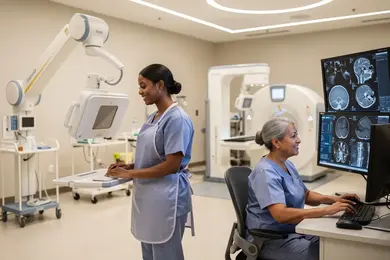
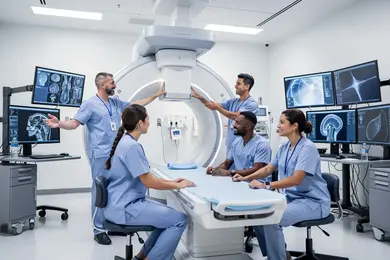
Beyond general remote work skills, specialized radiology technician digital competencies are essential. Employers seek expertise in Picture Archiving and Communication Systems (PACS), Radiology Information Systems (RIS), and secure remote image transmission tools to ensure safe handling of patient data and effective distributed clinical workflow. Without documented proficiency in these platforms, candidates risk exclusion from remote opportunities regardless of clinical qualifications.
- Technology Fluency: Mastery of both common remote work software and radiology-specific tools is a proxy for productivity, communication, and reliability in remote settings.
- Remote Communication Skills: Clear documentation, prompt responses via digital channels, and virtual team collaboration are vital when physical oversight is limited.
- Credential Documentation: Verified certifications, coursework with remote tools integration, and internships involving remote workflows demonstrate readiness.
- Platform Competency: Expected skills include PACS management, tele-radiology reporting systems, and HIPAA-compliant cloud technologies tailored for imaging data security.
- Development Pathways: Candidates should pursue formal training for complex software, self-directed practice with collaboration tools, and internships offering remote or hybrid experiences.
- Portfolio Building: Creating digital presentations or simulated case studies evidencing remote work capabilities enhances employability.
Proactively developing these technology competencies before graduation or early in one's career avoids barriers during job searches and positions radiology technicians for long-term remote work success across various specializations.
Geographic location strongly influences remote work availability for radiology technician degree graduates despite the promise of barrier-free remote jobs. Lightcast and LinkedIn data show that metropolitan areas like New York City, Chicago, and Los Angeles have the highest concentrations of remote-eligible radiology technician job postings-driven by large healthcare networks and tech-enabled radiology services headquartered there. States including California, Texas, and Florida also offer elevated remote job availability but face intense competition due to dense candidate populations. In contrast, rural areas and smaller states exhibit fewer remote opportunities, reflecting employer preferences for proximity to regulatory jurisdictions and client locations.
A geographic paradox complicates access: many employers impose state-specific hiring restrictions on remote radiology technician roles. These arise from state tax nexus laws, licensure reciprocity rules, employment law variations, and time zone collaboration needs-meaning a graduate's state of residence still significantly impacts remote job access, even when physical presence isn't required. This geographic impact is particularly acute for certain specializations:
- Licensed Professional Roles: Employer-specific state licensure mandates limit multi-state remote employment unless licensure portability exists.
- Regulated Industry Roles: State-specific compliance obligations restrict geographic flexibility for remote work.
- Client-Facing Services: Regulatory requirements based on client location force practitioners to operate within designated state jurisdictions.
Prospective candidates should conduct a geographic remote work access analysis tailored to their circumstances by:
- Job Posting Location Analysis: Using LinkedIn's remote job filters to evaluate availability based on state or metropolitan area.
- Employer Remote Policy Research: Consulting Flex Index data to identify organizations supporting state-inclusive or multi-state remote hiring.
- Licensure Reciprocity Evaluation: Reviewing professional association databases to understand portability and state-to-state agreements affecting eligibility.
According to a recent BLS telework supplement, roughly 22% of healthcare technologists and technicians engage in some form of remote work, marking moderate but growing adoption within radiology technician careers.
Understanding the nuanced impact of remote work availability for radiology technician degree graduates by region informs career planning-especially when combined with insights into the impact of geographic location on radiology technician remote jobs. For candidates considering further specialization or advanced degrees, exploring fields like a masters in nutrition can also provide additional pathways with different remote work dynamics.
Certain radiology technician in-person clinical roles are structurally bound to remain on-site despite the growing trend toward remote work. The Dingel-Neiman feasibility index, alongside McKinsey's automation and remote work task analysis and BLS telework data, reveals that some radiology technician job responsibilities-especially those demanding physical, regulatory, and security adherence-cannot be shifted remotely without major technological advances.
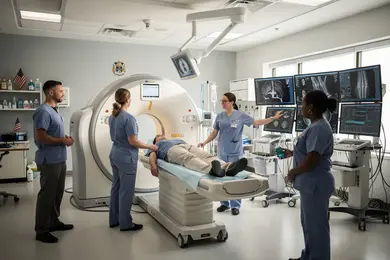
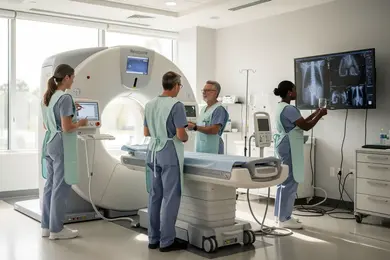
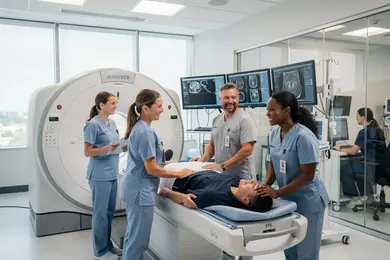
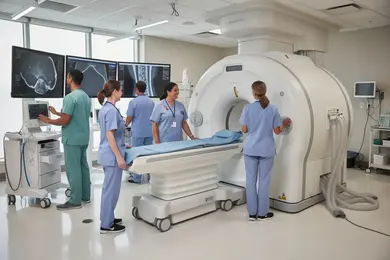
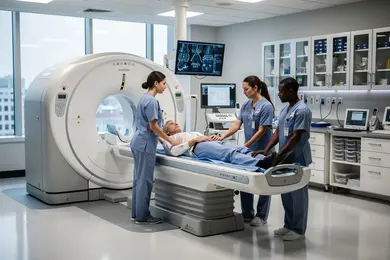
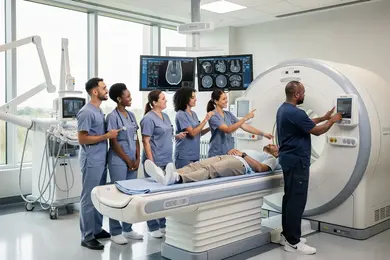
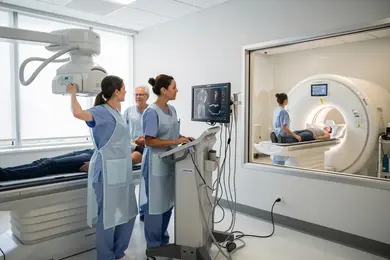
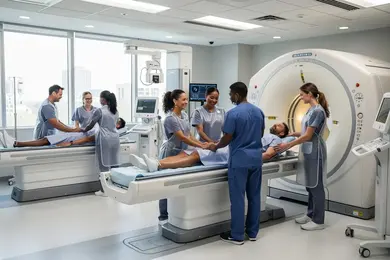
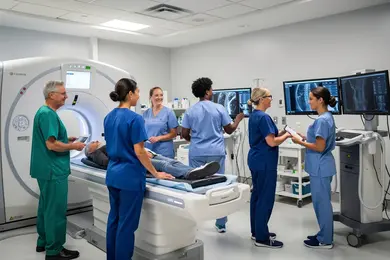
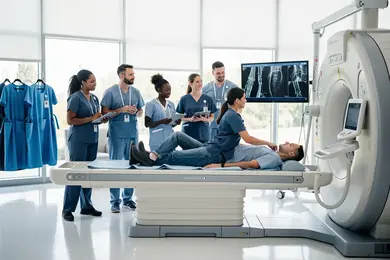
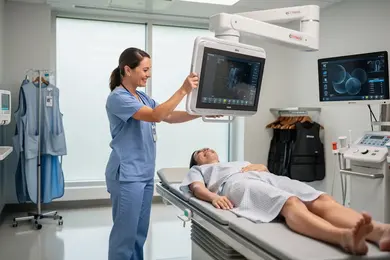
- Clinical Imaging Technologists: These professionals operate bulky, immobile machines like X-rays, CT scans, and MRI equipment, requiring precise, real-time patient positioning and adjustments. The necessity of physical client contact and hands-on operation makes remote work nearly impossible in these clinical roles.
- Interventional Radiology Technicians: Supporting image-guided surgeries and minimally invasive procedures, these technicians must be physically present to assist physicians and maintain sterile environments. Emergency responsiveness and strict health protocols further block remote options.
- Regulated Licensed Practice Roles: In many jurisdictions, radiology technicians need on-site supervision and credential verification to meet licensing standards. Virtual supervision is rarely accepted, limiting remote work possibilities due to compliance demands.
- Research and Production Technicians in Radiologic Sciences: Roles involving laboratory experiments, prototype testing, or specialized equipment calibration require physical access to controlled facilities, ruling out remote work feasibility.
- Government and Defense Radiology Technicians: Working in secure sites such as military or veterans hospitals, these roles depend on security clearances and physical site access, which are incompatible with remote work due to strict data security and clearance requirements.
While primary on-site radiology technician job responsibilities limit remote work, some professionals develop hybrid careers by adding remote consulting, educational content creation, telehealth advisory functions, or professional writing-leveraging their expertise without abandoning key clinical duties. This strategy expands remote work options within structurally on-site fields.
Prospective and current radiology technician students should weigh remote work ambitions against job security, compensation, and personal fulfillment. Some of the lowest-unemployment-risk and highest-paid specialties remain among the most physically anchored. Balancing these factors helps align educational and certification decisions with realistic expectations about remote work access.
For those comparing career paths, evaluating compensation accurately is vital-for example, examining Psych NP salary by state can provide context on related healthcare professions.
Graduate-level credentials significantly influence remote work accessibility for Radiology Technician professionals by accelerating entry into senior roles that afford greater autonomy. Data from authoritative workforce surveys reveal a strong link between higher job seniority and the opportunity for remote work-positions requiring advanced expertise and leadership responsibilities are far more amenable to telework arrangements than entry-level roles, which typically involve on-site technical tasks and supervision.
Senior Radiology Technician roles with graduate credentials often include managerial duties, protocol development, or specialized consulting, functions inherently more compatible with remote settings. Graduate education acts as a catalyst to these roles, offering advanced clinical skills and leadership training that employers associate with reliability and self-direction - crucial traits for remote employment.
- Professional Master's Programs: Equip graduates for senior individual contributor or administrative positions that increase remote work eligibility through enhanced clinical and managerial expertise.
- Doctoral Programs: Target practitioners aiming for research, academia, or specialized consulting roles that characteristically provide high degrees of remote autonomy.
- Specialized Graduate Certificates: Enable focus on emerging subspecialties like teleradiology technologies, aligning with growing demand and strong remote compatibility.
While advanced degrees offer a pathway to remote work by fast-tracking career advancement, they require substantial time and financial investment. Alternatives-such as building tenure in remote-friendly entry-level roles, mastering cutting-edge radiologic technologies, or aligning with employers who prioritize remote work-can sometimes yield equivalent access to flexible work options without extensive graduate study.
Entry-level radiology technician roles offering immediate remote work access frequently exist within digital-first healthcare providers and tech-oriented imaging companies. These organizations often apply remote-first policies consistently, allowing new hires to begin fully remote without prior onsite experience. Key entry-level roles with strong early remote potential include:
- Teleradiology Technician: Focused on preparing and processing imaging data for remote review by radiologists, these roles are common in telehealth firms and specialized teleradiology services. They feature clearly defined tasks, enabling remote work with measurable output and established digital collaboration platforms.
- Medical Imaging Transcription Specialist: Organizations concentrating on medical documentation for radiology practices offer entry-level remote positions converting imaging reports into standardized formats. The asynchronous nature of transcription suits remote workflows and performance evaluation.
- Radiology Informatics Support Technician: Digital health companies that manage radiology data systems and provide software support often hire remotely at entry levels. These roles require tech proficiency and engagement with digital infrastructure designed for remote collaboration.
- Healthcare IT Support in Imaging Departments: Some hospital systems and outpatient centers with advanced telecommuting policies allow entry-level IT technicians to start remotely, especially for routine system monitoring and troubleshooting tasks conducted via remote access tools.
While early remote roles offer flexibility, they may restrict access to crucial hands-on mentorship, skill-building through observation, and professional networking-elements essential for clinical development. Prospective technicians should weigh remote work benefits against development trade-offs, seeking employers that blend remote onboarding with periodic in-person interaction. Building an effective hybrid strategy involves targeting organizations with structured mentorship programs for remote hires, regularly scheduled team meetings, and clearly defined expectations for balancing remote and onsite engagement according to individual career objectives.
What Graduates Say About the Radiology Technician Degree Careers Most Likely to Be Remote in the Future
- Valentino: "Having completed the radiology technician degree recently, I'm genuinely excited about the future of remote work in this field. The current adoption rates for remote diagnostic roles are steadily rising-especially where digital imaging technology is well integrated. For those willing to master advanced tech tools, the opportunity to freelance or self-employ as a specialist hardly seems out of reach."
- Zev: "Reflecting on my journey through the radiology technician program, I find the industry's shift towards remote roles to be gradual but promising. Task-level compatibility analysis suggests that while many technical procedures still require physical presence, portions of diagnostic imaging review and reporting can be handled remotely. However, many employers maintain a conservative culture on working remotely, so adaptability remains key."
- Grayson: "From a professional standpoint, the radiology technician degree opened doors to a career path increasingly amenable to remote work in the long term. Technology proficiency requirements-particularly familiarity with cloud-based PACS systems-are rising, enabling geographic constraints to loosen over time. I see the most promising roles evolving into hybrid models where remote work is standard rather than an exception."
Other Things You Should Know About Radiology Technician Degrees
The 10-year employment outlook for radiology technician careers with the lowest unemployment risk is generally positive. Fields such as MRI technologists and nuclear medicine technologists are expected to grow faster than average due to ongoing advances in imaging technology and increased demand for non-invasive diagnostics. These specialties also benefit from expanding healthcare needs as populations age, providing more job stability and remote work opportunities through telemedicine support roles.
Mid-career radiology technician roles showing the highest demand typically involve advanced imaging techniques and specialized certifications-such as CT scans, MRI, and interventional radiology. These tracks are favored by employers looking for professionals who can operate complex equipment and assist remotely with image analysis and patient data management. Holding such certifications increases employability and opens pathways to hybrid or telehealth positions.
Freelance or self-employment options for radiology technician graduates remain limited but are growing with telehealth expansion. Freelancers may take on contract work analyzing images or providing consultative services remotely. However, this pathway requires strong technology skills and often a robust professional network. Self-employment can reduce unemployment risk by diversifying income sources but demands proactive client acquisition and continuous certification updates.
Yes. Teleradiology quality assurance roles are often remote and focus on image review, protocol compliance, and reporting accuracy. Employers usually require an accredited radiography degree, ARRT certification, state licensure where applicable, and at least 1 to 3 years of clinical experience in diagnostic imaging.
- 4 solutions to the biggest challenges facing remote radiologists https://radiologybusiness.com/topics/healthcare-management/healthcare-staffing/4-solutions-biggest-challenges-facing-remote-radiologists
- Radiology Career Trends: Job Outlook | AMN Healthcare https://www.amnhealthcare.com/blog/physician/perm/your-radiology-career-trends-tech-future-outlook/
- Exploring High-Demand Imaging Careers: CT, MRI, and X-Ray Tech Jobs https://www.crosscountry.com/blog/exploring-high-demand-imaging-careers
- Top Careers in Imaging and Radiology for 2025 - Supplemental Health Care https://shccares.com/blog/allied-health/top-careers-in-imaging-and-radiology-for-2025/
- Radiology technologist working from home https://www.siemens-healthineers.com/perspectives/working-from-home-in-radiology
- Integration of Artificial Intelligence in Radiology https://www.medical-professionals.com/en/integration-of-artificial-intelligence-in-radiology/
- What is the Future of Radiology in the Next 20 Years? https://www.intelerad.com/en/2022/05/13/what-is-the-future-of-radiology/
- Remote Radiology Jobs | Work from home as a Radiologist https://www.everlightradiology.com/careers/choice-and-flexibility
- Remote Scanning https://www.acr.org/Advocacy/Position-Statements/Remote-Scanning
- ASRT Staffing and Workplace Survey Shows Vacancy Rate Increases Near Record Highs, Aligning With Overall Health Care Profession Trends https://www.asrt.org/main/news-publications/news/article/2025/07/24/asrt-staffing-and-workplace-survey-shows-vacancy-rate-increases-near-record-highs-aligning-with-overall-health-care-profession-trends