2027 Which Marine Science Degree Careers Are Most Likely to Be Remote in the Future?

Co-Founder and Chief Data Scientist
Many aspiring marine science professionals face uncertainty about remote work availability-especially as traditional fieldwork-heavy roles limit telecommuting options. However, as of 2023, approximately 27% of marine science-related positions incorporate partial or full remote work, reflecting rising digital data analysis and remote monitoring tasks. Employers in research institutions and environmental consulting increasingly emphasize technology proficiency and data management skills, easing geographic constraints. Freelance scientific consulting also offers self-employment alternatives with flexible schedules. This article examines which marine science career paths best align with remote work trends-evaluating industry adoption, task compatibility, and long-term trajectories-to guide prospective and current professionals toward maximizing remote work access.
Key Things to Know About the Marine Science Degree Careers Most Likely to Be Remote in the Future
- Remote adoption rates remain highest in data analysis and modeling roles-where geographic constraints are minimal and technology proficiency drives full telecommuting capability among marine science graduates.
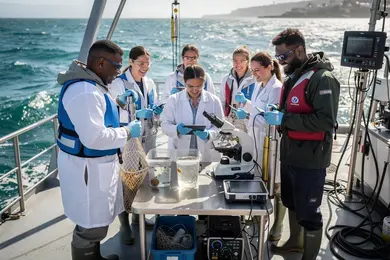
- Tasks focused on field research and specimen collection show limited remote compatibility due to necessary physical presence, though hybrid models are emerging with improved remote monitoring technologies.
- Freelance consulting and environmental policy analysis offer growing self-employment options, supported by industry-wide shifts favoring flexible, remote-friendly marine science career paths with sustained long-term growth.
What Does 'Remote Work' Actually Mean for Marine Science Degree Careers, and Why Does It Matter?
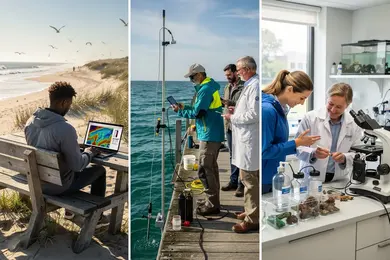
Remote work opportunities for marine science degree holders in the US vary widely, representing a spectrum rather than a simple yes-or-no status. Fully remote roles operate 100% off-site, offering complete geographic independence. Hybrid roles combine scheduled on-site work with remote time, reflecting increasing employer flexibility. Remote-eligible roles are primarily on-site but allow occasional remote work.
Understanding this distinction helps clarify how remote career options within marine science fields unfold across different employers and job functions.
According to Pew Research Center, Stanford Institute for Economic Policy Research, and BLS American Time Use Survey data, remote work adoption has expanded rapidly since 2020-most durable adoption appears in technology-driven, knowledge-based occupations. In contrast, marine science roles requiring physical presence, specialized equipment, or direct client interaction often maintain on-site requirements, limiting fully remote prospects.
The framework for assessing remote work potential includes key factors:
- Task-Level Remote Compatibility: Can the marine science work be performed off-site effectively?
- Employer-Level Remote Adoption: Have organizations embraced remote or hybrid policies within marine science sectors?
- Structural Constraints: Are licensing, regulations, client demands, or equipment needs requiring physical presence regardless of policy?
Geographic flexibility matters especially to marine science degree seekers, as it significantly broadens labor market access, eliminates commute time and costs, and may increase earning potential by connecting professionals with high-wage metropolitan employers regardless of residence.
Peer-reviewed studies link remote work to better job satisfaction and retention, factors critical for career stability and quality of life. Prospective students aiming for remote-compatible careers may also explore related fields offering remote options, such as online PharmD programs, to diversify possibilities.
Which Marine Science Career Paths Have the Highest Remote Work Adoption Rates Today?
Several marine science career paths today show notably high rates of remote or hybrid work adoption-a trend shaped by technological advances and changing employer expectations since the pandemic. Data from the BLS telework supplement, LinkedIn Workforce Insights, Ladders 2024 remote tracking, and Gallup workplace surveys reveal which roles exhibit durable remote work patterns rather than temporary shifts.
- Marine Data Analysts: These professionals manage and interpret extensive oceanographic datasets using specialized software. Their deliverables-digital reports and models-make remote work practical as tasks mainly require a secure computer and internet connection. This role has seen remote adoption steadily rise since 2020.
- Environmental Policy Advisors: Focused on policy development, regulatory compliance, and stakeholder communication, these advisors rely on virtual meetings and document drafting. Their productivity is measured by project milestones and written outputs, encouraging widespread hybrid work acceptance in government agencies and consultancies.
- Marine GIS Specialists: Utilizing cloud-based Geographic Information Systems for marine spatial analysis, this role supports consistent remote work. Post-pandemic data shows growth in remote adoption, especially within government and consulting sectors.
- Science Communicators and Writers: Translating complex marine science into accessible written and multimedia formats allows for fully remote delivery. This occupation maintains some of the highest and most stable remote work rates among marine science career paths.
- Remote Marine Research Coordinators: While their fieldwork remains on-site, many coordinators now conduct grant management, data synchronization, and partner communications remotely through digital project management tools, supporting a sustained hybrid work model.
- Marine Software Developers: Designing software systems for modeling and automation, these developers primarily work on computers connected via secure networks. Their fundamentally digital tasks contribute to some of the strongest remote work adoption in marine science.
- Remote Education and Outreach Specialists: Delivering marine science education through e-learning platforms and virtual events, they enjoy location flexibility. The pandemic accelerated and cemented adoption of virtual engagement formats, ensuring continued remote access in this role.
These remote work trends are influenced by employer type and sector-large technology-driven organizations often offer more flexible policies while smaller firms and government agencies face operational constraints. Notably, remote access is more enduring in marine science career stages centered on knowledge work and project management rather than field-based roles.
Prospective students, current learners, and early-career professionals weighing marine science remote work adoption rates in the United States should consider these nuances carefully.
Finally, those exploring remote-friendly marine science opportunities might also examine related fields for alternative credential strategies. For example, you can explore cheapest accelerated nursing programs to understand how flexible educational paths support remote work in other scientific disciplines.
How Does the Nature of Marine Science Work Determine Its Remote Compatibility?
Evaluating a marine science role's remote work potential demands analyzing occupational tasks via sources like O*NET, job descriptions, and interviews with current remote professionals. Understanding the share of remote-compatible functions helps students and early-career employees choose flexible paths and employers.
- Digital Deliverables: Tasks centered on producing reports, coding, data analysis, modeling, and digital communication align strongly with remote work. Careers such as marine data analysts, oceanographic modelers, and science communicators typically rely on creating digital outputs, enabling high remote feasibility.
- Virtual Interaction: Positions involving remote stakeholder engagement, virtual teaching, consultancy, or project oversight utilize video conferencing and asynchronous collaboration tools effectively. Roles like marine policy specialists, grant coordinators, and remote academic advisors fit this category.
- Secure Data Access: When practitioners can safely access and manage datasets-such as satellite imagery or underwater sensor data-through cloud platforms, remote work becomes practical. This suits specialists in marine bioinformatics and remote sensing.
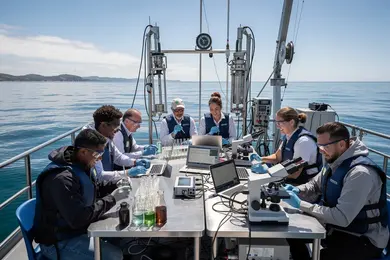
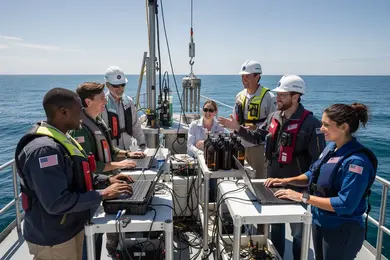
- On-site Obligations: Certain tasks always require physical presence despite remote technology-field sampling, lab experimentation, equipment maintenance, regulatory inspections, and urgent marine incident responses. For instance, marine ecologists conducting habitat surveys and compliance officers conducting inspections depend on being on site.
- Collaborative Constraints: Creative teamwork and labor-intensive activities-like vessel expedition planning or intricate laboratory procedures-often lose effectiveness when done remotely, limiting telework in these domains.
Several marine science specializations show strong potential for increased remote work adoption over the next decade, driven by technological advances and shifting employer attitudes. These roles rely heavily on digital workflows-where remote productivity often rivals or exceeds on-site efforts-offering promising flexibility for careers focused on knowledge-intensive tasks.
- Marine Data Analysis: The rise of digitized datasets from satellites, autonomous sensors, and monitoring platforms enables analysts to securely access and interpret information from any location, backed by cloud computing and advanced tools that support fully remote roles without productivity loss.
- Oceanographic Modeling and Simulation: Growing investments in high-performance computing and collaborative software empower modelers to contribute remotely to research and consulting projects, fostering remote-first cultures in institutions reliant on computational ocean science.
- Marine Environmental Consulting: With client preferences shifting toward asynchronous service delivery, consultants can conduct impact assessments and compliance remotely, supported by secure access solutions that reduce reliance on in-person visits, making remote consulting more sustainable.
- Marine Policy and Regulatory Analysis: Many responsibilities-such as drafting, analysis, and virtual stakeholder engagement-are digital and well-suited to remote work, though some roles may still require physical presence for compliance verification and relationship management.
However, certain specializations may face reduced remote opportunities despite current trends. These include roles requiring physical supervision of marine fieldwork, limitations in remote execution of complex laboratory tasks, and sectors where employers emphasize on-site presence and in-person client relationships-factors prompting a potential reversion from pandemic-era remote work norms.
Prospective students and early-career marine science professionals should weigh remote work sustainability alongside unemployment risk and career growth prospects. Selecting specializations with rising remote work access and robust demand supports long-term flexibility and resilience.
For those seeking accelerated pathways to adaptable healthcare careers integrated with marine science applications, a 9 month LPN program can provide complementary skills and career options. Targeting remote-friendly marine science specializations for the next decade can maximize career flexibility and alignment with evolving industry trends.
Industries like healthcare, regulatory enforcement, manufacturing, and client-focused consultancy generally limit remote roles due to physical or relationship-driven demands. Yet even here, marine science graduates can access remote opportunities by seeking data-centric, technical support, or virtual advisory functions that don't require on-site presence.
- Environmental Consulting: Firms in this sector leverage cloud-based tools for data analysis, environmental monitoring, and report writing, enabling seamless remote collaboration. They prioritize virtual meetings to sustain client relationships and adopt remote work as an integral, ongoing mode rather than a temporary fix. The use of GIS software and digital modeling supports distributed teams effectively.
- Research and Development (R&D): Both academic and private institutions focus on simulation, data analytics, and literature review-tasks easily performed off-site. Asynchronous teamwork is encouraged through results-driven performance management, with hybrid arrangements accommodating occasional field activities alongside remote data processing.
- Marine Policy and Advocacy: Cloud-based workflows facilitate strategic planning, virtual stakeholder engagement, and policy drafting for nonprofits and government agencies. Remote work suits these roles because communication and document management outweigh physical presence, supported by videoconferencing technologies.
- Technology and Software Development for Marine Applications: This rapidly growing field involves creating digital platforms, remote sensing tools, and autonomous vehicle software. Its fully digital nature fosters agile, virtual teams where remote work isn't just possible-it's the standard organizational practice.
- Education and Science Communication: Universities and digital media platforms hire marine science graduates to develop and present content via virtual classrooms, webinars, and social channels. Flexible scheduling and asynchronous production reinforce location independence across these positions.
Federal agencies showed strong telework adoption for marine science roles during the 2020-2022 pandemic years, leveraging OPM telework guidelines. Since 2023, however, political and administrative shifts have led to tightened remote work eligibility-making telework less consistent and often determined individually. State governments demonstrate a wide spectrum of telework policies, with some supporting hybrid models for marine science employees, while others mandate full on-site attendance based on local leadership and technology resources.
Local governments generally offer limited telework due to budget constraints and the in-person nature of many responsibilities.
- Federal Telework Trends: High telework rates prevailed in many marine science roles during the pandemic, but post-2023 policy changes favor more in-office presence, requiring case-by-case negotiation for remote work.
- State Government Variation: Policy diversity ranges from robust hybrid work support to strict on-site requirements, influenced by jurisdictional leadership and infrastructure.
- Local Government Challenges: Limited remote options exist at this level, primarily because marine science tasks often need physical interaction and resources are more constrained.
- Role Compatibility: Remote work fits well with functions like policy analysis, research, grant and program management, and data analysis, whereas regulatory inspection, law enforcement, and emergency response necessitate physical presence.
- Private-Sector Comparison: Consulting firms and technology-focused marine science roles typically offer greater and more stable remote flexibility than government positions.
- Advisory Insight: Prospective and current professionals should examine individual agency telework policies carefully, inquire about remote eligibility during hiring, and use OPM survey data for realistic expectations of remote work availability on a role-specific basis.
Technology proficiency is a critical gating credential for remote marine science roles, reflecting how employers evaluate candidates when direct observation of work processes is impossible. Remote positions demand fluency in foundational remote tools-such as Zoom, Microsoft Teams, Google Workspace, Slack, and project management platforms like Trello or Asana-alongside marine science-specific digital competencies that signal effective remote work capability.
Key technology competencies commonly required in remote marine science job postings include:
- Foundational Remote Tools: Mastery of video conferencing, cloud collaboration suites, and project management software that enable communication and coordination within distributed teams.
- Marine Science Digital Skills: Proficiency with geographic information systems (GIS), remote sensing software, programming languages like R or Python for data analysis, and specialized marine modeling or monitoring platforms crucial for virtual data collection and interpretation.
- Communication and Collaboration: The ability to clearly convey complex scientific information through digital channels and contribute effectively in virtual team environments is essential to compensate for the lack of in-person interaction.
Employers often use demonstrated technology proficiency as a proxy for remote work success-meaning marine science graduates without documented remote technology skills risk exclusion regardless of substantive expertise. Practitioners aiming for high-remote-adoption specializations should develop these skills through deliberate efforts such as coursework integration, independent certification programs in areas like GIS or cloud computing, remote-focused internships, and portfolio creation showcasing remote data projects and virtual presentations.
Developing a targeted technology proficiency plan tailored to specific marine science remote career paths improves job market access. Formal training is required for complex platforms like GIS and statistical programming; self-directed practice suits remote communication tools; and structured internships provide experience with end-to-end remote workflows.
Addressing these technology competencies proactively ensures smoother transitions into remote marine science careers rather than encountering unexpected hurdles during job applications.
Remote work opportunities for marine science degree graduates in coastal regions vary significantly by geography, contrary to the assumption that remote roles remove location barriers. Data from Lightcast and LinkedIn show metropolitan areas like Seattle, San Diego, and Boston lead in remote-eligible marine science job postings.
West Coast and Northeast states generally feature more competitive remote roles, reflecting mature employer remote hiring cultures. In contrast, regions with fewer marine research centers-such as parts of the Midwest and South-often see limited remote job access, highlighting the impact of geographic location on remote marine science careers.
Yet a geographic paradox persists: many remote employers impose state-specific hiring restrictions driven by tax nexus laws, licensure reciprocity, employment law compliance, and collaboration preferences aligned with time zones. These factors mean a marine science graduate's state of residence remains a crucial determinant of remote job eligibility-even for positions officially classified as fully remote.
- Licensed Professional Roles: Require state-specific credentials, such as certified environmental marine biologists or licensed aquatic toxicologists, limiting remote work to states where licensure reciprocity applies.
- Regulated Industry Roles: Fisheries management and coastal regulation roles often entail strict state compliance obligations, curbing multi-state remote employment opportunities.
- Client-Facing Service Roles: Consultants or educators serving local clients face geographic regulatory hurdles tied to the client's state, restricting flexible remote work.
Marine science graduates can better navigate these geographic constraints by conducting tailored remote work access analyses using tools like LinkedIn job posting location filters to evaluate state-specific remote role availability. Additionally, consulting Flex Index remote policy data helps identify employers with broad state-inclusive remote hiring practices, while professional association licensure reciprocity databases clarify credential portability.
This approach enables informed decisions aligned with realistic remote work prospects and geographic realities. Remote job postings for marine science roles increased nationwide by roughly 35% over two years, yet uneven geographic adoption underscores the enduring influence of state regulatory frameworks on remote work access.
Prospective students may also explore ASN online programs for foundational science credentials before specializing, optimizing their strategic positioning for careers emphasizing remote work flexibility.
Certain marine science careers in North America face persistent on-site work obligations despite growing trends toward remote work. Field-based marine science jobs with limited remote work options in the US and Canada often involve tasks that structurally resist remote adaptation rather than simply employer preference.
The Dingel-Neiman remote work feasibility index, McKinsey Global Institute's task analyses, and BLS telework data reveal that these roles require physical presence due to environmental, technical, regulatory, or security constraints.
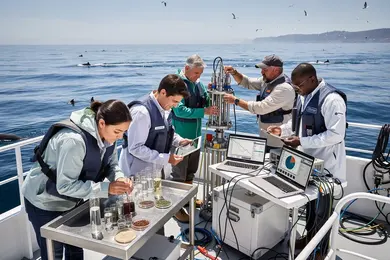
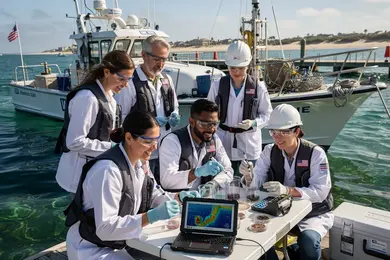
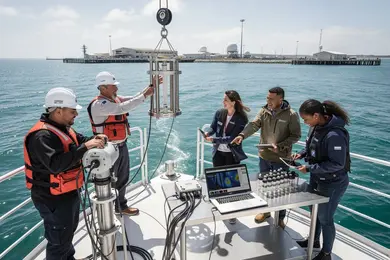
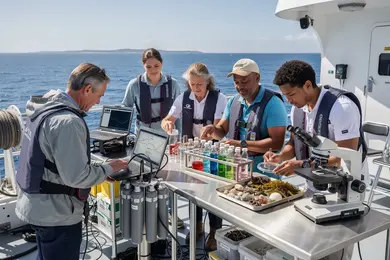
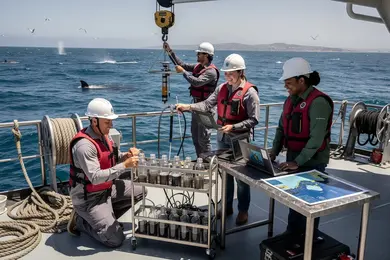
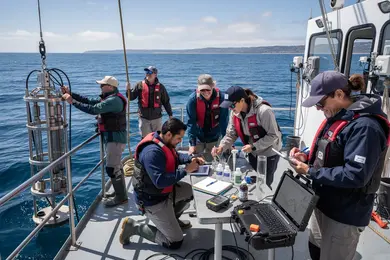
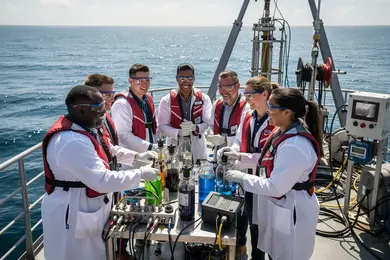
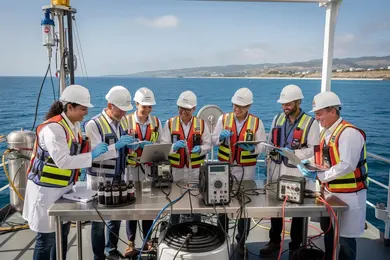
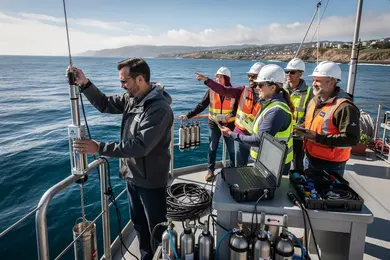
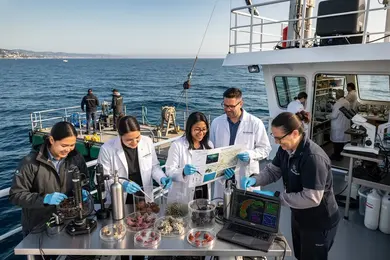
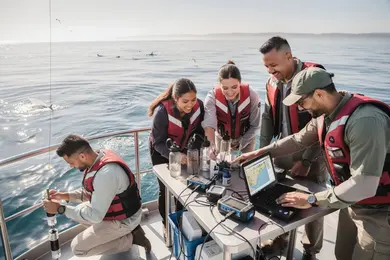
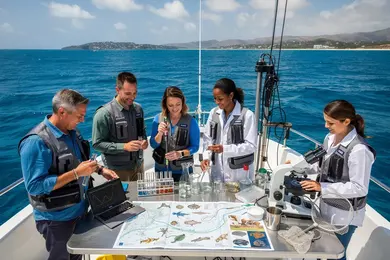
- Field Research and Sample Collection: These positions demand direct, hands-on interaction with marine environments-collecting specimens, operating instruments, or monitoring animal behavior onsite. Work must occur on vessels, coastal locations, or research platforms, making remote alternatives impractical without breakthroughs in robotic or remote sensing capabilities.
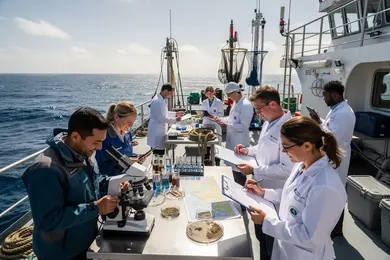
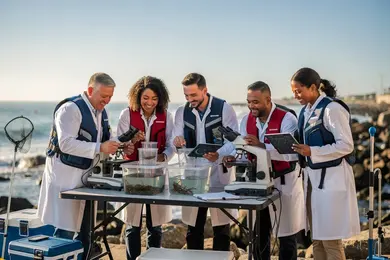
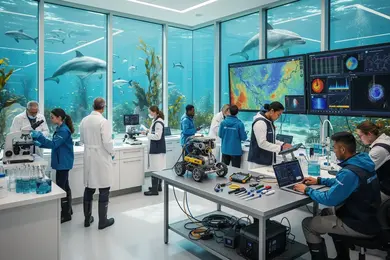
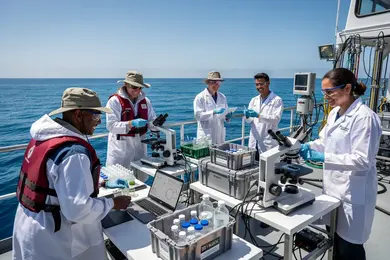
- Laboratory-Based Analysis Roles: Marine scientists analyzing water chemistry, tissue samples, or molecular data rely on specialized equipment housed in secure laboratory facilities. While some data processing can be remote, preparatory and experimental stages require physical access, limiting telework feasibility.
- Regulatory and Compliance Positions: Roles overseeing fisheries, environmental assessments, or marine protected areas involve strict jurisdictional protocols and licensure. Site inspections and face-to-face interactions with stakeholders are essential, making fully remote work unfeasible.
- Maritime and Coastal Emergency Response: Responding to oil spills, marine hazards, or search-and-rescue requires immediate onsite presence. These unpredictable emergencies demand rapid coordination that cannot be replicated remotely for primary responders.
- Government and Defense Science Roles: Marine scientists in these sectors often need security clearances and access to restricted locations and vessels. These immutable requirements enforce on-site work beyond employer discretion.
While these paths are structurally on-site, some practitioners develop hybrid careers incorporating remote-friendly consulting, education, writing, or advisory roles alongside their core responsibilities. For students and early-career professionals prioritizing remote work, recognizing these industry-imposed limits is key to crafting flexible career strategies that balance passion and practicality.
Career planning should integrate remote work potential with employment stability, compensation, and personal goals. Many structurally on-site marine science roles offer high pay and robust job security-trade-offs worthy of honest evaluation when selecting academic concentrations or internships.
Students seeking flexible options might explore complementary pathways or hybrid specializations. For those considering advanced degrees or certifications, programs like accelerated PMHNP programs demonstrate how certain remote-accessible fields intertwine with on-site expertise to broaden career flexibility.
Advanced degrees often serve as a gateway to remote work for marine science professionals by accelerating access to senior, autonomous roles where remote flexibility is more common. Employers tend to award remote privileges to experienced practitioners with specialized knowledge and proven independence, making graduate credentials indirectly valuable beyond simply qualifying for certain positions.
- Professional Master's Degrees: These programs prepare graduates for leadership or senior individual contributor roles that typically offer greater remote work compatibility.
- Doctoral Degrees: Holders of PhDs frequently engage in independent research or academic positions that are naturally suited to remote arrangements, offering notable autonomy.
- Specialized Graduate Certificates: Targeted certifications in emerging or niche marine science areas-such as marine data analytics or remote sensing-enable entry into remote-friendly roles without the time commitment of a full degree.
- Credential Impact Differentiation: Some graduate qualifications mainly boost salary or career progression without expanding remote work eligibility, underscoring the importance of selecting programs aligned with remote-compatible careers.
Yet graduate education isn't the only path to remote work access. Building seniority through roles that are already remote-compatible, acquiring technical skills like GIS and programming, or aligning with employers that prioritize remote-first cultures can also create substantial remote opportunities. For many marine science professionals, these alternatives may offer more efficient routes to remote flexibility without the extensive financial and time investments graduate programs require.
Remote work access in marine science hinges on a mix of career stage, credential type, and acquired competencies. Advanced degrees facilitate entry into roles where remote work is widely adopted, but targeted skill development and employer selection remain crucial factors shaping long-term remote work prospects.
Entry-level marine science roles that enable immediate or rapid remote work often exist where digital deliverables and measurable outputs drive performance evaluation without physical supervision. Consistent remote policies, remote-first organizational cultures, and established virtual infrastructure allow these positions to operate fully or partially off-site from the outset.
- Data Analyst: Common in government agencies, environmental consulting firms, and research institutions with mature remote work frameworks. Tasks focus on processing and interpreting marine datasets through software platforms, supporting clear remote productivity assessment.
- Environmental Consultant: Positions in digitally native consultancies or companies prioritizing remote-first cultures frequently offer full remote access immediately, especially when the role emphasizes report generation and data analysis rather than fieldwork.
- GIS Specialist: Typically found in academic and nonprofit settings that leverage the technical, software-driven nature of geographic information systems, enabling early-career remote opportunities.
- Scientific Writer or Communications Coordinator: Organizations such as advocacy groups and marine-focused media outlets employ early-career professionals with strong writing skills who can produce content entirely remotely.
Employers offering genuine remote entry-level access usually share key traits: digital-first operations, clear output metrics, and management teams experienced in remote supervision of junior staff. Conversely, some remote options are nominal-often contingent on developing tenure in-office first.
Prioritizing remote work at the start of a marine science career entails trade-offs-reduced mentorship, limited professional networking, and fewer hands-on learning experiences. Early-career professionals should assess whether remote convenience outweighs potential slower development.
Balancing a hybrid approach can optimize growth and flexibility. Target employers providing structured remote onboarding, scheduled in-person meetings, and explicit remote work expectations. This strategy helps emerging marine scientists build essential skills, networks, and career momentum while benefiting from remote access.
What Graduates Say About the Marine Science Degree Careers Most Likely to Be Remote in the Future
- Pierce: "When I completed my marine science degree, I was excited to see how rapidly the field is adopting remote work-especially roles involving data analysis and environmental monitoring. The technology proficiency required has definitely increased, with remote sensing tools becoming standard, which initially felt daunting but ultimately empowering. From my experience, the long-term trajectory for remote careers here is strong, making it possible to contribute to ocean health from nearly anywhere."
- Aryan: "The marine science industry's remote culture is still evolving, but many employers are now open to flexible work arrangements, especially for modeling and research positions. However, geographic constraints remain a hurdle for fieldwork-heavy roles, which is something I had to consider carefully when planning my career path. Freelance and self-employment opportunities offer exciting alternatives-allowing me to blend consulting with independent projects while working remotely."
- Jonathan: "Reflecting on my marine science education, task-level compatibility analysis was invaluable in identifying which job functions adapt well to remote setups-data processing and report writing top the list. The current adoption rates of remote practices vary greatly depending on the subfield, making it essential to target employers with strong remote infrastructure. From a professional standpoint, honing tech skills and understanding remote work dynamics early has made all the difference in sustaining a successful remote career in this field."
Other Things You Should Know About Marine Science Degrees
Data analyst, GIS specialist, and oceanographic modeler roles are the most remote-friendly marine science jobs. They usually do not require a field license, but many employers expect a bachelor’s degree, proficiency in Python or ArcGIS, and experience handling NOAA or satellite datasets.
Marine science tracks emphasizing specialized analytical skills-such as marine data science, environmental impact assessment, and marine policy analysis-tend to lead to the most in-demand mid-career roles. These roles often require proficiency in remote sensing and computer modeling, skills that facilitate remote work and enhance job security by aligning with evolving technological trends in the field.
Freelance and self-employment options can reduce unemployment risk for marine science graduates by providing flexibility and multiple income streams. Independent consultancy in environmental compliance, scientific communication, and data interpretation allows remote work and mitigates reliance on traditional employer-based roles, which can be more vulnerable during economic downturns or funding cuts.
In 2027, remote marine science careers are increasingly influenced by advancements in technology. Data analysis and environmental consultancy are among the fields most likely to operate remotely, leveraging tools like satellite imagery and AI to study ecosystems and advise on conservation strategies without the need for on-site presence.
- 10 careers you can have with a Marine Science degree - SAMS UHI Student Blog https://blog.sams.ac.uk/10-careers-you-can-have-with-a-marine-science-degree/
- The Role Of Emerging Technologies In Ocean Conservation — Youth STEM 2030 https://www.youthstem2030.org/youth-stem-matters/read/the-role-of-emerging-technologies-in-ocean-conservation
- Remote Work in Marine Sciences: A Paradigm Shift in the Workforce • Blue-Jobs • The online platform to find a job in marine sciences https://blue-jobs.com/2025/01/28/remote-work-in-marine-sciences-a-paradigm-shift-in-the-workforce/
- 18 Best marine science jobs in remote (Hiring Now!) | Workopolis https://www.workopolis.com/search
- Global patterns of sea surface climate connectivity for marine species - Communications Earth & Environment https://www.nature.com/articles/s43247-022-00569-5
- This website is not available in your country https://www.eurosciencejobs.com/article/876/remote-work-in-science-opportunities-and-challenges
- 10 Jobs You Can Get With a Marine Biology Degree https://www.seamester.com/blog/10-jobs-you-can-get-with-a-marine-biology-degree/
- Marine Conservation Jobs | Ultimate Guide | Conservation Careers https://www.conservation-careers.com/marine-conservation-jobs/
- Artwork of a gum leaf symbolising ‘welcome’ and acknowledging diverse countries, environments, communities, cultures, beliefs, and history. https://www.seek.com.au/entry-level-marine-science-jobs
- New high-tech jobs to support marine science | AIMS https://www.aims.gov.au/information-centre/news-and-stories/new-high-tech-jobs-support-marine-science