2027 BS in Business Administration and Accounting: Comparing Degree Plans After an AAS
Audited and Verified:
Our Editorial and Data Verification Process
Research.com uses government datasets, official education statistics and primary institutional information to support its career and degree guides. Our review process checks factual accuracy, occupational definitions, source dates and the requirements associated with the credentials discussed.
How This Article Was Fact-Checked
Our editorial team verifies salary estimates, employment projections, education requirements and program information against original data providers and official organizations. Salary figures are checked against the relevant occupational definitions and reporting periods. Information about licensure, accreditation and required in-person training is reviewed separately.
Fact-checked and verified on:

Co-Founder and Chief Data Scientist
An associate of applied science (AAS) can be a starting point for a bachelor's degree, but its career-focused courses may fit a business administration plan differently from an accounting plan. That difference can affect how many requirements remain, when you graduate, and whether the degree supports your target job. This comparison is for AAS graduates weighing those two paths.
It explains what to look for in a degree audit, how the curricula and career options differ, and which questions to resolve before committing to a program.
Key Things You Should Know
- Choose accounting if your goal requires substantial accounting coursework or a possible CPA pathway; choose business administration for broader preparation across business functions. Neither degree alone guarantees a job or license.
- An AAS course can be accepted for transfer yet count only as an elective. Compare official degree audits showing where each credit applies before judging which plan is shorter or cheaper.
- For context, the U.S. Bureau of Labor Statistics reports a $83,680 median annual wage for accountants and auditors in May 2025 and projects 5% employment growth from 2025 to 2035. Those occupation-wide figures are not starting salaries for graduates.
What Is the Difference Between a BS in Business Administration and Accounting?
A BS in Business Administration generally studies how organizations operate across functions. An accounting bachelor's degree concentrates more deeply on recording, analyzing, reporting, and auditing financial information. Degree names vary: a school might offer a BS or BBA in business administration and a BS or BBA in accounting. The course requirements - not the letters on the diploma - are the useful comparison.
This table shows the distinction an AAS graduate should test against each school's actual curriculum.
| Decision factor | Business administration | Accounting |
| Academic focus | Management, marketing, operations, finance, and organizational decisions | Financial reporting, taxation, auditing, and accounting systems |
| Best fit | Students exploring several business functions or building on operational experience | Students aiming for accounting-intensive roles or evaluating CPA eligibility |
| Main limitation | A broad curriculum may not provide enough accounting depth for accounting-specific jobs | Specialized requirements can leave less room for unrelated AAS electives |
If your goal is HR rather than general operations or accounting, compare the courses and entry-level roles associated with education options for future HR professionals before choosing either degree solely for its title.
How Does an AAS Transfer Into a Bachelor's Degree Program?
An AAS is usually designed around applied occupational study. A receiving university may accept its courses without using all of them to satisfy general education, business-core, accounting-major, or upper-division requirements. An accepted elective still appears on the transcript, but it may not reduce the courses needed for graduation.
Request a program-specific evaluation for both bachelor's plans. Give the transfer office official transcripts and, for courses without established equivalencies, catalog descriptions or syllabi. Then ask the academic adviser for a degree audit that identifies applied general education, major, elective, and residency credits, along with remaining prerequisites. The receiving institution has final authority over equivalencies and substitutions.
An AAS in bookkeeping, office technology, or another business-related field may supply useful preparation without replacing intermediate accounting or other upper-level courses. Conversely, a general business plan may accept more applied work as electives but still require a separate business core. If your AAS is operations-oriented, project management bachelor's completion using existing credits offers another transfer pathway to compare - not a promise that those credits will apply.
Which Degree Plan Offers Better Career Opportunities After an AAS?
The better plan depends on the work you want to do next and the experience you already have. Accounting offers a clearer academic route toward staff accounting, tax, audit, or financial-reporting work, subject to employer requirements. Business administration supports a wider search across operations, sales support, procurement, HR support, and other functions, but employers may still expect role-specific skills and experience.
Start with the responsibilities in jobs you would realistically apply for, not a future management title. An AAS graduate already handling invoices or reconciliations may benefit from accounting's deeper technical sequence.
Someone coordinating schedules, vendors, or workflows may gain more from business courses and a documented process-improvement project. An internship or supervised work sample can help demonstrate either path's skills; the degree by itself does not establish professional readiness.
If supply chain work is the actual target, compare that specialist route - including tuition and time comparisons for supply chain students - rather than assuming a general business degree is the most direct choice.
Both plans commonly include general education and introductory business study, such as economics, statistics, business law, information systems, and financial and managerial accounting. Business administration typically extends into management, marketing, finance, operations, and strategy. Accounting typically adds a longer sequence in intermediate accounting, taxation, auditing, and accounting information systems. Exact courses and prerequisite chains belong to the school's current catalog.
Sequencing matters as much as the course count. An AAS graduate who has introductory accounting credit may still need to establish its equivalence before taking intermediate accounting; a missing statistics or economics prerequisite can also delay either plan. Check which required courses run each term. Online bachelor's programs with short sessions may offer scheduling options, but shorter sessions do not remove prerequisites or reduce the work required in a course.
Delivery format does not change the central transfer question: which remaining requirements can you complete, and when are they offered? Online study may reduce travel and help an employed AAS graduate stay in a current job. Campus study may make scheduled faculty contact, peer collaboration, or local recruiting easier. Neither format is automatically faster or more flexible.
Compare the actual timetable for required accounting or business courses, not just the program advertisement. Ask about live attendance, exam proctoring, group meetings, internship arrangements, campus visits, software access, and part-time enrollment. For an employed student, business administration education for employed professionals is worth evaluating against work shifts and the program's assignment deadlines.
Accounting students should also check when upper-level courses are available; an online section offered infrequently can extend completion time.
Admission to the university, admission to a business school or accounting major, and approval of transfer credit can be separate decisions. Programs may review college transcripts, academic standing, completed prerequisites, and minimum-grade rules. Some permit students to enter while finishing prerequisites; others require them before entry to the major. An AAS does not automatically waive these conditions.
Ask admissions which application documents and deadlines apply to AAS holders. Ask the department whether your math, economics, and introductory accounting courses satisfy major-entry requirements, then obtain a written transfer evaluation for degree planning. If application costs are a concern, online schools with free applications can be a screening option, but a free application says nothing about credit applicability or program fit.
There is no reliable completion-time or total-cost estimate based on the AAS alone. The accounting plan may require more sequential major courses; the business plan may accept more AAS electives yet leave general education or residency requirements unmet. Course availability and whether you attend part time can change the calendar even when the number of remaining credits is similar.
For each school, calculate the comparison from its written audit: remaining required courses multiplied by applicable tuition, plus mandatory fees, materials, software, travel, and any extra terms caused by course scheduling.
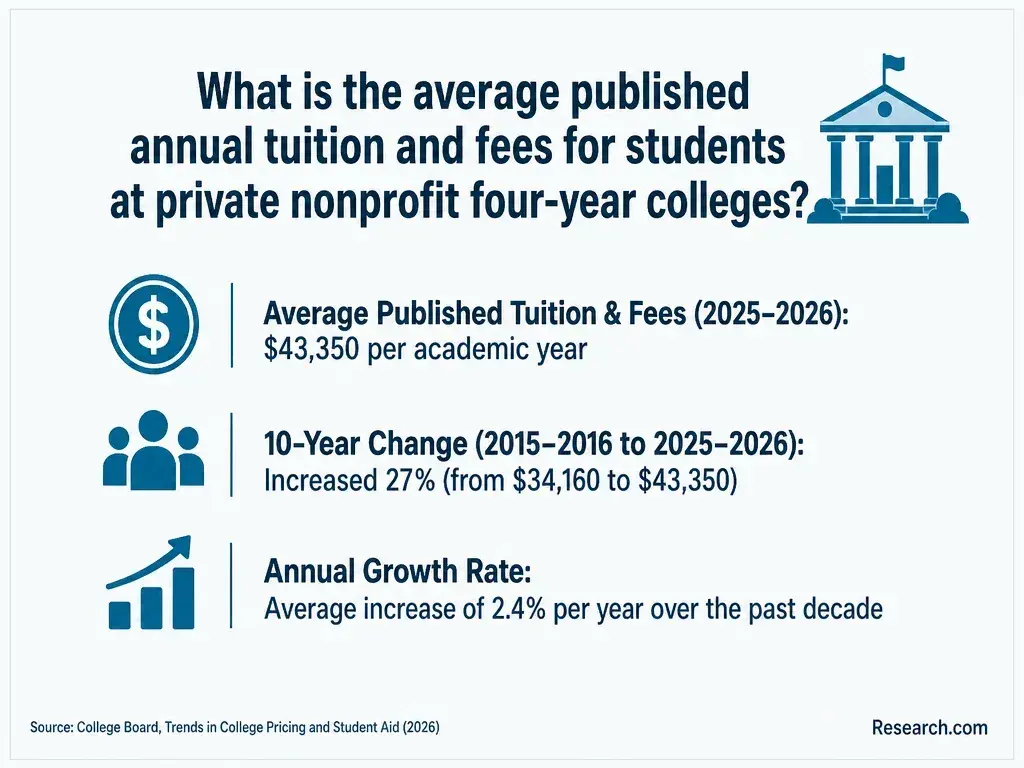
Keep scholarships, employer reimbursement, and loans separate from the sticker price; confirm eligibility and payment timing before counting on them. Compare low-cost online business degree programs using the cost of your remaining requirements, not a headline tuition rate.
First, confirm that the institution holds recognized institutional accreditation and that it covers the school awarding the degree. This matters for educational quality review, aid eligibility, and how other institutions or employers may evaluate the credential.
Then check whether the business school or specific program has AACSB, ACBSP, or IACBE accreditation, if that distinction matters to you. These accreditors have different scopes; do not assume a university-wide claim covers its accounting degree or every online offering.
Use the institution's and accreditor's current listings to confirm the exact program and location or delivery mode. For a CPA goal, also ask the relevant state board whether its educational rules impose accreditation conditions. Even when you explore economical project management degree programs as an alternative, apply the same institution-and-program scope check rather than treating low tuition as evidence of accreditation.
Salary data describes occupations, not what a newly graduated AAS transfer student will earn. The U.S. Bureau of Labor Statistics reports a May 2025 median annual wage of $83,680 for accountants and auditors, with 5% projected employment growth from 2025 to 2035. That median includes experienced workers; entry-level offers depend on location, employer, duties, and qualifications.
Business administration has no single matching occupation. For one possible path, BLS reports a $75,940 May 2025 median for human resources specialists and projects 6% growth over 2025-2035. Those figures do not mean a broad business degree automatically qualifies someone for an HR specialist position. Evaluate the specific job posting and your relevant experience before using an occupational median in a return-on-investment decision.
The same caution applies to project roles. If you are weighing that alternative, compare job requirements and your transferable work experience with the cost of economical project management degree programs; a higher occupation-wide wage would not establish your likely starting pay.
If you are also considering project management instead of either named degree, investigate project management bachelor's scholarship options as a separate financing comparison; aid available for one program should not be assumed available for another.
Does an Accounting Degree Meet CPA Certification Requirements?
Not by itself. CPA licensure is governed by state boards of accountancy, and requirements can include specified accounting and business courses, total education, examinations, and qualifying experience. Education pathways and timing vary by jurisdiction and can change. A bachelor's in accounting may supply relevant coursework without satisfying every requirement; a business administration degree with accounting electives may leave larger gaps.
Before enrolling, identify the state where you intend to seek licensure. Send its board requirements and the proposed accounting curriculum to a program adviser, and ask for a course-by-course explanation of any gaps. Confirm licensure eligibility with the board rather than relying on a degree title or a school's general CPA-preparation claim.
If CPA licensure is not your goal and you prefer broader business study, review academic eligibility for business administration degree study before choosing the less specialized plan.
Other Things You Should Know About Business Administration
Possibly. Ask the adviser to rerun your degree audit under the accounting catalog requirements first. A change of major may add prerequisite or sequential courses even if all your previously accepted credits remain on your transcript.
No. If the program requires an internship, faculty may need to approve the work setting, duties, supervision, and assessment in advance. Ask whether your current role qualifies before planning around that credit.
Often, if the assignment permits it and you have the right to share the material. Update older work to show current skills, and remove confidential employer, customer, or financial information.
Yes. Syllabi can help an adviser evaluate a disputed course equivalency or substitution. Keep copies alongside your official audit and any written decisions about how your credits apply.
- Institutional Transfer Guides | Colorado Department of Higher Education Home https://cdhe.colorado.gov/institutional-transfer-guides
- Education Requirements | texas.gov https://www.tsbpa.texas.gov/applicants/education/
- CPA Evolution - 150-hour Education Requirement https://www.op.nysed.gov/professions/certified-public-accountants/license-requirements/cpa-evolution-150-hour-education-requirement
- Education Requirements - CPA Examination https://www.labor.maryland.gov/license/cpa/cpaexam/cpaexameducreq.shtml
- Tuition and College Costs | Admissions | UNLV https://www.unlv.edu/admissions/paying-for-college/costs
- Transfer Credit | Registrar's Office | Georgia Tech https://registrar.gatech.edu/transfer-credit
- Business Administration, AAS - ECU Transfer Hub https://transfer.ecu.edu/business-administration-aas/
- Cost: Incoming First-Year and Transfer | University of Arizona Office of Scholarships & Financial Aid https://financialaid.arizona.edu/cost/incoming
- Transfer Credit - College of LSA - University of Michigan https://lsa.umich.edu/lsa/academics/lsa-academic-policies-and-procedures/transfer-information---residence-policy.html
- Business Administration | General Studies | BABA - UF Catalog https://catalog.ufl.edu/UGRD/colleges-schools/UGBUS/BAG_BABA/