2027 BS in Business Administration Program Choice: A Training Needs Assessment as a Capstone Option
Audited and Verified:
Our Editorial and Data Verification Process
Research.com uses government datasets, official education statistics and primary institutional information to support its career and degree guides. Our review process checks factual accuracy, occupational definitions, source dates and the requirements associated with the credentials discussed.
How This Article Was Fact-Checked
Our editorial team verifies salary estimates, employment projections, education requirements and program information against original data providers and official organizations. Salary figures are checked against the relevant occupational definitions and reporting periods. Information about licensure, accreditation and required in-person training is reviewed separately.
Fact-checked and verified on:

Co-Founder and Chief Data Scientist
A training needs assessment can turn a business administration capstone into a useful recommendation - but only if the student can define a real performance problem and gather appropriate evidence. This guide is for students choosing a capstone option, especially those interested in HR, operations, or workplace improvement. It explains what the project should produce, when another capstone would be a better fit, and how to check program rules, data access, time, and career relevance before committing.
Key Things You Should Know
- A strong training needs assessment identifies a business performance gap, tests whether training could address it, and recommends a proportionate response - not simply a course.
- Choose this capstone only if faculty approve its scope and you have a feasible, permitted way to gather evidence; an employer-based project does not automatically confer access to employee data.
- The U.S. Bureau of Labor Statistics reports a May 2025 median annual wage of $69,280 for training and development specialists, but that occupation-wide figure is not an expected starting salary for capstone students.
What is a training needs assessment capstone in a BS in Business Administration program?
A training needs assessment is a structured investigation of the difference between the work an organization needs people to perform and what currently happens. Its central test is whether a knowledge or skill gap contributes to that difference. A capstone turns the investigation into an academically assessed deliverable for a defined decision-maker, such as an operations manager deciding how to improve a process.
For example, a student might examine why new staff make errors when entering orders. The answer could be unclear instructions, software design, workload, insufficient practice, or a combination. Recommending training before distinguishing among those causes would weaken the project.
A manageable capstone can follow this sequence. The exact methods and final format must meet the instructor's requirements.
- Define the decision: State the process, affected roles, desired performance, project boundaries, and person who could act on the findings.
- Establish a baseline: Identify permitted evidence, such as an existing process map, de-identified error categories, public materials, or an approved interview protocol.
- Diagnose causes: Compare required tasks with observed practice and distinguish skill gaps from problems in tools, instructions, incentives, or staffing.
- Recommend a response: Specify who needs what support, whether training is appropriate, and what nontraining changes may be necessary.
- Plan evaluation: Name practical measures, a comparison point, assumptions, limitations, and who would own follow-up.
The final product may be a report and presentation with an executive summary, methods, findings, recommendations, and evaluation plan. It is a proposed decision aid, not proof that training worked. In an accelerated online bachelor's programs search, check whether the capstone calendar leaves enough time for permissions, feedback, and revision.
Why choose a training needs assessment for a business administration capstone?
Choose this project when you want to show that you can connect employee performance to an organizational objective without assuming every problem requires a class. It draws on management, operations, communication, and basic measurement. A well-scoped assessment may suit an HR-focused student, an aspiring operations coordinator, or an experienced employee examining a process they understand.
The choice depends less on the appeal of the topic than on the decision you can support. This comparison helps distinguish it from nearby capstone options.
| Capstone option | Best fit | Principal limitation |
| Training needs assessment | A defined performance problem with plausible skill and non-skill causes | Evidence may be sensitive; recommendations are not measured training outcomes |
| Process improvement review | A workflow whose steps, handoffs, or delays are the main concern | May not establish what employees need to learn |
| Training design proposal | A learning need that has already been established | Designing instruction does not, by itself, demonstrate that training is needed |
If you cannot interview employees or inspect internal records, ask whether faculty will accept a public-case analysis or an explicitly hypothetical organization. Label assumptions clearly; do not present invented responses as findings. Students aiming specifically for HR can also compare HR curricula and career directions before deciding whether a broad business capstone provides the depth they want.
How does a BS in Business Administration prepare students for business careers?
A BS in Business Administration commonly combines accounting, management, marketing, operations, quantitative reasoning, and communication. For this capstone, the value is the ability to frame training as a business decision: What performance matters, what might cause the gap, what could a response cost, and how would a manager judge it?
The degree does not make a student an HR specialist or grant authority to change workplace policy. An early-career graduate may be better positioned to support onboarding, coordinate projects, document processes, or assist with HR operations than to independently lead organizational training strategy. Relevant work experience, supervised projects, and evidence of sound judgment strengthen that transition.
If the target is specifically an HR role, compare the business core with specialized HR coursework and recruiting opportunities. Returning students considering HR bachelor's completion with transferred coursework should request a degree audit: credits a school accepts may not satisfy its HR major requirements.
Curricula vary by school. Management and organizational behavior can help explain how work is assigned; operations courses can reveal process constraints; statistics and analytics can support careful interpretation of performance measures. Accounting or finance can help students discuss resource limits, while business communication supports interviews and a usable final report.
For a training needs assessment, look beyond course titles. Ask whether assignments teach you to define a problem, assess evidence, consider competing explanations, and present recommendations to a decision-maker. An HR elective may cover learning and development, but an elective is not automatically a formal concentration or a substitute for an approved capstone.
Students whose real goal is supply chain work may find that operations-focused courses or a specialized program provide a better match than an HR-oriented assessment. Compare required courses and project access before considering fast-track online supply chain bachelor's options; a shorter advertised timeline does not establish that your prior credits will apply.
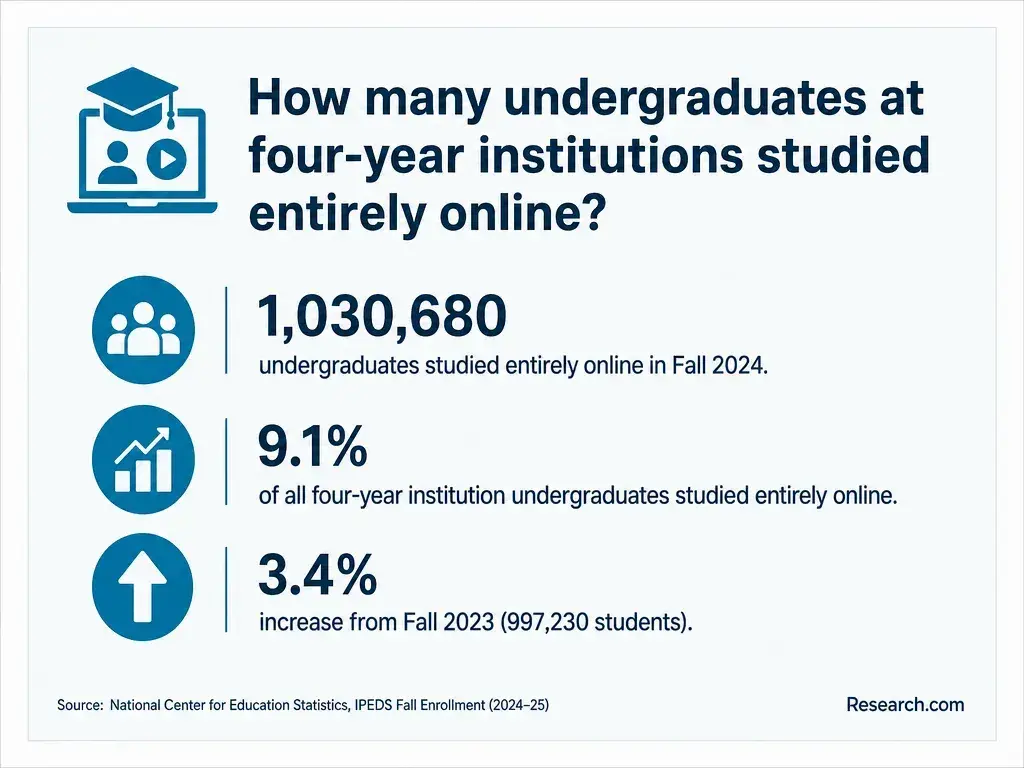
Either format can support a strong assessment. Online study may make it easier to use an approved local workplace or community organization; campus study may offer more direct access to faculty, peers, and potential project partners. Neither format guarantees a willing site, permission to use data, or a flexible capstone deadline.
Before choosing a format, confirm how students find projects, how often advisers meet with them, whether presentations are live, and whether group work or campus visits are required. Ask what happens if an employer withdraws permission partway through the term. Students comparing ranked school options for studying business online should check the actual capstone syllabus and course schedule rather than rely on a program-wide flexibility claim.
First, verify that the institution holds accreditation from an accreditor recognized by the U.S. Department of Education and confirm the status applies to your enrollment plans. Then check whether the business school or relevant program has additional accreditation from AACSB, ACBSP, or IACBE. Those organizations have different scopes; a school-wide claim does not establish that your specific degree is covered.
Accreditation is a screening tool, not proof that faculty will approve a training needs assessment or that graduates secure particular jobs. Request the current catalog and capstone policy as well. Even when comparing colleges with no upfront application payment, verify accreditation and project requirements independently; an application-fee policy says little about academic fit.
Requirements depend on whether you apply as a first-year, transfer, returning, or second-degree student. Schools may review prior transcripts and require particular mathematics or introductory business coursework before entry to the major or enrollment in upper-level courses. Admission to the institution, admission to the business major, and permission to enroll in the capstone can be separate decisions.
If you have previous college credit, ask for an official evaluation showing which courses meet general education, business core, elective, and residency requirements. Then confirm the prerequisites for research methods or the capstone itself. A business administration admissions preparation guide can help you organize questions, but the school's current catalog and written evaluation control your plan.
Completion time depends on the program's required credits, courses that actually apply to those requirements, enrollment pace, and how often necessary classes run. Capstone timing adds a practical constraint: a project needing employer approval, interviews, or faculty review may not fit a compressed term even when other courses do.
Compare total remaining tuition and required fees, not just the advertised price per credit. Include technology or proctoring charges, project-related travel, materials, and any reduction in paid work hours. Ask whether the capstone has separate fees and whether a delayed project would require another term of enrollment. For financial aid planning for low-cost business administration degrees, confirm institutional eligibility, your aid eligibility, enrollment requirements, and satisfactory academic progress with the financial-aid office.
A training needs assessment can provide a work sample for HR support, training coordination, operations coordination, or process-focused roles. It demonstrates how you frame a problem and communicate recommendations; it does not establish that you have implemented training or achieved a measurable workplace result.
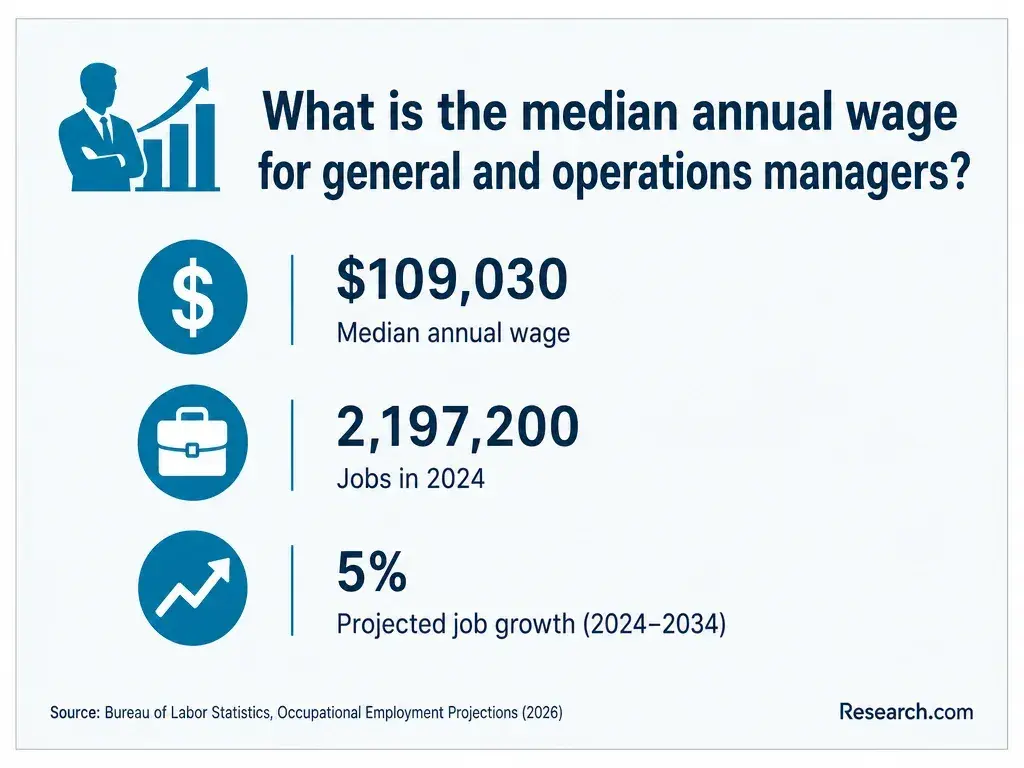
For context, the U.S. Bureau of Labor Statistics reports a May 2025 median annual wage of $69,280 for training and development specialists and projects 11% employment growth from 2025 to 2035. These are occupation-wide figures, not pay or hiring forecasts for new BS graduates. Specialist positions may require relevant experience, and job duties differ from entry-level coordination work.
If your target role is in logistics rather than workforce development, weigh the capstone against a supply chain project and relevant coursework. Use tuition and time comparisons for supply chain students as a starting point, then compare verified remaining costs and employer requirements for the roles you actually want.
What certifications or licenses complement a business administration degree?
There is no general license required to complete a training needs assessment capstone. Voluntary HR, training, or project-management credentials may become useful when their assessed skills match your target job, but each issuer sets its own eligibility and examination rules. A business degree, an HR concentration, and a capstone do not automatically award a separate professional credential.
If employers for your target role require a bachelor's degree, a short certificate may not replace it. If you already meet their education requirements and mainly need better assessment or facilitation skills, targeted training and supervised practice may be more direct than another degree. Compare that choice with affordable business education options online using your remaining requirements - not an assumed credential payoff.
Other Things You Should Know About Business Administration
Possibly. Obtain faculty approval for the project and separate employer permission for your proposed activities and data use. Employment alone does not authorize a capstone or access to personnel records.
That can be a valuable finding. Explain the evidence, identify more plausible causes, and recommend an appropriate next step rather than forcing a training proposal.
Check school and employer intellectual-property rules first. Remove identifying and proprietary information, obtain any required permission, and distinguish your analysis from actions the organization actually took.
Check whether a reader can trace each recommendation to permitted evidence, understand alternative explanations and limitations, and see how the organization could evaluate a future response. Ask your adviser to review that logic before final submission.
- Training Needs Assessment - Planning & Evaluating | U.S. Office of Personnel Management https://www.opm.gov/policy-data-oversight/training-and-development/planning-evaluating/
- Frequently Asked Questions | Protecting Student Privacy https://studentprivacy.ed.gov/frequently-asked-questions
- Privacy in the Workplace | priv.gc.ca https://www.priv.gc.ca/en/privacy-topics/employers-and-employees/02_05_d_17/
- Training needs assessment: tool utilization and global impact | nih.gov https://pmc.ncbi.nlm.nih.gov/articles/PMC8167940/
- What is a Capstone Project in College? | snhu.edu https://www.snhu.edu/about-us/newsroom/education/what-is-a-capstone-project
- Capstone Experiences | Assessment and Curriculum Development Office https://manoa.hawaii.edu/assessmenttest/resources/how-to/capstone-experiences/
- What Is a Capstone Project? - Boston University Questrom https://www.bu.edu/questrom/blog/what-is-a-capstone-project/
- Academics: College of Management and Human Potential: Undergraduate: BS in Business Administration https://academics.waldenu.edu/catalog/management-human-potential/undergraduate/bachelor-science-business-administration
- Business Administration, B.S. | School of Management https://catalog.nyit.edu/management/business_administration_bs/
- BS in Business Administration | Online Bachelor's Degree | Capella University https://www.capella.edu/online-business-degrees/bs-business-program/bachelors-business-administration/