2027 BS in Business Administration Transfer Planning: A Transfer Offer That Requires Retaking Statistics
Audited and Verified:
Our Editorial and Data Verification Process
Research.com uses government datasets, official education statistics and primary institutional information to support its career and degree guides. Our review process checks factual accuracy, occupational definitions, source dates and the requirements associated with the credentials discussed.
How This Article Was Fact-Checked
Our editorial team verifies salary estimates, employment projections, education requirements and program information against original data providers and official organizations. Salary figures are checked against the relevant occupational definitions and reporting periods. Information about licensure, accreditation and required in-person training is reviewed separately.
Fact-checked and verified on:

Co-Founder and Chief Data Scientist
A transfer offer can look generous until the degree audit shows that your completed statistics course will not satisfy the BS in Business Administration requirement. For transfer and returning students, that distinction can change the cost of finishing, access to later courses, and the graduation date.
This guide explains why the retake may be required, how to challenge or work around it, and how to compare the offer with another program. The goal is a written completion plan, not a guess based on the number of credits accepted.
Key Things You Should Know
- Admission and transfer-credit acceptance do not mean your previous statistics course satisfies the business major; check its placement in the official degree audit.
- Ask for a written equivalency review before accepting a retake. A syllabus, learning outcomes, credit value, grade, and course date can determine whether an appeal is possible.
- Compare the retake's tuition and fees with its effect on prerequisite sequencing and aid. One additional course can delay graduation if it blocks a required course offered infrequently.
What does a BS in Business Administration transfer offer requiring statistics retake mean?
It means the university may admit you while still requiring you to complete its approved statistics requirement. Your earlier course might be rejected for credit, accepted only as an elective, or accepted toward general education without satisfying the business core. Those outcomes have different effects on your remaining credits.
Read the offer alongside the degree audit and the catalog requirements for your entry term. Identify the exact unmet requirement and any courses it unlocks. Admission to the university, admission to the business major, and eligibility to graduate are separate decisions.
If the offer is conditional on completing prerequisites, clarify when you must finish them; this overview of required credits before entering business administration study can help you frame that conversation, but the receiving university's written decision controls.
Why might a university require transfer students to retake statistics?
The receiving department may find that the earlier class covered different material, for example, descriptive statistics but not the inference or regression used in its business analytics sequence.
Other possible reasons include a minimum-grade rule, a lower credit value after conversion from quarter credits, an upper-division requirement, a course-recency policy, or a rule requiring certain major courses in residence. An older syllabus may simply be missing from the evaluation.
Ask which specific rule caused the decision. That answer determines whether a syllabus review, placement assessment, approved substitution, or retake is realistic. Switching majors solely to avoid statistics is risky: a different curriculum may have its own quantitative prerequisite.
Even when considering fast-track online supply chain bachelor's options, compare the receiving school's evaluation of your actual courses rather than an advertised completion time.
How can you verify which transfer credits will count toward your degree?
Request an official, program-specific degree audit from the receiving university. It should show each accepted course and whether it fulfills general education, a business prerequisite or core course, a concentration, a free elective, or a residency requirement. A preliminary credit estimate is not a graduation plan.
The following sequence helps turn a disputed statistics decision into one you can evaluate before committing:
- Send official transcripts and obtain the audit for the correct BS in Business Administration catalog and concentration, if any.
- Collect the prior statistics syllabus, catalog description, credit value, course dates, grade, and representative assignments or learning outcomes if requested.
- Ask the transfer office who makes the equivalency decision and whether the business department must approve a major-course substitution.
- Request the appeal decision in writing, then ask an academic adviser to update the audit and map the remaining courses by term.
- Have financial aid review the revised schedule, particularly if previously completed coursework affects aid eligibility or enrollment intensity.
Repeat this process for every school you are seriously considering. A list of ranked school options for studying business online may help you identify alternatives, but it cannot establish how any school will apply your statistics credit.
Employer Confidence in Online vs. In-Person Degree Skills, Global 2024

Institutional accreditation is relevant to a receiving school's transfer review, but it does not compel that school to award a particular equivalency. The university sets its own curriculum, minimum-grade, residency, and transfer policies. Check the sending institution's accreditation for the period when you took the course and the receiving university's published rules.
AACSB, ACBSP, and IACBE accreditation concerns the stated scope of a business school or program; it is not the same as institutional accreditation or a guarantee that one statistics course substitutes for another. If a school cites business accreditation when denying credit, ask for the actual program rule and the office authorized to review an exception.
When examining lower-tuition online business administration programs, verify accreditation and transfer applicability separately, low published tuition does not establish low completion cost.
Compare the delivery of the required statistics course and the courses it precedes, not just the degree's advertised format. An online program may still have scheduled sessions, proctored exams, group projects, fixed deadlines, or limited course offerings. A campus program may offer a statistics section sooner or provide in-person quantitative support.
For each offer, ask when you can take statistics, when the next dependent course runs, and whether tutoring and advising fit your work or caregiving schedule. Check required campus visits and technology fees as well. Resources on online business administration programs with work-compatible schedules can help you shortlist formats; confirm the obligations for your specific courses before enrolling.
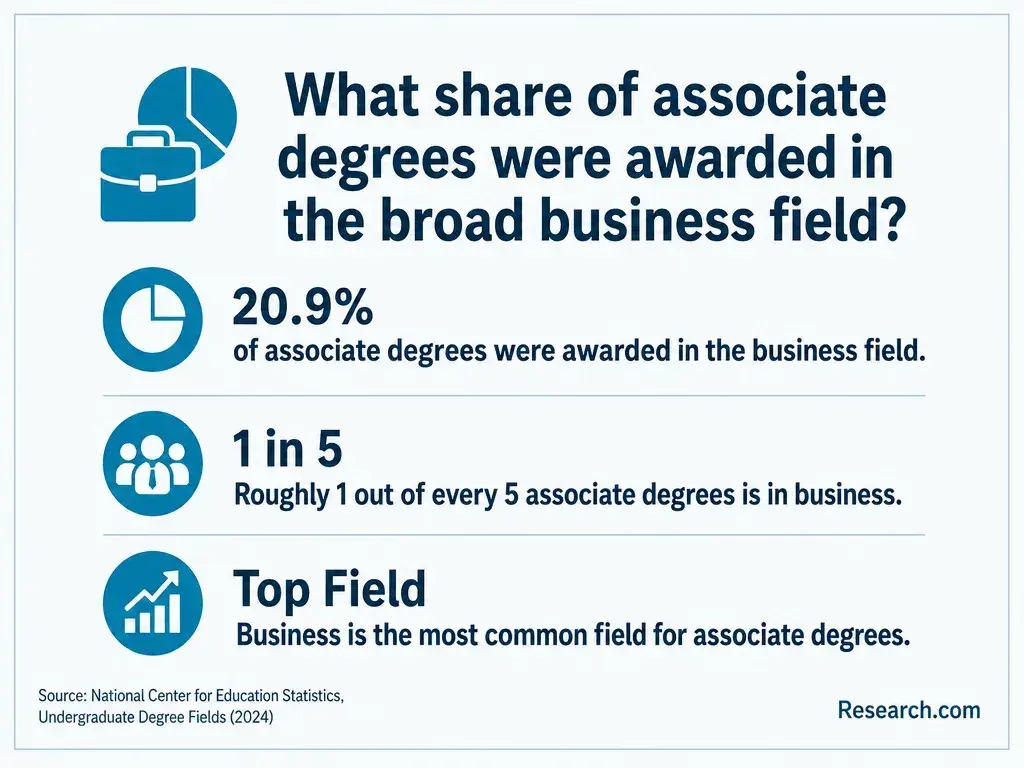
Business administration programs commonly combine statistics or quantitative reasoning with accounting, economics, finance, marketing, management, operations, and a culminating course.
The exact titles and sequence vary. Statistics may support later work in analytics, forecasting, market research, or operations, which is why a department may apply a stricter equivalency standard than it does for an open elective.
Check whether the requirement is introductory statistics, business statistics, or a more advanced quantitative course. Also check prerequisites for your intended concentration: an analytics or supply chain pathway may add quantitative work beyond the general business core.
If you are comparing budget-friendly supply chain degrees with shorter schedules, compare those added courses and their sequencing, not just the degree label or advertised duration.
A school may set separate requirements for university transfer admission and entry into its business major. Depending on the program, these can include prior college credits, a minimum GPA, a minimum grade in quantitative prerequisites, and official transcripts. Admission with an outstanding statistics requirement does not mean you can immediately enroll in every upper-division business course.
Ask admissions whether the retake is a condition of admission, a condition of major entry, or solely a graduation requirement. If you are weighing a different business-related major, compare HR bachelor's transfer policies with the same care: acceptance into another program does not prove that your statistics course or other business credits will meet its requirements.
Your remaining time depends on credits that satisfy requirements, course availability, enrollment pace, and the order of prerequisites, not merely total credits accepted. Price the statistics retake using the school's tuition basis and applicable fees, then include books or software, travel or proctoring, and any additional term it creates.
If it can be taken concurrently with other needed courses, its calendar impact may be small; if it blocks an infrequently offered course, the delay may matter more than the course price.
Compare offers using the same remaining-course plan and ask financial aid for an individualized eligibility estimate. Guides to business administration degree costs after FAFSA-based assistance can provide comparison context, but neither aid nor the final cost is certain until the school evaluates your circumstances. Do not assume a repeated course qualifies for aid without checking the applicable rules.
A business administration degree can support applications for roles in operations, HR, marketing, purchasing, or project coordination, depending on your experience and skills.
The statistics decision matters professionally if the course develops data interpretation or spreadsheet-based analysis you want to demonstrate. Retaking it solely for credit, however, should not be confused with gaining job-ready analytical experience.
For context, the U.S. Bureau of Labor Statistics reports a May 2025 median annual wage of $75,940 for human resources specialists and projects 6% employment growth from 2025 to 2035. Those are occupation-wide figures, not expected pay or a job guarantee for a new business graduate; hiring requirements and wages vary by role, experience, and location.
A business administration education length and salary outlook guide can broaden your comparison, but the transfer offer should be judged chiefly on its verified path to completion.
What questions should you ask before accepting a transfer offer?
Ask the receiving school for answers tied to your record and enrollment term. The most consequential questions are:
- Is my previous statistics course rejected entirely, accepted as an elective, or applied to another requirement and who can approve an appeal or substitution?
- Which courses remain in the official audit, including major, concentration, general education, and residency requirements?
- When can I take the required statistics course, which later courses depend on it, and when are those courses next offered?
- What will the retake and any added term cost after applicable aid, and what happens if I instead complete an approved course elsewhere?
- When will the school issue an updated written audit and term-by-term plan following a credit decision?
Accept the offer when the written plan is feasible and its total cost and schedule compare favorably with alternatives, not simply because the admission letter accepts many credits. Use a consistent cost basis when you compare tuition for online business colleges, and obtain a separate degree evaluation from each finalist before making a deposit or enrolling.
Other Things You Should Know About Business Administration Programs
Only if the university offers an assessment that awards the needed credit or formally waives the requirement. Placement into a higher course alone may not reduce the credits required to graduate.
Ask the receiving school where to obtain the closed college's official transcript and whether archived catalog descriptions or a retained syllabus can support an equivalency review.
Not necessarily. The receiving school's GPA and repeat-course policies determine how the new grade is counted; the earlier grade usually remains on the original transcript.
Ask admissions about the response deadline and whether an extension is available. Submit the appeal promptly, but do not assume a pending review automatically holds your place or changes a deposit deadline.
- Rule 3357:15-13-25 | Transfer and articulation. - Ohio Laws https://codes.ohio.gov/ohio-administrative-code/rule-3357:15-13-25
- Program Integrity Questions and Answers - Retaking Coursework | U.S. Department of Education http://www.ed.gov/laws-and-policy/higher-education-laws-and-policy/program-integrity-information-questions-and-2
- School-Determined Requirements | 2024-2025 Federal Student Aid Handbook https://fsapartners.ed.gov/knowledge-center/fsa-handbook/2024-2025/vol1/ch1-school-determined-requirements
- Transfer Credit Evaluation | Undergraduate Admissions | The Pennsylvania State University https://www.psu.edu/resources/credit/transfer-credit-evaluation
- How do I request transfer credit? - Stanford Student Services https://studentservices.stanford.edu/my-academics/earn-my-degree/undergraduate-degree-progress/test-transfer-credit/undergraduate/how-do
- Special regulations for courses in specific subject areas | UCOP https://www.ucop.edu/transfer-articulation/transfer-course-agreements/tca-policy/regulations-by-subject-area.html
- Degree Works Advisor FAQs | Oklahoma State University https://registrar.okstate.edu/degree-works/degree-works-advisor-faqs
- Undergraduate Policies | Virginia Tech Academic Catalog https://catalog.vt.edu/undergraduate/undergraduate-policies/
- Transfer and Articulation Agreements - NYU Bulletins https://bulletins.nyu.edu/nyu/policies/transfer/
- Transfer Credit Reevaluation - Core Education https://coreeducation.oregonstate.edu/students-0/transfer-credit-reevaluation