2027 Online BS in Business Administration vs. a BS in Construction Management: Which Route Fits Your Career Plan?
Audited and Verified:
Our Editorial and Data Verification Process
Research.com uses government datasets, official education statistics and primary institutional information to support its career and degree guides. Our review process checks factual accuracy, occupational definitions, source dates and the requirements associated with the credentials discussed.
How This Article Was Fact-Checked
Our editorial team verifies salary estimates, employment projections, education requirements and program information against original data providers and official organizations. Salary figures are checked against the relevant occupational definitions and reporting periods. Information about licensure, accreditation and required in-person training is reviewed separately.
Fact-checked and verified on:

Co-Founder and Chief Data Scientist
An online BS in Business Administration can prepare you for roles across industries; a BS in Construction Management focuses on delivering building projects. That distinction matters if you are choosing between a flexible business career and work tied to construction sites, schedules, budgets, and subcontractors.
This comparison is for prospective students, career changers, and construction employees considering a bachelor's degree. It explains what each route teaches, what employers may expect beyond the degree, and which program details to verify before committing your time and money.
Key Things You Should Know
- Choose business administration for broader options in operations, marketing, HR, or other functions; choose construction management when coordinating construction projects is the clear goal.
- Neither degree makes a new graduate a manager: the Bureau of Labor Statistics reports a May 2025 median wage of $102,320 for project management specialists across industries, not a starting salary for either major.
- Before enrolling, compare the remaining degree requirements, total completion cost, online attendance rules, and access to relevant projects or internships.
What is the difference between an online business administration degree and construction management degree?
A BS in Business Administration teaches how organizations make financial, operational, marketing, and personnel decisions. A BS in Construction Management applies management methods to the construction process, including estimating, scheduling, contracts, safety, and coordination among owners, designers, and trades. Online describes how a program delivers instruction; it does not determine its subject matter or guarantee that every requirement can be completed remotely.
The comparison below shows where the degrees diverge. Actual course requirements vary by institution.
| Decision factor | BS in Business Administration | BS in Construction Management |
| Primary focus | Managing business functions across sectors | Planning and coordinating construction work |
| Typical applied work | Business cases, budgets, process reviews, or market analyses | Estimates, project schedules, construction documents, or site-related work |
| Industry portability | Broad, although specific jobs require relevant skills | Strongest within construction and related project environments |
| Online constraints to check | Live classes, group work, presentations, and exams | Those requirements plus possible site visits, labs, or field experience |
If your interest is business operations rather than a particular building project, compare actual curricula - not just degree titles - when reviewing online business degree rankings for US college applicants. A specialized construction program is more direct only when its technical content matches the work you want to do.
Which degree offers better career opportunities: business administration or construction management?
Neither degree has universally better opportunities. Business administration offers more ways to change industries or functions, but its breadth means graduates must show employers what they can actually do. Construction management provides a clearer connection to estimating, project coordination, and construction operations, but opportunities depend more directly on construction activity and relevant field experience.
For a career changer, start with your existing skills and target role. Customer-facing or administrative experience may support an entry-level business operations or HR path; trade, site, or estimating experience may make construction management a more natural step toward project responsibility. If HR is the goal, compare the degree's actual personnel coursework with human resources education and career options rather than assuming a general business major supplies specialist preparation.
As a labor-market reference, BLS projects employment of management analysts to grow 10% from 2025 to 2035. That occupation often calls for related experience: its outlook is evidence of demand for the work, not a forecast of jobs available to new business graduates. Construction applicants should likewise examine local employers' requirements for field exposure, scheduling tools, and subcontractor coordination.
How do business administration and construction management salaries compare?
There is no reliable single salary for either degree. Employers pay for occupations, responsibilities, experience, industry, and location - not simply the name on a diploma. BLS reports a May 2025 median annual wage of $102,320 for project management specialists, an occupation spanning industries. It is not a construction-management graduate salary or an entry-level offer.
For a meaningful comparison, look up wages for the specific jobs you would pursue first, such as operations coordinator, estimator, or construction project coordinator, in your intended location. Then compare job postings' experience requirements. A higher occupational median may reflect experienced workers and may not justify a more expensive degree on its own.
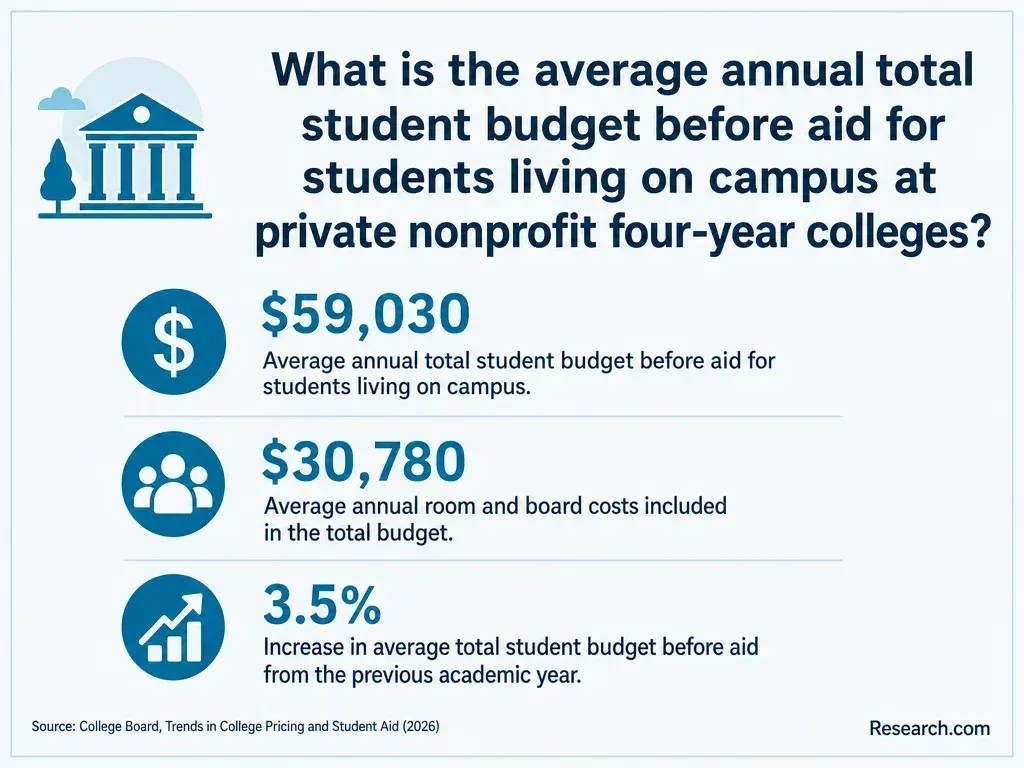
Keep education costs in the calculation: online business degrees with lower tuition may offer a better financial fit than a costlier option if their required courses and career support meet your needs. The same test applies to construction programs.
A business administration core commonly introduces accounting, finance, economics, marketing, management, operations, and quantitative decision-making. Students may analyze financial statements, build spreadsheet-based budgets, evaluate a process, or present a business recommendation. An official concentration can add depth in a function such as HR or operations; a few electives alone do not necessarily constitute a concentration.
For a prospective construction-company employee, business coursework can be useful in purchasing, staffing, budgeting, or customer relationships. It generally will not replace instruction in reading plans, construction estimating, or site safety. Ask whether an internship or capstone can address your target industry and what approval it requires.
Delivery also affects what you can learn while working. Accelerated study schedules for business majors may shorten calendar time, but they do not remove assignments or guarantee self-paced classes. Check live meetings, group deadlines, and assessment rules against your actual weekly availability.
Construction management programs commonly combine project scheduling, cost estimating, construction methods, contracts, safety, and communication with technical teams. Depending on the school, students may also study building systems, drawings, surveying concepts, or construction law. An applied assignment might require an estimate or schedule built from specified project information - not just a general business plan.
This technical context is the degree's main advantage if you want to work with contractors, owners, or construction project teams. Verify how students practice the work: software access, supervised field experience, labs, and site visits can differ substantially among online and hybrid programs. A classroom project is not the same as experience making decisions on an active site.
If your goal is coordinating projects across industries rather than learning construction methods, compare the required technical courses with affordable online study routes in project management. That alternative may be more focused on your goal, but it will not automatically provide construction-specific preparation.
They can be, but accreditation belongs to a specific institution or program - not to all online degrees with the same title. First, confirm that the college holds recognized institutional accreditation. Then check whether any claimed specialized accreditation covers the exact program you would enter.
Business schools may cite AACSB, ACBSP, or IACBE accreditation; their scopes differ, so check whether the bachelor's program is included. Construction-related programs may cite a specialized accreditor such as the American Council for Construction Education. Do not infer either type of programmatic accreditation from an institution's general accreditation, or assume programmatic accreditation guarantees a job.
Accreditation also matters when investigating aid. A starting point is FAFSA-eligible online business administration colleges, but confirm the institution's current aid eligibility and your own eligibility with its financial-aid office.
Requirements depend on whether you are applying as a first-year student, transfer student, or returning student. Schools generally review prior academic records; some majors also have mathematics or other prerequisite requirements before students enter advanced courses. A construction management program may expect preparation for technical and quantitative work, while a business program may sequence accounting, economics, or statistics before upper-level classes.
If you have college credit, request an official evaluation showing not only which credits are accepted but which satisfy general education, major, and elective requirements. Previous construction or business employment does not automatically earn academic credit. Ask the admissions or transfer office about required transcripts, prerequisite equivalencies, and any separate admission to the major.
Application cost is a smaller consideration than degree fit, but online universities with no application charge may help you explore options. Confirm the current fee policy for your applicant category before applying.
Both are bachelor's degrees, but your completion time depends on accepted credits that apply to the degree, prerequisites, course sequencing, and how many classes you can take while meeting other obligations. A construction program's field or technical courses may be offered less frequently; a business program may have different residency or concentration requirements. An accelerated calendar does not necessarily reduce the work required.
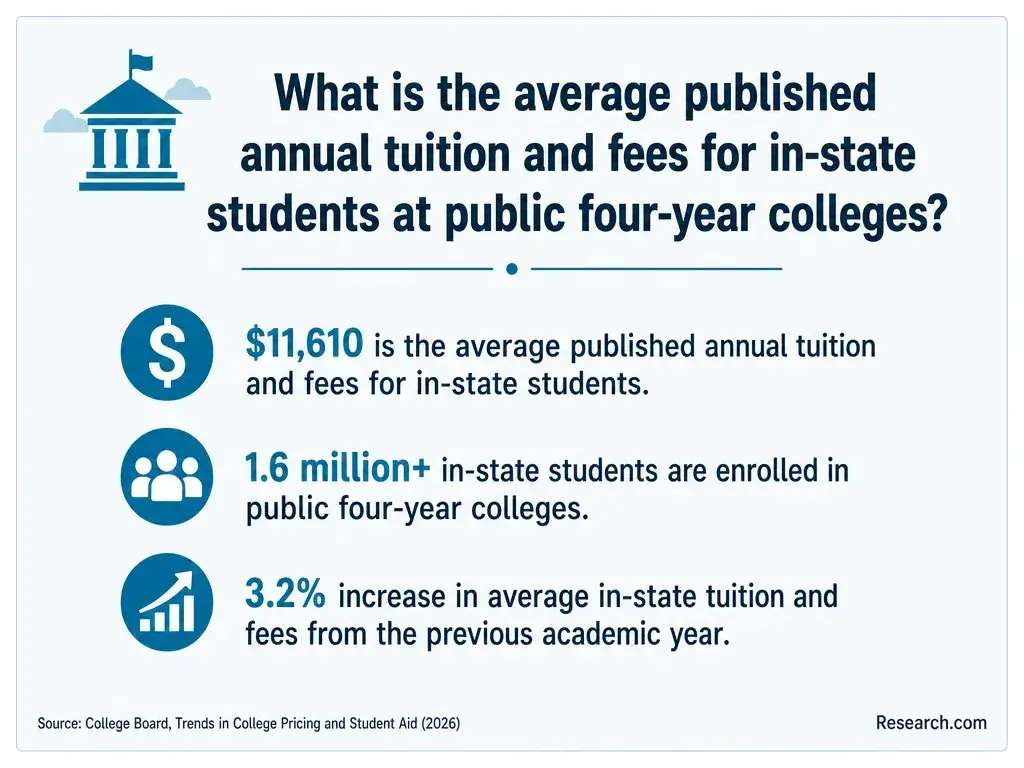
Published tuition is only one part of the comparison. Request a degree audit and a term-by-term plan from each school, then estimate tuition on the remaining required courses alongside fees, materials, software, travel or site obligations, and potential lost work hours. Confirm aid eligibility and borrowing terms separately; do not count a proposed transfer award or employer reimbursement as certain until approved.
Students considering a project-focused alternative can review guidance on funding an online project management bachelor's degree. For any route, the most useful cost figure is your documented cost to finish, not the advertised price for a new student.
Business administration graduates may pursue entry-level work in operations, sales support, HR, purchasing, or marketing, depending on their coursework and experience. Construction management graduates may seek roles in estimating, field coordination, scheduling, or assistant project management. In either field, managing major budgets, crews, or projects generally requires demonstrated experience beyond graduation.
Certification is separate from the degree. Employers may value job-relevant project management, safety, or construction credentials, but each issuer sets its own education, training, experience, and examination rules. A business degree does not confer a professional license; a construction management degree does not automatically authorize engineering practice or satisfy every contractor-licensing rule.
If project coordination is your main objective and you already have college coursework, compare construction management with online project management bachelor's programs accepting transfer credits. Ask each school how your credits would satisfy its actual requirements before deciding which route is faster.
How can you choose a reputable online degree program?
Start with the job you want next, then test whether each program provides the required subject knowledge and a feasible way to demonstrate it. A reputable program should be able to explain its accreditation, curriculum, transfer evaluation, online obligations, applied-learning rules, and total cost without relying on vague career promises.
Before enrolling, ask each school for the evidence that determines your decision:
- Which of my prior credits satisfy required courses, and which requirements remain in the official degree audit?
- Which classes have live meetings, proctored assessments, site visits, internships, or fixed group-work times?
- What supervised projects or career services connect students with my target role, and what approvals do they require?
- What will the remaining courses and required fees cost under my planned enrollment schedule?
Compare the answers side by side. Lower-priced accredited business administration study options are worth examining, but a low advertised tuition rate is useful only if the curriculum, support, and completion plan fit your goal. If construction project work is your firm destination, give greater weight to verified technical coursework and access to relevant experience.
Other Things You Should Know About Business Administration
Yes. Contractors also need people in accounting, purchasing, HR, sales, and office operations. Check individual job descriptions; some office roles still require familiarity with construction workflows.
No. The fields interact, but their degree requirements and professional responsibilities differ. Construction management study does not by itself qualify someone to practice licensed engineering.
Often, but overlapping credits may count differently in the new major. Request a revised degree audit before switching so you can see any added prerequisites or delay.
No. Check the required courses and applied work. A concentration label may be useful, but it is not equivalent to a construction management degree or verified project experience.
- Accreditation in the U.S. | ed.gov http://www.ed.gov/laws-and-policy/higher-education-laws-and-policy/college-accreditation/accreditation-in-the-us
- How Do Transfer Credits Work When You Go Back to School? | Whitworth Online https://online.whitworth.edu/news-articles/how-do-transfer-credits-work-when-you-go-back-to-school/
- Choosing your major based on career goals | wisc.edu https://dcs.wisc.edu/blog/choosing-your-major-based-on-career-goals/
- How to Become a Construction Manager - Fitchburg State Blog https://blog.fitchburgstate.edu/gce/how-to-become-a-construction-manager
- Construction Management | Alfred State College https://www.alfredstate.edu/academics/majors-and-programs/construction-management
- Applied Management vs Business Administration | Missouri Baptist University (Mobap) https://www.mobap.edu/news/applied-management-vs-business-administration/
- How to Finish Your Degree Online | University of North Carolina Wilmington https://flex-online.uncw.edu/blog/online-degree-completion/
- BBA vs BSBA: which business degree is right for you? | Strayer University https://www.strayer.edu/buzz/difference-between-bba-and-bsba/
- Co-op vs. internship explained: What you need to know | About the University of Cincinnati https://www.uc.edu/blog/co-op-internship.html
- Construction Management Degree at Purdue University https://polytechnic.purdue.edu/academics/construction-management