2027 Online BS in Business Administration vs. a BS in Industrial-Organizational Psychology: Which Route Fits Your Career Plan?
Audited and Verified:
Our Editorial and Data Verification Process
Research.com uses government datasets, official education statistics and primary institutional information to support its career and degree guides. Our review process checks factual accuracy, occupational definitions, source dates and the requirements associated with the credentials discussed.
How This Article Was Fact-Checked
Our editorial team verifies salary estimates, employment projections, education requirements and program information against original data providers and official organizations. Salary figures are checked against the relevant occupational definitions and reporting periods. Information about licensure, accreditation and required in-person training is reviewed separately.
Fact-checked and verified on:

Co-Founder and Chief Data Scientist
If you want to improve how organizations work, both business administration and industrial-organizational (I-O) psychology may appeal to you. They prepare you to approach different problems, though: one emphasizes running business functions, while the other examines people and behavior at work. That distinction matters when you choose courses, seek entry-level experience, or plan for graduate study. This comparison is for students choosing an online bachelor's degree, including those bringing college credits or workplace experience. It will help you match the degree to the work you want to do - and identify what else that career may require.
Key Things You Should Know
- Choose business administration for broader preparation in operations, finance, marketing, and management; choose I-O psychology for deeper study of workplace behavior and research methods.
- Neither bachelor's degree alone makes someone an I-O psychologist. A business or HR support role is a more realistic first step for many graduates.
- The U.S. median annual wage for human resources specialists was $75,940 in May 2025, but that occupation-wide figure is not a starting salary or a degree-specific outcome.
What is the difference between a business administration degree and an I-O psychology degree?
A BS in Business Administration studies how organizations make financial, operational, marketing, and managerial decisions. A BS in I-O psychology applies psychological research to workplace questions such as employee selection, motivation, training, and team performance. Both may cover organizational behavior, but they approach it from different directions.
This comparison shows which degree supplies the stronger foundation for a particular kind of work. Actual course requirements vary by school.
| Decision factor | BS in Business Administration | BS in I-O Psychology |
| Primary focus | Coordinating business functions and resources | Understanding and studying behavior at work |
| Typical analytical work | Budgets, business data, processes, and market decisions | Research design, statistics, assessment, and employee data |
| Best initial fit | Several possible business functions or an operations-focused goal | A clear interest in workplace research, talent assessment, or graduate I-O study |
If your goal is specifically recruiting, benefits, or employee relations, compare both curricula with choosing a degree in human resources. An HR degree may offer more direct preparation for those tasks than either broad business study or psychology research.
Which career paths can each bachelor's degree prepare you for?
Business administration can support applications for operations coordinator, sales support, procurement assistant, or marketing coordinator roles. I-O psychology can be relevant to recruiting coordination, HR assistance, training support, or people-analytics support. Neither degree substitutes for the software skills, employment-law knowledge, or experience specified in a job posting.
Start with the tasks you want to perform. If you want to track purchasing costs and improve a workflow, business coursework and a supervised operations project may provide stronger evidence. If you want to help evaluate training or interpret employee survey results, I-O research methods may be more relevant - provided you also learn privacy-conscious data handling. For a supply-chain goal, a specialized program may be more direct than either option; compare accelerated supply chain bachelor's degrees against your remaining credit requirements before assuming the shortest advertised timeline applies to you.
How do online business and I-O psychology programs compare with campus programs?
Online and campus programs can teach comparable academic content, but the way you practice and demonstrate skills may differ. An online business student might complete virtual team presentations or simulations; an I-O psychology student might analyze a research dataset or conduct a faculty-approved study. Campus programs may make in-person recruiting, research participation, or local internships easier, while online study may reduce commuting.
Online does not necessarily mean self-paced. Before enrolling, request sample course schedules and check live meetings, group-project deadlines, proctored exams, internship arrangements, and access to faculty and career services. If you intend to study while employed, use those details - not the word "flexible" - to judge business administration education for employed professionals.
Business administration typically includes accounting, economics, finance, marketing, operations, statistics, and management. Available concentrations may add depth, but an elective in HR does not automatically constitute an HR concentration. Look for assignments that let you demonstrate spreadsheet analysis, budgeting, process mapping, or stakeholder communication.
I-O psychology typically builds on general psychology, research methods, and statistics before addressing personnel selection, organizational behavior, motivation, and training. Check how much supervised research or applied assessment work the program actually offers. If your interest is chiefly in managing project schedules and resources rather than studying employee behavior, compare the relevant business courses with online project management degrees with lower tuition; a project course alone does not confer a professional credential.
Schools commonly request prior-school transcripts and evidence of secondary-school completion or previous college study. Transfer applicants may face different GPA, prerequisite, or major-entry rules. Some business majors require particular math, accounting, or economics courses before upper-level work; an I-O psychology pathway may require statistics or introductory psychology. Confirm the rules for the specific program rather than assuming institutional admission grants admission to the major.
If you have existing credits, ask for a written evaluation showing which satisfy general education, major, elective, and residency requirements. An accepted course may still fail to replace a required course. Application charges are a smaller consideration than total degree cost, but free application options at accredited online schools may help you explore alternatives without paying to apply to each one.
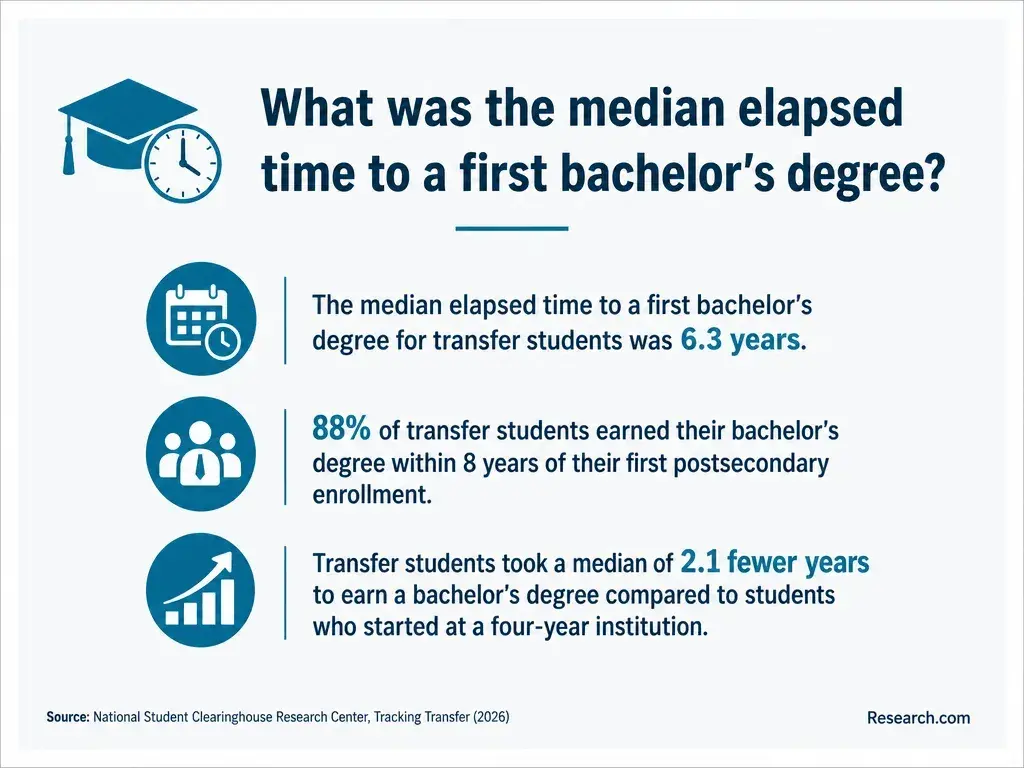
Completion time depends on credits that apply to the degree, course availability, prerequisites, and how many courses you can take while working. An accelerated calendar can shorten elapsed time without reducing required coursework. Psychology research sequences and business-core prerequisites can each delay completion if needed courses are offered infrequently.
Compare each school's written degree audit and itemized charges before choosing the apparently cheaper program. The amounts to request are:
- Tuition for the remaining required credits, using the school's actual per-credit, per-course, or per-term billing method.
- Required technology, materials, proctoring, and any internship or travel charges.
- Expected borrowing after confirmed grants, employer benefits, and other aid - not after assumed awards.
For a business route, find inexpensive online business administration colleges, then recalculate cost using your own transfer evaluation. A lower advertised tuition rate may not produce a lower completion cost if more courses remain.
First, verify that the institution holds recognized institutional accreditation and that it covers the online program you intend to enter. Then check the exact degree awarded and any program-specific claims. AACSB, ACBSP, and IACBE accredit business education within their respective scopes; their presence at a university does not establish that its psychology program - or every business offering - is covered.
For I-O psychology, examine faculty expertise, research opportunities, and graduate-program prerequisites rather than assuming a general psychology accreditation label confirms I-O specialization. US rankings of online business degree programs can help build a comparison list, but verify accreditation scope, curriculum, support, and current policies directly with each school.
A bachelor's degree can be a starting point for work related to I-O psychology, including recruiting, training coordination, and research assistance. It generally is not sufficient preparation for independent I-O psychologist roles, which ordinarily call for graduate education. Employers also assess whether you can handle data, communicate findings, and work responsibly with sensitive employee information.
If you want to improve teams but do not intend to pursue graduate psychology study, identify the work more precisely. Supervising operations, coordinating training, and conducting psychological assessment are different goals. For leadership-oriented undergraduate study, organizational leadership bachelor's completion planning offers another comparison; it does not replace the research preparation needed for I-O psychologist work.
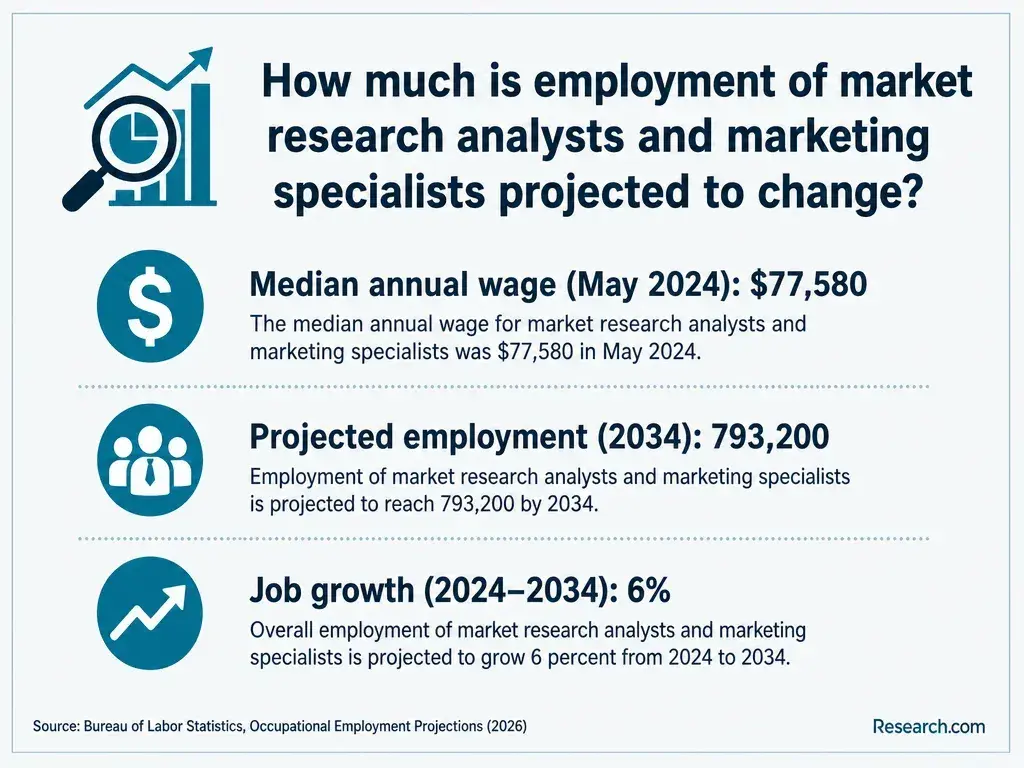
Neither degree has a single salary. The closest useful comparison is between specific occupations you might pursue after building the required skills and experience. The U.S. Bureau of Labor Statistics figures below are occupation-wide medians for May 2025 and projected U.S. employment changes from 2025 to 2035 - not wages or placement rates for new graduates.
| Occupation | Median annual wage, May 2025 | Projected employment change, 2025-2035 |
| Human resources specialist | $75,940 | +6% |
| Training and development specialist | $69,280 | +11% |
| Logistician | $82,320 | +18% |
HR and training roles may draw applicants from either degree; logistics is a more direct comparison for students drawn to business operations. These medians include experienced workers, and growth does not guarantee an opening in your area. Weigh local job requirements and total education cost together. If logistics is your target, explore lower-cost supply chain completion routes rather than selecting a general degree on the strength of an occupation-wide wage.
Do these careers require graduate degrees, licenses, or certifications?
Business coordination, HR support, and many specialist roles do not have one universal graduate-degree or license requirement; individual employers set qualifications. Advanced I-O psychology positions commonly require at least a master's degree, while research-intensive positions may favor doctoral training. State rules governing use of the psychologist title or independent psychological practice require separate checking and should not be inferred from a bachelor's degree name.
Voluntary HR or project-management certifications have their own eligibility and experience rules. A degree, concentration, or course does not automatically award one. If HR is the goal and you already have college coursework, compare curricula and obtain an official credit evaluation before choosing between programs; using existing credits in a human resources degree may change both the time and cost comparison.
Other Things You Should Know About Business Administration
Often, yes, through electives, a minor, or approved transfer courses. Check whether the combination fits the degree audit without adding a term; a few psychology electives do not award a second major.
Possibly, but employment alone does not award credit. Ask the program what advance approval, supervision, learning objectives, and permission to use workplace information it requires.
Both can provide broad undergraduate business preparation, but degree titles do not establish identical curricula. Compare required courses, concentrations, and transfer rules at the schools you are considering.
Ask each school about second-degree requirements and credit limits before starting another bachelor's program. Depending on your goal and preparation, targeted coursework, relevant experience, or a suitable graduate program may be more direct.
- Cost of Attendance (Budget) | 2025-2026 Federal Student Aid Handbook https://fsapartners.ed.gov/knowledge-center/fsa-handbook/2025-2026/vol3/ch2-cost-attendance-budget
- Accreditation in the U.S. | ed.gov http://www.ed.gov/laws-and-policy/higher-education-laws-and-policy/college-accreditation/accreditation-in-the-us
- Online classes versus traditional classes? Comparison during... - PMC https://pmc.ncbi.nlm.nih.gov/articles/PMC8826787/
- Affordable Online Degrees & Tuition | University of Kansas https://online.ku.edu/affordable-online-degrees
- Organizational Psychology vs. Industrial-Organizational Psychology | William James College https://www.williamjames.edu/news/organizational-psychology-vs-io-psychology.html
- Choosing your major based on career goals | wisc.edu https://dcs.wisc.edu/blog/choosing-your-major-based-on-career-goals/
- Human Resources vs. Organizational Behavior | Tulane University School of Professional Advancement https://sopa.tulane.edu/blog/human-resources-vs-organizational-behavior-which-degree-right-you
- 10 Industrial-Organizational Psychology Jobs to Consider | Touro University Worldwide https://www.tuw.edu/psychology/industrial-organizational-jobs/
- Why Is Accreditation Important? | ACE Blog https://ace.edu/blog/why-is-accreditation-important/
- What Degree Do You Need for Human Resources? | snhu.edu https://www.snhu.edu/about-us/newsroom/business/what-degree-do-you-need-for-human-resources