2027 Best Online Public Policy Doctorate Programs for Private Sector and Corporate Careers

Co-Founder and Chief Data Scientist
Corporate professionals are increasingly asked to interpret regulation, quantify social risk, and advise leaders on policy-sensitive decisions. The U.S. Bureau of Labor Statistics lists management analysts at a May 2024 median wage of $101,190 and projects 11% employment growth from 2023 to 2033, signaling strong demand for advanced analytical talent.
This guide is for experienced professionals considering an online public policy doctorate for private sector roles. You will learn which program types fit corporate goals, what skills and roles they support, and how to choose a program with realistic return-on-investment expectations.
Key Things to Know About Online Public Policy Doctorate Programs for Corporate Careers
- The strongest online public policy doctorate options for corporate careers usually combine policy analysis, quantitative methods, leadership, regulation, and an applied dissertation or capstone tied to a real organizational problem.
- For private sector outcomes, program fit matters more than title: PhD, DPA, and public policy/public administration doctorates can all work if the curriculum supports corporate strategy, government affairs, risk, compliance, or analytics.
- BLS May 2024 wage data places several relevant corporate policy-adjacent roles near or above $100,000, but a doctorate should be treated as a career-positioning investment, not a guaranteed promotion or salary increase.
Will Public Policy doctorate programs benefit corporate professionals?
Yes, public policy doctorate programs can benefit corporate professionals when the degree is aligned with a role that requires advanced evidence-based decision-making.
The best fit is usually not someone seeking a first corporate job, but an experienced professional who already works near regulation, strategy, analytics, public affairs, sustainability, health policy, infrastructure, technology governance, or corporate social responsibility.
A public policy doctorate is a terminal degree focused on how policies are designed, evaluated, implemented, and improved. In a corporate setting, that knowledge can help leaders anticipate regulatory change, measure program outcomes, translate stakeholder needs into business decisions, and build stronger cases for executive action.
The degree is most likely to add value for professionals in these situations:
- You already manage policy, compliance, government relations, ESG, health systems, infrastructure, workforce, or public-private partnership work and need stronger research credibility.
- You want to move from execution into advisory, strategy, director-level, or thought-leadership roles where evidence quality matters.
- Your industry is highly regulated, such as healthcare, energy, finance, transportation, education technology, defense, telecommunications, or urban development.
- You plan to publish, teach part time, testify, lead research teams, or represent your company in policy forums.
It may be a weaker investment if your goal is a general management promotion that does not require doctoral-level analysis. In that case, an MBA, MPA, analytics certificate, law-related credential, or employer-sponsored leadership program may be faster and less expensive.
The table below summarizes where the doctorate tends to help most and where it may be excessive for corporate goals:
| Corporate situation | Doctorate value | Why it matters |
| Regulatory strategy or government affairs | High | Doctoral training strengthens policy interpretation, stakeholder analysis, and evidence-based recommendations. |
| Corporate social responsibility or ESG strategy | High | Programs often cover evaluation, social impact measurement, governance, and public-private accountability. |
| Healthcare, education, or infrastructure leadership | High | These sectors often require executives to understand government funding, regulation, and population-level outcomes. |
| General operations management | Moderate | The degree can help if operations are policy-sensitive, but a management-focused credential may be more direct. |
| Entry-level corporate career change | Low to moderate | A doctorate can overqualify candidates if they lack applied experience or a clear specialization. |
What makes online Public Policy doctorate programs ideal for private sector or corporate careers?
An ideal online public policy doctorate for corporate careers is not simply a program that happens to be remote. It should be structured for working professionals and should let students connect doctoral research to private sector problems such as regulatory risk, market access, workforce policy, community impact, or governance.
Online delivery can be especially practical for corporate professionals because many are mid-career, employed full time, and unable to relocate. However, flexibility should not come at the expense of research rigor, faculty access, or credible institutional accreditation.
The most corporate-relevant programs usually have the following features:
- Regional institutional accreditation and a clear doctoral curriculum in policy analysis, public administration, economics, statistics, governance, ethics, and leadership.
- Applied research options that allow students to study a problem connected to their company, industry, or professional network.
- Faculty with experience in regulation, public management, public-private partnerships, health policy, urban policy, technology policy, environmental policy, or corporate governance.
- Online formats built for working adults, including part-time pacing, evening sessions, asynchronous coursework, and clear dissertation support.
- Career relevance beyond academia, such as executive seminars, practitioner faculty, policy labs, consulting-style projects, or industry-connected residencies.
Professionals working in real estate, infrastructure, transportation, or city-focused development may also compare a policy doctorate with an urban planning degree online, especially if their target roles are more technical and place-based than policy-advisory in nature.
The table below shows how program features translate into private sector usefulness:
| Program feature | Corporate benefit | What to verify |
| Applied dissertation or capstone | Creates a portfolio-quality research project tied to a business or industry problem | Whether employer-based projects are allowed and how data confidentiality is handled |
| Quantitative and mixed-methods sequence | Improves ability to evaluate programs, forecasts, surveys, policy impacts, and risk models | Number of required methods courses and available software training |
| Policy specialization options | Helps align doctoral work with healthcare, energy, technology, urban, education, or environmental sectors | Whether specializations are formal concentrations or only elective clusters |
| Residency or executive intensive | Builds peer networks and direct faculty access while preserving online flexibility | Travel requirements, timing, and additional fees |
| Practitioner-oriented faculty | Adds insight into real policy implementation and organizational constraints | Faculty publications, consulting work, agency experience, and industry partnerships |
What are the best online Public Policy doctorate programs for private sector careers?
The best online public policy doctorate program for a private sector career depends on the professional problem you want to solve. Some programs are labeled public policy, while others are doctorates in public administration or public affairs; for corporate careers, the better question is whether the curriculum supports policy leadership, research, and applied decision-making outside government.
The following programs are strong examples to evaluate because they offer online or primarily online doctoral study in public policy, public administration, or closely related policy leadership fields.
Delivery formats, residency rules, tuition, and curriculum can change, so confirm current details directly with each university before applying.
| Program | Credential focus | Best private sector fit | Why it stands out for corporate goals |
| Old Dominion University | PhD in Public Administration and Policy | Corporate policy research, government affairs, regulated-industry strategy | Strong fit for professionals who want a research-intensive doctorate with public administration and policy depth. |
| Valdosta State University | Doctor of Public Administration | Public-private operations, public affairs leadership, organizational governance | Applied DPA structure can suit experienced professionals who want practice-oriented doctoral training. |
| West Chester University | Doctor of Public Administration | Community impact, nonprofit-corporate partnerships, public management consulting | Useful for professionals focused on management, accountability, and cross-sector leadership. |
| Walden University | PhD in Public Policy and Administration | Flexible doctoral study for working professionals in policy-adjacent corporate roles | Online format and specialization-oriented structure may appeal to professionals needing flexibility; cost and employer perception should be carefully assessed. |
| National University | Doctor of Public Administration | Applied policy leadership, consulting, organizational improvement | Practice-focused structure can work for professionals who want to translate research into organizational decisions. |
| Regent University | PhD in Government with public policy-related study | Policy advocacy, corporate affairs, strategic policy analysis | May fit professionals whose corporate work intersects with governance, public ethics, advocacy, or political institutions. |
When comparing these options, avoid treating any list as a final ranking. A program that is excellent for academic policy research may not be the best choice for a corporate sustainability director, while a practice-oriented DPA may be ideal for someone leading public-private initiatives.
Before shortlisting programs, ask each admissions or program advisor these questions:
- Can the dissertation, capstone, or doctoral project focus on a private sector or employer-based policy problem?
- What percentage of recent doctoral students were working professionals while enrolled?
- Which faculty members supervise research in my industry or policy area?
- Are there required residencies, and what are the total travel and fee obligations?
- What career paths do alumni pursue outside academia and government?
- How does the program support students through comprehensive exams, proposal defense, and dissertation completion?
For most corporate professionals, an applied public policy or public administration doctorate is the more direct fit. A research-focused PhD is better when the professional goal involves publishing, leading advanced research teams, teaching at the university level, or becoming a recognized policy expert in a technical field.
The distinction matters because doctoral titles can look similar while training students for different kinds of work. A research-focused program typically emphasizes theory, original scholarship, and methodological contribution. An applied doctorate focuses more on solving complex problems in organizations, agencies, communities, or industries.
The table below compares the two routes from a corporate decision-making perspective:
| Factor | Research-focused doctorate | Applied doctorate |
| Common credential examples | PhD in Public Policy, PhD in Public Administration and Policy | DPA, Doctor of Public Policy, practice-focused policy doctorate |
| Best for | Research leadership, academic-adjacent roles, think tank partnerships, technical policy authority | Executive leadership, consulting, program evaluation, government affairs, organizational change |
| Typical dissertation orientation | Original contribution to scholarly literature | Applied research addressing a real-world organizational or policy problem |
| Corporate advantage | Stronger credibility in evidence-heavy, technical, or expert witness contexts | More direct translation to corporate decision-making and leadership practice |
| Potential drawback | May be less practical if the curriculum is designed mainly for academic placement | May be less suitable for tenure-track academic goals at research universities |
If you are not ready for doctoral-level research or need a faster leadership credential first, a 1 year MPA online can be a practical stepping stone. It can help you test your interest in policy, budgeting, administration, and governance before committing to a longer doctorate.
A simple way to decide is to start with the work product you want the degree to support. Choose a research-focused doctorate if you want to produce publishable evidence and influence a field. Choose an applied doctorate if you want to improve corporate decisions, lead cross-sector initiatives, or solve policy problems inside an organization.
Public policy doctorate programs can build a powerful mix of analytical, strategic, and leadership skills. For corporate professionals, the strongest value often comes from learning how to turn ambiguous social, legal, economic, and political conditions into structured decisions.
Labor market demand supports this direction. BLS projects 23% employment growth for operations research analysts from 2023 to 2033, reflecting strong demand for professionals who can use data to improve decisions.
While a public policy doctorate is not the same as an operations research degree, doctoral policy training can strengthen the evaluation, modeling, and evidence-translation skills that corporations increasingly need.
The table below connects common doctoral learning areas with practical corporate uses:
| Doctoral skill area | Corporate application | Example use case |
| Policy analysis | Evaluating how laws, regulations, and public programs affect business strategy | Assessing the effect of proposed healthcare rules on market access |
| Program evaluation | Measuring whether internal initiatives produce intended outcomes | Evaluating a workforce development or community investment program |
| Quantitative methods | Interpreting data, building evidence, and testing assumptions | Analyzing whether a compliance intervention reduced operational risk |
| Qualitative research | Understanding stakeholder behavior, employee experience, or public sentiment | Interviewing community partners before launching a new facility |
| Governance and ethics | Improving accountability in complex decision environments | Designing oversight for AI, privacy, or ESG reporting processes |
| Strategic communication | Translating evidence for executives, regulators, investors, and communities | Preparing a policy brief for senior leadership before a legislative hearing |
Professionals whose corporate work centers on social services, community benefit, healthcare access, or vulnerable populations may also compare policy doctorates with the best online MSW programs. The MSW route is usually more practice- and licensure-oriented, while the policy doctorate is more focused on systems, evaluation, and leadership.
The most important skill question is not "Does the program offer advanced courses?" but "Can I apply the methods to my industry?" A finance professional may need regulatory risk modeling, while a healthcare executive may need evaluation methods and health policy expertise. The best program should let you shape coursework and research around that professional context.
A public policy doctorate can support advancement into corporate roles where evidence, regulation, public accountability, and executive communication overlap. It is especially relevant for professionals who want to become the person leadership turns to when decisions involve government action, public scrutiny, community impact, or complex data.
The degree does not create a single linear career path. Instead, it can strengthen credibility across several private sector tracks, particularly when paired with industry experience.
The table below shows examples of roles where doctoral policy training may be useful and how salary context varies across related U.S. labor categories:
| Corporate role or track | Relevant BLS salary context | How the doctorate can help |
| Director of policy strategy or government affairs | Public relations and fundraising managers had a May 2024 median wage of $138,520 | Supports policy analysis, advocacy strategy, stakeholder communication, and executive advising. |
| Senior management consultant or policy consultant | Management analysts had a May 2024 median wage of $101,190 | Strengthens research design, evaluation, and evidence-based recommendations for clients or internal leaders. |
| Healthcare policy or strategy executive | Medical and health services managers had a May 2024 median wage of $117,960 | Helps leaders interpret health policy, reimbursement, regulation, equity, and systems-level outcomes. |
| Corporate risk, compliance, or governance leader | Compensation varies widely by industry and seniority | Adds depth in regulation, ethics, public accountability, and policy implementation. |
| ESG, social impact, or sustainability strategy leader | Compensation varies by company size, sector, and reporting responsibility | Improves ability to evaluate impact, manage public expectations, and align corporate programs with policy goals. |
| Research director or thought leadership lead | Political scientists had a May 2024 median wage of $139,380 | Builds credibility for original research, policy briefs, industry reports, and external-facing expertise. |
Use these salary figures as context, not promises. BLS categories do not map perfectly to every corporate job title, and employers often base pay on industry, location, profit responsibility, prior leadership experience, and specialized expertise.
A doctorate is most likely to unlock better roles when it is paired with a clear professional narrative. For example, "I study the policy and operational risks of Medicaid payment reform" is more compelling than "I earned a doctorate in public policy."
Programs with corporate, government, nonprofit, or consulting partnerships can offer an advantage when those partnerships create real access to data, mentors, projects, or professional networks. The advantage is strongest when the partnership is integrated into the curriculum rather than presented only as a marketing claim.
Corporate partnerships matter because many policy problems are cross-sector by nature. Healthcare access, workforce development, climate adaptation, housing, infrastructure, and technology governance often involve companies, agencies, communities, and nonprofit organizations working together.
Partnership-oriented programs may offer these benefits:
- Applied research projects based on current organizational problems rather than hypothetical case studies.
- Guest lectures, executive mentors, or practitioner faculty from regulated industries or consulting organizations.
- Access to policy labs, public-private initiatives, research centers, or community impact projects.
- Stronger networking with professionals who already work in the student's target sector.
- Better opportunities to translate dissertation findings into publishable reports, internal strategy documents, or conference presentations.
There are trade-offs. A program with strong partnerships may require residencies, synchronous participation, or project timelines that are harder for busy executives. It may also be more narrowly aligned with certain industries. A traditional academic program may offer broader theory and methods training but fewer built-in corporate connections.
Current employer learning trends make these partnerships more relevant. The 2024 SHRM Employee Benefits Survey continued to identify education and professional development benefits as part of employer talent strategies, which means some professionals may be able to connect doctoral study with tuition assistance, leadership development, or employer-approved research.
Readers should confirm reimbursement rules before enrolling because many employers set annual caps, grade requirements, or service commitments.
Corporate employers generally evaluate online public policy doctorate credentials through three lenses: institutional credibility, relevance to the role, and evidence of applied capability. The word "online" is usually less important than whether the university is accredited, the program is rigorous, and the candidate can show how doctoral training improves business outcomes.
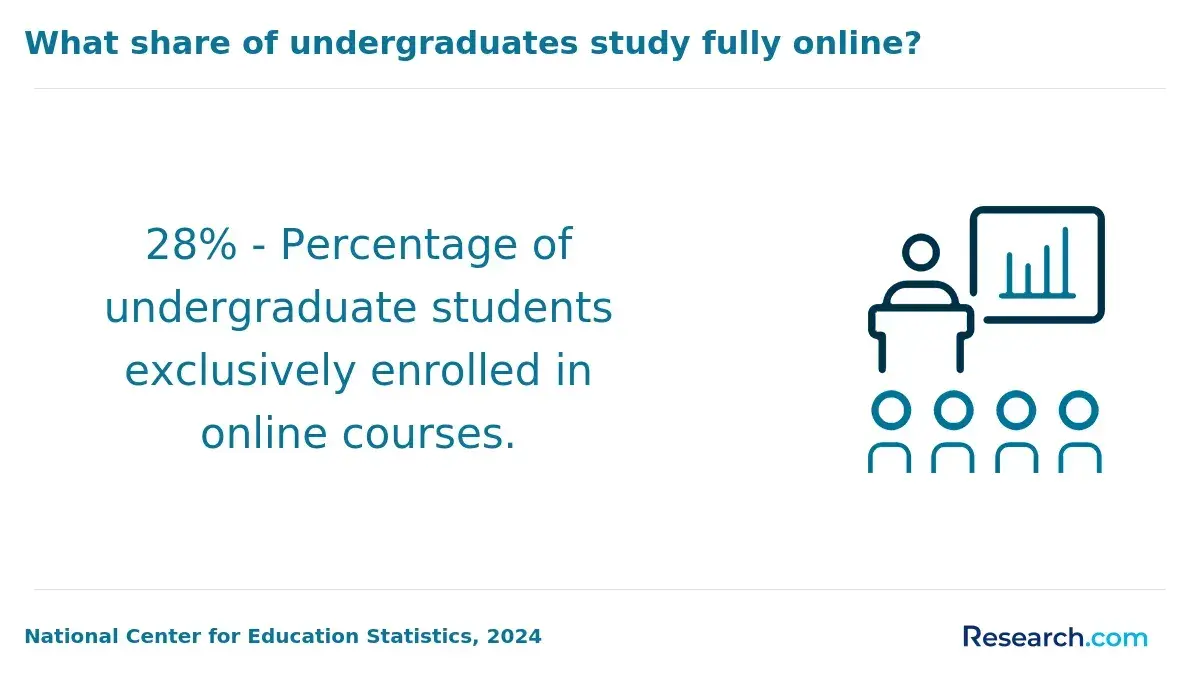
National data also suggests online graduate education is no longer unusual. Recent NCES distance education reporting shows that online coursework remains a mainstream part of U.S. graduate education, especially for working adults.
For corporate employers, that normalization reduces the stigma that once surrounded online degrees, but it does not eliminate the need to choose carefully.
Employers are more likely to view the credential favorably when the candidate can point to concrete outputs:
- A dissertation or doctoral project tied to a real industry problem.
- Advanced methods training that improves forecasting, evaluation, or risk analysis.
- Policy briefs, executive presentations, publications, conference talks, or measurable organizational improvements.
- A specialization that matches the employer's regulatory or strategic environment.
- A credible university brand, clear accreditation, and transparent academic standards.
Employer skepticism may appear when a program seems too easy, lacks clear research expectations, has unclear accreditation, or is unrelated to the job. Corporate hiring managers may also question a doctorate if the candidate cannot explain why the degree matters for the role.
The best way to present an online doctorate is to frame it as applied expertise. Instead of emphasizing the credential alone, describe the problem you studied, the methods you used, the decisions your work can improve, and the business risk or opportunity it addresses.
Public policy doctorate holders in the private sector can encounter a wide salary range because the degree can lead to different job families. A realistic planning range should be based on comparable roles, not on the degree title alone.
BLS May 2024 data provides useful benchmarks for several roles that can overlap with corporate policy work. These figures are national medians, so actual compensation can be higher or lower depending on region, industry, bonus structure, seniority, and employer size:
| Role category | May 2024 median wage | 2023 to 2033 projected growth | How to interpret it |
| Management analysts | $101,190 | 11% | Relevant for consulting, internal strategy, policy evaluation, and organizational improvement roles. |
| Operations research analysts | $91,290 | 23% | Useful comparison for data-heavy policy, risk, optimization, and decision analytics roles. |
| Medical and health services managers | $117,960 | 29% | Relevant for healthcare policy, payer strategy, delivery systems, and regulated health organizations. |
| Public relations and fundraising managers | $138,520 | 6% | Relevant for government affairs, public affairs, stakeholder relations, and external policy communication. |
| Political scientists | $139,380 | 3% | Relevant for research-heavy policy analysis, think tank partnerships, and expert advisory work. |
For ROI, compare the total cost of attendance with the specific promotion, consulting, leadership, or expert-positioning goal you expect the degree to support. Include tuition, fees, residencies, books, software, reduced work hours, and dissertation time. Employer tuition support can materially change the calculation, but only if the program meets reimbursement rules.
Be cautious about assuming that a doctorate automatically raises compensation. The salary upside is usually strongest when the degree helps you qualify for a higher-responsibility role, move into a more regulated or higher-paying industry, publish or consult as an expert, or lead a function where policy expertise directly affects revenue, risk, or reputation.
How do you narrow down online Public Policy doctorate programs for corporate goals?
To narrow down online public policy doctorate programs for corporate goals, start with your target business problem rather than a ranking. The right program should help you become more valuable in a specific professional arena, such as health policy strategy, regulatory affairs, infrastructure policy, ESG governance, workforce policy, or public-private partnership leadership.
Use the following sequence to build a practical shortlist:
- Define the corporate role you want within three to five years, including industry, function, and level of responsibility.
- Identify the policy problems that role must solve, such as regulation, community impact, reimbursement, climate risk, labor policy, or technology governance.
- Compare curriculum requirements for methods, economics, governance, leadership, ethics, and sector-specific policy electives.
- Review faculty profiles and confirm that at least two faculty members can supervise research in your area.
- Ask whether the dissertation or capstone can use workplace data, confidential case material, or an employer-approved applied project.
- Calculate total cost and time to completion using part-time pacing, residency travel, fees, and possible employer reimbursement.
- Evaluate student support, including dissertation advising, cohort structure, writing support, statistics help, and time-to-completion transparency.
- Speak with alumni or current students who work outside government and academia.
Professionals who are earlier in their education journey and still building a social science foundation may find the best online bachelors in sociology programs useful for understanding inequality, institutions, communities, and research methods before progressing to graduate policy study.
Common selection mistakes can be costly. Avoid choosing a program only because it is fast, highly advertised, or broadly ranked. Also avoid assuming that "public policy" automatically means corporate relevance. A strong program for your goals should show a clear connection between doctoral research and the private sector problems you want to solve.
Before applying, watch for these red flags:
- No clear regional accreditation or confusing accreditation claims.
- Limited information about dissertation expectations, faculty supervision, or completion support.
- Curriculum with little quantitative, evaluation, economics, or research methods training.
- No evidence that students can pursue applied or industry-relevant research questions.
- Admissions messaging that implies guaranteed promotions, salary increases, or executive roles.
- Total cost information that excludes residencies, fees, continuation credits, or dissertation extension costs.
A strong final shortlist usually includes three to five programs: one research-heavy option, one applied option, one lower-cost public university option, and one highly flexible option. Comparing different models helps you see the trade-offs instead of defaulting to the most familiar school name.
Other Things You Should Know About Public Policy
Many working professionals should plan for about three to six years, depending on transfer credits, course load, dissertation pace, and whether the program is structured as a PhD, DPA, or applied doctorate. The dissertation or doctoral project often determines the real completion timeline.
Some do and some do not. Programs may include short residencies, dissertation intensives, orientations, or executive seminars. Always confirm travel requirements, timing, and added costs before enrolling.
Strong applicants often have a master's degree, professional experience, a clear research interest, writing ability, and readiness for statistics or research methods. Corporate experience can be an asset if the applicant can connect it to a serious policy problem.
Yes. At minimum, look for institutional accreditation recognized by the U.S. Department of Education. Accreditation affects employer confidence, transferability, financial aid eligibility, and the overall credibility of the credential.
- Internships | U.S. Department of Commerce https://www.commerce.gov/work-with-us/internships
- Is Grad School Worth It? A Comprehensive Return on Investment Analysis - FREOPP https://freopp.org/whitepapers/is-grad-school-worth-it-a-comprehensive-return-on-investment-analysis/
- Partnership Internship Program https://ourpublicservice.org/about/work-with-us/partnership-internship-program
- Deciding if a PhD is right for you https://www.povertyactionlab.org/resource/deciding-if-phd-right-you
- Doctor of Public Policy (DPP) https://www.cgu.edu/academics/program/doctor-public-policy/
- Internships - TFAS DC Internships https://www.dcinternships.org/internships/
- Short-term policy programs - Emerging Technology Policy Careers https://emergingtechpolicy.org/pathways/short-term-policy-programs/