2027 Online vs On-Campus Public Policy Doctorate Programs: Cost, Flexibility, and Employer Perception

Co-Founder and Chief Data Scientist
The real decision is not whether an online or on-campus Public Policy doctorate is "better, " but which format fits your budget, schedule, research goals, and target employers. NCES distance education data published in 2024 shows graduate study is now deeply blended with online learning, making format comparison more important than ever.
This guide is for working professionals, policy analysts, public administrators, and aspiring faculty who need a practical way to compare cost, flexibility, fieldwork, dissertation expectations, and employer outlook before committing years of work and significant tuition.
Key Things to Know About Online vs On-Campus Public Policy Doctorate Programs
- Format alone does not determine quality: accreditation, faculty research fit, dissertation support, methods training, and employer-relevant policy experience matter more than whether coursework is online or on campus.
- NCES data published in 2024 places average graduate tuition and required fees at roughly $12,600 at public institutions and about $30,000 at private nonprofit institutions, so institution type and residency status often affect cost more than delivery format.
- Online programs usually offer the strongest scheduling flexibility for working professionals, while on-campus programs more often provide assistantships, in-person research networks, teaching experience, and easier access to campus-based policy centers.
What are the key differences between online vs on-campus Public Policy doctorate programs?
Online and on-campus Public Policy doctorate programs usually lead to similar academic outcomes, such as a PhD, Doctor of Public Policy, or related doctoral credential, but they organize learning differently. The core comparison is not simply "remote versus classroom"; it is how each format delivers research training, faculty access, peer interaction, policy fieldwork, and dissertation support.
Use the table below as a first-pass comparison. It summarizes the practical differences that most often affect completion, cost, and career alignment.
| Comparison factor | Online Public Policy doctorate | On-campus Public Policy doctorate |
| Best fit | Working professionals, agency leaders, military-affiliated students, nonprofit executives, and students who cannot relocate | Full-time doctoral students, aspiring faculty, research assistants, and students seeking daily campus access |
| Course delivery | Often asynchronous or hybrid, with possible live seminars and limited residencies | Mostly in-person seminars, workshops, colloquia, and research meetings |
| Networking | More dependent on virtual cohorts, professional background, conferences, and intentional outreach | More organic through campus events, policy labs, faculty projects, and teaching roles |
| Research access | Strong when faculty advising, digital library access, and remote methods support are well structured | Strong when students can use campus research centers, data labs, and faculty working groups |
| Cost pattern | May reduce relocation, commuting, and lost-income costs, though tuition may be similar to campus rates | May cost more in living expenses, but assistantships and tuition waivers may offset tuition |
| Employer signal | Depends heavily on institutional reputation, accreditation, dissertation quality, and policy experience | Depends heavily on institutional reputation, faculty network, research output, and internships |
The most important takeaway is that format should support your goal. If you want to remain employed in government or policy consulting while researching a problem from practice, online study may be logical. If you want a tenure-track academic path or intensive research apprenticeship, an on-campus PhD may offer stronger day-to-day scholarly immersion.
Public Policy also overlaps with urban planning, administration, social work, sociology, economics, and public affairs. If your long-term interest is city governance, housing, transportation, or community development, comparing an urban planning degree online can help you decide whether a doctorate is necessary or whether a more targeted graduate path fits your goals.
Are online Public Policy doctorate programs as rigorous as on-campus programs?
They can be, but rigor depends on program design rather than modality. A rigorous online Public Policy doctorate should require advanced research methods, policy theory, statistics or econometrics, qualitative or mixed-methods training, comprehensive exams, faculty-supervised dissertation work, and original research. A weak on-campus program can be less valuable than a well-supported online program if it lacks research depth, advising capacity, or credible outcomes.
For doctoral education, academic quality is usually visible in the structure of the program. Before applying, review the evidence that the online and on-campus formats are held to the same scholarly expectations.
- Confirm institutional accreditation from a recognized accreditor and verify that the online doctorate is awarded by the same university, not a separate unaccredited partner.
- Compare required methods courses, comprehensive exam requirements, dissertation milestones, and research ethics training across formats.
- Look for faculty who publish in public policy, public administration, economics, planning, education policy, health policy, or your intended specialization.
- Ask whether online students receive the same library access, statistical software access, dissertation advising, and research workshop opportunities as campus students.
- Review dissertation titles from recent graduates to see whether students are producing serious, field-relevant scholarship.
A common mistake is assuming "online" means easier. In doctoral study, online delivery often requires more self-management because students must keep up with reading, data analysis, research writing, and advisor communication without the daily structure of campus life.
How does scheduling flexibility differ between online and on-campus Public Policy doctorate programs?
Online Public Policy doctorates usually provide more flexibility, especially when courses are asynchronous. However, flexibility is not the same as a lighter workload. Doctoral students still need protected time for reading, research design, statistics, writing, fieldwork coordination, and dissertation revisions.
The table below shows how scheduling typically differs by delivery model. This matters because the wrong schedule can become a completion risk even if the program is academically strong.
| Format feature | Online format | On-campus format |
| Weekly class timing | May allow evening, weekend, asynchronous, or low-residency participation | Often requires daytime seminars and in-person attendance |
| Work compatibility | Usually better for full-time professionals if deadlines are predictable | More difficult for full-time workers unless the program is part-time or evening-based |
| Pacing | May offer part-time enrollment, cohort pacing, or limited self-paced elements | Often follows a fixed academic sequence, especially in the first two years |
| Faculty contact | Scheduled through video meetings, discussion boards, email, and virtual office hours | Available through office hours, informal campus interaction, labs, and seminars |
| Peer interaction | Depends on cohort design and required synchronous sessions | Often stronger through repeated in-person contact |
If you are comparing doctoral study with a faster professional master's option, a 1 year MPA online may be worth reviewing before you commit to a longer research doctorate. A doctorate is usually the better fit when your goal requires original research, senior policy leadership, academic teaching, or specialized evaluation expertise.
Before choosing the more flexible format, calculate your realistic weekly capacity. Many working doctoral students underestimate how much time dissertation work consumes after coursework ends, when external deadlines become less frequent and self-direction becomes more important.
Public Policy doctorates may include internships, applied policy labs, practicum projects, agency-based research, program evaluation, community-based research, or field data collection. The format affects where and how this work happens, but it does not eliminate the need for real-world policy exposure.
Online programs often let students complete fieldwork in their own region, which can be a major advantage for professionals already employed in government, nonprofits, education, healthcare, criminal justice, or urban policy. On-campus programs may provide easier access to university-affiliated policy institutes, faculty grants, local agencies, legislative offices, and research assistantships.
When comparing fieldwork expectations, ask admissions and faculty these questions before enrolling. The answers will show whether the format supports your actual policy interests.
- Can online students use their workplace or local agency as a fieldwork site, and what approvals are required?
- Are in-person residencies, policy labs, or campus visits mandatory, and when do they occur?
- Who supervises applied research projects: faculty, agency mentors, or both?
- Does the program help students secure placements, or must students arrange sites independently?
- Can fieldwork feed directly into the dissertation, especially for applied or practitioner-oriented doctorates?
A key red flag is an online doctorate that advertises convenience but gives vague answers about fieldwork supervision. Strong programs explain how applied research is approved, assessed, documented, and connected to policy competencies.
The dissertation process should be academically comparable across formats: students identify a policy problem, review literature, design a study, collect or analyze evidence, defend findings, and revise under committee supervision. The difference is usually in how often students interact with advisors, how research communities are formed, and how much structure exists after coursework.
Online dissertation support can work well when the program has clear milestones, virtual writing groups, scheduled advisor meetings, proposal-defense preparation, and remote access to research tools. On-campus programs may make dissertation progress easier for students who benefit from in-person writing groups, hallway conversations, research seminars, and immediate access to faculty and peers.
Use the following checklist to evaluate dissertation support. It is one of the most important quality indicators in any Public Policy doctorate.
- Ask for the normal sequence from coursework to comprehensive exams, proposal defense, data collection, final defense, and graduation.
- Request information on how dissertation advisors are assigned and whether students can change advisors if research interests shift.
- Check whether online students participate in research colloquia, methods workshops, and dissertation boot camps.
- Ask how often dissertation committees are expected to meet with students and whether meetings are documented.
- Review whether the program publishes completion time, attrition information, or dissertation-stage support resources.
Do not assume the dissertation will be easier online because you can work from home. For many students, the dissertation stage is when structure matters most. If you need frequent accountability, choose the format that gives you the strongest advising rhythm rather than the one that looks most convenient at admission.
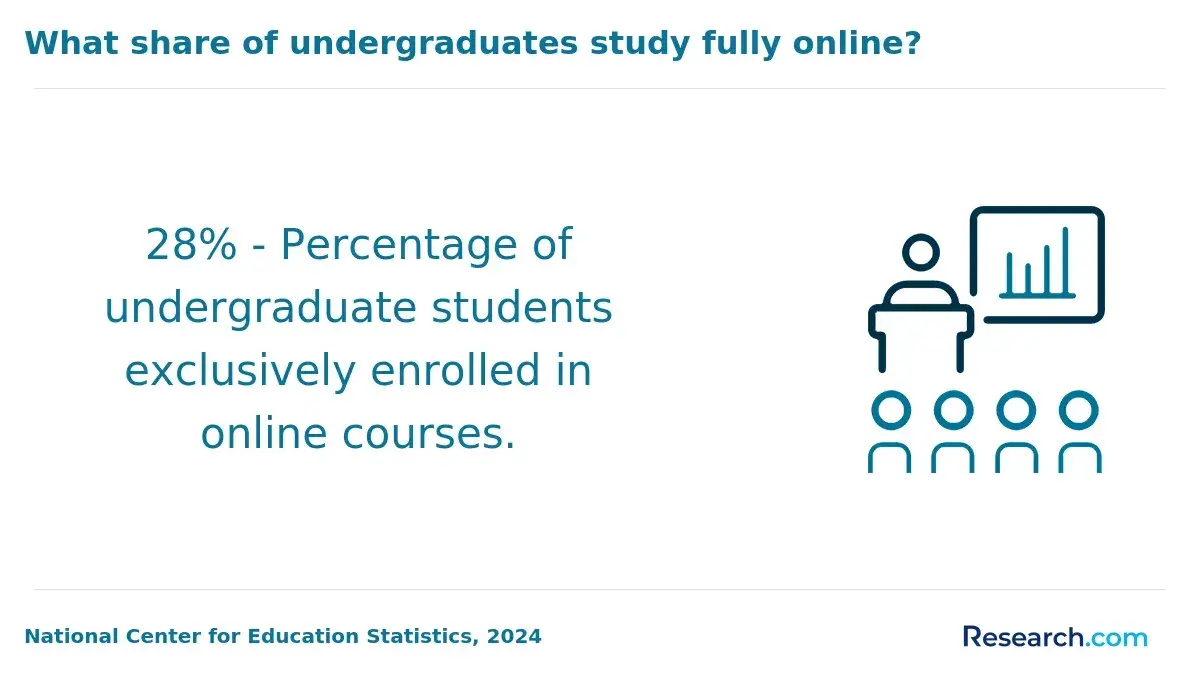
Tuition comparison is complicated because many universities do not publish a separate "online versus campus" doctoral tuition average for Public Policy. NCES data published in 2024 is still useful for context: average graduate tuition and required fees were roughly $12,600 at public institutions and about $30,000 at private nonprofit institutions for the reported academic year. That means school type, residency status, and funding package can matter more than delivery format.
The table below summarizes the tuition patterns students commonly encounter. Use it to avoid the mistake of comparing only the advertised per-credit rate.
| Cost factor | Online Public Policy doctorate | On-campus Public Policy doctorate |
| Tuition structure | Often charged per credit; some programs use flat online graduate rates | May be charged per credit, per term, or by full-time graduate status |
| Residency pricing | Some programs charge the same rate regardless of state residency | Public universities may charge higher out-of-state tuition |
| Mandatory fees | Technology, distance learning, library, graduation, and residency fees may apply | Campus, activity, health, facilities, technology, and student service fees may apply |
| Funding access | Federal aid may be available if eligible; assistantships vary widely | Assistantships, fellowships, tuition waivers, and research roles may be more common in full-time PhD programs |
| Price risk | Hidden residency travel and extended dissertation enrollment can raise total cost | Relocation, parking, commuting, and living costs can raise total cost |
To compare tuition fairly, calculate total program tuition using required credits, not just the rate per credit. Then add required fees, expected dissertation-continuation charges, residency travel, books, software, and any lost income from reducing work hours.
Cost of attendance includes tuition, fees, books, technology, housing, transportation, health insurance, childcare, travel, and lost earnings. Online students often save on relocation and commuting, but they may still pay technology fees, travel for residencies, and extended dissertation registration. On-campus students may face higher living costs, but they may also have better access to funded assistantships.
The table below separates direct academic costs from life costs. This distinction helps you identify the format that is actually affordable, not just the one with the lower tuition line.
| Cost category | Online doctoral student | On-campus doctoral student |
| Tuition and required fees | May be comparable to campus tuition; online fees can apply | May be higher for out-of-state students but sometimes offset by funding |
| Housing | Usually no relocation required unless residencies are lengthy | May require moving near campus, often a major cost driver |
| Transportation | Lower weekly commuting cost, but possible residency travel | Commuting, parking, transit, or relocation costs may apply |
| Income impact | Often allows continued full-time or part-time employment | Full-time study may reduce employment, though assistantships can replace some income |
| Professional expenses | Conference travel, software, data access, and membership fees may still be needed | Similar expenses, sometimes subsidized by departments or grants |
A practical way to compare formats is to build a four-year or five-year budget. Include tuition increases, summer enrollment, dissertation extension fees, loan interest, and the opportunity cost of working less. This is especially important for practitioner doctorates, where students may continue employment but receive fewer assistantship opportunities than full-time campus PhD students.
If your policy interests are centered on human services, community programs, or social welfare systems, it may also be useful to compare doctoral study with the best online MSW programs. In some roles, a professionally aligned master's degree plus experience may offer a more direct return than a doctorate.
Most Public Policy employers focus less on the course delivery format and more on institutional credibility, accreditation, research ability, policy experience, communication skills, and evidence of leadership. This is especially true in government agencies, consulting firms, think tanks, nonprofits, and applied research organizations where candidates are evaluated on analytical output and practical judgment.
Employer perception can differ by career path. Academic hiring committees may scrutinize research productivity, faculty mentorship, teaching experience, and publication potential more intensely than whether courses were online. Practitioner employers may care more about whether the doctorate strengthened your ability to evaluate programs, interpret evidence, lead teams, manage stakeholders, and communicate findings to decision-makers.
To understand how employers in your target field may view a program, gather evidence before you apply. This is more reliable than relying on broad claims about online degrees.
- Look up alumni job titles and employers, especially graduates from the same delivery format you are considering.
- Ask the program whether the diploma and transcript identify the delivery format, and whether that has affected graduates' hiring outcomes.
- Review faculty networks in your intended field, such as education policy, health policy, environmental policy, public finance, criminal justice, or urban governance.
- Ask employers, mentors, or hiring managers in your sector whether they recognize the university and value its doctoral training.
- Check whether students present at professional conferences, publish applied research, or complete policy projects with credible agencies.
A major red flag is a program that markets the doctorate primarily as a title upgrade without showing evidence of research training, alumni outcomes, or faculty expertise. Employer acceptance is strongest when the credential is backed by visible competence.
Program format can affect job prospects indirectly, but it rarely acts alone. Online study may help experienced professionals keep advancing in their current organization while earning the degree. On-campus study may create more opportunities for research assistantships, teaching experience, publications, and faculty mentorship, which can matter for academic and research-intensive roles.
The U.S. Bureau of Labor Statistics data published in its current Occupational Outlook resources shows that many policy-adjacent roles, such as political scientists, urban and regional planners, postsecondary teachers, survey researchers, and social and community service managers, reward advanced analytical and communication skills. For readers, the important point is not that a doctorate automatically produces a specific salary, but that the degree should connect clearly to the roles you are targeting.
Consider the format's career fit through the lens of your intended outcome. The same doctorate can have different value depending on whether you want research authority, leadership mobility, academic preparation, or applied policy specialization.
- Choose online if you already have strong policy experience, need to stay employed, and can use your workplace or professional network as a research environment.
- Choose on campus if you need intensive faculty mentorship, assistantship funding, teaching experience, research publications, or a stronger pathway into academia.
- Be cautious with either format if the program cannot explain placement outcomes, dissertation support, accreditation, faculty fit, or funding expectations.
- Do not choose a doctorate solely because it is flexible; choose it because the curriculum, research model, and alumni outcomes match your career target.
Public Policy is also a field where prior academic preparation matters. Students entering from sociology, social science, economics, public administration, or community research backgrounds may already have useful foundations. If you are still early in the education pathway, reviewing the best online bachelors in sociology programs can help clarify whether your long-term interests align with policy analysis, social research, or public service leadership.
How do you choose between online and on-campus Public Policy doctorate programs?
The best choice is the format that gives you the strongest chance of completing the doctorate and using it well. Start with your career goal, then test each program against cost, schedule, research fit, fieldwork structure, dissertation support, and employer recognition.
Use this step-by-step process to build a shortlist. It will help you compare programs on evidence rather than convenience, prestige, or assumptions.
- Define your target outcome: academic career, senior public leadership, consulting, think tank research, program evaluation, nonprofit leadership, or specialized policy expertise.
- Identify the degree type that fits that goal, such as a research PhD for academic or research-intensive careers or a professional doctorate for applied leadership roles.
- Verify accreditation, faculty expertise, dissertation requirements, methods training, and whether online and campus students meet equivalent academic standards.
- Calculate total cost of attendance, including tuition, fees, travel, relocation, lost income, loan interest, and dissertation extension charges.
- Compare flexibility honestly by mapping required class times, residencies, fieldwork, advisor meetings, and weekly research hours against your work and family obligations.
- Ask for evidence of student support, including advising loads, dissertation milestones, writing support, research workshops, and career services for doctoral students.
- Review alumni outcomes from the same format, not just the university overall, and compare those outcomes with your target employers.
- Speak with current students or recent graduates about workload, faculty access, hidden costs, and dissertation-stage support.
Common mistakes include assuming online tuition is always cheaper, overlooking residency requirements, choosing a program without a clear dissertation advisor match, ignoring assistantship differences, and underestimating the time required after coursework. If a program cannot provide clear answers about cost, completion support, and research expectations, treat that as a warning sign regardless of format.
In simple terms, choose online when flexibility allows you to keep meaningful policy experience while completing rigorous doctoral work. Choose on campus when immersive research training, funding, faculty access, and academic networking are central to your goal.
Other Things You Should Know About Public Policy
Sometimes, but differences are usually program-specific rather than format-specific. Most programs review graduate GPA, professional experience, writing ability, research interests, recommendation letters, and faculty fit. Some online professional doctorates may value applied leadership experience more heavily, while campus PhD programs may place more emphasis on research preparation.
Many universities do not list delivery format on the diploma, but policies vary. Ask the registrar or admissions office whether the diploma or transcript identifies online delivery before enrolling, especially if employer perception is a concern.
Many students attempt this, and some programs are designed for working professionals. However, full-time work plus doctoral study requires strong time management, predictable weekly study blocks, and realistic expectations during dissertation research. Flexibility does not remove the workload.
It can be worthwhile if your goal requires advanced research, policy evaluation, executive leadership, or specialized expertise. If your goal is general public administration advancement, a master's degree, certificate, or targeted professional experience may be a better investment.
- Research Summary: Education and Lifetime Earnings https://www.ssa.gov/policy/docs/research-summaries/education-earnings.html
- How Much Does a PhD Cost https://aituedu.org/how-much-does-a-phd-cost/
- Career Outcomes https://www.rand.edu/career-services/job-placement.html
- Earning a PhD Your Way: How to Choose the Right Online Learning Format https://www.phds.me/resources/online-learning-modes/
- How Employers View Online Degrees: Interviews with Nine Hiring Executives https://www.onlineeducation.com/features/how-employers-view-online-degrees
- How does a college degree improve graduates’ employment and earnings potential? - APLU https://www.aplu.org/our-work/4-policy-and-advocacy/publicuvalues/employment-earnings/
- PhD in Public Policy - Graduate School of Public Policy https://www.schoolofpublicpolicy.sk.ca/programs/doctoral-programs/phd-in-public-policy.php