
2027 Online Public Policy Doctorate Programs with Rolling Admissions: Deadlines, Start Dates, and Application Tips

Co-Founder and Chief Data Scientist
Choosing an online public policy doctorate with rolling admissions can speed up enrollment, but it can also create hidden deadline and funding risks. The stakes are real: the Bureau of Labor Statistics reports that management analysts, a common policy-adjacent career path, had a median annual wage of $101,190 in May 2024.
This guide is for working professionals comparing flexible doctoral options, start dates, and application timing. You will learn how rolling admissions work, when to apply, what requirements matter most, and how to choose a program without sacrificing quality for convenience.
Key Things You Should Know
- Rolling admission usually means applications are reviewed as they arrive, but most online public policy doctorate programs still set cohort, document, deposit, registration, and financial aid cutoffs.
- Applying 3 to 6 months before the desired start date gives most applicants enough time for transcripts, recommendations, writing samples, FAFSA processing, employer tuition benefits, and seat availability.
- Federal Student Aid lists graduate Direct Unsubsidized Loans at 7.94% and Grad PLUS Loans at 8.94% for loans first disbursed July 1, 2025 through June 30, 2026, so timing can affect borrowing costs and cash-flow planning.
How Does Rolling Admission Work for Online Public Policy Doctorate Programs?
Rolling admission for an online public policy doctorate means the program accepts and reviews applications over an extended period instead of waiting for one fixed deadline. In practice, "rolling" does not always mean "apply anytime and start immediately." Most doctoral programs still admit students into defined cohorts, terms, or course sequences.
Public policy doctorates may be structured as a PhD in Public Policy, Doctor of Public Administration, Doctor of Public Policy, or a closely related policy leadership degree. PhD programs often emphasize research design, theory, and dissertation work, while professional doctorates typically focus on applied policy analysis, governance, public-sector leadership, and solving real organizational problems.
The table below compares common admissions models so applicants can understand what "rolling" may actually mean before relying on a school's marketing language.
| Admissions model | How review usually works | What it means for applicants | Main risk |
| True rolling admission | Applications are reviewed continuously until seats are filled | Earlier applicants may receive decisions sooner and have more start-date options | Seats, scholarships, or course sections may close before the final cutoff |
| Rolling admission with priority deadlines | Applications are accepted throughout the year, but priority dates guide funding or cohort review | Applicants can still apply later, but early submissions may receive fuller consideration | Missing the priority date may limit aid or delay enrollment |
| Multiple fixed deadlines | The school has several review rounds tied to term starts | Applicants get flexibility, but decisions are not continuous | Calling it rolling may create false urgency or false flexibility |
| Annual cohort admission | Applications are reviewed for one major start date per year | Applicants need a longer planning runway | Missing the deadline may mean waiting a full year |
For doctoral applicants, the biggest advantage of rolling admission is timing control. A mid-career public manager, nonprofit executive, military officer, or policy analyst may not want to wait a full year to begin coursework.
The trade-off is that a flexible application window can make deadlines feel less visible, especially when financial aid, orientation, and dissertation-prep sequences have their own calendars.
When Are the Best Start Dates for Online Public Policy Doctorate Programs?
The best start date depends on the applicant's work calendar, funding plan, academic readiness, and the program's course sequence. Online public policy doctorates commonly offer fall, spring, and sometimes summer starts. Programs built around short terms may offer more frequent entries, but doctoral seminars, research methods courses, and residency requirements may not be available every term.
The table below summarizes how common start dates tend to fit different student situations. It is not a substitute for checking a specific school's academic calendar, but it helps narrow the decision before contacting admissions.
| Start date | Best fit | Why it may work well | Possible drawback |
| Fall | Applicants who want the fullest cohort experience | Many programs schedule core doctoral seminars and orientation around fall intake | Application volume may be higher, and earlier planning may be needed |
| Spring | Working professionals who need more time after year-end obligations | It can align with new employer tuition benefit cycles and a less crowded personal schedule | Some fall-only course sequences may require careful advising |
| Summer | Educators, public employees, and professionals with lighter summer workloads | It may allow students to complete an initial course before a busy fall season | Course options may be narrower in some doctoral programs |
| Accelerated short-term entry | Applicants ready with all documents and funding | It can reduce wait time if the program has frequent sessions | Fast entry can leave too little time for aid, onboarding, or academic preparation |
For most applicants, fall is the safest default because it often offers the broadest course availability and the strongest sense of cohort identity. Spring can be a strong choice for working professionals who need time to secure transcripts, recommendations, and employer support. Summer is useful when the first course is intentionally designed as an entry point rather than a limited off-cycle option.
A common mistake is choosing the earliest possible start date simply because it is available. Doctoral work requires sustained reading, writing, and research planning. If starting earlier means rushing the statement of purpose, borrowing without a budget, or enrolling in a less relevant first course, a later start date may be the better decision.
How Do Rolling Admissions Affect Application Deadlines for Online Public Policy Doctorates?
Rolling admissions affect deadlines by replacing one large application cutoff with several smaller deadlines. These may include priority review dates, final application dates, transcript deadlines, recommendation deadlines, enrollment deposit dates, orientation deadlines, and course registration cutoffs. Applicants should treat each of these as a real deadline, even if the admissions page says applications are reviewed on a rolling basis.
The most important distinction is between an admissions deadline and an enrollment deadline. An admissions deadline controls when the school will review the application. An enrollment deadline controls whether the admitted student can actually begin in the desired term. Missing the second one can push enrollment to the next cohort even after acceptance.
The table below shows the deadline types that commonly affect online doctoral applicants and why each matters.
| Deadline type | What it controls | Why it matters in rolling admissions |
| Priority application date | Early review, funding consideration, or preferred cohort placement | Later applicants may still be reviewed but with fewer options |
| Final application date | Last day to submit the admissions file for a start term | Rolling review usually stops once the term is closed |
| Document completion date | Receipt of transcripts, recommendations, test scores if required, and writing samples | An incomplete file may not enter review even if the application form was submitted |
| Enrollment deposit date | Seat confirmation in the cohort | Acceptance alone may not reserve a place |
| Registration deadline | Ability to enroll in first-term courses | Late registration can limit course choice or delay the start |
| Financial aid deadline | Loan, scholarship, assistantship, or payment plan processing | Aid timelines may be stricter than admissions timelines |
Applicants should also ask whether applications are reviewed continuously by faculty or batched for committee review. In doctoral programs, faculty fit and research alignment often matter more than speed. A school may accept applications year-round but still convene faculty review only at certain points in the term.
Most students should begin preparing 4 to 6 months before their preferred start date and submit the completed application at least 8 to 12 weeks before the program's final enrollment cutoff. Applicants with international transcripts, old academic records, military benefits, employer tuition reimbursement, or complex financial aid needs should start even earlier.
A practical application timeline helps prevent the most common rolling-admissions problem: submitting quickly but incompletely. The sequence below shows how to work backward from the desired start date.
- Six months before the start date, identify accredited online public policy doctorate programs, confirm whether the format is fully online or hybrid, and request current admissions calendars.
- Five months before the start date, compare degree type, research expectations, residency requirements, tuition structure, transfer-credit policy, and dissertation or capstone model.
- Four months before the start date, request official transcripts, contact recommenders, draft the statement of purpose, and gather a resume or CV that highlights policy, leadership, research, and public-service experience.
- Three months before the start date, submit the strongest complete application possible rather than waiting for the last rolling review window.
- Two months before the start date, complete financial aid steps, review the award package, confirm tuition due dates, and ask whether the first-term courses are still available.
- One month before the start date, finish onboarding, technology setup, orientation, advising, registration, and any residency or synchronous attendance planning.
Applying early is not a guarantee of admission, and schools should not be evaluated only by speed. Early application matters because it gives the applicant time to compare offers, revise funding plans, and avoid being forced into the next available cohort without understanding the trade-offs.
Applicants who are still deciding between a master's and a doctorate should be especially careful. If the career goal is faster advancement in public administration rather than original doctoral-level research, a 1 year MPA online may be a more efficient credential to compare before committing to a doctorate.
Admissions requirements for online public policy doctorate programs usually evaluate three things: academic readiness, professional relevance, and fit with the program's policy focus.
Rolling admissions may affect timing, but it rarely lowers the academic standard. Doctoral committees still need evidence that the applicant can complete advanced research, policy analysis, and long-form writing.
The table below summarizes common requirements and how applicants should interpret them during program comparison.
| Requirement | What schools usually look for | Why it matters |
| Master's degree | A relevant graduate degree in public policy, public administration, political science, economics, social work, sociology, education, criminal justice, or a related field | Doctoral coursework often assumes graduate-level writing, theory, and applied analysis |
| Minimum GPA | A stated graduate GPA threshold or evidence of strong recent academic performance | Programs use GPA as one indicator of readiness, not as the only measure |
| Resume or CV | Policy, government, nonprofit, research, advocacy, military, consulting, or leadership experience | Professional doctorates often value applied experience tied to public problems |
| Statement of purpose | Clear goals, research interests, policy focus, and reason for choosing the program | This is often the best place to show fit with faculty, curriculum, and career plans |
| Writing sample | Analytical writing, research papers, policy memos, publications, or professional reports | Doctoral success depends heavily on sustained argument, evidence, and synthesis |
| Recommendations | Academic or professional references who can discuss research ability, leadership, ethics, and persistence | Strong recommendations add context that grades and resumes cannot show |
| Interview | Discussion of goals, readiness, time management, and program fit | Some programs use interviews to evaluate whether online doctoral study is realistic |
Applicants without a public policy degree are not automatically at a disadvantage if they can show relevant preparation. For example, backgrounds in sociology, social services, economics, planning, law, public health, education, or criminal justice can all connect to policy work.
Students still building a foundation may want to examine how social research and institutions are taught in the best online bachelors in sociology programs, especially if they are mapping a longer route toward graduate policy study.
Accreditation also matters. Applicants should confirm institutional accreditation recognized by the U.S. Department of Education or the Council for Higher Education Accreditation. Programmatic accreditation is less universal for public policy doctorates than in fields such as nursing or counseling, so students should focus on institutional legitimacy, faculty qualifications, curriculum rigor, and whether the degree aligns with employer expectations.
A strong application does more than meet minimum requirements. It shows why the applicant is ready for doctoral-level policy work now, what public problem they want to study or solve, and why the specific program is a good fit. Rolling admissions can reward readiness, but a rushed application can weaken an otherwise qualified candidate.
Applicants can improve the quality of the application by focusing on the parts that doctoral committees read most carefully.
- Connect career experience to a specific public policy problem, such as housing affordability, education equity, public budgeting, health policy, climate resilience, criminal justice reform, or nonprofit governance.
- Use the statement of purpose to explain why the degree is necessary for the next career step, not just why public service is personally meaningful.
- Show evidence of analytical writing through a policy memo, thesis chapter, research paper, evaluation report, grant analysis, or published professional work.
- Ask recommenders who can discuss evidence-based decision-making, leadership under complexity, writing ability, ethical judgment, and persistence over time.
- Address academic weaknesses directly if needed, especially if older grades do not reflect recent professional or graduate-level performance.
- Demonstrate time management by explaining how online coursework, synchronous sessions, residencies, research milestones, and employment will fit into a realistic weekly schedule.
One red flag is a statement that sounds like it could apply to any school. Doctoral admissions committees often look for fit: course sequence, faculty expertise, applied research model, dissertation support, policy labs, or professional networks.
Applicants should name the program features that connect to their goals, while avoiding exaggerated claims about guaranteed career outcomes.
Public policy is also interdisciplinary. Applicants focused on social welfare, community systems, or human services policy may want to compare doctoral policy options with the best online MSW programs if their goals require direct practice, licensure preparation, or social-service leadership rather than doctoral research.
Rolling admissions can complicate financial aid because admissions flexibility does not always match funding timelines. A student may be admitted close to a start date but still need time for FAFSA processing, loan counseling, employer approval, scholarship review, payment-plan setup, and tuition billing. This is one reason an earlier start date is not always the most affordable start date.
For federal loans first disbursed July 1, 2025 through June 30, 2026, Federal Student Aid lists a 7.94% fixed interest rate for graduate Direct Unsubsidized Loans and 8.94% for Grad PLUS Loans. For doctoral students borrowing over multiple terms, that difference makes it important to compare total cost, not just the first-term bill.
The table below shows financial timing issues that rolling-admission applicants should check before accepting a start date.
| Funding item | Question to ask | Why timing matters |
| FAFSA | Which aid year applies to my intended start term? | Summer starts may fall into a different aid-year planning cycle than fall starts |
| Institutional scholarships | Is there a priority scholarship deadline separate from admission? | Late rolling applicants may miss school-based awards |
| Assistantships or fellowships | Are online doctoral students eligible? | Some funding is limited to campus-based or full-time students |
| Employer tuition assistance | How far in advance must my employer approve the program? | Employer reimbursement often requires preapproval before enrollment |
| Payment plans | When is the first payment due? | Admission close to the start date can compress payment deadlines |
| Transfer credits | Can prior graduate credits reduce tuition and time? | Credit evaluation may take longer than admissions review |
Applicants should calculate total program cost using tuition, fees, required residencies, travel, books, technology fees, dissertation continuation credits, and potential lost income if workload changes. A lower per-credit price is helpful, but it is not the whole ROI picture if the program has more credits, limited course availability, or weak alignment with the student's career goals.
Rolling admissions can improve enrollment flexibility, but it can also create uncertainty about seat availability and course sequencing. In doctoral programs, the issue is not only whether a seat is open. Students also need access to the right first courses, research methods sequence, advising structure, and cohort support.
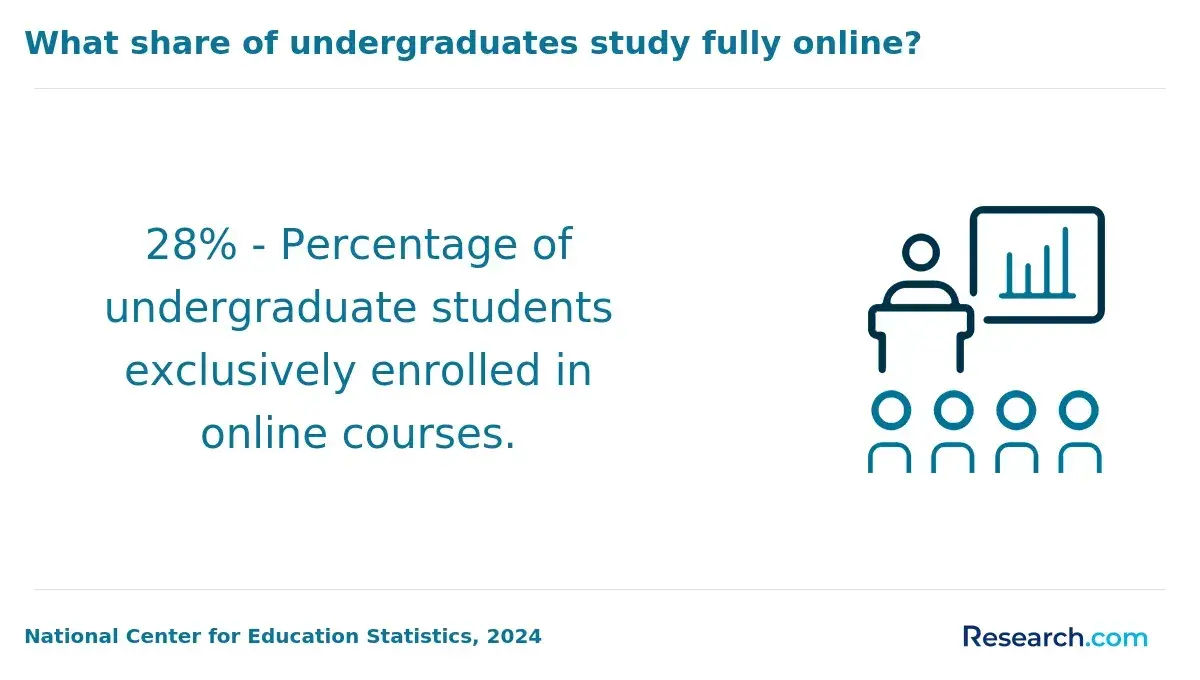
Online education has become a normal part of graduate study rather than a niche option. The National Center for Education Statistics reported in 2024 that more than half of graduate students took at least one distance education course in fall 2022.
For public policy doctoral applicants, this means more flexible choices, but also more competition for programs that combine online delivery with credible faculty support and strong professional relevance.
Applicants should confirm the enrollment details that affect whether a rolling start will actually work.
- Ask whether the desired start date has open seats in the doctorate, not just in the university overall.
- Confirm whether first-term courses are designed for new doctoral students or are simply the only courses still open.
- Check whether orientation, residency, or synchronous sessions are required before classes begin.
- Ask whether students who start in spring or summer can stay on the standard completion timeline.
- Confirm whether dissertation advising, research methods, statistics, or comprehensive exam preparation are offered every term.
- Find out whether online students have equal access to library support, data tools, faculty advising, writing support, and career services.
A major red flag is a program that emphasizes "start soon" but gives vague answers about course rotation, faculty advising, or dissertation support. Doctoral completion depends on structure. Flexibility is valuable only when the program also provides a clear path from admission to candidacy, dissertation or capstone completion, and graduation.
Rolling admissions are especially useful for working professionals whose careers do not follow an academic calendar. Public managers may need to plan around legislative sessions, budget cycles, grant deadlines, military transitions, school-year schedules, or major organizational projects. The right enrollment date should support the student's career momentum rather than disrupt it.
The table below compares common applicant profiles and how rolling admissions may fit their timelines.
| Student profile | Rolling-admission advantage | Best timing strategy | When to be cautious |
| Public-sector manager | Can start after budget season or a major agency deadline | Choose a term that allows consistent weekly study time | Avoid starting during a known high-pressure policy cycle |
| Nonprofit executive | Can align enrollment with grant or fiscal-year planning | Secure board or employer support before applying | Do not underestimate travel or residency conflicts |
| Military or veteran applicant | Can coordinate enrollment with transition and benefits timing | Confirm benefit certification and term dates early | Late admission may delay benefit processing |
| Policy analyst or researcher | Can begin when a research agenda is clear | Prioritize faculty fit and methods training over the earliest start | A fast start is risky if the research direction is vague |
| Career changer | Can enter without waiting for one annual cycle | Use extra time to strengthen prerequisites and writing samples | Doctoral study may be premature without policy experience |
Career outcomes also depend on the policy area, employer, and prior experience. For example, the Bureau of Labor Statistics reports that urban and regional planners had a median annual wage of $83,720 in May 2024.
Applicants aiming at planning, housing, transportation, or land-use policy may want to compare doctoral public policy options with an urban planning degree online if they need a more practice-specific credential.
Rolling admission makes the most sense when the applicant is academically ready, financially prepared, and clear about why doctoral study fits the next career step. It makes less sense when the applicant is using a quick start date to avoid deeper questions about degree type, cost, research fit, or whether a shorter graduate certificate or master's degree would meet the same goal.
How Should Students Choose and Apply to Online Public Policy Doctorate Programs With Rolling Admissions?
Students should choose an online public policy doctorate with rolling admissions by comparing academic quality, timing, cost, and career fit together.
The strongest choice is not necessarily the school that can admit the fastest. It is the program that offers a credible doctoral pathway, a realistic schedule, transparent costs, and a curriculum aligned with the student's policy goals.
A structured comparison process can keep applicants from being distracted by convenience alone.
- Define the career goal first, such as senior public administration, policy research, nonprofit leadership, consulting, higher education, advocacy, or executive government service.
- Choose the degree type that fits the goal, distinguishing research-oriented PhD programs from applied professional doctorates.
- Verify institutional accreditation and confirm that employers in the target field recognize the credential.
- Request the current admissions calendar, including priority review, final application, document, deposit, financial aid, orientation, and registration deadlines.
- Compare start dates against course sequencing, residency requirements, synchronous attendance, and dissertation or capstone milestones.
- Ask admissions whether applications are reviewed continuously or in batches, and whether seats remain for the desired cohort.
- Estimate total program cost, including credits, fees, travel, books, technology, dissertation continuation, and borrowing costs.
- Evaluate faculty fit, research support, writing resources, library access, data tools, and online student services.
- Submit a complete application early enough to compare offers rather than accepting the first available seat.
Applicants should also compare opportunity costs. A doctorate can support advanced leadership, research, and policy expertise, but it is a major investment of time and money. If the desired role requires planning certification, social-work licensure, public administration experience, data analysis skills, or a shorter credential, another path may offer a better fit.
Before committing, ask each school direct questions:
- How many start dates are available each year?
- Are all starts equal for course sequencing?
- Are online students eligible for the same funding?
- What is the typical time to completion?
- How are dissertation chairs assigned?
- What happens if a student pauses for a term?
Clear answers are a good sign; vague answers are a reason to slow down.
Other Things You Should Know About Public Policy Programs
It can, especially for applicants with strong research, policy expertise, publications, or professional leadership experience. However, tenure-track academic roles are competitive, and hiring requirements vary by institution and discipline.
Many do, but some professional doctorates may use an applied dissertation, doctoral project, or policy-focused capstone. Applicants should review the final project model because it affects time, advising, and research expectations.
Some programs require it, some waive it for applicants with a graduate degree or professional experience, and others do not use it. Always check the current admissions page because testing policies change.
Sometimes. Programs may accept a limited number of prior graduate credits if they are recent, relevant, and earned with strong grades. Dissertation, research, residency, and core doctoral requirements usually cannot be fully transferred.
- RAND Offers Master's and Ph.D. Degrees in Policy Analysis https://www.rand.edu/admissions.html
- Doctoral Public Affairs Education https://www.naspaa.org/resources/why-public-service-degree/doctoral-public-affairs-education
- 25 Best Online EdD Programs of 2025 https://www.eddprograms.org/schools/best-online-doctor-of-education-programs/
- Apply to a Doctoral Program at CEU https://www.ceu.edu/admissions/doctoral
- Can You Get Financial Aid for Doctoral Programs? - Graduate Programs for Educators https://www.graduateprogram.org/blog/can-you-get-financial-aid-for-doctoral-programs/
- Tips for Applying to Doctoral Programs | AASL Knowledge Quest https://knowledgequest.aasl.org/tips-for-applying-to-doctoral-programs/
- PhD Scholarships: Explore Your Online Education Aid Options https://www.oedb.org/phd-scholarship/


