2027 Online Public Policy Doctorate Programs for First-Time Doctoral Students

Co-Founder and Chief Data Scientist
Choosing an online public policy doctorate is a high-stakes decision because the degree can shape your research identity, leadership path, and debt load. The U.S. Bureau of Labor Statistics reports that social and community service managers had a median annual wage of $78,240 in May 2024, showing that policy-adjacent leadership can be financially meaningful but not automatically doctoral-level.
This guide is for first-time doctoral students comparing online options, degree types, costs, support systems, and career fit so they can decide whether to apply now, wait, or choose another graduate pathway.
Key Things You Should Know
- First-time doctoral students should prioritize structure: cohort models, required research-sequence courses, faculty advising, writing support, and clear dissertation or capstone milestones matter more than online convenience alone.
- Cost varies widely: NCES data published in 2024 show average graduate tuition and required fees of $12,596 at public institutions and $29,931 at private nonprofit institutions, before program fees, residencies, books, and extended dissertation enrollment.
- An online public policy doctorate is usually best for experienced professionals seeking senior policy, research, government, nonprofit, consulting, or academic roles; it is often a poor fit if you do not yet know what policy problem, population, or sector you want to study.
Which Online Public Policy Doctorate Programs Are Best for First-Time Doctoral Students?
The best online public policy doctorate for a first-time doctoral student is not necessarily the most famous school or the shortest program. It is the program whose structure, faculty expertise, research expectations, cost, and pace match your academic background and career goal.
Public policy doctorates generally fall into three categories. A research-focused PhD is usually designed for students who want to produce original scholarship, teach, or work in rigorous research roles.
A professional doctorate, such as a Doctor of Public Administration or Doctor of Public Policy where available, usually emphasizes applied leadership, evidence-based decision-making, and policy implementation.
Some interdisciplinary doctorates allow public policy concentrations in areas such as governance, public administration, social policy, urban systems, health policy, or security policy.
The comparison below can help first-time doctoral students identify the type of program that fits their goals before they evaluate individual schools:
| Program type | Best fit for first-time doctoral students who want to | Typical final project | Main caution |
| PhD in Public Policy or Policy Studies | Conduct original research, teach, publish, or pursue research-intensive policy roles | Dissertation | May require stronger quantitative, theory, and research-methods preparation |
| Doctor of Public Administration | Lead public agencies, nonprofits, civic organizations, or policy implementation teams | Dissertation, capstone, or applied research project | May be less appropriate for students whose primary goal is a tenure-track research career |
| Doctor of Public Policy | Use advanced analysis to solve real-world policy problems in government, consulting, advocacy, or executive leadership | Applied dissertation, policy analysis project, or traditional dissertation | Availability varies, and program design can differ substantially by school |
| Interdisciplinary doctorate with a policy concentration | Connect policy with health, education, criminal justice, urban planning, sustainability, or social systems | Dissertation or applied project | Students must verify that faculty expertise matches their intended policy topic |
If your interests are closer to land use, housing, transportation, sustainability, or regional governance, an urban planning degree online may be a better or more targeted step before doctoral study. First-time doctoral applicants should avoid assuming that any public affairs doctorate will cover their exact policy niche in enough depth.
A doctorate may not be the right next step if you are seeking a rapid credential for promotion, have limited graduate-level writing experience, or need a broad introduction to public administration.
In those cases, a master's degree, graduate certificate, or additional policy work experience can reduce the risk of entering a doctoral program before you are ready.
What Should First-Time Students Expect From an Online Public Policy Doctorate?
An online public policy doctorate is an advanced degree focused on how public problems are defined, studied, governed, funded, evaluated, and improved. First-time doctoral students should expect a major shift from consuming knowledge to producing knowledge or evidence-based solutions.
Most programs combine policy theory, research design, economics or budgeting, statistics, ethics, governance, program evaluation, and specialization electives.
The online format usually delivers coursework through learning management systems, virtual discussions, recorded lectures, synchronous seminars, research workshops, and digital library access. Some programs also require short residencies, campus intensives, or virtual dissertation boot camps.
Students new to doctoral study should understand how common program components affect the workload:
| Program component | What it usually involves | Why it matters for first-time doctoral students |
| Core policy seminars | Theory, institutions, governance, public finance, ethics, and policy process coursework | Builds the conceptual foundation needed to frame doctoral-level problems |
| Research-methods sequence | Quantitative, qualitative, mixed-methods, statistics, evaluation, or econometrics coursework | Often determines whether students can move confidently into dissertation or capstone work |
| Specialization electives | Courses in areas such as health policy, education policy, social policy, security, urban policy, or environmental policy | Helps connect the doctorate to a specific career or research agenda |
| Residency or intensive | Short campus or virtual sessions focused on advising, research design, or professional development | Can be valuable support, but it affects travel, scheduling, and total cost |
| Dissertation or applied project | Independent research or a practice-based policy project supervised by faculty | Usually the most difficult stage for students who have never completed doctoral research |
Students who mainly want fast preparation for management roles may find that a 1 year MPA online better matches their timeline than a doctorate. A doctorate is more appropriate when you need advanced research, policy analysis, or executive-level credibility tied to a defined long-term goal.
Online does not mean easier. The first year often requires disciplined reading, discussion participation, data analysis, academic writing, and early topic development while balancing work and family responsibilities. The students who adapt best usually treat the program like a long-term research apprenticeship, not a sequence of isolated online courses.
What Admissions Requirements Should First-Time Applicants Expect for an Online Public Policy Doctorate?
Admissions requirements vary by institution, but first-time doctoral applicants should expect schools to evaluate academic readiness, professional direction, research potential, writing ability, and fit with faculty expertise.
Some programs require a master's degree in public policy, public administration, political science, economics, sociology, social work, planning, education, criminal justice, or a related field, while others may admit highly prepared applicants from broader backgrounds.
The table below summarizes common admissions elements and what each one tells the admissions committee about your readiness:
| Requirement | What schools commonly look for | How first-time doctoral applicants should prepare |
| Master's degree | Graduate-level preparation in policy, administration, social science, economics, or a related field | Explain how prior coursework connects to your intended doctoral focus |
| Graduate GPA | Evidence that you can succeed in advanced academic work | Address weak grades directly if they do not reflect your current abilities |
| Statement of purpose | A clear policy problem, research interest, career goal, and reason for choosing the program | Avoid vague goals such as "making a difference" without a defined sector or issue |
| Writing sample | Ability to analyze evidence, organize arguments, and write at a graduate level | Submit a policy memo, thesis chapter, research paper, or analytical professional report when allowed |
| Professional experience | Exposure to government, nonprofit, advocacy, research, consulting, public service, or regulated sectors | Show how your experience gives you insight into a real policy problem |
| Letters of recommendation | Support from people who can evaluate your analytical, leadership, research, or writing ability | Choose recommenders who can discuss specific work, not just your job title |
| Research-methods background | Comfort with statistics, data interpretation, research design, or program evaluation | Take refresher courses if your methods experience is limited or outdated |
If your undergraduate foundation is in a social science but you do not yet have graduate preparation, reviewing options such as the best online bachelors in sociology programs can help you understand the kind of social research, inequality, institutions, and community analysis that often feeds into public policy study.
Doctoral applicants with non-policy backgrounds should be especially clear about how their prior education supports their proposed research area.
Before applying, complete a readiness check rather than relying on enthusiasm alone. This sequence can help you decide whether to apply now or strengthen your profile first.
- Review the curriculum and list any required skills you have not used recently, especially statistics, research design, economics, or academic writing.
- Identify one or two policy problems you can discuss with evidence, not just personal interest.
- Compare faculty biographies with your intended topic and confirm that more than one faculty member could plausibly advise your work.
- Ask admissions staff whether students without prior doctoral experience receive research boot camps, writing support, or structured dissertation planning.
- Estimate whether your work schedule allows sustained weekly reading, writing, and data-analysis time for several years.
For first-time doctoral students, support systems are not extras; they are part of the academic infrastructure that helps students move from coursework to independent research. A strong online public policy doctorate should make research expectations visible early and provide multiple ways to receive feedback.
The most useful support features are those that reduce isolation and clarify what successful progress looks like. Students should look for these features during program comparison and ask for concrete examples rather than broad promises:
- Doctoral orientation that explains the difference between master's-level coursework and doctoral-level inquiry.
- Required research-methods courses that build from foundational design to advanced analysis instead of assuming prior expertise.
- Writing support focused on scholarly argument, literature reviews, citation management, and dissertation chapter development.
- Library services with online access to policy databases, government documents, journals, data sets, and research consultations.
- Faculty advising checkpoints that begin before the dissertation stage, not only after coursework is complete.
- Peer workshops where students can present early ideas, receive critique, and learn how other students refine research questions.
- Clear milestones for topic approval, proposal development, data collection, analysis, final defense, or applied-project completion.
A common mistake is assuming online programs compensate for distance with more faculty access. Some do, but others expect substantial independence.
First-time doctoral students should ask how often they will meet with advisors, whether meetings are required or optional, how dissertation chairs are assigned, and what happens if a faculty member leaves or cannot supervise a topic.
AI tools are also changing doctoral research habits. Students may use AI-assisted search, transcription, coding support, or drafting tools where permitted, but universities increasingly expect careful disclosure, data privacy awareness, and original analysis.
The practical question is not whether a program "allows AI," but whether it teaches responsible evidence use, citation ethics, and research integrity in an AI-influenced policy environment.
The dissertation, capstone, or applied project often determines whether a first-time doctoral student finishes smoothly or stalls. Coursework has deadlines and instructor structure; the final doctoral project requires sustained independence, a feasible question, advisor alignment, and tolerance for revision.
The table below compares common final-project formats so students can judge which one best matches their goals and working style:
| Final requirement | Typical purpose | Best fit | Potential challenge |
| Traditional dissertation | Produce original scholarly research that contributes to public policy knowledge | Students interested in academia, think tanks, research organizations, or advanced analytical roles | Requires strong methods preparation and sustained independent writing |
| Applied dissertation | Use rigorous research to address a real policy or organizational problem | Working professionals who want to connect doctoral work to practice | Still requires scholarly grounding and may need access to organizational data |
| Capstone project | Develop a policy solution, evaluation, implementation plan, or evidence-based product | Students focused on executive leadership, agency improvement, or consulting | May carry less value for research-academic careers if it is not dissertation-equivalent |
| Policy analysis portfolio | Demonstrate advanced policy analysis across multiple products or cases | Students in practice-oriented programs that emphasize professional application | Quality expectations can vary, so students should review examples before enrolling |
First-time doctoral students should ask schools to explain exactly when final-project planning begins. Programs that delay topic development until the end of coursework may feel manageable at first but leave students underprepared for independent research.
Use the following questions to evaluate dissertation or capstone support before you commit:
- When are students expected to identify a topic, research question, and potential advisor?
- Does the curriculum include a dissertation seminar, proposal-development course, or applied-research design course?
- Are students allowed to use workplace or agency data, and what permissions are required?
- What institutional review board training is required for human-subjects research?
- How many committee members are required, and how are they selected?
- What happens if a student changes topics after the proposal stage?
- Are sample dissertations, capstones, or project rubrics available for admitted students to review?
The biggest red flag is a program that markets itself as convenient but cannot clearly explain the final-project process. Convenience helps you start; dissertation and capstone structure helps you finish.
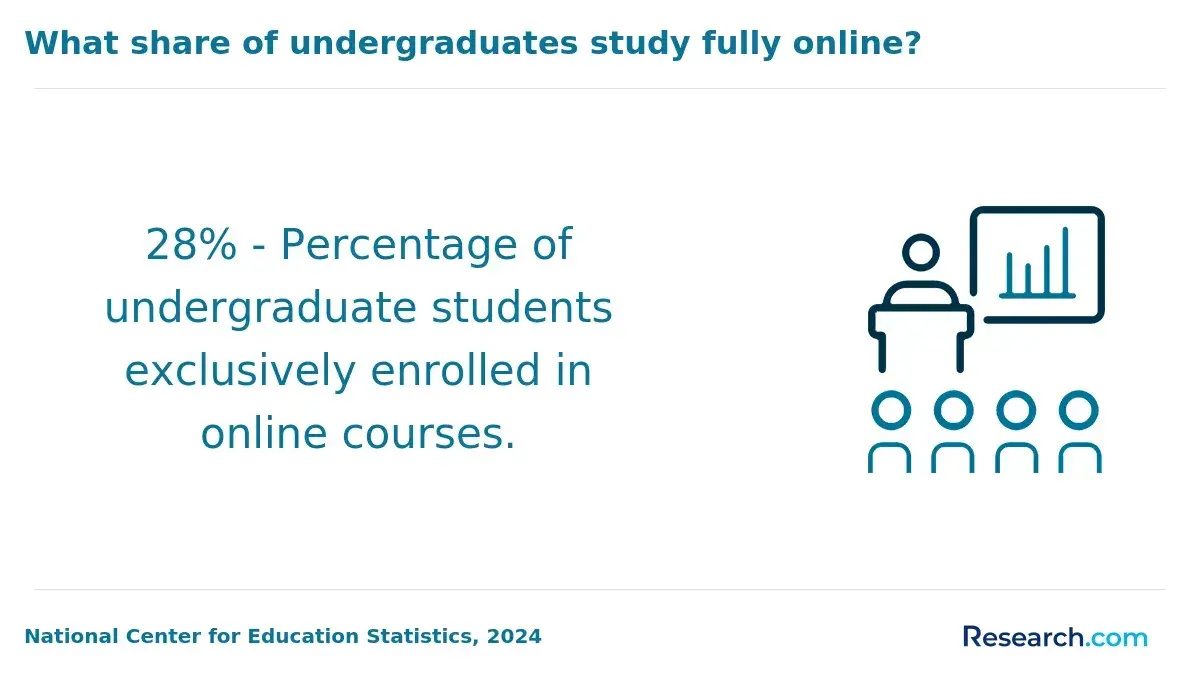
Online public policy doctorates can be flexible, but flexibility has limits. First-time doctoral students should examine course pacing, synchronous attendance, residency requirements, dissertation enrollment rules, and whether the program allows part-time study without losing access to advising.
The format comparison below shows how different online designs affect students who are balancing doctoral study with employment or caregiving:
| Format feature | What it means | Best for | Watch for |
| Asynchronous courses | Students complete weekly work without a fixed meeting time | Professionals with variable schedules or different time zones | Discussion deadlines and group projects can still be demanding |
| Synchronous online seminars | Students attend live virtual meetings at scheduled times | Students who benefit from real-time interaction and accountability | Evening or weekend sessions may conflict with work or family obligations |
| Cohort lockstep model | Students progress through courses with the same group | First-time doctoral students who want structure and peer support | Less ability to slow down, accelerate, or skip terms |
| Self-paced or independently paced model | Students have more control over course load and timing | Highly disciplined students with prior research confidence | Can increase isolation and make progress harder to measure |
| Required residency | Students attend campus or intensive sessions for advising, research, or networking | Students who value face-to-face faculty contact | Travel, lodging, time off work, and family logistics add cost |
Working professionals should be especially careful with the phrase "designed for adults." It may mean evening courses and part-time options, but it can also mean the program expects students to manage complex work independently with limited reminders.
Before enrolling, map a typical week rather than relying on broad time estimates. Include reading, discussion posts, research assignments, data work, writing, advisor meetings, library searches, and revision time. If your calendar has no protected writing blocks, an online doctorate may become stressful quickly even if the course platform is convenient.
Cohorts, mentorship, and student support can strongly affect the first-time doctoral experience because doctoral study is both academic and psychological. Students often need help interpreting feedback, narrowing topics, handling imposter feelings, and staying motivated through long research stages.
A cohort can provide peer accountability, but it is not a substitute for faculty mentorship. A mentor helps you understand whether a topic is feasible, which methods fit your question, what literature matters, and how your work connects to the field.
In public policy, mentorship is especially important because topics can become too broad quickly, such as "poverty," "housing," "public safety," or "education reform." Doctoral-level work requires a focused, researchable problem.
Students should look for multiple layers of support rather than one assigned advisor who handles everything. Strong programs often combine the following elements:
- Faculty advisor or dissertation chair with expertise in the student's policy area or method.
- Program director or doctoral coordinator who monitors progress and resolves administrative issues.
- Peer cohort or research groups that provide accountability and feedback.
- Methods faculty or statistics support for research design, data analysis, and evaluation questions.
- Writing center staff familiar with doctoral-level literature reviews, proposals, and long-form academic writing.
- Career services that understand government, nonprofit, academic, consulting, and research-sector pathways.
One current trend is that online doctoral students increasingly expect high-touch support without relocating. That expectation is reasonable, but students should verify how support works in practice: response-time standards, advisor loads, online office hours, dissertation committee availability, and whether support continues after coursework ends.
A common red flag is a program that emphasizes networking but does not describe academic mentoring. Networking may help your career, but doctoral success depends heavily on sustained feedback on your ideas, methods, and writing.
Most online public policy doctorates take several years, especially for students working full time. The exact length depends on transfer credits, course load, dissertation or capstone design, residency requirements, and whether the program charges per credit, per term, or per dissertation-continuation period.
Cost should be evaluated as total cost to completion, not just advertised tuition. NCES data published in 2024 report average graduate tuition and required fees of $12,596 at public institutions and $29,931 at private nonprofit institutions, which gives students a national benchmark but not a program-specific estimate.
The table below summarizes major time and cost factors first-time doctoral students should compare before applying:
| Factor | Typical range or issue | Why it matters |
| Credit requirements | Often based on post-master's credits, doctoral seminars, research courses, and dissertation or capstone credits | More credits usually increase tuition and time unless transfer credit is accepted |
| Time to completion | Commonly several years, with dissertation or applied-project pace creating the most variation | Longer enrollment can increase fees, opportunity cost, and financial stress |
| Tuition model | Per-credit, per-term, flat-rate cohort, or dissertation-continuation pricing | The cheapest credit price is not always the lowest total cost |
| Residency costs | Travel, lodging, meals, lost work time, and campus fees may apply | These costs can be missed if students only compare online tuition |
| Financial aid | Federal loans, institutional aid, employer tuition assistance, fellowships, assistantships, or payment plans may be available | Funding options vary widely and may not cover the full program |
| Loan interest | Federal graduate loan terms change by award year | Students should check current rates before borrowing because interest affects total repayment cost |
To estimate affordability, first-time doctoral students should build a simple completion budget. Include tuition, required fees, books, software, travel, residencies, dissertation editing if allowed, data access, professional memberships, conference travel, and any reduction in work hours.
A doctorate can be worth the investment when it directly supports a specific goal, such as senior policy analysis, executive public-service leadership, research leadership, consulting credibility, or academic advancement. It is riskier when the student expects the credential alone to produce a promotion or salary increase without confirming employer expectations and career pathways.
Career outcomes for online public policy doctorate students vary by prior experience, specialization, employer, location, and whether the doctorate is research-focused or practice-focused. The degree can support advancement, but it should be connected to a realistic career path before enrollment.
Public policy doctoral graduates may pursue or advance in roles such as policy director, senior policy analyst, public affairs researcher, nonprofit executive, government administrator, legislative analyst, program evaluation leader, think tank researcher, consultant, professor, or applied research director.
Students focused on health, education, housing, sustainability, criminal justice, or social policy should compare programs based on faculty and course depth in those areas.
The table below connects common career directions with the doctoral pathway that usually fits best:
| Career direction | Relevant doctoral emphasis | What employers may value |
| Policy research or think tank work | PhD or research-intensive doctorate | Methods expertise, publications, data analysis, policy specialization |
| Government or agency leadership | Professional doctorate or applied policy doctorate | Executive judgment, budgeting, implementation, evidence-based decision-making |
| Nonprofit or advocacy leadership | Applied public policy, public administration, or social policy focus | Program evaluation, grant strategy, community impact, policy communication |
| Higher education teaching | PhD or doctorate accepted by the target institution | Research record, teaching experience, subject expertise, accreditation fit |
| Consulting or evaluation | Doctorate with strong methods and applied project work | Client-ready analysis, evaluation design, communication, sector experience |
Students interested in policy careers centered on families, healthcare access, child welfare, mental health systems, or community services may also want to compare public policy pathways with the best online MSW programs. An MSW can be a better fit when the goal involves direct practice, clinical licensure, or social-service leadership rather than doctoral research.
Licensure is usually not the purpose of a public policy doctorate. Requirements for licensed roles in social work, counseling, education administration, law, or healthcare administration vary by state and profession. If your intended career requires licensure, verify rules with the relevant state board before assuming a policy doctorate will satisfy them.
For salary context, use occupational data cautiously. A BLS wage figure describes an occupation, not the payoff of a specific degree. A doctorate may strengthen qualifications for some senior roles, but experience, sector, geography, management responsibility, and employer type often influence compensation as much as the credential itself.
How Should First-Time Students Choose an Online Public Policy Doctorate Program?
First-time doctoral students should choose an online public policy doctorate by working backward from the career or research outcome they want. The strongest program for one student may be a poor fit for another if the dissertation model, faculty expertise, schedule, or cost structure does not match the student's needs.
Use the following process to compare programs in a practical way:
- Define your target outcome in one sentence, such as "I want to lead program evaluation for state health policy" or "I want to research housing affordability and teach public policy."
- Choose the degree type that fits that outcome: PhD for research-intensive goals, professional doctorate for applied leadership, or interdisciplinary doctorate for cross-sector policy problems.
- Verify institutional accreditation and confirm whether programmatic recognition, state authorization, or employer-specific requirements matter for your goal.
- Compare faculty expertise by reading biographies, recent publications, funded projects, and dissertation topics they have supervised.
- Review the methods curriculum and decide whether it will build the quantitative, qualitative, evaluation, or mixed-methods skills your topic requires.
- Ask for the full cost of completion, including fees, residencies, dissertation-continuation charges, and expected time to finish.
- Evaluate support after coursework, because many doctoral students struggle most during the independent research stage.
- Speak with admissions staff, current students, alumni, or faculty about workload, advising, cohort culture, and career outcomes.
Several red flags should make first-time doctoral students pause before enrolling. These do not always mean a program is low quality, but they should trigger deeper questions:
- The program cannot clearly explain dissertation, capstone, or applied-project milestones.
- No faculty member appears to specialize in your intended policy area or research method.
- Admissions messaging emphasizes speed but provides little detail about research expectations.
- The school advertises flexibility but requires synchronous meetings or residencies you cannot realistically attend.
- Tuition is discussed without a total cost-to-completion estimate.
- Career claims sound broad or guaranteed rather than tied to specific occupations and alumni outcomes.
- Student support appears strongest during recruitment but unclear after enrollment.
The best decision is not always to start immediately. If you need stronger methods preparation, clearer career direction, more policy experience, or a less expensive credential first, delaying the doctorate can be a strategic choice rather than a setback.
Other Things You Should Know About Public Policy
Many students do, but success depends on course pacing, dissertation expectations, and your weekly schedule. Full-time workers should look for part-time enrollment, predictable deadlines, strong advising, and clear policies for slowing down when work demands increase.
Some programs require the GRE, some make it optional, and others do not use it. First-time doctoral applicants should check each school's current policy and focus on strengthening the statement of purpose, writing sample, recommendations, and evidence of research readiness.
No. Public policy programs usually emphasize policy analysis, research, evaluation, and the design of public solutions. Public administration programs more often emphasize management, governance, organizational leadership, budgeting, and implementation, though the two fields overlap.
It can help, especially if the program is accredited and includes strong research preparation, but teaching opportunities depend on the institution, discipline, publication record, teaching experience, and whether the doctorate matches the department's hiring needs.
- PhD in Public Policy - Graduate School of Public Policy https://www.schoolofpublicpolicy.sk.ca/programs/doctoral-programs/phd-in-public-policy.php
- 4 Careers You Can Pursue with a Doctoral Degree in Public Administration https://smceducation.com/blog/careers-phd-public-administration/
- Policy master's: Cost and funding (Part 4) - Emerging Technology Policy Careers https://emergingtechpolicy.org/pathways/graduate-school/policy-masters/4-cost-and-funding/
- PhD Scholarships: Explore Your Online Education Aid Options https://www.oedb.org/phd-scholarship/
- 1-2 Year Doctoral Programs Online: Top Schools & More https://www.phds.me/online-programs/one-year-doctoral-programs/
- Financial Support for the Pardee RAND Ph.D. in Public Policy Analysis https://www.rand.edu/programs/phd-policy-analysis/funding-your-phd.html
- Average Cost of a Doctorate Degree [2026]: Ph.D., Psy.D. & More https://educationdata.org/average-cost-of-a-doctorate-degree
- Educational Funding https://phdproject.org/educational-funding/
- Affordable Doctoral Programs in 2026: How ACE Is Keeping Education Accessible When Others Are Cutting Back | ACE Blog https://ace.edu/blog/affordable-doctoral-programs-in-2026/