2027 How to Choose an Online Public Policy Doctorate Program: Accreditation, Cost, Format, and Career Fit

Co-Founder and Chief Data Scientist
An online Public Policy doctorate is a major commitment, and the wrong program can cost time, money, and career momentum. Federal Student Aid sets the 2024-25 graduate Direct Unsubsidized Loan limit at $20,500 per year, so tuition, fees, and completion time matter before you enroll.
This guide is for working professionals, policy analysts, public administrators, nonprofit leaders, and aspiring researchers comparing online options. You will learn how to verify accreditation, estimate total cost, compare formats, judge curriculum quality, and decide whether a program fits your long-term policy career goals.
Key Things to Know About Choosing Public Policy Doctorate Programs
- Start with accreditation: a credible online Public Policy doctorate should be offered by an institution recognized by the U.S. Department of Education or the Council for Higher Education Accreditation, while specialized public affairs accreditation is usually more relevant at the master's level than the doctoral level.
- Expect most online or low-residency Public Policy, Public Administration, or policy-focused doctorates to require roughly 48 to 72 credits, with many published 2024-25 tuition rates clustering near $700 to $1,300 per credit before fees.
- Format affects success as much as reputation: asynchronous courses usually fit full-time workers best, while cohort-based or residency-heavy models may provide stronger structure, networking, and faculty access.
What criteria should you use to assess an online Public Policy doctorate program?
The best online Public Policy doctorate program is not simply the highest-ranked or most recognizable school. It is the program that is credible, affordable enough to complete, academically rigorous, and aligned with the kind of policy work you want to do after graduation.
Use the following criteria to build a shortlist before you speak with admissions. These factors help you compare programs on the substance that affects your experience, not just marketing language.
- Institutional accreditation: Confirm that the university is institutionally accredited by an agency recognized by the U.S. Department of Education or CHEA.
- Doctoral fit: Check whether the degree is a PhD, Doctor of Public Policy, Doctor of Public Administration, or another applied doctorate, because each may emphasize research, leadership, or professional practice differently.
- Curriculum depth: Look for advanced coursework in policy analysis, economics, statistics, program evaluation, governance, ethics, research methods, and implementation.
- Faculty expertise: Review whether faculty publish or practice in your area of interest, such as health policy, education policy, criminal justice, environmental policy, urban policy, or public finance.
- Dissertation or capstone structure: Ask how students choose topics, secure committee members, receive feedback, and move from coursework to proposal defense.
- Total cost: Compare tuition, mandatory fees, technology costs, residency travel, dissertation continuation fees, and the cost of taking longer than planned.
- Online format: Decide whether you need asynchronous classes, evening live sessions, short residencies, cohort pacing, or a self-paced structure.
- Student support: Look for doctoral writing support, statistics tutoring, library access, research software, career advising, and dissertation coaching.
- Career relevance: Confirm that alumni outcomes, internships, policy labs, research centers, or applied projects connect to your intended role.
A practical way to narrow your search is to compare the doctorate with adjacent policy-related degrees. For example, if your goal is urban policy rather than doctoral research, an urban planning degree online may be a more direct fit than a Public Policy doctorate.
This table summarizes the major comparison categories and what each one tells you about program quality. Use it as a screening tool before investing time in applications.
| Criterion | What it signals | Why it matters |
| Institutional accreditation | Baseline academic legitimacy | Can affect federal aid, transferability, and employer recognition |
| Doctoral degree type | Research-focused or practice-focused orientation | Helps you choose between academic, analytical, and leadership pathways |
| Credit requirement | Program length and workload | Impacts cost, completion time, and weekly study demands |
| Residency requirements | How online the program really is | Can add travel costs and time away from work |
| Faculty alignment | Availability of mentors in your topic area | Important for dissertation quality and completion |
| Student support | Level of academic and research infrastructure | Can make a major difference during dissertation writing |
A common mistake is choosing a program because it sounds prestigious without confirming that the degree structure matches your goal. If you want to lead a government agency, an applied doctorate with leadership and implementation coursework may fit better than a theory-heavy research doctorate; if you want a tenure-track academic path, research expectations become much more important.
How do you check if an online Public Policy doctorate program is accredited?
Accreditation is the first nonnegotiable step in evaluating an online doctorate. In the United States, institutional accreditation means a recognized accrediting agency has reviewed the university's academic quality, governance, faculty qualifications, student services, and financial stability.
You should verify accreditation independently rather than relying only on a program webpage. Follow this sequence before applying or submitting a deposit.
- Find the university's official name, not just the school or department name, because accreditation applies at the institutional level.
- Search the U.S. Department of Education's Database of Accredited Postsecondary Institutions and Programs or CHEA's institutional directory.
- Confirm that the accreditor listed on the school's website matches the accreditor in the independent database.
- Check whether the accreditation is current, probationary, withdrawn, or under review.
- Ask admissions whether the online doctorate is included within the institution's accredited offerings and whether any state authorization limitations apply to your location.
- Save screenshots or documentation before enrolling, especially if employer reimbursement or federal financial aid will be part of your funding plan.
Accreditation does not mean every program is equally strong, affordable, or career-relevant. It simply confirms that the institution has met a recognized baseline. From there, you still need to compare curriculum, faculty, cost, format, and student outcomes.
This table explains the accreditation types you are most likely to encounter when reviewing online Public Policy doctorate programs. It can help you separate essential accreditation from optional quality signals.
| Accreditation type | What it covers | How to interpret it |
| Institutional accreditation | The university as a whole | Essential for credibility, federal aid eligibility, and broad employer recognition |
| Programmatic accreditation | A specific academic program or field | Useful when available, but not always common for doctoral Public Policy programs |
| State authorization | Permission to offer online education to students in certain states | Important if you live outside the university's home state |
| Professional recognition | Field-specific membership, standards, or public affairs networks | Can indicate engagement with the policy field but is not a substitute for accreditation |
A 2024 review of publicly available online doctoral catalogs in Public Policy, Public Administration, and closely related fields shows that credible programs consistently list institutional accreditation prominently, while specialized doctoral-level public policy accreditation is uncommon. That means your baseline standard should be institutional accreditation first, then program quality evidence second.
What programmatic accreditations matter most for an online Public Policy doctorate?
Public Policy doctorates are different from fields such as nursing, counseling, or education leadership, where programmatic accreditation may be tied closely to licensure or professional practice. For Public Policy, institutional accreditation is usually the key requirement, while field-specific recognition is more nuanced.
The public affairs field is often associated with the Network of Schools of Public Policy, Affairs, and Administration, known as NASPAA. NASPAA accreditation primarily applies to master's programs in public policy, public administration, and public affairs, so its presence can be a positive sign about the school's public affairs ecosystem even when the doctorate itself is not separately accredited.
When reviewing programmatic signals, focus on what they actually tell you. The following indicators are useful, but none should replace your review of dissertation support, faculty expertise, research methods training, and cost.
- NASPAA-accredited master's programs in the same school: This may suggest that the school follows recognized public affairs standards, even if the doctorate is not NASPAA-accredited.
- Membership in public affairs or policy associations: This can show field engagement, but it is not the same as accreditation.
- Research centers or policy institutes: These may provide stronger applied research opportunities, especially for students interested in government, nonprofit, or think tank work.
- Faculty policy experience: Professors with government, consulting, evaluation, or legislative experience can help connect coursework to real policy problems.
Do not reject a strong online Public Policy doctorate solely because it lacks programmatic accreditation if the university is institutionally accredited and the doctorate has rigorous doctoral standards. At the same time, be cautious if a program uses vague phrases like "internationally recognized," "career accredited," or "approved by employers" without naming a recognized accrediting body.
This distinction matters because doctoral Public Policy programs often prepare students for varied goals: academic research, policy evaluation, senior public administration, nonprofit leadership, advocacy strategy, or consulting. The best programmatic evidence is the evidence that supports your intended outcome.
To assess cost, calculate the full completion price rather than comparing tuition per credit alone. Online doctorates often look manageable when priced by course, but the real cost depends on credits, fees, residencies, dissertation continuation charges, textbooks, research software, and how long you remain enrolled.
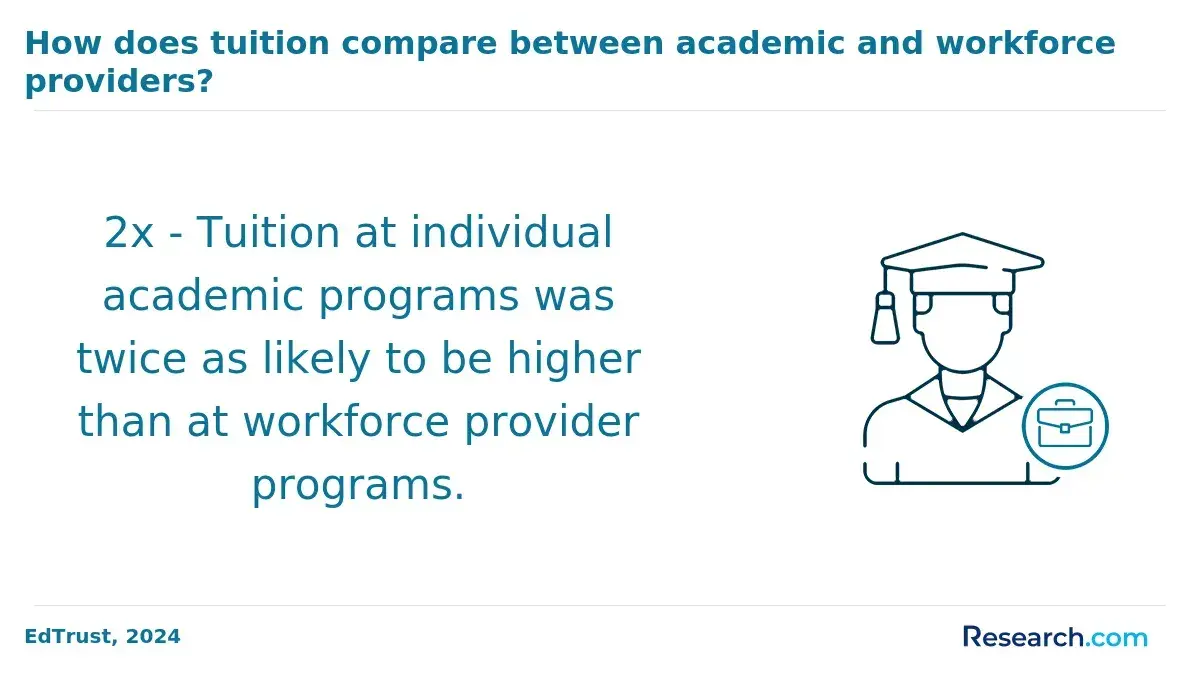
Published 2024-25 tuition pages for U.S. online and low-residency doctorates in Public Policy, Public Administration, and related policy fields commonly fall near $700 to $1,300 per credit. With many programs requiring about 48 to 72 credits, tuition-only totals can vary widely, so the cheapest per-credit program is not always the cheapest to finish.
Use this cost framework to compare programs consistently. It separates visible tuition from expenses that may appear later in the enrollment process.
| Cost component | Where it appears | Why it affects total cost |
| Tuition per credit | Tuition schedule or graduate catalog | Main driver of program cost |
| Total credits | Degree plan or curriculum page | Determines how many credits you must pay for |
| Mandatory university fees | Student accounts or fee schedule | Can apply every term even in online programs |
| Residency expenses | Program handbook or doctoral calendar | Adds travel, lodging, meals, and time away from work |
| Dissertation continuation fees | Graduate school policy | Can continue after coursework if the dissertation takes longer |
| Books and software | Syllabi or program technology requirements | May include statistics, citation, transcription, or data tools |
Before you compare offers, build a simple total-cost estimate. This step helps you avoid underestimating the program because of a low per-credit rate.
- Multiply tuition per credit by the total required credits.
- Add mandatory per-term fees for the number of terms you realistically expect to enroll.
- Add any required residency, orientation, defense, or intensive-session travel costs.
- Estimate dissertation continuation costs if the program charges after coursework.
- Subtract confirmed grants, scholarships, employer tuition benefits, or assistantship funding.
- Compare the final number with your expected career benefit, not just with other tuition rates.
For financing, remember that eligible graduate students may use up to $20,500 per year in Federal Direct Unsubsidized Loans for 2024-25, with Grad PLUS Loans potentially available after that for qualifying borrowers. This is not a reason to borrow the maximum; it is a reminder to compare debt load with realistic career outcomes.
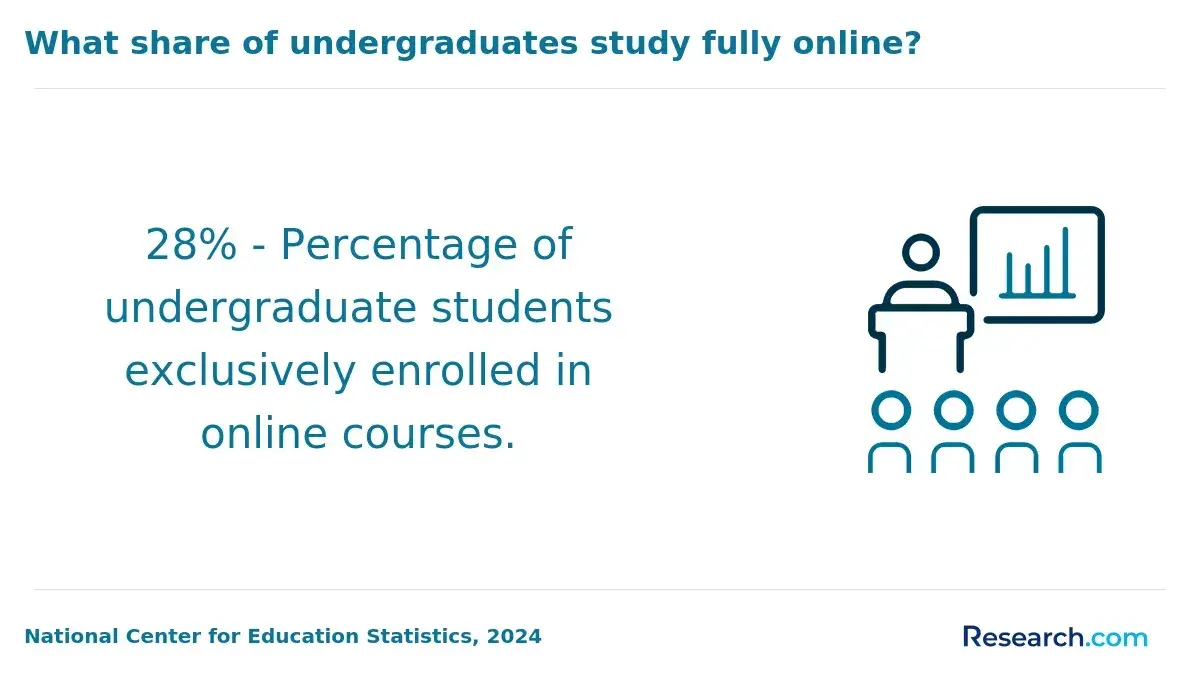
Online Public Policy doctorates are not all delivered the same way. Some are fully online, some are mostly online with residencies, and others mix online coursework with scheduled live sessions or cohort meetings.
Format should be matched to your work schedule, learning style, support needs, and career goals. The main formats differ in how much structure and real-time participation they require.
| Format | Typical structure | Best fit |
| Fully asynchronous | Coursework completed on weekly deadlines without required live class meetings | Working professionals with unpredictable schedules |
| Synchronous online | Live online classes at scheduled times | Students who want discussion, accountability, and direct faculty interaction |
| Hybrid or low-residency | Online coursework plus required campus or destination residencies | Students who value networking and face-to-face doctoral support |
| Cohort-based | Students move through courses with the same peer group | Students who benefit from structure and peer accountability |
| Individually paced | Students have more control over course sequencing and timing | Experienced professionals who can self-manage doctoral milestones |
Fully asynchronous formats have become more common in online graduate education because they serve working adults across time zones. However, asynchronous does not mean easier. You still need strong reading, writing, research, and time-management habits because doctoral work is often less externally structured than a master's program.
If your main goal is rapid advancement in public administration rather than doctoral-level research, compare whether a shorter credential would meet your needs. For example, a 1-year MPA online may be more appropriate if you need a faster leadership credential and do not need a dissertation-based doctorate.
Choose synchronous or cohort-based formats if you want more interaction and accountability. Choose asynchronous or individually paced formats if your work schedule changes frequently, but only if the program still provides strong advising and clear dissertation milestones.
Pacing determines how quickly you move through coursework, exams, proposal development, research, and the dissertation or applied doctoral project. Flexibility can be helpful, but too much flexibility without structure can lead to stalled progress.
Most online Public Policy and Public Administration doctorates are designed for working adults and commonly take about 3 to 5 years to complete, depending on transfer credits, enrollment intensity, dissertation progress, and whether the program uses a cohort calendar. Programs with 48 to 72 credits may still take longer if dissertation approvals, data collection, or committee feedback slow down.
Before enrolling, ask how pacing works at each stage of the degree. These questions clarify whether the program is realistically manageable alongside work and family responsibilities.
- Can students enroll part time? This matters if your job has busy seasons, travel, legislative sessions, or grant deadlines.
- Is there a maximum time to completion? Some universities require doctoral students to finish within a set number of years.
- Are courses offered every term? Limited course availability can delay progress if you miss a required class.
- Can prior graduate credits transfer? Transfer credit may reduce time and cost, but policies vary widely.
- When does dissertation planning begin? Programs that delay dissertation preparation until after coursework may feel slower.
- What happens if you pause enrollment? Leave policies can affect financial aid, timeline, and access to faculty support.
The right pace depends on your bandwidth. A two-course-per-term plan may look efficient, but it may not be sustainable if each course requires extensive reading, statistical work, writing, and group projects. A slower pace may be wiser if it lets you maintain full-time employment and produce stronger research.
Avoid assuming that self-paced always means student-friendly. A strong flexible program should still provide milestone maps, advising checkpoints, dissertation timelines, and clear expectations for satisfactory academic progress.
A strong Public Policy doctorate curriculum should build advanced research ability and practical policy judgment. At the doctoral level, you should expect more than a broad overview of government; the program should train you to analyze evidence, evaluate programs, understand institutions, and communicate policy recommendations clearly.
Review the curriculum in three layers: core requirements, research methods, and specialization options. These layers show whether the program can support both your dissertation and your career direction.
- Policy analysis: Courses should teach how to define policy problems, compare alternatives, weigh trade-offs, and communicate recommendations.
- Economics and public finance: Look for cost-benefit analysis, budgeting, fiscal policy, public economics, or resource allocation.
- Research methods: Doctoral students should receive rigorous training in quantitative, qualitative, or mixed-methods research.
- Statistics and data analysis: Public policy work increasingly requires comfort with datasets, evaluation metrics, and evidence-based decision-making.
- Program evaluation: This is especially important for students interested in government agencies, nonprofits, consulting, or philanthropy.
- Governance and institutions: Strong programs explain how policy is made, implemented, contested, and evaluated across levels of government.
- Ethics and equity: Public policy decisions affect communities differently, so ethical reasoning and equity analysis should be visible in the curriculum.
- Dissertation preparation: Look for proposal seminars, research design courses, and structured dissertation milestones.
Specializations can be valuable when they align with your policy niche. Common areas include health policy, education policy, criminal justice, environmental policy, homeland security, public finance, social policy, urban policy, and nonprofit management.
If you are building toward doctoral study from an undergraduate social science background, it can help to understand how policy programs connect with sociology, economics, political science, and public administration. Students still exploring the earlier academic pathway may find the best online bachelor's in sociology programs useful for seeing how social research foundations can support later policy analysis.
Curriculum quality is also where current trends matter. Public Policy programs are increasingly expected to address data analytics, AI-assisted policy research, administrative data, equity impact analysis, and evidence-based program evaluation. The key is not whether a program mentions AI in a course title, but whether it teaches students to use data ethically, interpret limitations, protect privacy, and avoid unsupported conclusions.
A Public Policy doctorate is the right investment only if the degree's training matches the work you want to do. The same credential can serve different goals, but the best program for a future professor may not be the best program for a city executive, policy director, evaluator, or nonprofit leader.
Start by naming your target outcome. Then compare the program's degree type, curriculum, faculty, dissertation model, and professional network against that outcome.
- Academic or research career: Prioritize a research-intensive curriculum, strong methods sequence, publishing opportunities, and faculty with active scholarship in your field.
- Government leadership: Look for public budgeting, administrative law, intergovernmental relations, implementation, ethics, and executive leadership coursework.
- Policy analysis or evaluation: Prioritize statistics, causal inference, program evaluation, data visualization, and applied research projects.
- Nonprofit or advocacy leadership: Look for policy communication, social equity, grant evaluation, community engagement, and organizational strategy.
- Consulting or applied policy practice: Seek client-based projects, case analysis, evaluation design, and opportunities to build a portfolio of policy work.
Career fit also depends on whether you need a doctorate at all. If your goal is direct clinical or social service leadership, the best online MSW programs may be more relevant than a policy doctorate, especially where licensure or practice credentials matter.
Use this comparison table to connect career goals with program features. It can help you avoid paying for a doctorate that is impressive but poorly matched to your intended role.
| Career goal | Program features to prioritize | Potential mismatch to avoid |
| University teaching or research | Research methods, publications, dissertation rigor, faculty scholarship | Programs with limited research expectations or weak dissertation support |
| Senior public administration | Leadership, budgeting, governance, implementation, ethics | Programs focused almost entirely on theory with little applied management |
| Policy evaluation | Statistics, evaluation design, data analysis, applied projects | Programs with only one basic research methods course |
| Nonprofit policy leadership | Equity, advocacy, funding systems, community policy, evaluation | Programs with no social policy or organizational strategy coursework |
| Think tank or consulting work | Policy writing, economic analysis, research design, public communication | Programs that do not develop publishable or client-ready work samples |
Before committing, ask admissions or the program director for examples of recent dissertation topics, faculty research areas, and alumni roles. Be cautious with programs that only provide broad claims such as "graduates work in leadership" without showing how the curriculum supports those outcomes.
What red flags should I watch out for in an online Public Policy doctorate program?
Red flags do not always mean a program is fraudulent, but they should slow your decision. A credible doctorate should be transparent about accreditation, cost, faculty, dissertation expectations, admissions standards, and student support.
Watch for the following warning signs when researching online Public Policy doctorate programs. These issues can signal poor quality, weak student support, or a higher risk of spending money on a degree that does not serve your goals.
- Unclear or unverifiable accreditation: If the school does not name its accreditor or the accreditor does not appear in recognized databases, do not enroll.
- Guaranteed completion claims: Doctoral progress depends on coursework, research approval, dissertation quality, and student effort, so guarantees should be treated skeptically.
- Vague dissertation requirements: A program should clearly explain proposal, committee, research ethics, defense, and final submission processes.
- Pressure-based admissions: Be wary if recruiters push immediate enrollment, avoid detailed questions, or emphasize discounts over academic fit.
- No faculty transparency: You should be able to review faculty credentials, research interests, and doctoral advising experience.
- Unpublished fees: If tuition is visible but required fees are difficult to obtain, ask for a written total-cost estimate.
- Too little methods training: A doctorate in Public Policy should prepare students to conduct or evaluate advanced research.
- No evidence of student support: Limited library access, writing support, advising, or dissertation guidance can create problems after coursework.
Compare red flags with signs of a credible program. This table helps you separate normal program variation from issues that may affect quality or legitimacy.
| Red flag | Credible-program signal |
| Accreditation language is vague or missing | The university lists a recognized institutional accreditor that can be independently verified |
| Admissions emphasizes speed over fit | Admissions discusses goals, readiness, workload, and research interests |
| Fees are scattered or unclear | The school provides a written tuition and fee estimate |
| Faculty pages are incomplete | Faculty credentials, publications, and policy expertise are easy to review |
| Dissertation process is poorly explained | The program publishes milestones, committee expectations, and support resources |
The safest approach is to pause before enrolling and request documentation. A strong program will not object when you ask detailed questions about accreditation, cost, format, faculty, and doctoral completion expectations.
Other Things You Should Know About Public Policy
Many online doctoral programs have moved away from universal GRE requirements, especially for experienced professionals, but policies vary by school. Check whether the program requires the GRE, waives it based on prior graduate work, or considers it optional for applicants with strong professional experience.
Many students do work full time, but the workload is demanding. Expect heavy reading, writing, research design, and dissertation planning, so it is important to choose a pace and format that match your weekly availability.
Common backgrounds include public administration, political science, economics, sociology, law, social work, education, urban planning, nonprofit management, and related fields. Strong applicants often show graduate-level writing ability, research readiness, policy experience, and a clear reason for doctoral study.
No. Public Policy doctorates often emphasize policy analysis, research, evidence, and policy design, while Public Administration doctorates often focus more on governance, management, leadership, and implementation. Some programs overlap, so compare the curriculum rather than relying only on the degree title.
- How much does it cost to get a PhD? A clear breakdown https://vinuni.edu.vn/how-much-does-it-cost-to-get-a-phd/
- Doctoral Public Affairs Education https://www.naspaa.org/resources/why-public-service-degree/doctoral-public-affairs-education
- Applying to Political Science PhD Programs | Mariana Carvalho https://www.maricarvalho.com/post/application-polsci/
- PhD in Public Policy - Graduate School of Public Policy https://www.schoolofpublicpolicy.sk.ca/programs/doctoral-programs/phd-in-public-policy.php
- PhD advice for policy careers | Emerging Technology Policy Careers https://emergingtechpolicy.org/pathways/graduate-school/phds/
- Average Cost of a Doctorate Degree [2026]: Ph.D., Psy.D. & More https://educationdata.org/average-cost-of-a-doctorate-degree
- Best Jobs After Completing an MA in Public Policy & Governance. https://amityonline.com/blog/jobs-can-students-get-with-ma-public-policy
- 3 Amazing and Well-Paying Jobs for PhDs and Master's Grads - Roostervane https://roostervane.com/3paths/
- The Price of a PhD: What to Expect and How to Fund Your Studies - Swiss School of Business Research https://ssbr-edu.ch/the-price-of-a-phd-what-to-expect-and-how-to-fund-your-studies/
- PhD Application Requirements https://www.applykite.com/blog/phd-guide-application-requirements