2027 Highest-Paying Jobs with a Public Policy Doctorate: Salaries, Career Paths, and Growth Outlook

Co-Founder and Chief Data Scientist
A Public Policy doctorate can lead to senior roles in government, consulting, research, academia, healthcare, technology, and advocacy-but the payoff depends on your specialization and experience. BLS data shows doctoral and professional degree holders had median weekly earnings of $2,109 in 2024, far above the $1,192 median for bachelor's degree holders. This guide is for professionals weighing a PhD, DPA, or policy-focused doctorate and wanting realistic salary outcomes. You'll learn which roles pay the most, which skills command premiums, and how to judge whether the degree fits your career goals.
Key Things to Know About High-Paying Jobs in Public Policy
- The highest-paying Public Policy doctorate jobs are usually executive, quantitative, regulatory, consulting, healthcare policy, and senior research roles-not general entry-level policy analyst positions.
- Recent BLS wage data shows strong salary ceilings in related occupations: chief executives had a median wage of $206,680, political scientists $139,380, economists $115,440, and management analysts $101,190 in May 2024.
- The doctorate tends to pay off best when paired with advanced quantitative methods, sector expertise, leadership experience, funded research, or a clear policy niche such as health, technology, climate, finance, urban systems, or national security.
Is there high demand for Public Policy doctorate graduates?
Yes, there is demand for Public Policy doctorate graduates, but it is uneven. The strongest demand is not simply for "policy experts"; it is for people who can turn complex evidence into decisions, budgets, regulations, legislation, programs, and measurable outcomes.
A Public Policy doctorate is a terminal research or professional degree, commonly offered as a PhD in Public Policy, Doctor of Public Administration, Doctor of Public Policy, or a closely related interdisciplinary doctorate. It signals advanced ability in policy analysis, economics, statistics, program evaluation, governance, organizational strategy, and applied research. Employers value the credential most when the candidate can show that the doctoral work solved real institutional problems.
BLS employment projections released for the 2024-2034 period show especially strong demand in adjacent high-skill roles: medical and health services managers are projected to grow much faster than average, while management analysts and operations research analysts are also expected to remain important as organizations use data to improve performance. For Public Policy doctorate holders, this means the best opportunities often sit where policy expertise overlaps with healthcare systems, analytics, public finance, risk, infrastructure, and technology governance.
The demand picture is also shaped by AI. Agencies, nonprofits, universities, and consulting firms increasingly need experts who can evaluate algorithmic bias, regulate automated decision-making, use large administrative datasets responsibly, and communicate evidence to nontechnical leaders. A doctorate can help if it includes methods training and ethical policy analysis; it is less valuable if the program is mostly theoretical and disconnected from employer needs.
Before enrolling, compare the degree against your current career stage. A doctorate may make sense if you already have policy, public administration, legal, nonprofit, consulting, or research experience and need the credential for senior leadership, tenure-track academic work, or high-level research authority. It may not be the fastest route to higher pay if you are early in your career and could reach your next salary step through an MPA, MBA, analytics certificate, or direct management experience.
Which Public Policy doctorate specializations lead to high-paying roles?
The highest-paying specializations are usually those connected to large budgets, regulated industries, quantifiable outcomes, or urgent public problems. A broad general-policy doctorate can still be valuable, but candidates targeting top pay often benefit from a niche that employers can immediately understand.
The table below summarizes specializations that commonly align with higher-paying roles. Use it to match your academic focus with the labor markets most likely to value doctoral-level policy expertise.
| Public Policy doctorate specialization | High-paying roles it can support | Why employers value it |
| Health policy and healthcare systems | Health policy director, healthcare strategy executive, research director, regulatory affairs leader | Healthcare organizations face complex payment, access, quality, and compliance decisions tied to large operating budgets. |
| Economics, public finance, and budgeting | Senior economist, fiscal policy director, budget director, policy consulting principal | Employers pay for advanced cost-benefit analysis, forecasting, revenue modeling, and evaluation of public investments. |
| Data analytics, evaluation, and AI governance | Director of policy analytics, evaluation scientist, responsible AI policy lead, evidence and learning director | Organizations need leaders who can interpret data, manage research quality, and translate findings into decisions. |
| Urban policy, housing, transportation, and infrastructure | Planning director, infrastructure policy lead, housing policy executive, regional development strategist | Federal, state, and local investments create demand for experts who understand land use, equity, finance, and long-term planning. |
| Environmental, energy, and climate policy | Climate policy director, sustainability strategy lead, energy regulation specialist, ESG policy executive | Regulation, resilience planning, emissions policy, and energy transition work require technical and policy fluency. |
| Security, technology, and regulatory policy | Technology policy director, cybersecurity policy lead, compliance strategist, national security policy analyst | Employers need credible experts who can navigate privacy, risk, emerging technology, and government oversight. |
Urban policy is a good example of how specialization affects career options. If your interests lean toward land use, housing, transportation, or regional development, comparing a doctorate with an urban planning degree online can help you decide whether you need doctoral research depth or a more practice-oriented planning credential.
The practical rule is simple: choose a specialization that maps to a funded problem. Health systems, infrastructure, AI governance, climate adaptation, fiscal policy, and public-sector modernization all have employers with budgets. Specializations with fewer direct funding streams can still be meaningful, but they may require stronger networking and a clearer translation of your research into employer value.
How competitive are the applications for high-paying Public Policy jobs?
Applications for high-paying Public Policy jobs can be very competitive because the strongest candidates often combine a doctorate with work experience, publications, technical skills, sector credibility, and an established network. The degree can open doors, but it rarely substitutes for a track record.
Competition differs by sector. Tenure-track academic roles are usually the most credential-sensitive and publication-driven. Senior government roles often prioritize public-sector experience, eligibility rules, leadership records, and sometimes security clearances. Consulting and private-sector roles tend to test whether the candidate can convert research into client value, revenue, operational improvement, or risk reduction.
BLS data helps explain the pressure. Political scientists, one of the closest federal occupational categories, represented a relatively small occupation compared with broad business or management fields, even though the median wage reached $139,380 in May 2024. In practical terms, high compensation is available, but the number of roles specifically labeled for doctoral-level policy experts is limited, so candidates often need to search across related titles rather than only "public policy PhD jobs."
To compete for higher-paying roles, focus on evidence that proves market value. The most effective candidates usually prepare the following before applying:
- Translate the dissertation into an employer-facing portfolio that includes policy briefs, dashboards, evaluation summaries, testimony, datasets, or executive memos.
- Build a title map that includes adjacent roles such as director of strategy, principal consultant, research director, evaluation lead, regulatory affairs director, and chief of staff.
- Document impact using outcomes such as cost savings, program improvements, grant funding, legislation supported, stakeholder coalitions built, or measurable population-level results.
- Network before the job search through alumni, policy labs, professional associations, advisory boards, government contractors, and research centers.
- Practice explaining advanced methods in plain language because senior employers often test whether doctoral expertise can influence real decisions.
A common mistake is assuming the doctorate itself will carry the application. It may get attention, but high-paying employers usually want proof that the candidate can lead people, manage ambiguity, communicate with executives, and influence policy in politically complex environments.
Public Policy doctorate salaries vary widely because graduates enter different labor markets: academia, federal agencies, state and local government, consulting, healthcare, philanthropy, nonprofits, think tanks, technology firms, and executive leadership. There is no single national salary dataset that isolates every Public Policy doctorate holder, so the most reliable approach is to compare closely related occupations.
The table below uses recent U.S. occupational wage data to show realistic salary anchors. These are not promises for doctorate holders, but they help you understand where doctoral-level policy training can fit in the labor market.
| Career category | Relevant BLS salary benchmark | What it means for Public Policy doctorate holders |
| Executive leadership | Chief executives had a median annual wage of $206,680 in May 2024. | Doctoral policy training can support executive roles when combined with leadership experience, budgeting authority, and organizational results. |
| Political and policy research | Political scientists had a median annual wage of $139,380 in May 2024. | This is one of the closest benchmarks for advanced policy research, especially in federal, consulting, and research settings. |
| Economic and fiscal analysis | Economists had a median annual wage of $115,440 in May 2024. | Policy doctorates with strong economics, econometrics, and forecasting skills can compete for senior analysis roles. |
| Management and policy consulting | Management analysts had a median annual wage of $101,190 in May 2024. | Consulting pay can rise above the median for candidates who manage clients, lead teams, or specialize in regulated sectors. |
| Higher education | Postsecondary teachers had a median annual wage of $83,980 in May 2024. | Academic earnings depend heavily on institution type, rank, discipline, grants, summer salary, and administrative appointments. |
| Urban and regional planning | Urban and regional planners had a median annual wage of $83,720 in May 2024. | Doctoral training may support leadership, research, or policy strategy roles beyond standard planner positions. |
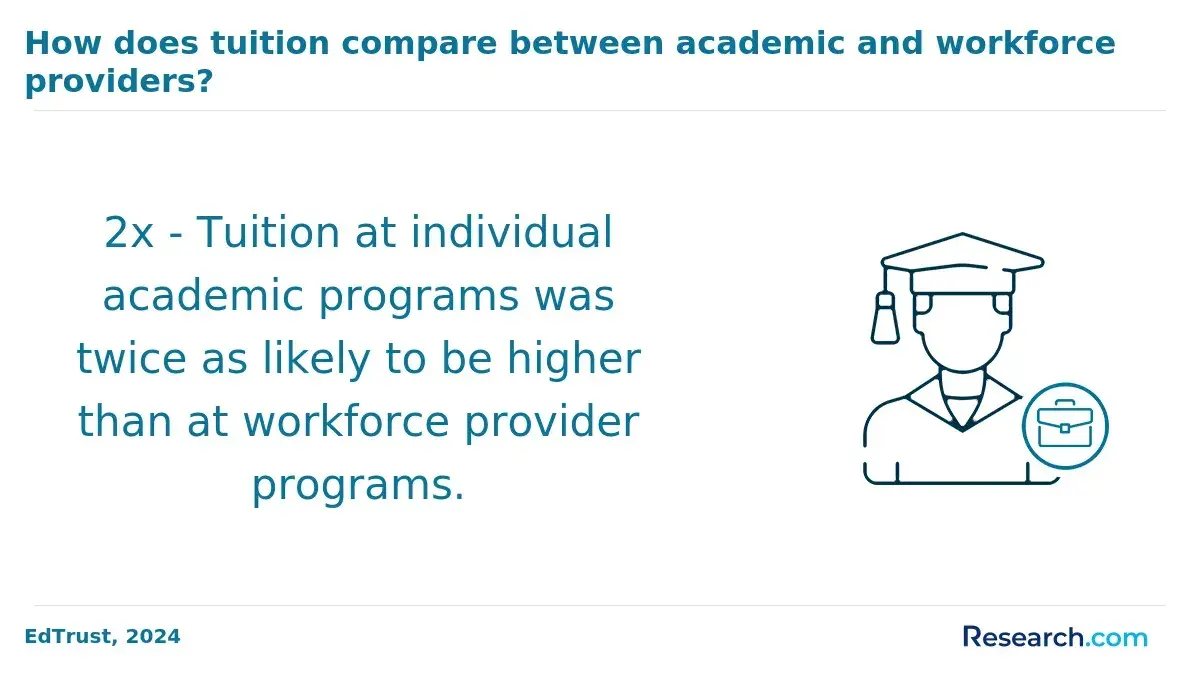
Cost matters when judging salary payoff. The National Center for Education Statistics reported in its 2024 publications that average annual graduate tuition and required fees for recent academic years were much lower at public institutions than at private nonprofit institutions, with public graduate tuition commonly near the low five figures and private nonprofit graduate tuition substantially higher. Because Public Policy doctorates vary from fully funded PhD programs to tuition-based professional doctorates, your ROI depends less on the school's label and more on net cost, lost income, funding, time to completion, and the salary step you can realistically reach.
For many working professionals, the best financial case is not "doctorate versus no doctorate." It is "doctorate versus the next-best credential." If your target role is senior analyst, program manager, or agency administrator, a master's degree plus experience may be enough. If your target role is professor, senior research director, principal investigator, chief policy officer, or executive-level expert, the doctorate may provide a stronger signal.
The highest-paying jobs for Public Policy doctorate holders are usually roles where policy knowledge directly affects money, regulation, strategy, risk, public legitimacy, or institutional performance. Many do not have "public policy" in the title, so a broad search strategy is essential.
The table below compares high-paying job titles that can be realistic for experienced Public Policy doctorate holders. Salary levels depend on sector, location, seniority, employer size, and whether the role includes management or revenue responsibility.
| High-paying job title | Typical salary signal | Best fit for candidates with |
| Chief policy officer or vice president of policy | Often aligned with executive compensation; BLS chief executive median wage was $206,680 in May 2024. | Leadership experience, stakeholder management, legislative strategy, and sector authority. |
| Policy consulting principal or partner | Often exceeds standard analyst pay when tied to client leadership and business development. | Consulting experience, quantitative analysis, proposal wins, and a strong network. |
| Senior economist or fiscal policy director | BLS economist median wage was $115,440 in May 2024. | Econometrics, forecasting, cost-benefit analysis, public finance, and budget modeling. |
| Health policy director or healthcare strategy executive | Often benchmarked against healthcare management roles; BLS medical and health services manager median wage was $117,960 in May 2024. | Healthcare systems knowledge, payment policy, quality metrics, regulation, and population health expertise. |
| Research director, principal investigator, or evaluation director | Varies by employer; senior roles can command premium pay when tied to grants, contracts, or large-scale evaluation. | Research design, causal inference, grant management, publication record, and team leadership. |
| Technology, AI, privacy, or regulatory policy director | Often pays more in technology, finance, and regulated industries than in general nonprofit roles. | Data governance, ethics, legal literacy, risk analysis, and technical communication. |
| Professor with administrative or funded research leadership | Base pay varies; compensation can increase through grants, summer salary, chairs, or administrative roles. | Publications, teaching record, external funding, and institutional service. |
If you are comparing a doctorate with a faster administrative credential, a 1 year MPA online may be enough for roles that require public management skills but not doctoral research authority. The doctorate becomes more compelling when your target jobs explicitly reward original research, advanced methods, policy credibility, or executive-level specialization.
One red flag is choosing a doctorate because the titles sound prestigious without checking job postings. Before committing, review at least 30 postings for your target roles and record required degree, preferred degree, salary range, years of experience, technical skills, sector knowledge, and whether the role actually asks for a doctorate.
Earnings from high-paying Public Policy jobs depend on how far you move beyond analyst-level work. The biggest salary jumps usually come from managing teams, controlling budgets, bringing in grants or contracts, advising senior leaders, or owning a specialized policy function.
The table below shows a practical salary progression model based on U.S. labor-market benchmarks for related roles. It is meant to help you think about earning potential by career stage, not to predict an individual outcome.
| Career stage | Common roles | Salary pattern | What drives the next pay jump |
| Early post-doctorate or transition stage | Senior policy analyst, research associate, evaluation specialist, legislative analyst | Often tied to analyst, planner, or postsecondary benchmarks depending on sector. | Building a portfolio of applied work, publishing, improving technical skills, and gaining sector credibility. |
| Mid-career specialist or manager | Policy manager, senior economist, program evaluation manager, agency strategy lead | Can align with management analyst, economist, or healthcare management salary bands. | Managing projects, supervising staff, leading evaluations, and advising executives. |
| Senior leader or expert | Research director, policy director, principal consultant, chief of staff, regulatory affairs director | Often reaches the upper end of policy and management salary structures. | Budget authority, external funding, public visibility, client leadership, and cross-sector influence. |
| Executive or principal level | Chief policy officer, vice president, partner, executive director, dean, cabinet-level advisor | May be benchmarked against executive pay rather than traditional policy analyst pay. | Organizational leadership, political judgment, revenue responsibility, governance experience, and measurable outcomes. |
To estimate your own payoff, compare the total net cost of the doctorate against the salary difference between your current role and a realistic target role. Include tuition, fees, books, travel, reduced work hours, delayed promotions, and the time value of staying in the workforce. A funded doctoral program has a very different ROI profile from a high-tuition professional doctorate paid out of pocket.
A good decision test is whether the doctorate is required, preferred, or merely nice to have for the salary level you want. If employers in your target market frequently hire master's degree holders into the same pay band, the doctorate may still help with credibility, but the financial return may be slower.
The best-paying industries for Public Policy doctorate holders tend to be those with large budgets, regulatory exposure, litigation or compliance risk, complex data, or high public accountability. Public-sector mission fit is important, but the highest salaries are not always in government.
The table below compares industries where doctoral-level policy expertise can be valuable. It focuses on how the sector uses the credential and why compensation may differ.
| Industry or sector | Why it can pay well | Common high-paying roles |
| Healthcare and health systems | Large budgets, payment reform, quality measurement, compliance, and population health strategy create demand for senior policy expertise. | Health policy director, strategy executive, research director, regulatory affairs lead. |
| Management consulting and government contracting | Employers pay for specialized expertise that can win contracts, advise clients, and improve public-sector performance. | Principal consultant, evaluation lead, public-sector strategy director, project executive. |
| Technology and data governance | AI, privacy, cybersecurity, platform regulation, and responsible data use create demand for policy leaders who understand technical risk. | AI policy director, trust and safety policy lead, privacy policy strategist, regulatory affairs director. |
| Finance, insurance, and regulated industries | Regulation, risk modeling, consumer protection, and compliance work can reward policy experts with quantitative and legal literacy. | Regulatory policy director, risk policy strategist, compliance research lead. |
| Federal government and research agencies | Doctoral training is valued for evidence-based policy, evaluation, economics, grants, and scientific program administration. | Senior policy analyst, economist, program director, branch chief, scientific review officer. |
| Universities and think tanks | Pay varies, but senior scholars with grants, administrative roles, or public visibility can move into higher compensation bands. | Professor, center director, principal investigator, institute director. |
| Philanthropy and large nonprofits | Major foundations and national organizations may pay for strategy, evaluation, advocacy, and systems-change expertise. | Program director, learning and evaluation director, policy and advocacy executive. |
Mission-driven careers can still lead to strong compensation when they connect policy expertise with leadership. For example, professionals interested in social policy may compare doctorate-level policy study with the best online MSW programs if their long-term goal is direct service leadership, clinical administration, or community systems work rather than advanced policy research.
Do not treat "private," "public," and "nonprofit" as simple salary rankings. A private nonprofit university, a federal agency, a consulting firm, and a philanthropic foundation may all value a doctorate differently. The better question is whether the employer has a funded problem that your research, leadership, and policy skills can solve.
The most valuable skills for high-paying Public Policy doctorate jobs are the ones that help organizations make better decisions under uncertainty. Employers may respect the doctorate, but they pay premiums for capabilities that reduce risk, improve outcomes, secure funding, or guide strategy.
The table below connects doctoral-level skills with the job functions where they are most marketable. Use it to identify gaps before applying to senior roles.
| High-value skill | Where it pays off | How to prove it |
| Quantitative methods and causal inference | Economics, evaluation, health policy, education policy, labor policy, and consulting. | Publish applied research, build reproducible analyses, and show policy decisions influenced by your findings. |
| Policy communication | Executive leadership, government affairs, advocacy, public testimony, and consulting. | Create short briefs, testimony, op-eds, presentations, and executive memos from technical work. |
| Budgeting and public finance | Fiscal policy, agency leadership, infrastructure, healthcare, and local government. | Show cost models, budget scenarios, fiscal impact analyses, or funding strategies. |
| Program evaluation | Government, philanthropy, nonprofits, research firms, and education or health systems. | Document evaluation designs, performance measures, dashboards, and outcome reports. |
| Leadership and stakeholder management | Executive policy roles, consulting, public administration, and cross-sector coalitions. | Show teams led, coalitions built, grants managed, public meetings facilitated, or decisions negotiated. |
| AI, data governance, and ethics | Technology policy, public-sector modernization, privacy, civil rights, and compliance. | Demonstrate work on algorithmic accountability, data-sharing governance, privacy, bias audits, or responsible AI frameworks. |
Policy work also benefits from social research training. If you are building a foundation before graduate study, the best online bachelors in sociology programs can be relevant for students interested in inequality, institutions, community change, and applied research before moving into advanced public policy study.
To increase your earning potential, build a portfolio around employer problems rather than course titles. Strong portfolio pieces include a policy memo for a real audience, a statistical analysis with a clear decision recommendation, a program evaluation report, a budget impact model, a stakeholder map, and a public presentation that shows you can communicate beyond academia.
The most stable sectors for Public Policy doctorate holders are usually those with recurring public needs, durable funding streams, regulatory obligations, or long-term demographic demand. Stability does not always mean the highest salary, but it can reduce career risk and support steady advancement.
Healthcare is one of the strongest stability bets because population aging, insurance complexity, quality measurement, and public spending keep policy expertise in demand. BLS projections for 2024-2034 place medical and health services managers among faster-growing management occupations, which matters for policy doctorates who can combine health policy expertise with operations or strategy.
Federal, state, and local government can also offer stability, especially in budgeting, evaluation, health, transportation, emergency management, housing, labor, and regulatory agencies. Advancement may be slower than in consulting, but public-sector roles can provide pension benefits, predictable pay grades, and strong mission alignment. The trade-off is that hiring may depend on budgets, civil-service rules, clearance requirements, and political cycles.
Universities and research organizations offer stability for candidates who secure tenure-track positions, long-term grant funding, or center leadership roles. However, academic hiring is highly competitive, and some roles depend on soft money. A doctorate is necessary for many faculty roles, but it does not remove the need for publications, teaching effectiveness, grants, and fit with departmental needs.
Consulting and government contracting can offer high pay and strong demand when public agencies outsource research, evaluation, technology modernization, or implementation support. The risk is that workloads can be intense and revenue pressure is higher. Candidates who can manage clients and win work tend to have more stability than those who only contribute technical analysis.
For career stability, ask these questions before choosing a path:
- Does the sector have recurring demand for the policy problem I study?
- Is the role funded through a stable budget, grant, contract, endowment, or revenue stream?
- Can my skills transfer across government, nonprofit, academic, and private-sector employers?
- Will the doctorate help me meet a real hiring requirement, or would experience matter more?
- Am I building leadership and communication skills, not just research expertise?
What do employers of high-paying jobs look for when hiring Public Policy doctorate holders?
Employers hiring for high-paying Public Policy roles look for more than doctoral credentials. They want evidence that you can use research to influence decisions, lead people, manage complexity, and produce measurable value.
The strongest applications usually show a combination of academic depth and practical relevance. The doctorate helps most when the candidate can explain how their research applies to the employer's policy environment, financial constraints, stakeholders, and operational goals.
Employers commonly evaluate candidates across these areas:
- Relevant experience: prior work in government, consulting, nonprofits, philanthropy, healthcare, education, technology, research, or regulated industries.
- Methods strength: quantitative analysis, qualitative research, mixed methods, causal inference, forecasting, evaluation, or data governance.
- Sector expertise: a clear policy area such as health, fiscal policy, climate, housing, labor, education, transportation, AI, or security.
- Communication ability: policy briefs, executive presentations, testimony, public writing, and the ability to explain technical evidence clearly.
- Leadership record: teams supervised, budgets managed, stakeholders convened, grants won, contracts delivered, or programs improved.
- Professional credibility: publications, speaking engagements, advisory roles, media citations, public service, or recognized expertise in a policy niche.
Common mistakes can reduce the salary value of the doctorate. One is applying only to jobs with "public policy" in the title while missing better-paid strategy, analytics, regulatory, or executive roles. Another is presenting the dissertation as an academic milestone rather than a source of usable insight. A third is ignoring salary transparency, pay bands, and negotiation timing until the offer stage.
To position yourself well, create different versions of your résumé for academic, government, consulting, and executive roles. Each version should translate the same doctoral experience into the language of that employer. For consulting, emphasize client value and deliverables. For government, emphasize public impact and compliance. For academia, emphasize research, teaching, grants, and publications. For executive roles, emphasize leadership, judgment, and measurable outcomes.
Other Things You Should Know About Public Policy
Yes. Many senior policy, government, nonprofit, and consulting roles accept candidates with a master's degree plus strong experience. A doctorate is most useful when the role requires advanced research authority, university teaching, high-level evaluation, or specialized policy expertise.
It can be, especially if the institution is accredited, the curriculum is rigorous, faculty are credible, and the program requires applied research. Employers usually care most about your skills, experience, dissertation relevance, and ability to solve real problems.
The payoff timeline varies by cost, funding, time to completion, and your current career level. Working professionals who use the degree for promotion may see benefits sooner than full-time students who leave the workforce, but no doctorate guarantees a specific salary increase.
Ask about completion time, funding, total net cost, alumni job titles, employer partnerships, placement support, dissertation flexibility, quantitative training, faculty networks, and whether graduates have moved into the specific roles you want.
- 13 Highest-Paying Doctoral Degrees in 2026 https://www.edumindslearning.com/blog/highest-paying-doctoral-degrees
- Six career paths for PhD graduates https://www.academictransfer.com/en/blog/six-career-paths-for-phd-graduates/
- Discover Career Paths With Bachelor's Degree In Public Policy https://online.mountsaintvincent.edu/degrees/undergraduate/bachelor-public-policy/rewarding-careers/
- Best Jobs After Completing an MA in Public Policy & Governance. https://amityonline.com/blog/jobs-can-students-get-with-ma-public-policy
- Public policy careers driving social impact and social change https://www.ispp.org.in/public-policy-careers-that-drive-social-impact-and-sustainable-change/
- 3 Amazing and Well-Paying Jobs for PhDs and Master's Grads - Roostervane https://roostervane.com/3paths/
- PhD advice for policy careers | Emerging Technology Policy Careers https://emergingtechpolicy.org/pathways/graduate-school/phds/
- Public Policy Careers: 2023 Guide to Career Paths, Options & Salary https://www.beyondberea.org/blog/2023/03/22/public-policy-careers-2023-guide-to-career-paths-options-salary/
- Public Policy Careers: Lead Change in Texas with Graduate America https://ga.edu/blog/navigating-the-public-policy-landscape-your-path-to-a-fulfilling-career