2027 Best Online Public Policy Doctorate Programs for Nonprofit, Policy, and Community Leadership Careers

Co-Founder and Chief Data Scientist
Choosing an online public policy doctorate is really a leadership investment: the wrong program can cost time, money, and career momentum. The stakes are real for mission-driven professionals, since BLS May 2024 data puts median pay for social and community service managers at $78,240, with faster-than-average projected growth. This guide helps nonprofit executives, policy practitioners, public administrators, and community leaders compare program quality, specialization fit, cost, online format, accreditation, faculty networks, and career alignment before enrolling.
Key Things You Should Know
- The best online public policy doctorate for nonprofit, policy, or community leadership is usually the one with regional accreditation, applied research opportunities, leadership-focused faculty, and a capstone or dissertation tied to your sector.
- BLS May 2024 wage data shows relevant leadership roles vary widely, from $78,240 median pay for social and community service managers to $139,380 for political scientists, so ROI depends heavily on your target role.
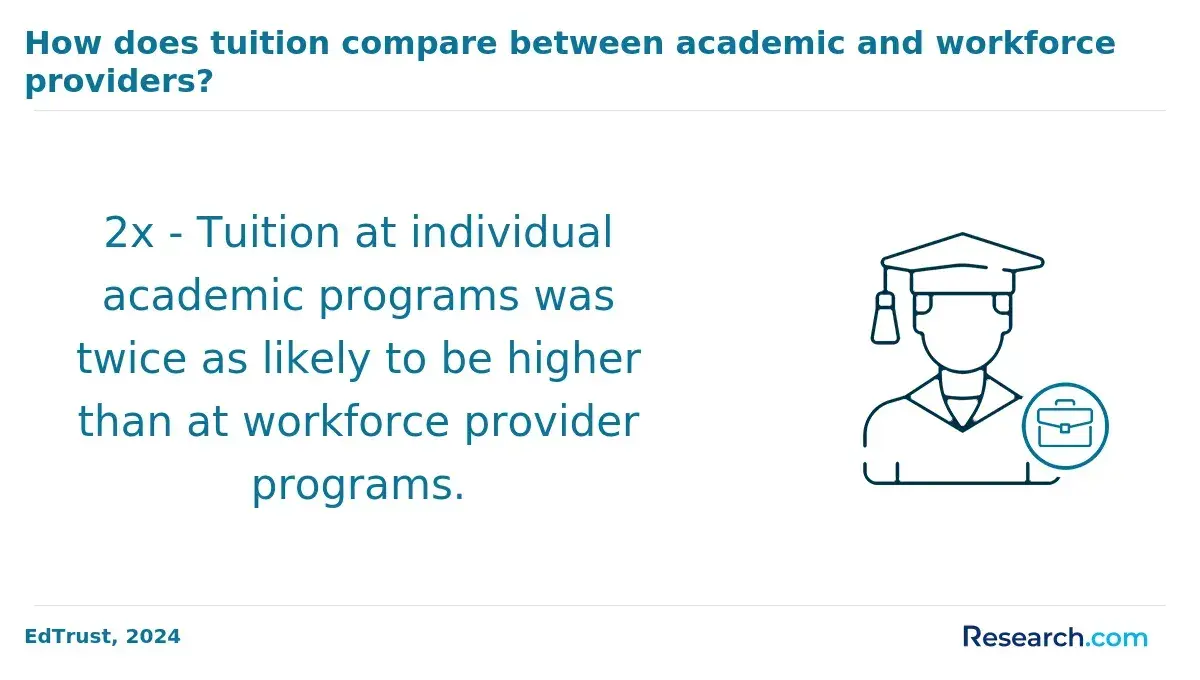
- NCES data published in 2024 shows average graduate tuition and required fees differ sharply by institution type, making total program cost, residency travel, and employer funding more useful than tuition alone.
Which Online Public Policy Doctorate Programs Are Best for Nonprofit, Policy, and Community Leadership?
The best online public policy doctorate is not the same for every mission-driven professional. A nonprofit CEO, legislative policy analyst, city department director, and coalition organizer may all benefit from doctoral-level policy training, but they should prioritize different program features.
Use the comparison below to identify the strongest fit by career goal. The point is not to rank schools by brand alone, but to match the degree structure to the leadership problems you want to solve.
| Career goal | Best-fit doctorate profile | What to prioritize | Potential drawback |
| Nonprofit executive leadership | Applied public policy, public administration, or organizational leadership doctorate with nonprofit management content | Governance, finance, program evaluation, fundraising strategy, board relations, and applied dissertation options | May be less suitable for academic research careers if methods training is light |
| Policy research and analysis | Research-focused public policy doctorate with strong quantitative, qualitative, or mixed-methods training | Econometrics, policy modeling, evaluation design, faculty publications, and dissertation mentorship | May be more theory-heavy than needed for practitioners seeking executive advancement |
| Community leadership and advocacy | Applied doctorate with concentrations in community development, social change, equity, or civic engagement | Community-based research, stakeholder engagement, coalition leadership, and field-based projects | May not offer deep preparation for highly technical policy analysis roles |
| Government or public-sector leadership | DPA, public policy doctorate, or policy-focused leadership doctorate | Public budgeting, ethics, intergovernmental relations, administrative law, and evidence-based decision-making | May require residencies, synchronous sessions, or a professional portfolio |
| Cross-sector consulting | Flexible applied doctorate with policy, data, and organizational change coursework | Program evaluation, strategic planning, implementation science, and client-facing doctoral projects | Career outcomes depend heavily on prior experience and professional network |
A strong online doctorate should also be compared against less time-intensive alternatives. If your immediate goal is public management advancement rather than doctoral-level research or executive specialization, a 1 year MPA online may offer a faster and less expensive path.
Before shortlisting programs, separate "best reputation" from "best fit." The strongest option for you should meet these conditions:
- It offers a doctorate type aligned with your goal, such as PhD, DPA, DPP, EdD in leadership with policy emphasis, or a related applied doctorate.
- It includes faculty with current work in public policy, nonprofit leadership, public administration, community development, social equity, or evaluation.
- It allows your dissertation, capstone, or doctoral project to address a real policy or organizational problem in your field.
- It publishes enough information about cost, time to completion, residency expectations, and student support to let you compare programs honestly.
- It has regional accreditation and no unresolved accreditation red flags.
Which Public Policy Doctorate Specializations Best Align With Nonprofit, Policy, and Community Leadership?
Specialization fit matters because public policy doctorates can point toward very different careers. A concentration in policy analysis builds different capabilities than one in nonprofit management, urban governance, health policy, or community development.
The table below summarizes common specialization areas and how they map to mission-driven leadership goals. Use it to avoid the common mistake of choosing a concentration because it sounds broad rather than because it supports your intended work.
| Specialization | Best for | Core skills developed | Good fit if you want to |
| Nonprofit management and philanthropy | Executive directors, foundation leaders, program directors, and social-sector consultants | Governance, grant strategy, financial stewardship, strategic planning, impact measurement | Lead complex nonprofit organizations or advise mission-driven agencies |
| Public policy analysis | Policy analysts, legislative staff, research directors, and think tank professionals | Policy design, evidence review, cost-benefit reasoning, quantitative and qualitative methods | Produce defensible recommendations for public problems |
| Public administration and governance | Government managers, agency leaders, and public-sector administrators | Public budgeting, administrative ethics, implementation, personnel leadership, public accountability | Move into senior roles in city, county, state, or federal agencies |
| Community development and civic engagement | Community organizers, coalition leaders, local development professionals, and advocacy executives | Participatory research, stakeholder facilitation, equity-centered planning, coalition building | Lead place-based or population-focused change initiatives |
| Health, social, or human services policy | Human services directors, public health administrators, and social service leaders | Service delivery analysis, regulatory context, program evaluation, interagency coordination | Improve systems that serve vulnerable or underserved populations |
| Urban policy and planning | Municipal leaders, housing advocates, transportation policy professionals, and regional development staff | Land use policy, urban governance, spatial equity, community planning, infrastructure decision-making | Connect policy leadership with neighborhood, city, or regional outcomes |
Professionals focused on housing, land use, transportation, or regional equity may also compare doctoral options with an urban planning degree online, especially if they need planning-specific training rather than a broader public policy doctorate.
A practical way to choose a specialization is to start with your leadership problem, not the course catalog. Ask what you want your doctoral work to help you do: redesign a nonprofit funding model, evaluate a policy, lead a public agency, improve community outcomes, or produce publishable research. Then choose the program whose faculty, methods sequence, and final project structure support that outcome.
What Curriculum Should a Public Policy Doctorate Offer for Mission-Driven Leadership?
A strong public policy doctorate for mission-driven leadership should combine leadership theory, policy analysis, research methods, and applied problem-solving. The curriculum should not be limited to abstract policy debates; it should help you diagnose public problems, evaluate evidence, lead institutions, and communicate decisions to stakeholders.
The curriculum areas below are especially important because they determine whether the program prepares you for senior leadership, research, or both.
- Policy analysis and implementation: Look for courses that teach how policies are designed, adopted, funded, implemented, evaluated, and revised.
- Research methods: Strong programs include quantitative, qualitative, and mixed-methods training so you can evaluate evidence rather than rely on opinion or advocacy alone.
- Program evaluation: Nonprofit and public-sector leaders need to measure outcomes, assess impact, and explain results to funders, boards, agencies, and communities.
- Public budgeting and finance: Mission-driven work still depends on resource allocation, grants, contracts, compliance, and fiscal trade-offs.
- Organizational leadership: Doctoral coursework should address change management, personnel leadership, ethics, governance, and strategic decision-making.
- Equity and community engagement: Programs serving community leadership goals should cover participatory methods, power dynamics, stakeholder engagement, and culturally responsive practice.
- Data, technology, and AI literacy: Policy leaders increasingly need to understand dashboards, administrative data, algorithmic bias, privacy, and responsible use of AI-supported analysis.
BLS May 2024 data lists a $104,900 median annual wage for urban and regional planners, a role where data interpretation, stakeholder coordination, and policy implementation frequently overlap. For prospective doctoral students, that illustrates why methods, planning, and community-facing leadership skills should be treated as core curriculum rather than electives.
If your work centers on social services, behavioral health, child welfare, or community-based care systems, compare policy doctorate curricula with the practice orientation of the best online MSW programs. An MSW may be more appropriate for clinical or direct-service leadership, while a public policy doctorate is usually better for system design, evaluation, and senior policy roles.
The applied-versus-research decision is one of the most important choices in this field. Both pathways can support leadership careers, but they differ in purpose, final project, faculty expectations, and ideal outcomes.
The comparison below clarifies which model fits different nonprofit, policy, and community leadership goals. Use it before deciding whether you need a PhD-style research doctorate, a DPA, a Doctor of Public Policy, or another applied doctoral option.
| Feature | Applied doctorate | Research-focused doctorate |
| Primary purpose | Solving real organizational, community, or policy implementation problems | Producing original scholarship that advances policy theory, methods, or evidence |
| Common degree types | DPA, DPP, applied public policy doctorate, EdD with policy or leadership concentration | PhD in Public Policy, PhD in Public Administration, policy-focused interdisciplinary PhD |
| Final requirement | Applied dissertation, capstone, professional project, or problem-of-practice study | Traditional dissertation with original research contribution |
| Best for | Executives, agency leaders, nonprofit directors, consultants, and practitioners | Researchers, faculty candidates, policy scholars, and advanced analysts |
| Methods depth | Usually practical and evaluation-oriented, though quality varies | Usually deeper in research design, statistics, theory, and publication expectations |
| Main trade-off | May carry less weight for tenure-track research roles | May be less directly tied to immediate workplace leadership problems |
Choose an applied doctorate if your goal is to lead an organization, improve a public program, evaluate a community intervention, or design a policy solution inside your current field. Choose a research-focused doctorate if your goal is university teaching, think tank research, advanced policy modeling, or scholarly publication.
A common mistake is assuming a PhD is always more prestigious or a DPA is always more practical. The better question is whether the final project, research methods sequence, and faculty mentorship match the work you want to do after graduation.
Accreditation is a basic quality filter for any online doctorate. For public policy, nonprofit leadership, and community leadership careers, the minimum expectation is institutional accreditation from an accreditor recognized by the U.S. Department of Education or the Council for Higher Education Accreditation.
Programmatic accreditation is less standardized for public policy doctorates than it is in fields such as nursing, counseling, or social work. Some public affairs schools may also have specialized recognition or memberships, but regional or institutional accreditation is the nonnegotiable baseline.
Before applying, verify these accreditation and quality signals directly with the school and accreditor:
- Confirm that the university is institutionally accredited and that the online doctorate is included within the accredited institution's scope.
- Check whether the school has probation, warning, teach-out, or ownership-change notices that could affect long-term stability.
- Ask whether the doctorate is eligible for federal financial aid if you plan to use loans or aid.
- Verify whether the degree title will appear differently on transcripts for online students.
- Review state authorization if you live outside the university's home state.
- Ask employers, boards, or agencies in your sector whether the credential meets promotion, teaching, or leadership requirements.
Red flags include vague accreditation language, pressure to enroll quickly, unclear dissertation requirements, unusually short completion promises, and refusal to publish tuition or residency expectations. Accreditation does not guarantee career outcomes, but it protects you from investing in a credential that employers or other universities may not respect.
Online public policy doctorates can look similar on program pages but feel very different in practice. Format affects scheduling, travel cost, networking, and whether you can keep working while completing advanced coursework and research.
The table below compares common delivery models. It can help you decide whether convenience, cohort interaction, residency access, or experiential learning should carry the most weight in your search.
| Format feature | What it means | Best for | Question to ask |
| Asynchronous courses | Students complete weekly work on their own schedule | Working professionals with variable hours or family responsibilities | How often are live sessions, group projects, or fixed deadlines required? |
| Synchronous courses | Classes meet live online at scheduled times | Students who want discussion, accountability, and faculty interaction | Are sessions held in the evening, and are recordings available? |
| Low-residency model | Most work is online, with short campus or destination residencies | Students who value networking and intensive workshops | How many trips are required, and what travel costs are not included in tuition? |
| Fully online model | No required campus visits | Students who cannot travel or need maximum flexibility | How does the program replace in-person advising, networking, and research support? |
| Embedded practicum or field project | Doctoral work is tied to an organization, agency, or community setting | Applied leaders who want immediate workplace relevance | Can I use my current workplace as a research or project site? |
| Cohort model | Students progress with the same peer group | Professionals who want built-in networking and peer support | What happens if I need to slow down or stop out? |
Experiential learning is especially important in community-facing programs. Applicants with earlier training in social systems, inequality, civic institutions, or community research, including graduates of the best online bachelors in sociology programs, should look for doctoral projects that build on that foundation through applied policy evaluation or community-engaged research.
One current trend is the expansion of hybrid doctoral learning: programs use online platforms for coursework while reserving residencies for research design, dissertation planning, leadership labs, or networking. This can be valuable, but only if you budget for travel, lodging, time away from work, and family obligations.
Admissions requirements vary by school and degree type, but online public policy doctorates are typically designed for experienced professionals rather than recent graduates with no leadership background. Strong applicants usually show academic readiness, professional maturity, and a clear policy or leadership problem they want to investigate.
Most programs ask for a combination of academic and professional materials. Review each requirement as evidence of fit, not just as a hurdle.
- Master's degree: Many programs prefer or require a graduate degree in public policy, public administration, nonprofit management, political science, social work, education, sociology, business, or a related field.
- Professional experience: Programs often value leadership, policy, advocacy, management, research, or public-service experience.
- Statement of purpose: This should explain your career goals, research interests, and why the specific program fits your mission-driven leadership path.
- Writing sample: Schools may use this to assess your ability to analyze evidence, organize arguments, and write at the doctoral level.
- Letters of recommendation: Strong letters usually come from supervisors, faculty, or senior professionals who can discuss your leadership and analytical potential.
- Resume or CV: This should show increasing responsibility, policy exposure, management experience, community impact, or research activity.
- Interview: Some programs use interviews to test fit, motivation, and readiness for independent doctoral work.
- GRE or other test scores: Many online professional doctorates have test-optional policies, but requirements vary.
Before applying, prepare a concise research or project concept. You do not need a finished dissertation topic, but you should be able to explain the population, policy issue, organization, or community problem you want to study. Applicants who cannot connect their goals to the program's faculty and curriculum may struggle to make a convincing case.
Costs vary widely because online public policy doctorates differ in credit length, tuition model, residency requirements, fees, and dissertation time. NCES data published in 2024 reported average graduate tuition and required fees of $12,596 at public institutions and $29,931 at private nonprofit institutions for the 2022-23 academic year; doctoral programs can cost more or less depending on credit load and pricing structure.
When schools publish tuition, compare the full cost rather than the per-credit rate alone. Common cost categories include:
- Per-credit tuition multiplied by the total required doctoral credits
- University, technology, dissertation, graduation, and student service fees
- Residency travel, lodging, meals, and time away from work
- Books, software, research tools, transcription, data access, or statistical support
- Continuation tuition or dissertation enrollment fees if research takes longer than expected
- Lost income if you reduce work hours to manage coursework or dissertation milestones
Funding can come from several sources, but doctoral funding is often more limited for online professional programs than for full-time residential PhD programs. Ask each school to provide a written aid estimate before enrolling.
- Federal Direct Unsubsidized Loans for eligible graduate students
- Federal Grad PLUS Loans for eligible borrowers after credit review
- Employer tuition assistance or professional development benefits
- Nonprofit, government, military, or public-service education benefits
- Institutional scholarships, alumni discounts, partnership rates, or assistantships when available
- Foundation, association, or sector-specific scholarships tied to public service, nonprofit leadership, or community development
The most common cost mistake is choosing the lowest advertised tuition without calculating completion risk. A cheaper program can become expensive if it has weak dissertation support, unclear milestones, limited advising, or residency obligations you did not budget for.
Faculty and professional connections can make the difference between a doctorate that is merely credentialed and one that is career-shaping. For nonprofit, policy, and community leadership careers, you want faculty who understand applied problems, publish or consult in relevant areas, and can mentor your final project with sector knowledge.
Evaluate faculty strength by looking beyond titles. The best indicators are alignment, accessibility, and evidence of active engagement in the areas you care about.
- Review faculty biographies for work in nonprofit governance, public finance, social policy, community development, evaluation, implementation, equity, or public administration.
- Look for faculty publications, grants, public reports, consulting projects, or practitioner partnerships related to your intended research area.
- Ask how dissertation or capstone chairs are assigned and whether online students can choose faculty based on topic fit.
- Find out whether faculty regularly mentor applied projects with agencies, nonprofits, foundations, or community organizations.
- Ask whether online doctoral students can participate in research centers, policy labs, speaker series, conferences, or alumni networks.
- Request examples of recent dissertation or capstone topics, especially those related to nonprofit, policy, or community leadership.
Networking is also part of program quality. Cohorts, residencies, alumni events, virtual research groups, and practitioner panels can help students build relationships across sectors. This matters because many senior public-service opportunities depend on credibility, referrals, and evidence that you can work across institutional boundaries.
A red flag is a program that highlights national rankings but provides little detail about who will supervise your research, how online students connect with faculty, or what professional networks are available after coursework ends.
How Should You Evaluate Career Outcomes and ROI When Choosing an Online Public Policy Doctorate?
ROI for an online public policy doctorate should be measured in career mobility, leadership scope, research capability, credibility, and total cost, not salary alone. The degree may be worthwhile if it helps you qualify for senior leadership, consulting, policy research, teaching, or systems-change roles that align with your goals.
BLS May 2024 data shows why ROI analysis should be role-specific: political scientists had a median annual wage of $139,380, while social and community service managers had a median of $78,240. Those figures describe occupations, not guaranteed outcomes, but they show that the same doctorate can lead into labor markets with very different compensation patterns.
Use this step-by-step process to evaluate ROI before enrolling:
- Define your target role as specifically as possible, such as nonprofit CEO, policy research director, city agency executive, foundation program officer, community development consultant, or adjunct faculty member.
- Identify whether that role actually values or requires a doctorate, or whether a master's degree plus experience would be sufficient.
- Calculate total program cost, including tuition, fees, books, residencies, travel, dissertation continuation, and reduced work time.
- Ask the program for completion-time ranges, dissertation support structures, alumni roles, and examples of employer outcomes.
- Compare the curriculum against job postings for your target role to see whether the degree builds requested skills.
- Estimate non-salary benefits, such as credibility with boards, research authority, grant competitiveness, consulting capacity, or teaching eligibility.
- Consider opportunity cost: what else could you do with the same time and money, such as an MPA, certificate, fellowship, or sector-specific leadership program?
Strong ROI signals include clear faculty fit, transparent cost, credible accreditation, applied research opportunities, robust advising, and alumni working in roles similar to the ones you want. Weak ROI signals include vague career claims, no outcome examples, limited methods training, minimal dissertation support, and heavy reliance on prestige without evidence of fit.
Other Things You Should Know About Public Policy
Many students do, especially in part-time or cohort-based programs designed for professionals. The key is to confirm weekly workload, live-session expectations, residency dates, and dissertation pacing before enrolling.
Not always. Nonprofit, advocacy, philanthropy, education, healthcare, social services, consulting, military, and community leadership experience can all be relevant if you can connect your background to public problems and policy-focused work.
It can support adjunct, practitioner faculty, or applied teaching opportunities, but tenure-track roles often favor research-focused PhD preparation and publication records. Ask schools where alumni teach and what kind of academic roles they hold.
Yes, when possible. A brief, professional message about your research interest can help you assess topic fit, advising availability, and whether the program has real expertise in your nonprofit, policy, or community leadership area.
- Tuition and Financial Support https://www.rand.edu/programs/mphil-policy-analysis/funding-your-mphil.html
- Is a PhD right for me? Navigating the PhD admissions process https://www.povertyactionlab.org/blog/1-10-23/phd-right-me-navigating-phd-admissions-process
- PhD Acceptance Rates 2025: How Competitive Is Getting In? https://www.applykite.com/blog/phd-guide-acceptance-rates
- Ph.D. in Leadership and Policy - Niagara University https://www.niagara.edu/programs/phd-in-leadership-and-policy/
- The Latest Data on For-Profit Colleges and the Future of Workforce Readiness https://career.org/web/web/Multimedia/CER/Summer-2025/The-Latest-Data-on-For-Profit-Colleges-and-the-Future-of-Workforce-Readiness.aspx
- Educational Funding https://phdproject.org/educational-funding/
- Doctor of Public Policy (DPP) https://www.cgu.edu/academics/program/doctor-public-policy/
- Applying to Political Science PhD Programs | Mariana Carvalho https://www.maricarvalho.com/post/application-polsci/
- Online MPA Programs in Nonprofit Administration & Leadership https://www.onlinempaprograms.com/specializations/nonprofit-administration