2027 Online Public Policy Doctorate Programs with One-on-One Faculty Mentorship

Co-Founder and Chief Data Scientist
Choosing an online public policy doctorate is often a question of support: will you get real faculty mentorship or just occasional advising? The stakes are high because doctoral study requires sustained research, career focus, and time management. The U. S. Bureau of Labor Statistics reports a May 2024 median wage of $139,380 for political scientists, a field closely tied to policy research and analysis. This guide helps working professionals, future faculty, analysts, and public-sector leaders evaluate mentorship quality, compare program models, and decide whether individualized faculty access is worth the cost and commitment.
Key Things You Should Know
- Strong one-on-one mentorship is most valuable when it is built into dissertation, capstone, or applied-policy research rather than limited to registration help or general academic advising.
- Cost matters because federal graduate Direct Unsubsidized Loans carried an 8.08% fixed interest rate for 2024-2025, making mentor access, completion support, and career relevance important parts of doctoral value.
- The best-fit program depends on your goal: aspiring researchers often need a faculty chair with methodological expertise, while senior practitioners may benefit more from mentors with public-sector, nonprofit, consulting, or policy implementation experience.
How Does One-on-One Faculty Mentorship Work in Online Public Policy Doctorate Programs?
One-on-one faculty mentorship in an online public policy doctorate means a student has direct access to one or more faculty members for research planning, scholarly development, professional guidance, and progress feedback. It is different from routine academic advising, which usually focuses on course registration, degree audits, deadlines, and administrative questions.
In public policy doctoral programs, mentorship usually becomes more individualized as students move from coursework into research design, dissertation preparation, applied policy analysis, or a professional capstone. Early in the program, contact may come through course instructors, program directors, or assigned advisors. Later, students typically work with a dissertation chair, committee members, or applied-project faculty supervisor.
Students should understand the main forms mentorship can take before comparing programs. These features affect how much support you actually receive and how well it matches your research or career goals.
- Assigned faculty advisor: A faculty member helps the student understand program milestones, select courses, and prepare for doctoral-level research.
- Dissertation or capstone chair: A primary mentor guides topic development, research design, literature review, data interpretation, and final defense preparation.
- Doctoral committee: Multiple faculty members provide specialized feedback on methods, theory, policy area, or professional application.
- Residency or intensive faculty contact: Some online programs use short virtual or campus-based sessions for research planning, proposal development, or scholarly networking.
- Career-oriented mentoring: Faculty may help students connect research to leadership roles, consulting, teaching, government service, nonprofit work, or policy evaluation.
The key question is not whether a school uses the word "mentor." The key question is whether the program defines mentor assignment, meeting frequency, feedback expectations, faculty expertise, and research supervision clearly enough for students to plan around it.
Online public policy doctorates usually serve experienced professionals, so mentorship also has to fit adult learners' schedules. A meaningful model typically includes synchronous meetings when important decisions are being made, asynchronous document feedback for drafts, and clear escalation routes when a student is stuck. If all communication is informal or left entirely to the student, the advertised mentorship may be less reliable than it sounds.
Which Online Public Policy Doctorate Programs Offer the Strongest Faculty Mentorship?
The strongest mentorship is usually found in programs that publish clear research milestones, identify faculty expertise, require dissertation or applied-project supervision, and give students access to faculty beyond individual courses. Because policies change, students should verify mentor assignment, faculty availability, and current program format directly with each institution before applying.
The table below summarizes common online or low-residency doctoral options in public policy, public administration, and closely related fields. It is designed to help you compare mentorship signals rather than treat any single program as automatically "best."
| Institution | Online Doctoral Program | Mentorship Signals to Evaluate | Best Fit |
| Liberty University | Doctor of Public Policy | Doctoral dissertation structure, faculty-supervised research sequence, and policy-focused specialization options | Students seeking a policy doctorate with a structured online format and a traditional dissertation pathway |
| Walden University | PhD in Public Policy and Administration | Doctoral committee model, dissertation chair support, research resources, and applied public policy concentrations | Working professionals who want research supervision tied to public administration, advocacy, or policy analysis |
| Valdosta State University | Doctor of Public Administration | Cohort-oriented doctoral structure, faculty advisement, applied public administration research, and dissertation requirements | Public-sector and nonprofit professionals looking for an applied doctorate with peer and faculty support |
| Old Dominion University | PhD in Public Administration and Policy | Research faculty alignment, dissertation committee supervision, and policy/public administration faculty expertise | Students who want a research doctorate and can match their interests with available faculty scholars |
| Capella University | Doctor of Public Administration | Doctoral advising, applied research support, structured milestones, and faculty feedback through doctoral project stages | Professionals seeking an applied public administration doctorate with flexible online delivery |
| National University | Doctor of Public Administration | Faculty-guided doctoral project or dissertation support, online doctoral resources, and practitioner-oriented research guidance | Mid-career administrators seeking leadership-focused doctoral preparation |
A program's mentorship strength depends on fit. A school with excellent faculty in healthcare policy may not be the best match for a student interested in transportation finance or housing policy. If your interests lean toward planning, land use, or community development, you may also want to compare doctoral options with a related urban planning degree online to decide whether a policy doctorate or planning-focused credential better supports your goals.
When comparing schools, look for evidence that mentorship is formal, repeatable, and connected to outcomes. A strong program should be able to explain how mentors are assigned, whether students can request a faculty match, what happens if a mentor leaves, and how often students receive feedback during major research stages.
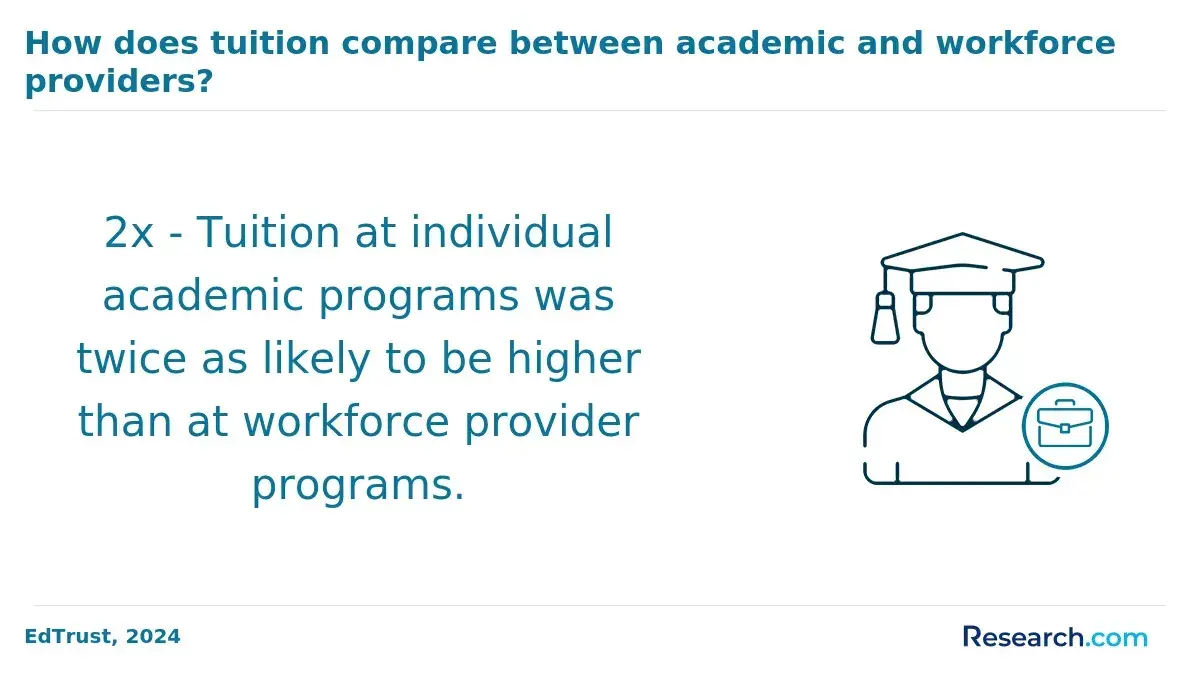
How Does Faculty Mentorship Support Dissertation or Applied Research in an Online Public Policy Doctorate?
Faculty mentorship is most important during the research phase because public policy doctoral work requires a defensible problem statement, appropriate methodology, ethical data handling, and a clear contribution to practice or scholarship. In an online program, the mentor often becomes the student's main guide through ambiguity.
Public policy doctoral research may involve quantitative analysis, qualitative interviews, case studies, program evaluation, policy implementation research, cost-benefit analysis, or mixed methods. A good mentor helps the student narrow an overly broad public problem into a researchable question and avoid projects that are too large, too political, or too dependent on inaccessible data.
The research support process usually follows a sequence. Understanding this sequence helps students ask better questions about how faculty feedback is provided at each stage.
- Topic refinement: The mentor helps the student move from a broad interest, such as criminal justice reform or education finance, to a focused doctoral problem.
- Literature and policy context: Faculty feedback helps the student identify relevant theory, statutes, administrative frameworks, and prior empirical research.
- Method selection: The mentor reviews whether the proposed design can answer the research question with available data and realistic time constraints.
- Proposal development: The student receives feedback on feasibility, ethics, sampling, instruments, and alignment between research questions and analysis.
- Data collection and analysis: The mentor helps the student interpret findings carefully without overstating policy implications.
- Final defense or presentation: Faculty prepare the student to explain limitations, defend methodological choices, and connect findings to policy practice.
One-on-one mentorship is especially valuable for students using workplace-based or agency-based research. These projects can be powerful, but they may raise confidentiality, political sensitivity, and data access issues. Faculty can help students design projects that are useful to employers without compromising academic standards or research ethics.
Students should also ask whether the program supports applied research as strongly as traditional dissertations. Some professional doctorates place more emphasis on organizational improvement or policy implementation, while PhD programs may emphasize original scholarly contribution. Neither model is automatically better; the stronger choice is the one that matches your career objective.
One-on-one mentorship can improve progress by helping students make timely decisions, avoid weak research designs, and recover from common doctoral bottlenecks. It does not guarantee faster completion, but it can reduce confusion during the phases where online doctoral students often lose momentum.
The most important progress advantage is early correction. A mentor who responds carefully to a research idea before the proposal stage can save months of revision later. This matters for working professionals because delays are not only academic; they can affect tuition costs, employer tuition benefits, family schedules, and career plans.
Students should evaluate mentorship by asking how it supports the main completion risks in doctoral study. The following risks are common in online public policy doctorates and should be addressed by a strong support model.
- Unclear research scope: Students may choose problems that are too broad, such as "improving public education," instead of a researchable policy question.
- Weak faculty fit: Progress can slow when no available mentor has expertise in the student's topic, method, or policy domain.
- Inconsistent feedback: Long response times or contradictory committee feedback can delay proposal approval and final revisions.
- Data access problems: Students may plan projects around government, nonprofit, or workplace data they cannot actually obtain.
- Isolation: Online students can lose motivation if they lack scheduled faculty contact and peer accountability.
The U.S. Department of Education's 2024-2025 federal aid rules allow graduate students to borrow up to $20,500 per academic year in Direct Unsubsidized Loans, before any Grad PLUS borrowing. That borrowing limit is a reminder that extra semesters can become expensive, so students should view mentorship as part of time-to-completion risk management.
Mentorship also supports progress by helping students set realistic timelines. A strong mentor will not simply encourage ambition; they will help the student identify a manageable data source, choose a feasible method, and create a writing schedule that fits work obligations.
Online public policy doctorate programs use different mentorship models, and each model creates a different student experience. Some students need close individualized research supervision, while others perform better in a cohort with structured deadlines and peer accountability.
The table below compares common mentorship models so you can identify which structure fits your learning style, schedule, and doctoral goals.
| Mentorship Model | How It Usually Works | Strengths | Limitations | Best For |
| Assigned individual faculty mentor | A faculty member advises the student from early coursework through research planning or milestones | Continuity, personalized guidance, and early research alignment | Quality depends heavily on mentor availability and expertise | Students with a defined policy interest who want consistent faculty contact |
| Dissertation chair and committee | A chair leads the research process while committee members review specialized areas | Strong scholarly oversight and multiple perspectives | Feedback can be slower if committee expectations are not coordinated | Students pursuing original research or academic careers |
| Cohort-based faculty support | Students move through milestones together with faculty-led seminars or research courses | Peer accountability and predictable structure | Less individualized if research interests vary widely | Working professionals who benefit from deadlines and community |
| Applied-project supervision | Faculty guide a professional project tied to an organization, agency, or policy problem | Direct workplace relevance and practical portfolio value | May be less suitable for students seeking tenure-track research roles | Senior practitioners, administrators, and consultants |
| Residency-enhanced mentoring | Online coursework is supplemented by virtual or in-person research intensives | Deeper interaction during major milestones | Travel, scheduling, or residency fees may add burden | Students who want online flexibility but value concentrated faculty access |
If you are choosing between a doctoral program and a shorter graduate credential, consider whether you need doctoral-level research mentorship at all. Some policy professionals may get sufficient leadership preparation from a 1 year MPA online, especially if their goal is advancement in administration rather than independent research or university teaching.
The best model is the one that fits your risk profile. If you are self-directed and already have research experience, a committee model with periodic meetings may be enough. If you are returning to school after many years or entering doctoral research for the first time, a more structured cohort or required milestone model may provide better support.
Faculty mentorship can shape career opportunities by helping students turn doctoral work into policy briefs, conference presentations, teaching interests, consulting expertise, or leadership narratives. This is especially important because public policy careers are broad and often depend on evidence of applied impact rather than the degree title alone.
Career outcomes vary by role. A public policy doctorate may support advancement in government agencies, think tanks, universities, nonprofit organizations, advocacy groups, international development organizations based in the U.S., research firms, healthcare policy teams, education agencies, and consulting practices. Mentors can help students translate research into language that employers understand.
The U.S. Bureau of Labor Statistics reported a May 2024 median annual wage of $79,310 for social and community service managers. For doctoral students focused on human services, poverty policy, behavioral health systems, or nonprofit leadership, that figure provides useful labor-market context: the doctorate may be most valuable when it supports senior leadership, research, evaluation, or policy strategy roles rather than entry-level management.
Mentorship can support career development in several concrete ways. Students should ask whether these opportunities are formal, informal, or dependent on individual faculty initiative.
- Research-to-practice translation: Mentors can help students turn a dissertation or capstone into an executive brief, policy memo, or agency presentation.
- Professional positioning: Faculty can help students describe doctoral skills in evaluation, data interpretation, governance, ethics, and implementation.
- Teaching preparation: Students interested in adjunct or full-time teaching may receive guidance on syllabi, publications, and academic job materials.
- Conference and publication guidance: Faculty may recommend associations, journals, practitioner outlets, or public administration conferences.
- Network navigation: Mentors with field experience may help students identify agencies, nonprofit coalitions, research centers, or consulting pathways relevant to their goals.
Students working in social policy should also compare public policy doctorates with adjacent professional paths. For example, those focused on direct service systems or clinical-administrative leadership may find that the best online MSW programs align better with licensure-oriented or human-service practice goals than a policy doctorate.
A strong mentor will not promise a job. Instead, they will help you connect your doctoral research to credible evidence of expertise. That may include a portfolio of policy analysis, a publishable study, an applied evaluation project, or a leadership case study from your organization.
An effective online public policy doctorate mentor should have expertise that matches the student's research topic, method, and career direction. The best mentor is not always the most famous faculty member; it is the faculty member who can give relevant, timely, and rigorous guidance.
At minimum, doctoral mentors should have appropriate terminal credentials, active scholarship or professional expertise, experience supervising doctoral research, and familiarity with ethical research standards. For applied doctorates, field experience in government, nonprofit leadership, consulting, program evaluation, or public administration can be just as important as publication history.
Students should look for several qualifications when reviewing faculty profiles. These signals help distinguish meaningful mentorship capacity from a general faculty directory.
- Policy-area expertise: The mentor has experience in areas such as health policy, education policy, urban policy, budgeting, criminal justice, environmental governance, public management, or social policy.
- Methodological fit: The mentor understands the student's likely research approach, such as statistics, qualitative interviews, case study design, policy analysis, or program evaluation.
- Doctoral supervision experience: The mentor has chaired or served on dissertations, capstones, or applied doctoral projects.
- Current engagement: The mentor remains active through research, consulting, public service, professional associations, grants, or policy practice.
- Communication reliability: The mentor has clear expectations for meetings, draft feedback, response times, and milestone review.
Prospective students should also consider interdisciplinary preparation. Public policy doctoral work often overlaps with sociology, economics, planning, law, education, public health, and social work. Students still building a foundation in social institutions, inequality, research methods, or community systems may want to review the best online bachelors in sociology programs before committing to a doctoral-level path.
A red flag is a program that cannot identify faculty who work in or near your intended policy area. Another warning sign is a program that assigns mentors only after several terms without explaining how students are supported before that point. If you enter with a clear research agenda, faculty fit should be part of your admissions decision, not an afterthought.
One-on-one mentorship can increase the value of an online public policy doctorate when it helps students finish efficiently, produce stronger research, and connect the degree to career goals. However, mentorship does not automatically justify higher tuition. Students should compare the total cost of attendance against the clarity, frequency, and relevance of faculty support.
The financial trade-off is important because doctoral students often pay for credits, dissertation continuation, technology fees, residencies, books, and research expenses. Federal borrowing costs also matter: graduate Direct Unsubsidized Loans first disbursed during the 2024-2025 award year carried an 8.08% fixed interest rate, while Grad PLUS Loans carried a 9.08% fixed interest rate. Higher borrowing costs make avoidable delays more expensive.
When estimating value, students should separate advertised tuition from the real cost of completion. The most useful cost review includes these items.
- Per-credit tuition for all required coursework and research credits
- Dissertation, doctoral project, or continuation fees after coursework ends
- Residency, travel, lodging, or intensive-session costs if required
- Technology, library, graduation, and student service fees
- Books, software, transcription, data access, statistical tools, or survey platforms
- Potential income trade-offs if the program reduces work hours or consulting availability
Mentorship adds value when it reduces the risk of paying for extra terms without progress. A lower-cost program with weak dissertation support may become expensive if students spend additional semesters revising proposals. A higher-cost program may be reasonable if it offers reliable faculty access, strong topic fit, clear milestones, and a record of supporting working professionals through completion.
Still, students should be cautious about paying a premium for vague promises. "Personalized support" is not the same as guaranteed one-on-one access to a qualified dissertation chair. Ask for specifics before deciding that mentorship justifies the price.
One-on-one mentorship is most valuable for students whose goals require independent research, specialized policy expertise, or a clear professional narrative. It is less essential for students who mainly want a broad leadership credential and are comfortable with a highly structured cohort model.
The students who benefit most often share one or more characteristics. If several of these describe you, mentorship should be a top selection factor.
- Students with a specific policy problem: If you want to study housing affordability, public finance, education accountability, emergency management, or healthcare access, you need faculty who understand that field.
- Working professionals using workplace data: Faculty guidance can help protect confidentiality, manage permissions, and keep projects academically defensible.
- Students new to doctoral research: A mentor can help translate research methods courses into a feasible dissertation or applied project.
- Aspiring faculty or researchers: Students seeking teaching, publication, or research roles need mentors who understand scholarly expectations.
- Career changers: Faculty can help connect prior experience to policy research, consulting, public administration, or nonprofit leadership.
- Students balancing school and full-time work: Regular mentor check-ins can reduce drift and help prioritize milestones.
Some students may not need a mentorship-heavy program. If your goal is a fast credential, a salary step, or general leadership development, a structured professional doctorate or master's program may provide better value. If you do not plan to use the dissertation or capstone professionally, paying more for intensive mentorship may not make sense.
Students should also be honest about their communication style. One-on-one mentorship works best when students prepare questions, send drafts on time, accept critique, and take responsibility for progress. A mentor can guide the process, but the student still owns the research.
How Should Students Evaluate Faculty Mentorship Before Choosing an Online Public Policy Doctorate?
Students should evaluate mentorship before applying, not after enrollment. The goal is to verify that faculty support is structured, accessible, and relevant to your goals rather than relying on marketing language.
A practical evaluation should combine website review, admissions conversations, faculty research checks, and direct questions to current students or alumni. Use the steps below to compare programs consistently.
- Identify your policy focus: Write a short description of the policy problem, population, agency type, or research method you want to explore.
- Review faculty profiles: Look for faculty whose research, professional background, publications, or projects align with your interests.
- Ask how mentors are assigned: Find out whether students can request a mentor, when assignment occurs, and what happens if the match is poor.
- Verify meeting expectations: Ask how often students typically meet with mentors during coursework, proposal development, data collection, and final writing.
- Clarify feedback timelines: Ask how long faculty usually take to review proposal drafts, dissertation chapters, or applied-project documents.
- Ask about advising loads: A mentor advising too many doctoral students may have limited time, even if they are highly qualified.
- Confirm communication formats: Determine whether mentoring happens by video meeting, phone, email, learning platform comments, residency sessions, or a combination.
- Speak with students or alumni: Ask whether faculty support was proactive, timely, and useful when research problems became difficult.
Students should also watch for common red flags. These issues do not always mean a program is poor, but they should prompt more questions before you commit.
- Admissions staff cannot explain the difference between academic advising and faculty research mentorship.
- The program advertises "individual attention" but does not define meeting frequency or feedback expectations.
- No available faculty appear to match your policy area or preferred research method.
- Mentor assignment happens late, with little support during early topic development.
- The school cannot explain what happens if a faculty mentor leaves or becomes unavailable.
- Current students report long delays in dissertation or capstone feedback.
- The program emphasizes flexibility but offers few structured research milestones.
If you cannot maximize mentorship, cost, and flexibility at the same time, prioritize based on your risk. Choose mentorship if your research topic is complex or career-defining. Choose flexibility if your work schedule is unpredictable. Choose lower cost if you already have strong research skills and access to professional networks. The right decision is the one that reduces your biggest barrier to completion and career value.
Other Things You Should Know About Public Policy
No. A public policy doctorate focuses on research, governance, policy analysis, administration, and evidence-based decision-making. A law degree prepares students for legal training and, depending on the state, bar eligibility. Policy graduates may study laws and regulations, but the doctorate itself does not qualify someone to practice law.
Public policy roles generally do not require a state license. Requirements vary for adjacent fields such as social work, education administration, planning, or legal practice. Students should check employer expectations and state rules if their career goal crosses into a regulated profession.
It can support teaching opportunities, especially in public administration, policy analysis, political science, nonprofit management, or related fields. Hiring depends on the institution, the applicant's research record, teaching experience, publications, and whether the doctorate is research-oriented or professionally focused.
Some programs require the GRE, while others waive it or do not use it. More important admissions factors often include a master's degree, professional experience, writing sample, statement of purpose, research interests, references, and faculty fit. Always confirm current requirements with the school.
- Funding your Degree https://gradsense.org/funding-your-degree/
- PhD in Germany: Eligibility, Requirements & Study Options | BSBI https://www.berlinsbi.com/blog/what-are-the-requirements-to-study-a-phd-in-germany
- Full-time PhD Programme https://unu.edu/merit/doctorate-degree/full-time-phd-programme
- Faculty-Student Mentoring in Online Higher Education https://www.facultyfocus.com/articles/online-education/online-assessment-grading-and-feedback/faculty-student-mentoring-in-online-higher-education/
- PhD in Public Policy - Graduate School of Public Policy https://www.schoolofpublicpolicy.sk.ca/programs/doctoral-programs/phd-in-public-policy.php
- 25 Best Online EdD Programs of 2025 https://www.eddprograms.org/schools/best-online-doctor-of-education-programs/
- Scholarships for Doctor of Education (EdD) Students | Teach.com https://teach.com/online-ed/education-degrees/online-edd-programs/scholarships/
- Funding for Graduate School: What Are My Options? https://www.cjbnetwork.com/articles/funding-for-graduate-school-what-are-my-options
- Educational Funding https://phdproject.org/educational-funding/
- PhD Scholarships: Explore Your Online Education Aid Options https://www.oedb.org/phd-scholarship/