2026 What Can You Do with a Public Policy Doctorate? Careers, Salaries, Academic Roles, and Industry Paths
Audited and Verified:
Our Editorial and Data Verification Process
Research.com uses government datasets, official education statistics and primary institutional information to support its career and degree guides. Our review process checks factual accuracy, occupational definitions, source dates and the requirements associated with the credentials discussed.
How This Article Was Fact-Checked
Our editorial team verifies salary estimates, employment projections, education requirements and program information against original data providers and official organizations. Salary figures are checked against the relevant occupational definitions and reporting periods. Information about licensure, accreditation and required in-person training is reviewed separately.
Fact-checked and verified on:

Co-Founder and Chief Data Scientist
A Public Policy doctorate is most useful when it helps you move from policy participation to policy leadership. The U. S. Bureau of Labor Statistics reported a May 2024 median wage of $139,380 for political scientists, showing that advanced policy expertise can connect to high-level research and advisory roles. This guide is for professionals comparing doctoral study with career advancement, consulting, academia, or public-sector leadership. You will learn which roles value the degree, how salaries vary, what online programs signal to employers, and how to decide whether the investment fits your goals.
Key Things to Know About Online Public Policy Doctorate Career Outcomes
- A Public Policy doctorate can support careers in policy research, executive leadership, academia, consulting, government, nonprofits, health policy, urban policy, and corporate public affairs, but the payoff depends heavily on your specialization, network, and target sector.
- Salary outcomes vary by role: BLS May 2024 data lists median pay of $139,380 for political scientists, $101,190 for management analysts, and $78,240 for social and community service managers, which means the doctorate is most financially useful when it moves you into senior analysis, leadership, or advisory work.
- Cost should be evaluated carefully because national public-policy-doctorate-specific cost averages are not published consistently; NCES 2023-24 graduate tuition benchmarks show average annual tuition and required fees of about $12,600 at public institutions and about $30,800 at private nonprofit institutions before living costs, books, travel, and opportunity cost.
What skills do you gain from Public Policy doctorate degrees?
A doctorate in Public Policy is designed to build advanced judgment, not just subject knowledge. Students learn how to define public problems, test policy assumptions, evaluate evidence, and communicate recommendations to decision-makers who may face legal, budgetary, political, and ethical constraints.
The most valuable skills are transferable across government, nonprofit, academic, and private-sector roles. They matter because many senior policy jobs require a mix of research depth, leadership credibility, and practical implementation skill.
| Skill area | What it means in practice | Where it is used |
| Policy analysis | Comparing policy options using evidence, feasibility, equity, and cost considerations | Legislative offices, agencies, think tanks, advocacy groups |
| Quantitative and qualitative research | Designing studies, interpreting data, conducting interviews, and evaluating program outcomes | Research institutes, universities, consulting firms, foundations |
| Program evaluation | Assessing whether public programs achieve measurable goals and identifying improvement opportunities | Government agencies, nonprofits, contractors, grant-funded organizations |
| Economics and budgeting | Understanding trade-offs, fiscal impact, cost-benefit analysis, and resource allocation | Public finance, health policy, education policy, infrastructure policy |
| Governance and ethics | Evaluating how laws, institutions, accountability, and public values shape policy decisions | Public administration, regulatory agencies, nonprofit leadership |
| Executive communication | Turning complex research into memos, testimony, presentations, and strategic briefings | Senior leadership, consulting, board-facing roles, public affairs |
The rise of AI and predictive analytics has made these skills more important, not less. Policy leaders are increasingly expected to judge whether algorithmic tools, automated eligibility systems, risk models, or surveillance technologies are valid, fair, transparent, and legally defensible.
A common mistake is choosing a doctorate only because you enjoy policy debates. The stronger reason is that you need advanced research and decision-making skills for roles where you will be expected to produce original analysis, lead complex initiatives, or advise institutions on high-stakes public problems.
What specializations can you pursue within Public Policy doctorate degrees?
Public Policy doctorates may be generalist or specialized. A general policy track can offer broader flexibility, while a niche specialization can make your profile stronger for a defined labor market such as health policy, education reform, criminal justice, environmental regulation, technology governance, or urban development.
The table below shows how specialization choices typically connect to career direction. It is useful because two students can earn the same degree title but graduate into very different markets depending on their dissertation, applied research, internships, and professional network.
| Specialization | Best fit for | Common career directions |
| Health policy | Professionals interested in healthcare access, costs, regulation, public health, and insurance systems | Health policy analyst, healthcare executive, foundation program director, government advisor |
| Education policy | Students focused on K-12, higher education, workforce development, funding, and accountability | Research director, education agency leader, policy evaluator, nonprofit executive |
| Urban and regional policy | Professionals working with housing, transportation, land use, infrastructure, and local government | Urban policy researcher, planning executive, municipal advisor, development policy consultant |
| Environmental and energy policy | Students interested in regulation, climate adaptation, utilities, sustainability, and environmental justice | Regulatory analyst, sustainability policy lead, environmental consultant, agency manager |
| Social policy and inequality | Professionals focused on poverty, welfare, labor, family policy, and racial or economic disparities | Nonprofit research director, program evaluator, advocacy strategist, foundation officer |
| Technology and data governance | Students interested in AI policy, privacy, cybersecurity, digital government, and platform regulation | Technology policy advisor, AI governance lead, public-sector innovation director, compliance strategist |
Urban and regional policy is a good example of specialization-driven career planning. If your interests are closer to housing, infrastructure, transportation, or community development than national policy research, comparing an urban planning degree online can also help you understand whether a planning-focused credential fits better than a Public Policy doctorate.
For flexibility, choose a specialization broad enough to support more than one role. For differentiation, choose a specialization tied to a visible problem area where employers need advanced evidence, regulatory understanding, and strategic leadership.
Are online Public Policy doctorate programs respected by employers?
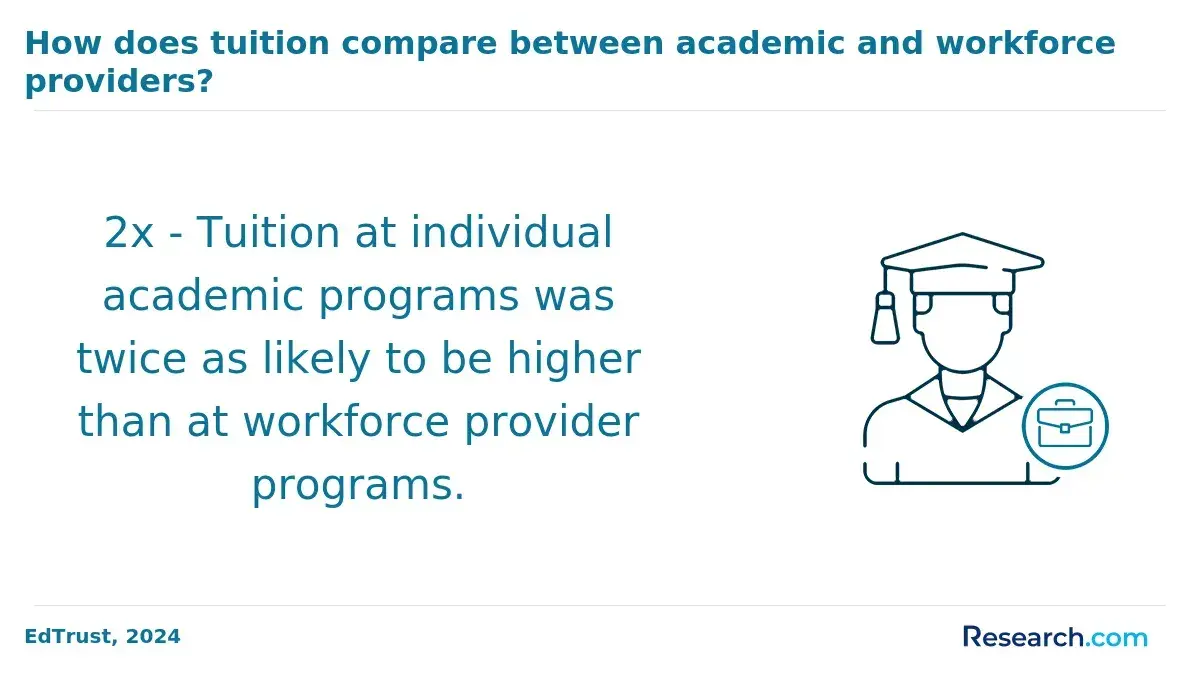
Online Public Policy doctorates can be respected by employers when they come from properly accredited institutions, include rigorous research training, and produce evidence of applied expertise. The delivery format matters less than the institution's credibility, faculty quality, dissertation or capstone standards, and the student's ability to demonstrate policy impact.
Employers usually assess an online doctorate through practical signals. Before enrolling, readers should evaluate these factors because they affect both credibility and career mobility.
- Institutional accreditation: Confirm that the university is accredited by a recognized institutional accreditor, because this affects transferability, federal financial aid eligibility, and employer acceptance.
- Faculty alignment: Review whether faculty publish or practice in your target area, such as health policy, local governance, environmental regulation, or social policy evaluation.
- Research expectations: Check whether the program requires a dissertation, applied dissertation, policy lab, or doctoral capstone and whether that final project fits your target career.
- Residency requirements: Some online programs include short campus residencies, synchronous seminars, or field-based requirements, which can strengthen networking but add travel and scheduling costs.
- Career outcomes transparency: Ask programs where recent graduates work, not just what titles the curriculum prepares students for.
Online versus hybrid is mainly a fit decision. Online programs may suit working professionals who need geographic flexibility, while hybrid formats can benefit students who want more faculty contact, cohort bonding, or access to local policy networks.
| Format | Strengths | Limitations | Best fit |
| Fully online | Maximum flexibility, easier to continue full-time work, broader school choice | Requires self-direction and may offer fewer informal networking moments | Mid-career professionals with stable policy work and clear goals |
| Hybrid | More in-person connection, stronger cohort experience, possible local partnerships | Travel, commuting, or residency costs can increase total cost | Students who benefit from structured interaction and can travel periodically |
| Campus-based | More immersion, easier access to faculty, research centers, and assistantships | Less flexible for working adults and may require relocation | Students pursuing academic research careers or full-time doctoral study |
A red flag is a program that advertises speed and prestige but gives little detail about faculty, research methods, accreditation, dissertation expectations, or graduate placements. A respected online doctorate should be demanding enough to build the credibility you are paying for.
Public Policy doctorate holders are valued in industries where decisions depend on regulation, public funding, social impact, risk, and evidence. The degree is especially relevant when an organization must interpret policy change, evaluate program effectiveness, or influence public systems.
The industries below commonly value doctoral-level public policy expertise. The table is not a ranking; it shows where the credential can create practical value and what kinds of problems employers expect you to solve.
| Industry or sector | Why the degree is valued | Examples of work |
| Federal, state, and local government | Agencies need evidence-based analysis, regulatory expertise, and program evaluation | Policy design, budget analysis, legislative research, performance improvement |
| Healthcare and public health | Healthcare systems face regulation, cost pressures, access issues, and quality measurement | Health policy strategy, Medicaid analysis, public health program evaluation |
| Education | School systems, universities, and agencies need evidence on funding, achievement, and access | Evaluation, accountability, workforce policy, higher education strategy |
| Consulting and professional services | Clients need expert analysis of programs, regulations, and organizational change | Impact studies, strategic planning, grant evaluation, regulatory analysis |
| Technology and data governance | AI, privacy, cybersecurity, and platform rules create demand for policy expertise | AI governance, digital rights, public-sector technology modernization |
| Nonprofits and philanthropy | Mission-driven organizations need measurable impact and policy influence | Research leadership, advocacy strategy, grantmaking, community impact evaluation |
Students comparing public policy with public administration should consider whether they want deeper research training or faster preparation for management practice. For some leadership goals, especially agency or nonprofit administration, a 1 year MPA online may be a more direct route than a doctorate.
Demand is strongest when you combine the doctorate with sector experience. A doctoral credential alone may not replace a track record in healthcare, education, government, or community development, but it can help experienced professionals move into research-driven leadership or advisory roles.
A Public Policy doctorate can support executive or leadership roles when it strengthens your ability to lead strategy, evaluate evidence, manage complex stakeholders, and make decisions under public scrutiny. It is usually not an entry-level credential; it tends to pay off most for professionals who already have managerial, analytical, legal, clinical, nonprofit, or government experience.
The following roles are common examples of leadership paths where doctoral training can be relevant. Salary potential depends on sector, geography, budget size, and whether the role sits in government, nonprofit, higher education, consulting, or private industry.
| Role | How the doctorate helps | Salary context |
| Policy director | Supports evidence-based agenda setting, staff supervision, stakeholder negotiation, and legislative strategy | Often tied to organization size and funding source |
| Research director | Builds credibility in study design, evaluation, publication, and translation of findings for decision-makers | Can be strong in think tanks, foundations, universities, and consulting |
| Program evaluation director | Applies doctoral research methods to assess public programs, grants, and interventions | Often stronger in large agencies, national nonprofits, and federal contractors |
| Chief strategy or impact officer | Connects mission, data, performance metrics, and policy environment to organizational strategy | Varies widely across nonprofits, foundations, and social enterprises |
| Government affairs executive | Uses policy expertise to interpret regulation, shape advocacy, and brief senior leaders | Can be higher in regulated industries such as healthcare, energy, finance, and technology |
BLS May 2024 data places the median annual wage for management analysts at $101,190. For Public Policy doctorate holders, that figure is best read as a market benchmark for analytical advisory work, not a guaranteed doctoral salary.
The doctorate makes the most sense for leadership if your target role rewards research authority. If your goal is people management without a major policy, evaluation, or research component, a shorter professional master's degree, certificate, or executive training program may have a better time-to-benefit ratio.
Academic careers are available for Public Policy doctorate holders, but they are competitive and require planning from the beginning of the program. A doctorate is commonly expected for tenure-track faculty roles, research faculty positions, postdoctoral fellowships, and many university-based policy center jobs.
The academic path is different from the industry path because hiring committees evaluate scholarly potential. Students interested in faculty careers should focus on evidence that shows they can contribute to research, teaching, and institutional service.
- Research agenda: Develop a focused area of inquiry that can produce publications, conference presentations, and future grant proposals.
- Methods depth: Build credibility in quantitative, qualitative, mixed-methods, causal inference, geospatial, or evaluation methods relevant to your field.
- Teaching experience: Seek opportunities to teach, assist courses, design syllabi, or lead workshops in policy analysis, research methods, or public administration.
- Publication record: Work with faculty on articles, policy reports, book chapters, or externally visible research outputs.
- Professional fit: Decide whether you are targeting research universities, teaching-focused colleges, professional schools, policy schools, or applied research centers.
BLS May 2024 data lists the median annual wage for postsecondary teachers at $83,980 across fields. That benchmark includes many disciplines and institution types, so Public Policy faculty salaries can differ based on school type, region, rank, funding, and whether the role is tenure-track, clinical, adjunct, or research-funded.
An academic career may be a strong fit if you enjoy writing, publishing, teaching, peer review, and long research timelines. It may be a poor fit if your main goal is immediate executive authority or if you do not want your career progress evaluated through publications, grants, and academic labor markets.
Consulting can be one of the most practical uses of a Public Policy doctorate because clients often pay for specialized judgment, evidence, and credibility. Doctoral training can help you lead evaluations, conduct stakeholder analysis, assess regulations, write policy reports, or advise organizations facing complex public problems.
Consulting opportunities usually fall into several categories. Understanding the differences helps you decide whether to pursue full-time consulting employment, independent advisory work, or a hybrid model alongside academic or nonprofit roles.
| Consulting path | Typical clients | Best use of the doctorate |
| Policy and strategy consulting | Governments, foundations, nonprofits, associations, corporations | Analyzing policy options, designing strategy, and advising leaders |
| Program evaluation consulting | Agencies, grant-funded nonprofits, universities, philanthropies | Measuring outcomes, building logic models, and improving implementation |
| Regulatory consulting | Healthcare, energy, finance, technology, environmental firms | Interpreting policy changes and advising on compliance or public affairs |
| Research consulting | Think tanks, litigation teams, public agencies, advocacy groups | Producing reports, data analysis, expert briefs, and literature reviews |
| Independent expert practice | Specialized clients in your field of expertise | Monetizing a niche reputation built through publications, experience, and networks |
Consulting makes sense if you like project-based work, client communication, deadlines, and translating research into recommendations. It may be less appealing if you prefer stable institutional authority, predictable promotion ladders, or long-term ownership of implementation.
A common mistake is assuming that the doctorate alone will attract clients. Consulting also requires a defined niche, proof of prior results, strong writing samples, pricing discipline, and a network that trusts your expertise.
Public Policy doctorate holders can pursue meaningful roles in government, public agencies, international-facing domestic organizations, nonprofits, advocacy groups, foundations, and community institutions. These paths are often less about maximizing salary and more about shaping programs, improving systems, and influencing decisions that affect communities.
Nonprofit and public-sector roles can differ significantly in authority, pace, and compensation. The table below shows how common roles use doctoral training in real organizational settings.
| Role | Typical setting | How doctoral training is used |
| Senior policy analyst | Government agency, legislative office, think tank, advocacy group | Analyzes proposals, prepares memos, evaluates evidence, and briefs leaders |
| Program evaluation manager | Public agency, nonprofit, foundation, contractor | Measures outcomes, designs evaluation frameworks, and recommends improvements |
| Foundation program officer | Private, community, or corporate foundation | Assesses grant proposals, tracks impact, and shapes funding strategy |
| Advocacy research director | Policy nonprofit, civil rights group, labor organization, professional association | Produces research, supports campaigns, and translates evidence for public audiences |
| Public agency administrator | City, county, state, or federal agency | Combines management, policy analysis, budgeting, and performance measurement |
BLS May 2024 data reports a median annual wage of $78,240 for social and community service managers. That number is useful because many mission-driven leadership jobs are meaningful and influential but may not match private-sector compensation, especially in smaller nonprofits.
Public policy also overlaps with social work, sociology, planning, and public administration. If your goal is direct community service leadership rather than policy research, comparing the best online MSW programs can help clarify whether a practice-oriented pathway is a better fit.
The strongest candidates for nonprofit and public-sector doctoral roles usually bring both research skill and field credibility. Employers often value people who understand budgets, politics, implementation barriers, community trust, and the limits of what data can prove.
A Public Policy doctorate can improve long-term earning potential when it helps you qualify for senior research, leadership, faculty, consulting, or executive advisory roles. It is less likely to produce a strong financial return if it does not change your job level, market, specialization, or ability to compete for higher-responsibility work.
The financial comparison is clearest when you look at role families rather than the degree alone. The following table uses BLS May 2024 wage benchmarks for U.S. occupations that often intersect with public policy expertise, though not every role requires a doctorate.
| Career direction | Relevant wage benchmark | How to interpret it |
| Political science and advanced policy research | $139,380 median annual wage for political scientists | Strong benchmark for research-intensive roles, especially when advanced methods and subject expertise are required |
| Management analysis and policy consulting | $101,190 median annual wage for management analysts | Relevant for consulting, organizational analysis, and public-sector performance improvement roles |
| Postsecondary teaching | $83,980 median annual wage for postsecondary teachers | Useful for academic planning, though pay varies widely by discipline, rank, and institution type |
| Social and community service leadership | $78,240 median annual wage for social and community service managers | Relevant for nonprofit and community impact roles, where mission fit may outweigh salary maximization |
The master's-versus-doctorate comparison depends on your goal. A master's degree may be enough for many analyst, manager, and public administration roles, while a doctorate can add value when you need research authority, faculty eligibility, senior evaluation expertise, or a niche policy reputation.
Cost is the other side of earning potential. NCES 2023-24 graduate tuition benchmarks show that average annual tuition and required fees were about $12,600 at public institutions and about $30,800 at private nonprofit institutions, before living expenses and program-specific fees. For a multi-year doctorate, that means funding, employer tuition assistance, assistantships, and opportunity cost should be evaluated before assuming the degree will produce a positive return.
Institution type alone does not determine ROI. A lower-cost public university, a private nonprofit university with strong funding, and an online program supported by employer reimbursement can all be financially reasonable under different circumstances.
How can you assess if a doctorate degree in Public Policy is aligned with your career goals?
The best reason to pursue a Public Policy doctorate is that it clearly supports a career outcome you cannot reach as efficiently with your current credentials. Before applying, define the role, sector, and type of authority you want the degree to help you build.
Use the following steps to assess fit before committing time and money. This sequence is especially important for working professionals comparing doctoral study with a master's, certificate, promotion strategy, or lateral career move.
- Write down your target role in specific terms, such as policy director, research faculty member, health policy consultant, program evaluation executive, or public agency administrator.
- Review job postings for that role and separate requirements from preferences, especially whether a doctorate is required, preferred, or simply respected.
- Compare the opportunity cost of doctoral study with alternatives such as an MPA, MPP, MBA, MSW, planning degree, data analytics certificate, or executive leadership program.
- Ask programs for recent graduate outcomes, dissertation topics, funding options, completion expectations, and examples of where students publish or present work.
- Choose a specialization based on both interest and market relevance, not interest alone.
- Estimate total cost using tuition, fees, books, travel, residencies, reduced work hours, childcare, and the time value of delayed promotions or consulting income.
- Confirm whether the program format supports your life, including synchronous class times, residency requirements, research supervision, and access to faculty.
Students who are still building a foundation in social research, inequality, institutions, or community systems may also benefit from earlier-stage pathways before a doctorate. For example, the best online bachelors in sociology programs can be relevant for readers exploring the broader social-science pipeline into policy work.
Common red flags include enrolling without a target career, ignoring accreditation, choosing a specialization only because it sounds interesting, assuming all doctorates lead to faculty jobs, or underestimating the workload of online doctoral study. The safer approach is to treat the doctorate as a strategic credential tied to a defined professional problem you want to solve.
A Public Policy doctorate is most aligned with your goals if you want to lead evidence-based decisions, produce original research, teach at the postsecondary level, advise institutions, or shape complex programs. If your goal is faster advancement into general administration, a shorter graduate or executive program may be the better investment.
Other Things You Should Know About Public Policy
No, but experience in government, nonprofits, research, advocacy, healthcare, education, planning, or regulated industries can make the doctorate more valuable. Prior experience helps you choose better research questions and connect the degree to real career outcomes.
Usually, yes. A PhD is often more research- and academia-oriented, while a professional doctorate may focus more on applied leadership, executive practice, and solving policy problems in organizations. Program design varies, so compare curriculum, dissertation expectations, and graduate outcomes.
Many online and part-time programs are designed for working professionals, but completion still requires sustained reading, research, writing, and faculty interaction. The hardest stage is often the dissertation or capstone, when progress depends heavily on self-management.
Generally, no. Public policy is not usually a licensed profession in the way clinical social work, law, teaching, or healthcare practice can be. If your target role requires a license or certification, verify those requirements separately before choosing a doctorate.
- PhD in Public Administration Salary https://mphprogramslist.com/phd-in-public-administration-salary/
- PhD advice for policy careers | Emerging Technology Policy Careers https://emergingtechpolicy.org/pathways/graduate-school/phds/
- Research Careers Beyond Academia: A Guide for PhDs outside the ‘hard’ sciences - PostGradual: The PhD Careers Blog https://phd-careers.co.uk/2026/04/20/research-careers-outside-academia-for-phds/
- PhD in Public Policy - Graduate School of Public Policy https://www.schoolofpublicpolicy.sk.ca/programs/doctoral-programs/phd-in-public-policy.php
- Doctor of Philosophy in Political Science https://dpp.ceu.edu/phd-political-science-public-policy-track
- After the PhD: Where to go if you don’t want to be a professor https://charlesmartinshields.com/2023/03/06/after-the-phd-where-to-go-if-you-dont-want-to-be-a-professor/
- Careers Beyond Academia - Arqus https://arqus-alliance.eu/research/phd-portal/careers-beyond-academia/
- 6 PhD jobs in Public Policy - Academic Positions https://academicpositions.es/jobs/position/phd/field/public-policy-political-science
- Public policy careers driving social impact and social change https://www.ispp.org.in/public-policy-careers-that-drive-social-impact-and-sustainable-change/