2027 Nursing Degree Program Approval and Accreditation Changes: What Enrolled Students Should Verify
Audited and Verified:
Our Editorial and Data Verification Process
Research.com uses government datasets, official education statistics and primary institutional information to support its career and degree guides. Our review process checks factual accuracy, occupational definitions, source dates and the requirements associated with the credentials discussed.
How This Article Was Fact-Checked
Our editorial team verifies salary estimates, employment projections, education requirements and program information against original data providers and official organizations. Salary figures are checked against the relevant occupational definitions and reporting periods. Information about licensure, accreditation and required in-person training is reviewed separately.
Fact-checked and verified on:

Co-Founder and Chief Data Scientist
A change in your nursing program's approval or accreditation can affect more than its reputation. Depending on the change, your graduation plan, NCLEX eligibility, financial aid, or future education options may need a closer look. This guide is for students already enrolled in a nursing degree or licensure pathway. It explains which authorities control each decision, how to verify status for your specific track and cohort, and what to request in writing before you continue, transfer, or withdraw.
Key Things You Should Know
- Check three separate records: state nursing board approval, nursing program accreditation, and institutional accreditation. None substitutes for the others.
- An accreditation or approval change does not automatically disqualify every enrolled student from the NCLEX; the licensing board must confirm eligibility under its rules and the change's effective dates.
- Get a written answer tied to your degree track, campus or online format, enrollment cohort, expected completion date, and intended licensing state before making a costly enrollment decision.
What do nursing program approval and accreditation mean for students?
State nursing board approval concerns whether a prelicensure program meets a jurisdiction's requirements to prepare candidates for nursing licensure. Nursing program accreditation, from an applicable accreditor such as ACEN or CCNE, evaluates the specific program or programs within its stated scope. Institutional accreditation applies to the college or university. These are different decisions made by different authorities.
A status change also needs an exact label. A warning, probation, voluntary withdrawal, lapse, and loss of state approval are not interchangeable. Ask for the official notice, effective date, affected degree and location, and any conditions for continuing students.
Do not infer that accreditation of one graduate track covers another: someone considering postgraduate FNP certificates organized by duration, for example, should check the certificate's actual accreditation scope and certification implications rather than rely on the school's general claims.
How can students verify a nursing program's state approval and accreditation status?
Start with primary records, not a marketing page or an advisor's verbal assurance. Record the status and effective dates shown by the nursing board for the program's jurisdiction, the applicable nursing accreditor's program directory or notice, and the institution's recognized accreditor.
If you expect to seek licensure elsewhere, ask that state's board whether your education meets its requirements; approval in the school's state is not a universal guarantee.
Use the same identifiers in every inquiry so an answer about a different track cannot be mistaken for yours:
- Identify your exact award, prelicensure or postlicensure track, campus or online location, enrollment term, and expected graduation date.
- Save dated copies of official status notices and ask the school for its written explanation of which cohorts are affected.
- Ask your intended licensing board to confirm how the change affects your application, required documentation, and any applicable deadlines.
Repeat the check if your school announces another action before graduation. Less restrictive admission does not establish regulatory standing; students comparing DNP programs with flexible admission criteria still need to verify the precise program and track.
Can nursing graduates take the NCLEX after program approval or accreditation changes?
Possibly, but there is no blanket grandfathering rule. The state board reviewing an application decides whether the applicant's education satisfies its requirements. The answer can depend on whether the issue is program accreditation or state approval, when it took effect, when the student enrolled and graduated, and the state where licensure is sought. A school cannot guarantee the board's decision.
Ask the board about your named cohort and projected graduation date, then ask the school how it will submit completion records if its status or operations change. Separate NCLEX-RN eligibility for prospective RNs from NCLEX-PN eligibility for prospective LPNs/LVNs.
Students comparing fast-track LPN completion timelines should verify the practical-nursing program and licensing route rather than assume RN rules apply. Examination eligibility, passing the exam, and receiving an active license are separate steps.
For initial RN licensure, the relevant question is whether the specific prelicensure program meets the intended state board's educational requirements - not whether its credential has "nursing" in the name. The comparison below helps enrolled students identify whether a proposed transfer would preserve their intended route.
| Pathway | Relationship to initial RN licensure |
| Prelicensure ADN/ASN or nursing diploma | May provide qualifying RN education when the program meets the licensing board's requirements. |
| Prelicensure BSN, including an accelerated BSN | May provide qualifying RN education when its specific program meets board requirements. |
| Direct-entry graduate program for non-nurses | Verify the point at which qualifying initial RN education is completed; the graduate degree title alone is insufficient. |
| RN-to-BSN or RN-to-MSN | Generally assumes an existing RN license and is not a substitute for initial prelicensure education. |
If you already hold an RN license, nursing master's bridges for ADN graduates may support academic advancement, but they do not re-create initial NCLEX eligibility. Before switching programs, have the receiving school confirm which nursing courses and clinical requirements actually apply toward graduation.
Online coursework does not eliminate required in-person skills assessment, simulation, or supervised clinical education. For a prelicensure student, the school must explain where clinical learning occurs, who arranges and approves sites, how faculty assess performance, and whether the program can enroll and place students where they live. Confirm any campus visits and the schedule of clinical shifts before relying on an advertised "online" format.
Postlicensure study can have different experiential requirements. Some BSN completion programs using workplace-based projects differ from prelicensure programs with supervised patient-care rotations; a workplace project does not replace clinical requirements for initial RN preparation. If a placement disappears after an approval change, request the school's written replacement plan and revised completion date.
For an enrolled prelicensure student, the useful test is whether the remaining curriculum still delivers the knowledge and assessed practice required for the program's stated outcome.
Expect a coherent sequence covering areas such as health assessment, pharmacology, clinical judgment, patient safety, and supervised care across required patient populations and settings. The exact courses, hours, and permitted simulation vary by program and regulator; accreditation is not a promise that every student has demonstrated competence.
Compare your degree audit and clinical record with the revised plan. If required placements are delayed or replaced, ask who approved the substitution, how competencies will be evaluated, and whether the licensing board accepts the resulting education.
Graduate APRN preparation adds role- and population-specific supervised experiences. Students examining FNP programs with support finding preceptors should verify who secures approved sites and what happens if no suitable preceptor is available.
The effective date and the official notice control more than a general statement that existing students are "protected." A change may affect new admissions, students already enrolled, graduates after a specified date, or particular tracks.
Its consequences can also differ across boards, accreditors, schools, employers, and future graduate programs. Neither continued enrollment nor an unchanged transcript proves that all those parties will treat the credential alike.
Request a cohort-specific written plan covering the remaining course sequence, clinical placements, graduation requirements, transcript wording, records custody, and any transfer or teach-out arrangements. Ask what happens if completion slips beyond a stated deadline.
This matters especially in compressed programs: accelerated DNP admissions and requirements should be evaluated alongside the time available to finish under any announced transition plan. If the school's response conflicts with an official notice, seek clarification from the issuing authority before withdrawing or paying another term's charges.
Compare the cost of finishing safely and eligibly, not just the next tuition bill. A delayed clinical placement can add living and travel expenses or postpone earnings even if tuition per credit stays the same. Ask both your current and prospective schools for written, student-specific estimates.
Include these items when comparing a continuation plan with a transfer:
- Remaining tuition and fees, clinical travel, required equipment, testing costs, and any added terms.
- Credits the receiving institution will accept versus credits it will actually apply to nursing courses, clinical requirements, and graduation.
- The first available nursing course and clinical seat, course-sequence restrictions, aid eligibility, and refund or withdrawal deadlines.
For graduate students, planning the cost of nurse practitioner education also means checking whether supervised placement or additional coursework could extend enrollment. Do not assume that an offer of transfer admission preserves your completion date or that previously completed clinical hours will be accepted.
Admissions rules matter when an affected student needs a replacement program. ADN and prelicensure BSN programs may evaluate prior science courses, laboratory formats, grades, entrance assessments, and eligibility for clinical placement.
An accelerated BSN commonly requires a prior bachelor's degree but still applies its own prerequisites. Postlicensure graduate programs generally require an RN license; a direct-entry program for non-nurses is a different route.
Ask a prospective school for a formal review of your transcript, course syllabi, clinical documentation, and standing in your current nursing sequence. Admission to the university is not admission to a particular nursing cohort.
A student exploring shorter MSN routes to psychiatric NP preparation should confirm both entry eligibility and the program's specific population-focus requirements rather than treat speed as evidence of fit.
How do nursing accreditation and approval affect licensure, careers, salaries, and job outlook?
State approval and qualifying education are central to an initial licensing application. Nursing program accreditation can also matter to a future school, certifying organization, or employer, depending on its rules.
Ask each decision-maker about the status at your relevant enrollment and graduation dates; do not assume that one authority's acceptance binds another. Graduation does not itself grant an RN license, and a graduate degree does not automatically confer APRN certification or practice authority.
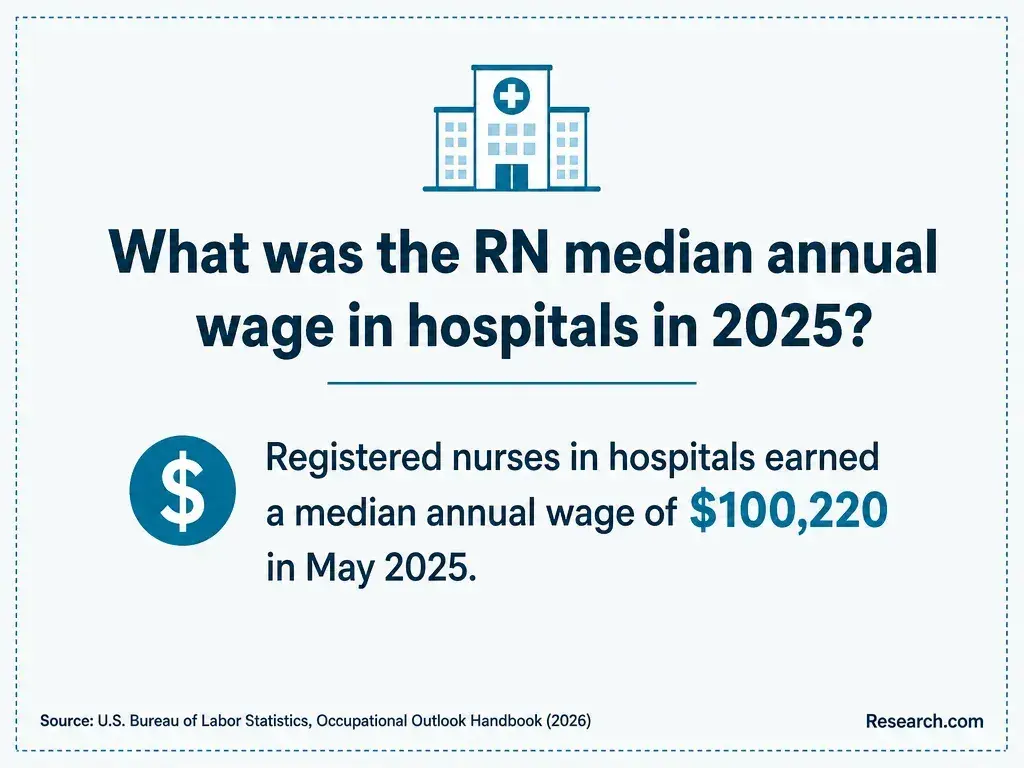
Pay and hiring prospects are different questions from credential eligibility. U.S. Bureau of Labor Statistics registered-nurse wage medians describe an occupation across employers and experience levels - not the salary guaranteed to graduates of an ADN or BSN program.
Its employment projections describe the occupation, not a placement rate for an affected cohort. For a specialty decision, compare local job requirements and the full education expense; PMHNP education costs and program choices should not be justified by assuming a particular future salary. Your immediate priority is a documented path to the credential your intended role requires.
Other Things You Should Know About Nursing
Keep the notice and your correspondence. Use the school's formal grievance process, then contact the authority responsible for the disputed issue, such as the state nursing board or applicable accreditor. Ask for a response about your specific program and cohort.
Keep transcripts, degree audits, syllabi, clinical-hour and competency records, enrollment agreements, and official status notices. Ask the school or its regulator who will retain records and how former students can obtain them.
No. Candidacy or a similar preliminary designation is not the same as accredited status. Check the accreditor's exact designation and dates, then ask the relevant board and any future program how they treat it.
Do not assume stopping is risk-free: it may affect progression, aid, or refund rights. Check published deadlines and obtain advice from the school's registrar and financial aid office while seeking the licensing board's written clarification.
- Apply for a nursing license by exam | mass.gov https://www.mass.gov/how-to/apply-for-a-nursing-license-by-exam
- Regulatory Overview | ky.gov https://kbn.ky.gov/education/Pages/Regulatory-Overview-Out-of-State-Programs-of-Nursing.aspx
- Frequently Asked Questions (FAQs) - NM Board of Nursing https://www.bon.nm.gov/faq/
- Criteria and Procedures for Recognition of State Agencies for Nurse Education | U.S. Department of Education http://www.ed.gov/laws-and-policy/higher-education-laws-and-policy/college-accreditation/national-recognition-of-state-approval-agencies/criteria-and-procedures-recognition-of-state-agencies
- Nursing Licensure Guide | Department of State https://www.pa.gov/agencies/dos/resources/professional-licensing-resources/licensure-processing-guides-and-timelines/nursing-guide
- Nursing Programs - California Board of Registered Nursing https://www.rn.ca.gov/education/programs.shtml
- .18 New Programs and Continuing Approval Requirements. | Library of Maryland Regulations https://regs.maryland.gov/us/md/exec/comar/10.27.03.18
- GA R&R - GAC - Chapter 410-8 REGISTERED NURSING EDUCATION PROGRAMS https://rules.sos.ga.gov/gac/410-8
- DAPIP | Homepage - Office of Postsecondary Education (OPE) https://ope.ed.gov/dapip/
- FERPA | Protecting Student Privacy - Department of Education https://studentprivacy.ed.gov/ferpa