2027 Parent PLUS Loan vs Private Parent Student Loan

Student Finance & Loan Expert
Parents funding a graduate student's education often face tough choices between loan options. Deciding whether to use the federal Parent PLUS Loan or seek a private parent student loan can impact repayment terms, interest rates, and borrower protections.
The consequences of making the wrong choice may lead to higher costs or limited flexibility in managing repayment. Navigating this decision requires clear understanding of the benefits and drawbacks of each loan type.
This article compares the two options, analyzing key factors to help readers select the best financial strategy for supporting a graduate education while minimizing risk and expense.
- What are Parent PLUS loans and private parent student loans, and how do they differ? Loan Types
- Which is better for covering college costs: Parent PLUS loan or private parent loan? Best Option
- How do interest rates, fees, and total costs compare for Parent PLUS vs private parent loans? Rates & Costs
- What are the eligibility and credit requirements for Parent PLUS and private parent loans? Eligibility
- How do borrowing limits differ between Parent PLUS loans and private parent student loans? Borrowing Limits
- How do repayment terms and monthly payment options compare for Parent PLUS and private parent loans? Repayment Terms
- Do Parent PLUS loans qualify for forgiveness, and can private parent loans ever be forgiven? Forgiveness
- What protections exist for deferment, forbearance, and disability death discharge on each loan type? Protections
- Can Parent PLUS and private parent loans be refinanced or consolidated, and how does that work? Refinancing
- How should families decide how much parents borrow versus students with federal student loans? Parent vs Student
What are Parent PLUS loans and private parent student loans, and how do they differ?
Parent PLUS loans are federal loans available to parents of dependent undergraduate students or graduate students pursuing advanced degrees. These loans feature a fixed interest rate of 8.94% for disbursements in the 2025-26 academic year and do not require a strict credit check, though a basic credit review excludes adverse credit history.
Borrowers benefit from federal protections like income-driven repayment plans, deferment, forbearance, and potential loan forgiveness programs. Understanding Parent PLUS loan eligibility and application process is crucial for parents considering this option.
Private parent student loans come from banks, credit unions, and private lenders, with interest rates that range from about 4% variable to over 10% fixed, depending on creditworthiness.
These loans often require strong credit or a co-signer and lack many federal benefits, making repayment more challenging if financial difficulties arise. Terms, fees, and eligibility criteria vary widely across lenders.
Choosing between these loans depends on personal credit profiles, repayment flexibility needs, and interest rates. For families needing assistance with expenses beyond tuition, it's worth exploring whether can FAFSA cover rent to complement these loan options.
Which is better for covering college costs: Parent PLUS loan or private parent loan?
The Parent PLUS loan benefits compared to private parent loans center on fixed interest rates and federal protections. Parent PLUS loans have a fixed rate of 8.05% for 2026, providing transparency and predictability throughout the loan term.
They also offer federal benefits including deferment, forbearance, and income-contingent repayment options, which can ease repayment challenges during or after college enrollment. Private parent student loans, however, present a wide range of interest rates from about 3.19% to 25.96%, depending on the lender and borrower credit.
While families with excellent credit might find private loans attractive for lowering borrowing costs, these loans lack the federal protections offered by Parent PLUS loans, increasing financial risk for many. This makes private loans less suitable for those needing flexibility or facing uncertain financial situations.
Choosing the best parent loan options for college funding depends on credit standing, risk tolerance, and repayment flexibility needs. Parent PLUS loans suit borrowers seeking consistent costs and federal support, while private loans may fit families confident in rapid repayment without needing deferment.
For those exploring alternatives, learning about student loans without parents can provide additional pathways to funding.
How do interest rates, fees, and total costs compare for Parent PLUS vs private parent loans?
Interest rates on Parent PLUS loans are fixed at 9.08% for the 2024-25 academic year, while private parent loans offer variable interest rates ranging from 3.59% to 17.99%, depending on creditworthiness and lender terms.
Borrowers with strong credit histories may secure private loans with rates substantially lower than Parent PLUS, reducing overall borrowing costs. This parent plus loan interest rates and fees comparison highlights key differences in cost and structure.
Parent PLUS loans charge an origination fee of 4.228%, deducted from the loan disbursement, which increases the effective cost. Private lenders vary widely in fees; some have no origination fees, while others may charge application or late fees, impacting the total repayment amount over time.
Total cost analysis of private parent student loans vs parent plus loans depends on interest rates, fees, repayment terms, and whether rates are fixed or variable. For instance, a $20,000 Parent PLUS loan at 9.08% over 10 years generally results in higher monthly payments and total interest costs than a private loan at 5% with no origination fee.
However, private loans with rates above 9% can become more expensive than Parent PLUS loans. Borrowers should also evaluate deferment and forbearance options. Parent PLUS loans include federal protections not always available with private loans, which can influence long-term costs in cases of financial hardship.
For prospective borrowers looking at options, detailed comparison of rates, fees, and repayment terms is critical. More information about these choices can be found in resources like business school student loans.
What are the eligibility and credit requirements for Parent PLUS and private parent loans?
Parent PLUS Loans require the borrower to be the biological or adoptive parent, or in some cases, a stepparent, of the dependent undergraduate student. The eligibility criteria include that the parent must not have an adverse credit history, which the Department of Education defines as recent bankruptcies, foreclosures, or defaulted federal student loans.
Unlike private loans, the credit check for Parent PLUS loans focuses mainly on negative marks rather than specific minimum credit score thresholds, making the parent plus loan eligibility criteria more lenient in this regard.
Credit requirements for private parent student loans differ significantly. Most lenders expect a minimum credit score around 650 or higher with proof of stable income or employment often necessary.
Co-signers are commonly allowed or required if the borrower's credit is less robust. In comparison to Parent PLUS loans, private loans offer greater flexibility but place more emphasis on creditworthiness.
Regarding fees, Parent PLUS loans charge an origination fee of 4.228% based on the total loan amount, deducted from each disbursement. Many private lenders waive origination fees, though they may set higher interest rates and variable fees depending on credit quality. This dynamic can sometimes balance the upfront savings.
Parents weighing loan options should consider these factors carefully. Those seeking to refinance or explore alternatives may want to check out banks that refinance student loans to find competitive rates.
How do borrowing limits differ between Parent PLUS loans and private parent student loans?
Parent PLUS loans allow borrowing up to the student's cost of attendance (COA) minus any grants or scholarships received.
For instance, if the COA is $30,000 and the student has $10,000 in aid, a parent can borrow up to $20,000 through a PLUS loan for that academic year. These federal loans don't have a fixed limit but are capped by the institution's reported costs and financial aid already awarded.
In contrast, private parent student loans depend heavily on the lender's criteria and the parent's creditworthiness. Borrowing limits vary but usually do not exceed the COA, often capped between $50,000 and $100,000 annually.
Some lenders require a co-signer or impose lower limits for those with weaker credit, thereby restricting how much can be borrowed. Here are key differences to consider:
- Parent PLUS loans offer flexibility tied to actual education costs and financial aid received.
- Private loans may offer lower interest rates or alternative repayment options but come with stricter credit and borrowing limits.
Parent PLUS loans remain a significant portion of student loan borrowing. In the 2024-25 academic year, parents and students borrowed $102.6 billion, with Parent PLUS loans accounting for about 12% ($12.3 billion), according to LendingTree data. This highlights their continued role despite private alternatives available.
How do repayment terms and monthly payment options compare for Parent PLUS and private parent loans?
Parent PLUS Loans come with fixed repayment terms, usually spanning 10 years, and monthly payments begin once the loan is fully disbursed. Borrowers can consolidate these loans into Direct Consolidation Loans, enabling enrollment in income-driven repayment (IDR) plans like Income Contingent Repayment.
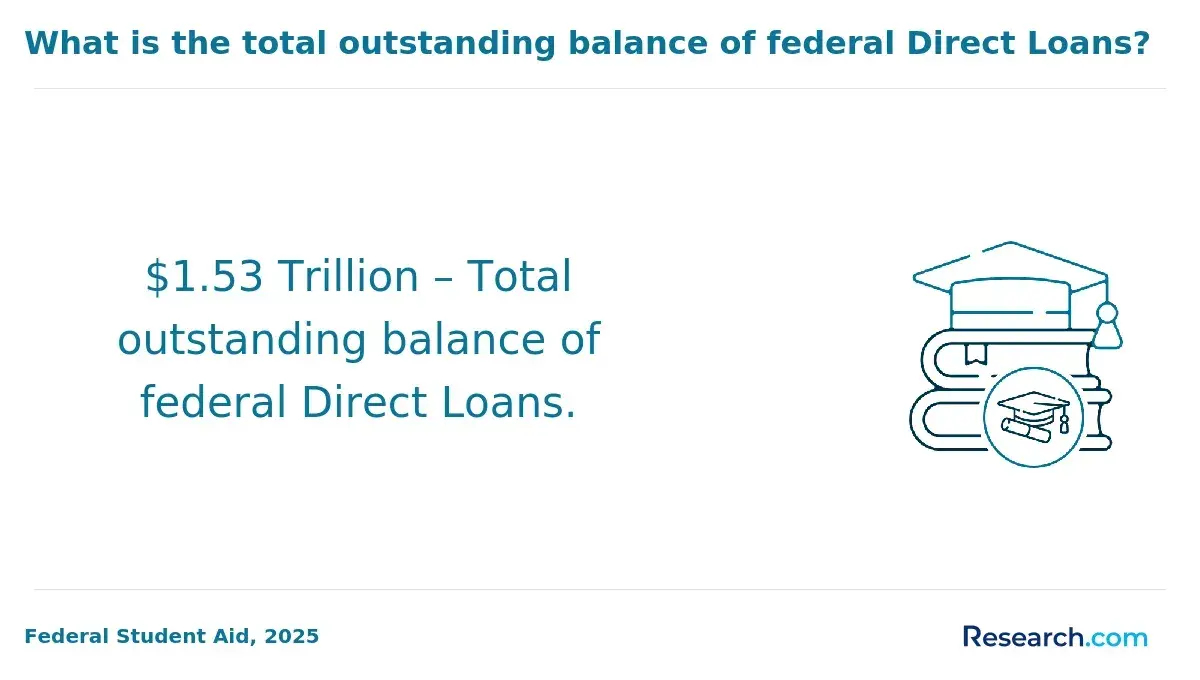
This option adjusts payments based on income and family size, offering relief during financial hardship. Approximately 31.6% of federal student loan debt is in Direct Consolidation Loans, highlighting their widespread use among Parent PLUS borrowers (Education Data Initiative).
Private parent student loans have less flexible repayment options, often determined by the lender. They may offer fixed or variable interest rates with repayment terms from 5 to 20 years.
These loans typically lack income-driven plans or forgiveness programs. Monthly payments may be fixed or graduated, but hardship accommodations are limited and vary by lender.
Key differences include:
- Parent PLUS borrowers can reduce payments through consolidation and IDR plans, unlike private loans without federal flexibility.
- Private loans may allow longer repayment periods but lack income-based adjustments, which can increase financial strain if income fluctuates.
- Federal loans offer deferment or forbearance under defined circumstances, while private loans' options depend on individual lenders and are less consistent.
Choosing Parent PLUS loans with consolidation is advisable for those seeking manageable payments and built-in hardship protections. Private loans may suit families with steady incomes favouring fixed costs but without federal safeguards.
Do Parent PLUS loans qualify for forgiveness, and can private parent loans ever be forgiven?
Parent PLUS loans qualify for federal loan forgiveness programs, although the options are more limited compared to other student loans. Borrowers can pursue Public Service Loan Forgiveness (PSLF) by making 120 qualifying payments while employed full-time by a government or eligible non-profit organization.
Income-Driven Repayment (IDR) plans may also forgive remaining balances after 20 or 25 years, but Parent PLUS loans must first be consolidated into a federal Direct Consolidation Loan to become eligible for these plans.
In contrast, private parent student loans do not offer federal forgiveness options. Private lenders establish their own terms, and forgiveness provisions are virtually unavailable. Since private loans cannot be consolidated into federal programs, borrowers face full repayment obligations without federal protections or forgiveness opportunities.
Key points include:
- Parent PLUS loans make up about 6.7% of outstanding federal student loan debt, often extending into retirement years
- Forgiveness requires strict repayment and employment conditions
- Families with Parent PLUS debt should consider public service roles or consolidation to access forgiveness
- Private loan borrowers must plan for full repayment; refinancing may reduce costs but won't enable forgiveness
Careful financial planning is essential for families balancing these loan types, especially to avoid long-term financial strain related to Parent PLUS debt.
What protections exist for deferment, forbearance, and disability death discharge on each loan type?
Parent PLUS loans offer important federal protections that many private parent student loans do not.
These include options for deferment and forbearance during economic hardship, unemployment, or when the student is enrolled at least half-time. Forbearance allows temporary payment suspension or reduction during financial difficulties.
Additionally, Parent PLUS loans provide discharge options if the parent borrower becomes totally and permanently disabled or passes away, relieving the debt from the borrower's estate. These protections are federally mandated and apply regardless of credit history.
Private parent student loans, in contrast, depend on individual lender policies that often provide fewer protections. Deferment and forbearance options may be limited and require direct negotiation. Disability and death discharges are rare and usually require strict documentation, increasing financial risk for families facing hardship.
Key differences include:
- Federal protections on Parent PLUS loans for deferment, forbearance, disability, and death discharge
- Private loans generally have less generous and more variable policies
- Higher reliance on Parent PLUS loans among families at historically Black colleges and universities (about 9%) compared to predominantly white institutions (4%) according to the DebtPlus Report from WCER
Parents should consider these factors carefully, especially if job loss, illness, or other financial shocks are possible, as the more robust safety net of Parent PLUS loans may provide greater security.
Can Parent PLUS and private parent loans be refinanced or consolidated, and how does that work?
Parent PLUS loans and private parent student loans can both be consolidated or refinanced, but the options and advantages differ.
Parent PLUS loans are federal and only eligible for consolidation through a federal Direct Consolidation Loan. This merges multiple federal loans into a single payment but generally does not reduce interest rates.
The new rate is a weighted average of existing rates, rounded up to the nearest one-eighth of one percent. For instance, consolidating multiple Parent PLUS loans results in one payment with an interest cost close to the original total.
Private parent loans, on the other hand, may be refinanced through private lenders, potentially offering lower rates or improved terms. Refinancing replaces the original loan with a new one subject to credit checks and income verification.
Depending on creditworthiness and market conditions, refinancing may secure rates below the Parent PLUS loan rate, which decreased slightly from 9.08% to 8.94% between academic years according to Education Data Initiative.
Important considerations include:
- Federal consolidation retains federal benefits like income-driven repayment plans and loan forgiveness eligibility but rarely lowers interest costs.
- Private refinancing can reduce interest rates and monthly payments but forfeits federal protections.
- Refinancing eligibility depends on credit profile and current market rates.
- Parent PLUS loans cannot be federally refinanced but might be refinanced privately if qualifications are met.
These distinctions help parents balance federal protections with potential savings through private refinancing.
How should families decide how much parents borrow versus students with federal student loans?
Federal student loans should be the first option for families financing college due to their lower fixed interest rates and flexible repayment plans.
These loans also offer forgiveness opportunities that make them more manageable long-term. Approximately 81.96% of all student loan debt comes from federal loans, highlighting their widespread use and benefits (Education Data Initiative).
Parents considering Parent PLUS loans must carefully assess their repayment ability. Parent PLUS loans carry higher interest rates and offer fewer forgiveness options compared to federal student loans taken out by students.
If the student qualifies for the maximum federal loan amounts, Parent PLUS should only cover essential remaining costs like tuition gaps or expenses outside the student's budget.
Key factors to consider include:
- Eligibility for federal Direct Subsidized and Unsubsidized Loans before Parent PLUS
- Parent creditworthiness, since Parent PLUS loans require a credit check
- Interest rate comparisons, as federal loans typically have lower fixed rates than Parent PLUS and private loans
- Availability of income-driven repayment plans mainly for student federal loans
Private parent loans are generally a last resort given their higher costs and limited borrower protections.
While some families with strong credit may find lower interest rates through private lenders, restricted repayment options and increased financial risk make federal loans the preferred starting point. Assessing total household debt and future income is crucial before borrowing any student or parent loans.
Other Things You Should Know About Parent PLUS Loan vs Private Parent Student Loan
Parent PLUS Loans cannot be used for graduate or professional school expenses. They are specifically designed for parents helping pay for their dependent undergraduate children's college expenses. Graduate students must apply for Direct PLUS Loans (Grad PLUS Loans) themselves.
A Parent PLUS loan requires a credit check, but the credit standards are less strict than those used for private loans. If a parent borrower is denied due to adverse credit, they may still be eligible by obtaining an endorser or demonstrating extenuating circumstances. Private parent loans typically have stricter credit requirements and cannot be co-signed by students in most cases.
Interest paid on Parent PLUS loans may be tax-deductible up to $2,500 annually, subject to income limits and other IRS rules, similar to other federal student loans. Private parent loans may also offer interest deductions if the lender qualifies under IRS guidelines, but borrowers should consult a tax advisor to confirm eligibility based on their specific loan and financial situation.
Yes, parents can take out private student loans regardless of existing Parent PLUS loans; however, lenders will evaluate their creditworthiness independently. Borrowers should consider the combined debt load and repayment obligations before pursuing additional private loans, as the terms and protections differ significantly between federal and private options.