2027 Online Paralegal Studies Degrees That Help Build File and Records Management Skills

Co-Founder and Chief Data Scientist
Choosing an online paralegal studies degree is partly about legal knowledge, but it is also about whether the program teaches you to manage evidence, deadlines, case files, and confidential records accurately. That matters because the U. S. Bureau of Labor Statistics reported a May 2024 median wage of $61,010 for paralegals and legal assistants, while employers continue to expect strong technology and document-management skills.
This guide is for prospective students comparing online options, costs, credibility, and career fit so they can choose a program with clearer return-on-investment expectations.
Key Things You Should Know
- Look for institution-level accreditation first, then evaluate whether the curriculum includes legal research, civil litigation, e-discovery, legal technology, ethics, and hands-on case-file organization.
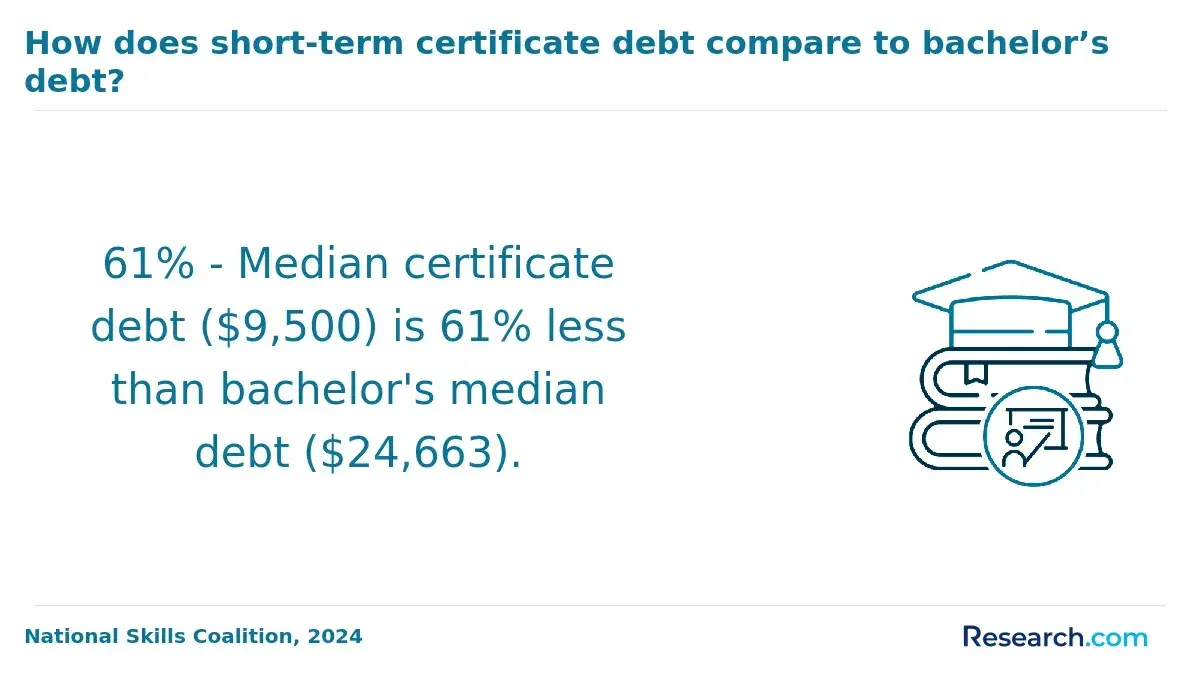
- Typical timelines range from about 12 months for some certificates to 2 years for associate degrees and 4 years for bachelor's degrees; cost varies widely, with College Board's 2024 published averages showing public two-year in-district tuition and fees at $4,050.
- The strongest career fit is for students who want detail-heavy legal support work; BLS May 2024 data places the median paralegal and legal assistant wage at $61,010, but pay depends on region, employer type, experience, and specialization.
What are online paralegal studies degrees that emphasize file and records management skills?
Online paralegal studies degrees are academic programs that prepare students to support attorneys, legal departments, courts, government agencies, and compliance teams. A records-focused program goes beyond basic legal terminology by teaching students how to create, organize, retrieve, secure, and maintain legal documents throughout the life of a case or transaction.
In legal settings, "file and records management" includes paper files, digital matter folders, pleadings, discovery materials, contracts, correspondence, billing records, client intake documents, exhibits, and retention schedules. Students learn why accuracy matters: a misfiled motion, missed deadline, or poorly labeled exhibit can create real risk for a client or employer.
The main online options differ by depth, speed, and career target. The table below summarizes how each credential generally fits students who want to build legal records and file-management skills.
| Program type | Best fit | Typical records-management emphasis | Decision note |
| Undergraduate certificate | Students who already have a degree or legal office experience | Focused legal procedures, legal research, document preparation, and case-file basics | Fastest route, but may be less competitive where employers prefer degrees |
| Associate degree in paralegal studies | New students seeking entry-level legal support roles | Combines general education with litigation, legal writing, office technology, and document control | Often a practical balance of time, cost, and job readiness |
| Bachelor's degree in legal studies or paralegal studies | Students aiming for corporate, compliance, government, or advancement-oriented roles | Broader coverage of legal systems, ethics, research, databases, compliance records, and advanced writing | Longer and usually more expensive, but may support broader career mobility |
| Post-baccalaureate certificate | Career changers with a bachelor's degree | Intensive legal skills, document drafting, litigation support, and technology workflows | Useful when the goal is to add paralegal preparation without completing another degree |
Students who are still exploring public safety, courts, policing, or corrections may also compare paralegal studies with an online associate degree in criminal justice. Criminal justice programs usually focus more on law enforcement and the justice system, while paralegal programs focus more on legal documents, attorney support, and procedural accuracy.
How do online paralegal programs compare with campus options for records management training?
Online paralegal programs can be effective for records management because much of modern legal work is digital. Students may use learning management systems, cloud-based document folders, legal research platforms, e-discovery simulations, and electronic filing exercises that resemble the tools used in law offices and corporate legal departments.
Campus programs may offer more face-to-face interaction, local internship connections, and structured lab time. Online programs usually offer stronger flexibility for working adults, caregivers, military students, and students who do not live near a college with paralegal coursework.
The right format depends on how you learn and what kind of records-management experience the program provides. This comparison highlights the trade-offs that matter most for students evaluating online versus campus study.
| Factor | Online paralegal program | Campus paralegal program | What to check before enrolling |
| Document-management practice | Often uses digital case files, uploads, databases, and simulated workflows | May include in-person file labs or office simulations | Ask whether assignments require organizing full case files, not just writing documents |
| Schedule | Often asynchronous or evening-friendly | Usually fixed class meeting times | Confirm weekly workload and whether deadlines are flexible |
| Technology exposure | Can mirror remote legal work and electronic records workflows | May depend on campus lab resources | Ask which legal research, e-filing, and office tools are used |
| Networking | May rely on virtual events, remote advising, and local internship searches | Often stronger local attorney and court connections | Ask how internship placement works for online students in your state |
| Learning style | Best for self-directed students who can manage deadlines independently | Best for students who want immediate in-person feedback | Review tutoring, faculty office hours, and writing support access |
Online study is not automatically easier. In fact, records-heavy paralegal courses can be demanding because they require careful naming conventions, deadline tracking, version control, citation accuracy, and ethical handling of confidential information. Students who struggle with self-organization should look for programs with structured weekly modules, frequent feedback, and required legal technology assignments.
What accreditation should online paralegal studies programs have for credible records management education?
The first accreditation checkpoint is institutional accreditation. In the U.S., students should verify that the college or university is accredited by an agency recognized by the U.S. Department of Education or the Council for Higher Education Accreditation. This matters for federal financial aid eligibility, transfer credit, employer recognition, and future graduate or certificate study.
Program-specific recognition can also matter. Some paralegal programs are approved by the American Bar Association, but ABA approval is not available for every fully online format in the same way it is for many campus or hybrid programs. Because policies and delivery formats can change, students should check the school's current ABA status directly and ask how online coursework is classified.
For records-management credibility, accreditation alone is not enough. A credible program should also show that it teaches the legal, ethical, and technical side of handling files. Before applying, ask admissions or the program director for documentation on the following points:
- Whether the institution is currently accredited and in good standing
- Whether the paralegal program has ABA approval or another relevant external review
- Whether online students complete the same legal specialty courses as campus students
- Whether courses include legal ethics, confidentiality, records retention, and litigation deadlines
- Whether students use realistic digital filing, legal research, and document-management assignments
- Whether internship or practicum options are available to online students
A common mistake is choosing a program based only on speed or low tuition without verifying accreditation. That can limit financial aid access, credit transfer, and employer confidence. If a school is unclear about its accreditation status, uses vague language such as "licensed" instead of accredited, or pressures you to enroll before answering questions, treat that as a red flag.
What courses in paralegal programs build file organization and legal records management skills?
Records management skills are usually built across several courses rather than in one class. The best programs make students practice how documents move through a legal matter, from client intake and investigation to filing, discovery, trial preparation, closing, and retention.
Some students interested in evidence handling, lab reports, chain-of-custody documentation, or expert exhibits may also compare legal studies with a forensic science degree online. Forensic science programs focus on scientific evidence and analysis, while paralegal programs focus on legal procedure, admissibility, document organization, and attorney support.
The following courses are especially relevant if your goal is to become the person a legal team trusts with files, deadlines, and records accuracy.
| Course area | Records-management skills built | Why it matters in legal work |
| Introduction to paralegal studies | Legal office roles, matter organization, case lifecycle, professional boundaries | Shows how files support attorney decision-making and client service |
| Legal research and writing | Citation tracking, source management, research logs, memo organization | Helps prevent unsupported claims and lost authorities |
| Civil litigation | Pleadings, motions, discovery requests, docketing, trial notebooks | Litigation teams depend on precise deadlines and document sequencing |
| Legal technology | Database use, e-filing, document assembly, spreadsheets, PDF management | Modern legal records are often digital-first and searchable |
| E-discovery | Electronically stored information, metadata, production logs, privilege review support | Large cases require organized review workflows and defensible document handling |
| Legal ethics | Confidentiality, conflicts, unauthorized practice of law, secure communication | Records errors can create ethical and professional responsibility problems |
| Law office management | File opening and closing, retention calendars, billing records, client communication logs | Connects records management to daily office operations |
When reviewing course descriptions, look for verbs such as "prepare," "organize," "maintain," "file," "retrieve," "analyze," and "manage." A program that only lists broad legal topics may not provide enough practical records training unless assignments require students to build complete case files or document sets.
What are the admission requirements for online paralegal degrees focused on records management?
Admission requirements depend on credential level. Certificate programs may require a high school diploma, prior college credit, or a completed bachelor's degree, while associate and bachelor's programs usually require standard undergraduate admission materials. Selective programs may also ask for placement tests, writing samples, minimum GPA, or prior coursework in English composition.
Most online paralegal programs do not require previous legal experience. However, students with office administration, court, banking, insurance, healthcare compliance, law enforcement, or records experience may be better prepared for document-heavy assignments. Transfer credits can also shorten the timeline, especially for students who have completed general education courses.
Applicants should prepare these materials early because records-focused programs often expect strong writing, organization, and technology readiness from the beginning:
- High school transcript, GED documentation, or prior college transcripts
- Online application and any required application fee
- Proof of residency if applying for in-state tuition at a public institution
- Placement information for writing, reading, or math if required by the school
- Transfer-credit evaluation for previous college coursework
- Current resume if applying to a post-baccalaureate certificate or career-focused program
- Technology readiness confirmation, including reliable internet access and word-processing software
Students who are unsure whether they want legal support, compliance, public administration, business operations, or another flexible career path may also look at online interdisciplinary studies bachelor programs low cost. Those programs may offer broader customization, while paralegal studies is more targeted toward legal work and attorney-supervised responsibilities.
How long do online paralegal programs take and what do they typically cost?
Online paralegal program length depends on the credential, transfer credits, enrollment intensity, and whether courses are offered in accelerated terms. A certificate can sometimes be completed in about a year, an associate degree commonly takes about two years of full-time study, and a bachelor's degree usually takes about four years unless the student transfers credits.
Cost varies more than timeline. Public community colleges are often the lowest-cost option for associate degrees, while private nonprofit and for-profit institutions may charge more.
For 2024-25, College Board's 2024 Trends in College Pricing and Student Aid reported an average published tuition and fees of $4,050 for public two-year in-district students. This benchmark helps students understand why community college-based paralegal programs can be a strong value when they are accredited and career-relevant.
The table below summarizes common time and cost drivers so students can compare programs beyond the advertised tuition rate.
| Cost or timeline factor | How it affects students | What to ask the school |
| Credential level | Certificates are shorter; associate and bachelor's degrees require more credits | How many total credits are required for completion? |
| Transfer credits | Accepted credits can reduce both time and tuition | Will my prior credits apply to the degree or only as electives? |
| Residency status | Public colleges may charge different rates for in-state and out-of-state students | Do online students qualify for in-state, e-tuition, or distance-learning rates? |
| Technology fees | Online programs may add platform, proctoring, or software fees | What is the total program cost including fees? |
| Books and legal databases | Legal textbooks and research tools can add costs | Are database subscriptions, e-books, or legal software included? |
| Internship requirements | Internships may affect scheduling and transportation costs | Can online students complete placements near home or remotely? |
To reduce costs, compare total program price rather than tuition per credit alone. Also ask whether the program accepts CLEP exams, prior learning credit, employer tuition assistance, military benefits, or transfer pathways from a community college to a bachelor's completion program.
What paralegal career paths rely heavily on file and records management expertise?
File and records management is central to nearly every paralegal role, but it is especially important in practice areas with high document volume, strict deadlines, confidential records, or regulatory requirements. Students who enjoy structured systems, checklists, version control, and careful review may find these roles a better fit than positions centered mainly on client interaction or field investigation.
The following career paths often reward strong records-management habits because the work depends on accurate retrieval, labeling, storage, and tracking of legal information.
| Career path | Records-heavy responsibilities | Common employers |
| Litigation paralegal | Organizes pleadings, discovery, exhibits, deposition files, calendars, and trial notebooks | Law firms, government legal offices, corporate litigation teams |
| Corporate paralegal | Maintains contracts, board records, entity files, compliance documents, and transaction checklists | Corporations, banks, insurance companies, in-house legal departments |
| Real estate paralegal | Tracks deeds, title documents, closing files, escrow records, and property disclosures | Real estate law firms, title companies, lenders |
| Immigration paralegal | Manages client evidence, forms, deadlines, identity documents, and government correspondence | Immigration law firms, nonprofits, corporate mobility teams |
| Compliance or regulatory assistant | Maintains audit files, policies, reporting records, permits, and investigation documentation | Healthcare, finance, education, government contractors |
| E-discovery support specialist | Helps process, tag, review, and produce electronically stored information | Law firms, litigation vendors, corporate legal operations teams |
If you like technical drawings, project files, specifications, and document control but are less interested in legal procedure, a related nonlegal alternative could be a 2-year architecture degree. That path may involve construction documentation and design records, while paralegal studies focuses on legal documents and attorney-supervised work.
What salaries can paralegals with strong records management skills expect to earn?
Salary depends on the employer, metro area, specialization, experience, education, and technical skill level. Strong records-management skills can make a candidate more useful in litigation, corporate legal operations, compliance, and e-discovery settings, but they do not guarantee a specific wage.
The U.S. Bureau of Labor Statistics reported a May 2024 median annual wage of $61,010 for paralegals and legal assistants. Readers should treat that figure as a national midpoint, not a starting salary promise; entry-level roles may pay less, while experienced paralegals in high-cost legal markets or specialized departments may earn more.
The table below explains how records-focused skills can affect earning potential without overstating what a degree alone can do.
| Salary factor | Why it matters | How students can use this information |
| Practice area | Corporate, litigation, intellectual property, and e-discovery roles may involve complex document systems | Choose electives and internships aligned with document-intensive fields |
| Legal technology skill | Employers value workers who can handle databases, PDFs, spreadsheets, and e-filing accurately | Build a portfolio of technology-based assignments when possible |
| Location | Pay often reflects local legal market size and cost of living | Compare wages in your metro area rather than relying only on national figures |
| Experience level | Senior paralegals may manage workflows, junior staff, or complex case files | Look for programs with internships, capstones, or simulated case projects |
| Employer type | Law firms, corporate legal departments, government agencies, and nonprofits may pay differently | Match your salary expectations with the sector you actually want to enter |
For return-on-investment planning, compare expected local entry-level wages with total program cost, debt, time to completion, and the credential employers request in job postings. A lower-cost accredited associate program may be the better first step for some students, while a bachelor's degree may make sense for those targeting corporate legal departments or future advancement.
What is the job outlook for paralegals specializing in file and records management?
The paralegal labor market is steady but competitive. BLS employment projections released in 2025 describe little or no overall employment change for paralegals and legal assistants over the 2024-2034 period, with many openings still expected because workers transfer to other occupations or leave the labor force. For students, this means the credential alone is not enough; practical technology and records skills can help differentiate candidates.
Several trends are shaping records-focused paralegal work. Law firms and legal departments are digitizing files, using cloud collaboration tools, adopting e-discovery platforms, and applying automation to routine document tasks. AI can help summarize, search, or classify documents, but legal teams still need trained staff to check accuracy, protect confidentiality, manage deadlines, and avoid unauthorized practice of law.
Students can improve job readiness by building evidence of practical competence before graduation. The most useful preparation steps include:
- Completing assignments that simulate full case files, not just isolated legal memos
- Learning spreadsheet organization, PDF editing, electronic filing, and document naming conventions
- Practicing confidentiality rules and secure file-sharing habits
- Seeking internships in litigation, corporate legal, compliance, court, or government settings
- Tracking local job postings to identify software names and credential preferences
- Creating a portfolio with redacted sample pleadings, research logs, calendars, and document indexes if the program permits it
A common mistake is assuming automation will make records skills less important. In reality, automation can increase the need for people who understand both legal procedure and data quality. Poorly organized digital records can make AI-assisted tools less reliable, while well-structured files make review, retrieval, and compliance easier.
How can students evaluate and choose a reputable online paralegal program?
A reputable online paralegal program should be accredited, transparent about costs, realistic about career outcomes, and specific about how it teaches legal skills. Students should be cautious of schools that advertise unusually fast completion, vague career promises, or "guaranteed" employment without clear evidence.
Use a decision process that compares fit, credibility, affordability, and outcomes. The steps below can help you narrow options before speaking with admissions representatives.
- Verify institutional accreditation using official accreditation databases, not just marketing pages.
- Confirm whether the program is ABA-approved, hybrid, fully online, or online with required campus components.
- Review the curriculum for legal research, litigation, ethics, legal technology, law office management, and e-discovery.
- Ask for total program cost, including fees, books, software, proctoring, graduation fees, and internship-related expenses.
- Check whether credits transfer to bachelor's programs if you may continue your education later.
- Ask how online students access tutoring, writing support, career services, faculty office hours, and internship help.
- Compare local job postings to the program's courses and software training.
- Request outcome information, but treat salary and placement claims carefully unless the school explains how the data was collected.
Students comparing legal studies with broader degree-completion paths may also review interdisciplinary studies bachelor programs if they want more flexibility across business, public administration, technology, or compliance. Paralegal studies is the better fit when the goal is specifically attorney-supervised legal support work.
The final choice should match your target job. Choose a lower-cost accredited associate degree if you want an efficient entry route into legal support. Choose a bachelor's or post-baccalaureate option if you already have credits, want advancement, or are targeting corporate or compliance roles. Consider a different field if you dislike detail-heavy work, strict deadlines, document review, or rules-based writing.
Other Things You Should Know About Paralegal Studies
No. Paralegals may perform legal support work under attorney supervision, but they cannot give legal advice, set legal fees, represent clients in court, or establish attorney-client relationships unless a specific jurisdiction creates a limited exception. Students should learn these boundaries early because ethics violations can harm clients and employers.
It can be useful after graduation or after gaining experience, especially if local employers recognize certifications from professional associations. Certification is different from earning a degree or certificate from a college, so students should check job postings in their area before paying for exams or prep courses.
Useful skills include word processing, spreadsheets, PDF editing, calendaring, secure file sharing, legal research platforms, case-management systems, and e-discovery tools. Students do not need to master every platform before enrolling, but comfort with organized digital work is a major advantage.
References
- Your Guide to Online Paralegal Programs: Degrees, Classes, and Training https://www.paralegalinst.com/online-paralegal-program
- Why Good Recordkeeping is Important in Case Management as a Paralegal | NCC https://www.northwestcareercollege.edu/blog/why-good-recordkeeping-is-important-in-case-management-as-a-paralegal/
- Guide To Online Paralegal Certificate Programs https://www.accreditedschoolsonline.org/online-degrees/certificate/paralegal-programs/
- 7 Tips for Mastering the Paper Flow in the Paralegal World https://paralegal-bootcamp.com/7-tips-for-mastering-the-paper-flow-in-the-paralegal-world/
- Paralegal Studies (BA/BS) https://www.etamu.edu/programs/paralegal-studies-ba-bs/
- How to Choose the Best Paralegal Program for You | Eastern College https://wwwlive.easterncollege.ca/blog/how-to-choose-the-best-paralegal-program-for-you/
- Paralegal career paths — where does your legal support career go from here? - InfoTrack https://www.infotrack.com/blog/paralegal-career-paths
- Career Outlook and Projected Growth - NALS... the association for legal professionals https://www.nals.org/page/USDEPlabor
- Most Popular Online Paralegal Certificates https://www.onlineu.com/degrees/paralegal