2027 Online Paralegal Studies Degrees for Students Who Want Family Law Paralegal Careers

Co-Founder and Chief Data Scientist
Choosing an online paralegal studies degree is a practical decision if you want to support divorce, custody, adoption, and domestic relations cases without becoming an attorney. The U. S. Bureau of Labor Statistics reported a 2024 median annual wage of $61,010 for paralegals and legal assistants, making this a career path where education, skills, and local legal markets matter.
This guide is for students comparing online programs, certificates, and degrees. You will learn what to study, how to check quality, what family law employers expect, and how to judge cost against career value.
Key Things You Should Know
- Online family law paralegal pathways usually include a certificate, associate degree, bachelor's degree, or post-baccalaureate certificate; the best fit depends on your prior credits, budget, and target employers.
- The BLS lists $61,010 as the 2024 median annual wage for paralegals and legal assistants, but pay varies by state, firm size, experience, and whether you work in private family law, legal aid, courts, or government.
- Before enrolling, verify institutional accreditation, legal specialty coursework, internship options, transfer policies, and whether the program's online format satisfies employer expectations in your state.
What does an online paralegal degree focused on family law cover and who is it for?
An online paralegal degree focused on family law teaches students how to perform legal support work for matters involving marriage, divorce, child custody, child support, adoption, guardianship, domestic violence orders, and property division. "Focused on family law" usually means the program is a general paralegal studies degree with electives, assignments, internships, or capstone projects tied to domestic relations practice.
This path is best for students who want legal work with direct client contact, detailed document preparation, and emotionally sensitive case management. It can also fit working adults who need online coursework while building skills for law firms, legal aid organizations, court systems, or public agencies.
The main decision is not simply "online or not." It is which credential level matches your starting point and job goal. The table below summarizes common academic routes and when each one tends to make sense.
| Program type | Typical student profile | Family law career use | Best fit |
| Undergraduate certificate | Student with limited time or a prior degree not required by the school | Builds entry-level legal terminology, research, drafting, and case support skills | Career changers testing the field or assistants seeking legal specialization |
| Associate degree in paralegal studies | Student starting college or seeking a two-year credential | Combines general education with legal specialty courses | Entry-level family law paralegal roles, especially in small and midsize firms |
| Bachelor's degree in legal studies or paralegal studies | Student seeking broader academic preparation or future advancement | Adds writing, research, policy, ethics, and sometimes management coursework | Students targeting competitive legal markets, government roles, or long-term advancement |
| Post-baccalaureate certificate | Student who already has a bachelor's degree | Provides concentrated paralegal training without repeating general education | Career changers who want the fastest credible route into legal support work |
Students who are deciding between legal support and broader justice careers should compare paralegal studies with a criminal justice degree. Criminal justice programs usually focus more on courts, policing, corrections, policy, and public safety, while paralegal programs focus more on legal documents, litigation support, client files, and attorney-supervised work.
What education and skills do you need to become a family law paralegal?
Most family law paralegal jobs require formal paralegal education, prior legal office experience, or both. There is no single national license for paralegals in the U.S., and requirements vary by employer and state. However, employers commonly prefer candidates who understand legal ethics, civil procedure, legal research, document drafting, confidentiality, and client communication.
Family law requires a specific blend of technical precision and emotional maturity. You may be preparing child support worksheets, tracking deadlines, organizing financial records, and communicating with clients who are under stress. That makes soft skills just as important as legal knowledge.
Students should build the following skill groups before applying for family law paralegal roles:
- Legal writing and document drafting: Prepare pleadings, discovery requests, affidavits, parenting plan drafts, settlement documents, and correspondence under attorney supervision.
- Legal research: Use statutes, court rules, case law databases, and local forms to support attorney work and avoid outdated procedures.
- Case organization: Track deadlines, hearings, financial disclosures, client documents, service of process, and court filings.
- Technology fluency: Work with e-filing systems, PDF tools, calendaring software, case management platforms, spreadsheets, and secure client portals.
- Client communication: Gather facts, explain process boundaries, document conversations, and maintain empathy without giving legal advice.
- Ethical judgment: Protect confidentiality, avoid conflicts of interest, follow attorney supervision rules, and recognize the unauthorized practice of law.
A common mistake is assuming that family law is easier than other legal fields because it involves everyday relationships. In practice, family law can involve urgent deadlines, financial complexity, safety concerns, and high-conflict communication. Choose this path if you can stay organized and calm while handling sensitive information.
How do online paralegal programs prepare graduates specifically for family law careers?
Strong online paralegal programs do more than upload lecture slides. They simulate the actual workflow of a legal office: opening a file, interviewing a client, checking conflicts, locating court rules, drafting documents, filing electronically, and preparing a case for attorney review.
For family law, the best preparation comes from repeated practice with documents and scenarios that resemble real client matters. Programs may use case studies involving custody disputes, divorce petitions, child support modifications, adoption filings, domestic violence protective orders, and mediated settlement agreements.
Look for online programs that include these career-building elements:
- Drafting assignments tied to local practice: Students should practice pleadings, motions, affidavits, discovery, and client letters rather than only reading about them.
- Legal research using professional tools: Coursework should teach statutes, case law, court rules, and citation methods using current legal research platforms or comparable academic databases.
- Ethics scenarios: Family law paralegals must know when a client question requires attorney review, especially around custody strategy, settlement value, and legal rights.
- Technology-based case management: Programs should expose students to e-filing, document organization, deadline tracking, and secure handling of confidential records.
- Internship, practicum, or capstone: Supervised experience helps students translate coursework into work samples and job interview examples.
AI tools are also changing paralegal work. They can assist with document review, summarization, and organization, but they do not replace legal judgment, confidentiality obligations, or attorney supervision. A quality program should teach students to verify AI-generated output, avoid entering confidential information into unapproved tools, and understand that courts and employers may have strict technology policies.
What accreditation and institutional approvals should family law paralegal programs have?
Accreditation is one of the most important quality checks for any online paralegal studies program. At minimum, the college or university should hold institutional accreditation from an accreditor recognized by the U.S. Department of Education or the Council for Higher Education Accreditation. This matters for federal financial aid, credit transfer, graduate study, and employer confidence.
Paralegal program approval is a separate issue. The American Bar Association approves some paralegal education programs, but ABA approval is voluntary and not the same as institutional accreditation. Some reputable online programs may not be ABA-approved, and some employers may prefer or require ABA-approved coursework. Because distance education policies and program formats can change, students should verify the current approval status directly with the school and the ABA directory before enrolling.
Use this checklist to evaluate program legitimacy before you apply:
- Confirm the institution's accreditation status through official accreditor or federal databases, not only the school's marketing page.
- Ask whether the paralegal program itself has ABA approval or another recognized legal education review, and ask what that approval covers.
- Review how many legal specialty credits are included and whether family law is offered as a required course, elective, or practicum topic.
- Ask whether online students can complete internships locally and whether the school helps identify placements.
- Check transfer credit rules, graduation requirements, total cost, refund policies, and career services access for online students.
- Request recent job placement or graduate outcome information, understanding that schools may report outcomes differently.
Red flags include vague accreditation language, pressure to enroll immediately, unclear tuition and fees, no legal specialty faculty listed, no writing-intensive coursework, or a curriculum that avoids ethics and legal research. Family law employers need accuracy and professionalism, so program quality should be judged by evidence, not promises.
How do online paralegal studies programs compare with campus options for family law?
Online and campus paralegal programs can both prepare students for family law careers, but they fit different schedules, learning styles, and networking needs. Online study often works well for working adults, caregivers, military students, and students outside commuting distance of a campus. Campus study may offer more in-person networking, live classroom practice, and local legal community connections.
The comparison below shows the practical trade-offs to weigh before choosing a format. Use it to match the program structure to your life, not just to your preference for convenience.
| Factor | Online paralegal program | Campus paralegal program | Family law decision point |
| Schedule | Often asynchronous or evening-friendly | Usually fixed class times | Online may be better if you work or handle caregiving responsibilities |
| Networking | May rely on virtual events, local internships, and alumni platforms | May offer easier access to local attorneys, courts, and classmates | Campus can help if you need a local professional network quickly |
| Skill practice | Can use simulations, discussion boards, recorded feedback, and digital drafting | Can include live mock interviews, classroom drafting, and courthouse visits | Choose the option with the strongest writing feedback and practical assignments |
| Internships | May require students to locate approved local placements | May have established relationships with nearby firms and agencies | Ask how many online students complete family law-related placements |
| Technology exposure | Often mirrors remote legal workflows and digital case management | May offer more traditional office and classroom interaction | Online can be useful if you expect hybrid or remote legal support work |
Choose online study if you are disciplined, comfortable writing in digital formats, and able to build local experience through internships or entry-level legal jobs. Choose campus study if you learn best through live interaction or need stronger local networking support. Either way, avoid programs that lack substantive writing, research, ethics, and supervised practice.
What courses and practicum experiences are included in a family law paralegal curriculum?
A family law paralegal curriculum usually combines core paralegal courses with specialized domestic relations content. Even when family law is only one course, students can often tailor research papers, capstones, internships, and electives toward divorce, custody, adoption, or child support practice.
The table below summarizes common courses and how they connect to family law work. It is useful for comparing program catalogs because course titles vary across schools.
| Course or experience | What students learn | Why it matters in family law |
| Introduction to paralegal studies | Legal system structure, paralegal roles, attorney supervision, and ethics | Clarifies what paralegals can and cannot do for clients |
| Legal research and writing | Statutes, case law, court rules, citations, and legal memoranda | Supports custody, support, adoption, and motion practice research |
| Civil litigation | Pleadings, discovery, motions, trial preparation, and court procedure | Family law cases often follow civil procedure rules with specialized local requirements |
| Family law | Divorce, custody, support, property division, adoption, and domestic violence concepts | Provides the direct subject matter foundation for domestic relations practice |
| Legal technology | E-filing, document management, calendaring, databases, and digital security | Family law files include sensitive financial, child-related, and personal records |
| Internship or practicum | Supervised legal office or project-based experience | Helps students develop work samples and understand real client workflows |
When reviewing a curriculum, do not focus only on whether the words "family law" appear in the program name. Instead, read syllabi or course descriptions to see whether students draft realistic documents, receive instructor feedback, and practice ethical client communication.
A strong family law preparation plan usually includes these steps:
- Complete core legal research, writing, ethics, and civil litigation courses before advanced electives whenever possible.
- Choose family law, mediation, child welfare, domestic violence, or elder law electives if available.
- Build a writing portfolio with redacted or classroom-created samples such as pleadings, memos, and client letters.
- Seek an internship with a family law firm, legal aid office, court self-help center, guardian ad litem program, or domestic violence advocacy organization.
- Ask instructors and supervisors for feedback on accuracy, tone, organization, and deadline management.
What are typical admission requirements and application materials for online paralegal degrees?
Admission requirements depend on the credential level. Certificate and associate programs may be open to students with a high school diploma or GED. Bachelor's programs usually require first-year or transfer admission materials. Post-baccalaureate certificates typically require an earned bachelor's degree before enrollment.
Online programs may also evaluate whether applicants are ready for college-level writing, technology-based learning, and independent time management. Family law is writing-heavy, so schools may place particular emphasis on English composition readiness or prior academic performance.
Common application materials include the following:
- Online application form and application fee or fee waiver request
- Official high school, GED, college, or bachelor's degree transcripts, depending on program level
- Placement test scores or proof of completed English and math coursework, when required
- Personal statement explaining interest in paralegal work or legal studies
- Resume showing office, customer service, administrative, military, or legal experience, if applicable
- Letters of recommendation for selective programs or post-baccalaureate options
- Technology requirements confirming access to a reliable computer, internet connection, webcam, and document software
Applicants should also ask how transfer credits are evaluated. This is especially important if you already completed general education courses, military training, business courses, or prior legal studies classes. Transfer credits can shorten your timeline and reduce cost, but only if the receiving school applies them toward degree requirements.
One common mistake is enrolling before reviewing the program's academic calendar. Some online programs use eight-week accelerated terms, while others follow traditional semesters. Accelerated terms can help motivated students finish faster, but they can also become difficult if you work full time or have caregiving responsibilities.
How long do online paralegal programs take and what do they cost for family law students?
Program length depends on credential level, transfer credits, enrollment pace, and whether courses are offered every term. A certificate may take a few months to one year, an associate degree often takes about two years of full-time study, and a bachelor's degree commonly takes four years for first-time students. Part-time students should expect a longer timeline.
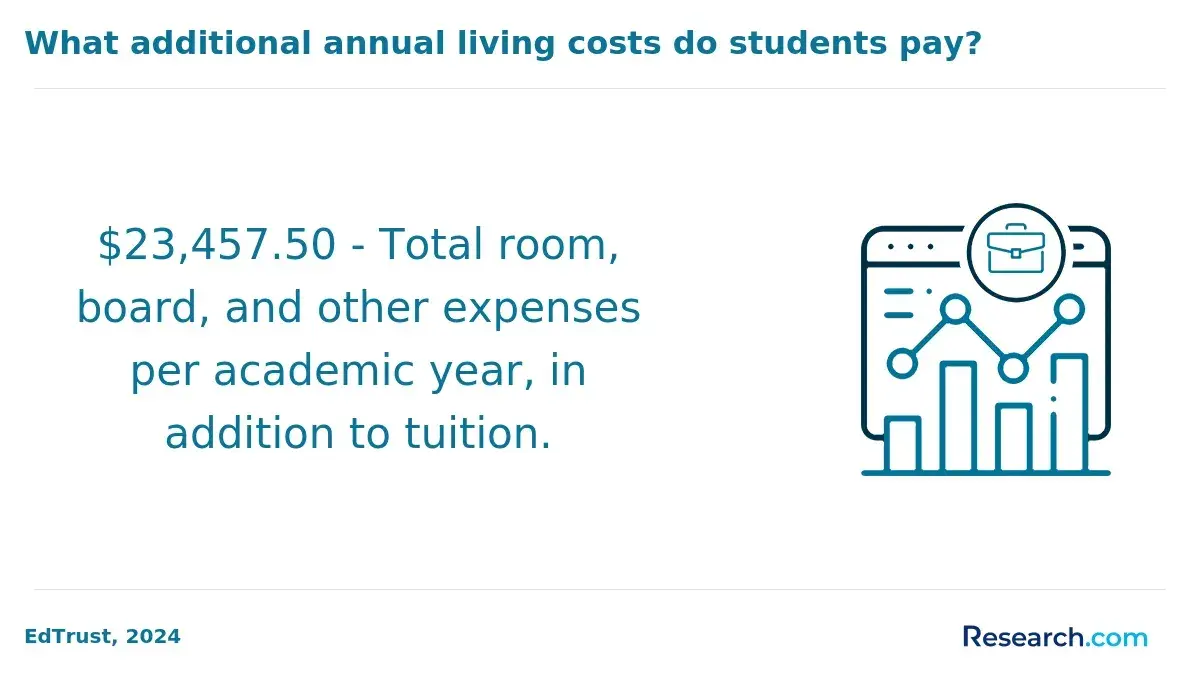
Cost varies widely, so compare total program price rather than tuition per credit alone. College Board's 2024-2025 figures show average published tuition and fees of $4,050 for public two-year in-district students, $11,610 for public four-year in-state students, and $43,350 for private nonprofit four-year students. These figures are not paralegal-specific, but they show why institution type, residency, and credential level can significantly affect affordability.
When budgeting for an online paralegal program, include both direct tuition and required extras:
- $4,050 average published tuition and fees for public two-year in-district students in 2024-2025
- $11,610 average published tuition and fees for public four-year in-state students in 2024-2025
- $43,350 average published tuition and fees for private nonprofit four-year students in 2024-2025
- Additional costs may include textbooks, legal database access, technology fees, graduation fees, exam fees, background checks, and internship-related transportation
The table below summarizes timeline trade-offs. It can help you decide whether speed, flexibility, or depth should drive your choice.
| Path | Typical completion pattern | Cost and value consideration | Best for |
| Accelerated certificate | Short, intensive terms | Lower time cost but may offer fewer general education or transfer options | Students with prior degrees or legal office experience |
| Associate degree | Full-time or part-time two-year pathway | Often affordable at community colleges, especially for in-district students | Students seeking entry-level employment with a college credential |
| Bachelor's degree | Four-year or transfer-completion pathway | Higher total cost but broader education and possible advancement value | Students targeting competitive markets or future graduate study |
| Post-baccalaureate certificate | Focused legal coursework after a bachelor's degree | Can avoid repeating general education, but per-credit rates vary | Career changers with an existing degree |
Students should be cautious with loans. Federal undergraduate Direct Loans for 2024-2025 carry a 6.53% interest rate, so borrowing decisions should be tied to realistic local wage expectations, not national medians alone. If your broader goal is business, communications, or firm growth rather than legal case support, compare this path with other options such as marketing graduate programs before committing to a legal studies track.
What are the job duties, work settings, and career paths for family law paralegals?
Family law paralegals support attorneys throughout the life of a domestic relations case. They do not give legal advice, set legal strategy, represent clients in court, or establish attorney-client relationships unless authorized by law and supervised appropriately. Their value comes from keeping cases organized, accurate, timely, and client-ready.
Typical job duties include the following:
- Interviewing clients for factual background and organizing intake information for attorney review
- Drafting petitions, responses, affidavits, discovery requests, financial disclosures, parenting plans, and settlement documents under supervision
- Maintaining case calendars for hearings, mediation dates, discovery deadlines, and filing requirements
- Collecting and organizing tax returns, pay records, bank statements, school records, medical records, and custody-related documents
- Preparing exhibits, trial notebooks, mediation binders, and electronic files
- Communicating with clients, courts, opposing counsel, process servers, experts, and agencies while following office policies
- Using e-filing systems and legal software to file, store, and retrieve case documents
Family law paralegals may work in solo practices, small law firms, midsize firms, legal aid organizations, nonprofit advocacy groups, court systems, government child support agencies, or corporate legal departments that handle employee-related domestic orders. Some move into senior paralegal roles, case management, law office administration, compliance, mediation support, or legal operations.
This field can also serve as a decision point for students interested in the intersection of law, psychology, and human behavior. If your interest is more focused on criminal behavior, victim services, or assessment rather than legal document support, it may be worth researching what can you do with a forensic psychology degree before choosing a paralegal program.
What salary, job outlook, and certification options exist for family law paralegals?
The U.S. Bureau of Labor Statistics groups family law paralegals under paralegals and legal assistants. The agency reported a 2024 median annual wage of $61,010 for the occupation. This figure is a useful benchmark, but it should not be read as a promise for new graduates. Entry-level wages may be lower, and pay can be higher in larger firms, high-cost metropolitan areas, specialized practices, or roles requiring advanced litigation and technology skills.
The BLS projects 1% employment growth for paralegals and legal assistants from 2023 to 2033, with openings still expected as workers retire, change occupations, or move into other legal roles. For family law students, this means employability may depend less on overall growth and more on practical skills, local demand, internship experience, and the ability to manage digital legal workflows.
Certification is usually voluntary, but it can help demonstrate professional competence, especially if you did not attend an ABA-approved program or are changing careers. The table below summarizes common U.S. certification options and how they may fit a family law paralegal path.
| Certification option | Organization | Typical use | Family law relevance |
| Certified Paralegal or Certified Legal Assistant | NALA | Recognizes general paralegal knowledge and skills through examination | Useful for demonstrating baseline competence to law firms |
| Professional Paralegal or Professional Legal Secretary | NALS | Supports legal professionals in paralegal and legal support roles | Helpful for students entering small firms where duties may blend paralegal and administrative work |
| Paralegal CORE Competency Exam or Registered Paralegal | NFPA | Provides competency-based credentials for different experience levels | May support advancement after building experience in family law or litigation |
| State or local paralegal credentials | Varies by state or bar association | May reflect state-specific education, experience, or continuing education standards | Worth checking if employers in your region value local recognition |
Students comparing legal careers should also recognize that paralegal work is not the same as investigative or law enforcement work. If your long-term interest is profiling, federal investigations, or behavioral analysis, reviewing FBI profiler salary information can help you compare a very different career path before investing in paralegal education.
To improve your career odds, graduate with more than a transcript. Build a portfolio, ask for internship evaluations, learn local court rules, practice client-centered communication, and stay current with legal technology. Employers in family law often need people who can be trusted with sensitive records and stressful timelines from the first day on the job.
Other Things You Should Know About Paralegal Studies
Yes, many online programs are designed for working adults. Before enrolling, check weekly workload, term length, synchronous meeting requirements, and whether internships can be scheduled around your job.
No. Paralegals generally may provide legal support under attorney supervision, but they cannot give legal advice, set strategy, represent clients, or tell clients what legal choices to make.
Students should ensure the program is accredited, offers comprehensive coursework relevant to family law, and provides opportunities for practical experience. Additionally, consider the flexibility of the program to accommodate work schedules, as well as the technology and resources available for online learning.
It can be. Family law often involves conflict, children, finances, trauma, and urgent client concerns. Strong boundaries, documentation habits, and supportive supervision are important for long-term success.
References
- Is the Paralegal Field Booming? Your Job Outlook Guide https://www.paralegalinst.com/paralegal-job-prospects
- Paralegal & Legal Studies AAS Degree - Iowa Lakes Community College https://iowalakes.edu/program/paralegal-legal-studies-aas/
- What are the Pros & Cons to Being a Paralegal https://www.uscareerinstitute.edu/blog/pros-and-cons-of-being-a-paralegal
- Paralegal https://www.fanshawec.ca/programs/plg1-paralegal/next
- PARALEGAL CAREER OUTLOOK https://www.villanova.edu/university/professional-studies/academics/professional-education/paralegal-certificate/paralegal_career_outlook.html
- How to Choose an Online Paralegal Studies Program | Campus https://campus.edu/blog/paralegal/how-to-choose-online-paralegal-program
- How Long is the Paralegal Program? https://www.cdicollege.ca/news/how-long-is-the-paralegal-program/
- FULL-TIME | WINNIPEG LOCATIONS LEGAF-CT Legal Assistant https://catalogue.rrc.ca/Programs/WPG/Fulltime/LEGAF-CT
- Affordable Online Paralegal Certification - Get Certified Today https://www.expertrating.com/certifications/personal-development-and-enrichment/paralegal-certification.asp
- ABA Approval vs. ABA Accreditation: Do You Need ABA Approval for a Paralegal Program? | Bryan University Online© https://bryanuniversity.edu/faq/aba-approval-accreditation-paralegal-programs/