2027 Online Paralegal Studies Degrees for Students Who Want Immigration Legal Support Careers

Co-Founder and Chief Data Scientist
Choosing an online paralegal studies degree can be a smart route into immigration legal support, but only if the program matches real employer needs. The U.S. Bureau of Labor Statistics reported a May 2024 median pay of $61,010 for paralegals and legal assistants, making program quality, cost, and specialization important decisions.
This guide is for students who want to support immigration attorneys, nonprofits, agencies, or corporate immigration teams. You will learn what to study, what credentials matter, how online programs compare, and how to judge whether the investment fits your goals.
Key Things You Should Know
- Immigration paralegals usually need strong legal research, writing, document management, client communication, and case-tracking skills; bilingual ability can be valuable, but it does not replace legal training.
- For paralegals and legal assistants, the BLS reported a May 2024 median annual wage of $61,010 and projected 1% employment growth from 2023 to 2033, so graduates should compare programs by outcomes, internships, and local employer connections.
- Online associate, bachelor's, and post-baccalaureate certificate programs can all lead to immigration legal support roles, but students should verify institutional accreditation, transfer credit rules, ABA approval status when relevant, and total cost before enrolling.
What is an online paralegal studies degree with a focus on immigration law?
An online paralegal studies degree teaches students how to assist attorneys with legal research, drafting, client files, court and agency procedures, and case management. A focus on immigration law adds training in immigration petitions, family-based cases, employment-based filings, humanitarian relief, removal defense support, administrative forms, and communication with clients who may be navigating high-stakes legal processes.
Paralegals are not lawyers. They cannot give legal advice, represent clients independently, or set legal strategy unless a specific law or authorized setting allows it. In immigration work, that boundary matters because mistakes can affect a person's ability to live, work, study, or remain in the United States.
The right credential depends on your education level and career timeline. The table below summarizes common online options and when each one tends to make sense:
| Program type | Typical student profile | Best fit for immigration support careers | Main limitation |
| Associate degree in paralegal studies | Students starting college or changing careers without a prior degree | Entry-level legal assistant or junior paralegal roles in law firms, nonprofits, and legal aid offices | May be less competitive for employers that prefer a bachelor's degree |
| Bachelor's degree in paralegal studies or legal studies | Students who want broader legal, writing, and policy preparation | Paralegal roles with more responsibility, compliance support, corporate immigration teams, or future graduate study | Costs more and takes longer than a certificate or associate degree |
| Post-baccalaureate paralegal certificate | Students who already have a bachelor's degree in another field | Fastest academic route for degree-holders who want legal support training | May not include as much general education or career exploration |
| Undergraduate certificate | Students testing the field or adding legal skills to another major | Administrative legal support, intake, or pathway into a longer degree | Some employers may not treat it as enough for paralegal-level work |
For immigration-focused students, the best program is rarely the one with the most general legal courses. It is the one that combines paralegal fundamentals with immigration-specific writing, forms practice, ethics, technology, and supervised experience.
How do online paralegal programs prepare students for immigration legal support roles?
Online paralegal programs prepare students by turning legal concepts into repeatable workplace tasks. Immigration legal support is highly procedural, so students need to learn not only what immigration categories mean but also how to organize evidence, track deadlines, prepare drafts, and communicate clearly with attorneys and clients.
A strong program should help students practice the kinds of assignments they may handle in a supervised legal setting. Look for coursework and projects that develop these job-ready abilities:
- Preparing draft cover letters, client declarations, exhibit lists, and attorney review packets for immigration filings.
- Working with USCIS, EOIR, Department of Labor, and consular-process terminology without confusing agency roles.
- Using calendaring systems to track biometrics appointments, filing deadlines, hearing dates, requests for evidence, and renewal periods.
- Maintaining organized digital case files with version control, confidentiality safeguards, and clear document naming conventions.
- Interviewing clients for factual information while avoiding legal advice and recognizing when an attorney must step in.
- Summarizing statutes, regulations, policy updates, and case facts in plain language for attorney review.
Technology is also changing the work. Many immigration practices now use cloud-based case management platforms, document automation, e-signature tools, secure client portals, and AI-assisted drafting or review. Students should expect technology to reduce repetitive formatting work, but not to eliminate the need for careful human review. Immigration filings still require accuracy, context, confidentiality, and attorney supervision.
When comparing programs, ask whether students complete realistic legal writing assignments, not just quizzes. Immigration employers often care less about memorized definitions and more about whether a new hire can produce clean drafts, spot missing documents, follow instructions, and protect sensitive client information.
What education and skills are required to become an immigration paralegal?
There is no single national license required to work as a paralegal in the United States, but employers commonly prefer candidates with formal paralegal education, legal office experience, strong writing skills, and comfort with detail-heavy procedures. Requirements can vary by law firm, nonprofit, corporate legal department, and government contractor.
Students should think about qualifications in three layers: academic credential, legal support skills, and immigration-specific readiness. The table below shows how those layers fit together:
| Requirement area | What employers often look for | Why it matters in immigration work |
| Education | Associate degree, bachelor's degree, or paralegal certificate from an accredited institution | Shows structured training in legal research, writing, ethics, and procedure |
| Legal writing | Clear, organized drafts and accurate citation or source use | Supports attorney-reviewed petitions, briefs, declarations, and client narratives |
| Client communication | Professional interviewing, empathy, and confidentiality | Immigration clients may be under stress and may need careful explanation of document requests |
| Organization | Deadline tracking, file management, and document checklists | Missed deadlines or incomplete evidence can create serious case problems |
| Language ability | Bilingual or multilingual communication where relevant | Can improve intake, trust, and document gathering, especially in high-volume practices |
| Ethics | Understanding unauthorized practice of law and attorney supervision | Protects clients and keeps paralegal work within legal boundaries |
Spanish-language ability can be especially useful in many immigration settings, but it should be paired with legal training and professional interpretation boundaries. Students who want to strengthen bilingual communication may compare legal studies with Spanish degrees online, especially if they hope to work with Spanish-speaking client communities.
Before enrolling, avoid the common mistake of assuming that compassion alone is enough for immigration legal support. The work is people-centered, but it is also deadline-driven, document-heavy, and ethically constrained. A good program should develop both the human and technical sides of the role.
How do online paralegal programs compare to campus-based options for immigration work?
Online and campus-based paralegal programs can both prepare students for immigration legal support, but they serve different needs. The better choice depends on your schedule, location, learning style, access to internships, and whether you need local networking with attorneys and legal aid organizations.
The comparison below highlights practical differences that matter most for students targeting immigration paralegal roles:
| Factor | Online paralegal program | Campus-based paralegal program | Decision point |
| Schedule | Often more flexible, with asynchronous lectures or evening options | More fixed class times and commuting requirements | Online is usually better for working adults and caregivers |
| Local legal network | Depends on virtual career services and school partnerships | May offer stronger local law firm and courthouse connections | Campus may help if you want to work in the same metro area as the school |
| Immigration specialization | Varies widely; some programs offer only one immigration law course | Also varies, but local clinics or guest speakers may add depth | Choose based on curriculum and experiential learning, not format alone |
| Technology practice | Often naturally builds remote collaboration and digital file skills | May include more face-to-face office simulation | Online can mirror hybrid legal workplaces when assignments are realistic |
| Internships | May require students to find approved placements near home | May have established local placement pipelines | Ask early how the school helps online students secure legal experience |
Online study can be a strong fit for immigration legal support because many modern firms already use digital document systems, remote client meetings, and electronic filing workflows. However, students should not choose an online program simply because it is convenient. The program still needs rigorous writing assignments, instructor feedback, legal technology exposure, and career support.
Campus-based programs may be worth the commute when they offer immigration clinics, strong local nonprofit partnerships, or access to courts and agencies. If a campus program has those advantages and fits your budget, it may provide a faster path to supervised experience.
Which accreditation and institutional approvals matter for online paralegal studies programs?
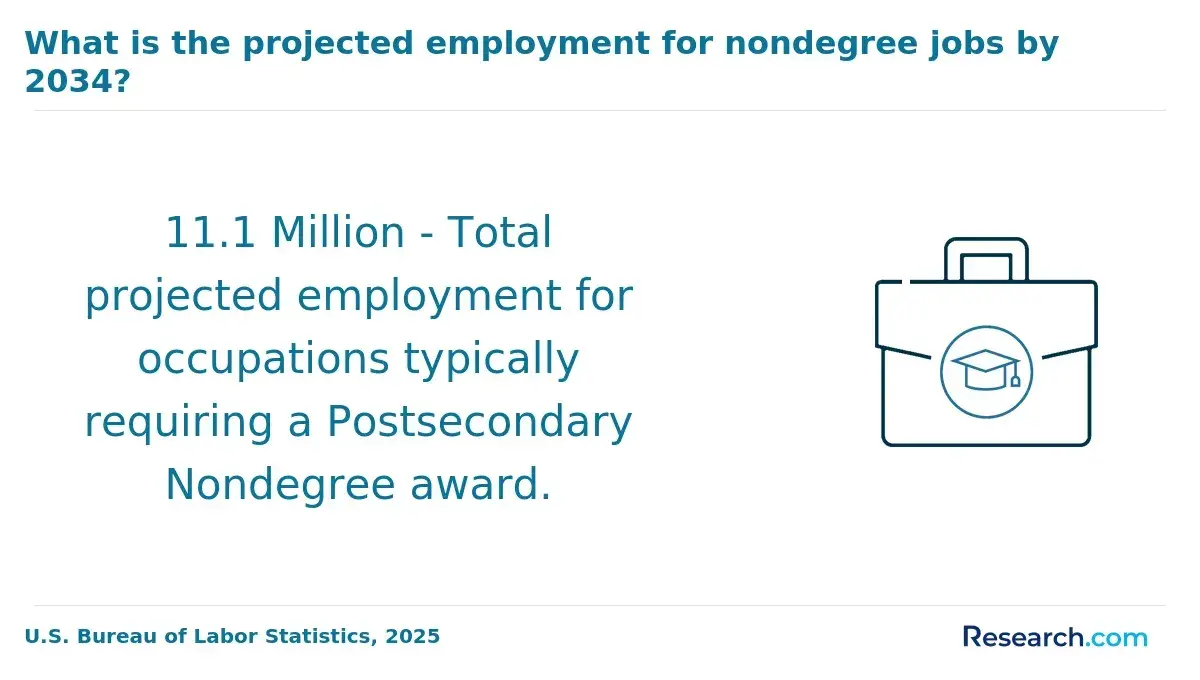
Accreditation is one of the most important checks before enrolling. For U.S. students, the baseline is institutional accreditation from an accrediting agency recognized by the U.S. Department of Education or the Council for Higher Education Accreditation. This affects federal financial aid eligibility, transfer credit, employer confidence, and graduate school options.
Paralegal programs may also seek approval from the American Bar Association, but ABA approval is not the same as institutional accreditation. ABA approval can signal that a program has met paralegal education standards, yet many legitimate online programs are not ABA-approved.
Some ABA-approved programs may also have limits or specific requirements around online delivery, synchronous instruction, or legal specialty coursework, so students should check the current program directory and the school's own disclosures.
Use this checklist before applying because accreditation mistakes can be expensive and hard to reverse:
- Confirm the school's institutional accreditation on an official federal or accreditor database, not only on the school's marketing page.
- Ask whether the paralegal program itself has ABA approval, and if so, whether online students complete the same approved curriculum.
- Verify whether credits can transfer to a bachelor's program or graduate program if you may continue your education later.
- Check whether the program's career services support students in your state or region, especially for internships and employer referrals.
- Read the refund, withdrawal, and teach-out policies before paying deposits or signing enrollment documents.
A common red flag is a program that advertises quick job placement or "certification" without clearly explaining institutional accreditation, curriculum, costs, and career limitations. Paralegal education can support a legal career, but it should not be marketed as a shortcut to practicing law.
What courses and specializations are common in immigration-focused paralegal curricula?
Most paralegal studies programs begin with legal foundations before moving into specialty electives. Immigration-focused students should make sure the curriculum includes both general paralegal competencies and direct exposure to immigration forms, agencies, and legal issues.
The following course areas are especially useful because they connect classroom work to the types of tasks immigration paralegals perform under attorney supervision:
- Introduction to law and the legal system, including sources of law and court structure.
- Legal research and writing, with practice reading statutes, regulations, administrative guidance, and case materials.
- Civil litigation and procedure, which helps students understand deadlines, pleadings, evidence, and attorney workflow.
- Immigration law, including family-based immigration, employment-based immigration, naturalization, humanitarian relief, removal proceedings, and inadmissibility concepts.
- Legal ethics, confidentiality, conflicts of interest, and unauthorized practice of law.
- Law office technology, e-filing concepts, case management systems, document automation, and secure communication.
- Interviewing, investigation, and client intake, especially for fact development and document collection.
- Administrative law or public policy, which can help students understand agency decision-making and regulatory updates.
Students who want broader flexibility may pair paralegal coursework with public policy, sociology, language study, nonprofit administration, or technology skills. If your interests cross legal, social service, and policy fields, comparing paralegal studies with best value online interdisciplinary studies degrees can help you decide whether a broader major or a more direct paralegal credential fits better.
Be cautious with programs that list "immigration law" as a specialization but offer only one short elective and no applied assignments. A meaningful specialization should help you practice drafting, document review, case tracking, and client communication in immigration-related scenarios.
What are typical admission requirements for online paralegal studies degrees?
Admission requirements vary by school and credential level, but most online paralegal programs are designed to be accessible. The main differences are whether you are entering an associate, bachelor's, or certificate pathway and whether the program expects prior college credit.
The table below summarizes common requirements so you can quickly identify which pathway matches your current education level:
| Program level | Common admission requirements | What to prepare before applying |
| Associate degree | High school diploma or GED, application, transcripts, placement assessment in some cases | High school records, FAFSA information, transfer transcripts if applicable |
| Bachelor's degree | High school diploma or GED for first-year applicants; college transcripts for transfer students | Transcripts, prior course descriptions, personal statement if required |
| Post-baccalaureate certificate | Completed bachelor's degree, official transcripts, minimum GPA in some programs | Proof of degree, resume, statement of interest, writing sample in selective programs |
| Graduate-level legal studies certificate | Bachelor's degree and sometimes professional experience | Resume, transcripts, goals statement, employer tuition assistance documents if available |
Before applying, students should complete a few practical checks. These steps can prevent delays and help you compare offers more accurately:
- Request a transfer credit evaluation before committing if you have prior college coursework.
- Ask whether legal specialty courses must be taken at the institution rather than transferred in.
- Confirm whether the online format includes synchronous classes, proctored exams, internships, or campus visits.
- Review technology requirements, including webcam, scanner access, secure internet, and document software.
- Ask admissions or advising staff how the program supports students seeking immigration law internships or volunteer placements.
The biggest admissions mistake is applying only to the fastest program without checking whether it accepts your credits, fits your weekly schedule, or has the immigration-related coursework you need. A slightly longer program may be better if it reduces repeated credits or improves access to supervised experience.
How long do online paralegal programs take, and what do they cost?
Program length depends on credential level, transfer credits, and whether you study full time or part time. A certificate may take a few months to about a year, an associate degree commonly takes about two years of full-time study, and a bachelor's degree often takes about four years for first-time students. Transfer students may finish faster if prior credits apply.
Cost varies widely, so students should compare total program price rather than only tuition per credit. The College Board's 2024 Trends in College Pricing reported average published tuition and fees of $4,050 for public two-year in-district students, $11,610 for public four-year in-state students, and $43,350 for private nonprofit four-year students for 2024-25. Those figures are not online-program quotes, but they help students benchmark whether an online price is unusually low, typical, or high.
When schools disclose costs, look for each required expense rather than relying on a single advertised number. Common cost categories include:
- Tuition per credit or flat-rate term tuition.
- Online course fees, technology fees, graduation fees, and transcript fees.
- Textbooks, legal research access, document software, and exam proctoring costs.
- Internship-related expenses, including transportation, background checks, or professional clothing.
- Lost work time if the program requires synchronous classes or daytime field placements.
The best financial choice is not always the cheapest program. A low-cost program may be a good value if it is accredited, transferable, and career-relevant. A higher-cost program may be worth considering if it offers strong internship placement, ABA approval where that matters to your target employers, generous transfer credit, or employer-recognized training.
To reduce cost, ask about transfer credits, community college pathways, employer tuition assistance, scholarships, payment plans, and federal financial aid eligibility. Also ask whether you can start with a certificate and later stack credits into an associate or bachelor's degree.
What are the job roles, workplaces, and career paths for immigration paralegals?
Immigration paralegals work in settings where legal teams handle visas, green cards, citizenship, asylum, removal defense, compliance, or immigrant services. The day-to-day work can be fast-paced because cases often involve strict deadlines, government requests, and large volumes of personal documents.
The table below shows common workplaces and how the work may differ by setting:
| Workplace | Common immigration paralegal duties | Best fit for students who want |
| Private immigration law firm | Client intake, draft petitions, evidence packets, case updates, deadline tracking | Broad exposure to family, humanitarian, or employment-based cases |
| Corporate legal department | Employment visa support, I-9 documentation coordination, global mobility records, vendor communication | Business immigration and compliance-focused work |
| Nonprofit or legal aid organization | Screening, document collection, community referrals, attorney-supported filings, clinic support | Mission-driven work with underserved communities |
| Government contractor or agency support role | Administrative case support, records review, compliance documentation, data entry | Structured procedures and public-sector-adjacent experience |
| University or hospital immigration office | Student, scholar, physician, or employee visa documentation support | Specialized institutional immigration processes |
Career paths often begin with legal assistant, intake specialist, case assistant, or junior paralegal roles. With experience, professionals may move into senior paralegal, case manager, corporate immigration specialist, compliance coordinator, legal operations, or nonprofit program roles.
Some students also compare immigration paralegal work with other law-adjacent careers. If you are more interested in evidence, lab procedures, and criminal investigations than client-facing immigration support, exploring forensic science careers may help you evaluate a different legal system pathway.
To prepare for entry-level roles, build a small portfolio of attorney-reviewed or classroom-based writing samples, practice professional email communication, learn common immigration forms and document categories, and seek volunteer or internship experience with a legal aid clinic, law office, or immigrant services organization.
What salary ranges and job outlook can immigration paralegal graduates expect?
Immigration paralegal pay depends on location, employer type, experience, bilingual ability, case complexity, and whether the role is more administrative or more substantive. The most reliable national benchmark is the broader paralegal and legal assistant occupation: the BLS reported a May 2024 median annual wage of $61,010. That figure should be treated as a midpoint for the occupation overall, not a promise of earnings for a specific graduate or immigration role.
The job outlook is stable but not especially fast-growing. The BLS projected 1% employment growth for paralegals and legal assistants from 2023 to 2033. For students, this means differentiation matters: immigration coursework, strong writing, technology fluency, bilingual communication, and supervised experience can be important when competing for roles.
Use salary data carefully when evaluating return on investment. A low-cost certificate may make sense for someone who already has a bachelor's degree and needs job-specific legal training. A bachelor's degree may make more sense for students who want broader advancement options, stronger writing preparation, or future graduate study. If your main goal is a higher-paying business, brand, or analytics path rather than legal support, comparing this route with a master's degree in marketing may clarify which investment better matches your long-term interests.
Before enrolling, ask schools for recent career outcomes, internship placement examples, employer partnerships, and graduate job titles. Avoid programs that imply salary guarantees. Good programs can improve preparation and access, but hiring and pay still depend on regional labor markets, employer budgets, experience, and individual performance.
Other Things You Should Know About Paralegal Studies
In 2027, the biggest red flag in an online paralegal program is a lack of accreditation. Accreditation ensures the program meets quality standards and is recognized by employers. Always verify accreditation with reputable bodies to ensure your degree is credible for immigration legal support careers.
Not always, but it can be a major advantage in many offices. Employers may value Spanish, Mandarin, Arabic, French, Haitian Creole, Vietnamese, or other languages depending on the client community. Bilingual ability should be paired with confidentiality, accuracy, and awareness of interpretation boundaries.
Certification is usually voluntary, but it may help show professional commitment. Options from paralegal associations can be useful after you meet their education or experience requirements. Check job postings in your target region to see whether employers request or prefer a specific credential.
References
- Immigration Paralegal Salary 2026: $45k - $100k https://my-career-path.com/career/immigration-paralegal.html
- Affordable Online Paralegal Certification - Get Certified Today https://www.expertrating.com/certifications/personal-development-and-enrichment/paralegal-certification.asp
- Immigration Paralegal | Salary, Duties, Skills & Requirements [2024 Guide] https://www.onlinedegree.com/article/immigration-paralegal/
- 5 Immigration Paralegal Skills that Matter | eimmigration Insights https://get.eimmigration.com/blog/immigration-paralegal-skills-that-matter
- Immigration Paralegal Salary, Certification & Duties https://www.allcriminaljusticeschools.com/specialties/immigration-paralegal/
- Paralegal Studies Courses: Fall 2025 https://my.daemen.edu/database/course_catalog_maintenance/department_courses.php
- Your Guide to Online Paralegal Programs: Degrees, Classes, and Training https://www.paralegalinst.com/online-paralegal-program
- Careers for Paralegals in Immigration Law https://www.becomeaparalegal.org/careers-for-paralegals-in-immigration-law/
- AILA Paralegals Online Course https://www.aila.org/shop/products/view/aila-paralegals-online-course
- The Rewarding and In Demand Career of an Immigration Paralegal | Law Ally US https://lawallyus.com/discover-your-potential-immigration-paralegal-career/